
DD
MM
YYYY

PAGES

DD
MM
YYYY

spot_img

PAGES

Home Blog Page 3411

America’s Falling Population and Its Implications

0

The United States, like many developed nations, is facing a demographic challenge that could reshape its economic and social landscape. Recent data indicates a trend of declining birth rates and an aging population, leading to projections of a falling population in the coming decades. This demographic shift presents a unique set of challenges for America, which has historically relied on a growing population to fuel its economy and support its social security systems.

The U.S. birth rate has reached historic lows, with 2020 witnessing the fewest babies born relative to the population of women of childbearing age in American history. Additionally, the Pew Research Center reports a decrease in the number of non-parents who are likely to have children in the future.

The U.S. Census Bureau’s projections suggest that the U.S. population will peak around 2080 before beginning to decline, with only a 9.7% increase from 2022 projected by 2100. This underscores the need for proactive measures to mitigate the potential impacts of a shrinking population.

The causes of this decline are multifaceted. Factors such as increased educational and career opportunities for women, economic pressures, changing social norms, and a shift in values towards smaller family units have all contributed to the decrease in fertility rates. Moreover, the COVID-19 pandemic has had a significant impact, exacerbating existing trends and potentially altering the course of future population growth.

Immigration has traditionally been a counterbalance to low birth rates in the U.S., but recent years have seen a shift. The only state where the immigrant population is falling reflects broader national trends of slowing immigration. Moreover, the wealth disparity in the country, with billionaires now richer than half the population combined, adds another layer of complexity to the issue.

The implications of a falling population are profound. Economically, it could lead to a smaller workforce, reduced consumer spending, and challenges in sustaining economic growth. Socially, it may strain healthcare and retirement systems as a larger proportion of the population enters old age. Additionally, there could be geopolitical consequences, as shifts in population size affect a nation’s influence and capabilities on the global stage.

To address these challenges, policymakers and stakeholders must consider a range of strategies. These could include incentivizing childbirth through family-friendly policies, rethinking immigration policies to bolster the workforce, and investing in automation and technology to compensate for labor shortages. Furthermore, reevaluating retirement and healthcare systems to ensure sustainability in the face of demographic changes will be crucial.

The United States is not alone in facing these issues. Many countries are experiencing similar trends, and there is much to be learned from the policies and approaches of nations that have successfully navigated these demographic shifts. For instance, some European countries have implemented generous parental leave policies and childcare support systems that have helped stabilize birth rates.

America’s demographic challenge requires a comprehensive and forward-thinking approach. It is not merely a question of numbers but of how the nation can adapt its economic and social structures to sustain growth and prosperity in the face of a declining population. The time to act is now, to ensure a resilient and vibrant future for generations to come.
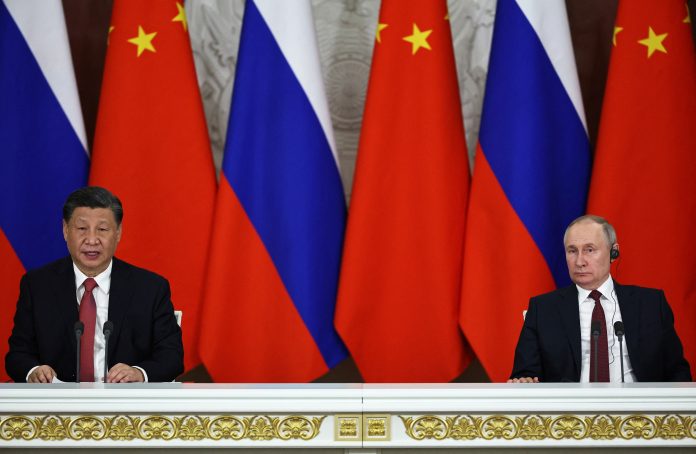

Russia and China’s trade practices, and the global shift away from USD

0

In a significant move that marks a shift in global economic dynamics, Russia and China have substantially reduced their reliance on the U.S. dollar for mutual trade. This strategic pivot reflects a growing trend among nations to diversify their international trade practices away from the traditional dollar-centric system.

Historically, the U.S. dollar has been the cornerstone of international trade, serving as the primary reserve currency worldwide. However, geopolitical shifts and economic strategies have led countries like Russia and China to explore alternative avenues. The move to reduce dollar usage in bilateral trade between these two nations is not a sudden development; it has been a gradual process influenced by various factors, including economic sanctions and the desire for financial autonomy.

The de-dollarization by Russia and China is not an isolated event but part of a larger pattern that reflects the evolving nature of the global economy. As the world’s economic center of gravity shifts, other countries will need to assess the potential risks and opportunities that arise from this transformation. The move away from the U.S. dollar in international trade is a strategic decision with long-term implications, signaling the pursuit of diversified, resilient economic partnerships in a changing world.

The de-dollarization effort began in earnest around 2014, amidst rising tensions and sanctions involving Russia. The share of trade operations between Russia and China using the U.S. dollar fell to 46 percent in the first quarter of 2020, down from 90 percent just five years prior. This trend has continued, with a significant portion of their trade now conducted in their national currencies, the ruble and yuan.

The implications of this shift are manifold. Economically, it allows both countries to insulate themselves from potential financial sanctions and currency fluctuations associated with the U.S. dollar. Politically, it represents a move towards greater economic sovereignty and a reconfiguration of traditional power structures in global finance.

The energy and agricultural sectors have been key areas of focus in the burgeoning economic cooperation between Russia and China. The use of national currencies in these domains not only facilitates trade but also strengthens the financial systems of both countries. Moreover, this transition aligns with the broader vision of the BRICS alliance (Brazil, Russia, India, China, and South Africa) to promote local currencies in trade and reduce dollar dependency.

For other countries, the implications of Russia and China’s de-dollarization can be multifaceted:

Diversification of Currency Reserves: As major economies like Russia and China decrease their dollar holdings, other countries may also reconsider their foreign exchange strategies. The trend could lead to a more diversified portfolio of currencies in national reserves, potentially reducing the dominance of the U.S. dollar as the world’s primary reserve currency.

Trade Agreements: Nations may seek to establish trade agreements that allow for transactions in alternative currencies. This could foster closer ties between countries looking to bypass the dollar and could lead to the creation of new economic blocs with shared financial interests.

Financial Autonomy: Countries that have historically relied on the U.S. dollar may view de-dollarization as a way to achieve greater financial autonomy. By using local or regional currencies, these nations could insulate themselves from the volatility of the dollar and U.S. monetary policy.

As the world watches this unfolding economic narrative, it is clear that the move away from the U.S. dollar in international trade by Russia and China is a strategic decision with long-term implications. It underscores the evolving nature of global trade relations and the pursuit of diversified, resilient economic partnerships.

Blast Second Round of Gold Distribution and XCOPY 227 Ether Sale

0

The digital asset ecosystem is witnessing a significant move by Blast, a platform known for its innovative approach to decentralized application (Dapp) development and support. In its second round of Blast Gold distribution, the platform has made a strategic allocation of funds that underscores its commitment to fostering a robust Dapp environment.

Thruster, a Dapp that has shown considerable promise and traction within the Blast ecosystem, has received a notable 1.1 million in Blast Gold. This substantial allocation reflects Thruster’s alignment with Blast’s vision and its effective use of Blast-native features, which include yield mechanisms and gas fee sharing.

Following closely are two SocialFi applications, District One and Fantasy.top, each securing 730k in Blast Gold. These applications are part of a growing trend of social finance platforms that leverage blockchain technology to create decentralized social networking opportunities with integrated financial capabilities.

The distribution methodology employed by Blast takes into account several factors, including the Dapp’s category, its exclusivity to the Blast platform, on-chain traction, and the effectiveness of its incentive design. The introduction of an Incentive Weight in this round of distribution is particularly noteworthy, as it encourages Dapps to refine their incentive structures to better distribute Gold to users.

Blast’s approach to Gold distribution is meritocratic, aiming to reward Dapps not based on their business development prowess but on their unique contributions to the Blast ecosystem and their alignment with Blast’s long-term goals. This strategy is expected to incentivize innovation and the creation of value for the Blast community.

The impact of this distribution extends beyond the immediate financial boost to the selected Dapps. It signals to the broader blockchain community that Blast is serious about its support for Dapp development and is willing to invest in projects that share its vision for a decentralized future.

XCOPY’s “The Last Selfie” sells for 277 ETH (875K) to Punk4945.

The NFT market continues to thrive, and the recent sale of XCOPY’s “The Last Selfie” is a testament to the growing interest and value in digital art. The piece was acquired by the collector known as Punk4945 for 277 ETH, which is approximately $875,000, marking another significant transaction in the world of non-fungible tokens (NFTs).

XCOPY, a London-based anonymous artist, has become a prominent figure in the NFT space, known for their distinctive glitch art style that often portrays dark and dystopian themes. This particular sale is not an isolated event; it follows a pattern of high-value transactions involving XCOPY’s work. For instance, “A Coin for the Ferryman” sold for a staggering 1330 ETH, amounting to over $6 million. Such sales highlight the artist’s rising prominence and the increasing willingness of collectors to invest substantial sums in digital art.

“The Last Selfie” is a piece that resonates with many for its commentary on the transient nature of life and the self-reflective aspect of modern society. It’s part of a broader conversation about the value and significance of digital art in a world where the lines between the virtual and the real are increasingly blurred.

The sale also underscores the unique aspects of NFTs, such as the ability for artists like XCOPY to receive royalties from secondary market sales, a feature made possible by blockchain technology. This ensures that artists continue to benefit from their work long after the initial sale, which is a significant shift from the traditional art market model.

As the NFT market evolves, it’s clear that works like “The Last Selfie” are not only artistic expressions but also investment pieces that capture the attention of high-net-worth individuals and collectors. The sale to Punk4945 is a clear indicator of the value placed on digital art and the confidence in its long-term appreciation.

The impact of such sales extends beyond the art world, influencing perceptions of cryptocurrency and blockchain technology’s role in shaping the future of ownership and value exchange. As artists like XCOPY continue to push the boundaries of digital art, the NFT space is likely to witness even more groundbreaking sales and innovative works that challenge our understanding of art and its place in the digital age.

Crypto Pump Alert! Play To Earn Crypto Presale To Buy Billion Dollar Jackpot Draws Investors From ETH & BTC

0

Once dominated by established giants like Ethereum (ETH) and Bitcoin (BTC), the cryptocurrency market is witnessing a paradigm shift. Fuelled by innovation and a growing emphasis on utility, a new generation of projects is emerging, challenging the existing hierarchy. At the forefront of this movement lies Play-to-Earn (P2E), a revolutionary concept that incentivizes user participation through in-game rewards and real-world value.

One such project, Billion Dollar Jackpot (BDJ), has captured the attention of investors with its unique blend of P2E mechanics and is currently enjoying a crypto pump. Crypto pumps, characterized by rapid price increases fueled by speculation and hype, have historically been a hallmark of new altcoins entering the market. While some pumps are legitimate reflections of genuine project potential, others fizzle out just as quickly as they ignite.

The ongoing presale for Billion Dollar Jackpot has triggered a surge in interest, with investors closely evaluating its potential to deliver long-term value beyond a short-lived price pump. This begs the question: can a P2E project like Billion Dollar Jackpot carve out a niche in a market traditionally defined by giants like Ethereum and Bitcoin?

Billion Dollar Jackpot: Helps DeFi Turn A New Corner

Imagine a world where your passion for F1 could turn you a profit. Billion Dollar Jackpot makes this a reality and a massive possibility. This revolutionary rising platform is in presale and already making a name for itself. Powered by cutting-edge blockchain technology, it transforms F1 viewership into an interactive and potentially life-changing experience.

Here’s the heart of the action: predict race finishing positions, showcase your F1 knowledge, and accumulate points for each accurate prediction. The higher you climb the leaderboard, the closer you get to a share of a staggering $1 billion End-of-Season Jackpot.

The lifeblood of Billion Dollar Jackpot is $BDJ, the platform’s native token. Think of it as your VIP pass to a world of exclusive rewards. Your success in the prediction markets translates directly into $BDJ tokens, which unlock a treasure trove of benefits:

Billion Dollar Jackpot offers an attractive entry point for investors seeking to capitalize on the project’s immense potential. The limited token supply, the project’s robust utility, and the passionate target audience position BDJ for a potential pole position in the 2024 crypto race.

Ethereum: The Crypto Prince Faces Uncertain Crossroads

Ethereum (ETH) has reigned supreme as the world’s second-largest cryptocurrency by market cap for years. Its pioneering role in smart contracts and decentralized applications (dApps) fueled a wave of innovation within the crypto space. However, recent times have presented challenges.

Price fluctuations and a decline in Open Interest on ETH futures contracts have sparked concerns about a potential downtrend. While a resurgence is undoubtedly possible, Ethereum’s future trajectory appears less certain than in its glory days. Investors closely monitor on-chain metrics to gauge sentiment and predict the path.

Bitcoin: The Halving Hype and Beyond

The recent halving event for Bitcoin (BTC), the undisputed heavyweight champion of the crypto world, was a highly anticipated occasion. Historically, halving events have been followed by significant price increases, which cut the issuance of new bitcoins in half roughly every four years.

The hope is that this halving will trigger another bullish cycle for Bitcoin. However, the immediate impact on miners rewarded with new bitcoins for validating transactions could influence Bitcoin’s short-term performance. Market conditions will also determine how Bitcoin responds to this significant event.

While established players like Ethereum and Bitcoin hold undeniable weight, Billion Dollar Jackpot offers a unique proposition. The ongoing Billion Dollar Jackpot presale presents a compelling opportunity for investors seeking a high-growth crypto with a clear path to success. While established giants like Ethereum and Bitcoin grapple with their uncertainties, Billion Dollar Jackpot offers a fresh perspective on fan engagement and gamified predictions.

Interested in finding out more about BDJ and its new presale? Check out the links below:


Website: https://racetoabillion.com/en

Twitter: https://twitter.com/B_DollarJackpot

Telegram: https://t.me/billion_dollar_jackpot

AI And Digital Innovation Poised to Play Crucial Role in Shaping Banking Across Africa – KPMG Survey

0

According to the findings of KPMG’s inaugural Southern African Banking Survey that was recently released, Artificial Intelligence (AI) and Digital Innovation are poised to play a crucial role in shaping the future of banking in Africa.

The survey suggests that technology-driven advancements will continue to drive transformation and growth within the banking sector throughout the African continent.

According to respondents, this growth would be driven primarily by opportunities in investment banking, corporate banking, and transaction banking, followed by retail and wealth management, underpinned by innovation that enables more customers to access banking services through mobile banking.

Speaking on this, Auguste Claude-Nguetsop, a partner and head of Banking Advisory at KPMG in Southern Africa said that the integration of AI in Africa’s banking sector, as well as digital innovation, will be crucial for financial inclusion, improved customer service, amongst several others.

In his words,

One need only look at the remarkably quick uptake of mobile payments across Africa, and then compare it to the more legacy systems still prevalent in the developed world. AI and digital innovation open further opportunities for financial inclusion, personalization, and customer service.

“The arrival of digital-first banks in Africa, and their easily understood customer offerings has proven this. Challenged by legacy infrastructure and technologies, skills shortages, and regulatory requirements, traditional financial institutions have a longer adoption curve”.

However, the survey highlighted key challenges that would limit such technological advancements which include, the existence of a reliable regulatory framework, solid governance and transparency across the industry, as well as considerations around anti-money laundering and compliance, as well as currency and political risk.

In the survey, 38% of participants confirmed that between 21% and 30% of their IT budget was devoted to these priorities. However, 54% of survey participants indicated that the primary factor preventing the adoption of AI and digital innovation lay within budgetary constraints. 50% outlined that they had, or intended to deploy AI technologies to reduce the costs associated with compliance.

By embracing technological advancements, banks in Africa can unlock new opportunities for innovation, drive financial inclusion, and pave the way for sustainable growth in the digital era.

At least half (51%) of the 153 African banks surveyed in the African Digital Banking Transformation Report 2023 consider digital transformation to be the one most important factor in their growth strategies.

Also, with Al becoming increasingly important, overtaking cybersecurity as the most important trend, Al-powered tools are enabling these banks across the continent to engage with customers effectively, build local natural languages into interactions, and improve credit scoring.

Overall, the findings of the KPMG survey underscore the pivotal role of AI and digital innovation in shaping the future of banking in Africa.