DD
MM
YYYY

PAGES

DD
MM
YYYY

spot_img

PAGES

Home Blog Page 3411

Tekedia Institute Offers Corporate AI Upskilling Courses for Companies

0

At Tekedia Institute, we’re helping banks, insurers and other sector players to master the fundamental rudiments on how AI could help them drive productivity. We will upskill your workers and get them ready for the future.

Email our team for a discovery Zoom session to enable us to understand that journey of growth and productivity you want to undertake. Once we do, we will design a custom program for your organization. Contact the #best school here.

Customized Tekedia AI in Business (Remote & On-Premise) now Available for Companies

Customized Tekedia AI In Business (Remote & On-Premise) Now Available For Companies

Due to huge demand from companies, I am happy to note that the Tekedia Institute “Artificial Intelligence (AI) in Business” program can now come to your office. Yes, we now offer customized remote and on-premise classes for companies.

AI will redesign the world of business, and re-architect economies even as it transforms markets, communities, and organizations. In our program, participants will gain the knowledge capabilities and confidence required to support the integration of AI systems into their organizations, and unlock value.

At the end of this program,  workplace productivity, collaboration, and automation will become clearer; the program comes with AI labs. We have trained CFOs, CMOs, CEOs, CDOs, CIO, CTOs, etc, focusing on AI as a great tool in business. I invite you to contact our team for a discovery meeting which will enable us to design a program for your organization.

(For individuals, not affiliated with companies, Tekedia AI in Business Masterclass remains available for enrollment here)

Exploring the World’s Blue Zones of Healthiest and Longest-living Populations on Earth

0

In the quest for longevity and vitality, certain regions around the globe have piqued the interest of researchers and health enthusiasts alike. These regions, known as “Blue Zones,” are remarkable for having some of the healthiest and longest-living populations on Earth. The concept of Blue Zones was popularized by Dan Buettner, who identified five distinct areas where people live exceptionally long lives, often surpassing the global life expectancy of 71.4 years.

What makes the Blue Zones exceptional? Studies suggest that several factors contribute to the health and longevity of their inhabitants. These include a primarily plant-based diet, regular physical activity, moderate alcohol consumption, strong social connections, and a sense of purpose. Interestingly, genetics account for only 20-30% of longevity, implying that lifestyle choices play a significant role.

The first of these zones is Sardinia, Italy, where a combination of a plant-based diet, regular physical activity, and strong family ties contribute to the high concentration of male centenarians. Interestingly, a genetic marker linked to longevity, known as the M26, is prevalent among this secluded community.

Next is Okinawa, Japan, where the longest-living women in the world can be found. The Okinawans attribute their longevity to a supportive social network called “moai,” a healthy diet, and a stress-minimizing lifestyle.

In Nicoya, Costa Rica, residents enjoy a diet rich in beans, squash, corn, and tropical fruits. They also benefit from a strong sense of purpose, known as “plan de vida,” which contributes to their mental and spiritual well-being, allowing many to live past 90.

Loma Linda, California, stands out as the only Blue Zone in the United States. Here, the Seventh-day Adventist community thrives with a set of healthful principles, including a day of rest each week, a plant-based diet, and a close-knit community, leading to a life expectancy that is 10 years longer than the average American’s.

Lastly, Ikaria, Greece, boasts a population where 1 in 3 people live into their 90s, often free of dementia and chronic diseases. A strong community bond, adherence to the Mediterranean diet, and a balanced approach to daily living contribute to their remarkable health.

Adopting the practices of the Blue Zones could potentially transform public health. By integrating their principles, such as prioritizing family, fostering community, and natural movement, societies can create environments that encourage healthier living and increased lifespan. The Blue Zones stand as a testament to the possibility of a longer, healthier life through mindful living and community support.

These Blue Zones offer valuable insights into the factors that contribute to a long and healthy life. While genetics play a role, lifestyle choices such as diet, exercise, community involvement, and stress management appear to be significant contributors to the extraordinary longevity observed in these regions. By studying these communities, we can learn how to incorporate their healthful practices into our own lives, potentially improving our health and longevity.

The Blue Zones offer more than just a peek into the lives of the world’s oldest populations; they provide a blueprint for living well. By learning from these zones, we can apply their lessons to improve our health and potentially extend our lifespan, proving that our daily choices and environment profoundly impact our health outcomes.

Crypto Market Pulse in Early May 2024

0

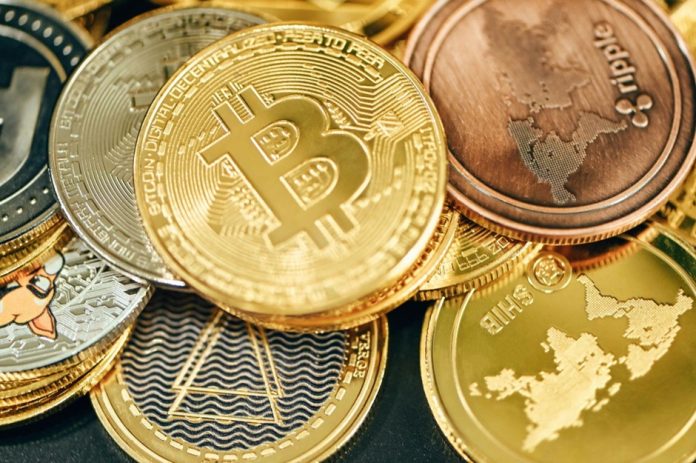
The cryptocurrency market in May 2024 is a landscape of dynamic change and unprecedented growth. As we delve into the market’s pulse, it’s evident that certain cryptocurrencies have taken the spotlight, showcasing remarkable performance and potential.

Bitgert coin, for instance, has seen a staggering 2,000% increase, a figure that defies expectations and highlights the coin’s growing prominence in the market. Its surge is attributed to its accessibility on major exchanges and a strong commitment to decentralized finance (DeFi) development.

Moreover, the market cap milestones are being reached, with predictions indicating that two cryptocurrencies are on the verge of hitting the $100 billion mark. This reflects a significant inflow of capital and investor confidence in the potential of these digital assets.

The overall market outlook remains cautiously optimistic, with a mixed bag of performances from the previous month. Altcoins have faced substantial losses, while Bitcoin has shown a subdued yet steady presence. The anticipation of potential upward movements keeps investors on their toes, especially with altcoins poised to outshine their counterparts.

In this vibrant market, Binance Coin (BNB) continues to seek new highs, striving to surpass its previous peak. Despite the general market downturn, BNB has been persistent, testing resistance levels and indicating room for growth as suggested by the Relative Strength Index (RSI).

Bitcoin (BTC), on the other hand, navigates within a narrow range, with its price trajectory aligning with the Wyckoff model. This suggests the possibility of scaling new heights beyond its current position, although a downturn could lead to deeper lows.

Emerging players like Bitget Token (BGB) and Ondo (ONDO) are also worth watching. These tokens present intriguing prospects and are positioned to carve a niche in the ever-evolving crypto market.

As we capture the crypto market pulse in May 2024, it’s clear that the landscape is shaped by a combination of surging newcomers, steadfast mainstays, and the constant ebb and flow of investor sentiment. The market’s vitality is palpable, and its trajectory, while uncertain, is a journey filled with innovation, resilience, and the promise of a digital financial revolution. For a more detailed analysis and predictions, you can refer to the comprehensive market outlook.

The crypto market continues to be influenced by macroeconomic factors, regulatory decisions, and global events. The Federal Reserve’s meeting outcomes, the Consumer Price Index (CPI) report, and international conferences like the Bitcoin Asia Conference in Hong Kong are just a few of the events that could shape the market’s direction in the coming month.

As we move forward, it’s crucial for investors and enthusiasts to stay informed and agile, ready to navigate the waves of change that define the crypto market. The pulse of the market is strong, and its beat echoes the rhythm of innovation and the potential for growth that lies ahead.

Solana’s Unique Appeal to Institutional Investors

0

The cryptocurrency landscape is constantly evolving, with market dynamics shifting as a result of various factors including technological advancements, regulatory changes, and the strategic movements of large-scale investors known as ‘whales’.

In recent developments, Solana (SOL), a high-performance blockchain platform known for its speed and efficiency, has witnessed a significant return of whales and institutional investors. This resurgence is a testament to the growing confidence in Solana’s long-term potential and its ability to provide scalable and decentralized finance solutions.

Launched in 2020 by the Solana Foundation, Solana has carved out a niche for itself in the crowded blockchain space by offering a hybrid consensus model that combines proof-of-history (PoH) and proof-of-stake (PoS) mechanisms. This innovative approach has resulted in lightning-fast transaction processing times and enhanced scalability, making it an attractive option for a wide range of users, from small-time traders to large institutional investors.

The recent acquisition of significant amounts of SOL tokens by whales indicates a strong belief in the project’s future prospects. These strategic investments not only reflect confidence in Solana’s technological capabilities but also contribute to increased market liquidity, which is essential for the healthy functioning of any financial ecosystem.

Alongside Solana, Option2Trade (O2T), a global trading platform, has also garnered attention from whales. O2T is revolutionizing traditional exchange trading by integrating Web3 social trading and AI algorithms, offering a diverse range of trading options including Forex, indices, stocks, commodities, and cryptocurrencies. The platform’s commitment to innovation and the adoption of cutting-edge technology has made it a focal point for investors looking to capitalize on the next wave of financial evolution.

The activities of whales are often seen as indicators of market trends, and their recent movements within the Solana ecosystem have sparked discussions about the potential implications for SOL’s price trajectory. With substantial sums being transferred within the ecosystem, these actions are closely monitored by traders and investors for hints of upcoming market shifts.

Moreover, institutional interest in Solana has been on the rise, as evidenced by a survey conducted by CoinShares, which revealed a strong preference for the blockchain among institutional investors. This shift in sentiment is likely to influence Solana’s price trajectory, potentially leading to increased stability and growth.

The return of whales and institutional investors to Solana is a significant development in the cryptocurrency world. It highlights the enduring appeal of innovative blockchain solutions and the importance of investor confidence in shaping the market. As Solana continues to attract attention and investment, it stands as a prominent example of the dynamic and ever-changing nature of the blockchain industry.

Fake Solana Memecoin “Bonk Killer” traps Investors?

The cryptocurrency market is known for its volatility and the potential for high returns, which often attracts investors to the latest trends and tokens. However, this environment also harbors risks, as seen in the recent case of the memecoin “Bonk Killer.” This token, which operated on the Solana blockchain, made headlines for reaching an astonishing $328 trillion market cap. Unfortunately, this turned out to be a facade for a honeypot scam, trapping investors and leading to a loss of $1.62 million.

A honeypot scam in the crypto world is a malicious setup where investors are lured by the promise of significant profits but are then unable to sell their investment due to restrictions placed by the creators. In the case of Bonk Killer, the developers embedded code within the smart contract that prevented token holders from selling, effectively freezing their assets and rendering them worthless.

The Bonk Killer incident serves as a stark reminder of the importance of due diligence in the crypto space. Despite the allure of quick gains, it’s crucial for investors to research and understand the projects they are investing in. This includes scrutinizing the token’s smart contract, the distribution of token holdings, and the transparency of the developers involved.

Blockchain analytics platforms can assist in identifying potential red flags, such as a high percentage of tokens held by the creator or unusual patterns in token transfers. Additionally, the crypto community often shares warnings about potential scams, which should not be ignored.

The aftermath of the Bonk Killer scam highlights the need for increased awareness and education among crypto investors. It’s essential to approach new investment opportunities with caution and to prioritize security over the temptation of immediate profits. The crypto market continues to evolve, and with it, the strategies of those looking to exploit unwary investors. Staying informed and vigilant is the best defense against falling victim to such schemes.

Navigating Market Uncertainty

Recently, a wave of caution has swept through the market, with some analysts warning of a potential crash, while others maintain a more sanguine outlook.

Milton Berg, a seasoned technical analyst, has voiced concerns over a possible 60% plunge in the S&P 500, drawing parallels to historical market downturns such as the Wall Street Crash of 1929 and the dot-com bubble burst in 2000. Berg’s analysis, grounded in decades of experience, suggests that technical indicators like Federal Reserve interest rate hikes and extreme investor sentiment may signal an impending shift in market dynamics.

Conversely, voices like CNBC’s Jim Cramer offer a counter-narrative, suggesting that the current market activity might indicate a peak rather than a bubble, pointing to specific stocks and the Nasdaq Composite’s recent decline as evidence of a potential rebound. This perspective is echoed by other commentators who view market crashes as inevitable yet manageable events, akin to natural economic cycles that savvy investors can navigate successfully.

The dichotomy of views presents a conundrum for investors: to brace for impact or to remain calm in the face of volatility. History has shown that markets are resilient, often recovering from downturns as economies adapt and grow. Moreover, downturns can present opportunities for investors to acquire valuable assets at lower prices, capitalizing on the market’s cyclical nature.

As the debate continues, it’s crucial for investors to stay informed, diversify their portfolios, and align their strategies with their risk tolerance and long-term financial goals. While the possibility of a market crash can be disconcerting, a balanced approach that considers multiple viewpoints and prepares for various outcomes can help investors weather any storm.

NERC orders cap on electricity supply to cross-border customers to prioritize Nigerian consumers

0

The Nigerian Electricity Regulatory Commission (NERC) has taken decisive steps to prioritize power availability to Nigerian consumers by ordering the capping of power supply to cross-border customers in Benin Republic, Niger, and Togo. 

This move aims to ensure that Nigerians have access to a more reliable and consistent power supply. The directive, outlined in an interim order titled ‘Interim Order on Transmission System Dispatch Operations, Cross-border Supply and Related Matters,‘ is set to last for six months initially.

NERC’s interim order, signed by the commission’s Chairman, Sanusi Garba, and Vice Chairman, Musiliu Oseni, comes into effect from May 1, 2024. It directs the System Operator (SO), a department within the Transmission Company of Nigeria (TCN), to limit power delivery to Nigeria’s neighbors to no more than six percent of total grid electricity at any given time.

The regulatory agency expressed concerns about sub-optimal grid dispatch operations that have compromised Distribution Companies (Discos) ability to meet their service obligations under the Service Based Tariff (SBT). It highlighted the need for a more equitable distribution of power allocation among various off-takers, including Discos, international customers, and eligible customers.

“The commission hereby orders as follows: The system operator shall develop and present to the commission for approval within seven days from the issuance of this order a pro-rata load-shedding scheme that ensures equitable adjustment to load allocation to all off-takers — Discos, international customers, and eligible customers — in the event of a drop in generation and other under-frequency related grid imbalances necessitating critical grid management.

“The system operator shall implement a framework to log and publish hourly readings and enforce necessary sanctions for violation of grid instructions and contracted nominations by off-takers in line with the grid code and market,” it stated.

Moreover, NERC emphasized the importance of transparency and accountability in grid operations, calling for the implementation of Standard Operating Procedures (SOPs) to improve the fairness and efficiency of service delivery. The commission instructed the system operator to develop a pro-rata load-shedding scheme to ensure equitable adjustments to load allocation during grid imbalances.

“The system operator shall ensure that the maximum load allocation to international off-takers in each trading hour shall not be more than six percent of the total available grid generation.

“The aggregate capacity that can be nominated by a generating plant to service international off-takers shall not be more than 10 percent of its available generation capacity unless in exceptional circumstances a derogation is granted by the commission.

“The system operator shall henceforth cease to recognise any capacity addition in bilateral transactions between a generator and an off-taker without the express approval of the commission,” it added.

Additionally, NERC mandated the installation of integrated Internet of Things (IoT) meters at off-take and delivery points to provide real-time visibility of aggregate power consumption. This measure aims to enhance the monitoring and enforcement of grid instructions and contractual obligations.

In a related development, the Minister of Power, Chief Adebayo Adelabu, revealed plans by the federal government and the Nigerian Sovereign Investment Authority (NSIA) to address the country’s significant electricity metering gap. With approximately seven million unmetered consumers, the government plans to inject N750 billion in capital annually, supplemented by N250 billion in debt financing from NSIA, to accelerate meter acquisition initiatives.

He said that out of nearly 13 million registered electricity consumers at present; slightly over five million of them are metered customers.

“The target that we have is that within four to five years, we should close the gap, which means that a minimum of two million meters must be installed under the Presidential Metering Initiatives every year,’’ Adelabu said on Saturday in Lagos during his visit to Femadec Group, a local electricity meter manufacturing company. Earlier that day, he inaugurated the 63MVA, 132/33kV Mobile Substation deployed to Ajah as part of Phase One of the Presidential Power Initiative (PPI).

These moves follow recent developments in Nigeria’s power sector, including increased generation capacity and tariff adjustments, said to have sparked renewed investor interest. The completion of projects like the Zungeru Hydro Electric Power Plant in Niger State has contributed to a rise in power generation, from 4,200MW to 4,800MW, signaling positive momentum for the sector.