DD
MM
YYYY

PAGES

DD
MM
YYYY

spot_img

PAGES

Home Blog Page 3415

Femi Otedola Explains Strategic Investment in Dangote Cement

0

Foremost Nigerian businessman, Femi Otedola, provided detailed insights into his recent substantial investment in Dangote Cement, highlighting its strategic importance for long-term wealth preservation and economic development.

In a statement from his media office, Otedola explained the rationale behind his move, emphasizing the unique attributes of Dangote Cement that prompted his investment decision.

Otedola’s decision to acquire substantial shares in Dangote Cement followed his divestment from Transnational Corporation of Nigeria (Transcorp), where he sold 2.6 billion units of shares, amounting to 6.3%. The shares were strategically acquired by Tony Elumelu, the largest shareholder of United Bank for Africa, marking a significant development in the Nigerian business landscape. Otedola’s subsequent investment in Dangote Cement underscores his continued commitment to impactful ventures in the country.

In his statement, Otedola stated, “This astute investment in Dangote Cement is part of my overall strategy to ensure long-term wealth preservation.”

He said that the move reflects his confidence in the capacity of Dangote Cement to play a pivotal role in propelling Nigeria and Africa into a much-needed era of industrialization.

The billionaire investor expressed his belief in Dangote Cement’s potential to substantially contribute to the economic growth of Nigeria and the broader African region. He noted that the company is the only cement company in Nigeria with two export terminals, boasting a combined export capacity of 8 million tons per annum.

Confirming his significant acquisition of shares in Dangote Cement, Otedola highlighted the strategic importance of the company’s position in the market. He stated, “Dangote Cement’s export capabilities and extensive operations across sub-Saharan Africa are essential for regional economic integration and growth.” This underlines his confidence in the company’s ability to generate foreign exchange for Nigeria and support businesses contributing to the country’s economic resilience.

As sub-Saharan Africa’s largest cement producer, Dangote Cement boasts an annual production capacity of 51.6 million tons across 10 countries. Otedola pointed at the company’s extensive footprint in the industry, highlighting its dominance and crucial role in driving economic growth across the region.

“The recent expansion of Dangote Cement, including the new 6 million-ton plant in Itori, Ogun state, enhances its export capacity and emphasizes the company’s contribution to Nigeria’s economic diversification,” Otedola remarked.

He sees the company’s commitment to expansion as a positive signal for its role in supporting economic development initiatives.

Otedola’s investment in Dangote Cement aligns with his vision of long-term wealth preservation and the principle that shareholders should be the primary beneficiaries of a company’s success.

He stated, “In my investment decisions, I focus on long-term wealth preservation and ensuring shareholders are the ultimate beneficiaries of a company’s success.”

Dangote Cement’s unique position with two export terminals offers a substantial opportunity to earn foreign exchange crucial for Nigeria’s economy, according to Otedola. He believes that the company’s extensive pan-African presence makes it an ideal investment choice, contributing to the nation’s economic growth.

The billionaire businessman acknowledged Dangote Cement’s track record of dividend payments, exceeding N2.1 trillion in recent years, and its commitment to sustainable business practices.

“Companies like Dangote Cement, which consistently deliver value to their shareholders, are fundamental for sustainable economic growth,” Otedola asserted.

Moreover, Otedola noted the evolving regulatory space in Nigeria, emphasizing Environmental, Social, and Governance (ESG) compliance. He said that companies adhering to these principles are more likely to ensure transparency, accountability, and long-term value creation.

“Dangote Cement’s strong corporate governance and impressive ESG compliance track record make it an ideal investment choice,” stated Otedola.

Otedola stated that his investment in Dangote Cement is a strategic decision reflecting his belief in the company’s ability to positively impact Nigeria’s economy. It aligns with his commitment to fostering a culture of responsible investment and serves as an encouragement for others to consider investments that contribute to economic growth and stability.

Stakeholders believe that Otdola’s investment in Dangote Cement serves as a call to action for Nigerians to invest in companies that offer financial returns and play a crucial role in the nation’s economic growth and stability.


U.S.-Nigeria Trade Council, Rhodes-Vivour, Warn of Economic Consequences Over Lagos Plastic Ban

0

Titus Olowokere, President of the U.S.-Nigeria Trade Council (USTC), has voiced his concerns over the economic ramifications of the Lagos State government’s ban on single-use plastic containers.

The ban, announced on Sunday, has stirred debates on striking a delicate balance between environmental conservation and economic sustainability.

Olowokere, though acknowledged the importance of environmental conservation and sustainability, raised concerns about the potential adverse effects on the Lagos state economy.

In his statement, he urged the government to carefully weigh the economic impact of the ban and collaborate with stakeholders to implement sustainable waste management strategies.

“Lagos state relies heavily on plastic manufacturing and packaging industries that employ thousands of people. This ban directly affects not only industry workers but also countless small-scale entrepreneurs who depend on the plastic sector for their livelihoods,” noted Olowokere.

The USTC proposed a comprehensive and measured approach to address the environmental concerns without causing economic distress. Olowokere suggested alternatives to an immediate blanket ban, emphasizing the importance of public awareness campaigns and educational programs about sustainable waste management practices.

“We firmly believe that this ban will have detrimental effects on Lagos state economy and exacerbate the unemployment crisis. We urge the government to reconsider this decision and take into account alternative solutions that promote entrepreneurship, sustainable consumption, and waste management,” said Olowokere.

The council also advocated engaging with industry stakeholders to develop and adopt eco-friendly packaging alternatives, such as biodegradable materials, to minimize the environmental impact of packaging waste.

Olowokere spoke of the need for investment in recycling infrastructure, stating, “The establishment and expansion of recycling facilities will create new job opportunities and support the growth of a sustainable recycling industry in Nigeria.”

In terms of entrepreneurship development, the USTC urged supporting entrepreneurs to invest in alternative packaging materials and innovative waste management solutions. Collaborative efforts between the government, private sector entities, and civil society organizations were encouraged to develop and implement waste management projects that drive entrepreneurship and job creation.

The Lagos government on Sunday announced a ban on the use of styrofoam and single-use plastic with immediate effect.

In response to the ban on Monday, Gbadebo Rhodes-Vivour, the governorship candidate of the Labour Party, expressed strong criticism against the abrupt implementation in a press statement titled “Plastic Ban: Hasty Impulsive Decisions Are No Substitute For Critical Policy Making.” Rhodes-Vivour acknowledged the importance of addressing environmental issues but questioned the lack of a well-thought-out alternative policy.

“While I acknowledge the importance of addressing environmental concerns and the impact of plastic pollution in Lagos, I find the sudden implementation of this ban without a well-thought-out alternative policy deeply troubling,” said Rhodes-Vivour.

The statement raised questions about the government’s consideration for the thousands of retailers and small business owners whose livelihoods are closely tied to the production and sale of plastic products. Rhodes-Vivour questioned whether the government had evaluated the potential loss of jobs and the overall devastation this swift ban could bring to manufacturers and the associated value chain.

“Did the government care to think about what would happen to the thousands of retailers and small business owners, from Idumota to Oshodi and Ojota, whose livelihoods are tied to this product? Did it think about the potential loss of jobs and the utter devastation it would bring to manufacturers?” queried Rhodes-Vivour.

Rhodes-Vivour proposed a more sustainable and phased-out approach, suggesting alternative policy measures to address the environmental challenges posed by single-use plastics. These measures include public awareness and education programs, incentives for businesses to transition to environmentally friendly alternatives, investment in recycling infrastructure, regulated pricing of plastic bottles, and the implementation of Extended Producer Responsibility (EPR) policies.

The call for a measured and inclusive policy-making process aims to balance environmental concerns with the economic well-being of citizens and businesses in Lagos.

While the USTC and Rhodes-Vivour highlighted the economic concerns, the Lagos State Government remained resolute in its commitment to the ban, citing the serious environmental threat posed by non-biodegradable properties of styrofoam and single-use plastics, which block drainage channels in the state.

The Lagos State Government, in announcing the ban, said “Our state cannot be held hostage to the economic interests of a few wealthy business owners compared to the millions of Lagosians suffering the consequences of indiscriminate dumping of single-use plastics and other types of waste.”

Although the ban seems to be in synergy with growing global best practices on single-use plastics, the call for a measured and inclusive policy-making process aims to balance environmental concerns with the economic well-being of citizens and businesses in Lagos.

Russia and India Partner for Digital Economy as China Appears to U-turn on Gaming Crackdown

0

Russia and India have announced a new partnership to create a “digital economy” that will foster innovation and collaboration in various sectors, such as e-commerce, cybersecurity, artificial intelligence, and blockchain.

The partnership was formalized during the 21st India-Russia Annual Summit, where Prime Minister Narendra Modi and President Vladimir Putin signed a joint statement on cooperation in the digital sphere.

The joint statement said that both countries recognize the importance of digital transformation for economic growth, social development, and national security. They also agreed to enhance bilateral dialogue and exchange of best practices on digital policies, regulations, standards, and technologies. The partnership will also facilitate joint projects and initiatives involving government agencies, private sector, academia, and civil society.

One of the main objectives of the partnership is to create a common digital space that will enable seamless connectivity and data flow between the two countries. This will help to promote cross-border trade and investment, as well as foster innovation and entrepreneurship.

The partnership will also support the development of digital infrastructure and services, such as broadband networks, cloud computing, e-governance, e-health, e-education, and e-agriculture.

Another key aspect of the partnership is to enhance cooperation in cybersecurity and combat cyber threats. Both countries agreed to share information and best practices on cyber incidents, malware analysis, threat intelligence, and capacity building.

They also pledged to work together to prevent the misuse of information and communication technologies (ICTs) for terrorist or criminal purposes. The partnership will also support the development of a rules-based international order in cyberspace that respects the sovereignty, security, and human rights of all states.

The partnership will also explore the potential of emerging technologies such as artificial intelligence (AI), blockchain, big data, internet of things (IoT), and 5G. Both countries agreed to foster research and development, innovation, and collaboration in these fields. They also expressed their interest in developing common standards and norms for the ethical and responsible use of these technologies.

The partnership is expected to bring significant benefits for both countries in terms of economic growth, social development, and national security. It will also strengthen the strategic partnership between India and Russia that is based on mutual trust, respect, and friendship.

China appears to U-turn on gaming crackdown

In a surprising move, China’s state media has praised the positive effects of video games on young people, just months after imposing strict limits on gaming time for minors.

In September 2021, China introduced a new policy that banned children under 18 from playing online games for more than three hours a week, and only on Fridays, Saturdays and Sundays. The policy was aimed at curbing what the authorities called “gaming addiction” and “spiritual opium” among the youth.

Video games have a long and complex history in China, where they have been both embraced and rejected by the authorities and the public. In this article, we will explore how China’s attitude towards gaming has evolved over time, and what the recent state media praise of video games means for the future of the sector.

The rise and fall of gaming in China

China’s gaming industry began in the late 1980s and early 1990s, when arcade machines, home consoles and personal computers became popular among urban youth. However, in 2000, the government banned the import and sale of consoles, citing concerns over their negative impact on children’s physical and mental health. As a result, online games, especially massively multiplayer online role-playing games (MMORPGs), became the dominant form of gaming in China.

Online games flourished in China, attracting millions of players and generating billions of dollars in revenue. Some of the most successful titles included Fantasy Westward Journey, World of Warcraft and League of Legends. Online games also became a platform for social interaction, entertainment and cultural expression, as well as a source of controversy and criticism.

In the 2010s, China’s gaming market expanded further with the emergence of mobile games, which offered more convenience and accessibility to gamers. Mobile games also introduced new genres and modes of play, such as casual games, puzzle games and battle royale games. Some of the most popular mobile games in China included Honor of Kings, PUBG Mobile and Genshin Impact.

However, in a recent article published by the Xinhua News Agency, the official mouthpiece of the Chinese Communist Party, video games were described as an important form of cultural expression and a source of innovation and creativity. The article also cited several examples of how games can benefit education, health and social interaction.

The article’s tone was markedly different from the previous criticism and condemnation of the gaming industry by the state media and regulators. It also contrasted with the recent crackdown on other sectors such as tech, entertainment and education, which have faced increased scrutiny and regulation from Beijing.

Some analysts have speculated that the apparent U-turn on gaming may be a sign of a more nuanced and balanced approach to regulating the sector, as well as an acknowledgment of its economic and cultural value. China is the world’s largest gaming market, with more than 720 million players and $45.6 billion in revenue in 2020, according to research firm new zoo.

Others have suggested that the article may be a response to the backlash and discontent among gamers and parents, who have complained that the gaming restrictions are too harsh and unrealistic. Some have also pointed out that the article does not necessarily reflect a change in policy, but rather an attempt to soften the image of the authorities and appease the public.

Regardless of the motives behind the article, it seems that China’s stance on gaming is not as clear-cut and consistent as it may have seemed. Whether this will lead to any changes in the actual regulation and enforcement of the gaming sector remains to be seen.

The State of Play for Bitcoin ETFs

0

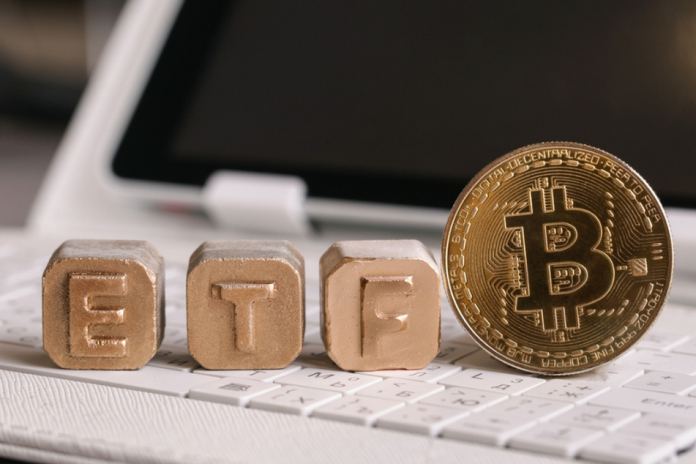
Bitcoin exchange-traded funds (ETFs) have been a hot topic in the crypto industry for the past few months. Several fund providers have applied to launch bitcoin ETFs in the US, hoping to attract more investors to the nascent asset class.

However, not all bitcoin ETFs are created equal, and some have faced more challenges than others in gaining regulatory approval and market share. Here’s a brief overview of the current state of play for bitcoin ETFs in the US and abroad.

A bitcoin ETF is a type of investment fund that tracks the price of bitcoin, the leading cryptocurrency by market capitalization. Unlike buying bitcoin directly from an exchange or a wallet, investing in a bitcoin ETF allows investors to gain exposure to the crypto market without having to deal with the technical and security issues of storing and transferring digital assets. A bitcoin ETF also offers more liquidity, transparency and tax efficiency than other forms of crypto investing.

There are two main types of bitcoin ETFs: physical and futures. A physical bitcoin ETF holds actual bitcoins in custody, while a futures bitcoin ETF uses derivatives contracts to track the price of bitcoin. Both types of bitcoin ETFs have their pros and cons, depending on the investor’s risk appetite, cost sensitivity and regulatory preference.

Physical vs. futures bitcoin ETFs

A physical bitcoin ETF is considered to be more faithful to the underlying asset, as it reflects the actual supply and demand of bitcoins in the market. A physical bitcoin ETF also avoids the risks and costs associated with futures contracts, such as rollover, contango and margin requirements.

However, a physical bitcoin ETF also faces more regulatory hurdles, as it requires the approval of the Securities and Exchange Commission (SEC), which has been reluctant to authorize such products due to concerns over market manipulation, fraud and custody.

A futures bitcoin ETF, on the other hand, is easier to launch, as it only needs the approval of the Commodity Futures Trading Commission (CFTC), which oversees the derivatives market. A futures bitcoin ETF also offers more flexibility and diversity for investors, as it can track different futures contracts with different maturities and prices.

However, a futures bitcoin ETF also introduces more complexity and volatility to the investment, as it depends on the performance of the futures market, which can deviate significantly from the spot market.

So far, no physical bitcoin ETF has been approved in the US, despite several attempts by various fund providers. The SEC has repeatedly delayed or rejected applications for physical bitcoin ETFs, citing unresolved issues regarding market surveillance, investor protection and custody standards.

The most recent example is the VanEck Bitcoin Trust, which was filed in December 2020 and has been postponed several times by the SEC. The latest deadline for a decision is February 14, 2022.

However, in October 2021, the SEC approved the first two futures bitcoin ETFs in the US: the ProShares Bitcoin Strategy ETF (BITO) and the Valkyrie Bitcoin Strategy ETF (BTF). These funds track the price of bitcoin futures contracts traded on the Chicago Mercantile Exchange (CME), which is one of the largest and most regulated futures exchanges in the world.

Since then, several other futures bitcoin ETFs have been launched or are in the pipeline, such as the Invesco Bitcoin Strategy ETF (BTCF), the VanEck Bitcoin Strategy ETF (XBTF) and the WisdomTree Bitcoin Strategy ETF (BTCW).

The performance of these futures’ bitcoin ETFs has been mixed so far. BITO, which was the first to launch on October 19, 2021, has seen strong inflows and trading volumes, reaching over $1 billion in assets under management (AUM) and over $500 million in average daily volume (ADV) in its first month.

BTF, which launched a day later, has also attracted significant interest, with over $200 million in AUM and over $100 million in ADV. However, BTCF, which launched on October 25, 2021, has lagged behind its peers, with only $50 million in AUM and $20 million in ADV.

The main reason for this discrepancy is likely due to the different fee structures and tracking errors of these funds. BITO charges an annual expense ratio of 0.95%, while BTF charges 0.8% and BTCF charges 0.65%.

However, BITO also has a lower tracking error than BTF and BTCF, meaning that it closely follows its benchmark index without deviating too much. According to Bloomberg data, BITO had a tracking error of 0.06% as of November 19, 2021, while BTF had 0.13% and BTCF had 0.23%.

This means that investors who buy BITO are getting a more accurate exposure to the price of bitcoin futures than those who buy BTF or BTCF.

Another factor that may influence the performance of these futures’ bitcoin ETFs is the shape of the futures curve. The futures curve shows the relationship between the prices of futures contracts with different maturities.

When the futures curve is upward sloping, meaning that longer-dated contracts are more expensive than shorter-dated ones, it is said to be in contango. When the futures curve is downward sloping, meaning that longer-dated contracts are cheaper than shorter-dated ones, it is said to be in backwardation.

The shape of the futures curve affects the returns of futures bitcoin ETFs, as they have to roll over their contracts periodically to maintain their exposure. When the futures curve is in contango, futures bitcoin ETFs have to sell their expiring contracts at a lower price and buy new ones at a higher price, resulting in a negative roll yield.

When the futures curve is in backwardation, futures bitcoin ETFs have to sell their expiring contracts at a higher price and buy new ones at a lower price, resulting in a positive roll yield.

The CME bitcoin futures curve has been mostly in contango since the launch of the futures bitcoin ETFs, meaning that these funds have suffered from a negative roll yield.

The outlook for bitcoin ETFs

Despite these challenges, the outlook for bitcoin ETFs remains positive, as more investors seek to gain exposure to the crypto market through regulated and liquid vehicles. The demand for bitcoin ETFs is evident from the inflows and volumes that these funds have attracted in their short lifespan, as well as from the number of applications that are still pending or being prepared by various fund providers.

However, the ultimate prize for the crypto industry is still a physical bitcoin ETF, which would offer a more direct and simple way to invest in bitcoin without the complications and costs of futures contracts.

Many analysts and experts believe that a physical bitcoin ETF is inevitable in the US, as it is only a matter of time before the SEC addresses its concerns and follows the example of other jurisdictions that have already approved such products, such as Canada, Europe and Brazil.

Until then, investors who want to access the crypto market through an ETF have to weigh the trade-offs between physical and futures bitcoin ETFs and choose the one that best suits their risk profile, cost sensitivity and regulatory preference. As always, investors should also do their own research and due diligence before investing in any product or asset class.

[You’re Invited] Preparing for Careers and Businesses of the Future – Tekedia Growth Hour

0

The academic festival will begin on Feb 5 for Tekedia Mini-MBA. Login details will be sent tomorrow to all registered Learners. And on Saturday, at 4-5pm WAT, we will spend time reviewing the curriculum specifically for the program LIVE Zoom sessions. The prerecorded courseware is structured as follows https://school.tekedia.com/structure/ with 13 modules, covering all critical domains of business management and leadership.

Tekedia Live sessions are some of the most exciting components for our Learners; we expect at least 35 live sessions during the 3-month program. To make sure those sessions remain impactful, we want to source some ideas from our Learners and broad Tekedia community.

So, what topics and areas do you want us to teach? In this edition, 30% of the Live sessions are reserved for our Learners to shape the topics and areas. Our 350 plus Faculty members have deep capabilities in all areas of business education; we just want to know what areas you think will help your career and business.

This event is open and everyone is invited, even if you are not joining us in the next edition of Tekedia Mini-MBA. I will deliver a presentation on Preparing for Careers and Businesses of the Future  before we move to Q/As for the program topics.

Tekedia Institute Growth Hour … knowledge to grow careers & companies

  • Topic: Preparing for Careers and Businesses of the Future 
  • Date: Saturday, Jan 27, 2024 
  • Time: 4-5pm WAT 
  • Speaker: Ndubuisi Ekekwe, MBA, PhD (Banking/Finance), PhD (Engineering); Lead Faculty, Tekedia Mini-MBA
  • Venue: Zoom link here

And of course, you do not need to wait till Saturday, feel free to share topics and areas you want to see in Live sessions . Our Faculty members come from Google, Microsoft, Access Bank, Flutterwave, Shell, KPMG, Amazon, Bitmama, and other amazing companies you admire.