
DD
MM
YYYY

PAGES

DD
MM
YYYY

spot_img

PAGES

Home Blog Page 3421

Samourai Cofounder Pleads Not Guilty amid Terraform and Do Kwon Legal Rambles

0

In a recent turn of events that has captured the attention of the cryptocurrency community, Keonne Rodriguez, co-founder of the privacy-focused crypto wallet Samourai Wallet, has pleaded not guilty to federal charges of money laundering and operating an unlicensed money-transmitting business. This case emerges amidst a broader conversation about the balance between financial privacy and regulatory oversight in the digital age.

Samourai Wallet, known for its robust privacy features, has been under scrutiny for allegedly facilitating transactions that bypass regulatory oversight. The U.S. authorities have accused the platform of enabling over $100 million in laundered criminal proceeds and a total of approximately $2 billion in unlawful transactions. These allegations have led to the seizure of Samourai Wallet’s servers and the app’s removal from the Google Play Store in the U.S.

The legal proceedings against Rodriguez and his co-founder William Lonergan Hill, who is currently awaiting extradition from Portugal, have sparked a debate within the crypto industry. Supporters of Samourai Wallet argue that the case represents an attack on financial privacy, a cornerstone of the cryptocurrency ethos. Critics, however, point to the necessity of regulatory measures to prevent illicit activities within the financial system.

Rodriguez’s plea of not guilty and subsequent release on a $1 million bond, secured by real estate and family signatures, highlights the complexities involved in cases of this nature. With Rodriguez under house arrest and monitored by location tracking technology, the crypto community watches closely as the case unfolds, with implications that may extend far beyond the individuals involved.

Do Kwon and Terraform says fine should be closer to $1 million and not SEC’s proposed $5.3B.

The Securities and Exchange Commission (SEC) has proposed a staggering $5.3 billion fine against Terraform Labs and Do Kwon, following a series of events that led to substantial investor losses. This fine is based on what the SEC describes as a “conservative” but “reasonable approximation” of the “ill-gotten gains” from the alleged fraud involving Terraform’s crypto assets.

On the other side of the debate, Terraform Labs and Do Kwon argue that the fine should be substantially lower, closer to $1 million. This stark contrast in viewpoints underscores the complexity of the legal and regulatory issues surrounding cryptocurrency and the enforcement actions that follow.

The SEC’s case against Terraform Labs centers on the accusation of defrauding investors through crypto asset securities, including an algorithmic stablecoin and other related securities. The collapse of the Terra ecosystem in May 2022, which included the depegging of the Terra USD (UST) from the U.S. dollar, resulted in significant market turmoil and investor losses. The SEC alleges that Terraform and Kwon marketed these crypto asset securities to investors with claims of profitability and stability, which the SEC contends were false and misleading.

The proposed fine by the SEC is not just a reflection of the financial losses incurred but also serves as a deterrent for future violations and a signal of the regulatory body’s commitment to protecting investors and maintaining market integrity. The SEC’s request for such a substantial fine also includes injunctions to prevent further securities violations and a ban on Kwon from serving as an officer or director at any SEC-reporting public company.

The debate over the appropriate fine amount is emblematic of the broader challenges in regulating the cryptocurrency market. It raises questions about the valuation of damages, the accountability of company executives, and the role of regulatory agencies in a rapidly changing financial landscape.

The outcome of this case could set a precedent for how privacy-focused cryptocurrency services operate in relation to regulatory frameworks. It raises critical questions about the extent to which privacy can be maintained while adhering to laws designed to combat financial crimes. As the trial progresses, it will undoubtedly provide further insights into the evolving landscape of cryptocurrency regulation and the ongoing tension between innovation and compliance.
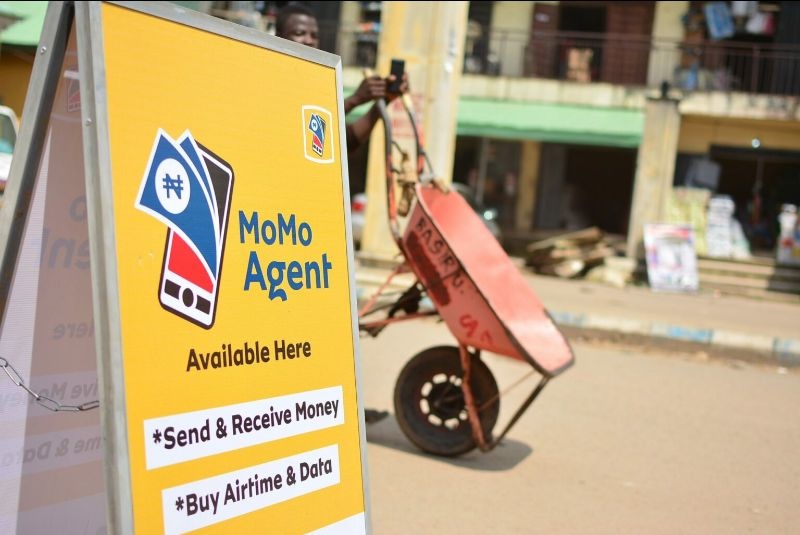

MTN Nigeria’s Fintech Records Marginal Revenue Increase in Q1 2024

0

The fintech arm of MTN Nigeria recorded a marginal revenue increase of N22.8 billion in the first quarter (Q1) of 2024, amid a pre-tax loss of N575.69 billion in the company’s overall operations.

In Q1 2024 financial result, MTN fintech recorded significant gains of 0.7% growth which was impacted by industry-wide exercises of linking National Identification Numbers (NIN) with mobile numbers and KYC validation.

The growing adoption and increased activity within MTN’s fintech ecosystem spurred transaction volume growth of 25.6% YoY. Meanwhile, despite the marginal revenue increase, active wallets significantly declined due to KYC requirements. MTN reportedly ended the quarter with 4.8 million active wallet users, representing a 566k decline in Q1.

Also, in quarter 1 of 2024, with 232.3k MoMo agents, which includes OTC agents, reflecting a decline of 94.4k in the period. Excluding OTC transactions, MoMo agents were 189.6k. The company added more than 75k merchants in Q1, bringing the total number of merchants within our ecosystem to over 400k.”

Commenting on the earnings report, MTN Nigeria CEO Karl Toriola said,

“The KYC requirement and the delays in CBN approvals for some of our commercial initiatives impacted the growth of active wallets. We ended the quarter with 4.8 million active wallet users, representing a 566k decline in Q1. The growing adoption and increased activity within our fintech ecosystem spurred transaction volume growth of 25.6% YoY.

“We ended the quarter with 232.3k MoMo agents, which includes OTC agents, reflecting a decline of 94. 4k in the period. Excluding OTC transactions, MoMo agents were 189.6k. We added more than 75k merchants in Q1, bringing the total number of merchants within our ecosystem to over 400k.”

Moving forward, Mr. Toriola stated that the company remains focused on its fintech priority to build robust structures that support the acceleration of wallet adoption and the growth of our merchant ecosystem.

He further added that MTN will continue to drive consumer education and awareness, leveraging its distribution network. Additionally, there will be an expansion of the bouquet of services from basic to advanced services to boost adoption and monetization, which are crucial steps towards scaling the fintech business and driving financial inclusion.

Recall that after posting an unimpressive first quarter report for 2024, with a pre-tax loss of N575bn pre-tax loss, MTN disclosed that this was spurred by a challenging operating environment in the first quarter, with rising inflation and continued naira depreciation off an already low base.

As continued elevated inflation and unpredictable foreign exchange rates remain significant challenges for businesses, MTN disclosed that it remains focused on sustaining commercial momentum, accelerating service revenue growth, unlocking operational efficiencies, and strengthening its balance sheet to improve the profitability of its business, optimizing capex, and reducing forex exposure.Notably, it remains focused on reducing the various exposures the business has to dollar volatility.

Forbes Unveils “12 Zombie Blockchains” as Hong Kong debuts Asia’s first spot Ether, Bitcoin ETFs

0

In the ever-evolving world of cryptocurrency, market capitalization has often been a misleading indicator of a blockchain’s success and utility. Forbes recently published a list that has sparked widespread discussion in the crypto community. This list identifies 20 blockchains that, despite their high market caps, exhibit a startling lack of traction or adoption, earning them the moniker “Zombie Blockchains.”

The term “Zombie Blockchains” has been making rounds in the cryptocurrency community, particularly after a recent Forbes article highlighted a list of 12 such blockchains. These are digital assets that, despite having high market valuations, show minimal real-world utility or user adoption. They are essentially projects that are alive in the sense that they are being traded, but they lack the vitality of functional use or a substantial user base.

The term “zombie” is used to describe these blockchains because they are akin to the walking dead of the crypto world—present, yet devoid of the life that comes from active use and development. Among these are well-known names such as Ripple’s XRP, Cardano (ADA), Stacks (STX), Flow (FLOW), Stellar (XLM), Bitcoin Cash, and Tezos (XTZ) among others.

Forbes’ scrutiny reveals a disconcerting trend: a significant number of these “zombie blockchains” are not fulfilling their intended purposes. Instead, they are primarily sustained by speculative trading, with little to no real-world application or user adoption. This raises critical questions about the valuation of cryptocurrencies and the long-term viability of projects that lack clear practical applications.

For instance, Ripple’s XRP, initially envisioned as a disruptor in global financial transfers, has struggled to move beyond its speculative image. Despite a daily trading volume of around $2 billion, its real-world utility remains questionable. Similarly, Ethereum Classic (ETC), with a market value of billions, generated a mere $41,000 in fees in 2023, highlighting a stark disparity between valuation and actual use.

Tezos and Cardano, once hailed as potential successors to Ethereum, face similar challenges. They boast advanced technology and high valuations but have yet to achieve widespread acceptance or demonstrate substantial real-world utility.

The Forbes report is a wake-up call to investors and users in the cryptocurrency space. It underscores the importance of due diligence and the need to look beyond market cap when evaluating the potential and progress of blockchain projects. The report also serves as a reminder that innovation and adoption are key drivers of value in the blockchain ecosystem.

It highlights the importance of due diligence and the need to look beyond market hype. The longevity and success of these platforms heavily rely on market sentiment rather than fundamental value, which is a precarious position for any financial asset.

As the crypto market continues to mature, it will be interesting to see how these “zombie blockchains” evolve. Will they find a way to breathe new life into their projects, or will they remain trapped in a state of undeath, sustained by nothing more than speculation? Only time will tell, but one thing is certain: the crypto world is watching closely.

Hong Kong debuts Asia’s first spot Ether, Bitcoin ETFs

In a landmark move for the Asian financial markets, Hong Kong has officially launched the first spot Bitcoin and Ether ETFs, marking a significant milestone in the integration of cryptocurrencies into mainstream financial instruments. This pioneering step not only positions Hong Kong as a leader in the cryptocurrency ETF space in Asia but also signals the region’s growing acceptance and institutionalization of digital assets.

The debut of these ETFs allows retail investors to trade cryptocurrencies at spot prices, a feature that was previously unavailable in the Asian markets. The introduction of six spot Bitcoin and Ether exchange-traded funds (ETFs) has been met with enthusiasm, reflecting the Asian investors’ appetite for cryptocurrencies. The three Bitcoin ETFs saw an early climb of more than 3% in their initial trading, showcasing the positive reception from the market.

This development comes just three months after the United States launched its first ETFs tracking spot Bitcoin prices, highlighting the rapid global evolution of cryptocurrency investment vehicles. However, the U.S. has yet to approve ETFs that track spot Ether prices, giving Hong Kong a competitive edge in this domain.

The ETFs in Hong Kong are unique in that they adopt an “in-kind” transaction mechanism, allowing investors to buy and sell ETF shares using the relevant crypto tokens instead of cash. This mechanism is particularly appealing to investors who own tokens and wish to hold them through the ETFs without incurring the cost of converting to fiat currency.

Despite the excitement, the Securities and Futures Commission (SFC) of Hong Kong has cautioned investors about the speculative and volatile nature of virtual assets. The SFC’s executive director, Christina Choi, reminded potential investors that such assets might not be suitable for everyone, underscoring the importance of risk awareness in these investments.

The management fees for these Hong Kong crypto spot ETFs range between 0.3% to 0.99%, which is higher than those listed in the U.S. This is attributed to the limited number of regulated service providers under Hong Kong’s strict legal framework. Currently, Hashkey and OSL are the only two approved trading platforms in the city.

The success of Hong Kong’s crypto ETFs will be closely monitored for indications of whether crypto flows could shift towards Asia from the U.S. Analysts anticipate that the initial inflow will primarily come from local retail investors due to cost considerations.

The launch of Asia’s first spot Bitcoin and Ether ETFs in Hong Kong is a testament to the city’s ambition to establish itself as a global digital asset hub. It also reflects the broader trend of cryptocurrency’s increasing legitimacy and adoption in the financial sector. As the market for these ETFs matures, it will be interesting to observe how they influence the dynamics of cryptocurrency investment on a global scale.

Best Crypto Presales 2024: BlockDAG Dominates with a $22 Million Presale as InQubeta Debut Faces Challenges on MEXC

0

In the turbulent world of cryptos, BlockDAG has firmly established itself as a frontrunner, amassing a remarkable $22 million in its latest presale. This significant financial milestone coincided with InQubeta’s debut on the MEXC exchange, a launch that has unfortunately not lived up to investor expectations and has been overshadowed by BlockDAG’s success.

BlockDAG Sets Ambitious Future Goals

During a vibrant presentation at Shibuya Crossing, BlockDAG unveiled its bold prediction for the BDAG coin, forecasting a potential 30,000x increase in value by 2030. The recent presale, which raised $22 million, underscores the growing investor confidence in BlockDAG’s potential. With anticipation building for the next round of sales, BlockDAG is on a clear upward trajectory.

To support this growth, BlockDAG has introduced a vesting schedule to coincide with its market launch to promote market stability and long-term growth. This includes an initial 40% coin airdrop followed by monthly releases of 20%, backed by a robust $100 million in liquidity to ensure a smooth rollout and sustained market presence.

InQubeta Debut Stumbles After MEXC Launch

In contrast, InQubeta’s recent introduction to the MEXC exchange has encountered skepticism. The platform’s ambitious plan to meld AI technology with blockchain had promised a 35x growth in value shortly after launch. However, persistent doubts about the feasibility of its funding model for AI startups and its long-term growth capacity have dampened enthusiasm.

BlockDAG Innovates in NFT and Token Creation

BlockDAG is also making waves with its innovative NFT and token creation approach. Through its low-code/no-code platform, BlockDAG is making it easier for anyone to create and deploy NFTs, regardless of their technical expertise. This initiative is broadening access to blockchain technology, facilitating a diverse range of creators contributing to the growth of decentralized applications.

BlockDAG: A Reliable Investment in the Crypto Sector

Unlike InQubeta’s uncertain start, BlockDAG has proven itself to be a stable and promising investment opportunity. With strategic planning, significant financial backing, and cutting-edge technology, BlockDAG attracts a broad spectrum of investors and sets new industry standards for success and accessibility.

Final Thoughts

As the cryptocurrency sector continues to evolve, BlockDAG is leading the way with strategic planning and innovative solutions, securing a dominant position in the industry. While InQubeta’s debut struggles to gain traction following its launch on MEXC, BlockDAG’s clear vision and strong investment strategy ensure its place at the forefront of the crypto revolution, offering promising returns and a stable investment landscape for its backers.


Join BlockDAG Presale Now:

Website: https://blockdag.network

Presale: https://purchase.blockdag.network

Telegram: https://t.me/blockDAGnetworkOfficial

Discord: https://discord.gg/Q7BxghMVyu

ETFSwap (ETFS) Emerges As The Best Crypto ETF Platform Ahead Of BlackRock

0

Recent data from Farside, a crypto ETF analytics platform, suggests investors are turning away from the BlackRock Bitcoin ETF. For the first time this year, BlackRock iShares Bitcoin Trust (IBIT) recorded no daily inflows on April 24 and 25.

Notably, BlackRock’s Bitcoin ETF inflows approached the $500 million mark in the second week of April. While that was an impressive feat, the figures quickly dwindled. Last week, BlackRock iShares Bitcoin Trust could only manage a net inflow of $57.6 million, with a $0 inflow on Wednesday and Thursday.

This decline in daily inflows for BlackRock’s Bitcoin ETF could be due to the adoption of ETFSwap (ETFS), a decentralized crypto ETF platform with enhanced features.

Why Investors Are Turning To ETFSwap (ETFS) Over BlackRock

Although BlackRock plays a significant role as a crypto ETF platform, it has some limitations that ETFSwap (ETFS) has in checks. Firstly, BlackRock is much more centralized. While centralization is not entirely negative, modern investors prefer having total control of their funds. ETFSwap (ETFS) has created a platform to put investors in control of their assets by harnessing the power of blockchain technology.

Further, the ETFSwap (ETFS) platform is a smart contract-driven product. This ensures that users avoid paying management fees to intermediaries, thus saving costs in the long run. Users can also efficiently swap from cryptocurrencies to ETF products within the twinkling of an eye. This enhanced trading experience has contributed to the platform’s massive growth in the past few months.

Notably, while investors are still bullish on ETF products in 2024, retail and institutional traders place a higher value on decentralized platforms with greater flexibility. Currently, ETFSwap (ETFS) is the only decentralized crypto ETF platform, making it the best Exchange-Traded Funds (ETF) platform for Web3-inclined investors.

ETFSwap – The Best Crypto ETF Platform

ETFSwap (ETFS) has been recognized by many in the crypto community as the leading crypto ETF trading platform. Despite being relatively new compared to other centralized ETF platforms, ETFSwap (ETFS) has multiple features that make ETF investing seamless.

One notable feature that makes ETFSwap (ETFS) stand out is its fractionalized investing. One of the platform’s goals is to make cryptocurrencies and exchange-traded funds more accessible, enabling financial inclusion globally. ETFSwap (ETFS) is well on track to achieve this as retail and institutional investors with limited access to funds can gain exposure to ETFs.

Additionally, users have uninterrupted access to investment opportunities on the platform. While most ETF platforms enable investments only on working days, ETFSwap (ETFS) users can access the markets 24 hours any day, including weekends.

ETFSwap (ETFS) offers cryptocurrency spot and futures ETFs with real-time data, enabling users to monitor asset performance. Users also have access to leveraged ETFs, allowing investors to maximize their position sizes to earn higher returns. Further, the platform gives users access to commodity ETFs and fixed-income ETFs. Through tokenization, investors can seamlessly gain exposure to gold, silver, bonds, treasuries, and agricultural products.

ETFS Investors Anticipate 10-100X Gains From The First Presale

The native token of the ETFSwap (ETFS) platform is ETFS. Interestingly, the token’s utility and fundamental value have left investors rushing to buy into its presale. Around $200,000 has already been raised from the first presale stage, with over 32 million ETFS tokens sold.

With a solid team and community behind the project and a thriving blockchain ecosystem, investors have projected 10-100X gains in the coming months. It is also worth noting that ETFSwap (ETFS) hit its private fundraising target of $750,000 in just three days.

40% of the token’s supply has been reserved for the presale, 24% for the ecosystem, and 12% for liquidity and listing reserves. The presale is set to end in the next five days, and its available supply will steadily get exhausted as more investors accumulate the ETFS token.

For more information about the ETFS Presale:

Visit ETFSwap Presale

Join The ETFSwap Community