DD
MM
YYYY

PAGES

DD
MM
YYYY

spot_img

PAGES

Home Blog Page 3424

What does the Future of Blockchain Tokenization Hodl?

0

Tokenization, the process of converting rights to an asset into a digital token on a blockchain, is poised to revolutionize the financial industry. As we move further into 2024, the potential for tokenization continues to expand, promising to transform the way we think about asset ownership and exchange.

In recent years, tokenization has moved from a concept to a practical application, particularly in the realm of financial assets. The market has seen a significant increase, with projections suggesting a growth from $2.3 billion in 2021 to $5.6 billion by 2025. This growth is driven by the benefits tokenization offers, such as increased liquidity, faster settlement times, and enhanced security.

The technical bottlenecks that once hindered the adoption of tokenization are being addressed. Innovations in blockchain infrastructure and interoperability are laying the groundwork for a more robust tokenization ecosystem. Private equity funds and credit markets are leading the charge, developing new tokenization vehicles and structured instruments that are inherently digital and easier to migrate on-chain.

The future of tokenization is not limited to traditional financial instruments like bonds and equities. We are beginning to see the tokenization of real-world assets such as art, automobiles, commodities, and even fine wines. This expansion allows for fractional ownership and on-chain trading, opening up new opportunities for investors and collectors alike.

One of the primary hurdles in the path of tokenization is the lack of regulatory clarity. Different jurisdictions have varying rules and standards for defining, issuing, and trading tokens. This lack of uniformity creates a complex landscape for token issuers and investors to navigate, often leading to uncertainty and hesitation in market participation.

The existing financial regulations were designed with traditional securities in mind, which poses a challenge for the integration of tokenized assets. There is a pressing need for a hybrid token structure that can comply with these regulations while retaining the key value propositions of tokenization, such as increased liquidity and efficiency.

The question of custody and asset servicing in the digital space is another significant challenge. The absence of regulation that ensures official safety, security, stability, transparency, and accountability contributes to a lack of trust. Finding solutions that satisfy both regulators’ demands for transparency and auditability and investors’ demands for privacy is a delicate balance that must be struck.

Tokens representing legal ownership of an asset in a way that is recognizable in court is yet to be fully realized. The lack of a legal and technical framework to enable on-chain land registries, for example, means that property rights are not yet fully tokenizable. This gap in the legal framework presents a barrier to the full potential of tokenization.

While technology plays a crucial role, trust remains a central factor in the adoption of tokenization. Blockchain technology provides a unique address for each token, ensuring strong data protection through access control and decentralized storage. This security aspect is crucial for gaining the trust of both investors and regulators, paving the way for broader acceptance of tokenized assets.

Tokenization stands to have a profound impact on business operations and the global economy. By enabling the conversion of tangible assets into digital tokens, tokenization enhances tradability and liquidity, potentially unlocking value in assets that were previously illiquid or difficult to transfer. The efficiency gains from blockchain-based transactions could lead to a more dynamic and inclusive financial ecosystem.

As we look to the future, tokenization appears to be an inevitable part of the financial landscape. With its promise of increased efficiency, security, and accessibility, tokenization could democratize investment opportunities and reshape the global economy. The journey is just beginning, and the coming years will likely witness the full maturation of this transformative technology.

Post Retik Finance Uniswap Listing; Renowned Influencers Around the Globe Join BlockDAG Presale for Potential 30,000x ROI

0

Retik Finance is preparing for its Uniswap listing on May 21, 2024. At the same time, influencers endorse BlockDAG‘s presale, which has soared beyond 23.6M, and its innovative strategies and cutting-edge technologies to reshape how users interact with digital currencies.

This exploration highlights how BlockDAG’s groundbreaking mobile mining application positioning is setting new standards in user engagement and expanding financial horizons through the power of blockchain technology. As we delve deeper, we uncover unique paths, providing enthusiasts with rich, versatile opportunities.

YouTube Influencers Propel BlockDAG Into the Crypto Spotlight

BlockDAG is capturing the global finance stage, guided by the powerful voices of leading YouTube influencers. These digital trendsetters are vocal advocates and investors in BlockDAG, which amassed $23.6M, having delved deep into its technical prowess and promising market trajectory, which will reach $30 by 2030, offering 30,000x ROI after launch.

In a world where digital platforms increasingly influence financial narratives, these YouTube personalities are crucial to introducing vast online communities to burgeoning opportunities like BlockDAG. Their endorsements are rooted in comprehensive analyses predicting BlockDAG’s capacity to compete with heavyweights.

This trend marks a pivotal shift in the marketing and perception of financial products, placing influencers at the helm of this transformative wave. They are not only promoting new technologies but are also pivotal in advancing financial inclusion and literacy. The remarkable surge in popularity of BlockDAG, bolstered by high-profile endorsements, mirrors unparalleled potential ascent as it gains traction through influential YouTube endorsements.

Upcoming Retik Finance Uniswap Listing

Retik Finance has announced its impressive achievement, concluding its presale and setting a strong foundation for its forthcoming Finance Retik Uniswap Listing on May 21, 2024. This milestone underscores investors’ confidence and interest in Retik Finance’s innovative DeFi solutions.

As the Retik Finance Uniswap Listing approaches, the platform is strategically positioned to disrupt the conventional financial ecosystem and redefine global transactions with its cutting-edge approach to decentralized finance. The Retik Finance Uniswap Listing represents a critical step towards the platform’s goal to transform the DeFi landscape.

Retik Finance Main Features

Retik Finance is preparing for its Uniswap listing on May 21, 2024, introducing its suite of DeFi solutions. The platform features innovative offerings like the Retik DeFi Crypto Cards, a Smart Crypto Payment Gateway, AI-powered P2P Lending, and a Multi-Chain Highly Secured DeFi Wallet.

These tools are designed to enhance how users engage with digital finance. As the Retik Finance Uniswap Listing approaches, it marks a step towards broader access to financial services, encouraging users to stay informed about the platform’s developments.

Unleash the Power of Your Smartphone with BlockDAG’s X1 Mining App

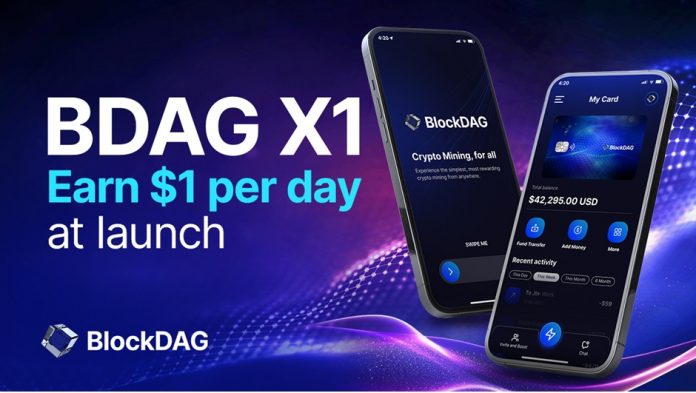
BlockDAG is transforming how cryptocurrency enthusiasts, from beginners to seasoned miners, engage with mining through its innovative X1 app. Available on both Google Play and the Apple App Store, this 50 MB app enables users to mine up to 20 BDAG coins directly from their smartphones daily. It’s designed to be low-impact, minimizing battery consumption and data usage.

The X1 app boasts a sleek, user-friendly interface for Android and iOS devices. It features straightforward signup processes and an intelligent referral system to maximize your mining potential. Additionally, users can activate a ‘lightning button’ every 24 hours to significantly increase their mining rate.

The app’s transparent ranking system rewards users with new perks as they advance, enhancing the overall mining experience. With the beta version launching on June 1st for iOS and Android, users can look forward to even more enhancements tailored to improve usability and engagement.

BlockDAG Excels, Leaving Retik Finance Behind

Retik will put all the effort into the Uniswap listing to prove where it stands. Conversely, BlockDAG has carved a unique niche within the crypto community with its intuitive and eco-friendly X1 mining app. This application revolutionizes traditional mining paradigms by offering a streamlined, energy-efficient process that minimizes battery and data use, appealing to a broad spectrum of users. Backed by glowing endorsements from prominent YouTube personalities, BlockDAG gains additional credibility and visibility, distinguishing itself in a saturated market.

Invest in the BlockDAG Presale Now:

Website: https://blockdag.network

Presale: https://purchase.blockdag.network

Telegram: https://t.me/blockDAGnetworkOfficial

Discord: https://discord.gg/Q7BxghMVyu

BlockDAG X1 Mining App Launch Sets To Transform Crypto Mining with 30,000x ROI; Injective And Quant’s Market Dynamics

1

While Injective (INJ) demonstrates resilience in the DeFi sector and Quant (QNT) grapples with price volatility, BlockDAG is gearing up to disrupt the cryptocurrency mining industry with its upcoming X1 App Miner. This innovative app, complemented by BlockDAG‘s notable $23.6 million presale success at a coin price of $0.006, is poised to make mining both accessible and lucrative, marking a significant advancement in the crypto landscape.

Injective Maintains Its Ground in DeFi Despite Market Fluctuations

Despite recent downturns in its price, Injective continues to solidify its presence in the decentralized finance (DeFi) sector. With its fully decentralized exchange protocol, Injective facilitates the trading of a diverse range of financial instruments on a secure and high-speed platform. Even in the face of price dips, the platform’s market cap remains stable, suggesting strong underlying health and potential for growth as it continues to enhance its ecosystem functionalities. This resilience positions Injective as a crucial player in the ongoing evolution of DeFi trading platforms.

Quant Navigates a Fluctuating Market Environment

The price of Quant is experiencing significant fluctuations, reflecting a challenging period of testing both resistance and support levels. According to analyses from Coinidol, Quant often encounters difficulties at higher resistance levels, leading to temporary pullbacks. However, its ability to maintain stability at lower support thresholds has been key to its market performance, indicating a cautious yet hopeful trading environment for its investors.

Revolutionizing Crypto Mining with BlockDAG’s X1 App

Set to launch on June 1st in its beta version, the BlockDAG X1 App Miner is transforming smartphone devices into powerful mining tools capable of efficiently generating BDAG coins. The app’s design focuses on simplicity and user engagement; by tapping a ‘lightning’ button every 24 hours, users can significantly boost their mining rates. This feature not only simplifies the mining process but also ensures continuous user involvement, fostering a committed community around BlockDAG’s innovative mining solution.

The X1 app boasts an intuitive user interface, making it accessible to both novice and experienced miners. The sign-up process is straightforward, and navigation through the app is seamless, enhancing the overall user experience. Additionally, the app includes a unique referral system where users can increase their mining rewards by inviting others using a personal code. Regular activities like the daily lightning tap promote consistent interaction and reward accumulation.

As BlockDAG’s presale momentum continues, surpassing $23.6 million in its 10th batch at a coin price of $0.006, the potential for high returns is evident. With 8.5 billion coins already sold and the prospect of a 30,000x ROI, BlockDAG is set to significantly impact the crypto-mining industry. The X1 App’s energy-efficient mining protocol ensures sustainable mining practices, broadening its appeal to a global audience.

BlockDAG Leads with Innovative Mining Technology

While the Injective and Quant platforms continue to navigate the volatile cryptocurrency market, BlockDAG introduces a groundbreaking approach to crypto mining. The upcoming X1 App Miner, with its user-friendly design and potential for substantial earnings, is set to captivate the crypto community.

Encouraging daily user interaction through simple actions like the lightning tap, BlockDAG’s new mining tool is positioned as a key development in making cryptocurrency mining more accessible and rewarding. With a successful presale and innovative technology, BlockDAG’s X1 Miner is emerging as a formidable tool in the evolving world of cryptocurrency.


Join BlockDAG Presale Now:

Website: https://blockdag.network

Presale: https://purchase.blockdag.network

Telegram: https://t.me/blockDAGnetworkOfficial

Discord: https://discord.gg/Q7BxghMVyu

Microsoft Uninstalls Nigeria as it closes African Development Centre (ADC) in Lagos

1

Many years ago while in FUTO, we created an amazing campus radio station which covered the whole university. We were engineering students, and the FUTO radio station was the zenith of our call. But one afternoon, the Head of Department summoned me, as Director of Research, and dropped a bombshell: the Vice Chancellor would like the radio closed immediately because Nigeria’s ruler, Sani Abacha, was concerned that we could use it to take over the airwaves of Nigeria.

Yes, he was worried that a coup could happen through the station. That day, our Director of Social, Osita, who had developed a roster of shifts with anchors, DJs, etc, for the station, had to abruptly cancel everything. And some lovebirds who had paid for their friends to be wished happy birthdays on the air had their money returned.

That was the first time I learnt the power of own-goals in national development. How could a leader of a country be worried about our toy project? In some countries, he would have sent commendation letters, honouring the students. As the Director of Research, I dropped my resignation, and one by one, everyone resigned and handed all the files with the Head of Department and the university.

But own-goals have never stopped, and they continue in Nigeria. In 2023, we scored many at the national level, and the impacts are everywhere:

Amid economic challenges in Nigeria, Microsoft’s African Development Centre (ADC) in Lagos faces potential closure, putting over 200 jobs at risk and exacerbating the country’s unemployment crisis. The news comes as the Nigerian stock market experiences a downturn, with the NGX All-Share Index declining and the naira depreciating against the dollar. This development follows a series of exits by foreign companies from Nigeria, including Bolt Nigeria’s quiet layoffs and office closures.

“While Microsoft has not issued an official statement, affected employees might receive salaries until June and continue to have access to their health insurance. The ripple effects of this exit are significant, impacting various sectors including printing presses, HMOs, brand communication firms, audit firms, and stationery vendors. This situation highlights the challenges foreign investors face in Nigeria’s current economic climate, leaving many to wonder about the future of innovation and job creation in the country.”

How PREMIUM TIMES Uses Discipline, Punishment in Its Editorial on Lagos-Calabar Coastal Highway

0

Political and non-political circles have been debating the importance of the Lagos-Calabar coastal highway project being carried out by President Bola Ahmed Tinubu’s government for a number of days now. President Tinubu has been scrutinised in the media and in public courts, much like the previous administrations that proposed and carried out various projects. Different linguistic devices, socio-political contexts, and economic indicators have been used to analyse the project from various angles. 

In this piece, our analyst examines the editorial on the road project from one of the nation’s most renowned and critical newspapers. Premium Times is renowned for its in-depth investigative reporting and coverage that questions the deeds and inactions of public office holders. The newspaper is renowned for covering issues related to the private sector. The editorial was titled “a coastal highway of misplace priority and due process abuse” by the newspaper. 

Our analyst analyses the newspaper’s use of punishment and discipline as a metaphor to highlight inequalities in the planning and current construction of the road project. In the process, a few metaphors employed by the newspaper were examined through the analytical lenses of Michael Foucault’s ideas on punishment and discipline.

Discipline emphasises how to help someone make a better decision the next time, whereas punishment literally concentrates on making someone suffer for disobeying the rules. The idea put out by Foucault is that one cannot exist without the other. The knowledge that defines and categorises people is the foundation for the power and methods of punishment, and this knowledge is derived from specific power and dominance dynamics.

In this regard, our analyst observes that, as highlighted in the editorial, the Nigerian government is exploiting the power granted to it by the Constitution, as well as facts that individuals do not understand, to dominate conversations over the road project. Instead of hiding beneath them, the newspaper’s editorial wants the government to act in conformity with the country’s current socioeconomic realities, particularly those affecting disadvantaged individuals.

The economy is bleeding profusely, there must be better areas to plough our little resources into

This metaphor conveys a sense of mismanagement and inefficiency within the economic structure, implying that resources are being squandered or poorly distributed. According to Foucault’s paradigm, this might indicate a lack of discipline in economic governance and resource management, in which those in authority fail to efficiently regulate and use resources for the benefit of society.

His (Minister of Works) zealousness in its implementation brooks no dissent, and sometimes it gets spiteful

Here, the metaphor represents an authoritarian style to execution in which disagreement is not permitted. In Foucault’s framework, this indicates a sort of disciplinary authority in which individuals are controlled and coerced into conforming to the wishes of those in power.

The political ecosystem is already astir on the Lagos-Calabar Coastal Highway, with the circumstances surrounding its award

This metaphor emphasises the political difficulties and disputes that surround the project’s execution. According to Foucault’s view, this shows the prevalence of power struggles and surveillance mechanisms in the political landscape, where many actors compete for control and influence over decision-making processes.

Adherence to due process has been raised by some critics, causing waffling in official quarters

The metaphor implies hesitation or indecision among official authority in response to accusations of procedural integrity. From Foucault’s perspective, this might imply a disruption in the regular functioning of disciplinary processes, as challenges to established procedures generate ambiguity and undermine authority.

How the project will be financed is still mired in obfuscation

This metaphor suggests the government’s intentional attempt to obfuscate or mislead the public about the project’s financial mechanisms. In Foucault’s paradigm, this is a type of disciplinary authority through informational control in which transparency and accountability are lacking, allowing those in power to keep control and evade examination.

It beats our imagination that the federal government will undertake the construction of these projects at a time that the country’s finances are heading south; and in the face of the dilapidated state of thousands of kilometres of existing highways, which are death-traps

This metaphor expresses skepticism and criticism of the government’s infrastructure development decisions in the face of budgetary constraints and current infrastructure inadequacies. In Foucault’s perspective, this emphasises the use of power by governmental officials in prioritising particular projects above others, despite popular objections and resistance. 

The Tinubu regime should be shrewd in deploying public resources

This metaphor emphasises the need for astuteness and strategic decision-making in government resource distribution. From a Foucauldian standpoint, it emphasises the need of disciplinary procedures in managing and regulating the use of state resources, with an emphasis on efficiency and effectiveness in attaining government goals.

These funds should not be frittered away on a white elephant and projects that will not positively impact the economy in the short and medium terms

The metaphor advises against wasting money on projects that may not produce major economic advantages. Foucault would take this as a plea for disciplined governance and rational resource allocation, in which government activities are scrutinised and assessed based on their perceived usefulness and societal impact.

Our teaching hospitals are relics of the last century

This metaphor describes teaching hospitals as obsolete and in need of upgrading. In the context of Foucault’s paradigm, it emphasises the significance of institutional structures in maintaining disciplinary norms and practices, where established systems and facilities may resist change and adaptation to changing society requirements.

Our seaports cannot compete with the best in Africa, which before now led to the loss of $7 billion annually to Cotonou and Ghana seaports, while the international airports are a laughing stock in comparison with their peers offshore.

This metaphor depicts Nigeria’s seaports and international airports as inferior and less competitive than those in adjacent nations. Here, the power dynamics and disciplinary procedures that shape the country’s infrastructure development and foreign trade ties are described as mirroring bigger concerns of governance and regulation.