DD
MM
YYYY

PAGES

DD
MM
YYYY

spot_img

PAGES

Home Blog Page 3428

What We can Learn from Apple, Microsoft on ChatGPT’s OpenAI

0

A vital lesson for Nigerian companies: a critical playbook in business is knowing when to partner with other companies. Businesses are like organic systems where timing is important. Yes, that is why we have emergency services and ambulances to get people quickly to clinics when bad things happen.

The AI is causing massive dislocations in markets, and many industrial sectors need tech-emergency services to stay relevant. Would you prefer to do it alone or find ways to work with the category-kings?

Microsoft is anchoring a part of its future on ChatGPT’s OpenAI technology. Apple has joined the party despite its heritage of being a fandom company. Yes, overcome the pride and look at what works, and most times, working with others helps.

Apple and OpenAI have successfully concluded a deal to integrate OpenAI’s generative AI technology into Apple’s software ecosystem, marking a significant milestone for both companies.

This development was reported by The Information, citing a source familiar with discussions between OpenAI CEO Sam Altman and Apple.

According to The Information, Altman has long aimed to secure a partnership with Apple, envisioning substantial benefits for OpenAI. “Now, [Altman] has fulfilled a longtime goal by striking a deal with Apple to use OpenAI’s conversational artificial intelligence in its products, which could be worth billions of dollars to the startup if it goes well,” stated the source.

The greatest problem in business is when you do not know that you need help. And one of the biggest challenges to success is thinking that because you came first in the classroom that you would come first in the market, without knowing that the exams are different. And until you change that attitude, you will be disappointed.

Apple is in another era and it is working to win with partnership. Nigerian firms must learn to PARTNER, and where necessary MERGE. Yes, not everyone should be a CEO when it is obvious that more value would be created if the two companies combine for one, deepening economies of scale. More here

Apple and OpenAI Strike Major Deal: Integrating AI Technology into Apple Software

Economic Implications of Slowing Foreign Direct Investments in Nigeria

1

The economic landscape of Nigeria, like many emerging markets, has been significantly shaped by the inflow of Foreign Direct Investment (FDI). FDI has been a critical driver of economic growth, infrastructure development, and employment generation. However, the potential departure of FDI poses a complex challenge with far-reaching implications for the nation’s broader economic life.

Economic Implications

The exit of FDI can have immediate and long-term effects on Nigeria’s economy. In the short term, there may be a decrease in the availability of capital for investment, which can lead to a slowdown in industrial growth and infrastructure projects. This could result in job losses and a decrease in household incomes, affecting consumer spending and the overall demand within the economy.

One of the most notable exits is that of Procter & Gamble (P&G), a multinational consumer goods company. Citing Nigeria’s challenging macroeconomic environment, P&G decided to transition its operations to an import-only model. This decision reflects the difficulties faced by multinationals in navigating the Nigerian economic landscape.

Another significant departure was that of GlaxoSmithKline (GSK), a pharmaceutical and biotechnology giant. The company’s decision to leave was also influenced by the macroeconomic challenges, marking a trend that raises concerns about Nigeria’s attractiveness as an investment destination.

The trend continues with other multinational firms such as Unilever Nigeria (specifically its home care and skin cleansing division), Sanofi, and Bolt Foods, which have also divested from Nigeria. These departures signal a broader issue that could impact Nigeria’s efforts to drive economic growth and job creation.

In the long term, the absence of FDI could lead to a reduction in the transfer of technology and skills, which are vital for the development of local industries. The potential decline in the quality of labor and capital intensity could negatively impact the Real Gross Domestic Product (RGDP) growth. Moreover, the country may face challenges in attracting new investments, as the exit of FDI could signal a lack of confidence in the Nigerian market to potential investors.

Strategic Responses

To mitigate the adverse effects of FDI withdrawal, Nigeria must adopt a multi-faceted approach:

Policy Reforms: Implementing policies that improve the business environment, such as simplifying regulations, enhancing the legal framework, and providing incentives for domestic investments, can help compensate for the loss of FDI.

Diversification: Diversifying the economy away from oil dependency to other sectors like agriculture, manufacturing, and services can reduce vulnerability to external shocks and create a more stable economic environment.

Human Capital Development: Investing in education and training can improve labor quality, fostering innovation and entrepreneurship, which are essential for economic resilience.

Local Entrepreneurship: Encouraging local entrepreneurship and the development of small and medium-sized enterprises (SMEs) can lead to job creation and economic diversification.

Capital Intensity Improvement: Addressing the negative effects of capital intensity on RGDP by promoting appropriate technology and capital investments can enhance productivity and economic growth.

The potential departure of FDI from Nigeria requires a strategic and proactive response to safeguard and stimulate the nation’s economic growth. By focusing on policy reforms, economic diversification, human capital development, local entrepreneurship, and improving capital intensity, Nigeria can navigate the challenges posed by the changing dynamics of FDI and chart a path toward sustainable economic development.

CBN Clarifies 50% Repatriation Rules for Export Proceeds of International Oil Companies (IOCs)

0

The Central Bank of Nigeria (CBN) issued a detailed clarification on the management of repatriated export proceeds, particularly addressing the handling of the 50 percent balance of these proceeds.

This comes in response to inquiries from banks and stakeholders regarding the policies outlined in recent circulars.

New Guidelines on Repatriated Proceeds

In a circular dated May 31, 2024, and published on its website on Saturday, the CBN clarified that the 50 percent balance of repatriated export proceeds can be sold to authorized dealers or eligible users of Foreign Exchange (FX) with eligible transactions.

Dr. W.J. Kanya, signing on behalf of the Director of the Trade and Exchange Department, outlined that this balance may be sold wholly if the International Oil Companies (IOCs) do not have financial obligations to settle with these funds during or after the 90-day retention period.

Previously, the CBN had stipulated that this 50 percent balance could be used for settling financial obligations within Nigeria as required during the prescribed 90-day period. The clarification reaffirms that the initial 50 percent of repatriated proceeds can be pooled immediately or when needed.

Eligible Uses of the 50 percent Balance

The central bank provided specific guidelines on what the remaining 50 percent of the repatriated proceeds can be used for. Expenses eligible for settlement from this balance include:

  1. Petroleum profit tax
  2. Royalties
  3. Domestic contractor invoices
  4. Cash calls
  5. Domestic loan repayments (principal and interest)
  6. Transaction taxes, such as the Nigerian Content Development (NCD) Levy and education tax
  7. Forex sales at the Nigerian Foreign Exchange Market

Background and Policy Interventions

In February, the CBN introduced several policy interventions aimed at boosting FX liquidity. One significant change was the restriction that IOCs could only repatriate a maximum of 50 percent of their export proceeds initially, with the remaining 50 percent eligible for repatriation after 90 days from the date of inflow.

Additionally, the CBN prohibited the payment of Personal Travel Allowance (PTA) and Business Travel Allowance (BTA) by cash, mandating that such allowances be disbursed through electronic channels like debit or credit cards. This measure aims to curb abuses and enhance transparency in FX transactions.

Addressing Cash Pooling Practices

The CBN’s recent circulars also address the practice of cash pooling by IOCs, where proceeds of crude oil exports are often transferred offshore to fund their parent accounts. This practice, according to the CBN, affects liquidity in the domestic FX market.

While supporting the need for IOCs to access their export proceeds to meet offshore obligations, the CBN emphasizes that such repatriations should minimize the negative impact on domestic FX market liquidity.

These clarifications and guidelines follow inquiries from banks and other stakeholders concerning the CBN’s circulars on cash pooling requests. The central bank has urged banks to submit cash pooling requests ahead of the expected date of receipt, accompanied by the necessary documentation for approval.

By providing these detailed guidelines, the apex bank aims to ensure a balance between meeting the financial obligations of IOCs and maintaining stability and liquidity within Nigeria’s FX market. This approach is part of ongoing reforms designed to foster a more transparent and robust economic environment.

The Notorious $242 million and $29 million Banking Scams

0

In the annals of financial fraud, few cases have captured the public imagination quite like the infamous $242 million scam perpetrated by Emmanuel Nwude in the late 1990s. This staggering con, which remains Africa’s biggest bank scam to date, is a cautionary tale of greed, deception, and the catastrophic consequences of a well-orchestrated financial crime.

Emmanuel Nwude, a former director of the Union Bank of Nigeria, masterminded a scheme that defrauded Nelson Sakaguchi, a director at Brazil’s Banco Noroeste, out of $242 million between 1995 and 1998. The scam was ingeniously simple yet audacious: Nwude impersonated Paul Ogwuma, the then Governor of the Central Bank of Nigeria, and convinced Sakaguchi to invest in a non-existent airport project in Nigeria’s capital, Abuja.

The fallout from this scam was monumental. Banco Noroeste, which had been a significant financial institution in Brazil, collapsed in 2001 as a direct result of the fraud. The personal and professional lives of those involved were irreparably damaged, and the scam had far-reaching implications for the global banking industry, prompting a reevaluation of risk management and due diligence practices.

The case also highlighted the vulnerabilities of the banking system to the machinations of a determined fraudster with insider knowledge. Nwude’s position as a bank director gave him the credibility and access needed to concoct a believable narrative that lured the victims into his trap. His intimate understanding of banking operations and international finance allowed him to navigate the complexities of the scam with a deft hand.

The First Bank $29 Million- or 40 Billion-Naira Fraud.

In a shocking revelation, First Bank of Nigeria has found itself at the center of a massive fraud scandal. An employee, now on the run, is accused of diverting approximately 40 billion Naira (equivalent to $29 million) into various accounts, including those of first beneficiaries and second-tier accounts, in a sophisticated scheme of financial deception.

This incident serves as a stark reminder of the vulnerabilities that exist within financial institutions and the importance of rigorous internal controls. The employee in question, Tijani Muiz Adeyinka, was in a position that allowed him to process reversals for customers, which he exploited to credit funds to accounts he controlled, bypassing the need for further approvals due to his role’s authority.

The fraud was uncovered following a customer complaint, leading to an internal investigation that exposed numerous suspicious transactions. This has prompted First Bank to take swift legal action to recover the stolen funds and work closely with law enforcement agencies to apprehend all individuals involved in this fraudulent activity.

This case highlights the ongoing battle against financial fraud and the need for constant vigilance. It also underscores the importance of customers being aware of their financial transactions and reporting any discrepancies immediately. As the investigation continues, the financial community watches closely, hoping for a resolution that will reinforce trust in the banking system.

The exposure of the Notorious $242 Million Bank Scam led to a multinational criminal investigation, involving authorities from Brazil, Britain, Nigeria, Switzerland, and the United States. The uncovering of the fraud was a pivotal moment for Nigeria, leading to the establishment of the Economic and Financial Crimes Commission in 2002, at the behest of former Nigerian President Olusegun Obasanjo.

Nwude and his accomplices were eventually brought to justice, with Nwude receiving a sentence totaling 25 years in prison. However, the story did not end there. In a twist befitting a Hollywood thriller, Nwude was later implicated in a large-scale attack on a town in Nigeria and arrested on murder charges, although he was subsequently released.

The Emmanuel Nwude scam serves as a stark reminder of the potential for financial crime to destabilize institutions and economies. It underscores the importance of vigilance, transparency, and robust regulatory frameworks to safeguard against such threats. As the world becomes increasingly interconnected, the lessons from this scandal remain as relevant as ever, warning us of the perils that lurk when integrity is compromised in the pursuit of wealth.

The Rains of Profits in Nigerian Banking and Power of Value Capture

1

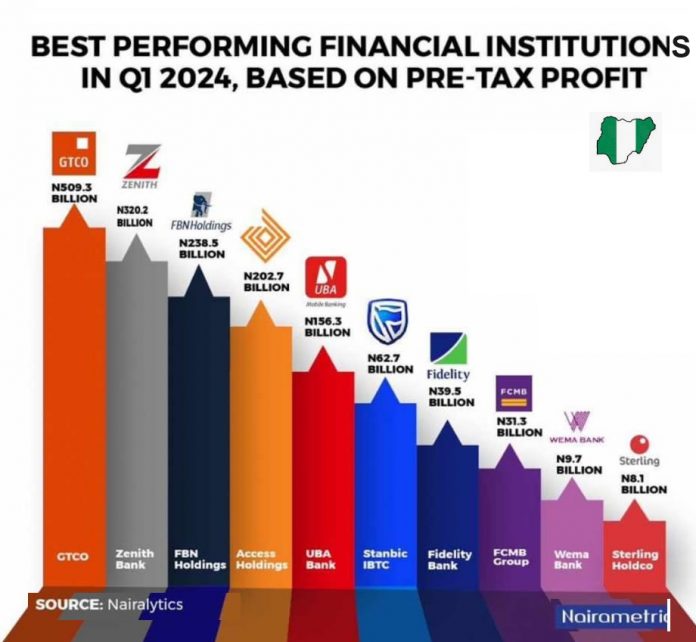
The numbers are out and Nigerian banking is firing on all cylinders: “Nigerian banks recorded a combined pre-tax profit of N1.58 trillion in Q1 2024, marking a 263% year-on-year increase compared to N436 billion in Q1 2023, with GTCO posting the highest profit in Nigeria banking history for the quarter…Top performers in Q1 2024 included Zenith Bank (N320.2 billion pre-tax profit), FBN Holdings (N238.5 billion), Access Holdings (N202.7 billion), and UBA (N156.3 billion)…”, notes Nairametrics.

Congratulations folks and well done. Nigerian bankers are the hardest working professionals in our nation. If everyone has the same level of productivity they have, Nigeria would have been a bigger Singapore. Period.

Yes, it is an industry where excuses are not tolerated, and the workers understand that loud and clear. Those days, I used to board diesel trucks from Apapa to Victoria Island to ensure diesel was delivered to Diamond Bank’s headquarters. I used to go to the VI NEPA office at 1am begging them to keep light on the Diamond Bank line. I worked for 3 years including on Christmas Day, Easter Day, etc without a vacation.  

But I enjoyed it because they elevated your spirit to see a mission which if you drop the ball, that mission could be imperiled. Go to night shift, sleep and the next day, the branches will not open because “system is down”. Why? The entry level engineers in the HQs did not complete the tasking end of day runs on time. Sleep twice, you are out!

So, when you look at these numbers, put everything in context: they’re coming from an industry which works and has figured out how to capture value (read my Harvard piece on capturing value here). 

GTBank’s GTCO has one of the finest genes; it has an industry-leading cost-to-income ratio, averaged over a decade, and that continues to show on its profitability. I am also happy to note that the elephant is dancing well despite the recent paralysis. So, guys, enjoy the party.

Now your question – why are banks breaking profit records when companies are closing and the economy struggling? 

My response: It is not the banking sector’s fault that the Central Bank of Nigeria (CBN) is increasing the prime rate which forces banks to hike interest rates on their customers. It is also not the banking sector’s fault that Nigeria floated its currency which delivers higher value for their foreign currency denominated financial instruments. So, if you visit your bank and the interest rate has gone up, do not curse the bank, ask the apex bank because those rates are partly driven by the central bank policy.

Now, he is defending the banks to protect his friends. That is not fair to a village boy; I hope you can take time and master how banks design their processes and playbooks to capture value in Nigeria.