DD
MM
YYYY

PAGES

DD
MM
YYYY

spot_img

PAGES

Home Blog Page 3434

Billion Dollar Jackpot vs Uniswap: Why Are Utility Coins Pumping Right Now?

0

The cryptocurrency market is experiencing a surge in popularity, particularly for tokens with real-world utility. This trend is fueled by a growing understanding of blockchain technology’s potential to revolutionize various industries. In this space, two tokens are generating excitement: Billion Dollar Jackpot (BDJ) and Uniswap (UNI).

Billion Dollar Jackpot is a unique platform merging Formula 1 excitement with blockchain tech. Users can predict race outcomes and earn rewards in $BDJ, the platform’s native token. Uniswap, on the other hand, is a well-established decentralized exchange (DEX) enabling users to trade various cryptocurrencies without intermediaries. While seemingly distinct, both BDJ and Uniswap cater to a growing demand for utility tokens within the crypto ecosystem.

Billion Dollar Jackpot: F1 Predictions on the Blockchain

Billion Dollar Jackpot (BDJ) is a novel platform that merges the thrill of Formula 1 racing with the transparency and security of blockchain technology. Here’s a closer look at its key aspects.

$BDJ offers a revolutionary platform where users can participate in F1 prediction markets. By accurately forecasting race outcomes, users can climb the leaderboard and compete for weekly prizes as well as a massive end-of-season jackpot. The platform leverages decentralized technology to ensure complete transparency and security in all predictions, transactions, and results.

The Billion Dollar Jackpot project outlines a clear roadmap with various phases, from initial coin offering (ICO) launch and community building to platform launch, token distribution, and the introduction of additional sports markets. Participating in the presale is easy, allowing users to buy $BDJ with various cryptocurrencies or even a credit card.

Several features distinguish BDJ from traditional gaming platforms:

  • F1-Focused Blockchain Platform: $BDJ uniquely combines F1 and blockchain technology, catering to a passionate global fanbase eager for innovative ways to engage with the sport.
  • Predictions Market with Rewards: The platform gamifies F1 viewership by allowing users to predict race outcomes and win $BDJ tokens.
  • Decentralized and Secure: Blockchain ensures transparency, security, and tamper-proof transactions, fostering trust among users.
  • Comprehensive Token Utility: $BDJ serves various purposes, encouraging active participation and long-term engagement.
  • Structured Roadmap for Growth: The project has a clear roadmap, indicating a planned approach to growth and adaptation.
  • Accessibility and Ease of Entry: Multiple payment options for the presale and user-friendly staking mechanisms make participation easy.

Billion Dollar Jackpot is currently in the early stages of its presale. Funds raised from this will be used for liquidity and development of the platform. You can get $BDJ for a fraction of the launch price currently, meaning a high ROI once the token is fully live on exchanges.

Uniswap: A Leading Decentralized Exchange

Uniswap is a major player in the decentralized exchange (DEX) arena. Unlike traditional exchanges controlled by a central authority, Uniswap operates on a decentralized protocol, where users can swap various cryptocurrencies directly. Here’s what makes Uniswap so popular:

  • Decentralization and Security: Uniswap eliminates the need for a central authority, reducing the risk of hacks or manipulation. Users maintain control over their funds throughout the trading process.
  • Liquidity Pools: Uniswap utilizes liquidity pools created by users who deposit their crypto holdings. This system ensures smooth trading and minimizes price fluctuations.
  • Accessibility and Ease of Use: Anyone with a cryptocurrency wallet can access Uniswap and trade tokens, making it user-friendly for both beginners and experienced traders.
  • Wide Range of Tokens: Uniswap supports a vast array of tokens, including established cryptocurrencies and emerging projects.

Utility Tokens Take the Lead

The growing popularity of both Billion Dollar Jackpot and Uniswap reflects the increasing demand for utility tokens within the cryptocurrency market. BDJ offers a unique and engaging platform for Formula 1 fans, while Uniswap provides a secure and user-friendly DEX for broader crypto trading. As the market continues to thrive, utility tokens with strong use cases are likely to remain at the forefront of innovation and adoption.


Find out more about BDJ:

Website: https://racetoabillion.com/en

Twitter: https://twitter.com/B_DollarJackpot

Telegram: https://t.me/billion_dollar_jackpot
Wema Bank Disconnects Its Fintech Partners Over Fraudulent Activities, Launches Anti-Fraud Campaign

0

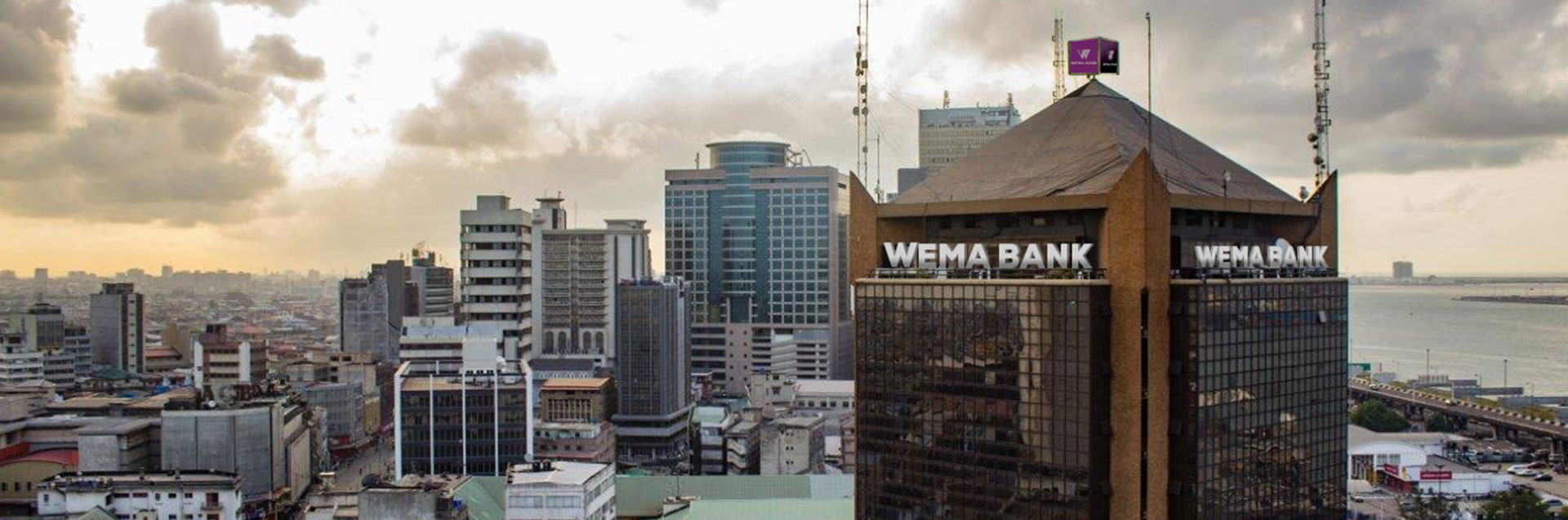
Nigeria’s commercial financial institution Wema Bank has reportedly disconnected seven (7) of its Fintech partners from its payment gateway platform, citing a case of fraud.

The bank disclosed that the move was necessitated following the rising cases of fraud involving some wallet accounts linked to the fintech firms.

In a statement, Wema Bank disclosed that illicit wallet accounts owned by some of its fintech partners using third-party wallet accounts had spiked.

In a bid to protect its customers from falling victim to fraud cases, the bank launched an anti-fraud campaign for sensitization purposes, providing customers with vital information on the tactics used by fraudsters and how they can avoid falling victim to their schemes.

The anti-fraud campaign is targeted at creating awareness, educating, and equipping customers with the necessary information needed to mitigate, detect, and handle fraudulent activities on their bank accounts, which underscores the bank’s commitment to safeguarding customers’ finances and personal data.

Furthermore, Wema Bank acknowledged that the tricks used by these fraudsters are constantly evolving, hence it is committed to staying ahead by providing customers with up-to-date information on their activities.

Speaking on this Wema Bank’s Chief Audit Executive, Oluwole Esomojumi said,

The antics of fraudsters are constantly evolving. To stay steps ahead, it is imperative that consumers have a good understanding of what interaction or engagement are telltale signs of fraud and how they can handle suspicious fraudulent engagements, hence the launch of the Wema Bank anti-fraud campaign. We are steps ahead on our end which is why we have taken time to investigate our fintech partners and those found culpable have been disengaged from our payment gateway platform.

As a bank that is resolute in our stance against fraud, we cannot compromise the safety of our beloved Nigerians, especially when these threats of fraud are emanating from fintechs who use our platforms. Rest assured, there is no room for fraudsters here. We have multiplied the frequency of our security checks and are committed to rooting them out one by one. No fraudster is safe with Wema Bank because customer safety is our priority and empowering the lives and businesses of every customer is our mission.”

Fintech fraud cases have continued to be prevalent in Nigeria for several years, which has raised concerns. A report revealed that between 2019 and July 2023, banking customers lost N51 billion worth of savings to fraud, as cybercriminals are now targeting Fintech bank customers. Even the big names have not been spared, the likes of Flutterwave, Patricia, and Interswitch.

This growing fraud problem is not only affecting customers’ trust, but has created distrust among companies. Recall that in October 2023, Fidelity Bank temporarily restricted fund transfers to neobanks such as PalmPay, OPay, Moniepoint, amongst others.

Notably, there are concerns by several financial experts that some of these Fintech platforms have weak security measures which makes it easy for fraudsters to penetrate. However, Fintech companies in Nigeria have been urged to deploy blockchain technology to prevent cases of fraud in the sector.

Also, they are advised to propagate and implement a system that can anticipate those fraud cases before they happen, as having a solid framework against fraud for financial services has become more crucial than ever.

Currency Devaluation Impacts Wealth of African Millionaires, 1,600 Nigerians Dropped From Dollar Millionaire List – Report

0

In a recent report by Henley and Partners, currency depreciation and underperforming stock markets swept off the wealth of Africa’s millionaires.

This erosion of wealth according to the report, can be largely attributed to the typical composition of African wealth portfolios. African investors reportedly allocated their assets equally across equities, property, and cash.

With African stock markets underperforming against global peers, local property markets facing headwinds, and currencies depreciating against the dollar, African investors have seen their wealth eroded on multiple fronts.

In the report, the South African rand declined by 43% against the US dollar from 2013–2023, and even though the Johannesburg Stock Exchange (JSE) all Share Index, which makes up well over half of Africa’s listed company holdings, rose in local currency terms, it was down 5% in USD terms over that period.

Currencies in several African countries also performed poorly compared to the US dollar over the past 10 years, with dramatic depreciations of over 75% recorded in Nigeria, Egypt, Angola, and Zambia.

Nigeria saw the largest decline in millionaires, followed by Kenya and Egypt with 500 each, and South Africa, 400. In Nigeria, the devaluation of the Naira impacted the wealth of dollar millionaires, which saw their number drop by 16.3 percent in 2023. This also led to 1,600 Nigerian millionaires being swept off the dollar millionaire list.

It is worth noting that the liberalisation of the foreign exchange regime in Nigeria as part of measures to revive the economy led to a large devaluation of the naira. In February 2024, Nigeria and Africa’s richest man Aliko Dangote saw $3 billion wiped off from his wealth in one week. Dangote was one of the most affected by the naira devaluation.

He began climbing in the billionaire ranking in January, gaining a whopping $7 billion in weeks, ranked 82nd in the world, and later plummeted to 132nd wealthiest men after the Naira devalued to par with the parallel market.

Amid these challenges, there are some notable centers of affluence across the continent. The ‘Big 5’ wealth markets — South Africa, Egypt, Nigeria, Kenya, and Morocco — collectively account for 56% of Africa’s high-net-worth individuals and over 90% of its billionaires.

South Africa leads the pack with 37,400 millionaires, 102 centi-millionaires, and 5 billionaires, followed by Egypt with 15,600 millionaires, 52 centi-millionaires, and 7 billionaires.

Going forward, over the next decade (to 2033), the likes of Mauritius, Namibia, Morocco, Zambia, Kenya, Uganda and Rwanda are all expected to experience 80%+ millionaire growth. Mauritius, with its stable governance and favorable tax regime, is projected to experience a remarkable 95% growth rate, positioning it as one of the world’s fastest-growing wealth markets once more. Namibia, too, is poised for impressive high-net-worth growth, with a forecast exceeding 85% by 2033.

However, the report highlights the growing trend of Wealthy Africans seeking residence or citizenship abroad, which calls for the need of African governments to create an enabling environment that encourages local investment and mitigates talent and capital flight.

Implementing measures like bolstering institutions, improving transparency, and enacting investor-friendly policies will be crucial for retaining and attracting wealth. Despite the obstacles, Africa still holds vast potential for wealth generation.

World Bank Report: Rising Inflation Pushed 10 Million Nigerians into Poverty in 2023

0

According to the World Bank’s ‘Macro Poverty Outlook for Nigeria: April 2024’, rising inflation coupled with weak earnings resulted in 10 million Nigerians slipping into poverty in 2023.

The report paints a grim picture of an economy where nominal earnings have failed to keep pace with soaring inflation rates, leading to a decline in living standards across the country.

“Nominal earnings have not kept up with inflation, pushing another 10 million Nigerians into poverty in 2023,” it said.

The report reveals alarming statistics regarding poverty rates in Nigeria across various economic thresholds. Notably, 30.9% of the population falls below the international poverty rate of $2.15 per day. Even more concerning is the fact that 63.5% live in poverty according to the lower middle-income threshold of $3.65 per day, while a staggering 90.8% fall below the upper middle-income poverty line of $6.85 per day.

Root Causes of Economic Strain

The dire economic situation is attributed to a combination of weak macroeconomic fundamentals and deep-seated structural constraints. The overreliance on the oil sector is identified as a significant factor, with its deteriorating performance contributing to macroeconomic instability. Low state revenues, driven by factors such as an expensive petrol subsidy and ineffective tax rates, further exacerbate the challenges faced by the government in providing essential public services.

Additionally, high levels of inflation, fueled by loose monetary policies and depreciating exchange rates, continue to erode purchasing power and hinder economic growth. Structural issues such as inadequate infrastructure, high trade costs, insecurity, weak institutions, and low levels of human capital development further compound Nigeria’s economic woes.

“Nigeria’s economic growth has been insufficient to raise living standards, weighed down by weak macroeconomic fundamentals and several structural constraints. Overreliance on the oil sector for fiscal revenues, exports, and FX inflows led macro stability to erode with the sector’s deteriorating performance in recent years,” the report noted.

“Low revenues—including due to a costly petrol subsidy, low tax rates, and weak tax administration—have limited state capacity and public service delivery.

“Inflation has remained high and escalating on the back of a relatively loose monetary policy and exchange rate depreciation. Structural factors holding back the country’s growth potential include lack of adequate energy and transport infrastructure, high domestic trade costs and foreign trade protectionism, widespread insecurity, weak institutions, and low levels of human capital development.”

Outlook and Projections

The World Bank noted the urgent need for ambitious reforms centered around macroeconomic stabilization to address these challenges. Economic forecasts predict an average growth rate of 3.5% between 2024 and 2026, slightly outpacing the population growth rate. However, poverty rates are expected to continue rising in 2024 and 2025 before stabilizing in 2026, driven by ongoing reforms and persistently high inflation.

Since 2015, Nigeria’s inflation rate has been on an upward trend, reaching 33.2% in March 2024. Food inflation has surged to 40.01% year-on-year, driven by rising prices of essential items such as garri, millet, and yam.

Moreover, the cost of Housing, Water, Electricity, Gas, and Other Fuels has soared by 27.64% over the past year, further burdening Nigerian households amidst escalating inflation and declining incomes.

Against this backdrop, more Nigerians are finding it difficult to cope, as the cost of goods and services outweighs their earning power. This suggests a likelihood of more Nigerians falling into abject poverty in the next two years.

Efforts to stabilize the economy are expected to gradually moderate inflation to 15.1% by 2026, supported by tightened monetary policies and exchange rate stabilization initiatives.

The report highlights the urgent need for comprehensive reforms to address Nigeria’s economic challenges and alleviate the growing burden of poverty on its population.

Google Initiates A Fresh Round of Layoff, Fires 28 Employees Protesting Project Nimbus

0

Amidst efforts to streamline operations and reduce costs, Alphabet-owned Google has initiated layoffs impacting an unspecified number of employees, a company representative confirmed on Wednesday.

This move marks the latest in a series of cuts at the technology giant, reflecting broader trends within the tech and media industry amidst economic uncertainties.

While the lay-offs are not companywide, affected employees will have the opportunity to apply for internal roles within Google. However, the representative did not disclose the exact number of employees affected or specify the teams involved. It’s noted that a small percentage of the affected roles will transition to hubs where the company is investing, including locations such as India, Chicago, Atlanta, and Dublin.

The decision to implement layoffs follows a wave of job cuts across Google and the broader industry throughout the year, raising concerns about the potential for further reductions as companies navigate economic challenges.

Speaking on the rationale behind the move, the Google representative highlighted ongoing efforts to enhance efficiency and realign resources with the company’s key product priorities. This includes initiatives undertaken by various teams during the second half of 2023 and into 2024 to streamline operations and remove unnecessary layers.

“Throughout the second half of 2023 and into 2024, a number of our teams made changes to become more efficient and work better, remove layers and align their resources to their biggest product priorities,” the Google representative added.

Employees across several of Google’s teams in its real estate and finance departments have been affected by the layoffs. Specifically, the finance teams impacted include Google’s treasury, business services, and revenue cash operations.

In response to these developments, Google’s finance chief, Ruth Porat, reportedly communicated the restructuring efforts to employees via email, according to BI. The restructuring includes plans to expand growth to key locations such as Bengaluru, Mexico City, and Dublin, in line with the company’s strategic objectives.

This announcement comes on the heels of previous job cuts at Google, including significant layoffs across multiple teams in January, which encompassed engineering, hardware, and assistant teams. These moves align with the company’s focus on investment and the development of artificial intelligence offerings, as indicated by CEO Sundar Pichai earlier in the year.

Also on Tuesday, Google fired employees protesting Project Nimbus, resulting in backlash. The dismissal impacted 28 employees who participated in office protests in New York and California. The dismissals come amid ongoing tensions surrounding Project Nimbus, a $1.2 billion joint contract between Google and Amazon providing services to Israel’s government.

According to a Google spokesperson, the employees occupied Google offices in Sunnyvale, California, and New York City, protesting against Project Nimbus.

The spokesperson stated, “Physically impeding other employees’ work and preventing them from accessing our facilities is a clear violation of our policies, and we will investigate and take action.”

The terminated employees have been placed on administrative leave, with their access to company systems cut off.

Nine workers were arrested after they refused to vacate the offices, with five arrests occurring in Sunnyvale and four in New York. Charges of criminal trespassing have been brought against the protesters, according to authorities.

Chris Rackow, Google’s head of security, described the protests as “extremely disruptive” and stated that they “made coworkers feel threatened” in an internal memo.

The protests stem from discontent surrounding Project Nimbus, which provides artificial intelligence and cloud computing services to Israel’s government and military. More than 100 people, including Google employees, protested the project outside the company’s New York office in 2022, following the resignation of a Google employee who had spoken out against it.

The latest protests were organized by the tech group No Tech for Apartheid, which campaigns for the cancellation of Project Nimbus, alleging that the contract enables the Israeli government to surveil and displace Palestinians. The contract drew additional scrutiny after Hamas launched a series of attacks on Israel in 2021, resulting in significant casualties.

Google has defended its involvement in Project Nimbus, stating that the contract serves Israeli government ministries operating within the company’s Terms of Service and Acceptable Use Policy. The tech giant asserts that the work is not directed at highly sensitive or classified military projects.

Sunnyvale Police Department Captain Dzanh Le reported that between 80 to 90 protesters gathered outside the building in Sunnyvale, with some occupying a room within Google’s complex. Despite multiple requests to leave, the protesters remained, resulting in arrests for criminal trespassing.

The terminations and arrests have sparked criticism, with concerns raised over freedom of expression and Google’s handling of employee dissent.