DD
MM
YYYY

PAGES

DD
MM
YYYY

spot_img

PAGES

Home Blog Page 3442

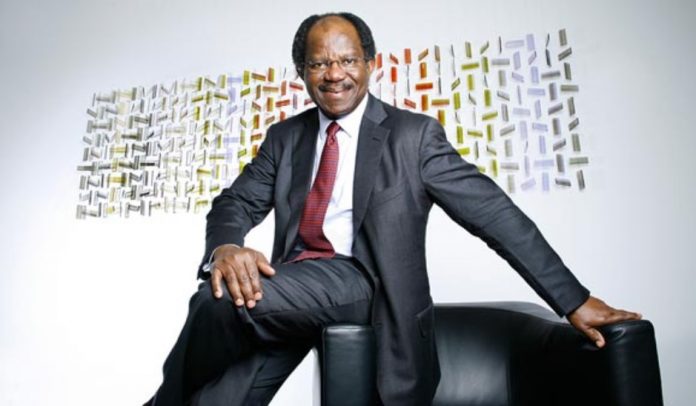
Adebayo Ogunlesi’s Net Worth Soars to $2.3 Billion Amid BlackRock’s GIP $12.5 Billion Acquisition

0

Adebayo Ogunlesi, the seasoned 70-year-old Chairman and CEO of Global Infrastructure Partners (GIP) is poised to enter the billionaire league as his net worth experiences a remarkable surge, reaching an estimated $2.3 billion.

This financial upswing is intricately tied to the recent groundbreaking acquisition of GIP by BlackRock Inc., the world’s largest asset manager, in a historic deal valued at an astounding $12.5 billion.

Ogunlesi, holding a significant 17.5% stake in GIP, has swiftly become a prominent figure among Nigerian dollar-denominated billionaires, as per the Bloomberg Billionaires Index. His wealth, now estimated at around $2.3 billion, firmly establishes him as one of the influential figures in the global financial landscape.

The acquisition, expected to conclude in the third quarter of 2024, involves a payment structure of $3 billion in cash and approximately 12 million shares, valued at roughly $9.5 billion based on closing prices as of January 11. This strategic move by BlackRock, managing assets totaling an astounding $10 trillion as of FY 2023, not only signifies a monumental financial deal but also cements its position as a powerhouse in the global financial market.

This acquisition marks a significant transformation for BlackRock, shifting its focus from traditional index-based investing to emerging as a major player in illiquid funds supporting intricate and substantial projects. BlackRock’s holdings in illiquid alternatives have experienced an impressive surge of 65% in the three years leading up to September 2023.

Adebayo Ogunlesi’s journey to financial eminence is characterized by academic brilliance and strategic leadership. Holding an undergraduate degree with first-class honors from Oxford University, a law degree, and an MBA from Harvard, his illustrious career includes a clerkship on the Supreme Court under Thurgood Marshall and pivotal roles such as heading Credit Suisse’s investment banking division and serving as the lead independent director at Goldman Sachs Group Inc.

His foray into the financial sector commenced after a brief stint at the prestigious law firm Cravath, Swaine & Moore. Perfectly timing his move with Wall Street’s mergers boom in the 1980s, he continued his ascent, particularly when Credit Suisse took over, overseeing the investment banking division in 2002.

In pursuit of change due to job dissatisfaction, Ogunlesi, alongside colleague Matt Harris, conceptualized the idea of managing infrastructure investments. This vision materialized with the founding of GIP in 2006, evolving into a diversified portfolio encompassing airports, gas pipelines, wind farms, and more.

Ogunlesi’s influence extends beyond the financial realm, with connections that include fireside chats with billionaire Henry Kravis and active participation in White House meetings. Currently chairing Joe Biden’s National Infrastructure Advisory Council, he continues to impact national infrastructure policies.

With the impending sale of GIP, Ogunlesi is set to resign as the lead independent director at Goldman Sachs, marking the conclusion of a significant chapter in his illustrious career. Recognized not only for his financial acumen but also for his golfing prowess and philanthropic initiatives, Ogunlesi’s journey stands as a testament to resilience and strategic vision in navigating the intricate world of global finance.

GIP’s extensive $100 billion in assets combine with BlackRock’s existing infrastructure assets of approximately $50 billion to form a formidable unit, rivaling industry giants like Macquarie Asset Management and Brookfield Asset Management.

BlackRock’s involvement in substantial infrastructure investments worldwide, including pipelines in the Middle East, a carbon-capture project in Texas, and a fiber network venture with AT&T Inc., further solidifies its dominant position in this space, promising a new era of influence and innovation in the realm of global infrastructure investment.


The American Tech Race and Nigeria and Africa’s Moment

1

The Internet unlocked $trillions in America, catalyzing wealth creation at scale. That Microsoft is near $3 trillion is because of the internet, and most especially its ability to unlock value in the application utility phase. Windows remains the operating system of enterprises, and the web has souped its ability to capture value, as the web distorted piracy at scale, with subscriptions, software validation and authentication.

The promise of African knowledge companies in this decade is to unlock the value which remains latent in the application utility phase. We have the mobile internet but our applications remain limited. Yes, from real estate to agriculture, from education to retail, and indeed all sectors, the power of the web must work in Africa, village to city, one at a time.

Microsoft has overtaken Apple as the world’s most valuable company, according to the latest market data. The tech giant reached a market capitalization of $2.8 trillion on Friday, surpassing Apple’s $2.7 trillion valuation. This is the first time since 2010 that Microsoft has claimed the top spot in the global ranking of public companies.

Microsoft’s impressive performance is driven by its strong growth in cloud computing, gaming, and hardware segments. The company reported a 21% increase in revenue and a 47% increase in net income for the quarter ending September 30, 2023. Microsoft also announced a $60 billion share buyback program and raised its quarterly dividend by 11%.

For everything you think has happened, our transition remains at infancy. Yes, these “big” startups have done really nothing, and that means more builders are still needed. I tell Tekedia Capital founders, do not worry about competition that much in Africa, worry about your inability to execute your playbook! Why? Most startups which have failed did not fail because someone solved the problems which they wanted to fix, but because they gave up, while trying!

Be inspired that someone can build a company worth $2.89 trillion and could overtake another company in that range. If you put that in context, understanding that ALL companies in the Nigerian stock exchange are not worth up to $60 billion, you can appreciate the power of knowledge and executed missions of firms.

Apple over Microsoft, Microsoft over Apple – that is the American tech race on market caps. By this time in ten years, another company will likely lead the show.

#Build because Nigeria, Africa still need their moments!

By 2030, I expect 80% of richest Nigerians to have made money from technology. Nigeria is having its finest cambrian moment on the formation of enduring companies. The last time we were this bold, on entrepreneurial capitalism, was in the early 1990s when some of Nigeria’s current leading banks were established.

The 1990s gave us the new generation banks. The 2000s brought voice telephony. The 2010s ushered mobile internet. The 2020s would deliver the era of application utility across industry sectors and market territories.

Criminal responsibility of a child (minor) under the Nigerian laws

0

Criminal responsibility has been defined in section 1 of the Criminal Code Act as the liability for punishment for an offense. It simply means the culpability of an individual. 

Under Nigerian law, a child or a minor could or could not be criminally liable for a crime he committed depending on the circumstances or facts of the case.

According to the constitution of the Federal Republic of Nigeria, a minor is a person who is below the age of eighteen (18). An adult under the Nigerian constitution is a person who has attained the age of 18, ie the age of majority. This is the provisions of section 29 of the constitution and to its effect, any person who is below the age of 18 is still deemed to be a minor. At the age of 18, you become an adult in Nigeria and can therefore begin to enjoy every right and liberty that accrues to an adult citizen, on the same vein, you will be held liable for your own offense; you can be issued with a driver’s license, you can vote during the election, you can be allowed to own a landed property in your own name and you sue and be sued in your own capacity etc. 

However, the Criminal Code Act for the sake of being criminally culpable for offenses took another view of who a minor is in Nigeria. While acknowledging the fact that a person who is below the age of 18 is not yet an adult as provided in section 29 of the constitution, such a person who is below the age of 18 can still be held to be criminally liable for any offense he commits. 

According to section 30 of the criminal code act, a person will be criminally culpable, once such a person is twelve (12) years and above. A person who is twelve years and above will be presumed to have grown enough to form the mental capacity to distinguish what is right from what is wrong. A person who is below the age of twelve but above the age of seven may be held criminally liable for the offense he or she committed but the prosecutor will need to prove to the court that at the time of the offender committing such offense he or she knows what they are doing. A child who is below the age of seven will not be held criminally liable for any criminal offenses because it is presumed in law that the child who is below the age of seven has not developed the mental capacity to distinguish right from wrong. 

Also, according to the provisions of section 30 of the criminal code act, a boy child under the age of twelve years is presumed to be incapable of having carnal knowledge, this is to say that a boy child under the age of twelve cannot be held liable for sexual related offenses. 

In the case of NPF v OMOTOSHO (2018) LPELR – 4577 8 (CA) the court while adopting the fact that a child may not be held culpable for offenses held that “in both civil and criminal law, the legal capacity/criminal responsibility of a minor is diminished and can never equate to that of an adult by virtue of the mental capacity and level of maturity” but in the case of YUSUF MUSA AND THE STATE in 2022 the Supreme Court upheld the judgment of both the Jigawa state high court and the judgment of the court of appeal which held that the accused, an eleven years old minor who struck a machete on a person multiples times thereby killing the deceased is guilty of culpable homicide despite the fact that he is less than twelve years old.

immaturity or being a minor is actually a strong and valid defense in criminal jurisprudence all over the world and it has gotten a lot of folks off the hook who used being a minor as a defense in a plethora of cases. Other valid defenses under the criminal jurisprudence aside from immaturity include; mistake, Bona fide claim of right, Intoxication or being drunk, Insanity or mental incapacitation and Provocation. 

Citigroup to cut 20,000 US Employees

0

Citigroup, one of the largest banking corporations in the world, announced today that it will reduce its US workforce by 20,000 employees over the next two years. This decision comes as part of a restructuring plan aimed at cutting costs and improving efficiency in the face of increased competition and regulatory pressures.

The company said that the layoffs will affect various divisions and locations across the US but did not provide specific details on which roles or regions will be impacted. Citigroup said that it will offer severance packages and outplacement services to the affected employees, and that it will try to minimize the disruption to its customers and operations.

Citigroup CEO Jane Fraser said in a statement that the move was necessary to adapt to the changing market conditions and customer preferences. She said that the company will focus on investing in its core businesses and digital capabilities, as well as enhancing its risk management and compliance functions.

“We are taking these difficult but decisive actions to position Citigroup for long-term growth and profitability,” Fraser said. “We are grateful for the contributions of our colleagues who will be leaving us, and we will support them throughout this transition.”

The announcement comes as Citigroup faces several challenges, including a $400 million fine from US regulators for failing to address longstanding deficiencies in its risk and control systems, a $900 million payment error that resulted in a legal dispute with some of its creditors, and a decline in its net income by 34% in the third quarter of 2020 compared to the same period in 2019.

Citigroup is not the only bank that has resorted to layoffs amid the pandemic-induced economic downturn. Earlier this year, Wells Fargo said that it would cut up to 10% of its workforce, or about 26,000 employees, over three years. Bank of America and JPMorgan Chase have also reduced their headcounts by 3% and 1%, respectively, since the end of 2019.

To provide more details on the impact of the layoffs, Citigroup said that it expects to incur about $1 billion in pre-tax charges related to severance and other expenses in the fourth quarter of 2020 and the first half of 2021. The company also said that it expects to generate about $2 billion in annual savings from the workforce reduction by 2023.

Citigroup said that it will continue to serve its customers across its four main business segments: global consumer banking, institutional client’s group, corporate/other, and Citi Holdings. The company said that it will also continue to pursue its environmental, social and governance (ESG) goals, such as achieving net zero greenhouse gas emissions by 2050 and advancing racial equity within its organization and communities.

As for the impact on Citigroup’s stock price, the market reaction was mixed. The shares closed at $53.02 on January 10, 2024, up 1.8% from the previous day. However, they were still down 3.2% from their 52-week high of $54.75 reached on December 13, 2023. Some analysts expressed concern about the potential loss of revenue and market share from the layoffs, while others praised the company’s efforts to streamline its operations and improve its profitability.

Indiana has officially introduced legislation to protect fundamental Bitcoin Rights

0

In a landmark move, the State of Indiana has become the first in the US to propose a bill that would recognize and protect the rights of Bitcoin users. The bill, titled “An Act to amend the Indiana Code concerning financial institutions”, was introduced by Representative on January 12, 2024.

The bill aims to establish a legal framework for the use of Bitcoin and other cryptocurrencies in Indiana, and to prevent any interference or discrimination from banks, regulators, or other entities. The bill states that:

A person has the right to own, use, exchange, and transfer Bitcoin and other cryptocurrencies without any restriction or penalty. A person has the right to use any software, hardware, or service of their choice to access, store, or transact with Bitcoin and other cryptocurrencies. A person has the right to privacy and anonymity in their Bitcoin and other cryptocurrency transactions, and to not disclose any personal or financial information to any third party without their consent.

A person has the right to participate in the governance and development of Bitcoin and other cryptocurrencies, and to express their opinions and preferences without fear of censorship or retaliation. A person has the right to access and benefit from the innovation and opportunities created by Bitcoin and other cryptocurrencies, and to not be excluded or disadvantaged by any law, regulation, or policy.

The bill also defines Bitcoin and other cryptocurrencies as “digital assets” that are not subject to taxation, seizure, or confiscation by any authority. The bill further clarifies that no entity can require a person to obtain a license, registration, or authorization to use Bitcoin and other cryptocurrencies, or impose any fees, charges, or penalties for doing so.

Representative Smith said that he introduced the bill to protect the rights and freedoms of Indiana residents who use Bitcoin and other cryptocurrencies, and to foster a conducive environment for innovation and growth in the state. He said that Bitcoin and other cryptocurrencies are “the future of money” and that Indiana should be at the forefront of embracing them.

The bill has received widespread support from the Bitcoin and cryptocurrency community in Indiana and beyond, who praised it as a “historic” and “revolutionary” step. Many have expressed their hope that other states will follow Indiana’s example and adopt similar legislation.

The bill is expected to face some opposition from banks, regulators, and lawmakers who are skeptical or hostile towards Bitcoin and other cryptocurrencies. Some have argued that the bill is too radical and risky, and that it could undermine the stability and security of the financial system. They have also raised concerns about the potential for money laundering, tax evasion, fraud, and cybercrime involving Bitcoin and other cryptocurrencies.

The bill is currently pending in the House Committee on Financial Institutions, where it will be reviewed and debated. If approved by the committee, it will then move to the full House for a vote. If passed by the House, it will then go to the Senate for a similar process. If passed by both chambers, it will then go to the Governor for signing into law.

The bill is expected to generate a lot of interest and attention in the coming weeks and months, as it could have significant implications for the future of Bitcoin and other cryptocurrencies in the US. The bill could also set a precedent for other countries around the world who are grappling with how to regulate and deal with this new phenomenon.