DD
MM
YYYY

PAGES

DD
MM
YYYY

spot_img

PAGES

Home Blog Page 3450

I will Put Entire US Budget on the Blockchain if Elected President – Robert F. Kennedy Jr

0

In a bold move that has captured the attention of both the crypto community and political analysts, independent presidential candidate Robert F. Kennedy Jr. has proposed a radical idea: to put the entire U.S. budget on blockchain if he is elected in 2024. This proposal comes at a time when the intersection of technology and governance is becoming increasingly relevant, and the call for transparency in government spending is louder than ever.

Blockchain technology, best known for underpinning cryptocurrencies like Bitcoin, offers a decentralized ledger that records transactions across many computers so that the record cannot be altered retroactively. Kennedy’s proposal suggests leveraging this technology to create a public, immutable record of U.S. government spending, allowing every American to scrutinize budget items anytime.

The concept of using blockchain for government transparency is not entirely new, but Kennedy’s approach is unprecedented in its scale. By proposing to place the entire U.S. budget on a blockchain, Kennedy is advocating for a level of transparency that could fundamentally change the way citizens interact with their government. The idea is that with 300 million Americans potentially watching the budget, questionable expenditures would be less likely to go unnoticed.

Kennedy’s stance on digital assets is well-documented, as he has accepted campaign donations in Bitcoin and expressed plans to back the U.S. dollar with Bitcoin. His opposition to a central bank digital currency (CBDC) aligns him with certain political figures who argue that a CBDC could infringe on privacy. Instead, Kennedy’s vision seems to favor a decentralized approach to financial governance, one that empowers individuals rather than central authorities.

The proposal has sparked a variety of responses. Advocates for cryptocurrency and blockchain technology laud the idea for its potential to reduce corruption and increase accountability. Critics, however, question the feasibility of implementing such a system on the scale of the federal budget and raise concerns about the technical and security challenges involved.

Regardless of the outcome of Kennedy’s presidential bid, his proposal has ignited a conversation about the role of blockchain in government. It raises important questions about the balance between innovation and practicality, the need for transparency versus the complexities of national security, and the potential for technology to foster a more participatory democracy.

As the 2024 election approaches, it will be interesting to see how Kennedy’s pro-cryptocurrency stance and his unique proposal resonate with voters. Will the promise of blockchain-based transparency be enough to sway the electorate, or will concerns about the implementation and implications of such a system prevail? Only time will tell, but one thing is certain: the intersection of blockchain technology and government transparency will remain a topic of discussion and debate for years to come.

Nigerian Government Sets Minimum Age for Tertiary Institution Admission At 18

0

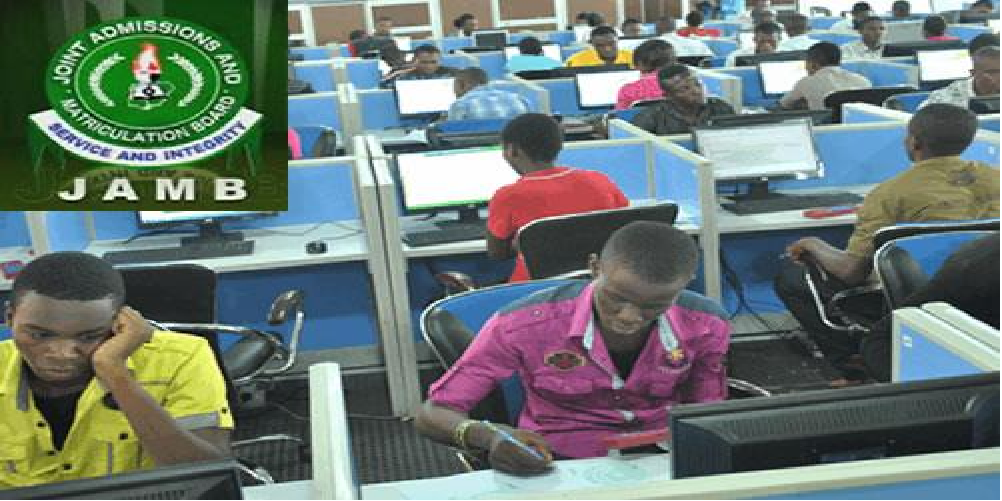
In a move aimed at curbing premature admissions to tertiary institutions, the Nigerian government has issued a directive stipulating that candidates below the age of 18 should not be admitted

The announcement was made by the Minister of Education, Tahir Mamman, during a monitoring exercise of the ongoing 2024 Unified Tertiary Matriculation Examination (UTME) in Bwari, Federal Capital Territory, on Monday.

Expressing concern over the pressure exerted by some parents on their underage children to secure admissions, Minister Mamman explained that the 18-year benchmark aligns with the 6-3-3-4 education system.

“The minimum age of entry into the university is 18, but we have seen students who are 15 or 16 years old going in for the entrance examination,” he remarked, urging parents to refrain from pushing their wards prematurely into higher education.

“We are going to look at this development because the candidates are too young to understand what the whole university education is all about,” he added.

Highlighting the significance of skill acquisition for those unable to gain admission, Mamman affirmed the ministry’s commitment to integrating skills training into the educational curriculum from the primary school level.

“Overall, it is 20 percent that can be admitted into the university, polytechnic, and colleges of education systems.

“So, where will the 80 percent go? That is why the issue of skill acquisition is very important.

“Any student who is unable to proceed to tertiary institutions should be able to have a meaningful life after primary and secondary school education, and the only solution to this is skill acquisition,” he said.

Corroborating the minister’s stance, the spokesperson for the Joint Admissions and Matriculation Board (JAMB), Fabian Benjamin, reiterated that the age of 18 aligns with the educational framework.

Meanwhile, the Minister of State for Education, Yusuf Sununu, who was part of the monitoring team, lauded the conduct of the 2024 UTME, particularly applauding the introduction of online examinations to combat malpractices. Sununu attributed the reduction in exam malpractices to the adoption of computer-based testing (CBT) methods.

Despite the government’s rationale behind the new directive, it has sparked criticism from various quarters, with many viewing it as a setback to the increasing trend of younger individuals graduating from higher institutions. Concerns have been raised about the potential implications on the educational aspirations of prodigious youths below the age of 18.

Furthermore, education experts have warned that the directive has the potential to bring about significant consequences for the country’s educational sector.

Below are some of the noted potential implications of the new rule:

  • One immediate consequence could be restricted access to higher education for academically gifted students who are below the age of 18. While the directive aims to ensure students are sufficiently mature before entering tertiary institutions, it might inadvertently hinder the progression of exceptionally bright students who are ready to pursue advanced studies at an earlier age.
  • Furthermore, there is likely to be increased pressure on secondary education systems to adequately prepare students for tertiary studies by the age of 18. Schools may find themselves compelled to review and adjust their curricula and teaching methods to ensure students are both academically and emotionally prepared for higher education at the prescribed age.
  • The delay in admission until the age of 18 could also have repercussions on graduation rates in tertiary institutions. Starting a university education later may prolong the duration of academic programs, potentially leading to delays in graduating and entering the workforce.
  • Moreover, the emphasis on skill acquisition for students who do not proceed to tertiary education suggests a broader shift in educational priorities. There may be a heightened focus on vocational and technical training programs to equip students with practical skills for employment opportunities outside of traditional academic pathways.
  • Implementing and enforcing the age requirement could necessitate additional administrative measures within tertiary institutions and regulatory bodies. Admission processes may need to be revised to verify the age of applicants, ensuring compliance with the new directive.

Nigeria’s Official Exchange Rate Hits Month-to-Date At N1,300/$1

0

Nigeria’s official exchange rate took a sharp dip on Tuesday, April 23, 2024, plummeting to a month-to-date low of N1,300/$1, according to data from the Financial Markets Dealers Quotations (FMDQ), where the official exchange rate is traded.

This marks a significant 5.05% depreciation from the N1,234.49/$1 recorded at the beginning of the week, continuing the downward trend that commenced last Friday. In just five days, the exchange rate has weakened by a staggering 17.49%, raising concerns about the Central Bank’s capacity to sustain the recent gains.

According to the FMDQ, the day concluded with the exchange rate settling at N1,300.15/$1, amidst a total daily turnover of $133.65 million. Daily turnover has witnessed a noticeable increase from the levels observed on Friday and Monday, which stood at $86.68 million and $110.17 million respectively.

Throughout the trading day, the exchange rate fluctuated between an intra-day high of N1,317 and a low of N1,000, indicating a disparity of approximately 30% between the upper and lower bands. Concurrently, black market sources reported a surge in demand, pushing the dollar’s value closer to N1,300/$1 by late Tuesday.

In contrast, the Central Bank of Nigeria’s data for April 22nd revealed a marginal climb in Nigeria’s external reserve position, reaching $32.109 billion from $32.106 billion in previous days.

Over the weekend, Central Bank Governor, Yemi Cardoso, proudly declared the Naira as the best-performing currency globally as of April 2024. This accolade follows a series of foreign exchange market reforms and has been bolstered by positive sentiment from leading international investment institutions, as announced during a press briefing on the sidelines of the World Bank/IMF Press briefing in Washington DC, United States.

Notably, the Naira’s fortunes have dramatically improved since March when it plunged to lows of N1,600/$1 on the official market and N1,800/$1 on the parallel market.

Addressing concerns regarding the central bank’s intervention in the market, Cardoso explained that the observed fluctuations were a result of market forces at play rather than deliberate currency defense measures. 

“Again, to be honest, I think we should expect that there will be increases here and there, ups and downs and even from what you’ve reported yesterday, from what I gather, the naira has begun strengthening overnight,” he said.

“So I think the most important thing to say here is that we are doing everything possible to ensure that we have a stable exchange rate and an exchange rate that finds its adequate price discovery level. That is a process that will continue.”

Meanwhile, the Central Bank issued a new circular to all Bureau De Change (BDC) operators, announcing a fresh sale of forex at a reduced rate of N1,021 per dollar. This move marks the second such occurrence this month and the fourth instance this year, underscoring the CBN’s proactive approach to managing currency volatility and ensuring the availability of essential foreign exchange.

The recent initiative builds upon previous interventions, including the distribution of $20,000 to each BDC in February at a rate of N1,301 per dollar, subsequent adjustments during the second disbursement, and a sale at the beginning of April offering $10,000 to each BDC at a rate of N1,101 per dollar.

The CBN boss also disclosed that the response from the foreign portfolio investors (FPI) has been positive.

They’re part of a process of continuous engagement. And it is so critical that we use any opportunity we can to dialogue with investors and to update them on the state of the reforms that have taken place,” he said.

“The response from the foreign portfolio investors has been very positive and it shows in the numbers and we expect from what the reactions that we got during the course of the past few days, that positive sentiment will continue to improve.”

Argentina Celebrates First Quarterly Budget Surplus Since 2008 under President Milei

0
TOPSHOT - Argentine presidential candidate for the La Libertad Avanza alliance Javier Milei waves to supporters after winning the presidential election runoff at his party headquarters in Buenos Aires on November 19, 2023. Libertarian outsider Javier Milei pulled off a massive upset Sunday with a resounding win in Argentina's presidential election, a stinging rebuke of the traditional parties that have overseen decades of economic decline. (Photo by Luis ROBAYO / AFP) (Photo by LUIS ROBAYO/AFP via Getty Images)

Argentina’s newly elected President, Javier Milei, has lauded his country’s achievement of its first quarterly budget surplus since 2008 as a historic milestone. 

Addressing the nation on Monday night via national television, Milei revealed that in the first quarter of 2024, Argentina recorded a budget surplus of approximately 275 billion pesos, equivalent to around $309 million at the official exchange rate. 

This surplus accounted for 0.2 percent of the country’s GDP.

“This is the first quarter with a financial surplus since 2008,” Milei proudly declared, taking a swipe at his left-wing predecessor, Cristina Kirchner’s initial year in office.

Milei, who assumed office in Decembercharacterized the surplus as a remarkable global achievement. Emphasizing his economic ideology, the self-described “anarcho-capitalist” asserted that curbing inflation and achieving fiscal discipline were not magical feats but rather the result of prudent financial management.

The President’s victory in last November’s elections was fueled by promises to eliminate the deficit entirely, a goal more ambitious than the requirements set by the International Monetary Fund (IMF), with whom Argentina holds a $44 billion loan. To fulfill his pledge, Milei has implemented an austerity program, slashing subsidies for transportation fuel, and energy.

Despite Argentina grappling with annual inflation rates of 290 percent, a staggering 60 percent poverty rate, and a 20 percent decline in purchasing power for wage-earners, Milei remains resolute in his commitment to fiscal discipline. 

The austerity measures have led to thousands of public servants losing their jobs, reflecting the administration’s stance against public spending as a solution to economic woes.

However, the government’s cost-cutting measures have sparked protests, with university students, unions, and opposition parties organizing a march to denounce financing cuts to higher public education, research, and science. 

Universities have declared a budgetary emergency, citing stagnant funding levels amidst soaring inflation and energy costs. Ricardo Gelpi, the rector of the University of Buenos Aires (UBA), warned that without adequate funding, institutions could only sustain operations for a few more months.

However, positive signs of his austerity measures have been consistent. The South American country achieved its first monthly budget surplus in nearly 12 years in January. It recorded a positive balance for public-sector finances of US$589 million (approximately S$800 million) at the official exchange rate.

In addition to the removal of subsidies, the government made other major spending cuts.

Earlier this year, Presidential spokesman Manuel Adorni announced a government initiative to cut chauffeurs for public officials by 50%. Additionally, he revealed plans to sell two planes previously owned by the state-owned oil company YPF, citing their predominant use for what he described as “political privileges.”

“This is in addition to the reduction the government had already decided earlier this week […] We will continue to inform about the reduction of privileges every day,” he said. Adorni referred to the decision made earlier to decrease ministries by 50% and secretariats by 49%, aiming to curtail public spending.

These measures were expected to save nearly US$3 billion for the state.

BlockDAG Captures Attention with Keynote Video Teaser From Moon and $19.8M Presale as DOGE20 Listed on Uniswap

0

As BlockDAG secures an impressive $19.8 million from its presale, overshadowing the recent listing of DOGE20 on Uniswap, let’s delve into why investors are increasingly drawn to BlockDAG’s 30,000x ROI. The DAG Paper V2 reveals how BlockDAG leverages its network to perform outstandingly, which was recently showcased in Las Vegas. With a forthcoming keynote set to be broadcast from the moon, BlockDAG continues to showcase its innovative strategies that leave its competitors behind, such as the Doge20 listed on Uniswap.

Comparing BlockDAG and Blockchain Technologies

Explore the next generation of distributed ledger technology with BlockDAG, where efficiency and scalability are paramount. Unlike traditional blockchains that link transactions end-to-end, creating bottlenecks as they expand, BlockDAG employs a network that allows multiple transactions to process concurrently. This advancement isn’t just an improvement—it revolutionizes how transactions are processed and recorded, setting new standards for the financial sector’s future.

DOGE20 Listed on Uniswap and its Stake-To-Earn Model

DOGE20, recently launched on Uniswap, represents another evolution of the famous Dogecoin, maintaining its meme appeal but with added functionalities designed for sustainability and practical use. It introduces a Stake-to-Earn system, incentivizing users to stake their coins in return for rewards, aiming to create a more stable economic model. The platform strives to engage its community through interactive and utility-driven features, attempting to break away from the usual limitations associated with meme coins.

BlockDAG’s Investment Appeal and the Promise of 30,000x ROI

BlockDAG is preparing to release its tenth batch of coins, increasing the price from $0.005 to $0.006, and continuing to attract significant investor interest. This move is fueled by the potential for a 30,000x return on investment, emphasizing BlockDAG’s growth potential and establishing it as a premier investment opportunity in the cryptocurrency arena for 2024.

BlockDAG’s Technological Impact and Future Prospects

BlockDAG is transforming DeFi transactions by merging the solid security features of blockchain with the swift efficiency of Directed Acyclic Graphs (DAGs). This combination enhances transaction speeds dramatically, opening new possibilities in various sectors like financial services, supply chain management, and the Internet of Things (IoT). Imagine processing up to 15,000 transactions per second with minimal delay—BlockDAG is setting new benchmarks for efficiency and cost-effectiveness in our digitally connected world.

Seizing the Moment: Investing in BlockDAG for Future Returns

BlockDAG is crafting a standout position in the crypto-sphere by integrating the dependable security of blockchain with the flexibility and speed of Directed Acyclic Graphs. This synthesis enables remarkable transaction speeds, up to 15,000 per second, reshaping the financial and technological landscapes.

As BlockDAG gears up to increase its coin value in the upcoming batch, the anticipated 30,000x ROI delineates a future further fueled by a keynote video teaser from the moon; where BlockDAG doesn’t just participate but leads in the market with distinction and innovation. This strategic foresight positions BlockDAG far ahead of competitors even with DOGE20 listed on Uniswap, ensuring its place as a leader in efficient and expansive growth within the crypto market.


Join BlockDAG Presale Now:

Website: https://blockdag.network

Presale: https://purchase.blockdag.network

Telegram: https://t.me/blockDAGnetworkOfficial

Discord: https://discord.gg/Q7BxghMVyu