DD
MM
YYYY

PAGES

DD
MM
YYYY

spot_img

PAGES

Home Blog Page 3452

Ethereum core devs Chart an Ambitious 2024 as Crypto Market Diverges between Altcoins and BTC

0

Ethereum, the second-largest cryptocurrency by market capitalization, has been undergoing a series of upgrades and innovations in the past few years. The most notable ones are the transition from proof-of-work to proof-of-stake consensus mechanism, the implementation of sharding and rollups to improve scalability and efficiency, and the introduction of new features and standards to enhance interoperability and usability.

However, the Ethereum core developers are not resting on their laurels. They have a bold vision for the future of the network, and they are working hard to make it a reality. We will introduce you to two of the most influential and active core devs in the Ethereum community: Dencun and Pralectra. We will also explore their plans and projects for 2024, which promise to bring Ethereum to new heights of innovation and adoption.

Dencun: The mastermind behind EIP-1559 and EIP-3675

Dencun is a pseudonymous developer who has been contributing to Ethereum since 2017. He is best known for proposing and leading the development of two of the most impactful Ethereum Improvement Proposals (EIPs) in recent history: EIP-1559 and EIP-3675.

EIP-1559, which was activated in August 2021, introduced a new fee mechanism that dynamically adjusts the gas price based on network demand and burns a portion of the fees, creating a deflationary pressure on ETH supply. EIP-3675, which was implemented in December 2021, finalized the transition from proof-of-work to proof-of-stake by merging the Ethereum mainnet with the Beacon Chain, the backbone of the new consensus protocol.

Both EIPs have been widely praised by the Ethereum community for improving the security, sustainability, and user experience of the network. They have also boosted the value proposition of ETH as an asset, as evidenced by its strong performance in the market.

Dencun is not done yet. He is currently working on several projects that aim to further enhance Ethereum’s capabilities and competitiveness. One of them is EIP-4488, which proposes to reduce the gas cost of call data, the data that is passed to smart contracts when they are executed. This would lower the barriers for developers and users to deploy and interact with complex applications on Ethereum, such as decentralized exchanges, lending platforms, gaming dapps, and more.

Another project that Dencun is involved in is EIP-6484, which suggests introducing a new opcode called BASEFEE that would allow smart contracts to access the current base fee of the network. This would enable new possibilities for fee management and optimization, such as fee abstraction, fee delegation, fee rebates, and more.

Pralectra: The pioneer of zk-SNARKs and zk-rollups

Pralectra is another pseudonymous developer who has been working on Ethereum since 2018. She is a leading expert and innovator in the field of zero-knowledge proofs (ZKPs), a cryptographic technique that allows users to prove that they know some information without revealing it.

Pralectra has been instrumental in bringing ZKPs to Ethereum, both at the protocol and application levels. She is one of the main contributors to EIP-1962, which added support for various ZKP primitives to the Ethereum virtual machine (EVM), enabling developers to use them in their smart contracts. She is also one of the co-founders and core developers of ZKSync, one of the most popular and advanced zk-rollup solutions on Ethereum.

ZKSync is a layer-2 scaling platform that uses ZKPs to compress and verify transactions off-chain, while maintaining security guarantees from the mainnet. ZKSync can process thousands of transactions per second with minimal fees and latency, while supporting smart contracts, token transfers, NFTs, and more.

Pralectra is constantly pushing the boundaries of ZKPs and zk-rollups on Ethereum. She is currently working on ZKSync 2.0, which aims to bring full EVM compatibility and programmability to zk-rollups, allowing any existing or future dapp to run on ZKSync with zero friction or compromise. She is also working on ZKPorter, a new scaling technique that combines zk-rollups with data availability sampling, resulting in an exponential increase in throughput and a significant decrease in cost.

ZKSync 2.0 and ZKPorter are expected to launch in 2024, marking a new era of scalability and privacy for Ethereum.

Dencun and Pralectra are just two examples of the many talented and dedicated core developers who are making Ethereum better every day. They represent the ethos and vision of Ethereum: a decentralized, open-source, community-driven platform that strives for innovation and excellence.

As we enter 2024, we are excited to see what Dencun, Pralectra, and the rest of the Ethereum core devs will bring to the table. We are confident that they will continue to surprise and delight us with their groundbreaking ideas and implementations. We are proud to support and celebrate their work, and we invite you to join us in following their progress and achievements.

Cryptocurrency market is experiencing a significant divergence between Bitcoin and Altcoins

Meanwhile, the cryptocurrency market is experiencing a significant divergence between Bitcoin and altcoins. While Bitcoin is holding its price below $50,000, most altcoins are dumping hard, losing value against both the US dollar and BTC. What is causing this phenomenon and what does it mean for investors?

One possible explanation is that Bitcoin is attracting more institutional and corporate demand, as evidenced by the recent purchases of MicroStrategy, Tesla and Square. These entities are buying large amounts of Bitcoin as a hedge against inflation and currency devaluation, and they are not interested in speculating on altcoins. This creates a strong support for Bitcoin’s price, while reducing the liquidity and demand for altcoins.

Some examples of altcoins that have suffered from this trend are Ethereum, which dropped from over $4,000 to below $3,000 in May, Cardano, which lost more than 50% of its value in the same month, and Dogecoin, which plunged from over $0.7 to below $0.3 after Elon Musk’s appearance on Saturday Night Live in 2021.

Another possible explanation is that Bitcoin is benefiting from its network effects and its status as the most secure and decentralized cryptocurrency. As the regulatory environment becomes more uncertain and hostile, especially in countries like China and India, investors may prefer to stick with the proven leader of the crypto space, rather than risk their funds on less established and more vulnerable projects. This creates a positive feedback loop for Bitcoin’s price, while increasing the volatility and risk for altcoins.

Some examples of altcoins that have faced regulatory challenges are Binance Coin, which was banned by several financial authorities around the world, Ripple, which is involved in a lawsuit with the US Securities and Exchange Commission, and Tether, which is under investigation for its reserve claims.

A third possible explanation is that Bitcoin is undergoing a consolidation phase, after reaching a new all-time high of over $60,000 in March 2021. During this period, traders may take profits from their Bitcoin positions and rotate them into altcoins, hoping to catch the next wave of growth.

However, this strategy may backfire if Bitcoin resumes its uptrend and breaks out of its current range. This creates a temporary boost for altcoins’ price, while exposing them to a potential reversal and sell-off. Some examples of altcoins that have benefited from this rotation are Polygon, which surged from $0.03 to over $2 in May, Solana, which increased from $13 to over $40 in the same month, and Uniswap, which reached a new all-time high of over $40 in May 2022.

Regardless of the explanation, the divergence between Bitcoin and altcoins is a clear sign of the maturation and differentiation of the cryptocurrency market. Investors need to be aware of the different factors that affect each coin’s performance and adjust their portfolios accordingly.

While diversification is still advisable, it may not be enough to protect against the risks of holding altcoins in a bearish environment. Investors may need to adopt a more active and selective approach, focusing on quality projects with strong fundamentals, innovation and adoption.

Hong Kong Securities and Futures Commission open to receiving Spot Bitcoin ETF Applications

0

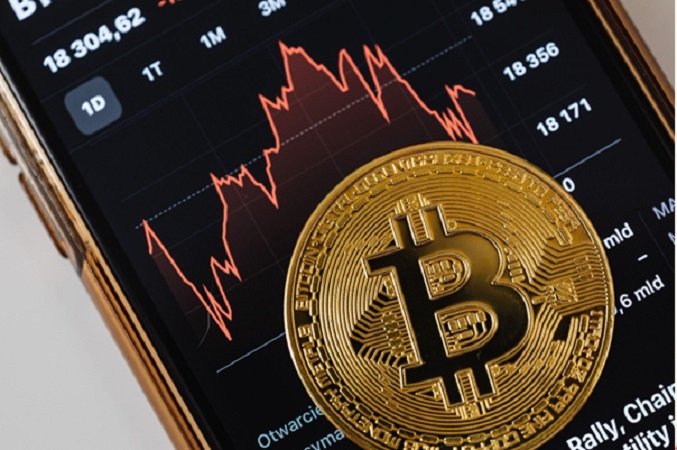
The Hong Kong Securities and Futures Commission (SFC) has recently announced that it is open to receiving applications for cryptocurrency exchange-traded funds (ETFs) that track spot prices of digital assets such as Bitcoin. This is a significant development for the crypto industry in Hong Kong, as it could pave the way for more institutional and retail investors to access the emerging asset class.

According to media reports, up to 10 asset managers are already preparing to launch crypto spot ETFs in Hong Kong, following the SFC’s guidance. Some of them have already filed their applications, while others are in the process of doing so. These asset managers include global firms such as Fidelity and Invesco, as well as local players such as HashKey and Arrano Capital.

Crypto spot ETFs are different from crypto futures ETFs, which are already available in some markets such as the US and Canada. Crypto spot ETFs track the actual prices of cryptocurrencies on spot exchanges, while crypto futures ETFs track the prices of contracts that bet on the future prices of cryptocurrencies. Crypto spot ETFs are generally considered to be more accurate and transparent, as they reflect the real-time supply and demand of the underlying assets.

However, crypto spot ETFs also face more regulatory challenges, as they require the ETF providers to ensure the safe custody and security of the digital assets. The SFC has issued a set of requirements for crypto spot ETFs, such as having a minimum fund size of HK$100 million, appointing qualified custodians with insurance coverage, conducting independent audits, and disclosing the risks and fees associated with the products.

The SFC has also stated that it will only consider applications for crypto spot ETFs that track a basket of cryptocurrencies with at least 10 constituents, and that no single constituent can exceed 40% of the basket’s weight.

This is to ensure diversification and reduce concentration risk. The SFC has also indicated that it will not approve crypto spot ETFs that track privacy-oriented coins such as Monero or Zcash, as they pose higher risks of money laundering and terrorist financing.

The launch of crypto spot ETFs in Hong Kong could have a positive impact on the crypto market, as it could attract more capital inflows, enhance liquidity, and improve price discovery. It could also boost Hong Kong’s competitiveness as a leading financial hub in Asia, as it could offer a wider range of investment options for both local and international investors.

However, crypto spot ETFs are not without risks, as they are subject to the volatility and uncertainty of the crypto market, as well as the regulatory and operational risks of the ETF providers and custodians. Therefore, investors should exercise caution and due diligence before investing in these products.

Invesco Galaxy files registration for spot Bitcoin ETF

Meanwhile, in a major development for the crypto industry, Invesco Galaxy has filed a registration statement with the U.S. Securities and Exchange Commission (SEC) for its spot Bitcoin ETF. The proposed fund, named Invesco Galaxy Bitcoin Trust, will invest directly in Bitcoin and provide exposure to the price movements of the leading cryptocurrency.

The filing comes at a time when the SEC has approved several Bitcoin futures ETFs but has not yet given the green light to any spot Bitcoin ETFs. A spot Bitcoin ETF would track the actual price of Bitcoin, rather than the price of Bitcoin futures contracts traded on regulated exchanges. This would potentially offer investors a more accurate and cost-effective way to access the crypto market.

According to the filing, Invesco Galaxy Bitcoin Trust will use Coinbase Custody Trust Company as its custodian and will obtain its Bitcoin price data from Bloomberg. The fund will charge a 0.65% annual fee, which is lower than the fees of most Bitcoin futures ETFs. The fund will also seek to minimize the tracking error between its net asset value (NAV) and the market price of Bitcoin.

Invesco Galaxy is a joint venture between Invesco, a global asset manager with over $1.5 trillion in assets under management, and Galaxy Digital, a diversified financial services firm focused on digital assets and blockchain technology. The partnership aims to leverage Invesco’s expertise in ETFs and Galaxy’s leadership in crypto innovation.

The filing of Invesco Galaxy Bitcoin Trust marks another milestone in the quest for a spot Bitcoin ETF in the U.S., which many investors and industry experts believe would boost the adoption and legitimacy of crypto assets. However, the SEC has been cautious and skeptical about approving such a product, citing concerns over market manipulation, investor protection, and regulatory oversight.

It remains to be seen whether Invesco Galaxy’s spot Bitcoin ETF will receive a favorable response from the SEC, or whether it will face the same fate as many previous applications that have been rejected or withdrawn. The SEC has until 75 days after the filing date to make a decision, unless it extends the review period. In any case, Invesco Galaxy’s move signals that the demand and interest for a spot Bitcoin ETF is still strong and growing.

Standard Charter Bank says Bitcoin??could see $50-100 billion in spot ETF inflows upon approval in 2024

One of the most anticipated events in the crypto space is the approval of a Bitcoin spot exchange-traded fund (ETF) by the US Securities and Exchange Commission (SEC). A Bitcoin spot ETF would allow investors to buy and sell shares of a fund that holds actual bitcoins, rather than derivatives or trusts. This would provide more exposure, liquidity and legitimacy to the leading cryptocurrency.

According to a recent report by Standard Charter Bank, a global financial institution, a Bitcoin spot ETF could attract $50-100 billion in inflows in the first year of its launch. The report estimates that the total market capitalization of Bitcoin could reach $1.8-2.4 trillion by 2024, assuming a spot ETF approval and a moderate increase in institutional adoption.

The report also compares the potential impact of a Bitcoin spot ETF to that of a gold ETF, which was launched in 2004 and boosted the demand and price of the precious metal. The report argues that a Bitcoin spot ETF would have a similar effect, as it would lower the barriers to entry and increase the accessibility and transparency of the crypto market.

The report acknowledges that there are still some challenges and uncertainties regarding the regulatory approval of a Bitcoin spot ETF, such as the lack of clear rules, the volatility and security risks of the crypto market, and the potential competition from other crypto products. However, the report also notes that there are some positive signs, such as the growing interest and involvement of institutional investors, regulators and policymakers in the crypto space.

The report concludes that a Bitcoin spot ETF would be a game-changer for the crypto industry, as it would enhance the credibility, liquidity and efficiency of the market. The report also suggests that investors should prepare for this scenario, as it could have significant implications for the valuation and adoption of Bitcoin.

X to launch peer-to-peer payments, SEC’s X account Compromised by Hackers

0

X, the leading social media platform, has announced that it will launch a peer-to-peer payment service in 2024. The service, which will be integrated into X’s existing app, will allow users to send and receive money from their friends and contacts without leaving the platform.

According to X’s CEO, the payment service is part of X’s vision to create a more connected and inclusive world. “We believe that money should be as easy to share as a message, a photo, or a video. With our payment service, we want to empower our users to support each other, exchange value, and access opportunities across the globe,” he said in a press release.

The payment service will use X’s own digital currency, which will be backed by a basket of fiat currencies and other assets. Users will be able to convert their local currency into X’s digital currency and vice versa, as well as store their funds in a digital wallet provided by X. The service will also offer low fees, fast transactions, and high security.

X’s payment service will compete with other peer-to-peer payment platforms such as PayPal, Venmo, and Zelle, as well as emerging players in the cryptocurrency space. However, X claims that its service will have a competitive edge due to its large user base, global reach, and social features. “We are not just building a payment system; we are building a social payment system.

Our users will be able to interact with each other, send messages, stickers, and emojis, and even request or split payments within the app. We think this will make payments more fun and engaging,” said X’s head of product.

Some of the possible implications

X could gain a competitive edge over other social media platforms that do not offer such a service, such as Y and Z. This could increase X’s user base, engagement, and revenue. X could challenge the dominance of existing peer-to-peer payment apps, such as A and B, by leveraging its large network of users and its social features. For example, X could enable users to send money to their friends along with a message, a sticker, or a video.

X could disrupt the traditional banking system by offering a cheaper, faster, and more convenient way of transferring money. This could reduce the reliance on banks and credit cards and increase the adoption of digital payments. X could face regulatory hurdles and security risks as it enters the complex and sensitive domain of financial services. For instance, X would have to comply with anti-money laundering and data protection laws in different countries and ensure the safety and privacy of its users’ financial information.

X could create new opportunities and challenges for the consumers who use its payment service. On one hand, consumers could benefit from having an easy and accessible way of sending and receiving money. On the other hand, consumers could face issues such as fraud, scams, or identity theft.

X’s launch of peer-to-peer payments is a bold and ambitious move that could have far-reaching consequences for the fintech industry, the banking sector, and the consumers. It remains to be seen how X will navigate the challenges and opportunities that lie ahead.

X’s payment service is expected to launch in 2024 in select markets, with plans to expand to more regions over time. Users who are interested in joining the service can sign up for early access on X’s website.

SEC’s X account was Compromised by Hackers

Meanwhile, in a shocking turn of events, the official Twitter account of the Securities and Exchange Commission (SEC) was hacked by an unknown group of cybercriminals on Tuesday. The hackers posted several misleading and false tweets about the stock market, causing panic and confusion among investors and the public.

The SEC quickly took down the hacked tweets and regained control of the account. The agency issued a statement apologizing for the incident and assuring that it was working with law enforcement to investigate the breach and hold the perpetrators accountable. The SEC also advised the public to disregard any information posted by the hacked account and to verify any news or updates from official sources.

Macro Replaces Elisabeth Borne with 34-year-old Gabriel Attal as the youngest French Prime Minister

0

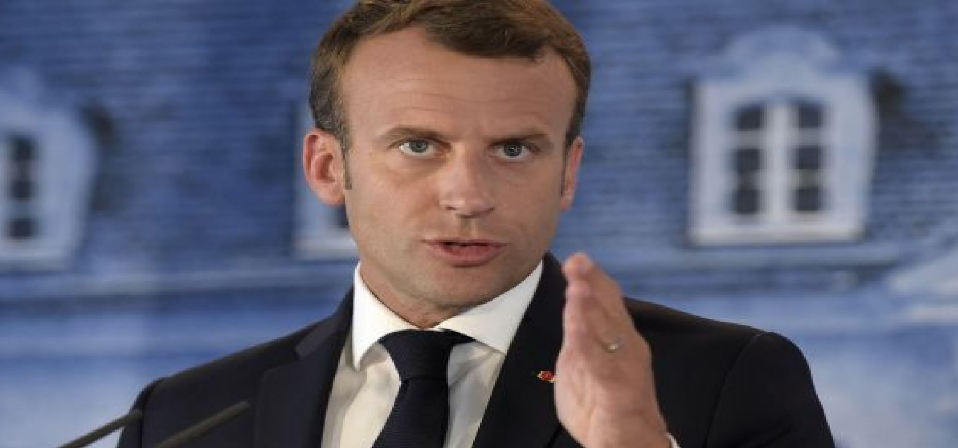
President Emmanuel Macron announced his spokesman and loyal ally, Gabriel Attal, to succeed him as prime minister. Attal, 34, thus becomes the youngest head of government in the history of France, beating the record held by Laurent Fabius since 1984.

The reshuffle is part of Macron’s strategy to invigorate his second term, particularly in anticipation of the upcoming European Parliament elections later this year. Gabriel Attal, born in 1989, assumes the role of France’s prime minister at the age of 34, a distinction that places him among other young leaders in European countries in recent years.

Attal, who previously served as secretary of state to the prime minister for youth and engagement, is considered close to Macron, having worked with him since his 2017 presidential campaign. He is also the first openly gay prime minister of France, having come out in 2018 during an interview with Paris Match.

The reasons for Elisabeth’s surprise resignation remain unclear, but some political observers speculate that it is a strategy to prepare for the 2024 presidential election, where Macron is expected to face far-right candidate Marine Le Pen. By temporarily stepping down from power, Macron could distance himself from criticism of his handling of the Covid-19 health and economic crisis and present himself as a candidate of renewal.

A profile of Gabriel Attal reveals his rapid rise in the political arena, progressing from a work experience recruit in the health ministry to becoming France’s youngest prime minister. Attal, who hails from a privileged background, has demonstrated effective communication skills, earning him the moniker “the Word Sniper.”

Born to Yves Attal, a lawyer and film producer of Tunisian Jewish descent, and Marie de Couriss, with roots in Orthodox Christians from Odesa, Attal is the first openly gay leader of the French government.

International leaders have begun congratulating Gabriel Attal, with French President Emmanuel Macron expressing confidence in Attal’s energy and commitment.

As discussions unfold about Attal’s potential premiership, critics question the choice, emphasizing his age and relatively short tenure as education minister. However, Attal’s trajectory suggests a promising and dynamic leadership style.

The official announcement of France’s new prime minister is anticipated later in the day, with Gabriel Attal emerging as the leading candidate.

Attal will have the daunting task of leading the country in a difficult period, marked by strong political polarization, a rise in populism and terrorism, as well as a climate emergency. He will also have to contend with a fragile parliamentary majority and tense relations with some European partners, notably Germany and Hungary.

Attal said he intended to continue Macron’s reforms, including on pensions, unemployment insurance and the environment. He also promised to strengthen social dialogue and citizen participation, drawing on his experience of youth and engagement. Finally, he affirmed his desire to defend republican values and secularism, while respecting diversity and the rights of minorities.

The new prime minister is expected to announce the composition of his government in the coming days, after consulting the president of the Senate, Gérard Larcher, and the president of the National Assembly, Richard Ferrand. According to some sources, he could appoint several personalities from civil society or the associative world, in order to renew the French political landscape.

NTA Acquires AFCON Broadcasting Rights After DStv’s Loss

0

The National Television Authority (NTA) has secured broadcasting rights to air all 52 matches of the highly anticipated 2023 African Cup of Nations (AFCON), causing a monumental shift in African football broadcast exclusivity.

This disrupting move comes in the wake of MultiChoice’s announcement of their inability to broadcast the tournament on DSTV and SuperSport, leaving a vacuum in coverage just days before the kickoff.

NTA announced this groundbreaking development via their official platform on X, confirming a strategic partnership with Afro Sports to bring the AFCON spectacle to Nigerian screens. The announcement, made on Wednesday, highlighted the signing of a memorandum of understanding between NTA and Afro Sports for the transmission of the entire tournament, setting the stage for an unprecedented level of access for Nigerian viewers.

Following the exclusivity shake-up in African football broadcasting, which saw Togolese broadcaster New World TV secure the broadcasting rights for all CAF competitions in the Sub-Saharan Africa region, including the 2023 and 2025 AFCON tournaments, Nigerian viewers faced an unexpected blackout on DStv. This development upended the status quo, ousting previous holders like SuperSport International and Canal Plus from the scene.

The three-year deal inked between New World TV and CAF covers rights for a staggering 13 competitions, spanning 46 countries in the region. This comprehensive agreement extends its reach far beyond the AFCON tournaments, encompassing various competitions, and mandates that free-to-air stations within these nations acquire broadcasting rights through sublicensing facilitated by New World TV.

The abrupt blackout on DStv, a longstanding source of football content across Africa, has left Nigerian viewers disheartened, particularly due to the looming AFCON tournament. The sudden unavailability of the platform jeopardizes the chance for Nigerian football enthusiasts to witness the Super Eagles’ quest for a coveted fourth AFCON title.

However, this groundbreaking shift in broadcasting rights facilitated by NTA has come to the rescue of Nigerian football enthusiasts, who now have the opportunity to catch every moment of the AFCON action from the comfort of their homes. With NTA at the helm, fans across the nation can eagerly anticipate witnessing all the thrills, goals, and drama that define this prestigious continental football tournament.

The AFCON 2023 tournament is set to kick off with a high-stakes Group A match between hosts Ivory Coast and Guinea Bissau at the Alassane Ouattara Stadium in Abidjan on January 13, 2024. Nigeria’s Super Eagles, positioned in Group A alongside Ivory Coast, Equatorial Guinea, and Guinea Bissau, are slated to launch their campaign against Equatorial Guinea at the same venue on Sunday, January 14, at 3 pm Nigerian time.

The team aims to seize their chance at clinching a fourth AFCON title, igniting hopes and fervor among Nigerian football enthusiasts.

NTA’s acquisition of the AFCON broadcasting rights not only assures comprehensive coverage but also signifies a monumental shift in the accessibility and availability of top-tier football events to the Nigerian audience.