DD
MM
YYYY

PAGES

DD
MM
YYYY

spot_img

PAGES

Home Blog Page 3473

Will Tshisekedi’s Re-election Ease Concerns in Congo?

0

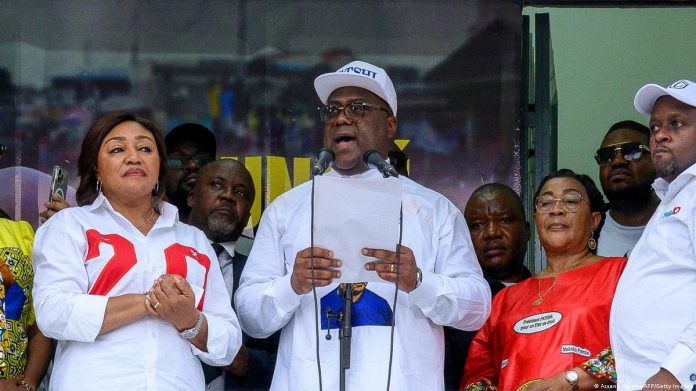
The Democratic Republic of Congo (DRC) has recently held its second presidential election since the end of the civil war in 2003. The incumbent, Felix Tshisekedi, has claimed a landslide victory over his main rival, Martin Fayulu, who has rejected the results and called for a recount.

The election was marred by allegations of fraud, violence and logistical problems, raising doubts about its credibility and legitimacy. The international community has expressed concern about the stability and security of the country, which is rich in natural resources but plagued by poverty, corruption and armed conflicts.

Tshisekedi, who took office in 2019 after a controversial election that saw him succeed Joseph Kabila, who ruled for 18 years, has faced many challenges during his first term. He has struggled to assert his authority over a coalition government dominated by Kabila’s allies, who control most of the key ministries and institutions.

He has also faced resistance from the powerful military and security forces, which have been accused of human rights violations and involvement in illicit activities. Tshisekedi has tried to implement some reforms and fight corruption, but his efforts have been hampered by political infighting, institutional inertia and lack of resources.

Tshisekedi’s re-election campaign was based on his promise to bring change and development to the country, as well as to restore peace and security in the eastern regions, where dozens of armed groups operate, and millions of people have been displaced by violence. He also vowed to improve relations with neighboring countries and regional organizations, such as Rwanda, Uganda and the African Union (AU), which have a significant influence on the DRC’s affairs.

Tshisekedi has sought to distance himself from Kabila and his allies, and to form a new parliamentary majority with the support of opposition parties and civil society groups.

However, Tshisekedi’s re-election does not guarantee that he will be able to deliver on his promises or ease the concerns of the Congolese people and the international community. He still faces many obstacles and challenges, both internally and externally.

Internally, he will have to deal with the legal challenges and protests from Fayulu and his supporters, who claim that the election was rigged and that they represent the true will of the people. He will also have to manage the expectations and demands of his new allies, who may have different agendas and interests than him. He will also have to address the deep-rooted problems of governance, economy, social services, human rights and justice that affect the lives of millions of Congolese.

Externally, he will have to navigate the complex and often conflicting interests of regional and international actors, who have different stakes and perspectives on the DRC’s situation. He will have to balance his own sovereignty and autonomy with the need for cooperation and assistance from these actors. He will also have to deal with the ongoing threats and challenges posed by armed groups, cross-border tensions, illegal exploitation of natural resources, humanitarian crises and epidemics.

Tshisekedi’s re-election may offer an opportunity for a new beginning for the DRC, but it also poses many risks and uncertainties. The country is still far from achieving stability, democracy and development. The Congolese people deserve better than a flawed election and a contested outcome.

They deserve a peaceful transition of power that reflects their aspirations and respects their rights. They deserve a government that works for their interests and welfare, not for personal or partisan gains. They deserve a future that is free from violence, poverty and injustice.
Nigerian Petroleum Marketers Predict Potential Surge in Petrol Prices to N1,200/liter

0

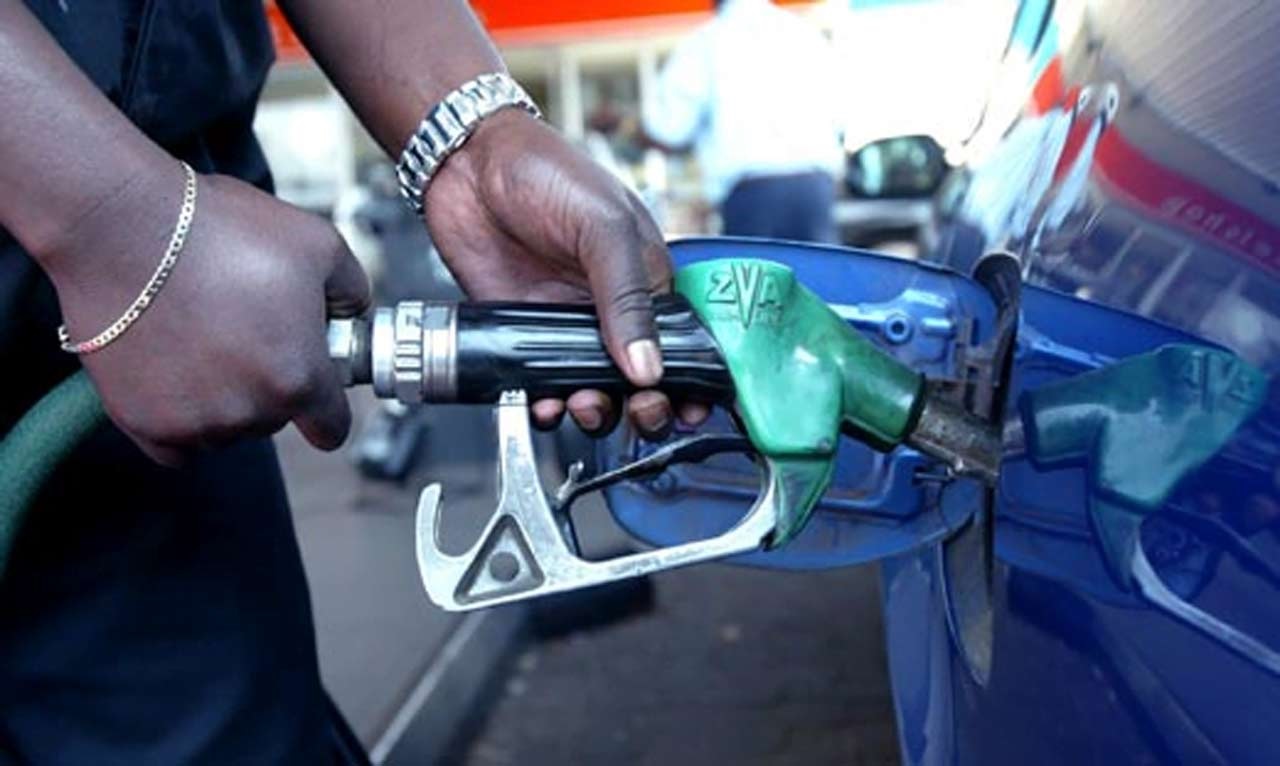
Against the backdrop of growing volatility in Nigeria’s FX market, the Independent Petroleum Marketers Association of Nigeria (IPMAN) has foreseen a substantial rise in pump prices, projecting a potential escalation to N1,200 per liter for petrol in the Nigerian market.

Chief Ukadike Chinedu, the National Public Relations Officer of IPMAN, shed light on the mounting subsidy on petrol, asserting that in a free market scenario, the cost of the commodity could easily reach N1,200 per liter.

Ukadike backed this forecast by drawing comparisons with international petrol prices, specifically in the United States. He highlighted that premium petrol retails at $2.99, while super petrol is priced between $3.10 to $3.15 per gallon in the U.S. market. Converting these figures using the prevalent exchange rate in Nigeria’s parallel market, the cost equates to over N3,000 per gallon.

“To be pragmatic in this analysis let’s consider the cost of petrol today in the United States. For premium petrol, it is $2.99, while super petrol sells for $3.15 or $3.10 depending on the part of that country where you are making the purchase,” he told The Punch.

He said that historically, in a free market setup, petrol tends to be priced higher than diesel, which currently sells for over N1,000 per liter in Nigeria.

“So if you consider the cost of diesel, dollar and other international factors, the price of petrol in Nigeria should be around N1,200/litre, but the government is subsidizing it, which to an extent is understandable,” he stated.

Illustrating the quasi-subsidy model, Ukadike clarified that the government wasn’t totally eliminating the subsidy but rather opting for a partial removal, taking out approximately 50% of the subsidy.

The NNPCL disagrees

However, contradicting these projections, the Nigerian National Petroleum Company Limited (NNPC Ltd) through its chief corporate communications officer, Olufemi Soneye, rebuffed any immediate rise in petrol prices. Soneye’s statement cautioned against panic-buying and reassured the public that there were no immediate plans to escalate the cost of petrol.

Ukadike, however, remained hopeful, suggesting that the commencement of operations at the Port Harcourt and Dangote refineries could potentially lead to a reduction in the prices of refined petroleum products. He emphasized his belief that the functioning of these refineries would play a pivotal role in stabilizing prices and decreasing the nation’s reliance on imported products.

The conflicting projections between petroleum marketers and the NNPC have left consumers uncertain about potential fuel price hikes. While the NNPC seeks to allay fears, the projections from IPMAN representatives sow seeds of caution and uncertainty, leaving the public in a state of cautious anticipation regarding the future cost of petrol.

Big win for Adani Group as India Supreme Court rules in its favour

0

The Adani Group, one of India’s largest conglomerates, has scored a major victory in the Supreme Court, which ruled in its favour in a dispute over the development of an airport in Kerala. The apex court upheld the validity of the lease agreement between the Adani Group and the Airports Authority of India (AAI), and dismissed the petitions filed by the Kerala government and others challenging the deal.

The Adani Group had won the bid to operate and develop six airports in India, including the Thiruvananthapuram International Airport, in 2019. However, the Kerala government opposed the move, claiming that it had a stake in the airport and that the transfer of management to a private entity would affect the state’s interests. The Kerala government also alleged that the bidding process was flawed and lacked transparency.

The Supreme Court, however, rejected these arguments and held that the AAI had the authority to lease out the airport to the Adani Group, as per the provisions of the Airports Authority of India Act, 1994. The court also noted that the Adani Group had fulfilled all the eligibility criteria and had offered the highest per-passenger fee to the AAI. The court said that there was no evidence of any malafide or arbitrariness in the award of the contract.

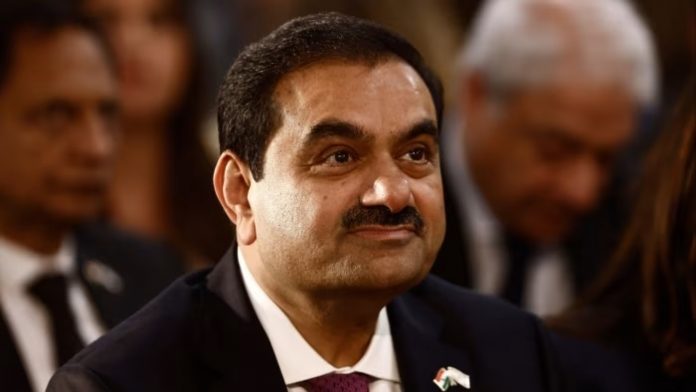
The ruling is a significant boost for the Adani Group, which has been expanding its presence in various sectors, including energy, mining, ports, logistics, and defence. The group has also faced criticism and controversies over some of its projects, especially in the environmental and social domains. The group’s chairman, Gautam Adani, is one of the richest men in India and a close ally of Prime Minister Narendra Modi.

The ruling is a major victory for Adani Groups, which had invested around Rs 10,000 crore in developing the coal blocks and setting up power plants in Odisha. The company had argued that it had followed all the procedures and guidelines for obtaining the coal blocks and that the cancellation was arbitrary and illegal. The company had also claimed that it had suffered huge losses due to the cancellation and sought compensation from the central government.

The ruling has several implications for the coal sector and the power sector in India. Some of the possible implications are:

The ruling may boost the confidence of private players in investing in coal mining and power generation projects in India, as it shows that the judiciary can protect their interests and rights in case of any disputes or policy changes.
The ruling may also encourage more competition and innovation in the coal sector, as it may open up more opportunities for private players to participate in coal block auctions and bidding processes.

The ruling may also have an impact on the environment and climate change, as it may lead to more coal mining and consumption in India, which is already one of the largest emitters of greenhouse gases in the world. The ruling may also affect the implementation of India’s commitments under the Paris Agreement, which aims to reduce the dependence on fossil fuels and increase the share of renewable energy sources.

The ruling may also have a social and political impact, as it may trigger protests and opposition from various groups and parties, who may raise concerns over the environmental, human rights, and land acquisition issues related to coal mining and power projects. The ruling may also affect the relations between the central government and the state governments, especially those ruled by different parties, as it may create conflicts over the allocation and distribution of natural resources and revenues.

The Adani Group has welcomed the Supreme Court’s verdict and said that it is committed to developing world-class airports in India. The group also said that it respects the sentiments of the people of Kerala and will work with all stakeholders to ensure the growth and development of the state.

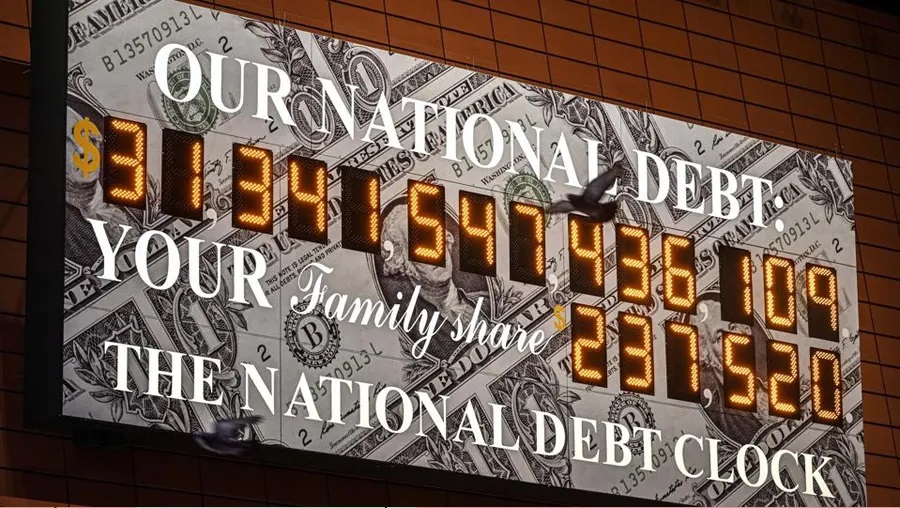
US National Debt Reaches $34 trillion

0

The US National Debt has reached a new milestone: $34 trillion. This is the total amount of money that the federal government owes to its creditors, both domestic and foreign. The debt has been growing steadily for decades, but it has accelerated in recent years due to the economic impact of the COVID-19 pandemic and the stimulus measures enacted by Congress.

The debt is not only a huge number, but also a serious challenge for the future of the country. It limits the fiscal space for public spending on infrastructure, education, health care, and other priorities. It increases the risk of a debt crisis if interest rates rise or investors lose confidence in the US creditworthiness. It also imposes a burden on future generations, who will have to repay the debt or face the consequences of default.

How did the US get into this situation? What are the implications of such a high level of debt? And what can be done to reduce it? We will explore these questions and provide some insights from economic theory and history. We will also cite some reliable sources that support our arguments and offer more information on this topic.

Growth: The US debt has been growing faster than its gross domestic product (GDP) for several years, reaching 127% of GDP in 2020. This means that the US is spending more than it is producing, and relying on borrowing to finance its deficit. While some level of debt can be beneficial for stimulating economic activity and investment, excessive debt can have negative consequences for long-term growth.

For example, high debt can crowd out private sector borrowing, reduce public investment in infrastructure and education, and limit fiscal space for responding to shocks and crises. Moreover, high debt can erode investor confidence and increase the risk of a debt crisis or default, which could trigger a severe recession.

Inflation: The US debt is largely denominated in its own currency, the US dollar. This gives the US an advantage over other countries that borrow in foreign currencies, as it can print money to service its debt without facing exchange rate risk.

However, this also creates the possibility of inflation, which is the general rise in the prices of goods and services over time. Inflation reduces the purchasing power of money and erodes the real value of debt.

While inflation has been low and stable in the US for decades, some economists warn that the unprecedented fiscal and monetary stimulus in response to the COVID-19 pandemic could lead to higher inflation in the future.

Higher inflation could hurt consumers and businesses, especially those with fixed incomes or contracts. It could also force the Federal Reserve to raise interest rates to curb inflation, which could slow down economic growth and increase the cost of servicing debt.

Interest rates: The US debt is influenced by the level and direction of interest rates, which are determined by the supply and demand for money in the market. The US government borrows money by issuing bonds, which are promises to pay back a certain amount of money with interest over time.

The interest rate on these bonds reflects the risk and return that investors expect from lending to the US government. The higher the interest rate, the more expensive it is for the US government to borrow money and service its debt.

The lower the interest rate, the cheaper it is for the US government to borrow money and service its debt. Interest rates are affected by various factors, such as inflation expectations, economic growth prospects, monetary policy actions, global market conditions, and investor sentiment.

Generally speaking, higher inflation, lower growth, tighter monetary policy, weaker global demand, and lower confidence tend to push interest rates up. Lower inflation, higher growth, looser monetary policy, stronger global demand, and higher confidence tend to push interest rates down.

Trade: The US debt has implications for its trade balance with other countries, which is the difference between its exports and imports of goods and services. The US has been running a trade deficit for decades, meaning that it imports more than it exports.

This implies that the US consumes more than it produces and relies on foreign savings to finance its consumption. The trade deficit is partly financed by issuing debt to foreign investors, who buy US assets such as bonds, stocks, real estate, and businesses. This increases the US net foreign debt position, which is the difference between its assets and liabilities abroad.

The trade deficit also affects the value of the US dollar relative to other currencies, which influences the competitiveness of US goods and services in international markets. A weaker dollar makes US exports cheaper and imports more expensive, which could reduce the trade deficit and boost domestic production. A stronger dollar makes US exports more expensive and imports cheaper, which could increase the trade deficit and reduce domestic production.

African Startups Raised $2.9 Billion in Funding in 2023, A 39% Year-on-Year Drop

0
Fund, money cash dollar

A recent report by Africa: The Big Deal, which provides a database and insights on start-up funding in Africa, has reported that start-ups in Africa raised at least $2.9 billion in funding in 2023.

The report disclosed that funding on the continent fell -39% year-on-year (YoY), compared to 2022, where African startups raised $4.8 billion.

Despite this downturn, the report highlighted that the results were better than anticipated, given the global slowdown in venture capital (VC) activity during the year.

Recall that VC funding in the African startup ecosystem significantly declined in 2023, causing concerns amongst experts about the future of the once fast-growing sector.

This funding crunch triggered mass layoffs, slashed valuations, and the liquidation of several African startups.

Part of the report reads,

Last year, startups in Africa raised at least $2.9 billion through deals $100k and above. That’s if we count all types of deals (equity, debt, grants, etc.), but exclude exits. For reference, we tracked 19 exits in 2023 worth over half a billion dollars, almost entirely thanks to two Tunisian success stories: InstaDeep’s acquisition by BioNTech and Expensya’s acquisition by Medius.”

Overall, 500 start-ups raised at least $100k in Africa in 2023, compared to 821 in 2022, signifying that the average deal size has remained stable between 2022 and 2023.

Funding on the continent fell -39% YoY. In the context of a global slowdown in VC activity, this performance is better than most might have feared. 500 start-ups raised at least $100k in Africa in 2023, compared to 821 in 2022 (also -39% YoY). This therefore means that the average deal size has remained stable between 2022 and 2023, again a pretty encouraging fact given the global climate”, the report stated.

Beyond the total number, the firm reported that one interesting thing to note is that many start-ups in Africa have turned to debt to finance their growth. It reported that The amount of debt raised reached $1.1 billion, a +47% growth YoY; in comparison, equity funding fell by -57% during the same period.

In 2022, start-ups in Africa had raised 19 cents of debt for every $1 of equity they’d secured. In 2023, this number went up to 65 cents, and debt made up 38% of all funding raised (vs. 16% in 2022).

The trend of startups turning to debt financing is however not isolated to 2023. According to a recent report by Briter Bridges, African startups borrowed $2.1 billion between 2014 and 2023. Over the last five years, debt financing in the African startup ecosystem increased significantly due to declining equity funding.

From 2019 to H1 2023, debt as a share of the total funding volume for ventures in Africa surged from 4 percent to 26 percent. The decline in equity funding played a pivotal role in this shift, dropping from $2.6 billion in 2022 to $1.4 billion in 2023.

Briter Bridges highlighted that over the past decade, more than $2 billion in disclosed debt funding has been raised by digital, technology-enabled, and green companies in Africa from over 140 funders, accounting for more than 200 deals.