DD
MM
YYYY

PAGES

DD
MM
YYYY

spot_img

PAGES

Home Blog Page 3476

Pushd (PUSHD) is tipped to be the presale of 2024 and overtake Toncoin (TON) and Litecoin (LTC)

3

In the much awaited presale events of 2024, Pushd (PUSHD), a rising star in the cryptocurrency space, is poised to upend long-standing titans like Toncoin (TON) and Litecoin (LTC). In addition to entering the market, Pushd is taking a bold stand to change the rules and reshape peer-to-peer decentralized transactions in the web3 environment.

Toncoin (TON): Navigating Regulatory Challenges and Ongoing Development

Originally led by Telegram, Toncoin (TON) is a native of The Open Network TON and was abandoned by its social media founder due to regulatory issues with US authorities. Despite all odds, independent developers took control and advanced the project. With forward-thinking projects like TON Bridge and TON Swap, Toncoin (TON) is a monument to interoperability, speed, and adaptability. At $2.38 right now, Toncoin (TON) has increased in value by 5.79% over the past day, exhibiting impressive price performance. Toncoin (TON) is being watched closely as its continuous development positions it as a contender in the upcoming bull market.

Litecoin (LTC): A Decentralized Powerhouse Showing Resilience in Market Dynamics

With a record 1 million transactions per day in 2023, Litecoin (LTC), the decentralized asset enabling borderless transactions, reached a significant milestone. December saw strong success from Litecoin (LTC), which showed tenacity in the face of market volatility with a 7% price gain, active addresses, and daily transactions. The price of Litecoin (LTC) rose from $58.83 on September 11 to a local high of $76.28 on December 8, despite profit-taking actions. This indicates a significant association with Ethereum. Large wallet investors are making calculated moves, as seen by the Santiment chart, which supports the burstiness and durability of Litecoin’s (LTC) upward trend.

Pushd (PUSHD): Disrupting the Norms By Establishing A Web3 Marketplace

Pushd is a newcomer in the crypto space, rising as a decentralized, peer-to-peer platform offering a user-friendly, decentralized experience for web3 marketplaces. It eliminates intermediaries and allows users to list products or auction items seamlessly while setting prices. The user-friendly process, free from extensive KYC documentation, will add simplicity and privacy.

Pushd will support various cryptocurrencies and offer a swap service for quick currency exchange. It will address challenges faced by traditional platforms by ensuring instant fund release upon transaction completion. In a global e-commerce sector projected to be valued at over 5 trillion USD, Pushd’s potential for growth will be evident.

Investors participating in the presale will contribute to the project’s success and gain governance over the platform, empowering them to propose changes for an enhanced user experience. Pushd will distinguish itself with lower fees, instant deposits and withdrawals, and a commitment to security through blockchain technology.

Token holders will actively participate in decision-making processes, fostering community-driven involvement. The enticing proposition of a revenue share of platform earnings will emphasize the prospect of Pushd overtaking Toncoin (TON) and Litecoin (LTC).

For more information about the Pushd (PUSHD) Presale, visit their website.

A New Era in Global Taxation Begins as the Implementation of the Minimum Global Tax Commences

2

In a pivotal moment for global economics, the curtains have risen on a new era in international tax policy. This Monday marked the commencement of a groundbreaking reform that heralds the introduction of a minimum global tax for multinational corporations, a watershed development spearheaded by a coalition of 140 countries.

The primary goal? To address long-standing loopholes and pave the way for an estimated $220 billion in additional annual revenue.

After nearly three years of negotiations, major economies have embarked on the implementation of an effective corporate tax rate of at least 15%, marking a substantial shift in the tax landscape. This interconnected system empowers participating countries to impose “top-up” taxes should a multinational corporation’s profits fall below this threshold in any jurisdiction.

The Organization for Economic Cooperation and Development (OECD), the driving force behind these reforms, foresees a potential 9% surge in global tax revenue, translating to a staggering $220 billion annually.

Jason Ward, principal analyst at the Centre for International Corporate Tax Accountability and Research, lauded the reform, asserting that it will significantly curtail the utilization of tax havens by companies and countries, putting a halt to what was once a concerning “race to the bottom.”

“It will reduce incentives from companies to use tax havens and incentives for countries to be tax havens,” he said, adding that it puts “a serious brake on what was a race to the bottom”.

The initial wave of jurisdictions adopting this global minimum tax includes the European Union, the United Kingdom, Norway, Australia, South Korea, Japan, and Canada. These rules will apply to multinational companies with an annual turnover exceeding €750 million. Notably, countries often considered tax havens, such as Ireland, Luxembourg, the Netherlands, Switzerland, and Barbados with its former corporate tax rate of 5.5%, have joined this transformative initiative.

However, two global economic powerhouses, the United States and China, have not yet introduced legislation to enforce this reform, despite initially supporting the agreement back in 2021. Nevertheless, the wide-scale impact of these reforms is anticipated, as the interconnected nature of the system incentivizes further adoption by other nations.

The OECD-led agreement encompasses two key pillars: the first aims to ensure multinational corporations pay taxes where they conduct business, while the second establishes a universal minimum corporate tax rate. Pascal Saint-Amans, the OECD’s former tax chief, emphasized that the successful implementation of the second pillar necessitates a critical mass of countries, creating a scenario where avoiding compliance becomes increasingly challenging.

“Pillar two only needs a critical mass of countries to implement it,” he said. “Nobody has found a silver bullet where you can avoid it.”

Anticipated outcomes of these reforms include a potential redistribution of revenue to countries hosting substantial low-taxed corporate profits, such as Ireland, a consequence not initially envisaged by proponents.

Manal Corwin, head of tax at the OECD, noted that the early stages might offer a mere snapshot of the reforms’ impact, with the future trajectory likely channeling more taxes to where economic activities genuinely transpire.

“This will shift over time,” she told The Financial Times. “The future footprint is the value of what’s being delivered.” Corwin added that through the elimination of distortions in the system, she ultimately expected more taxes to be paid “where economic activities take place”.

Furthermore, the introduction of these reforms is poised to intensify tax competition among jurisdictions, potentially prompting the creation of credits, grants, or subsidies. The OECD confirmed last year that the global minimum tax calculations would offer preferential treatment for specific tax credits, including those within the US’s Inflation Reduction Act, amplifying the potential for altered economic landscapes across the globe.

However, this seismic shift in global tax policy hasn’t gone unchallenged. Recent actions by Nigeria, Ghana, South Africa, and other nations within the United Nations signal a desire to assert a more substantial role in international tax matters. Growing disillusionment with the OECD-led negotiations has prompted these nations to advocate for a greater UN presence in creating a convention on international tax cooperation.

The evolving global tax terrain, where the balance of power and economic influence undergoes a tectonic shift, is expected to wield rippling effects through economies worldwide, ushering in a new paradigm in global fiscal policies.

OpenAI Records $1.6 Billion Revenue Surge in 2023 Despite CEO Ouster Drama

0

OpenAI, the AI research organization responsible for the development of ChatGPT, has reported a staggering surge in revenue, reaching a monumental $1.6 billion in annualized income for the year 2023, according to The Information.

This marked a significant increase from $1.3 billion just a few months prior, revealing the company’s meteoric rise in generating income, largely credited to the success of its ChatGPT language model.

OpenAI boasts 24 institutional investors, with notable names such as Microsoft, Y Combinator, and Sequoia Capital among them. Additionally, prominent figures including Peter Thiel and five others serve as Angel Investors for OpenAI. In 2023, Microsoft substantially increased its investment in OpenAI, contributing approximately $13 billion to support the organization’s endeavors.

However, this financial triumph was overshadowed by the dramatic ouster and subsequent reinstatement of CEO Sam Altman, a co-founder of the company. The sequence of events began with Altman’s sudden dismissal by the OpenAI board under ambiguous circumstances, leading to widespread uproar among the company’s staff.

The board’s decision to remove Altman was shrouded in mystery, citing vague allegations of lacking transparency about OpenAI’s work in his communication with the board. This sparked intense speculation and left unanswered questions regarding the true reasons behind his abrupt firing.

Altman, in an exclusive podcast appearance with Trevor Noah, recounted the shocking moment when he received the call notifying him of his termination while in Las Vegas for the Formula 1 Grand Prix. Describing it as surreal and chaotic, Altman confessed to feeling confused and overwhelmed by the sudden turn of events, stating, “It felt like a dream…it was obviously…painful.”

“It felt like a dream,” Altman told Noah. “I was confused. It was chaotic. It did not feel real. It was obviously…painful. But confusion was just the dominant emotion at that point. It was like I was just in a fog, in a haze,” he added.

Following his dismissal, Altman found himself inundated with messages, causing his smartphone to freeze temporarily due to the flood of notifications, including calls from influential entities like Microsoft. Despite the ordeal, Altman swiftly returned to California, showing resilience and determination to move forward.

During the podcast, Altman refrained from making negative remarks about OpenAI, hinting at the toll the dismissal had taken on him. He expressed optimism about bouncing back but acknowledged the undeniable impact the experience had on him, admitting, “I think it’d be impossible to go through this and not have it take a toll on you.”

In tandem with its astonishing revenue surge, OpenAI also witnessed an exponential spike in user growth throughout 2023. The user base for its AI technologies, prominently the ChatGPT language model, expanded at an unprecedented rate, capturing the attention of various industries and users worldwide. Reports suggest a manifold increase in user engagement and adoption, solidifying OpenAI’s foothold of 100 million users within the first quarter of its launch.

Looking ahead to 2024, industry experts and financial analysts project a continued upward trajectory for OpenAI’s revenue generation. Optimistic estimates foresee a substantial climb in revenue, with projections reaching beyond the $2 billion mark. This forecast stems from the company’s consistent innovation and the sustained popularity of its AI models, reflecting the persistent demand for advanced AI solutions across diverse sectors.

Despite this positive revenue outlook, the recent turmoil surrounding the abrupt CEO ouster and subsequent reinstatement of Sam Altman has cast a shadow of uncertainty over OpenAI’s internal stability.

The aftermath of these tumultuous events remains a subject of intense speculation within the tech and AI communities, with stakeholders keenly observing how the company navigates its leadership challenges while maintaining its technological advancements and financial growth in 2024.

Tinubu’s-Led Administration Discloses Commitment to Securing Solar Power Access to MSMEs in Nigeria

1
Concept of house in paper on blue color background for real estate property industry

President Bola Tinubu-led administration has disclosed its commitment to securing alternative power sources, (Solar Power energy), for Micro, Small, and Medium Enterprises (MSMEs) across Nigeria.

This was disclosed by Temitola Adekunle-Johnson, the Senior Special Assistant to the President on Job Creation and MSMEs. Mr. Johnson said this initiative is aimed at sustaining these businesses, due to the unstable power supply in the country.

He added that the administration is working effortlessly to provide reliable power alternatives, to MSMEs, due to the pivotal role they play in the nation’s economy.

In his words,

I am aware that we are in deep discussions with the Rural Electrification Agency (REA) to ensure solar power access for MSMEs across many markets, so, what we are doing is when you have a market that has a cluster of small businesses maybe a thousand or thereabouts, we are trying to power those markets to ensure that these MSMEs some into their business daily and have a guaranteed 8-hours of light.?I am aware that before the second?quarter of 2024, this will be ramped up significantly.”

Highlighting the importance of providing solar power energy, he emphasized that it presents a viable solution for Micro, Small, and Medium Enterprise (MSME) owners. He further stressed the importance of this initiative by disclosing the daily expenses incurred by small and medium-sized business owners in running generators for power supply.  

In a 2021 survey for a study titled “Electricity outages and its effect on small and medium scale enterprises (SMEs) in Nigeria,” 110 business owners were asked about their most reliable source of power. Out of 110 business owners, 70.9% (78) rely on generators to run their businesses, while 22.7% (25) depend on electricity, and 6.3% (7) did not respond.

It is a known fact that Small and Medium Enterprises (SMEs) play a vital role in Nigeria’s economic growth, employment, and poverty alleviation, as they contribute 48% to the national GDP, cover 96% of all types of businesses, and provide 84% of employment. 

While these businesses are referred to as the backbone of the economy, creating more jobs than large businesses, their operations have been greatly affected by the epileptic power supply in the country, which has continued to take a negative toll on Nigeria’s economy, thereby impeding growth.

It is worth noting that power supply is the major driving force for all businesses in today’s competitive world. It is therefore important that access to stable power supply is essential for the success of any business which in turn leads to consumer satisfaction, high productivity, profitability, employment, and overall economic growth.

Tinubu Signs Controversial N28.78tn 2024 Nigeria Budget into Law

0

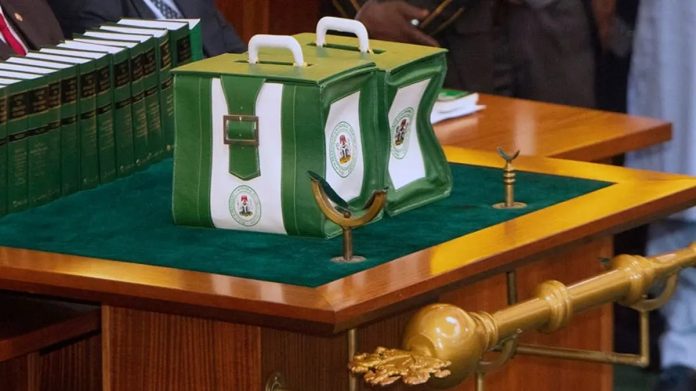
Nigeria’s President Bola Tinubu has officially signed the N28.78 trillion 2024 Budget into law. The signing follows a period of intense controversies surrounding the bill, notably the contentious N1.2 trillion inflation imposed by the National Assembly.

The ceremony, witnessed by top government officials at the Presidential Villa in Abuja, marked the end of extensive deliberations and revisions that have followed the bill. President Tinubu returned to the Aso Rock Villa in Abuja after a week-long Christmas break in Lagos to preside over this historic signing.

Accompanying the President were key figures including the President of the Senate, Senator Godswill Akpabio, and the Speaker of the House of Representatives, Tajudeen Abbas. Notable personalities such as the Minister of Finance and Coordinating Minister of the Economy, Wale Edun, Minister of Budget and Economic Planning, Atiku Abubakar, and the National Security Adviser (NSA), Nuhu Ribadu, were also present, underscoring the gravity of the moment.

The National Assembly’s passage of the budget over the weekend sparked intense debates as it increased the budget size from the initially proposed N27.5 trillion by President Tinubu to N28.7 trillion, resulting in a substantial N1.2 trillion increase.

Key determinations within the approved budget include benchmarking oil prices at $77.96 per barrel, aligning with current international market prices. The sanctioned oil production rate stands at 1.78 million barrels per day, while the fixed exchange rate remains at N800 to a US dollar. Furthermore, the budget outlines a GDP growth rate of 3.88%, accompanied by a notable budget deficit of N9.18 trillion.

Senate President Godswill Akpabio, during the announcement of the successful passage of the budget, highlighted that the majority of lawmakers supported the decision through a voice vote. The passage followed a meticulous consideration of a report presented by the Chairman of the Senate Committee on Appropriations, Adeola Olamilekan.

Olamilekan, in his comprehensive report, proposed allocations such as N1.7 trillion for Statutory Transfers, N8.2 trillion for Debt Service, N8.7 trillion for recurrent expenditure, and N9.9 trillion for capital expenditure. The amplified appropriation was attributed to the necessity for additional funding in sectors that were initially underrepresented in President Tinubu’s initial proposal.

The committee acknowledged the inadequacy of funding in various Ministries, Departments, and Agencies (MDAs) of the federal government, which significantly contributed to the amplified budget.

However, controversies arose as the National Assembly inflated its 2024 budget to N344 billion, a 51% increase from 2023 and a remarkable 75% surge from the initial proposal. Notable allocations included N4 billion for a new National Assembly Recreational Centre and N6 billion for car parks, sparking debates on governance costs within Nigeria.

The breakdown of the National Assembly Budget reveals allocations for specific purposes:

House of Representatives: N78.624 billion

Senate: N49.145 billion

National Assembly Recreational Centre: N4 billion

Senate and House Car Parks: N6 billion each

National Institute for Legislative and Democratic Studies (NILDS): N4.5 billion

Committee Meeting Rooms Furnishing: N2.7 billion

Infrastructure Upgrades & Modern Printing Press: N3 billion each

NASS Library Books: N3 billion

Pension Board: N2.5 billion

Retired Clerks & Permanent Secretaries: N1.230 billion

Constitution Review: N1 billion

Senate Appropriations Committee: N200 million

Public Accounts Committee: N130 million (Senate), N150 million (House)