DD
MM
YYYY

PAGES

DD
MM
YYYY

spot_img

PAGES

Home Blog Page 35

Musk’s xAI Scales Up Data Centre Footprint with New Facility, Targets Near-2GW Compute Power in Escalating AI Arms Race

0

Elon Musk’s artificial intelligence startup xAI is accelerating its infrastructure push, acquiring a third building to expand its data center footprint as it seeks to lift training capacity to nearly 2 gigawatts of compute power.

The move underpins how the race to build ever more powerful AI models is increasingly being decided not just by algorithms, but by access to electricity, land, and specialized chips.

Musk disclosed the purchase on Tuesday in a post on X, saying xAI had bought a third facility called “MACROHARDRR,” without revealing its precise location. The name appears to be a deliberate play on Microsoft, a key backer of OpenAI. Earlier, The Information reported, citing property records and a person familiar with the project, that the building for the third supersized data center is planned outside Memphis, Tennessee, where xAI is already operating its flagship supercomputer cluster, Colossus.

Colossus, based in Memphis, has been billed by xAI as the largest AI supercomputer in the world. The system is central to Musk’s ambition of turning xAI into a credible challenger to OpenAI’s ChatGPT and Anthropic’s Claude. According to people familiar with the plans, xAI intends to expand Colossus to house at least one million graphics processing units, a scale that would put it among the most compute-dense AI installations globally.

The newly acquired warehouse is expected to begin conversion into a data center in 2026, The Information reported. It would complement both the existing Colossus cluster and a planned Colossus 2 facility. Crucially, both sites are located near a natural gas power plant that xAI is building in the area, alongside other power sources, highlighting how energy access has become one of the most significant bottlenecks in advanced AI development.

The near-2GW compute target is striking. For context, data center campuses operating at that level rival the power consumption of small cities. As AI models grow larger and more complex, training runs can take weeks and require an enormous, continuous energy supply. This has pushed leading AI companies to secure long-term power arrangements, invest directly in generation assets, and, in some cases, rethink where data centers are located.

Vertical integration appears to be a strategic choice for xAI. Unlike OpenAI and Anthropic, which rely heavily on cloud partners such as Microsoft and Amazon, Musk is pursuing a more self-contained model, combining proprietary data centers, power generation, and in-house model development. Supporters say this could give xAI greater control over costs and scaling, while reducing reliance on third-party infrastructure that may be constrained by competing demands.

The expansion also reflects the broader surge in capital spending across the AI sector. Tech companies have been pouring hundreds of billions of dollars into data centers, chips, and networking equipment to support a global frenzy for AI solutions. Nvidia’s dominance in AI chips has made access to GPUs a strategic priority, while power availability has emerged as a limiting factor even for the largest cloud providers.

However, the rapid buildout has not gone unchallenged. Environmental groups and local activists have raised concerns about the impact of large data centers, pointing to their heavy electricity consumption, water use for cooling, and increased strain on local grids. xAI’s proximity to a natural gas plant has intensified scrutiny, as critics question the climate implications of fossil-fuel-powered AI infrastructure at a time when governments and companies are pledging to cut emissions.

Musk has previously argued that AI progress requires massive compute and that reliable baseload power is essential to support it. Yet the tension between AI’s growth and sustainability is becoming harder to ignore, particularly as projects scale into the gigawatt range.

Strategically, the expansion signals Musk’s determination to keep xAI in the top tier of AI developers as competition intensifies. With OpenAI reportedly working on increasingly powerful models and Anthropic attracting significant enterprise adoption, the ability to train faster, larger, and more capable systems is becoming a decisive advantage.

xAI’s latest move reinforces a central reality of the sector as the AI arms race deepens: leadership is no longer just about who has the smartest models, but who can marshal the infrastructure, energy, and capital required to run them at unprecedented scale.

Happy New Year, And the Best of 2026

0

It is a beautiful thing to step out of the bounds of 2025 and feel the fresh breeze of 2026. The sun has risen on the horizon, flowers are in bloom, awakened by new energy from the eastern corridor, and the birds sing in quiet ecstasy. Men and women, renewed in imagination, welcome the gentle harmattan as radios and televisions announce the arrival of a new year. A new day. A new year. With drums and songs, claps and clicks, likes and shouts, we welcome 2026.

May 2026 bring abundance to you, your friends, and your families; abundance like the baobab tree, unconstrained in health, wealth, and wisdom. May the works of your hands be blessed. My name is Ndu-bu-isi-uwa (life is first in all things in the universe) and I pray that life, in abundance, finds you this year.

As we cross into 2026, pause and review 2025. Identify where your processes can improve. Then step boldly into the new year with the disciplined energy of harmattan, ready to unlock new vistas in your career and personal economy.

Remember this enduring truth about careers: two energies shape them, the physical energy of youth and the wisdom energy of experience. Early in our journeys, organizations compensate us largely for physical energy: speed, stamina, and execution. Over time, that compensation shifts toward wisdom: judgment, pattern recognition, and leadership. When we fail to recognize and prepare for this transition, we risk breaking the arc of an otherwise great career.

Think of the athlete. In youth, success is driven by strength and vitality. With age, longevity comes from mastery, strategy, and insight. We are all athletes in our respective fields, and 2026 is another opportunity to prepare deliberately for that transition.

So, compound your wisdom. Invest in judgment. Deepen your processes. And let 2026 be a year of sustained growth and victories.

A journey into 2026.
A journey into abundance.
Happy New Year.

China Begins Issuing Second Batch of 2026 Crude Import Quotas to Independent Refiners

0

China has started distributing the second batch of 2026 crude oil import quotas to independent refiners, with at least one major facility in eastern China receiving its allocation, sources familiar with the matter revealed to Reuters on Tuesday.

More refiners, particularly in the Shandong province hub, expect notifications in the coming days, signaling Beijing’s calibrated approach to managing non-state imports amid stable overall volumes and a focus on demand flexibility.

The unnamed eastern refiner secured a combined 11 million metric tons (approximately 220,000 barrels per day) across the first two batches—equivalent to about 70% of its projected full-year quota. The initial batch, issued in late November, totaled around 8 million tons nationwide and was usable for cargoes arriving by year-end, providing a bridge amid quota exhaustion in late 2025.

This early release spurred a buying spree among teapots, boosting November crude imports to their highest daily level in 27 months at 12.2 million bpd, as refiners scrambled to utilize the fresh allowances before expiration. Independent refiners—commonly called “teapots,” clustered primarily in Shandong and processing ~20-25% of China’s crude (total imports ~11 million bpd)—anticipate their first two batches will similarly cover 70% of annual allowances, a shift from 2025 when early issuances comprised the full quota.

The reason for front-loading less volume remains unclear, though analysts speculate it allows greater flexibility in response to demand fluctuations, sanctions impacts, or inventory management. Beijing released an additional quota of about 10 million mt to qualified independent refineries for crude imports in 2025 in late November, and the final batch of 2025 quotas totaled more than 7.5 million tons—notably higher than the 6 million tons released in the same period the previous year.

China’s Ministry of Commerce has set the total 2026 quota for non-state firms at 257 million metric tons, unchanged from 2025 and reflecting cautious demand expectations in a slowing economy with 4.7% GDP growth in 2025. This cap covers independent refiners and some private giants, excluding state majors like Sinopec and PetroChina, which import freely.

For 2026, the first batch of fuel export quotas is stable year-on-year, with main recipients being state-owned oil companies Sinopec and CNPC, which received 13.76 million tons of allowances for refined fuels. Independent refiners often favor discounted sanctioned grades such as Russian, Iranian, and Venezuelan, due to price sensitivity, and the quota system, in place since the 1990s, regulates their imports to control refining capacity, fuel quality, and foreign exchange outflows.

Early 2026 allocations enable teapots to plan purchases amid narrowing Russian discounts of $2-4/bbl below Brent and heightened sanctions scrutiny. The November batch spurred a buying spree, boosting utilization rates to over 60% in December and drawing down bonded storage of Iranian crude. Second-batch issuances could sustain this momentum into Q1 2026, supporting sour barrel demand while Beijing manages overcapacity.

Independent refiners exhausted their previous quotas as early as October and were waiting for a new issuance at the end of the year. Shandong teapots, representing 80% of independent capacity (4 million bpd total), have faced headwinds: quota delays, fuel export curbs, and consolidation pressures. Recent revivals—three bankrupt plants resurrected under new owners—highlight resilience, but overall numbers have declined from peaks above 50 refiners.

Stable quotas signal muted growth expectations for 2026 refining throughput, prioritizing efficiency over expansion amid EV adoption and peak oil demand forecasts. Yet, front-loading 70% early provides certainty for discounted sour crude sourcing, potentially stabilizing Asian physical markets. China’s independent refiners boost crude buying after new import quotas, with the total allocation for 2026 set at 257 million tons, the same as a year ago.


Central Bank of Nigeria Sees Inflation Falling Below 13% in 2026 Amid High Interest Rate

0

Nigeria’s inflation outlook is expected to improve significantly in 2026, with the Central Bank of Nigeria (CBN) projecting headline inflation to moderate to an average of 12.94%, driven by easing food prices and a decline in the cost of premium motor spirit (PMS).

The projection, contained in the apex bank’s 2026 Macroeconomic Outlook for Nigeria, reinforces expectations that price pressures may finally be coming under control after years of instability.

According to the CBN, improved domestic supply conditions and stabilizing energy prices are expected to reduce cost pressures on households and businesses, supporting broader price stability.

“Headline inflation is projected to moderate to an estimated average of 12.94 per cent in 2026, driven by declining food and premium motor spirit (PMS) prices,” the bank said in the report.

The projection comes against the backdrop of a sharp statistical reset in Nigeria’s inflation data following the recent rebasing of the Consumer Price Index (CPI). The rebasing, which updated consumption weights to better reflect current spending patterns, resulted in a notable downward adjustment in headline inflation levels. Following the rebasing, the inflation rate dropped to 14.45% in November 2025 from 16.05% in October, according to the National Bureau of Statistics.

That decline has been widely interpreted as evidence that underlying price pressures may be easing more rapidly than previously assumed, especially as food inflation — long the most persistent driver — shows signs of moderation. Energy-related costs, particularly PMS, have also stabilized relative to the sharp shocks seen earlier in the subsidy reform period.

Despite this improvement, the CBN has maintained a tight monetary stance, keeping the Monetary Policy Rate (MPR) at a high 27%. The decision has drawn increasing scrutiny from economists and business leaders, many of whom argue that monetary conditions are now excessively restrictive relative to the inflation trend.

While the central bank has defended its position by citing the need to anchor inflation expectations and safeguard exchange rate stability, critics say the lag between the inflation slowdown and monetary easing is beginning to weigh heavily on the real economy.

At 27%, the MPR feeds into lending rates that often exceed 30% for many businesses, particularly small and medium-sized enterprises. Economists have repeatedly warned that such borrowing costs are choking productive activity, discouraging investment, and limiting the ability of firms to expand or even sustain operations.

Analysts have noted that while tight policy may have helped stabilize prices and the currency, the absence of any commensurate reduction in the benchmark rate, despite rebased inflation and easing headline numbers, risks undermining growth. Manufacturing firms, agribusinesses, and service providers continue to cite financing costs as one of their biggest constraints, especially in an environment already burdened by weak consumer demand and high operating expenses.

The CBN, however, appears cautious about easing too quickly. In its outlook, the bank pointed to several factors that could still influence liquidity and price dynamics in 2026, including exchange rate movements, fiscal operations, and election-related spending. Political activity ahead of elections is expected to increase government expenditure and financial flows, which could reintroduce inflationary pressures if not carefully managed.

Beyond inflation, the apex bank projected a bullish capital market outlook for 2026, supported by ongoing bank recapitalization, rising investor confidence, and policy measures aimed at strengthening the financial system. Stronger banks, the CBN believes, will be better positioned to intermediate credit and support economic growth, even under tight monetary conditions.

If the inflation projection materializes, it would mark a sharp turnaround from the price instability that defined much of the past two years. A sustained moderation toward the low-teens could ease pressure on households, improve business planning, and gradually restore confidence across the economy.

However, economists argue that monetary policy must evolve alongside the data. With inflation rebased and trending lower, calls are growing louder for the CBN to recalibrate its stance, warning that prolonged ultra-tight policy could deepen stress in the private sector and slow Nigeria’s recovery.

The central bank said it remains committed to deploying appropriate policy tools to sustain macroeconomic stability, support growth, and strengthen the financial system, even as debates intensify over how quickly policy should shift from inflation-fighting to growth support.

Nigeria’s Domestic Airline Capacity Shrinks 7.5% in December as Cost Pressures Deepen Industry Strain

0

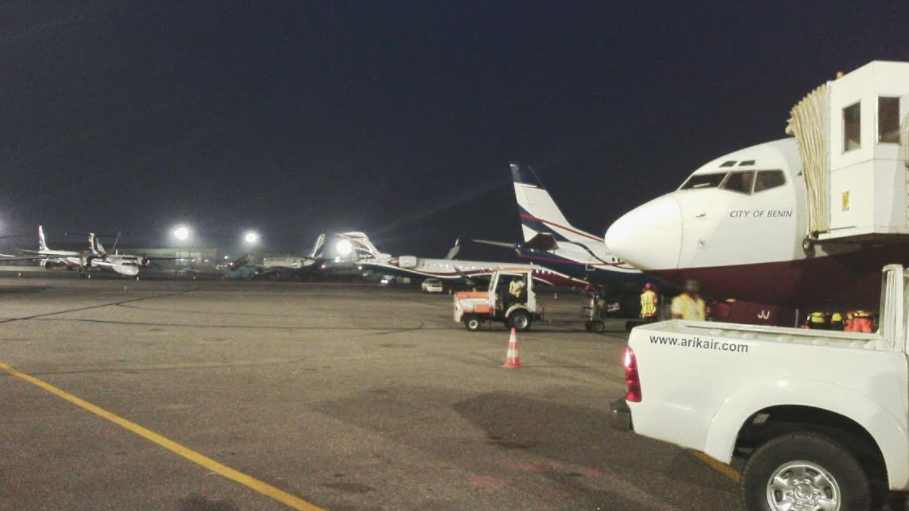
Nigeria’s domestic aviation market closed 2025 on a weaker footing, with available airline seats falling sharply in December amid persistent structural and financial challenges confronting local carriers.

Data from OAG’s Africa Aviation Market Monthly Airline Data Updates for December 2025 shows that total domestic seat capacity in Nigeria declined to 850,420 seats, down from 919,400 seats in December 2024. The 7.5% year-on-year drop places Nigeria among the worst-performing major domestic aviation markets on the continent during the period.

The figures underline a broader slowdown in activity across Nigeria’s domestic air travel sector at a time when several African peers are expanding capacity and rebuilding momentum after years of disruption.

By contrast, South Africa consolidated its position as Africa’s largest domestic aviation market. Available seats there rose to 1,803,097 in December 2025 from 1,686,956 a year earlier, representing growth of nearly 7%. Kenya also posted solid gains, increasing domestic capacity by 8.6% to 456,500 seats, while Tanzania recorded one of the strongest expansions on the continent, surging 27% to 415,130 seats.

North African markets largely moved in the opposite direction from Nigeria. Egypt recorded modest growth of 2.5%, while Algeria expanded capacity by more than 26%. Morocco grew its domestic seat count by almost 12%, and Cape Verde posted the fastest percentage growth among surveyed markets, with capacity jumping nearly 34%.

Not all markets fared well. Ethiopia experienced a contraction, while the Democratic Republic of Congo recorded one of the sharpest declines, shedding close to 29% of its domestic seat capacity year on year.

For Nigeria, the decline reflects deep-rooted challenges that have constrained airline operations for years. A major factor has been limited access to dry-lease aircraft, which restricted fleet expansion and replacement. For a long period, Nigeria was blacklisted by the Aviation Working Group over non-compliance with the Cape Town Convention, following past aircraft defaults by local carriers. That status effectively shut Nigerian airlines out of global leasing markets.

Although Nigeria has since made progress, raising its Cape Town Convention compliance score from 49% to 75.5% and securing removal from the AWG watchlist in October 2024, the recovery has been slow. According to government disclosures, only one airline has so far qualified for a dry-lease aircraft, which the Minister of Aviation said would arrive in October 2025. Most carriers continue to rely on wet leases or outright purchases, with aircraft prices reaching as high as $80 million.

Dry leasing remains critical to restoring domestic capacity because it allows airlines to operate aircraft under their own crews and schedules, giving them full control over routes and costs. Without it, fleet planning becomes more expensive and less flexible, limiting the ability of airlines to add seats consistently.

Financing conditions have further compounded the problem. High interest rates and limited access to affordable credit continue to restrict aircraft acquisition. At the same time, Nigeria’s lack of functional wide-body maintenance, repair, and overhaul facilities has forced airlines to ferry aircraft overseas for servicing. Air Peace chief executive Allen Onyema has said a single ferry trip can cost as much as $400,000, with aircraft sometimes grounded for months, shrinking available capacity, and disrupting schedules.

Pressure on the sector is also intensifying ahead of proposed fiscal changes. Onyema has warned that provisions in the tax reform package scheduled to take effect in January 2026 could significantly raise operating costs. Central to his concern is the reintroduction of value added tax on aircraft, spare parts, and air tickets — items that were exempted under the 2020 Finance Act to stabilize the aviation industry.

According to Onyema, importing an aircraft valued at around $80 million would immediately attract 7.5% VAT under the new rules, translating into billions of naira at current exchange rates. He has argued that airlines lack the financial buffers to absorb such costs, especially in an environment where borrowing rates can climb as high as 35%.

“By the time you bring these things in, at the end of the day, the cost of operation will be huge,” Onyema said. “Your ticket fares will hit N1.something million soon.”

He warned that pushing additional taxes onto already stretched operators could have devastating consequences.

“If we implement that tax reform, Nigerian airlines could go down within three months,” he said.

While several local carriers, including Air Peace and Ibom Air, are developing maintenance facilities, these projects are not yet operational. Until they come on stream, aircraft downtime will remain a drag on capacity and reliability.

Taken together, the December figures paint a picture of a domestic aviation market struggling to regain altitude. Without faster access to leasing, cheaper financing, operational infrastructure, and regulatory stability, Nigeria risks falling further behind regional peers that are steadily rebuilding and expanding their domestic air networks.