DD
MM
YYYY

PAGES

DD
MM
YYYY

spot_img

PAGES

Home Blog Page 3511

Unveiling Options: How Many Decks Are Used in Blackjack?

0

Blackjack, a staple in the world of casino card games, is renowned for its use of varying numbers of decks of cards. While some casinos opt for six or eight decks, others may use a single-deck version of blackjack. Regardless of the quantity, the game is fundamentally played with standard 52-card decks. This article introduces the intriguing aspect of how the number of decks influences the game’s dynamics.

Blackjack Strategies and Actions

The basic actions, including hitting to take an additional card, standing to keep your total, doubling down to double your bet and take just one more card, splitting pairs into two hands, and surrendering half your bet, are available in most casino versions of blackjack. The number of decks used does impact card counting techniques, as fewer decks make it easier to track the cards in play. Using more decks increases the house edge, makes card counting more difficult, and makes the game less susceptible to card counters.

While the rules of blackjack remain consistent, the variations in how many tens and face cards remain in the shoe matter. With more decks shuffled together, there is less variance in the percentages of cards remaining to be dealt. Discovering how many decks of 52 cards are used, the rules for reshuffling, and if cut cards are employed can help blackjack players adjust basic strategy for that particular casino game. No matter how many decks are placed in the shoe and used in the game, the goal remains beating the dealer.

Why Casinos Use Multiple Decks

Most casinos use more than one deck when dealing blackjack hands. The most common number of decks used is 4, 6, or 8. The reason for using multiple decks has to do with the house edge. When only one deck is in play, there is less randomness which can shift the odds slightly more in favor of players. With more decks shuffled together, there are more cards and more variability which gives the house a bigger advantage. Using 6-8 decks enables casinos to reduce the risk of losing money on blackjack over the long run.

In addition to increased house edge, multiple decks force players to modify their strategy. Actions like when to double down or split pairs change depending on the number of decks in the shoe. Players have to learn different basic strategy charts for single deck versus multiple deck blackjack. So multi-deck blackjack adds complexity and can confuse players, which also benefits the casino.

Standard Number of Decks Used

Most casino blackjack games utilize 6-8 decks as standard. 6 decks is the most common, followed by 8 decks. Using this many cards allows frequent reshuffling while still maintaining the house edge. These deck numbers provide enough randomness without having to switch decks too frequently.

While 6-8 decks is standard, some games use as few as one deck or up to 12 decks. Single deck blackjack is rare but offers the lowest house edge. On the other end, some high limit blackjack tables use 12-16 decks to better accommodate high stakes betting. But for the average low or medium stakes tables, nearly all will use either 6 or 8 decks total.

Single Deck vs. Multiple Decks

Single deck blackjack has some advantages and disadvantages for players compared to multi-deck games. The main benefit is the house edge drops significantly to around 0.5% with perfect basic strategy. That’s much lower than the typical 2% edge in 8 deck games. Single deck also makes card counting more feasible. But casinos don’t offer many single deck options since it costs them money.

Another pro is that optimal player strategy is easier to learn when only playing against one deck. The decisions are generally more straightforward. However, the downside is that fewer cards also means more frequent reshuffling. This slows down the pace of play. In addition, you’ll have less time to take advantage of any favorable count before the deck is shuffled again.

In multiple deck blackjack, the house edge is higher, so players are at a greater inherent disadvantage. More decks make card counting essentially pointless as well. But more decks do mean less frequent reshuffling, allowing more hands per hour to be dealt. And players do have more leeway with strategy since the greater randomness makes each decision less critical.

How Deck Number Impacts Blackjack Strategy

The number of decks used significantly alters a player’s optimal blackjack strategy. With fewer decks in play, the potency of each card and hand increases. So doubles, splits, and surrenders become more favorable with just one deck. For example, you would only double soft 18 (Ace-7) in single deck but not with 6+ decks. Pair splitting changes as well – you would split 66 vs a dealer 10 in single deck but not multiple deck.

Betting strategies must adapt to deck number too. In single deck blackjack, you would make larger bets during neutral counts and reduce them during negative counts. This takes advantage of the greater deck composition predictability. But with 6-8 decks, there’s less fluctuation in true count, so bet spreads don’t need to be as dramatic.

Other adjustments are required when playing single deck. You hit more often on hard totals of 12-16. Surrender and insurance become less advantageous. And pairs should be split less frequently compared to multi-deck blackjack strategy.

Online vs. Live Blackjack Deck Numbers

Live dealer blackjack tables at casinos will virtually always use multiple decks, usually between 6-8. This helps the house maintain their edge in person. Online blackjack offers more variety in deck numbers. While many online games still use 6-8 decks, you’ll also find options for single deck, double deck, and 4 deck games.

Online casinos can offer favorable single or double deck rules because the games are automated. Removing the human dealer element eliminates risk and opens up options for players. But regardless of whether you play live or online, game rules and deck number should always be checked before playing blackjack.

Rules and Regulations on Number of Decks

Gaming commissions provide oversight and set the basic rules that regulated casinos must follow. But most jurisdictions do not mandate a specific number of decks used in blackjack. Nevada, New Jersey, and other gaming regulators allow casinos to decide how many decks to use provided other rules fall within allowed limits.

Individual casinos have latitude to set deck numbers to achieve desired house edges. Many brick-and-mortar casinos stick to 6-8 decks as standard to maintain a healthy advantage. Online casinos, facing less risk, can offer single and double deck games with player-friendly rules. But any changes to deck numbers or rules have to be approved by gaming authorities before implementation.

Finding Single Deck Blackjack Games

Single deck blackjack is elusive in land-based casinos today. But it can still be found at select venues if you know where to look. Some higher limit tables use single deck blackjack for VIP players willing to wager more per hand. Lower limit single deck games are rarer but can sometimes be found in downtown Vegas or at tribal casinos.

Online is the easiest way to find and play single deck blackjack. Many internet blackjack sites offer single deck options with favorable rules like early surrender. Leading online providers for single deck games include Bovada, Ignition, Cafe Casino, Slots.lv and Red Dog. Double deck blackjack is also easier to find online than live. Just be sure to check rules and deck numbers before playing at any blackjack table.

Conclusion 

While most blackjack is dealt from 6-8 decks, single deck blackjack offers some advantages for skilled players. Understanding differences in basic strategy and betting based on deck number is key. Multiple decks increase house edge but require less dramatic strategy changes. Regulators allow casinos flexibility on deck numbers provided other rules fall within limits. Single deck blackjack remains a rarity in live casinos but can easily be found at many online sites. Knowing the right places to play single deck blackjack along with proper strategy adjustments provides opportunities to boost player odds.

Kenyan Non-Bank Financial Services Company MyCredit Secures $3 Million From BlueOrchard to Scale Operations

0

MyCredit, a non-bank financial services company registered in Kenya, has secured $3 million in funds from BlueOrchard to scale operations.

The company disclosed that the funds will be used to support the plan in offering affordable and medium-term financing of up to a maximum period of three years to its customers who are in the education sector. Through this partnership, the institution has launched an education product called “Kuza Elimu Loan”. 

The lender targets private school owners seeking both secured and unsecured funds. They can borrow up to between Ksh1 million to Ksh5M secured funds.

CEO of MyCredit Wangaruro Mbira stated that the company has already disbursed 11,014 loans to customers across the country with a total value of Kshs.7.88 billion in the last 7 years.

We have over 10,500 customers and we will be opening more branches gradually in all the 47 counties and commercial centers to be able to reach more entrepreneurs in the education sector,” he added.

The investment from BlueOrchard, a global impact investment manager, signifies a show of confidence in MyCredit’s business model and its potential to make a positive impact in the financial services sector in Kenya.

Also, this will enable MyCredit to fulfill its mission to support businesses and local communities to achieve greater financial freedom by getting custom-built financial offerings to growing and emerging enterprises, professionals, and civil servants.

Based in Kenya, MyCredit aims to support businesses and local communities to achieve greater financial freedom through tailor-made loans to small and medium enterprises (SMEs), and professionals, amongst others.

The company offers loans, guarantees, leasing, and insurance services, and is a credit-only finance company.

On MyCreditLoans, this product is for short-term business bridging capital needs. It’s available for clients in business only.

Features include;

  • Available for business clients who have been in operation for over 12 months.
  • The maximum repayment period is 12 months.
  • Collateral – Motor vehicle.

On MyCredit insurance feature, it offers a non-life insurance cover to customers, that compensates the policyholder, in the event that there is a loss or damage to property or against liability.

For Life insurance, this is an insurance policy that pays a designated beneficiary a sum of money upon the occurrence of an insured event

Lauded for its support to businesses and local communities to achieve greater financial freedom, MyCredit plans to build a truly pan-African business in the next 10 years, opening branches in all 47 counties and commercial centers to reach and develop missing middle enterprises.

The company’s dream is to be a leading and diverse non-bank financial institution in Kenya, with a mission to support businesses and families to achieve more financial freedom. Notably, MyCredit has an ambition to grow its membership to 20,000 by 2025.

The Presidential Peace Accord Between Sim Fubara and Nyesom Wike for Rivers State

0

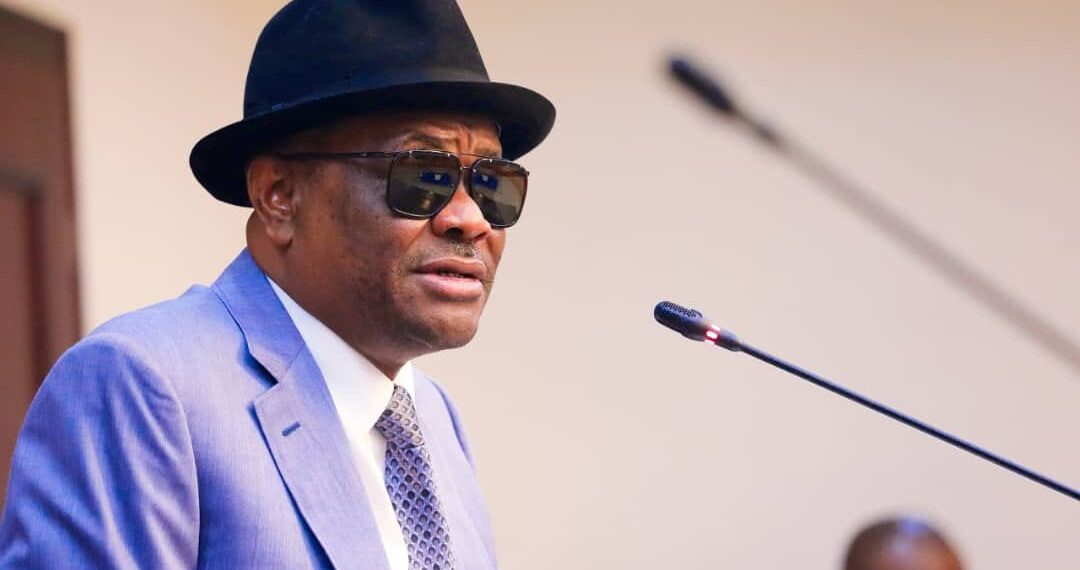
A paper has been circulating on social media purported to be an order from the president to Governor Sim Fubara and Minister Nyesom Wike for a peace accord. 

When I saw the letter, so many questions flashed through my mind, one of which was; “does the president have the statutory power to give such an order to an elected executive governor, If yes, what section of the law empowers the president to give such an order. Also, is this directive purportedly issued by the president mandatory or just optional at the convenience of the governor? 

I have been flipping through the constitution and other existing laws applicable in Nigeria and I couldn’t find any law that empowers the president to give such an order to an executive governor. We can therefore say in this instance that the president is acting (ultra vires) beyond his powers because this appears more like a military decree issued by the military president to appointed administrators. 

I am of the fully informed opinion (which I stand to be corrected with any other overriding opinion) that the president does have such power to issue an order or directive to an elected executive governor or to any other elected officeholder. The president although being the commander in chief cannot order the governor, it can happen in an autocracy or military regime but not in a democratic system

The implication of a democratic system of governance is that the governor is elected and he and every other elected official enjoy that executive and independent status, independence from external interference even from the presidency just like the president enjoys his own executive and independent status. The governor is not appointed; hence you cannot just dismiss, fire or issue him an order, he is an elected official, and for him to be dismissed for any reason whatsoever he will have to go through a democratic dismissal process known as the impeachment. 

Let us even dive into the content of the paper; it is a peace accord laying down terms and conditions for the brokerage of peace between the current governor and the immediate past governor of Rivers State.

One discrepancy that stood out for me is that the signature of the president is not on the paper but it is purported to be from the president; although the signature of the Secretary General of the federation is on it and the signature of the national security adviser is on it as well but we cannot claim for it to be from the president without the signature of the president; it could be argued instead that it is from the office of the president or from the presidency.

My final open question is; what then happens if any of the parties fails to live up to their own side of the bargain; can the other party go to court to force a defaulting party to keep their own side of the agreement?; does any court has jurisdiction to entertain the content of the order since we have already established that the order is invalid because the purported issuer, the president have no such statutory power to issue such directive.

Let’s all watch and see as the event unfolds in the coming days. 

PRESS CONFERENCE HELD ON THE IMPOSED SETTLEMENT OF PRESIDENT BOLA AHMED TINUBU ON THE RIVERS STATE CRISIS
By Chief (Dr.) E. K. Clark (19th December, 2023)

Firstly, I wish to commend President Bola Ahmed Tinubu for heeding the various calls, including our own, to mediate in the on-going crisis rocking Rivers State by calling Barr. Nyesome Wike to order so as to restore peace and tranquillity in the State and avert any problem similar to that which occurred in 2013, when Barr. Wike was Minister of State Education.

However, the terms of settlement as contained in the Communique issued at the end of the reconciliatory meeting is what is baffling, appalling and unacceptable to the people, especially, the Ijaw ethnic nationality. From the terms of settlement, it is obvious that President Tinubu sees his role as a mediator, to once again, show gratitude to the current Minister of the Federal Capital Territory (FCT), for “delivering” Rivers State to him during the past Presidential elections, having first of gratified him by making him the Minister of FCT.

First Observation:
The composition of the attendees of the meeting was one sided in favour of Nyesome Wike, the Minister of the Federal Capital Territory (FCT), because while Martins Amaewhule, a former Speaker, (because he has automatically lost his seat the very moment he decamped to another political party), was present at the meeting, it would have only been equitable and expedient, for Edison Ehie, the Speaker as affirmed by constitutional provisions and by the granting of the court, to be in the meeting, if there were sincerity of purpose.
The 8 resolutions reached, are the most unconstitutional, absurd and obnoxious resolutions at settling feuding parties that I have ever witnessed in my life. As a matter of fact, some medias captured it very well when they described it as Directives. And for the fact that such thing was done at the Villa, the seat of the Federal Government of Nigeria, is sacrilegious, because any place housing or is a custodian of symbol of authority, ought to be sacred.

It is obvious that Governor Siminialayi Fubara was ambushed and intimidated into submission. President Tinubu should know that with all the powers he possesses, he cannot override the Constitution. From all that transpired at the meeting, the laws of the land have not been obeyed. President Tinubu simply sat over a meeting where the Constitution, which is the fulcrum of his office as President and which he swore to uphold and abide by, was truncated and desecrated.

27 or so members (because the figure is not certain), of the Rivers State House of Assembly left the political party on which platform they were elected. The Constitution of the Federal Republic of Nigeria is very clear on that. Section 109 is quite clear on that and it says:

A member of a House of Assembly shall vacate his seat in the House if
Being a person whose election to the House of Assembly was sponsored by a political party, he becomes a member of another political party before the expiration of the period for which that House was elected:

Provided that his membership of the later political party is not as a result of a division in the political party of which he was previously a member or of a merger of two or more political parties or factions by one of which he was previously sponsored;
The Speaker of the House of Assembly shall give effect to subsection (1) of this section, so however that the Speaker or a member shall first present evidence satisfactory to the House that any of the provisions of that subsection has become applicable in respect of the member.

Nyesom Wike is quite abreast of these constitutional provisions. He shouted his voice hoarse calling for the removal of persons like David Umahi as Governor of Ebonyi State, Ben Ayade as Governor of Cross River State and Bello Matawalle as Governor of Zamafara State, when they decamped from the PDP on which platform they were elected into office, to the APC, citing the above constitutional provisions. What has changed?

A Court of competent jurisdiction has pronounced Edison Ehie as the Speaker of the Rivers State House of Assembly. That Ruling has not been vacated, and based on that he exercised the duties conferred on him by Section 109 (2) as quoted above, when the 27 or so members openly defected to APC, waving the flags of the party and singing President Tinubu’s campaign songs, from the Peoples’ Democratic Party (PDP). As at today and going by the Constitution, the Rivers State House of Assembly has four members who are recognised by the laws of the land Therefore, on what premise is Mr. President saying that the 27 decamped members should go back to the House? Under what political party, the PDP or the APC. The directives of Mr. President is absurd and cannot hold water. Mr. President should be aware that Siminialayi Fubara, today, is the elected Governor of Rivers State in the same manner Bola Ahmed Tinubu is the elected President of the country. And as a Governor, Mr. Fubara possesses all the powers as conferred on him by the Constitution.

  1. Re-Submission of the names of Commissioners who have resigned their Appointments:
    Another “directive” of Mr. President that the names of the Commissioners who were nominated by Nyesom Wike and who resigned on their own volition, and who have lost their trust in Governor Fubara, should be represented to the Rivers State House of Assembly for clearance to become Commissioners again, is ridiculous. Who is nominating them to become Commissioners again? Is it Mr. President? Was Mr. President thinking that he was mediating in a matter between Nyesom Wike and employees in Nyesom Wike’s private company? Is it what Nyesom Wike means when he talks about “structure”, referring to Rivers State as his personal holdings or enterprise?

  2. Re-Presentation of a Budget already signed and passed into Law:
    Another unthinkable “directive” of Mr. President is that a Budget which has been passed into Law, should be represented. It is absolutely ridiculous and unconstitutional.

By President Tinubu’s actions and directives, he has overruled the Constitution of the country; he has shaken the foundation of the country’s democracy. People lost their lives fighting for democracy in this country. Today, President Bola Ahmed Tinubu, has made of no effect the blood of the freedom fighters shed to salvage this country. He has thrown the country’s democracy fifty years backwards; this is unacceptable. Rather than building a strong system and society, we are building strong, invidious characters, with our national patrimony through corruption and avarice.

By the actions of President Bola Ahmed Tinubu, he has really shown his dislike and disdain for the Ijaw people. and confirms his hatred for them. And as the leader of the Ijaws, we will resist it.

Nyesom Wike is not an emperor. For the eight years he was in power as Governor of the Rivers State, he ruled with an iron fist. As Governor, he will not accept such treatment from anyone, as he is spear heading to be meted out to the current Governor of the State, Siminialayi Fubara. Barr. Wike destroyed his opponent’s houses and even threatened to kill them as cried out by Senator Lee Maiba from Ogoni, and Dr. Abiye Sekibo from Okrika
It is still fresh in our memory, how Nyesom Wike, as Minister of State, Education, used federal might to fight the then Governor of Rivers State, Chibuike Amaechi that almost led to the grinding to a halt of governance in Rivers State when the Judiciary was closed down and the House of Assembly was shut down by the then Governor, Rotimi Chibuike Amaechi. President Jonathan did not interfere in his action because if he did, he will definitely be breaching Section 5(2) of the 1999 Constitution of the Federal republic of Nigeria, which President Tinubu has deliberately breached, despite his oath of office to uphold and promote the Constitution. Nyesom Wike is Minister now, and again, he is using the federal government to truncate the wishes of the people of Rivers State. The rule of law in the country is completely truncated by President Tinubu. While it will be noted that presently, the National Assembly is discussing on the Bill of Local Government Autonomy, President Bola Tinubu is directing Governor Fubara to put into effect, a Bill passed by people who are no longer law makers.

  1. The members of the House of Assembly choosing where they will sit to carry out their legislative duties:
    It is the duty of the executive to provide legislative accommodation for the Houses of Assembly including the National Assembly, and not the members of the House of Assembly to choose a place to meet. It is in this vein that President Bola Ahmed Tinubu, in presenting his Budget to the National Assembly, recognised the FCT Minister, Nyesome Nwike, as the land lord, because he is of the executive arm of government. It is the FCT that owns the National Assembly complex and maintains it. It is, therefore, ridiculous and unconstitutional for President Tinubu to direct, in his settlement, that the members of the Rivers State House of Assembly, should meet wherever they want to meet.

We will resist such draconic, arbitrary and unconstitutional action by Mr. President and his customer Nyesom Wike. We will go to court to challenge this so-called one-sided and oppressive action of Mr. President.

On his part, the Executive Governor of Rivers State, Siminialayi Fubara, who has the mandate of the people of Rivers State to govern them for the next four years, has shown feebleness of character, by agreeing and appending his signature on a document containing such absurdity. He has betrayed the people who elected him as Governor and those who stood behind him in this cause. Mr Fubara has shown naivety in his actions; by signing that document, he has signed his death warrant, believing that the President will show him some sort of favours. Mr. Fubara’s mandate is Constitutional and so, he cannot surrender it in the face of intimidation from any quarter. And it is quite unfortunate. Did he go to that meeting to speak and justify his actions, or he went there to take directives from an equally elected President. As Governor of a State and as the Chief Security Officer of the State, he has shown tremendous lack of courage and competence. It will be in his best interest to resign if he cannot govern the State as constitutionally provided, or he may as well decamp and join APC, and be taking directives from Nyesom Wike and President Tinubu on the governance and leadership of the State.

Like I stated earlier, these obnoxious directives will not stand. The people of Rivers State, particularly, the Ijaws, who are in the majority and who have about 11 (eleven) Local Government Areas, out of the 23 Local Government Areas in the State, will resist it. Because by it, President Tinubu has delivered Rivers State to Nyesom Wike as a reward for “delivering” the State to him. I call on the people of Rivers State and indeed all well-meaning Nigerians, to stand up against it, using all Constitutional and legal means, because we do not know the next State in the country that will be affected or pawned to another political customer by President Tinubu, as political patronage. It is absurd, it is draconian. It is transactional. It is a rape of our democracy. The people of Rivers State should remember that it was the same lopsided solution/directive that President Tinubu gave to the people of Ondo State but they resisted and rejected it. Today, the needful has been done in that State.

Bola Ahmed Tinubu would not allow himself to be treated the way he oversaw Mr. Fubara being treated. We all can recall what happened when he governed Lagos State for eight years, and when he successfully resisted President Olusegun Obasanjo’s dictatorial tendencies when he tried to prevent him from creating more Local Government Areas in Lagos State. Nigerians hailed Bola Ahmed Tinubu for standing up to the occasion. That made him to be the undisputed leader of Lagos State. But today, he is overseeing such draconian and authoritarian action as President of the country, giving directives to a Governor to take action on things obviously not in tandem with the nation’s Constitution.

I, Senator Edwin Kiagbodo Clark, as leader of the Ijaw nation, and as Chairman of the Board of Trustees of the Ijaw National Congress (INC), decided to hold this emergency Press Conference with the full authority of my people. We are prepared to face any consequences that may result in the political crisis in Rivers State. We will resist any attempt subtle, subterranean, convert, overt, to make an elected Ijaw son, Siminialayi Fubara, the Governor of Rivers State, a servant, a stooge to Nyesome Wike, who had boasted that any attempt by the Governor to touch his so-called ‘Wike’s structure’, with the connivance and support of President Bola Tinubu, will be resisted by us.
Like I said, we will go to go court to resist this oppressive action using all available constitutional and legal means. It is on this note I wish to appeal to the youths who are aggrieved, to remain calm, as we will use legal means to dethrone this hydra headed monster, called oppression.

Enough is Enough.

Chief (Dr.) EDWIN Kiagbodo Clark, OFR, CON

ROUNDTABLE DISCUSSION: The Complicated Meaning of the ENDSARS Protest and Its Pains

1

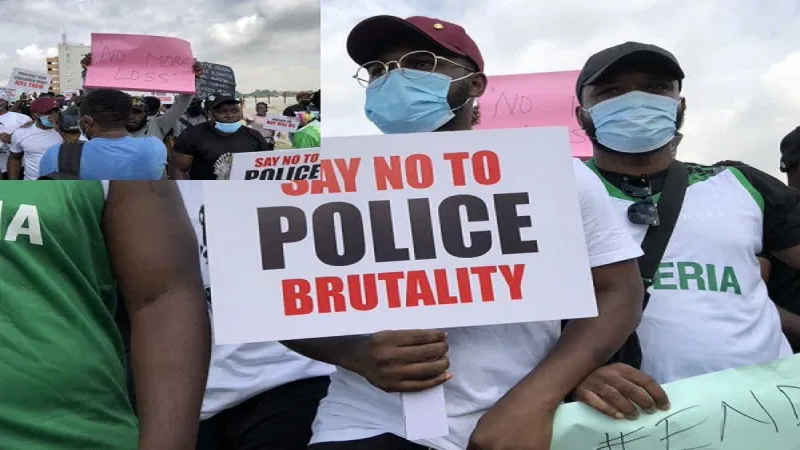
EndSARS is a social movement in Nigeria advocating for the dissolution of the Special Anti-Robbery Squad (SARS), a notorious unit known for abuse of citizens’ rights. The movement gained momentum in 2017 and resurged in October 2020 after revelations about SARS abuses. The Nigerian government officially dissolved the SARS unit on October 11, 2020, but the protests on October 20, 2020, resulted in several fatalities, highlighting the ongoing struggle against police brutality in the country.

During the protests, photojournalists reported moments that depict various issues. As part of the requirements for fulfilling the completion of Project Seminar course taught by Professor Panos Kompatsiaris of the Department of Media Communications, National Research University Higher School of Economics, Moscow, Russia, our analyst examined the protests through a selection of images that establishes brutality from both actors – police (SARS) and protesters. The goal is pursed on the premise that images could be an alternative means for viewing and accessing pains of others.

On December 18, 2023, the outcomes were presented [presentation slide] at a virtual roundtable discussion. The discussion was led by Mr Silas Obumneme Udenze, PhD Researcher from Universität Oberta de Catalunya in Spain. Nigeria’s academic community was represented by Associate Professor Abdulrasaq Adisa, Mass Communication Department, University of Ilorin, Kwara State, and Associate Professor Olusegun Liadi, Sociology Department, Fountain University, Osogbo, Osun State. Civil society was represented by Mr Dare Adeoye, Social Development Expert, and Mr Abideen Olasupo, Global Director, Brain Builder Youth Development Initiatives.

Our analyst notes that the ENDSARS protest in Nigeria marked a pivotal moment in the nation’s history, bringing to light the complex interplay between visual representation, political dynamics, and societal issues.

Key Insights from the Roundtable Discussion

Defining Visual Economy: Silas Udenze rightly emphasizes the importance of delving into the memories of the protest. The term “visual economy” encompasses the collective impact of images on public discourse, revealing the implicit messages and societal reflections embedded within these visuals. Mr Udenze’s critique suggests that the focus should not solely be on the broad concept of visual economy but on the appropriateness of the images used to convey the lack of democratic governance and the authorities’ irresponsibility.

Government Perspective and Media Role: Dr. Adisa Rasaq adds another layer to the discussion, highlighting the role of the media in shaping public opinion. The agenda-setting function of media becomes crucial, especially when examining the government’s perspective. Dr Rasaq’s assertion that visual economy should only be a concern when the aim is to profit by the media underscores the challenges posed by media ownership. The differentiation between traditional and social media in handling the protest demonstrates the need for a balanced and responsible approach to coverage during such events.

Social Norm Breakdown and Trust Issues: Dr. Liadi’s perspective introduces a critical dimension by attributing the protest to a breakdown in social norms and trust between the government and citizens. This breakdown is linked to citizens’ desire for fair treatment. The protest, according to Liadi, acted as a forceful expression within a social movement, where the voiceless transformed into the voiced. The relationship between citizens and the police, as members of the same society, underscores the complexities of the issues at hand.

Youth Empowerment and Government Response: Mr. Dare Adeoye and Mr. Abideen Olasupo provide contrasting views on the protest’s outcomes. Adeoye sees the youth as having spoken and conveyed a powerful message. In contrast, Olasupo acknowledges the government’s potential reluctance to address all youth demands but emphasizes the protest’s success in sending a compelling message. The manipulation of images to mislead the public, as mentioned by Olasupo, raises questions about the role of misinformation in shaping perceptions.

How Sleep Deprivation and Talkativeness Are Indicators of Mental Health Problems

0

Sleep deprivation research demonstrates that otherwise healthy adults who sleep poorly can suffer greater worry and unhappiness. Those suffering from mental health conditions are more likely to have chronic sleep problems, which can exacerbate psychiatric symptoms and even raise the risk of suicide. Though research on the impact of talkativeness on mental health is limited, there are a lot of evidences from the treatment of people with this illness that point to being mentally challenged as a result of jinn possession.

In this piece, as a continuation of our mental health series, our analyst and the contributor looked at how talkativeness and lack of sleep contribute to mental health issues. To determine the nature and dynamics of the two components from a spiritual standpoint, the case of a young lady was explored.

Ma’s Sudden Lack of Sleep & Loquaciousness

Ma (a pseudonym) was in her early 20s. I didn’t know her until she started having three ‘strange’ symptoms. She would talk for a long time, far longer than she used to. She no longer slept at night. Her continuous chatter kept everyone around her awake. If she didn’t sleep, no one else would either! Also, she was not worried about her single jilbab (a long, non-tight head covering used by Muslim women). She would wear it every day for days. Because of these red flags, our local mosque decided to take care of her. We resorted to this because her father and mother were separated.

These symptoms were similar to those associated with Jinn possession. However, we didn’t conclude yet for several reasons. One, Ma had a traumatic childhood experience. Two, Ma’s father was accused of amassing wealth through diabolical means; Ma’s mother affirmed the allegation. However, the father had lost almost everything he acquired when Ma’s symptoms manifested. Then, Ma’s association with a young guy before the case began was questionable. As our norm, we decided to opt for two therapies: Islamic exorcism to test for the presence of Jinn, and/or clinical psychiatric test/treatment.

Read How Do You Bring Jinns Into Your Life?

The first, second and third exorcisms and clinical psychiatry

Hearing about Ma’s case, the Imam of the mosque performed Islamic exorcism to test for the presence of Jinn. At a point in the recitation, she covered her ears with her hands. She then had a short nap. Everyone thought she was possessed by a Jinn. Her previous symptoms continued on the second day. The exorcism was repeated for the second time. The Imam later stressed that her case wasn’t about Jinn possession. For the third time, a professional Islamic exorcism, Mallam Musa, also diagnosed her for Jinn possession and nothing was found. As an experienced and enlightened practitioner with 12 years of practice, he suggested Ma be scheduled for a clinical mental test and treatment. At the hospital, Ma tested positive. She needed thorough mental care.

Read How to Identify Authentic Islamic Exorcists

What did we learn from Ma’s case?

Ma’s case provided us with some insights. First, some traumatic experience symptoms may share some similarities with symptoms of Jinn possession. So, don’t conclude until you run a holistic therapy on those who have lived through it. Second, Islamic exorcists who are enlightened about the biopsychosocial components of mental health are the round peg in the round hole of Islamic exorcism. They aren’t after monetary benefits. Third, be very careful of being the source of people’s traumatic experiences. Fourth, native intelligence shouldn’t be sidelined. Finally, avoid becoming overly individualistic; instead, identify with your community. Ma’s parents, especially the father, were very lackadaisical about Ma’s mental health; it was the mosque that covered 90% of her hospital bills and other alternative care she received.

Umar Olansile Ajetunmobi, an independent, interdisciplinary researcher with special interests in political, (mental) health, development, and digital media communication, contributes to the development of this piece through his skills and knowledge garnered over the years.