DD
MM
YYYY

PAGES

DD
MM
YYYY

spot_img

PAGES

Home Blog Page 3516

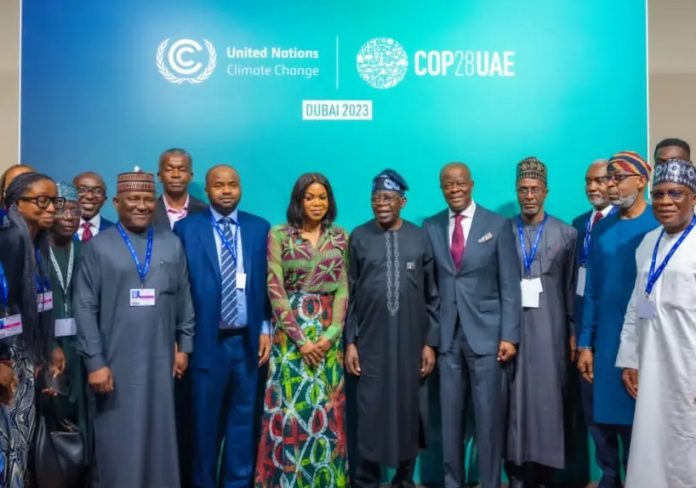
What was achieved in COP28 and what needs to happen

0

The 28th Conference of the Parties (COP28) to the United Nations Framework Convention on Climate Change (UNFCCC) took place in Glasgow, Scotland, from 31 October to 12 November 2023. It was a crucial summit that aimed to accelerate global action on climate change and to finalize the implementation of the Paris Agreement, which was adopted in 2015.

The main outcomes of COP28 were:

The Glasgow Climate Pact, which updated the Paris Agreement with new commitments and rules on mitigation, adaptation, finance, transparency, and global stocktake. The pact also included a new goal of limiting global warming to 1.5°C above pre-industrial levels, and a request for countries to submit more ambitious nationally determined contributions (NDCs) by the end of 2024.

The Glasgow Climate Finance Package, which mobilized $100 billion per year from developed countries to support developing countries in their climate actions. The package also included a new mechanism for loss and damage, which recognized the need to address the impacts of climate change that are beyond adaptation.

The Glasgow Energy Transition Initiative, which launched a global coalition of governments, businesses, and civil society to accelerate the shift from fossil fuels to clean energy sources. The initiative also announced a series of pledges and partnerships on renewable energy, energy efficiency, and clean transport.

The Glasgow Forests and Land Use Alliance, which brought together more than 100 countries and organizations to protect and restore forests and other natural ecosystems. The alliance committed to halting and reversing deforestation by 2030, and to enhancing carbon sinks and biodiversity.

The Glasgow Adaptation Action Coalition, which enhanced cooperation and support for adaptation and resilience. The coalition launched a global adaptation goal, a global adaptation network, and a global adaptation summit.

These outcomes represent significant progress in the global response to climate change, but they are not enough to avoid the worst impacts of the crisis. According to the latest report by the Intergovernmental Panel on Climate Change (IPCC), the world is already experiencing unprecedented changes in temperature, precipitation, sea level, ice cover, and extreme events. These changes are affecting human health, food security, water availability, ecosystems, and livelihoods.

To limit global warming to 1.5°C, the world needs to reduce its greenhouse gas emissions by 45% by 2030 and reach net zero by 2050. This requires urgent and transformative actions from all sectors and actors. Some of the key actions that need to happen now are:

Strengthening the implementation and ambition of NDCs. Countries need to translate their NDCs into concrete policies and measures that can deliver rapid and deep emission reductions. They also need to update their NDCs every five years with higher targets and more robust plans.

Scaling up climate finance and technology transfer. Developed countries need to fulfill their commitment of providing $100 billion per year by 2020 and increase their support beyond that level. Developing countries need to access and utilize climate finance effectively and efficiently. Both groups need to enhance cooperation on technology development and diffusion.

Enhancing adaptation and resilience. All countries need to integrate adaptation into their development plans and policies and invest in building adaptive capacity and reducing vulnerability. They also need to support the most vulnerable countries and communities in coping with loss and damage.

Engaging non-state actors and stakeholders. Governments need to work with businesses, investors, cities, regions, civil society, indigenous peoples, youth, women, and other groups that are taking action on climate change. They need to create enabling environments for their participation and contribution, and foster partnerships and coalitions for collective impact.

COP28 was a historic moment for the world to come together and act on climate change. But it was not the end of the journey. It was only the beginning of a new phase of enhanced cooperation and action. The success of COP28 depends on how well we follow up on our commitments and promises. We have no time to waste. We have no planet B. We have only one chance to get it right.


The Adobe’s $1Billion to Figma for a Reverse Termination fee – And Lessons for African Startups

1

What an amazing world where a regulator’s dis-approval for one company to buy another will activate a clause which will make the buyer pay the seller $1 billion as a termination fee. Yes, Adobe will have to fork out $1 billion and wire the funds to Figma because the UK and EU regulators would not allow the Adobe-Figma deal to go ahead:

Adobe (ADBE.O) on Monday shelved its $20 billion deal for cloud-based designer platform Figma, pointing to “no clear path” for antitrust approvals in Europe and the UK for what would have been among the biggest buyouts of a software startup…Adobe will pay a termination fee of $1 billion to San Francisco-based Figma, whose web-based collaborative platform for designs and brainstorming is used by Uber, Coinbase, Zoom Video Communications and many other firms.”

That last part is the focus of this post: the power of contracts and making sure people do not waste people’s time. You see, Figma has done the agreement in such a way that if Adobe is unable to get the regulators to approve the deal, it will cost Adobe $1 billion. With that, the “smaller” company will not be distracted without compensation if the deal fails. For Adobe, it must have modeled that it could overcome all hurdles before agreeing to such. Of course, deals fail, and they do happen all the time. In America, there is always a termination fee within a clearly defined timeline.

In 2023, I know two major Nigerian startups which did not survive, after publicly announced deals did not materialize. The reputational hit which comes when the buyer pulls out could be damaging especially when that pull-out is not because of any regulatory scrutiny. But left and right, it comes down to the positioning of the seller. If you are on a fire yard sale, no one will promise you anything. But when your positioning is strong, you can put a clause to be paid $1 million if the company decides not to move ahead, provided during due diligence, no demons were discovered.

In Nigeria and Africa, we should learn from these clauses and see how we make sure people do not come on the pretense to acquire companies, just to steal trade secrets, and then walk away free. I have seen such in the startup world, and I continue to tell founders to be careful before they open their books. Yes, define all boundaries and add a small penalty such that if after all the terms are met, and the buyer decides not to execute, the company will be mandated to compensate.

Make it self-evident so that you do not need a court to interpret the terms because it would be lively-activated:  if we meet conditions A, B, andC, and within 30 days, we have not received Agreement #3 signed, you would be required to pay $1m as termination fee, and that fee should be wired to reach our bank account (….) by Jan 4, 2024. Yes, something like that; ask your lawyers! I can always provide the bank account…lol

Figma and Adobe have abandoned their proposed merger. The companies “no longer see a path toward regulatory approval of our proposed acquisition,” Figma’s co-founder and CEO Dylan Field posted on Monday. The blockbuster $20 billion deal faced significant regulatory hurdles in Europe and the United Kingdom in particular, where the Competition and Markets Authority (CMA) provisionally determined the deal “would harm the product design software market” if it were to move forward. The deal’s collapse means that Adobe must now fork out $1 billion to Figma for a reverse termination fee (RTF), The Verge reports.

An RTF is a fee payable by the buyer to the seller in the event of non-consummation, often due to failure to receive antitrust clearance within a certain time frame or failure to secure financing for the transaction.

Fifteen months into the regulatory review process, Figma and Adobe no longer see a path toward regulatory approval of our proposed acquisition.

Figma and Adobe have reached a joint decision to end our pending acquisition. It’s not the outcome we had hoped for, but despite thousands of hours spent with regulators around the world detailing differences between our businesses, our products, and the markets we serve, we no longer see a path toward regulatory approval of the deal.

We entered into this agreement 15 months ago with the goal of accelerating what both Adobe and Figma could do for our respective communities. While we leave that future behind and continue on as an independent company, we are excited to find ways to partner for our users.

Amid the uncertainty of a pending acquisition, I am deeply proud of how the Figma team delivered for our community and feel we have only continued to accelerate our pace over the past 15 months. Our team built and shipped new products to make it easier to ideate, design and build software, including our first native AI features, Dev Mode, Variables, and Advanced Prototyping. We also opened new hubs in the UK and Asia, hosted an epic Config IRL in San Francisco, acquired AI startup Diagram, and added more than 500 new Figmates.

Figma’s founding vision was to “eliminate the gap between imagination and reality.” The shift from a physical economy to a digital economy and huge advances in AI have combined to make this aspiration feel even more urgent and within reach today than it did 11 years ago.

This will be our focus moving forward. We want to make it easy for anyone to design and build digital products on a single multiplayer canvas—from start to finish, idea to production. I’m so excited for what the future holds and beyond grateful to our community for supporting us. Figma’s best, most innovative days are still ahead. See you all in 2024!

Comment on Feed

Comment 1: A new twist. What happens in seller-induced headwinds for-profit situations?

My Response: Most times, for a termination fee to be included, it cannot be the seller which initiates. Typically, you are sleeping and the buyer wakes you up, and you want to return back to sleep, and he tells you to stay awake with a promise of money if the deal cannot get through. You awake and distracted, you’re sure Head or Tail, you get something!

Key Predictions for Generative AI In 2024

0

Generative AI is one of the most exciting and promising fields of artificial intelligence, as it enables machines to create novel and realistic content, such as images, text, music, and more. Generative AI has already shown impressive results in various domains, such as deepfakes, style transfer, text summarization, and image captioning. But what can we expect from generative AI in the next few years?

What are some examples of generative AI?

Generative AI is a branch of artificial intelligence that focuses on creating novel and realistic content, such as images, text, music, and more. Generative AI uses various techniques and models, such as generative adversarial networks (GANs), variational autoencoders (VAEs), and transformers, to learn from data and generate new data that resembles the original data. Here are some examples of generative AI applications in different domains:

  • Image generation: Generative AI can create realistic images of faces, animals, landscapes, and more. For example, NVIDIA’s StyleGAN can generate high-quality images of human faces that do not exist in reality. Another example is Google’s DeepDream, which can generate surreal images based on the user’s input image.

  • Text generation: Generative AI can create natural and coherent text for various purposes, such as summarization, translation, captioning, and storytelling. For example, OpenAI’s GPT-3 can generate text on any topic given a few words or sentences as input. Another example is Microsoft’s Turing-NLG, which can generate summaries of long documents or articles.

  • Music generation: Generative AI can create original and expressive music compositions and performances. For example, Google’s Magenta can generate music based on the user’s input melody or genre. Another example is AIVA, which can generate music for movies, games, and commercials.

  • Speech synthesis: Generative AI can create realistic and natural speech from text or other inputs. For example, Google’s WaveNet can generate speech that sounds like a human voice. Another example is Microsoft’s Neural Text-to-Speech, which can generate speech in different languages and accents.

Here are five key predictions for generative AI in 2024

Generative AI will become more accessible and democratized. As generative AI models become more powerful and efficient, they will also become more accessible and affordable for developers, researchers, and hobbyists.

Cloud platforms, such as Microsoft Azure, will offer easy-to-use tools and APIs for generative AI applications, such as image generation, text generation, and speech synthesis. Moreover, open-source frameworks and libraries, such as TensorFlow and PyTorch, will provide more support and resources for generative AI development and experimentation.

Generative AI will enable more personalized and interactive experiences. Generative AI will not only create content, but also adapt it to the preferences and needs of the users.

For example, generative AI will be able to generate personalized music playlists, news articles, and product recommendations based on the user’s profile, mood, and context. Furthermore, generative AI will enable more interactive and engaging experiences, such as conversational agents, chatbots, and virtual assistants that can generate natural and coherent responses.

Generative AI will enhance creativity and innovation. Generative AI will not only mimic human creativity, but also augment it and inspire it. For example, generative AI will be able to generate novel ideas, concepts, and designs that can spark human imagination and innovation.

Moreover, generative AI will be able to collaborate with humans in creative tasks, such as writing, composing, and designing. Generative AI will also be able to provide feedback and suggestions to improve human-generated content.

Generative AI will face more ethical and social challenges. As generative AI becomes more realistic and widespread, it will also pose more ethical and social risks and challenges. For example, generative AI will be able to generate fake or misleading content that can harm individuals or groups of people, such as deepfakes, fake news, and propaganda.

Moreover, generative AI will raise questions about the ownership, authorship, and responsibility of the generated content. Furthermore, generative AI will challenge the notions of authenticity, originality, and creativity in human culture.

Generative AI will require more regulation and governance. As generative AI impacts various domains and sectors of society, it will also require more regulation and governance to ensure its safe and responsible use. For example, generative AI will need to comply with laws and standards that protect the privacy, security, and rights of the users and the creators of the generated content.

Moreover, generative AI will need to follow ethical principles and guidelines that ensure its fairness, transparency, accountability, and social good.

Sales of Solana’s Smartphone is Surging, as Coinbase files lawsuit against the SEC following denial of transparent crypto regulation

0

Solana is a rising star in the smartphone market, thanks to its innovative features and competitive pricing. The company has reported a surge in sales of its latest model, the Solana S20, which boasts a sleek design, a powerful processor, and a long-lasting battery. The Solana S20 also supports the Solana blockchain network, which enables fast and secure transactions using the SOL cryptocurrency. This feature has attracted many crypto enthusiasts and investors, who see the potential of Solana as a platform for decentralized applications.

We will take a closer look at the Solana S20 and its advantages over other smartphones in the market. We will also explore how Solana is disrupting the mobile industry with its blockchain technology and its vision for the future of communication and commerce.

The Solana S20 is not just a smartphone, it’s a smart device that connects you to the world of blockchain. The Solana blockchain network is one of the fastest and most scalable in the industry, capable of processing thousands of transactions per second with low fees and high security. The Solana S20 allows you to access this network directly from your phone, without the need for any intermediaries or third-party apps.

You can use your SOL tokens to pay for goods and services, send and receive money, or invest in various projects built on Solana. You can also create your own decentralized applications using the Solana SDK, which provides you with the tools and resources to develop your own solutions on the blockchain.

The Solana S20 also has a number of features that make it stand out from other smartphones in the market. Here are some of them:

  • A 6.5-inch OLED display with a 120Hz refresh rate and a 2400×1080 resolution, offering a smooth and immersive viewing experience.
  • A Snapdragon 888 processor with 8GB of RAM and 256GB of storage, delivering fast performance and ample space for your apps and files.
  • A 5000mAh battery with 65W fast charging, ensuring that you never run out of power even when using the blockchain features.

  • A quad-camera system with a 64MP main camera, a 12MP ultra-wide camera, an 8MP telephoto camera, and a 2MP macro camera, allowing you to capture stunning photos and videos in any situation.

  • A fingerprint sensor under the display, an infrared face unlock system, and a 3D sound system with Dolby Atmos support, enhancing your security and entertainment options.

Coinbase files lawsuit against the SEC following denial of transparent crypto regulation

Coinbase, one of the largest cryptocurrency exchanges in the world, has filed a lawsuit against the U.S. Securities and Exchange Commission (SEC) after the agency rejected its request for a clear and transparent regulatory framework for crypto assets.

The lawsuit, filed on December 15 in the U.S. District Court for the District of Columbia, claims that the SEC has violated Coinbase’s constitutional rights to due process and equal protection by arbitrarily and capriciously denying its petition for rulemaking, which was submitted in July 2021.

The petition asked the SEC to adopt a set of rules that would provide clarity and certainty for the crypto industry, as well as protect investors and promote innovation. The petition argued that the current regulatory environment is vague, inconsistent and unpredictable, creating confusion and uncertainty for both crypto businesses and consumers.

The petition also proposed a set of principles that could guide the SEC’s rulemaking process, such as recognizing the inherent differences between crypto assets and traditional securities, applying a functional approach that focuses on the economic realities of each crypto asset, and fostering a collaborative and cooperative relationship with the crypto industry.

However, the SEC denied the petition in November 2021, stating that it did not meet the criteria for rulemaking and that it was not in the public interest. The SEC also asserted that it has sufficient authority and guidance to regulate crypto assets under existing laws and regulations.

Coinbase’s lawsuit challenges the SEC’s denial as arbitrary, capricious, an abuse of discretion and contrary to law. The lawsuit also alleges that the SEC has failed to provide a rational explanation for its decision, ignored relevant facts and evidence, and violated Coinbase’s constitutional rights.

Coinbase’s CEO Brian Armstrong said in a blog post that the lawsuit is a “last resort” after exhausting all other options to engage with the SEC. He said that Coinbase is not seeking any special treatment or exemption from the SEC, but rather a fair and transparent regulatory framework that applies equally to all crypto businesses.

“We believe that everyone deserves access to a fair and open financial system, and that crypto is a powerful force for good in the world. We also believe that regulation is essential to protect investors and ensure market integrity.

But regulation must be clear, consistent and predictable. It must also be developed through a transparent and participatory process that respects the rule of law and the rights of all stakeholders,” Armstrong wrote.

He added that Coinbase hopes to resolve the dispute with the SEC through dialogue and cooperation, but that it is prepared to defend its position in court if necessary.

“We are confident that we have a strong legal case and that we will prevail in this lawsuit. We are also hopeful that this lawsuit will ultimately benefit not only Coinbase, but the entire crypto industry and its millions of users,” he concluded.

How to Stay Motivated After a Setback

0

One of the most important skills for achieving success in any field is resilience. Resilience is the ability to bounce back from failures and setbacks, and to keep pursuing your goals with passion and determination. Resilience is not something that you are born with, but something that you can develop and strengthen over time. In this blog post, I will share some tips and strategies on how to build resilience and become more successful in your personal and professional life.

First, you need to have a clear vision of what success means to you. Success is not a one-size-fits-all concept, but a personal definition that reflects your values, interests, and aspirations. Having a clear vision of success will help you set realistic and meaningful goals, and also measure your progress and achievements. You can use tools such as vision boards, affirmations, or journaling to create and reinforce your vision of success.

Second, you need to embrace failure as a learning opportunity. Failure is inevitable in any endeavor, and it is not a sign of weakness or incompetence. Rather, failure is a feedback mechanism that tells you what works and what doesn’t, and what you need to improve or change. Instead of avoiding or denying failure, you should accept it, analyze it, and learn from it. You can use tools such as reflection, feedback, or coaching to extract valuable lessons from failure.

Third, you need to cultivate a positive mindset and attitude. Your mindset and attitude have a powerful influence on how you perceive and respond to failure and success. A positive mindset and attitude will help you see failure as a challenge rather than a threat, and success as a reward rather than a destination. A positive mindset and attitude will also help you cope with stress, overcome obstacles, and celebrate achievements. You can use tools such as gratitude, optimism, or meditation to foster a positive mindset and attitude.

Reframe your failure. Don’t think of failure as something negative or shameful. Think of it as a valuable lesson that can help you improve and avoid making the same mistake in the future. Failure is not a sign of weakness, but a sign of courage and resilience.

Celebrate your progress. Don’t focus only on the outcome, but also on the process. Recognize and appreciate how far you have come and how much you have learned along the way. Celebrate your small wins and milestones and reward yourself for your efforts.

Seek feedback and support. Don’t isolate yourself or dwell on your failure. Reach out to others who can offer you constructive feedback and encouragement. Seek advice from mentors, coaches, or peers who have faced similar challenges and overcome them. Learn from their experiences and insights and apply them to your own situation.

Set new goals and action plans. Don’t let your failure stop you from pursuing your dreams. Instead, use it as an opportunity to reassess your goals and strategies, and make adjustments as needed. Set realistic and specific goals that are aligned with your vision and values and break them down into manageable steps. Create a clear and detailed action plan that outlines what you need to do, when you need to do it, and how you will measure your progress.

Keep a positive mindset. Don’t let negative thoughts or emotions overwhelm you or sabotage your success. Instead, cultivate a positive mindset that empowers you and boosts your confidence. Replace negative self-talk with positive affirmations and focus on the possibilities rather than the limitations. Remind yourself of your strengths and achievements and visualize yourself succeeding in the future.

Remember, success is not a destination, but a journey. And every journey has its ups and downs, twists and turns. The important thing is to keep going, keep learning, and keep growing. Success is the ability to go from one failure to another with no loss of enthusiasm. And you have that ability within you.

Finally, you need to persist in the face of adversity. Persistence is the ability to keep going despite difficulties, disappointments, or discouragement. Persistence is not about stubbornness or rigidity, but about flexibility and adaptability.