DD
MM
YYYY

PAGES

DD
MM
YYYY

spot_img

PAGES

Home Blog Page 3516

Department of Justice Accuses Apple of Stifling ‘WeChat-like’ Super App Creation in the US

0

The United States Department of Justice (DOJ) has taken an assertive stance against tech behemoth Apple, filing a civil antitrust lawsuit alleging the company’s obstruction of the development of WeChat-like super apps within the US market.

This legal action, joined by 16 state and district attorneys general, is grounded on the allegation that Apple has violated Section 2 of the Sherman Act by monopolizing or attempting to monopolize smartphone markets.

Super apps, epitomized by Tencent Holdings Ltd.’s WeChat, have long been coveted by US tech leaders for their multifaceted functionalities. With a user base of 1.3 billion predominantly in China, WeChat seamlessly integrates messaging, music, shopping, gaming, hiring, and bookings into a single platform. The DOJ contends that Apple has deliberately imposed barriers to impede the proliferation of super apps, fearing that they would facilitate easier transitions to smartphone rivals.

“Apple’s broad-based, exclusionary conduct makes it harder for Americans to switch smartphones, undermines innovation for apps, products, and services, and imposes extraordinary costs on developers, businesses, and consumers,” the DOJ said.

The complaint cites an Apple manager’s caution that permitting unified experiences akin to super apps would “let the barbarians in at the gate.”

In response, Apple rebuts the DOJ’s claims, stating its facilitation of super apps on the iPhone, pointing to examples such as China’s WeChat and Tata’s Tata Neu in India. The company argues that the relative lack of popularity of super apps in the US cannot be solely attributed to its platform rules.

The DOJ’s argument diverges from conventional wisdom, which attributes the limited success of super apps in the US to consumer preferences for single-purpose apps and unique regulatory and economic conditions in Asia. Critics argue that cramming multiple features into one app often yields a cumbersome user experience, prompting tech giants like Facebook to unbundle their offerings.

At the crux of the DOJ’s claim lies historic iOS restrictions against “mini programs,” lightweight third-party software integrated directly into services like WeChat. The lawsuit alleges that Apple obstructed this alternative ecosystem by enforcing arbitrary interface rules and restricting payments for mini-programs.

Although Apple enabled in-app purchases for mini-programs in January, critics maintain that the company’s policies hindered innovation and competition.

The DOJ’s scrutiny marks a new battleground in Apple’s ongoing defense of its walled garden. European regulators have previously pressured the company to revise its developer fees and permit alternative marketplaces. While the veracity of the DOJ’s claims awaits adjudication in court, skeptics question whether tangible evidence exists to demonstrate harm to consumers resulting from the absence of mini-programs in the US.

Despite these challenges, some developers persist in their pursuit of WeChat-style ambitions. Snap Inc., for instance, introduced Minis in 2020, offering bite-sized utilities within its chat app, albeit discontinuing the feature later on, according to Bloomberg. Nevertheless, industry-specific bundles, such as Uber’s services tab, OpenAI’s ChatGPT, and Elon Musk’s aim at “everything app” with X, suggest that developers are finding success with alternative approaches to app integration.

The outcome of the lawsuit is likely going to determine whether Apple will keep its walled garden, protected by its policies, or have it dismantled to liberalize app development in the US.
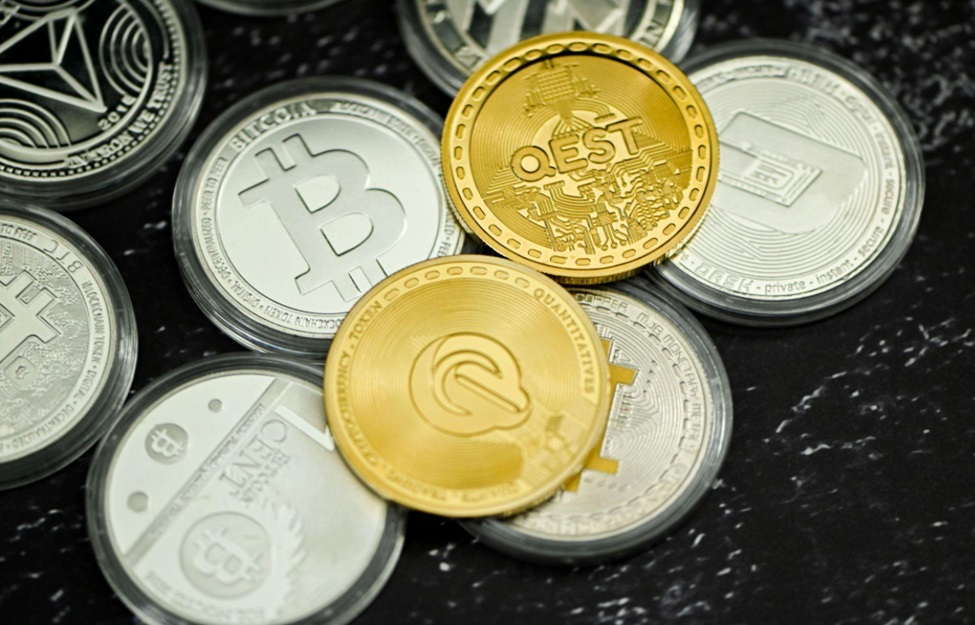
BlockDAG Presale Approaches Fifth Batch, Raises $8.8 Million, Investors Take Note Amid BNB Price Fall and Mantle (MNT) Debut

0

The digital currency ecosystem is vibrant, with fresh technologies and initiatives swiftly gaining attention. BlockDAG (BDAG) is at the forefront, thanks to its innovative methods, use of the latest technology, and ambitious objectives, such as achieving a remarkable 5000X return on investment. This piece will explore the path BlockDAG has taken to presale achievement and examine the elements that lend it legitimacy. We’ll navigate through the current fluctuations in BNB’s price and discover the recent introduction of Mantle (MNT). 

Downturn in BNB Prices

BNB, Binance’s proprietary digital currency, has seen a significant decrease in value, dropping from a high of $644 to $557. Despite this downturn, investors maintain a positive outlook, ready to boost the currency’s worth.

Present trends indicate a possible period of consolidation. With the 20 and 50 EMAs nearing the currency’s present value, BNB could experience short-term stability, with prices oscillating between $539 and $570. A decline in trading volume and a high RSI index also suggest that BNB may be preparing for additional price corrections as it finds a new balance. 

Mantle Targets New Investments

Mantle aims to improve Ethereum’s scalability with its Layer 2 solution and has witnessed a price increase, showing strong investor trust. The link between its trading volume and price suggests an uptick in demand. Mantle and similar investments, like Koala Coin, draw attention for their potential profits and novel strategies, clearly intriguing the market. However, the variability seen in Mantle’s market cap and volume advises a cautious investment approach, underlining the unpredictability of the cryptocurrency market.

BlockDAG’s Competitive Advantage

BlockDAG stands out in the digital currency economy with its Proof-of-Work consensus mechanism and Directed Acyclic Graph architecture. Focusing on security and environmental sustainability, BlockDAG achieves unparalleled transaction speeds, currently at 10 blocks per second and targeting more than 30. Its foundational technology enables secure mining, the use of smart contracts, and enhancement of performance, establishing it as a strong contender in the cryptocurrency world.

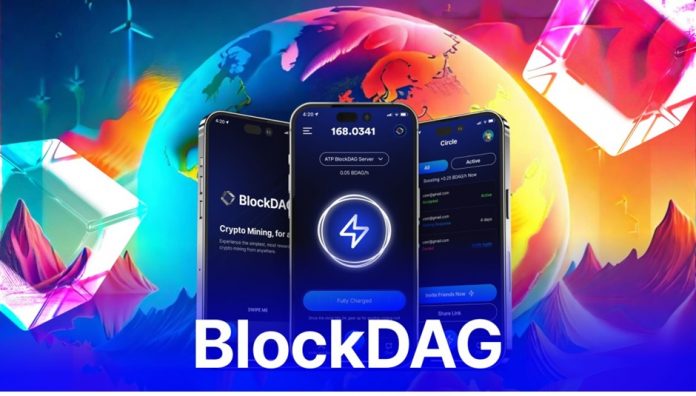
The initiative’s dedication to community engagement, demonstrated by offering a 10% referral incentive, signifies a strategic growth plan, cultivating a committed and active community. This sense of involvement and contribution is essential for sustained success in the rapidly changing cryptocurrency arena. BlockDAG’s framework guarantees transaction safety and efficiency and promotes a decentralized community with high levels of participation and innovation. Notably, it introduced user-friendly applications like BlockDAGX1 and specific mining devices, such as BlockDAGX 10, X30, and X100, which provide passive income for miners, potentially earning up to $100 daily.

From its initial Batch 1 presale, which set a record with $1 million raised in 24 hours, to the nearly completed Batch 4, raising close to $8.8 million and selling over 4000 miners in a brief period, BlockDAG has solidified its reputation among experienced investors and aspiring entrepreneurs alike.

Last Thoughts

BlockDAG is on track to become a key player in the cryptocurrency sector, differentiating itself with technological advancements, community involvement, and a commitment to eco-friendliness. Unlike the current stagnation phase of BNB and the fluctuation of Mantle, BlockDAG’s journey indicates a solid basis for expansion and a definitive route towards entering the top 50 digital currencies.

With its lofty ambitions and potential for a 5000X return on investment, the prospect of significant financial growth is tangible. BlockDAG presents an exciting opportunity for those looking to invest in the future of crypto. Don’t miss your chance to join this adventure; the BlockDAG Layer 1 Presale is currently underway!


Website: https://blockdag.network

Presale: https://purchase.blockdag.network

Telegram:https://t.me/blockDAGnetworkOfficial

Discord: https://discord.gg/Q7BxghMVyu


The Apple’s Playbook As A Platform To Unify The Best

0

When Uber was making driverless cars, I wrote here that it was a bad strategy. Yes, Uber does not need to make driverless cars since it has the world’s finest and largest ecosystem for the orchestration and aggregation of drivers and riders. Simply, focus on making that ecosystem to remain the category-king, and any person who makes the best robot-cab will come to partner with Uber, since that company, if great, will like to work with the best.

Apple in its own game plan has continued to make the best consumer devices. The implication is that the best will like to converge on the Apple iPhone and its ecosystems. The Google Gemini AI is coming to the Apple world, and today we are reading that Baidu AI will do the same in China for Apple: “In a strategic move aimed at enhancing its offerings in the Chinese market, US tech giant Apple has reportedly selected Chinese search engine powerhouse Baidu to provide generative artificial intelligence (AI) technology for its upcoming iPhone 16 and other products slated for release in mainland China this year.”

It is what it is: it takes the killing of one leopard to be called a killer of leopards. Yes, just WIN big in one thing, and if you sustain that position, you will capture a lot of value in this world. For Apple and its iPhone, there is a moment: ‘a New York Times report offers a specific figure: it says Google paid Apple “around $18 billion” in 2021’ to be Apple’s default search engine.

If someone can pay you that yearly to have a storefront on your device, why do you need to fight that person? People, Apple is minding its own lane, and that is wisdom.

Apple Partners with Baidu for AI Technology in Mainland China Amidst Rising Competition and Regulatory Scrutiny

Apple Partners with Baidu for AI Technology in Mainland China Amidst Rising Competition and Regulatory Scrutiny

0

In a strategic move aimed at enhancing its offerings in the Chinese market, US tech giant Apple has reportedly selected Chinese search engine powerhouse Baidu to provide generative artificial intelligence (AI) technology for its upcoming iPhone 16 and other products slated for release in mainland China this year.

This collaboration signifies Apple’s commitment to leveraging locally-built technology to address rising national security concerns and regulatory pressures in China, according to a report from Chinese media outlet China Star Market.

The decision to partner with Baidu underscores Apple’s recognition of the importance of tailoring its products and services to meet the specific needs and preferences of Chinese consumers. By integrating Baidu’s Ernie Bot into its iPhone 16, Mac OS, and iOS 18, Apple aims to enhance user experiences while complying with local regulations.

The reported partnership with Baidu comes amidst mounting concerns over the use of foreign tech products in China, with the Chinese government actively promoting domestic alternatives. As part of these efforts, the government has sought to reduce the use of iPhones among state employees, leading to a resurgence of domestic competitors like Huawei.

Following the news of the collaboration, Baidu’s share price surged by as much as 6% in Hong Kong on Monday morning, reflecting investor optimism about the potential benefits of the partnership. However, both Baidu and Apple have refrained from commenting on the report.

Tim Cook, Apple’s CEO, has emphasized the importance of China to the company’s operations.

“There’s no supply chain in the world that’s more critical to us than China,” Cook was quoted by China’s state-owned Global Times as saying.

Cook’s recent visit to China further underscores the company’s commitment to the Chinese market. During his visit, Cook inaugurated a new retail store in Shanghai and reaffirmed Apple’s partnership with key Chinese suppliers. Cook’s remarks at a high-profile summit hosted by the Chinese government emphasized the significant contributions of Chinese suppliers to Apple’s carbon-neutral goals.

Despite Apple’s efforts to strengthen its presence in China, the company faces stiff competition in the smartphone market. According to a report by Counterpoint Research, iPhone sales in China declined by 24% year-on-year in the first six weeks of 2024, attributed to increased competition from domestic rivals such as Huawei, Oppo, Vivo, and Xiaomi.

The potential partnership between Apple and Baidu aligns with broader trends in the tech industry, as companies seek to integrate AI technology into their products to enhance user experiences. Samsung Electronics, for instance, recently announced plans to integrate Baidu’s Ernie large language model (LLM) into its flagship 5G devices, highlighting the growing importance of AI in the smartphone market.

However, AI service providers in China are facing increased regulatory scrutiny, with authorities issuing new guidelines and rules to ensure compliance with government standards. Last August, China implemented detailed regulations governing domestic generative AI services, signaling a proactive approach to regulating emerging technologies.

Against the backdrop of regulatory challenges and escalating competition in the Chinese market, Apple seems to have recognized that its future success in China hinges on adapting to local dynamics. This adaptation involves forming strategic partnerships with domestic players such as Baidu.

It is believed that working with established Chinese companies will help Apple to better manage the complex regulatory requirements and better understand the preferences and needs of Chinese consumers. These partnerships not only improve Apple’s market presence but also facilitate the development of customized products and services that appeal to the local audience.

Embracing such localized strategies underscores Apple’s commitment to maintaining its position in one of the largest and most dynamic markets in the world.

Discover Mines of Knowledge with Tekedia Mini-MBA

0

“Mines of knowledge, not gold or diamond or silver, will connect Africa to a greater destiny and to the growth regions of the world” – Ndubuisi Ekekwe, Harvard Business Review.

Today, I invite you to Tekedia Mini-MBA, a temple for the mastering of the mechanics of business. The next edition begins in June, and it is going to be the best yet. Register and let us build mines of knowledge for your career, business and community. Save with early bird discounts here.

Tekedia Mini-MBA is an innovation management 12-week program, optimized for business execution and growth, with digital operational overlay. It runs 100% online. The theme is Innovation, Growth & Digital Execution – Techniques for Building Category-King Companies. All contents are self-paced, recorded and archived which means participants do not have to be at any scheduled time to consume contents. Besides, programs are designed for ALL sectors, from fintech to construction, healthcare to manufacturing, agriculture to real estate, etc.