DD
MM
YYYY

PAGES

DD
MM
YYYY

spot_img

PAGES

Home Blog Page 3534

Nigeria’s Inflation Predicted to Surge to 32.6% in March 2024

0

The deputy governor of the Economic Policy Directorate of the Central Bank of Nigeria (CBN) Muhammad Sani Abdullahi has predicted that Nigeria’s inflation will increase by 32.6% in March, due to high energy costs, fluctuation in the exchange rate, and insecurity.

Mr. Abdullahi while analyzing a document at the CITI-CEEMA Macro Conference held on March 20, 2024, in London, offered insights into Nigeria’s economic projections, highlighting an anticipated rise in the country’s inflation rate.

Part of the document reads,

“Headline inflation is expected to rise to 32.63% in March 2024, due to: High Energy Prices: Lingering impact of fuel subsidy removal, increasing the cost of household utilities, transportation, and production costs.

“Exchange Rate Passthrough: Depreciation of the naira resulting from the market-determined exchange rate policy, is likely to have a passthrough effect on domestic prices.

“Others are Insecurity: Impact of insecurity on food production, the winding down of the harvest season, and high cost of farm input could negatively impact food prices.” 

Inflation in Nigeria is still climbing while it has slowed globally. Recall that in February 2024, Nigeria’s inflation rate rose to 31.70% up from 29.90% in January 2024, marking an increase of 1.80%

A report by Reuters disclosed that Nigeria’s inflation approaches 30%, the highest it had ever climbed since mid-1996, eroding incomes and savings and worsening the cost of living for citizens.

The weaker naira, which has continued to suffer constant devaluation, is reported to be a key factor behind price pressure alongside energy and logistics costs associated with infrastructure problems.

In a post on X by Steve Hanke, on Inflation’s Dashboard for March 2024, Nigeria ranks amongst the top five (5) countries in the world with the highest inflation rate.

The post reads,

“This week’s top 5 inflaters:

1. Zimbabwe(1521%/yr)

2. Argentina (180%/ yr)

3. Sudan (139%/yr)

4. South Sudan (115%/yr)

5. Nigeria (113%/yr)

The int’l press repeatedly reports that ARG has the highest inflation rate in the world = NOT TRUE.”

Analysts predict that Nigeria’s rising inflation could result in stagflation if not addressed urgently.

A member of Nigeria’s Monetary Policy Committee (MPC), Murtala Sabo Sagagi, recently said that the underlying structural issues within the Nigerian economy significantly hinder the traditional monetary policy tools from achieving desired outcomes on inflation control.

Sagagi emphasized that without addressing key issues such as insecurity, food shortages, and a comprehensive roadmap for economic and social rejuvenation, any monetary policy adjustments would have a minimal impact on inflation rates.

In a bid to mitigate the rising inflation with a focus on food inflation, Nigeria’s Vice President Kashim Shettima last month disclosed that the government planned to set up a commodity board to regulate the price of grains and other items to curb food costs and support smallholder farmers who dominate production.

The Central Bank of Nigeria (CBN) however anticipates a turnaround, with inflation expected to start its downward trajectory beginning in May 2024. The Bank’s governor Olayemi Cardoso has hinted that the CBN aims for inflation to fall to about 21%.


It’s The Law: Abia State Abolishes Pension for ex-Abia Governors, Deputies

1

I thanked Mr. Speaker when he did his part. Today, I want to thank Mr. Governor for doing his part. Yes, Governor Alex Otti of Abia State, on Thursday, signed the Abia State of Nigeria Governors and Deputy Governors Pension Repeal Bill of 2024 into law. With the signature, former governors and deputies would not be receiving pensions. To the Attorney General of the state, Ikechukwu Uwanna, you are working, making sure the right law stays even as we take some crazy ones out of the books.

To all nations, Abia is working day and night to pass the Grand Law which will repeal poverty through improvement of human welfare and opportunities in the God’s Own State. We ask you to join us to craft that law through investments, support and other ways.


Governor Alex Otti of Abia on Thursday signed the Abia State of Nigeria Governors and Deputy Governors Pension Repeal Bill of 2024 into law.

In a speech after assenting to the law in Nvosi, Mr Otti described the new law as part of the efforts made to promote good governance and stewardship in Abia.

The governor said that he strongly believed that leadership was all about stewardship and should not be viewed as an opportunity to embezzle public funds.

He thanked the Abia House of Assembly for expeditiously dealing with the bill and commended them for the cordial relationship between the legislative and executive arms of government.

Mr Otti said that the cordial relationship between both arms of government had been built on trust and understanding that the separate arms of government were working together for the people.

He assured the legislature of maximum support from the executive.

Mr Otti described the new law regarding revoking pension payments to former officeholders as a step in the right direction.

He said that “government is not about self-interest, it is actually self-interest that destroys government.”

Mr Otti said that prioritising public welfare over individual benefits ought to be given key consideration in policy-making.

He said that he was aware that he would have benefitted if the law continued to exist and added that it was best to use the funds to improve the lives of citizens.

Mr Otti also said that the pensioners were the people who needed the funds the most and not former office holders.

He expressed displeasure over the practice of allocating 80 per cent of the state’s budget to recurrent expenditure and 20 per cent to capital expenditure by past administrations.

He said that the changed policy was part of the efforts made by the present administration to reduce the cost of governance.

Mr Otti said: “I have seen engagements where people said that they have not been collecting.

“It is true because they have not been paid, and we don’t believe that those payments should be made.

“One of the people that should be paid wrote me about not being paid; I put a call across to him and explained why it should not be paid and he agreed with me.

“I told him we have not paid anyone and he said that he wants to confirm that he was not being singled out.

“The point I am trying to make is that even the people that should receive it believe that repealing the law is the best.”

The Speaker of the Abia House of Assembly, Emmanuel Emereuwa, said that the bill when signed into law would revoke Abia State Governors’ and Deputy Governors’ Law no 4 of 2001.

Mr Emeruwa, represented by his deputy, Austin Meregini, said that he had come to present the bill to the governor for his assent.

In a remark, the Attorney General of the state, Ikechukwu Uwanna, said that the governor had taken a bold and audacious step by assenting to the bill.

Mr Uwanna said that he believed that it was in line with the will of the people and thanked the House of Assembly for working in tandem with the executive to transform the state.
(NAN)

The Future of Fundraising Mechanism

0

In the dynamic world of finance, the rise of cryptocurrencies has sparked a debate on the future of fundraising mechanisms, particularly whether ICOs (Initial Coin Offerings) could replace traditional IPOs (Initial Public Offerings). ICOs have emerged as a novel method for startups and projects within the crypto space to raise capital by issuing their own tokens in exchange for established cryptocurrencies like Bitcoin or Ethereum.

IPOs are the traditional route taken by companies aiming to go public. This process involves selling shares of a private corporation to the public in a new stock issuance, allowing the company to raise capital from public investors.

The transition from a private to a public company can be a critical time for private investors to fully realize gains from their investment as it typically includes share premiums for current private investors. Moreover, it opens the door for a wider range of investors to participate in the company’s growth.

ICOs represent a more modern approach, often associated with cryptocurrency projects. They allow startups to bypass the rigorous and regulated capital-raising process required by venture capitalists or banks.

In an ICO, a company sells tokens that can be used on their platform or that represent ownership or a stake in a cryptocurrency project. These tokens are typically sold to raise funds for the development of a new cryptocurrency or crypto-related service.

IMOs are a relatively new concept where models, often in the form of digital assets or services, are offered initially to the public or private sectors. This can include anything from new software models to innovative service methodologies. IMOs can be seen as an extension of the ICO concept but are more focused on model-based offerings rather than currency or token-based ones.

ICOs offer a more direct and decentralized approach to investment. They have been praised for their ability to democratize access to investment opportunities and for their potential to streamline and expedite the fundraising process. Each of these avenues offers unique opportunities and challenges for companies seeking to raise capital and for investors looking to allocate their resources effectively.

However, ICOs are not without their challenges. Regulatory scrutiny has increased as authorities seek to protect investors from fraud and ensure compliance with financial laws. The lack of standardization and oversight in ICOs can lead to high volatility and risk for investors.

Despite these concerns, the potential for ICOs to replace IPOs cannot be dismissed. As blockchain technology matures and regulatory frameworks adapt, ICOs may offer a viable alternative for companies looking to raise funds while providing investors with new opportunities in the burgeoning crypto market.

While ICOs present an innovative fundraising model that aligns with the decentralized ethos of cryptocurrencies, they are not likely to completely replace IPOs in the near future. Instead, they may coexist as complementary options catering to different needs within the financial ecosystem.

Each of these mechanisms requires careful consideration regarding regulatory compliance, market conditions, and the overall goals of the entity looking to raise funds. As such, they are not one-size-fits-all solutions but rather distinct paths that cater to different strategic financial needs.

Implications of BlackRock’s Tokenization on Ethereum Network

0

The integration of blockchain technology into financial services, as exemplified by BlackRock’s recent launch of a tokenized asset fund on the Ethereum network, offers numerous benefits that are reshaping the industry. Blockchain technology stands out for its ability to provide enhanced security, transparency, and efficiency in financial transactions.

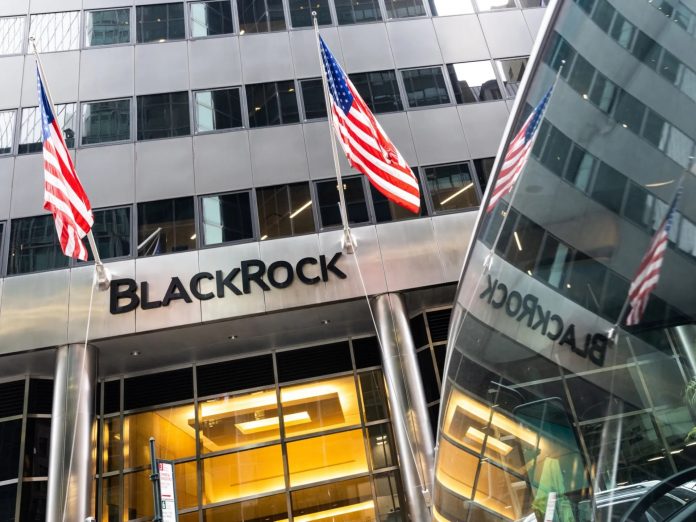
BlackRock, the global investment management corporation, has recently made a significant stride into the digital asset space by unveiling its tokenized asset fund on the Ethereum network. This move marks a monumental shift in the adoption of blockchain technology and cryptocurrency assets within traditional financial institutions.

Tokenization is a pivotal aspect of BlackRock’s new Ethereum-based asset fund, representing a significant innovation in how assets are handled in the financial sector. At its core, tokenization is the process of converting rights to an asset into a digital token on a blockchain.

Here’s how it works: an asset, whether it be real estate, art, or in BlackRock’s case, a financial fund, is divided into shares that can be distributed among investors. Each share is represented by a digital token, which signifies ownership and can be traded or sold. These tokens are stored and managed on a blockchain platform, such as Ethereum, which provides a secure and transparent ledger of all transactions.

One of the primary advantages of blockchain is its immutable ledger system, which ensures that once a transaction is recorded, it cannot be altered. This feature is crucial for maintaining the integrity of financial records and preventing fraud. Additionally, blockchain’s decentralized nature reduces the reliance on central authorities, potentially lowering the risk of systemic failures and increasing trust among participants.

Blockchain also offers greater transparency, as all transactions are recorded on a public ledger, accessible to anyone. This level of openness can lead to more informed investment decisions and improved regulatory oversight. Moreover, the technology streamlines processes by eliminating intermediaries, which can reduce costs and settlement times for transactions.

The fund, which operates on the Ethereum blockchain, allows investors to purchase shares represented as tokens. This innovative approach combines the world of traditional finance with the benefits of decentralized finance (DeFi), offering investors a new way to access and interact with their investments.

Tokenization of assets is a process where the value of an asset is converted into a token that can be transacted on a blockchain network. This process provides increased liquidity, transparency, and efficiency in asset trading. By leveraging the Ethereum network, BlackRock is tapping into one of the most established and widely used blockchain platforms, known for its smart contract capabilities and robust ecosystem.

BlackRock’s initiative is expected to pave the way for more institutional investors to explore and integrate blockchain technology into their investment strategies. The launch of this tokenized asset fund not only demonstrates BlackRock’s commitment to innovation but also signals a growing recognition of cryptocurrency’s potential to transform the financial landscape.

The tokenization of assets on blockchain platforms like Ethereum further enhances liquidity, allowing for fractional ownership and easier transferability of assets. This can open up investment opportunities to a broader range of investors, democratizing access to financial markets.

Overall, BlackRock’s adoption of blockchain technology through its Ethereum-based tokenized asset fund highlights the transformative potential of this technology in offering secure, transparent, and efficient financial solutions.

As regulatory frameworks continue to evolve and technology advances, we can anticipate further convergence between traditional finance and digital assets. BlackRock’s entry into tokenized assets on the Ethereum network is just the beginning of what promises to be an exciting journey for the financial industry.

Is Bitcoin Trading on Rate Expectations?

0

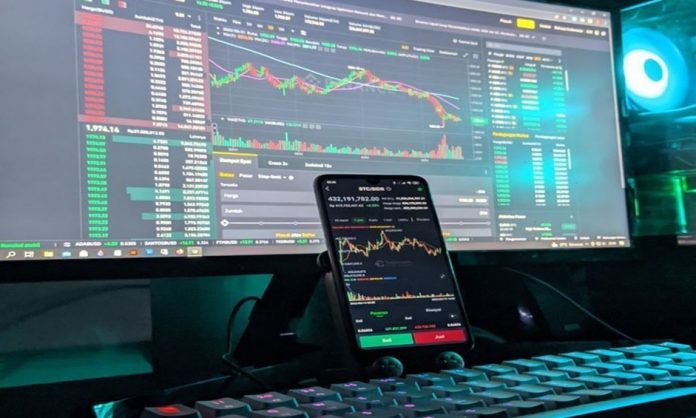
In the dynamic world of cryptocurrency, Bitcoin trading often reflects the market’s reaction to various economic indicators, including rate expectations. Traders and investors closely monitor central bank announcements and economic forecasts to gauge potential shifts in monetary policy, which can significantly impact Bitcoin’s value.

Inflation is a key economic factor that can significantly influence Bitcoin trading. It refers to the rate at which the general level of prices for goods and services is rising, and subsequently, purchasing power is falling. Central banks attempt to limit inflation, and avoid deflation, in order to keep the economy running smoothly.

For Bitcoin, which is often touted as ‘digital gold’, inflation can be a double-edged sword. On one hand, as inflation rises, traditional fiat currencies may lose value, making Bitcoin more attractive as it is not subject to the same devaluation; its supply is capped at 21 million coins. This scarcity mimics the properties of gold and can make Bitcoin a more appealing store of value during times of high inflation.

Understanding Rate Expectations

Rate expectations refer to the anticipated interest rate changes by central banks, such as the Federal Reserve in the United States or the European Central Bank. These expectations are formed based on economic data, inflation rates, employment figures, and other macroeconomic factors.

Bitcoin, although decentralized and not directly linked to any single economy’s monetary policy, is not immune to the effects of rate expectations. When traders anticipate a rate hike, they may shift their investments from riskier assets like Bitcoin to more traditional and stable ones. Conversely, if rate cuts are expected, Bitcoin may see an influx of investment as traders seek higher returns.

Strategies for Trading Bitcoin on Rate Expectations

  1. Stay Informed: Keep up to date with central bank announcements and economic news.
  2. Analyze Trends: Use technical analysis to identify how Bitcoin’s price has historically reacted to changes in rate expectations.
  3. Diversify: Spread your investments across different asset classes to mitigate risk.
  4. Risk Management: Set stop-loss orders to protect your capital against sudden market movements.

While Bitcoin operates independently of central banks, its trading is still influenced by global economic factors, including rate expectations. This decentralized digital currency thrives on the autonomy it provides to its users. However, it’s not immune to the ebb and flow of the broader economic environment. Factors such as interest rate expectations, inflation rates, and economic growth indicators can all have a significant impact on Bitcoin’s value.

Interest rate expectations, for instance, can affect investor appetite for riskier assets like cryptocurrencies. When rates are expected to rise, traditional investments like bonds may become more attractive, potentially leading to a decrease in Bitcoin investment. Conversely, if rates are expected to fall, Bitcoin may see an uptick in demand as investors seek higher returns.

Inflation rates also play a crucial role. As a hedge against inflation, Bitcoin can become more appealing when inflation is high or expected to increase. This is because, unlike fiat currencies that can be printed at will by governments, Bitcoin has a capped supply, which theoretically makes it less susceptible to devaluation through inflation.

Economic growth indicators such as GDP growth can influence investor sentiment as well. Strong economic growth may lead to increased investor confidence and a willingness to invest in riskier assets like Bitcoin.

Understanding these economic factors is crucial for anyone involved in Bitcoin trading. While the cryptocurrency’s decentralized nature offers some protection from localized economic shifts, it’s clear that global economic trends still hold sway over its market movements.