
DD
MM
YYYY

PAGES

DD
MM
YYYY

spot_img

PAGES

Home Blog Page 3541

Abia Gov. Calls for Return of Looted Funds following past governments Airport Project probe

0

Abia State Governor, Alex Otti, has issued a stern warning to the immediate past administration led by Okezie Ikpeazu, urging them to prepare to return allegedly looted funds, including money allocated for the airport project. Otti’s statement comes in the wake of the release of a forensic audit report on the state’s accounts, which uncovered significant financial irregularities.

Addressing the public during a solidarity visit by supporters and loyalists of the member representing Isiala Ngwa South State Constituency, Rowland Chinwendu, Governor Otti emphasized that his administration is solely focused on recovering looted funds to ensure good governance and foster the progress and development of Abia State.

“We are not fighting anybody, but we are determined to recover the looted funds,” Otti stated unequivocally.

Expressing disappointment at the alleged misappropriation of funds earmarked for developmental projects, Otti stressed the need for accountability and transparency in governance. He specifically pointed to the abandoned airport project, highlighting that since it was not executed, the funds allocated for the project should be refunded to the state.

“The forensic audit of our accounts revealed that a substantial amount of money was brazenly looted, including the funds allocated for the N10 billion Abia Airport Project,” Otti revealed.

Despite facing criticism and insults in the media for disclosing the findings of the forensic audit report, Otti remained steadfast in his commitment to recovering stolen funds and channeling them towards meaningful development initiatives for the benefit of the people of Abia State.

“We are not pursuing vendettas; we are demanding accountability. If we cannot locate the airport project, then they must refund the money they misappropriated,” Otti asserted.

The governor reaffirmed his administration’s dedication to infrastructure development, environmental sanitation, and job creation, emphasizing the imperative of building a prosperous and thriving Abia State.

In his remarks, Rowland Chinwendu, the member representing Isiala Ngwa South State Constituency, expressed his unwavering support for Governor Otti’s administration and underscored the importance of unity and collaboration in advancing the interests of the people.

“As a representative of my constituents, I am fully committed to working in harmony with the governor to fulfill our mandate of delivering progress and development to our communities,” Chinwendu affirmed.

He expressed gratitude to Governor Otti for ongoing infrastructure projects in his constituency, including the reconstruction of the Umuikaa-Umuene road, and pledged his continued support for initiatives aimed at improving the lives of the people of Abia State.

The Governor Pledges to Prioritize Masses in Abia State

Otti hailed for his transformative efforts since assuming office approximately a year ago, reaffirmed his commitment to ensuring that the masses reap the dividends of democracy under his leadership. 

Speaking during a meeting with a delegation from Course 17, Syndicate 2 of the National Institute for Security Studies, Abuja, at Government House Umuahia, Governor Otti emphasized his dedication to inclusive governance that benefits the entire populace, rather than a select few.

Otti expressed his conviction that it is high time the ordinary citizens of Abia State experienced the tangible benefits of good governance. He lamented the decades-long trend where a handful of privileged politicians have purportedly enriched themselves at the expense of the masses and pledged to reverse this trend during his tenure.

“Politicians who have held sway over the affairs of the state since the return of democracy in 1999 have helped themselves enough with the common patrimony,” Otti remarked.

Highlighting recent initiatives aimed at prioritizing the welfare of the masses, Otti pointed to his administration’s decision to clear the backlog of pension arrears owed to retirees since 2014. He emphasized that this move exemplifies his administration’s dedication to addressing the plight of pensioners who have been neglected by previous administrations.

“Never again shall Abia pensioners be owed their pension,” Otti declared emphatically.

Furthermore, Otti disclosed that he had directed that pensioners be paid alongside workers on the 28th of every month, with this directive taking effect from April. He emphasized the importance of timely and consistent payment of pensions as a demonstration of respect and gratitude for the contributions of retirees to the development of the state.

“This is the people’s time. Politicians have helped themselves enough for the past 24 years,” Otti asserted, signaling a departure from the status quo and a renewed focus on uplifting the lives of ordinary citizens.

Governor Otti’s remarks reflect a broader commitment to inclusive governance and social justice, where the interests and welfare of the masses take precedence over political expediency.
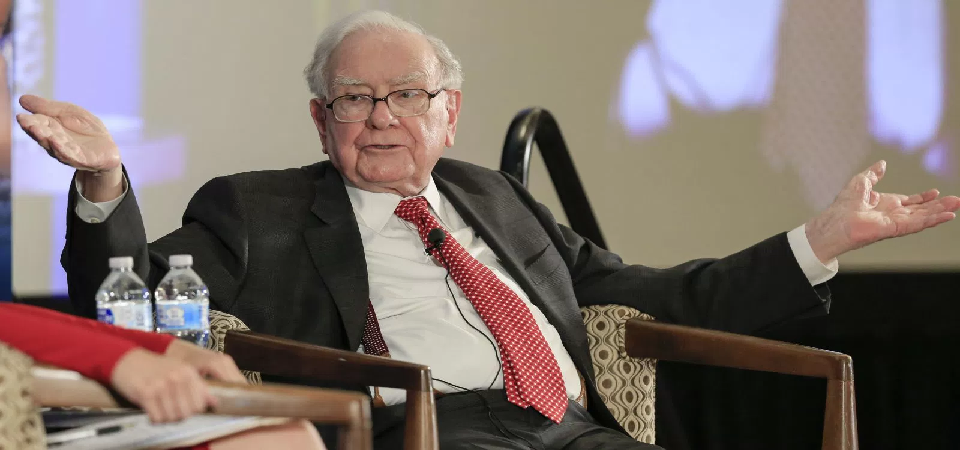

Warren Buffett Foresees AI Scams Becoming The Next Major Growth Industry

0

American businessman investor and CEO of Berkshire Hathaway Warren Buffet, has predicted that Artificial Intelligence (AI) scams will emerge as the next major growth industry.

Buffet made this disclosure at the company’s annual shareholder meeting on Saturday, highlighting the technology’s ability to reproduce malicious content that would generate money for bad actors.

In his words,

“When you think about the potential for scamming people, if I was interested in investing in scamming, AI is going to be the growth industry of all time and it’s enabled in a way. Obviously, AI has the potential for good things too, but I do think as someone who doesn’t understand a damn thing about it, it has enormous potential for good and enormous potential for harm, and I just don’t know how that plays out”.

Buffett’s comments is coming after he saw a video that replicated his voice, likeness, and mannerisms with unsettling accuracy. Furthermore, he likened AI to nuclear weapons, which he said has been doing some terrible things lately, noting that the power of the advanced technology gives him huge concern.

Buffet’s prediction casts a shadow on the future of industries, painting a picture where AI scams emerge as significant players in the economic landscape. With the proliferation of AI, it opens new avenues for exploitation and deceit.

Interestingly, as AI technologies advance, so do the capabilities of scammers, who leverage these tools to orchestrate sophisticated schemes with unprecedented reach and impact. From identity theft to financial fraud, the spectrum of AI-enabled scams spam-wide cast a shadow of uncertainty over the digital realm.

Experts warn that these scams are on the rise and there is no slowing down as these scammers continue to innovate new ways with the advanced technology. Recall that in March last year, Guardian Australia journalist Nick Evershed said he was able to use an AI version of his voice to gain access to his Centrelink self-service account, which raised concerns for some security experts.

However, with voice cloning being the top most exploited one by scammers, experts say it is not the only way they are taking advantage of AI.

As AI systems improve, large language models (LLMs) such as OpenAI’s popular chatbot ChatGPT can better emulate human-like responses, this is something that scammers try to recreate in emails, text messages, and other chatbots they might create themselves.

Also, scammers are using AI in phishing scams, which typically involve an email or text message that purports to be from a legitimate source but ends up using social engineering to obtain personal information.

As businesses and individuals alike embrace the promise of Al-driven innovation, they must ensure to remain vigilant and ahead of the curve, against the looming threat of exploitation. Only by understanding and addressing the vulnerabilities inherent in these advanced technologies can they safeguard against the rise of Al scams and ensure a future of sustainable growth and prosperity.

P2P Trading in Nigeria: SIBAN Blames Lack of Regulation For Surge

0

Stakeholders in Blockchain Technology Association of Nigeria (SiBAN), have cited the lack of regulation for the rise of peer-to-peer crypto trading in Nigeria.

President of SIBAN, Mr. Obinna Iwuno made this statement on Saturday during an X space session addressing the state of web3 in Nigeria. The session took place amidst the backdrop of the government’s recent clampdown on crypto transactions in the country.

Mr. Iwuno stated that if the government had regulated the crypto industry, p2p trading wouldn’t have surged to this level, as everyone would transact through regulated exchanges and not P2P. He also noted that if nothing is done, the system would be infiltrated by criminals using it as a means to carry out illegal transactions.

In his words,

“We need regulation as an industry. Regulation will help us more than an unregulated sector would help us. In fact, the reason why fingers are being pointed at P2P presently is because of the lack of regulation.

“And if the government had regulated the industry, I bet you that there would have been no rise in P2P because everybody would have been trading through regulated agencies and exchanges and we wouldn’t have an issue of so much rise in P2P that is unregulated and now being accused of economic sabotage and manipulation of forex rates, which is affecting the economy”.

Moving forward the SIBAN president urged for stakeholders to join hands on deck to ensure the industry is well regulated, which according to him can help the nation achieve economic development and wealth creation.

“When we have a regulated space, it is going to help us to achieve economic development and wealth creation using this technology. We stand a big chance at it than when we are operating in an unregulated space. What we are seeing currently is not the action of our industry, but because certain things have been made to look as though this is what our industry represents.

“Accusing fingers are being pointed at us when we are not guilty and it is one that we have to deal with because if we don’t deal with it, it has the possibility of spreading even further than it is now and hurting the industry more than it is already. We do not want to wake up one day and crypto has been criminalized and then has been made illegitimate and illegal and against the law,” he added.

SIBAN’s call for the regulation of peer-2-peer trading in Nigeria is coming after it was revealed that P2P transactions in the country is predicted to be around $500 billion.

Ray Youssef, the Chief Executive Officer of Nigeria’s prominent cryptocurrency platform, Noones, made this revelation comes amidst mounting regulatory pressure on cryptocurrency activities in Nigeria.

In a recent interview, Youssef shed light on the meteoric rise of P2P transactions, particularly in the context of an impending ban on cryptocurrency within the country. He emphasized that the official volume of cryptocurrency transactions in Nigeria stands at $59 billion annually, but the actual figure could be ten times higher, hovering around the $500 billion mark.

According to him, the bulk of P2P transactions evade traditional cryptocurrency platforms like Binance, occurring instead on platforms like WhatsApp, Telegram, and even in coffee shops and streets across the nation. He noted that the $59 billion reported volume largely conceals the true extent of P2P trading, which is significantly more pervasive.

It is worth noting that the rationale for a ban on p2p trading in Nigeria, is linked to the Central Bank’s belief that crypto traders use peer-to-peer trading to manipulate the naira via a pump-and-dump strategy. Nevertheless, these traders have voiced discontent with the government’s actions, arguing that cryptocurrency should not be scapegoated for currency devaluation.

Lagos-Calabar Coastal Highway: Atiku alleges conflict of interest, accuses Tinubu of Prioritizing Personal Business Interests

0

In a scathing accusation, former Vice-President Atiku Abubakar has said that President Bola Tinubu’s government is deeply immersed in a conflict of interest over the Lagos-Calabar Coastal Highway.

At the heart of Atiku’s allegations is Tinubu’s son, Seyi Tinubu’s involvement with CDK Integrated Industries, a subsidiary of the Chagoury Group, which is owned by one of Tinubu’s business allies, Gilbert Chagoury.

Speaking out against what he perceives as a blatant disregard for ethical conduct, Atiku contends that Seyi Tinubu’s position on the board of CDK Integrated Industries represents a conflict of interest, particularly in light of the Chagoury Group’s role in the massive Lagos-Calabar coastal highway project. 

Atiku, through his Media Adviser, Paul Ibe, voiced his concerns, noting the implications of such a relationship on fair governance and procurement processes.

Atiku, who has been a vocal critic of the Lagos-Calabar coastal highway project, reiterated his stance that the project was hastily awarded and executed, bypassing established procurement laws.

“It is on record that this project is the most expensive single project ever embarked upon by the Nigerian government. The fact that it is happening at a time when Nigeria is facing its worst economic crisis ever is a red flag.

“To add insult to injury, this project that is being done in excess of $13bn, was awarded without a competitive bidding. From all indications, the so-called Badagry-Sokoto highway would be awarded in a similar fashion at an enormous cost to taxpayers purely because Tinubu has put his personal interest ahead of the Nigerian people,” he said.

The presidential flag bearer of the Peoples Democratic Party (PDP) in the last general elections emphasized the need for genuine investment and criticized what he perceived as the government’s penchant for prioritizing personal interests over national development.

Drawing attention to a report by a Paris-based Africa Intelligence News Agency, Atiku highlighted Seyi Tinubu’s official association with Gilbert Chagoury, further cementing the ties between the Tinubu family and the Chagoury Group. 

The Lagos-Calabar Coastal Highway project has been at the center of leadership controversies in Nigeria recently, with the bone of contention being the exorbitant cost, businesses and jobs being destroyed along.

Atiku stated that the lack of adequate notice and the demolition of tourist, recreational facilities, and other properties within the Oniru corridor have contributed to the continued absence of foreign direct investments in the country.

He contended that instead of enhancing the ease of doing business, the Tinubu administration had demonstrated to the world that personal business interests, particularly those of Tinubu and his family, consistently took precedence over national interests.

He said: Tinubu has been globetrotting in search of foreign direct investments. He claims to have secured over $30 billion from various companies, but none has been forthcoming.

“Rather, all manufacturing firms have been posting heavy losses while some are exiting due to his poorly implemented exchange rate unification policy with even Aliko Dangote describing it as a huge mess at the recent annual general meeting of Dangote Sugar Refinery.

 “The IMF in its latest report stated that Nigeria will by the end of the year become the 4th largest economy in Africa behind South Africa, Egypt, and Algeria, a disgraceful development for a nation which was the largest in Africa by a mile when the PDP left the stage in 2015.

“Investors are seeing how local businesses are being treated and will not come to a place where their investments will not be protected. In saner climes, businesses such as Landmark would have been given at least two years’ notice for effective planning. But Tinubu’s eagerness to satisfy his business partners impaired his ability to coordinate the project properly.

“The awarding of the Lagos-Calabar coastal highway was rushed; the environmental impact assessment report was not even completed; the right of way for the 700 km stretch of the highway project was not secured; it was converted from a PPP to a government-funded project within the twinkle of an eye. 

“The N500m that was approved by the National Assembly for the project was ignored, while over N1tn was released by Tinubu’s administration without approval from the National Assembly.”

Atiku’s allegations have reignited debates surrounding the Lagos-Calabar coastal highway project and the broader issue of transparency and accountability in government. Critics have echoed his concerns, calling for a thorough investigation into the procurement process and the relationship between the Tinubu administration and business interests.

Although the federal government has defended the integrity of the procurement process and dismissed allegations of conflict of interest – portraying the project as a vital component of Nigeria’s infrastructure and economic progress, Atiku and other critics, including Labour Party presidential candidate, Peter Obi, have remained resolute in their call for transparency and accountability. 

Atiku called on President Tinubu to jettison propaganda and prioritize the interests of the Nigerian people over personal business interests.

MyAIFactChecker: A Revolutionary Solution to Africa’s Information Pollution Epidemic

0

As the world gains access to information at unprecedented speeds due to the rapid growth of technology across borders, news, which is information or happenings from the north, east, west, and south of the world, has continued to erode, adding ‘fake’ as a superimposed prefix, which scholars and professionals have described as unnecessary if news is truly a truthful concept, as reporters, editors, and media entrepreneurs want the audience to believe. 

The world has been battered and continues to be impacted negatively as a result of the activities of some people, groups, and governments who typically seek solace in creating diluted messages or information in order to achieve personal social, economic, and political gains at the expense of the collective positive well-being of the majority, who require access to quality messages or information in order to make informed decisions for present and future growth. 

Stakeholders in Africa, like those on other continents, have devised and implemented a number of policies and initiatives aimed at reducing information pollution. According to a survey of multiple sources, interested stakeholders have worked on disinformation, misinformation, mal-information, fake news, and hate speech, which are the most common forms of information pollution. The creators and disseminators of polluted messages have been targeted with a variety of behavioural change intervention programmes and activities.

The Brain Builders Youth Development Initiative is a prominent actor in the development sector that has worked relentlessly to build long-term strategies for reducing polluted messages across multiple media and communication platforms in Africa, particularly Nigeria. BBYDI is a youth-led organisation that brings together the creativity and capacities of a number of African youths to create and provide useful public goods across tribes, communities, and societies. 

A few years ago, the youth’s nimbleness and their faith in Africa’s progress and advancement inspired the establishment of Fact-check Africa, a platform that uses both non-human and human tools to disintermediate the power of those spreading polluted messages in real time. Since actors of information pollution change strategies and tactics day-by-day, Fact-check Africa through the BBYDI developed MyAIFactchecker, to provide a strong AI-enabled application for Africans to detect and isolate fictitious facts from facts. This, according to the organisation, becomes highly necessary in a world where generative artificial intelligence such as large language models are now being deployed by purveyors and spreaders of messages that affect reputation and cause damages in societies. 

The App 

In this piece, after many days of using the tool, our analyst notes that MyAIFactchecker offers capabilities and produces results that make it a game changer in the continent’s fight against information pollution. BBDYI’s app encourages truth-seekers to go through three stages in their quest to become informed and dismantle any confirmation bias they may have developed from absorbing polluted messages on any medium. The first step is to introduce a clause or paragraph of dubious news into a designated segment. The next step is to press the authenticity button, which will expose concealed information from multiple sources. The truth-seekers are supposed to analyse the results obtained from a variety of credible sources in the third stage. 

Aside from these, our analyst observes that sentiment analysis, one of the app’s key features, aligns with existing views from media scholars and artificial intelligence experts that deep mediatisation of separating fictions from facts is critical in the fight against information pollution. This is based on the fact that significant business actors continue to employ sophisticated and embedded artificial intelligence capabilities. It is also critical that truth-seekers be able to diffuse their preconceived feelings about the targets in the polluted message consumed previously. 

The Outputs

Our analyst tested the app using two fake news stories fact-checked by Africa Check and Dubawa, two of the key fact-checker platforms in Africa. While these platforms developed human and non-human tools such as Google Image Reverse to authentic news stories, MyAIFactchecker serves as an automated fact-checking for assisting human fact-checkers in their quest of providing solutions to the menace. This is evident from the way the app turns out fact-checked news stories from Africa Check, Dubawa among others for the truth-seekers to further deepen their thirst for genuine information. 

Our analyst picked “Kenya’s deputy president used a foreign plane to attend military chief’s funeral,”  a social media claim from Africa Check, and inserted it into the provided section. MyAIFactchecker says, “The claim that Kenya’s deputy president used a foreign plane to attend the military chief’s funeral appears to be a falsehood propagated on social media. Fact-checking has revealed that these claims are not accurate.”

“Nigeria is the inaugural nation globally to implement a new meningitis vaccine, Men5CV,” from Dubawa, resulting in the app saying, “Yes, Nigeria is the inaugural nation globally to implement a new meningitis vaccine, Men5CV. This is confirmed by several sources, including the World Health Organisation.”

The app further provides negative and neutral sentiments for Kenya’s and Nigeria’s information, respectively. In line with this, our analyst points out that the app seems to be associating polluted messages with negative and neutral emotions with fake and real information, respectively. As previously said, truth-seekers may, in this way, have their previously held negative opinion of the targets changed or abandon doing acts that could harm the targets. Additionally, neutrality would enable individuals to keep a positive outlook and engage in initiatives that lessen the negative effects of information pollution.