DD
MM
YYYY

PAGES

DD
MM
YYYY

spot_img

PAGES

Home Blog Page 3542

Guidelines For Lawyers In Nigeria On Professional Relations With Clients Under The New Rules Of Professional Conduct

0

In this write-up, we will be taking a closer look at a very important issue for many lawyers in private legal practice which is their professional relationship with clients which is regulated by the rules of professional conduct (RPC) in Nigeria.

Our focus will be on the topics of :-

– Dedication & devotion to the cause of clients.

– Client representation within the bounds of the law.

– Competent representation.

– Conflicts of interest.

– Agreements with clients.

What are the requirements of the RPC regarding dedication to the cause of a client?

– A lawyer shall devote his attention, energy and expertise to the service of his client, and subject to any rule of law, act in a manner consistent with the best interest of his client.

– A lawyer shall:

a). Consult with his client in all questions of doubt which don’t fall within his discretion.

b). Keep the client informed of the progress and any important development in the cause or matter as may be reasonably necessary.

c). Warn his client against a particular risk which is likely to occur in the course of the matter.

d). Respond as promptly as reasonably possible to request for information by the client.

e). Where he considers the client’s claim or defence to be hopeless, inform him accordingly.

– A lawyer employed in respect of a court case shall be personally present or be properly represented throughout the proceedings in court.

– Any negligence by a lawyer in handling a client’s affairs may amount to professional misconduct.

What does the RPC say regarding representing clients within the bounds of the law?

– In his representing a client,a lawyer may refuse to aid or participate in conduct that he believes to be unlawful even though there is some support for an argument that the conduct is legal.

What does the RPC provide regarding competent representation of clients by lawyers?

– Lawyers are not allowed to :

a). Handle a legal matter which he knows or ought reasonably to know that he is not competent to handle without associating with him a lawyer who is competent to handle it, unless the client objects.

b). Handle a legal matter without adequate preparation.

c). Neglect a legal matter entrusted to him.

d). Attempt to exonerate himself from or limit his ability to his client for his personal malpractice or professional misconduct.

What does the RPC say on conflicts of interest?

– A lawyer shall at the time of a retainer, disclose to the client all the circumstances of his relating with the parties and any interest in or connection with the controversy which might influence the client in the selection of the lawyer.

What does the RPC say on agreements with clients?

– A client shall be free to change his lawyer and to dispense with his services as he deems fit, provided that nothing in this provision shall absolve the client from fulfilling any agreed or implied obligations to the lawyer including the payment of fees.

Section II

This second article installment will be looking at the provisions of the new rules of professional conduct (RPC) for lawyers regarding their relationships with clients in the areas of  :-

– Maintaining client privilege and confidence.

– Lawyers standing as witnesses for clients.

– Withdrawal from employment of clients by lawyers.

– Calling at the houses or places of business of clients by lawyers to receive briefs.

– Lawyers dealing in properties of clients.

What does the RPC say regarding the privilege and confidence of a client?

– All oral or written communications made by a client to his lawyer in the normal course of professional employment are privileged.

– A lawyer shall not knowingly :

(i). reveal a confidence or secret of his client;

(ii). use a confidence or secret of his client to the disadvantage of the client;

(iii). use a confidence or secret of his client to the advantage of himself or of a 3rd person unless the client consents after full disclosure except with the client’s consent after full disclosure or when necessary to establish his legal fee or defending a wrongful conduct allegation.

What does the RPC say on lawyers standing as witnesses for their clients?

– Lawyers are not allowed to do so in any contemplated or pending litigation where he knows or ought reasonably to know that he or a lawyer in his firm may be called as a witness .

– A lawyer can testify:

a). Where the testimony will relate solely to an unconnected matter.

b). Where the testimony will solely relate to a matter of formality and there’s no reason to believe that substantial evidence will be offered in opposition to the testimony.

What does the RPC say on withdrawal by lawyers from a client’s employment?

– A lawyer shall not abandon or withdraw from an employment once assumed, except for good cause which can be – 

a). conflict with the interest of the client;

b). when the client insists on an unjust or immoral course in the conduct of his case;

c). where the client persists against the lawyer’s advice and persists in pressing frivolous defenses;

d). where the client deliberately disregards an agreement or obligation as to payment of fees or expenses.

Is a lawyer calling at the place of business or residence of a client allowed under the new RPC?

This is not allowed except in special circumstances or for some other reason preventing his client from coming to his law office.

What does the new RPC say regarding a lawyer dealing in the property of a client?

– This is allowed except when it constitutes an abuse of the client’s trust.
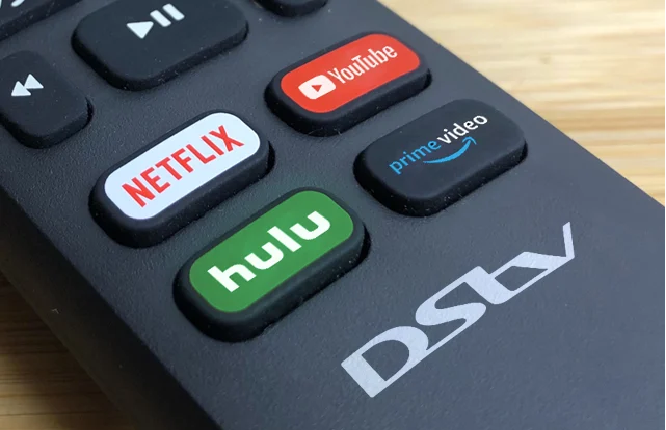
The  MultiChoice’s Only Choice as It Raises Prices on DStv, GOtv

1

Yes, your DStv price may be going up and watching your European Champions League games may be imperiled in Nigeria. Before you call me names for trying to make a case why Multichoice needs to increase prices, I have to report that DStv and its owner are not having good days: “Broadcasting company Multichoice has jacked up the prices of its offerings in Nigeria days after announcing a $72m loss in its financial statement for the third quarter of the year. Checks on the company’s reviewed price list showed a 20 percent percent hike in the company’s packages across the board.”

Of course, someone will get a court injunction to stop MutiChoice (owner of DStv and GOtv) from increasing prices since watching these sports games is a right enshrined in the Nigerian constitution+ and the judges are doing their jobs protecting citizens from a “monopolist”.

I do not live in Nigeria to care about DStv. But what I know is that DStv’s core product (European football) is a foreign product, created in Europe. If MultiChoice does its agreements every 5 years, there is a likelihood that it paid for its current rights when Naira was going for say N385/$. It paid the Europeans in foreign currency and never in Naira. If that remains the case, and with Naira hovering around N1000/$, if MultiChoice does not increase price, it has to be assessed for running a charity as a for-profit company.

Interestingly, it was assessed and it reported “$72m loss in its financial statement for the third quarter of the year”. Now, it has to come to reality and increase prices. It is a reasonable thing to do if customers want it to live for the future. 

Indeed, MultiChoice offers customers multiple choices, but here, it has only a single choice to remain in business: jack up prices since it cannot return to Europe to renegotiate rates because the Naira has crashed!

Broadcasting company Multichoice has jacked up the prices of its offerings in Nigeria days after announcing a $72m loss in its financial statement for the third quarter of the year.

Checks on the company’s reviewed price list showed a 20 percent percent hike in the company’s packages across the board.

With the latest price hike, the DStv Premium package increased by 20.4 percent from N24,500 to N29,500. Similarly, the DStv Compact+ has gone up by 19.2 percent from N16,600 to N19,800 while the Compact package increased by 19 percent, from N10,500 to N12,500.

Comment on Feed

Comment 1: Why focus on only football? Is the offering only in Nigeria?

My Response: Because Nigeria is the only country that lost 60% of the value of its currency in 3 months! They are doing well in other countries if you look at their consolidated annual reports. But when you convert the Naira to USD, they become hopeless.

Good point. PPV is even a terrible business model in Nigeria. People think they will divide N20,000/30 days/24 hours and ask you to pay whatever during Champions League games. They can make Champions League N50,000 per 3 hours and allow you to do PPV. In US, PPV can go for $1,000

UK Court Orders P&ID to Pay £20 Million Damages to Nigeria Following Victory in $11 Billion Judgment

0

A UK court has ruled that Process & Industrial Developments (P&ID) Limited must pay £20 million in damages and compensation to Nigeria within the next 28 days.

This decision comes after Nigeria’s success in overturning an $11 billion judgment debt in October, with the court citing P&ID’s reprehensible conduct in securing the gas processing contract.

The consequential ruling in London determined the next steps in the legal proceedings and whether P&ID would be granted permission to appeal the case. However, the UK court denied P&ID the opportunity to take the matter back to arbitration.

The £20 million damages awarded to Nigeria were based on the court’s assessment of P&ID’s conduct in obtaining the gas processing contract. Nigeria had sought at least £20 million from P&ID to cover damages and legal fees.

The dispute between Nigeria and P&ID dates back to 2010 when the two parties entered into an agreement for P&ID to build and operate a gas processing facility in Calabar, Cross River State. The deal collapsed, leading to legal action initiated by P&ID, accusing Nigeria of breaching the contract.

In 2017, a tribunal ruled that Nigeria should compensate P&ID with $6.6 billion in damages, along with pre and post-judgment interest at a rate of 7 percent. In September 2020, a judge within the Business and Property Court of England, Ross Cranston, granted the application for Nigeria to pay damages to P&ID.

However, Nigeria’s legal representatives alleged that P&ID secured the contract through bribery, a claim vehemently refuted by P&ID as “unfounded allegations and conspiracy theories.”

In March, lawyers representing the Nigerian government sought to invalidate the arbitration award, arguing that the gas processing contract was obtained fraudulently. The turning point came in October 2023 when the UK court ruled in favor of Nigeria, stating that the awards were obtained by fraud and contrary to public policy.

“In the circumstances and the reasons I have sought to describe and explain, Nigeria succeeds in its challenge under section 68.

“I have not accepted all of Nigeria’s allegations. But the awards were obtained by fraud and the awards were and the way in which they were procured was contrary to public policy,” Justice Robin Knowles of the Commercial Courts of England and Wales said in the judgment.

The latest directive for P&ID to pay £20 million in damages reflects a significant development in the legal battle and is seen as another victory for Nigeria in the protracted dispute.

Multichoice (DStv, GOtv) Raises Prices in Nigeria Following $72 Million Forex Loss

0

Broadcasting company Multichoice has jacked up the prices of its offerings in Nigeria days after announcing a $72m loss in its financial statement for the third quarter of the year.

Checks on the company’s reviewed price list showed a 20 percent percent hike in the company’s packages across the board.

With the latest price hike, the DStv Premium package increased by 20.4 percent from N24,500 to N29,500. Similarly, the DStv Compact+ has gone up by 19.2 percent from N16,600 to N19,800 while the Compact package increased by 19 percent, from N10,500 to N12,500.

The Comfam package moved up by 19.2 percent from N6,200 to N7,400. The latest hike made it the second time the company would implement an upward review of prices within six months.

In May, Multichoice had jacked up the prices of its offerings. During this round of price hikes, the DStv Premium package increased by 16.7 percent (N3,500) from N21,000 to N24,500.

Similarly, the DStv Compact+ package had gone up by 16.5 percent (N2,350) from N14,250 to N16,600. The DStv Compact package also rose by 16.7 percent from N9,000 to N10,500. The DStv Confam package, previously priced at N5,300, went up by 17 percent to N6,200.

Confirming the latest hike to The PUNCH, a spokesperson in the company who preferred to speak anonymously blamed the harsh business environment for the hike.

According to the source, the company had to grapple with the devastating consequences of the continued devaluation of the naira, alongside a vast array of challenges including taxation, and logistics, among others.

The source said, “Yes. We have increased our rates. We buy content in dollars but earn in naira. If we take off a channel or stop acquiring content that our customers are used to, we will be slammed.

“We buy diesel. We pay taxes. Even before this year, with the dollar and fuel subsidy removal. We pay billions in licensing fees. We operate several offices. We have to pay staff.”

The latest hike comes after Multichoice reported a third consecutive semi-annual loss, attributing its financial challenges to foreign exchange difficulties in Nigeria and persistent power outages in South Africa.

More troubles loom as the forex crisis deepen

The naira’s free fall, following the floating of the Nigerian FX market in June, has seen a host of multinational companies leaving the country. This year alone, about five multinational companies, including Unilever, GSK, P&G, Sanofi, and Equinor, have left Nigeria citing the forex crisis.

Efforts by the government to tame the tide, including a move by the central bank to clear $7 billion in forex obligation backlog, have proved ineffective even as the consequences accelerate.

Earlier this week, the International Air Transport Association (IATA) issued a warning to the Central Bank of Nigeria (CBN) about the potential withdrawal of foreign airlines from the Nigerian market if urgent action is not taken regarding the $790 million ticket revenue currently trapped in the country.

With the threat of more international companies withdrawing their services from Nigeria rising, the government’s efforts to boost naira’s performance have been put under serious scrutiny.

The free fall of the naira is significantly tied to poor oil output, which has yielded insufficient foreign exchange for the country for years. The government had blamed the situation on petrol subsidy payments, which gulped more than $10 billion in recent years, depleting the country’s foreign reserve.

However, the petrol subsidy was removed in June by President Bola Tinubu. The removal is expected to boost Nigeria’s forex earnings and the naira’s strength but it has failed to achieve its aim.

Former CBN governor Lamido Sanusi implied on Friday that the Nigerian National Petroleum Company Limited (NNPCL) owes Nigerians an explanation on why the country’s foreign reserve is performing poorly.

“Why is the NNPCL not able to bring in dollars?,” Sanusi asked. “This is the question that cost me my job & I will continue asking this question until NNPCL fixes it up or until I die. We are no longer paying subsidies, so where are the dollars?”

Moody’s Revises Nigeria’s Economic Outlook to Positive Amidst Reform Efforts

0

Moody’s, the renowned rating agency, has upgraded its outlook on Nigeria from stable to positive, indicating a potential reversal in the country’s fiscal and external positions due to robust reform initiatives undertaken by the government.

While affirming its “Caa1” long-term foreign currency and local currency issuer ratings, Moody’s acknowledged the possibility of a turnaround in Nigeria’s economic standing, a stark shift from its previous downgrade of the nation’s sovereign rating to deeper junk territory in February.

At that time, Moody’s had expressed concerns about Nigeria’s ability to withstand challenges, citing institutional vulnerabilities and social issues that had eroded the country’s capacity to weather economic storms. The downgrade to Caa1 from the prior rating of B3 highlighted Nigeria’s descent into non-investment grade territory.

However, the emergence of Bola Tinubu as the President of Nigeria has signaled a wave of economic reforms, offering hope for a brighter economic outlook. President Tinubu’s administration has swiftly introduced bold measures aimed at stimulating growth and attracting substantial new investments into Africa’s largest economy.

Among the notable reforms, Tinubu’s government eliminated a costly fuel subsidy in May, lifted exchange controls, and eased restrictions on certain imports. These reforms, though welcomed by investors, have faced criticism from unions due to resulting cost increases, exacerbating Nigeria’s persistently high inflation levels, which have remained in double digits since 2016, further straining savings and incomes.

Moody’s, in a statement, said “These policy changes, and those potentially to come, have raised the prospects of a fiscal and external improvement in the country’s credit profile.”

President Tinubu is pushing to curtail the persistent poor performance of the naira in the forex market, which has sustained Nigeria’s double-digit inflation currently standing at 27…%. The naira traded on Saturday at an all-time low of N1,099.05/$1 at the official market and around N1200/$1 at the parallel market.

To actualize this push, the Central Bank of Nigeria commenced the clearance of $7 billion outstanding foreign currency forwards in November, aiming to attract fresh dollar inflows and stabilize the depreciating naira.

Moody’s positive outlook follows S&P Global Ratings’ August decision to revise Nigeria’s outlook to stable from negative, affirming its rating at ‘B-/B.’ These shifts in rating agencies’ perspectives reflect a growing sentiment of cautious optimism surrounding Nigeria’s economic trajectory, underpinned by ongoing reforms and strategic fiscal measures.

Sustaining the gain

While sound economic policies are required to move Nigeria’s economy to its pre-2015 status, the sustainability of the gain that prompted the recent Moody’s rating is highly tied to activities in the oil sector.

The crisis in the oil sector, which includes oil theft and pipeline vandalism, has resulted in low oil output – significantly depleting Nigeria’s revenue generation. Although production has improved recently to about 1.5 million barrels per day (mbpd), the challenges persist.

On Friday, the Group Chief Executive Officer of NNPCL, Mele Kyari, revealed during a presentation before the Senate Committee on Appropriations, that the Nigerian National Petroleum Company Ltd. (NNPCL) has identified 4,800 illegal connections on 5,000 kilometers of oil pipelines nationwide.

In his presentation to the committee, the NNPCL boss stated that the oil-related projections in the budget are both practical and achievable, despite the current daily oil production averaging 1.5 million barrels in the country.

He explained that “the illegal connections on oil pipelines in the Niger Delta are so rampant that within 100 kilometers of the affected pipelines, 300 insertions are made on them, which eventually made the pipe to be weak to the point of not being able to hold the pressure of oil pumped, let alone delivering it to the targeted destination.”

Grappling with this crisis, the government has sought the help of non-state actors to protect oil installations – a situation experts have criticized, saying it’s a sign of helplessness. Against this backdrop, analysts believe that a negative shadow still covers Nigeria’s economic outlook despite reforms.