DD
MM
YYYY

PAGES

DD
MM
YYYY

spot_img

PAGES

Home Blog Page 3547

Do You Understand Food Inflation and Why It is High?

0

Food inflation is the increase in the prices of food items over time. It affects everyone who buys food, whether it is for consumption or production. Food inflation can have various causes, such as supply shocks, demand shocks, monetary policy, exchange rate fluctuations, climate change, and trade policies.

Supply shocks are sudden disruptions in the availability of food items due to natural disasters, wars, pests, diseases, or other factors. For example, a drought can reduce the crop yield and increase the cost of irrigation, leading to higher prices for farmers and consumers. A flood can damage the transportation infrastructure and spoil the stored food, creating shortages and wastage. A pandemic can disrupt the labor force and the supply chain, affecting the production and distribution of food.

Demand shocks are sudden changes in the demand for food items due to population growth, income growth, preferences, or other factors. For example, a population boom can increase the number of people who need food, putting pressure on the existing supply. An income boom can increase the purchasing power of consumers, allowing them to buy more or better-quality food. A preference shift can alter the consumption patterns of consumers, increasing the demand for certain food items and decreasing the demand for others.

Monetary policy is the action taken by central banks to control the money supply and interest rates in an economy. It affects the inflation rate of all goods and services, including food. For example, an expansionary monetary policy can increase the money supply and lower the interest rates, stimulating the economic activity and increasing the demand for food. However, it can also reduce the value of the currency and make imports more expensive, raising the cost of food. A contractionary monetary policy can have the opposite effects.

Exchange rate fluctuations are changes in the value of one currency relative to another. They affect the prices of imported and exported food items. For example, a depreciation of the domestic currency can make imports more expensive and exports more competitive, increasing the domestic prices of imported food items and decreasing the domestic prices of exported food items. An appreciation of the domestic currency can have the opposite effects.

Climate change is the long-term alteration in the global weather patterns due to human activities. It affects the production and consumption of food in various ways. For example, climate change can increase the frequency and intensity of extreme weather events, such as droughts, floods, heat waves, storms, and wildfires, damaging the crops and livestock and disrupting the supply chain. Climate change can also alter the suitability of land for agriculture, reducing the arable land and affecting the crop diversity and quality.

Trade policies are the rules and regulations that govern the international trade of goods and services. They affect the availability and affordability of food items across countries. For example, trade liberalization can reduce or eliminate tariffs, quotas, subsidies, and other barriers to trade, increasing the competition and efficiency in the global food market. However, it can also expose domestic producers to foreign competition and price volatility, affecting their income and livelihood. Trade protectionism can have the opposite effects.

Economic Benefits of Second Niger Bridge in Nigeria

0

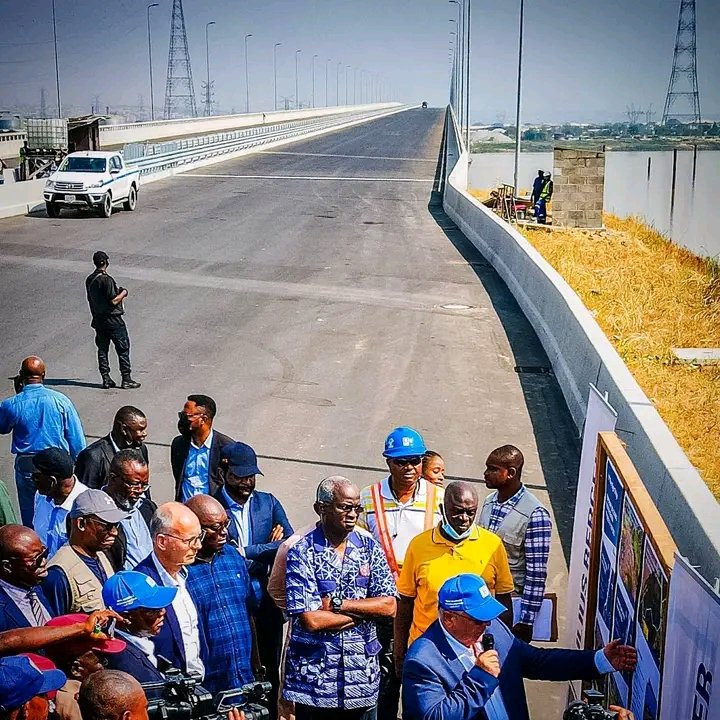
Julius Berger, the leading construction company in Nigeria, has completed the construction of the Second Niger Bridge and handed it over to the Federal Government. The bridge, which spans 1.6 km across the Niger River, connects Asaba in Delta State with Onitsha in Anambra State. It is expected to ease traffic congestion, enhance trade and commerce, and improve the socio-economic well-being of the people in the South-East and South-South regions.

The handing over ceremony was held on Thursday, December 7, 2023, at the bridge site. Federal government of Nigeria commended Julius Berger for delivering the project on time and within budget. He also praised the company for its high standards of quality and safety, as well as its corporate social responsibility initiatives. He said the bridge was a testament to his administration’s commitment to infrastructural development and national integration.

The bridge, which connects Asaba in Delta State with Onitsha in Anambra State, is expected to have the following impacts:

– Ease traffic congestion: The bridge will reduce the pressure on the existing Niger Bridge, which was built in 1965 and is often overcrowded and prone to breakdowns. The new bridge will provide an alternative route for travelers and commuters and improve the flow of traffic between the South-East and South-South regions.

– Enhance trade and commerce: The bridge will facilitate the movement of goods and services across the Niger River and boost the economic activities of the region. The bridge will also link the Onitsha Main Market, which is the largest market in West Africa, with other markets in Delta State and beyond. The bridge will also create opportunities for new businesses and investments in the region.

– Improve the socio-economic well-being of the people: The bridge will improve the access to education, health care, and other social amenities for the people living in the region. The bridge will also create employment opportunities for the local communities, especially during the construction and maintenance phases. The bridge will also enhance the security and safety of the people, as it will reduce the risk of accidents and criminal activities on the road.

The Second Niger Bridge is a landmark project that demonstrates the commitment of the Federal Government to infrastructural development and national integration. The bridge is designed to have a service life of 120 years and to withstand earthquakes, floods, and heavy loads.

It has four lanes of 3.75 meters width each, two emergency lanes of 3 meters width each, and a pedestrian walkway of 1.5 meters width on both sides. It also has streetlights, traffic signals, CCTV cameras, and other modern features. The bridge is expected to reduce travel time between Asaba and Onitsha from two hours to 15 minutes.

The Chairman of Julius Berger Nigeria Plc, Mr. Mutiu Sunmonu, expressed his gratitude to the President and the Federal Ministry of Works and Housing for entrusting the company with the landmark project. He said Julius Berger was proud to be part of Nigeria’s history and development and assured that the company would continue to provide excellent services to its clients and stakeholders. He also thanked the host communities, the security agencies, and the media for their support and cooperation throughout the project.

The Second Niger Bridge project started in 2014 under the administration of former President Goodluck Jonathan. It was initially estimated to cost N117 billion and to be completed in 2018. However, due to funding challenges, design modifications, and security issues, the project suffered several delays and cost overruns.

The project was eventually revived by the Buhari administration, which secured a $500 million loan from the African Development Bank (AfDB) and increased the budget to N336 billion. The project also included the construction of 10.3 km of link roads and toll plazas on both ends of the bridge.

The bridge is designed to have a service life of 120 years and to withstand earthquakes, floods, and heavy loads. It has four lanes of 3.75 meters width each, two emergency lanes of 3 meters width each, and a pedestrian walkway of 1.5 meters width on both sides. It also has streetlights, traffic signals, CCTV cameras, and other modern features. The bridge is expected to reduce travel time between Asaba and Onitsha from two hours to 15 minutes, and to boost economic activities in the region.

Notable Provisions of the Petroleum Measurement Regulations of Nigeria

0

The Nigerian Upstream Petroleum Regulatory Commission (NUPRC) released a set or regulations on petroleum measurement in the upstream oil and gas sector. This article is the first in a 3-part series, with a focus on :

– Objectives

– Application scope of the regulations

– Metering plans

– Measurement equipment and metering services under a metering plan

– Licenses to provide metering services.

What are the objectives of the regulations?

– To provide a framework for –

a). The installation of measurement equipment and measurement points as prescribed by the NUPRC.

b). Accelerated meter rollout measurement points as determined by the NUPRC.

c). The provision of independent and competitive metering service operations in the upstream petroleum sector.

– To encourage private investments in the provision of metering services in the upstream sector.

What is the application scope of the regulations? 

– These regulations shall apply to licensees, lessees & persons providing services in relation to measurement in upstream petroleum operations.

What are the metering plan requirements stipulated by the regulations?

– A licensee or lessee shall have w metering plan approved by the NUPRC for measuring petroleum production from its producing license or lease area.

– A metering plan shall contain – 

a). All measurement points related to the license or lease.

b). Location of all existing measurement meters related to the license or lease.

c). Any additional measurement meters required based on the directives of NUPRC .

d). The timeline for installation of measurement meters, where additional meters are required. 

e). A plan for the provision of metering services in relation to the license or lease.

What are the provisions of the regulations regarding measurement equipment and metering services under a metering plan?

– A lessee shall carry out the installation of metering services under a metering plan through a licensed metering services provider in accordance with these regulations.

– A licensed metering services provider shall be an original equipment provider or its agent, approved by the NUPRC.

What are the provisions of the regulations on the license to provide metering services?

– A person shall not provide metering services under these regulations without obtaining a license issued by the NUPRC.

– The NUPRC may grant a license to a qualified person to provide metering services to a licensee or lessee, provided that such authorization is subject to such terms and conditions as may be prescribed by the commission in the license agreement.

What are the provisions of the regulations on measurement systems?

– Measurement equipment and metering systems deployed by a licensee or lessee under a metering plan shall conform with the standards and specifications issued by NUPRC.

– These standards and specifications shall relate to the design, fabrication,manufacture, installation, calibration, operation, maintenance, upgrade and inspection or any other requirement issued by NUPRC.

Section II

This article is focused on the provisions of the NUPRC  Petroleum Measurement Regulations on the topics of:

– Technical requirements for deployment of metering services

– The rights & obligations of parties

– The resolution of dispute between a lessee and metering services provider

– Obligations of the lessee

What are the technical requirements for the deployment of metering services?

– A metering service provider shall deploy technology and back-office systems to –

a). Measure production from the licensee’s or lessee’s  petroleum operation.

b). Report the measured production to the NUPRC on an online real time basis.

c). Create an interface for data sharing on an online real time basis between the lessee and the commission.

What are the rights of lessees under the regulations?

– A lessee shall have access to metering equipment deployed by a metering services provider for the purpose of data verification.

– A lessee may query the accuracy of data generated by  the metering services provider.

What are the provisions of the regulations on the resolution of disputes between a lessee and metering services provider?

– Any dispute between a lessee and a metering services provider shall be resolved between the parties.

– Where the dispute cannot be resolved between the parties, a party to the dispute may refer the dispute to the NUPRC for resolution.

– Where disputes cannot be resolved by the NUPRC , the dispute shall be resolved in accordance with the dispute resolution mechanism in the metering services agreement.

– Where the dispute relates to payment for services rendered, the lessee shall pay the disputed amount to the metering services provider within 30 days until the dispute is resolved by the NUPRC.

What are the obligations of a lessee?

– A lessee shall –

a). Execute a metering Services agreement with a metering services provider for the deployment of metering services under these regulations.

b). Treat cases of unauthorized access and meter tampering in accordance with existing laws and regulations.

c). Provide relevant information to the metering services provider in a timely manner to enable it carry out its obligations under the metering services agreement.

d). Provide a safe and secure location within its facilities for the metering services provider to carry out its services under a metering services agreement.

Notable Provisions of The Upstream Petroleum Measurement Regulations of Nigeria

The Nigerian Upstream Petroleum Regulatory Commission (NUPRC) released a set or regulations on petroleum measurement in the upstream oil and gas sector. This article is the first in a 3-part series, with a focus on :

– Objectives

– Application scope of the regulations

– Metering plans

– Measurement equipment and metering services under a metering plan

– Licenses to provide metering services.

What are the objectives of the regulations?

– To provide a framework for –

a). The installation of measurement equipment and measurement points as prescribed by the NUPRC.

b). Accelerated meter rollout measurement points as determined by the NUPRC.

c). The provision of independent and competitive metering service operations in the upstream petroleum sector.

– To encourage private investments in the provision of metering services in the upstream sector.

What is the application scope of the regulations? 

– These regulations shall apply to licensees, lessees & persons providing services in relation to measurement in upstream petroleum operations.

What are the metering plan requirements stipulated by the regulations?

– A licensee or lessee shall have w metering plan approved by the NUPRC for measuring petroleum production from its producing license or lease area.

– A metering plan shall contain – 

a). All measurement points related to the license or lease.

b). Location of all existing measurement meters related to the license or lease.

c). Any additional measurement meters required based on the directives of NUPRC .

d). The timeline for installation of measurement meters, where additional meters are required. 

e). A plan for the provision of metering services in relation to the license or lease.

What are the provisions of the regulations regarding measurement equipment and metering services under a metering plan?

– A lessee shall carry out the installation of metering services under a metering plan through a licensed metering services provider in accordance with these regulations.

– A licensed metering services provider shall be an original equipment provider or its agent, approved by the NUPRC.

What are the provisions of the regulations on the license to provide metering services?

– A person shall not provide metering services under these regulations without obtaining a license issued by the NUPRC.

– The NUPRC may grant a license to a qualified person to provide metering services to a licensee or lessee, provided that such authorization is subject to such terms and conditions as may be prescribed by the commission in the license agreement.

What are the provisions of the regulations on measurement systems?

– Measurement equipment and metering systems deployed by a licensee or lessee under a metering plan shall conform with the standards and specifications issued by NUPRC.

– These standards and specifications shall relate to the design, fabrication,manufacture, installation, calibration, operation, maintenance, upgrade and inspection or any other requirement issued by NUPRC.

Section II

This article is focused on the provisions of the NUPRC  Petroleum Measurement Regulations on the topics of:

– Technical requirements for deployment of metering services

– The rights & obligations of parties

– The resolution of dispute between a lessee and metering services provider

– Obligations of the lessee

What are the technical requirements for the deployment of metering services?

– A metering service provider shall deploy technology and back-office systems to –

a). Measure production from the licensee’s or lessee’s  petroleum operation.

b). Report the measured production to the NUPRC on an online real time basis.

c). Create an interface for data sharing on an online real time basis between the lessee and the commission.

What are the rights of lessees under the regulations?

– A lessee shall have access to metering equipment deployed by a metering services provider for the purpose of data verification.

– A lessee may query the accuracy of data generated by  the metering services provider.

What are the provisions of the regulations on the resolution of disputes between a lessee and metering services provider?

– Any dispute between a lessee and a metering services provider shall be resolved between the parties.

– Where the dispute cannot be resolved between the parties, a party to the dispute may refer the dispute to the NUPRC for resolution.

– Where disputes cannot be resolved by the NUPRC , the dispute shall be resolved in accordance with the dispute resolution mechanism in the metering services agreement.

– Where the dispute relates to payment for services rendered, the lessee shall pay the disputed amount to the metering services provider within 30 days until the dispute is resolved by the NUPRC.

What are the obligations of a lessee?

– A lessee shall –

a). Execute a metering Services agreement with a metering services provider for the deployment of metering services under these regulations.

b). Treat cases of unauthorized access and meter tampering in accordance with existing laws and regulations.

c). Provide relevant information to the metering services provider in a timely manner to enable it carry out its obligations under the metering services agreement.

d). Provide a safe and secure location within its facilities for the metering services provider to carry out its services under a metering services agreement.


CAC Issues New Directive to Nigerian Startups With Foreign Investors, to Have A Minimum Paid-up Capital of N100 Million

0
CAC

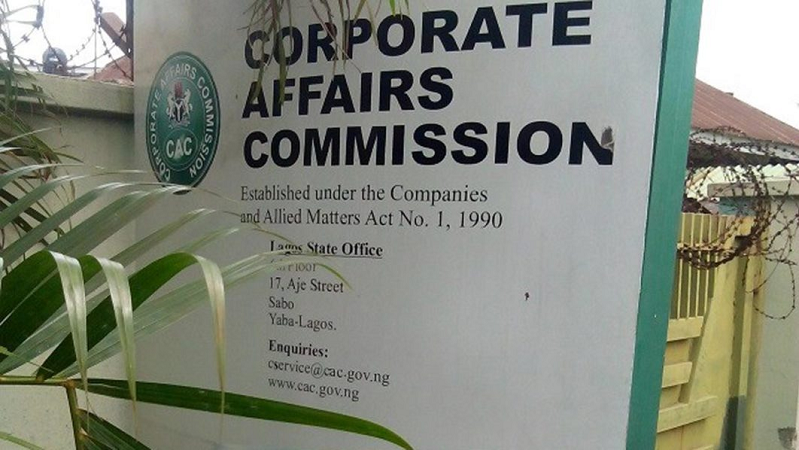
Nigeria’s Corporate Affairs Commission (CAC), has issued a new directive to Nigerian startups with foreign participation, to have a minimum paid-up capital of N100 million.

The commission via a public notice, announced that existing companies with foreign participation that have less than N100,000 paid-up capital are advised to comply within six months from the date of the notice, failure to do so will force the compulsory winding-up of companies.

The notice reads,

“The Commission wishes to notify the General Public that it has in line with the Revised Handbook on Expatriate Quota Administration (2022), commenced the implementation of the requirement of N100,000,000 (One Hundred Million Naira) MINIMUM PAID-UP CAPITAL for Companies with foreign participation.

“Accordingly, any application for incorporation of a company having foreign participation shall not be processed unless it complies with the above requirement. Existing Companies with foreign participation that have less than N100,000,000 paid-up capital are hereby advised to ensure compliance with the above requirement not later than six (6) months from the date of this notice, failing which the Commission shall commence proceedings for the compulsory winding-up of the Companies under Section 571 (e) of the Companies and Allied Matters Act 2020.”

This new directive by the CAC is likely implemented to ensure financial robustness and stability, potentially reflecting regulatory efforts to fortify the economic resilience of startups with international investment involvement. Prior to this time, the minimum share capital requirement was 10 million naira.

While this new requirement may be intended to protect the interest of stakeholders, enhance corporate governance, and contribute to the overall economic stability of the country, it has however sparked mixed reactions from Netizens.

Check out some reactions from Netizens on X,

@Ashley Smith wrote,

“This requirement is hugely prohibitive. A startup with foreign co-founders are better off registering abroad, opening a bank account abroad, and paying local talent as contractors. Meanwhile, NG will lose out on the tax rev. What’s the purpose here??”

@Malachy Odo wrote,

“Foreign companies are shutting down and fleeing from the company but CAC is asking the few companies with foreign participation to up their share capital by N100M!!! Tone deaf”.

@Good_citizins wrote,

“It’s concerning to see Nigeria’s Corporate Affairs Commission set a high minimum paid-up capital of N100m for foreign-involved companies. In a time when Nigeria desperately needs foreign investments, this policy can deter potential investors. More flexible strategies are needed.”

@Arome Abu wrote,

“I hear that by January 2024, already existing companies with foreign participation may be given a deadline to increase their share capital from 10 million naira to 100 million Naira or risk penalties. The only solution in the event of inability to increase share capital might be to remove the foreigner(s) as Directors and appoint Nigerians”.

The CAC’s move signifies a significant shift in the regulatory framework, aiming to balance foreign participation with financial stability within Nigeria’s startup ecosystem.

Four Types of Casino Entertainment That Will Always Take Your Money

0

While the thrill of casino gaming is undeniable, it is always wise to understand the inherent risks that come along with the craft. Mind you, the stakes are the same irrespective of where you play – it could be at a brick-and-mortar New Zealand gambling house such as the Christchurch Casino or an NZ-facing iGaming site like mrbet online platform.

Based on casino revenue statistics, some games have been known to consistently make the house more money than others; they are pokies, roulette, craps, and blackjack. As a result, the said games are thought to ‘always take away your money’ whenever players participate in them. So, does this assumption carry any weight? Well, in today’s post, we’ll unravel the mysteries of the various games that are considered to take all your money.

The Pokies Illusion of Easy Wins

When we talk about gambling in New Zealand or other parts of the world, slots or pokies, as Kiwis popularly call them, usually take centre stage. With their colourful themes, enticing mechanics, exciting sounds, and bonuses, these are the most ubiquitous games in any casino, brick-and-mortar or online.

While pokies present players with the illusion of choice, they are carefully crafted with mechanics set in place to ensure that wins are produced at random. Here’s a breakdown of how slots calculate wins:

  • Random Number Generators – Each slot machine uses RNG software that generates thousands of numbers per second. The numbers correspond to varying sequences of symbols on the slot reels;
  • Mapping Symbols to Numbers – The RNG allocates each symbol to a specific number;
  • Player Spin – When you spin the reel, the RNG will generate a new arbitrary number right away, and the RNG outcome produced in each spin is different;
  • Outcome Determination – The random number produced will correspond to a specific sequence of in-game symbols, and if the symbols land on a payline, you win.

So, as you can see, the outcomes of pokies are purely based on luck; there is no way for you to predict the next win, which is why they are thought to take your money. However, if you enjoy playing pokies, you can increase your odds of bagging wins by only taking on high RTP slots, preferably 96% or higher.

Roulette

Like pokies, roulette is primarily a game of chance. The wheel determines your fate, and you are presented with a one in thirty-seven chance of winning every time you play. The probability of this stat does not raise the required confidence that this game has commanded over the years.

All in all, the deceptively simple gameplay of the roulette game conceals mathematics that typically gives the house an edge for specific types of wagers, especially for American variants of the game. To try evening the odds, if this is a game you enjoy, you should employ different roulette strategies like the Martingale or D’Alembert systems.

Craps

Often left to the upper echelons of the gambling realm, the entertainment of craps is a somewhat complicated game that novice gamers often shy away from. That said, beneath the intimidating outward look, it is a game that is pretty easy to understand once you get the gist of things. In craps, players place wagers on the outcome of two rolled dice, with the various combos determining wins, losses, and continued rolls.

The house edge in craps will vary depending on the type of wager you place. Here’s an example of some of the common bets associated with craps and their respective house edge rate:

Bet Type House Edge
Field Bets ( 3, 4, 9, 10, or 11) 5.56%
Place Bets (6 or 8) 1.52%
Place Bets (4 or 10) 6.67%
Place Bets (5 or 9) 4%
Don’t Come 1.36%
Come 1.41%

From the table above, you already know that you should avoid the wagers with the higher house advantage to reduce the chances of the house taking your money.

Blackjack

Blackjack, often known as 21, is often associated with players who can employ strategic decisions to win the game. That said, there is more than meets the eye regarding the entire game makeup. For you to rake in some attractive rewards, you must be skilled enough in the game; otherwise, you’ll end up with the short end of the stick. So, as popular as the game is in casinos, don’t be tempted to play it unless you have confidence in your gameplay skills.

Measure Twice, Bet Once

Beneath the flashing glitz and the glam of casinos lies the uncomfortable truth that gambling games, by nature, are designed to ensure that the house wins or at least turns a profit. Otherwise, the casino wouldn’t be a viable business. This does not mean that playing the games isn’t a good idea; instead, just make sure you have a plan before risking your hard-earned money in the lobby.