DD
MM
YYYY

PAGES

DD
MM
YYYY

spot_img

PAGES

Home Blog Page 3548

Have you registered for the next Tekedia Mini-MBA?

0

Have you registered for the next Tekedia Mini-MBA? It will begin on Feb 4 to end May 2,  2024. More people attend Tekedia programs in a year than any business school in Africa. With more than 350 eminent faculty members from companies you admire, we have demonstrated capabilities to educate at the least cost possible, on the fundamental mechanics of business management and leadership.

I invite you to join us, by registering, before the early bird discounts end.  This is the #best school; register today for the free ebooks, free cybersecurity course, and other goodies which come with early registrations. Go here now.

Cost remains N90,000 or $170 and we have many payment options.

N3tn Revenue Loss: Nigerian Senate Asks Federal Govt. to Stop Tax Waivers

0

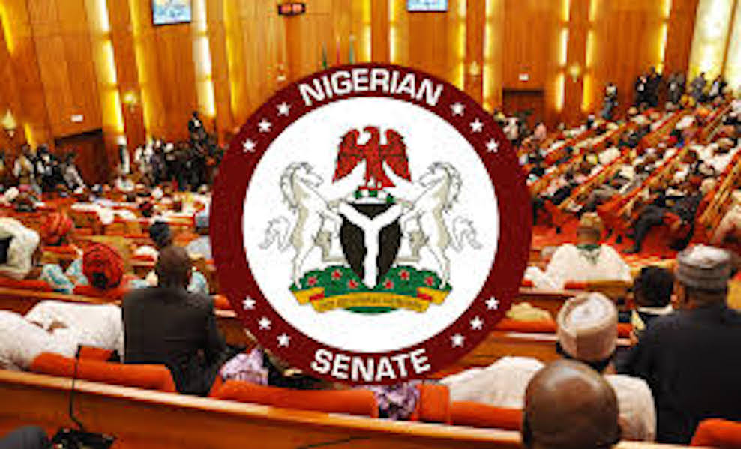
The Nigerian Senate has urged the Federal Government to cease providing tax waivers and concessions to corporate organizations, expressing concerns over substantial revenue losses attributed to these incentives.

The call comes on the back of efforts by the federal government to mitigate dwindling revenue generation.

The Senate Committee on Appropriations proposed an alternative approach during an interactive session on the 2024 budget with Wale Edun, Minister of Finance, and Atiku Bagudu, Minister of Budget and Economic Planning.

The committee, chaired by Adeola Olamilekan, underscored the need for companies to fulfill their tax obligations entirely and suggested that they pay their taxes upfront, with the option to apply for rebates if deemed necessary.

During the session on Wednesday, concerns were raised about the abuse of economic policies, leading to significant revenue loss. Minister Wale Edun informed the panel that Nigeria had lost approximately N3 trillion to tax waivers this year alone.

In response to these concerns, Senator Mohammed Sani Musa proposed adopting a system similar to withholding taxes for tax waivers, suggesting that companies must prove tax compliance before receiving rebates.

Ali Ndume echoed the sentiment, urging the government to follow the bold decision on fuel subsidies and put an end to tax credits and waivers. He emphasized the importance of addressing revenue collection loopholes that benefit a few at the nation’s expense.

Committee Chairman Adeola Olamilekan proposed a transitional approach by reducing the provision for waivers by 50 percent. Edun assured the committee that the federal government’s fiscal policy and tax reform committee would carefully consider the lawmakers’ advice.

While appreciating the need for reform, Edun stressed the importance of practicality in implementing such policies, acknowledging that the details require careful consideration. He highlighted the agreement to move towards a rebate system rather than the upfront granting of waivers and incentives, including interest incentives.

“In trying to implement such a laudable policy, it is important to look at the practicality and decide how it can be done, whether it can be done in one fell swoop, or whether there are some obvious exceptions. But I think we are all agreeing that we should try as much as possible to move to a rebate system rather than upfront granting of waivers and other incentives, even including interest incentives.

“The fiscal policy and tax reform committee is very careful about that, and what you have advised today will be taken as important input into our work,” said Edun.

The Senate’s call for the discontinuation of tax waivers and concessions reflects a broader effort to enhance revenue collection and address fiscal challenges, aligning with the government’s commitment to expanding tax nets as part of President Bola Tinubu’s tax reforms.

However, should the call be heeded, it would present a new hurdle considering that the government has relied on tax waivers as a tool to incentivize businesses, particularly during a period when the nation’s economy is facing a downturn.

Why Naira Has Not Stabilized with US Dollars in Nigeria Despite the Floating Policy

0

The experts praised it, from Lagos to London to New York. But yours truly did not buy it. Yes, I was possibly the only person who challenged the core thesis of floating the Naira. As the banks, traders, etc trumpeted the consequential policy, I cautioned that Naira could struggle to attain a stable state.

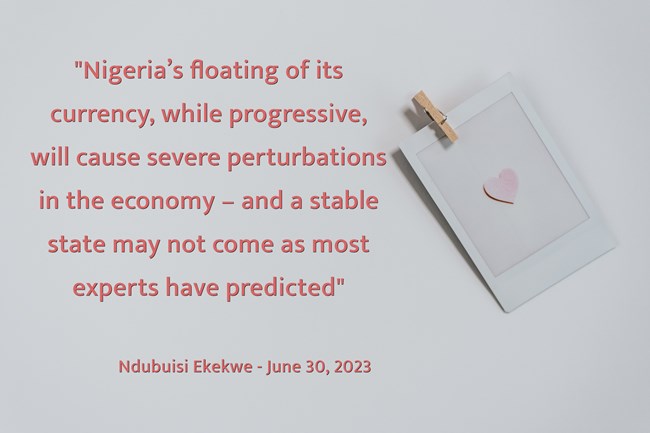
Nothing big, I only used what I learnt from AO Lawal’s textbook in secondary school (I did not do Economics in SSCE, rather, I bought the book, read and took external GCE while in secondary school, since those days, it was either Further Maths or Econs; I chose Further Maths for SSCE). I wrote on June 30 2023 thus.

‘In his O’ Level textbook on economics, AO Lawal explained demand and supply and the movement of price on the demand-supply curve. If I apply what he explained in that book, floating naira with no capacity to earn USD dollars will kill Naira, because there is an asymmetric imbalance on demand and supply of USD in the Willing Buyer, Willing Seller nexus. In other words, two people may each have $100 to sell while twenty people want to buy each $100. If you do not close that number to near parity, the equilibrium point will keep shifting and I do not see how Naira will stabilize because demand outweighs supply here.’

‘I have read many theses on how Naira will stabilize to N680. Good luck. But if you visit Marina Street in Lagos, and climb one of those tall buildings (I have friends who give me access whenever in Lagos), look at the far habour, count the number of ships coming into and leaving Nigeria – and then examine their capacities. Most come loaded, most depart empty! What does it say? We spend more US Dollars than we can “create”.’

Can someone hear me now? I think we make sense on this feed and should be a required Follow for Nigerian leaders. Hahahaha. Lol

Massive Volcanic Eruption of the Marapi Volcano in West Sumatra, Indonesia

0

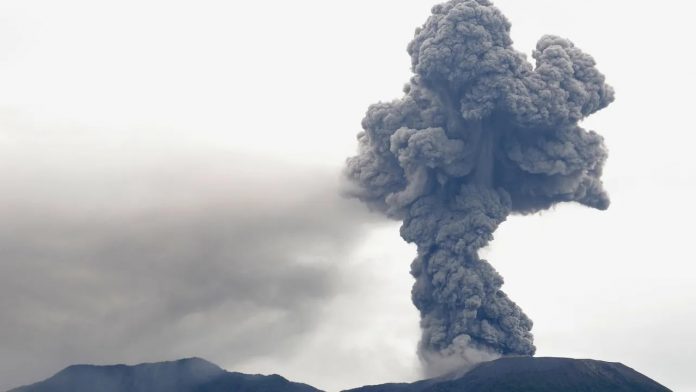
A massive volcanic eruption of the Marapi volcano in West Sumatra, Indonesia, has sent a plume of ash and gas more than 10 kilometers into the sky, forcing thousands of people to evacuate their homes and disrupting air traffic in the region. The eruption, which occurred last Friday morning, was the strongest one recorded at the volcano since 2010, when it killed two people and injured dozens more.

The Marapi volcano, which is not to be confused with the similarly named Merapi volcano in Central Java, is one of the most active volcanoes in Indonesia, a country that lies on the Pacific Ring of Fire, a belt of seismic and volcanic activity that encircles the Pacific Ocean. It has erupted more than 50 times since 1800, with the most recent eruption occurring in 2018. The volcano is part of the Barisan mountain range that runs along the western coast of Sumatra, and it has a height of 2891 meters above sea level.

The Marapi volcano is a stratovolcano, meaning that it is composed of layers of lava and ash that have accumulated over time. The volcano has a complex structure, with several craters and vents that produce different types of eruptions. Some eruptions are explosive, sending ash and gas into the air, while others are effusive, producing lava flows that can reach up to 10 kilometers from the summit.

The Marapi volcano poses a significant threat to the surrounding population, as it is located near several major cities and towns, such as Bukittinggi, Padang Panjang, and Batusangkar. The volcano also affects the local agriculture and environment, as the ash and lava can damage crops and forests, as well as pollute water sources. The Indonesian government has established a 3-kilometer exclusion zone around the volcano, and monitors its activity closely using seismographs and satellite imagery.

The Marapi volcano is also a popular destination for tourists and hikers, who can enjoy the scenic views and natural beauty of the area. However, visitors are advised to follow the safety regulations and avoid the danger zones when the volcano is active.

According to the Smithsonian Institution’s Global Volcanism Program, Marapi has erupted at least 21 times since 1800, with the deadliest one occurring in 1975, when an explosive eruption killed at least 80 people and injured hundreds more. The latest eruption comes amid heightened volcanic activity in Indonesia.

The Indonesian authorities have raised the alert level for the volcano to the second highest and warned of possible lava flows and pyroclastic surges. The National Disaster Management Agency (BNPB) said that more than 20,000 people living within a 10-kilometer radius of the volcano have been evacuated to safer areas, and that no casualties have been reported so far.

The agency also said that masks and other protective equipment have been distributed to the affected communities, as the ash and gas could pose health risks, especially for people with respiratory problems. The eruption has also affected air travel, as several flights to and from the nearby cities of Padang and Pekanbaru have been canceled or diverted due to the poor visibility and the risk of engine damage.

The Volcanic Ash Advisory Center (VAAC) in Darwin, Australia, issued a red alert for aviation, indicating that the eruption could produce a major ash cloud that could disrupt air traffic over a large area. The Marapi volcano, which is not to be confused with the similarly named Merapi volcano in Central Java, is one of the most active volcanoes in Indonesia, a country that lies on the Pacific Ring of Fire, a belt of seismic and volcanic activity that encircles the Pacific Ocean.

According to the Smithsonian Institution’s Global Volcanism Program, Marapi has erupted at least 21 times since 1800, with the deadliest one occurring in 1975, when an explosive eruption killed at least 80 people and injured hundreds more.

The latest eruption comes amid heightened volcanic activity in Indonesia, as several other volcanoes, such as Sinabung, Semeru, and Raung, have also erupted in recent weeks, causing evacuations and flight disruptions. Indonesia has more than 120 active volcanoes, making it one of the most volcanically active countries in the world.

BlackRock bought Bitcoin through the bear markets amid receiving $100k Seed on its ETF Applications

0

BlackRock, the world’s largest asset manager, has been accumulating Bitcoin quietly during the recent market downturn, according to a new report. The report, published by CoinDesk, claims that BlackRock has been using a private trust, launched in 2022, to buy and hold Bitcoin on behalf of its institutional clients. The trust, which is not registered with the SEC, has Coinbase as its custodian and charges a 2% annual fee.

The report cites anonymous sources familiar with the matter, who say that BlackRock has been buying Bitcoin since early 2022, when the price of the cryptocurrency dropped below $30,000. The sources also claim that BlackRock has invested hundreds of millions of dollars in Bitcoin through the trust, and that it plans to increase its exposure in the future.

BlackRock’s interest in Bitcoin is not surprising, given that the company has expressed positive views on the digital asset in the past. In January 2021, BlackRock’s chief investment officer Rick Rieder said that Bitcoin could replace gold as a store of value. In February 2021, BlackRock filed documents with the SEC indicating that it could add Bitcoin futures to some of its funds. In March 2021, BlackRock’s CEO Larry Fink said that he was fascinated by Bitcoin and that it could become a global asset.

BlackRock received $100,000 as “seed capital” for its proposed bitcoin ETF

BlackRock, the world’s largest asset manager, has taken a significant step towards launching a bitcoin exchange-traded fund (ETF) in the US. The company announced that it has received $100,000 from an unnamed investor as “seed capital” for its proposed BlackRock Bitcoin Trust, which would track the performance of the leading cryptocurrency.

A bitcoin ETF is a type of investment product that would allow investors to gain exposure to the price movements of bitcoin without having to buy or store the digital asset directly. Instead, they would buy shares of the ETF, which would hold a pool of bitcoins on behalf of the investors. The ETF would trade on a regulated stock exchange, making it easier and cheaper for investors to access the bitcoin market.

BlackRock is not the first company to pursue a bitcoin ETF in the US. Several other firms, including VanEck, Valkyrie, and NYDIG, have filed applications with the Securities and Exchange Commission (SEC) to launch their own bitcoin ETFs. However, none of them have received approval from the regulator yet, as the SEC has expressed concerns about the potential for fraud, manipulation, and volatility in the bitcoin market.

BlackRock’s announcement suggests that the company is confident that it can overcome these regulatory hurdles and become the first to launch a bitcoin ETF in the US. The company has a strong reputation and track record in the ETF industry, managing over $9 trillion in assets across various funds. It also has experience in dealing with cryptocurrencies, as it offers two mutual funds that invest in bitcoin futures contracts.

The $100,000 seed capital is a symbolic amount that shows that BlackRock has secured at least one investor for its proposed bitcoin ETF. The company will need to raise more funds from other investors before it can launch the product. According to its filing with the SEC, the minimum investment amount for the BlackRock Bitcoin Trust is $50,000.

If BlackRock succeeds in launching a bitcoin ETF in the US, it could have a significant impact on the cryptocurrency market. A bitcoin ETF would provide a convenient and regulated way for institutional and retail investors to access bitcoin, potentially increasing the demand and liquidity for the digital asset. It could also boost the credibility and legitimacy of bitcoin as an alternative asset class, attracting more mainstream adoption and acceptance.

However, BlackRock’s use of a private trust to invest in Bitcoin is a novel and secretive approach, which could give it an edge over other institutional investors. By using a private trust, BlackRock can avoid the regulatory scrutiny and disclosure requirements that come with publicly traded products such as ETFs or trusts. Moreover, by using Coinbase as its custodian, BlackRock can benefit from the security and liquidity of one of the largest and most reputable crypto platforms in the world.

BlackRock’s private trust could also signal a growing demand for Bitcoin among institutional investors, who are looking for alternative ways to gain exposure to the cryptocurrency without dealing with the technical and regulatory challenges of owning it directly. As more institutions enter the Bitcoin market, the price and adoption of the cryptocurrency could increase significantly in the long term.