Crypto markets in 2025 are filled with opportunities for new investors to turn small beginnings into life-changing fortunes. While major players like Bitcoin and Ethereum continue to show strength, the real wealth creation often happens in emerging projects with massive potential before they go mainstream.
One such project capturing attention is Ozak AI — an AI-powered blockchain ecosystem that’s transforming how intelligence and automation interact with decentralized systems. Currently priced at just $0.012, Ozak AI offers an early entry point that could turn a modest $15,000 investment into $1,250,000 if the token reaches $1. For first-time buyers who missed early Bitcoin or Ethereum, Ozak AI represents a second chance—but with a far more advanced technological foundation.
Ozak AI’s Ecosystem
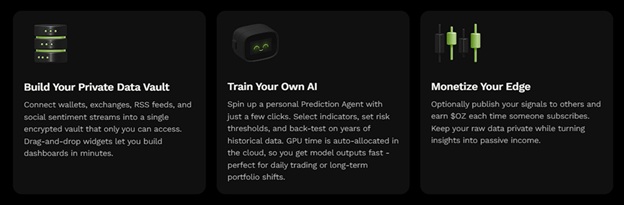
Ozak AI stands out in a crowded market by combining two of the most disruptive technologies of our time — artificial intelligence (AI) and blockchain. The project is developing a decentralized network of AI Prediction Agents, which are autonomous, self-learning systems capable of analyzing data, forecasting market movements, and executing intelligent decisions across DeFi and trading ecosystems.
This means Ozak AI doesn’t just exist as a token—it functions as an intelligent ecosystem. These AI agents can be used for automated trading, data modeling, predictive analytics, and even risk management tools. By making blockchain smarter and more adaptive, Ozak AI could revolutionize how decentralized platforms operate.
With AI markets projected to exceed $1.5 trillion by 2030, Ozak AI’s entry into this sector couldn’t be more timely. Its ability to integrate intelligence with blockchain efficiency positions it as a major contender for mass adoption.
Youtube embed:
Ozak AI Millionaire Math: $15,000 to $1,250,000
Ozak AI presale price of $0.012 gives investors a massive upside potential. A $15,000 investment today would buy 1,250,000 Ozak tokens. If Ozak AI reaches $1, that same holding would be worth $1,250,000.
While that figure would possibly appear ambitious, it’s now not unrealistic. Similar AI-based crypto projects like Fetch.AI (FET), Render (RNDR), and SingularityNET (AGIX) have reached multi-billion-dollar valuations, proving that innovative AI tokens can climb exponentially once they gain traction. Ozak AI’s strong basics and partnerships endorse its ability to comply with a similar trajectory.
Ozak AI Partnerships Strengthen Its Long-Term Potential
One of the most powerful indicators of Ozak AI’s long-time period achievement is its growing listing of strategic partnerships. The venture has teamed up with Perceptron Network, which operates over seven hundred,000 lively nodes, supplying distributed computing power for AI version schooling. Its collaboration with SINT—a platform specializing in AI marketers, SDK toolkits, and cross-chain bridges—gives Ozak AI cross-chain compatibility and superior improvement potential.
Additionally, Ozak AI’s partnership with HIVE permits 30 ms blockchain signal processing, permitting lightning-speedy AI insights and predictions. This technical aspect offers Ozak AI a competitive benefit in a space wherein speed and accuracy outline success.
The project has also been audited by using CertiK, indexed on CoinMarketCap and CoinGecko, and featured at Coinfest Asia 2025, alongside enterprise leaders like Manta Network, Coin Kami, and Forum Crypto Indonesia. These milestones replicate both transparency and growing recognition within the global crypto community.
Why First-Time Buyers Are Flocking to Ozak AI
For new investors entering the crypto market, Ozak AI represents a perfect mix of low entry cost, high upside potential, and real-world utility. The presale has already raised over $3.5 million, proving strong investor demand even before the token’s official launch. Analysts predict that Ozak AI could surge 50x–100x after exchange listings, fueled by rising excitement in AI-integrated blockchain projects.
More importantly, Ozak AI’s technology ensures it’s more than just a trend. Its AI-driven automation and predictive intelligence offer lasting value—exactly what long-term investors are seeking.
Ozak AI’s Realistic Millionaire Opportunity
For first-time buyers dreaming of financial independence, Ozak AI at $0.012 provides one of the most realistic millionaire opportunities in the 2025 market. The formula is simple: $15,000 today = $1,250,000 at $1—and Ozak AI’s roadmap, innovation, and partnerships make that path achievable.
As the world shifts toward intelligent, automated blockchain systems, Ozak AI stands at the center of that transformation. For those ready to take their first step into crypto, this may be the project that defines their financial future—a true chance to become a crypto millionaire by being early, not lucky.
About Ozak AI
Ozak AI is a blockchain-based crypto project that provides a technology platform that specializes in predictive AI and advanced data analytics for financial markets. Through machine learning algorithms and decentralized network technologies, Ozak AI enables real-time, accurate, and actionable insights to help crypto enthusiasts and businesses make the correct decisions.
Oftentimes, the best altcoin to buy isn’t always the one dominating headlines. With the overall crypto market cap now hovering near $3.7 trillion (due to the recent crypto crash) and projected to surge toward $6.21 trillion in 2026, the stage is set for massive capital influx.
While every crypto cycle has been different, this time around the real life-changing opportunities lie in projects combining undervalued market positions, strong fundamentals, and powerful catalysts timed perfectly with the broader bull run.
Leading such high-upside projects is Pikamoon ($PIKA), a GameFi ecosystem gearing up for its highly anticipated Solana relaunch on October 12th, complete with new listings, added liquidity, and a clear roadmap. Alongside Pikamoon, there are four other promising altcoins that meet our strict criteria and could deliver outsized gains in the coming months.
Of course, bold claims mean little without a clear process. That’s why before diving into the picks, we’ll walk you through the lens we used to separate real contenders from noise.
How We Identified the Best Altcoins to Buy
1. Untapped Growth Sectors with Convincing Narratives & Mindshare
The most explosive altcoins come from sectors that the market is underpricing today but that have clear paths to mass adoption tomorrow. Right now, GameFi is a textbook example. Once dismissed as a passing trend after the 2021 cycle, it’s now rebounding with better games and better tokenomics. Projects that can frame themselves within these larger narratives, while offering a product that actually delivers, have the potential to outperform the broader market.
2. Undervalued Market Caps with Visible Momentum
Size matters in crypto. Large caps offer stability but limited upside, while micro-to-mid caps with strong traction are where the life-changing gains are made. We looked for projects that not only trade at modest valuations compared to peers but also demonstrate steady community growth, active developer updates, and upcoming product milestones. When those conditions align, it creates a setup where the downside is protected by fundamentals, but the upside remains uncapped once broader attention rotates in.
3. Teams That Execute Without Handholding
A flashy whitepaper means little if the team behind it can’t deliver. The projects we selected show a track record of execution, transparency, and independence. Fully doxxed leadership, frequent community engagement, and an ability to ship updates on time all signal that these teams can survive volatility and thrive across multiple cycles. In contrast, projects overly reliant on VC hype or anonymous developers often collapse under pressure. As the experts say, execution is everything.
Best Altcoins to Buy Now Before 2025 Ends
1. Pikamoon ($PIKA): Crypto’s Next Altcoin Breakout Story
Pikamoon ($PIKA) is the best altcoin to buy right now because it sits at the intersection of undervalued opportunity, cultural relevance, and technical execution, all while preparing for one of the biggest relaunches in crypto history this year (on October 12th).
A Market Mispricing Too Big to Ignore
What makes Pikamoon stand out isn’t just its sub-$5M market cap, it’s the disconnect between that valuation and its actual trajectory. At the previous Ethereum launch, PIKA briefly touched $200M, proof that the market has already voted once on its potential. Since then, the project has advanced dramatically: in-house AAA game development, a thriving player-driven community, and migration to Solana for scalability. The fact that all of this progress is priced at less than 40x of its previous peak creates an asymmetric bet rarely seen at this stage of a cycle.
Product Design That Fixes Web3’s Core Flaw
GameFi projects in the past collapsed because they forced every player into Web3 mechanics from day one. Wallets, staking, gas fees, all too technical for a non-technical gamer base. Pikamoon solved this with PIKAHUB, a proprietary off-ramp/on-ramp that isolates the crypto layer from the gameplay. This means the core game functions like a polished Web2 title, with optional Web3 superpowers (NFTs, staking, token trading) available for those who want them. It’s a design choice that widens the funnel from thousands of crypto natives to potentially millions of mainstream gamers.
A Team Building for Cycles, Not Headlines
Where many projects leaned on VCs or hype-driven tokenomics, Pikamoon’s developers of Orbio Games have prioritized independence and execution. They’ve publicly rejected misaligned VC capital, choosing instead to build with transparency and direct community engagement. Founder Conrad Lewis regularly engages on X Spaces and podcasts, ensuring accountability while stoking organic momentum.
Catalysts That Can Flip the Chart Overnight
The timing is also on Pikamoon’s side. The 45-day bridge from Ethereum to Solana just closed, permanently burning nearly 12% of the un-migrated tokens and locking in scarcity. Now, the team is preparing a high-voltage relaunch campaign in October: new announced listings on Meteora and MEXC, boosted liquidity pools, referral contests, and giveaways. Add to that an alpha game release in Q4 2025 and a full AAA battle-royale in 2026, and you have near-term sparks and long-term flames. This stack of catalysts is exactly the setup traders look for before a parabolic life-changing move.
Overall, Pikamoon checks all three of the criteria that matter. It has an undervalued sector, undervalued market cap, and a proven team. But it also adds something rare: a relaunch catalyst timed perfectly with the macro shift of capital rotations into altcoins. That’s why Pikamoon is the best altcoin to buy right now.
2. ASTER ($ASTER)
On the second spot, is another coin that has been making the headlines lately. Backed by Binance, Aster is a next-generation decentralized exchange (DEX) that offers both perpetual futures and spot trading in one platform. In just months of its launch, Aster captured nearly 20% of the entire perpetual DEX market’s trading volume.
ASTER differentiates itself with cutting-edge features like the hidden “dark pool” orders that protect traders from MEV and liquidation sniping, supports 24/7 stock-index perpetuals, and even runs on its own high-performance Layer-1 chain for privacy-preserving, on-chain execution. Uniquely, Aster lets users post yield-bearing collateral for margin, so traders earn passive yield even while leveraged
These product innovations, backed by an ex-Binance core team (YZi Labs), position Aster as an all-in-one DeFi venue built to challenge both decentralized rivals and traditional exchanges. Its ability to deliver lightning-fast, one-click trades without custodial risk has attracted a surge of volume and liquidity, quickly making Aster one of the top DEXs to watch heading into 2026.
3. SUI ($SUI)
On the third spot is SUI, a Layer-1 blockchain (built by ex-Meta engineers) that has seen steady ecosystem development since its 2023 launch, and it’s now breaking new ground with real technological partnerships. Most prominently, Sui was selected as a launch partner for Google’s Agentic Payments Protocol (AP2), an ambitious framework for AI-driven commerce.
Sui’s Move-based architecture is purpose-built for high-frequency, asset-oriented transactions, exactly the kind of micro-payments and token transfers AI agents will require. The chain also continues to upgrade its core features. A recent highlight is Sui’s “hidden” deflationary design, where storage fees permanently remove SUI tokens from circulation Already about 700k SUI have been burned via this storage fund in two years, meaning increased on-chain activity directly makes the supply more scarce.
Additionally, institutional interest in Sui is growing. For instance, SUI’s inclusion in new crypto index products and ETF filings suggests big players are starting to consider it alongside more established assets. On the ecosystem front, Sui is cultivating use-cases beyond just DeFi trading. A notable fintech partner, xMoney, expanded to Sui and is launching a regulated payments token on the network
As 2026 approaches, Sui stands out as a high-potential pick, utilizing both narrative (AI, institutional adoption) and fundamentals (deflationary tokenomics, scalable design) to position for decent upside.
4. Solana ($SOL)
Solana has reasserted itself in 2025 as a top smart contract platform, thanks to both technical milestones and headline-grabbing real-world usage. After navigating past challenges, Solana’s network is now demonstrating unprecedented reliability and speed, attributes that caught the attention of payments giant Visa.
In August 2025, Visa officially expanded its stablecoin settlement pilot to include Solana, citing the chain’s high throughput and low fees for fast global payments. This integration means Visa can move USDC on Solana’s network alongside traditional payment rails, a strong validation of Solana’s capability to handle mainstream financial traffic.
Institutional confidence in Solana is further evident from surging derivatives activity: CME’s futures on SOL saw volumes spike 250% to over $8 billion in a month. Meanwhile, the Solana ecosystem continues to push boundaries in user adoption. Solana Labs rolled out its second-generation crypto smartphone, the “Saga Seeker,” in mid-2025, with tens of thousands of pre-orders driven by exclusive airdrop incentives.
Last but not least, SOL ETFs are also expected to get SEC’s approval by October 16th.
5. Chainlink ($LINK)
Chainlink has quietly transitioned from a DeFi-focused oracle provider into a cornerstone of blockchain’s integration with the traditional financial world. In September 2025, Chainlink announced a landmark partnership by joining the Canton Network, an enterprise blockchain network backed by giants like Goldman Sachs, Microsoft, and multiple global banks.
As a designated “super validator” on Canton, Chainlink will not only help secure this institutional network’s transactions but also provide its renowned data feeds and interoperability solutions to Canton’s participants.
In practice, this means Chainlink’s infrastructure will verify data like asset prices and coordinate cross-chain communication for a platform that already handles hundreds of billions in daily volume of tokenized assets and trades. By plugging in Chainlink’s Cross-Chain Interoperability Protocol (CCIP), Canton can seamlessly connect to public blockchains, allowing assets and messages to move between private bank networks and chains like Ethereum
Within the crypto ecosystem itself, Chainlink remains just as indispensable: its price oracles secure over $20 billion in DeFi value, and new services like Proof of Reserve and random number generation continue to see uptake. After introducing a successful staking program and the “Chainlink Economics 2.0” model, the network is also gradually decentralizing and sharing fees with LINK stakers, strengthening the token’s value capture.
Final Thoughts: Why $PIKA is the Top Altcoin to Own Now
While the crypto landscape offers several opportunities with projects like ASTER, SUI, SOL and LINK, none combines timing, execution, and upside potential as perfectly as Pikamoon ($PIKA). After completing its migration from Ethereum to Solana, $PIKA now enjoys the speed, scalability, and low-cost transactions of one of the fastest blockchains in the world.
As the frontrunner of GameFi 2.0, with an alpha release dropping in Q4 2025, a full AAA battle-royale launch in 2026, and continuous catalysts like NFT rollouts and seasonal updates planned through the next five years, $PIKA is positioned to dominate both the gaming and crypto charts. And with its market cap still sitting under $5M despite previously hitting nearly $200M at launch, the upside from here is definitely moon-bound.
So, if you’re looking for the next breakout altcoin that can deliver life-changing returns, Pikamoon ($PIKA) it is.
Take Note: Pikamoon relaunches October 12th, 14:00 UTC!
Join official Telegram group and follow Pikamoon on X to stay ahead with exclusive updates on the relaunch, upcoming CEX/DEX listings, and the latest project news.
The PIKAArmy is gearing up for green candles. Catch them before the broader market catches on!
Hyperliquid (HYPE) and Chainlink (LINK) are seeing strong attention, but both coins still face pressure near key price levels. HYPE shows steady momentum backed by traders, though its movement often depends on whale trades and short-term bursts. LINK continues adding real-world use cases through its network collaborations, but its price has yet to break beyond important resistance. Both highlight the same challenge: impressive metrics but slow adoption among everyday users.
BlockDAG (BDAG), however, offers a new path. Its Awakening Testnet is already live, giving participants the chance to explore dApps, test contracts, and use a real faucet. This hands-on progress proves that BDAG is more than a presale; it’s an active ecosystem. For people looking at the top crypto coins, BlockDAG is gaining ground for showing practical results before the mainnet launch.
BlockDAG Awakening Testnet: Early Builders Shape the Future
BlockDAG’s Awakening Testnet has gone live, giving early users a real opportunity to build and test in an active environment. The faucet is operational, dApps like Reflection and Lottery are running, and the explorer tracks all transfers, videos, and images instantly. Users can mint their own coins, deploy smart contracts, and experiment with NFT creation. This setup goes beyond a preview; it allows the community to take part in shaping the system before it reaches the mainnet stage.
This progress explains why BlockDAG is now discussed among the top crypto coins. While other platforms still promise utility, BlockDAG already lets users participate in a working setup that feels like a live economy. Developers are coding daily, testers are exploring new functions, and holders are getting ready for the vesting phase that will distribute testnet BDAG soon.
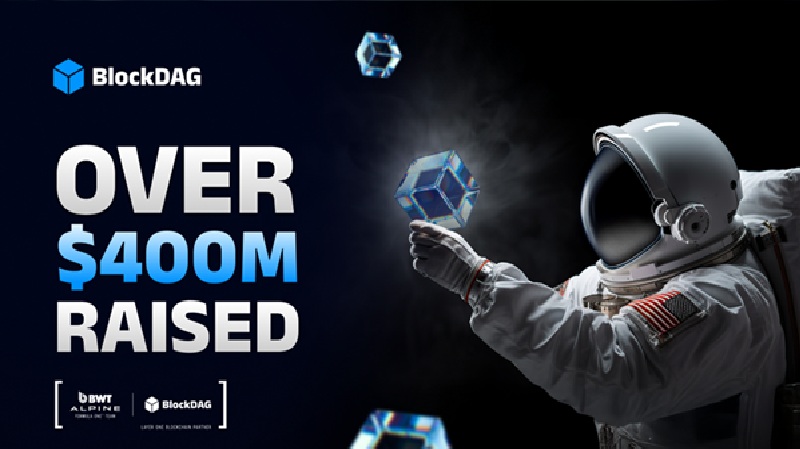
Behind all this activity is a presale drawing global attention. BlockDAG has raised over $420 million, sold nearly 27 billion coins, and reached 312,000+ holders. The limited-time Batch 31 price is $0.0018, far below the regular $0.0304, creating a clear advantage for early buyers. This is possible only with the ‘TGE’ code that allows buyers to secure BDAG at the special rate and offers early access at launch based on their leaderboard ranking. With 3 million+ X1 mobile users and 20,000+ miners already operating worldwide, demand is strong.
For anyone comparing the top crypto coins, BlockDAG’s combination of real usage, a live testnet, and a presale price with potential returns makes it a standout. Those who act early are positioning themselves ahead of the next phase, while others may only watch from the sidelines once the mainnet launches.
Hyperliquid (HYPE) Price and Market Trends
Recent Hyperliquid (HYPE) updates show the coin trading close to $47, staying steady while most of the market remains mixed. Analysts note that breaking above $52 could confirm a bullish shift, while support around $40 is key for stability. Just last week, HYPE gained more than 9% even as many other assets dipped, showing that momentum remains firm. Current forecasts suggest a possible trading range between $40 and $64 through 2025, depending on how adoption develops.
For those tracking price trends, Hyperliquid continues to prove resilient under pressure. Many traders view it as a strong market performer compared to slower, less volatile coins. It remains closely watched and often mentioned among coins showing high potential during uncertain conditions.
Chainlink (LINK) Price Updates and Adoption Growth
Chainlink (LINK) is trading around $20.70 to $21.50, struggling to move higher after repeated tests near resistance. Analysts warn that a dip below $20.50 could lead to a slide toward $20, though forecasts remain positive for the long term. Some projections suggest LINK could reach the mid-$60s by 2026 if network adoption continues to rise. Its current $14 billion market valuation keeps it firmly in the top tier of digital assets.
Beyond its price, Chainlink’s progress is backed by expanding real-world integrations. These include Mastercard pilot programs, ICE forex data feeds using Chainlink oracles, and Canton Network’s adoption for secure data sharing and cross-chain operations. These steps prove that Chainlink’s network continues to attract enterprise attention, giving it an advantage in real-world applications.
Conclusion: BlockDAG Leads the Pack Among Top Crypto Coins
Hyperliquid (HYPE) remains stable around $47, with the potential to climb toward $52 if momentum continues. Chainlink (LINK) stays near $21, supported by strong partnerships but limited by technical barriers. Both remain relevant coins for those watching the market’s next moves.
BlockDAG, however, is already showing what real adoption looks like. Its Awakening Testnet is fully functional with live dApps, a faucet, and explorer tools that let anyone mint and deploy right now. With over $420 million raised, 3 million+ users, and limited-time $0.0018 entry price, BlockDAG clearly sets itself apart among the top crypto coins ready for the next major leap.
Coinbase has officially launched decentralized exchange (DEX) trading directly within its mobile app for all eligible U.S. users, excluding those in New York State due to local regulations.
This integration allows users to trade millions of on-chain assets—primarily on the Base network—moments after they launch, without needing to wait for traditional listings or switch to external wallets.
Live now for U.S. app users (ex. NY). Expansion to more networks like Solana and countries is planned soon. Trades are routed through DEX aggregators like 1inch and 0x for optimal pricing and liquidity from pools on platforms such as Uniswap and Aerodrome.
Users can fund trades with their existing Coinbase balances or USDC, retaining self-custody via the app’s built-in wallet. Coinbase covers gas fees, charging only a small, transparent trading fee.
Instant access to new Base-native tokens from projects like Virtuals AI Agents and Reserve Protocol. No asset listing delays—new tokens become tradable within hours of on-chain creation.
Bridges centralized (CEX) and decentralized (DeFi) trading, lowering barriers for retail users. This follows a limited beta in August 2025 and aligns with surging DEX volumes (up 25% in Q2 2025 to over $400B monthly, per DeFiLlama).
Coinbase’s Q2 trading volume dipped slightly to $237B, making this a strategic push toward an “everything app” for crypto. Coinbase shared the news on X: “Check your phone—the wait is over.
Explore millions of assets, moments after they launch, right from the Coinbase app. DEX trading is live for all U.S. users excluding. NY. Coming soon: more assets, more networks, more countries.” The post included a short video demoing the seamless swap interface.
Users can now trade millions of on-chain assets, including newly launched tokens, directly within the Coinbase app without needing external wallets or navigating complex DEX platforms like Uniswap. This lowers the entry barrier for retail investors exploring decentralized finance (DeFi).
Self-custody via Coinbase’s integrated wallet gives users more control over their assets compared to traditional CEX trading, aligning with DeFi’s ethos. Coinbase covering gas fees simplifies the trading process, as users only face a transparent trading fee. This could make DEX trading more cost-competitive with CEX trades for retail users.
Seamless integration with existing Coinbase balances for USDC or other assets eliminates the need to transfer funds to external wallets, improving user experience. Users can trade Base-native tokens moments after launch, offering opportunities to invest in emerging projects before they hit centralized listings.
As Coinbase’s Layer-2 solution, Base benefits from increased visibility and liquidity as millions of Coinbase users gain direct access to its ecosystem. This could drive adoption of Base-native projects and increase on-chain activity.
Per recent data, Base’s total value locked (TVL) and transaction volume could see significant growth, building on DeFi’s Q2 2025 surge to over $400B in monthly DEX volume according data from DeFiLlama.
Coinbase’s integration of DEX trading within a CEX app bridges centralized and decentralized finance, potentially accelerating mainstream DeFi adoption. This could pressure other CEXs (e.g., Binance, Kraken) to offer similar features.
It may also spur competition among DEX aggregators like 1inch, 0x and protocols like Uniswap and Aerodrome to optimize liquidity and pricing for Coinbase’s routing. Early access to new tokens could increase volatility in the DeFi space, as speculative trading on fresh assets spikes.
The move could shift some trading volume from traditional CEX markets to DEXs, especially for long-tail assets not listed on centralized platforms. By embedding DEX trading, Coinbase strengthens its push toward becoming a crypto “everything app,” combining CEX convenience with DeFi flexibility.
This could help reverse its Q2 2025 trading volume dip $237B, down slightly year-over-year. The focus on Base reinforces Coinbase’s investment in its Layer-2 network, potentially capturing more value within its ecosystem as Base grows.
While Coinbase covers gas fees, its trading fees on DEX swaps provide a new revenue stream. As trading volume grows, this could offset costs and boost profitability. The feature may attract new users and retain existing ones, increasing engagement and potential subscription uptake.
Excluding New York suggests Coinbase is navigating strict U.S. state regulations like the BitLicense requirements. Expanding to other regions will require careful compliance, especially in jurisdictions skeptical of DeFi.
By offering self-custody and DEX access, Coinbase may mitigate some regulatory scrutiny faced by CEXs, aligning with decentralized principles while maintaining a trusted brand. Coinbase’s move could normalize DeFi for millions of retail users, driving broader adoption and potentially influencing other major CEXs to integrate DEX features.
It may accelerate development of user-friendly DeFi tools, as competitors aim to match Coinbase’s seamless experience. Base’s prominence could challenge other Layer-2 solutions for market share, especially if Coinbase expands DEX support to networks like Solana.
Users in New York miss out due to regulatory hurdles, limiting full U.S. reach. High trading volumes could strain Base or DEX aggregators, potentially causing delays or slippage during peak activity.
While self-custody empowers users, it also shifts responsibility for private key management, which could lead to losses if mishandled. Expanding DEX access globally may face pushback in regions with unclear or restrictive crypto regulations.
This move positions Coinbase as a leader in bridging CEX and DeFi, potentially reshaping retail crypto trading while amplifying Base’s role in the ecosystem.
LemFi, an international payments platform, has launched a groundbreaking financial service, “Send Now, Pay Later” (SNPL), an innovative payment solution that merges credit and remittance to help immigrants send money home even when their cash flow is tight.
The new feature allows users to leverage their LemFi credit line to make international money transfers instantly and repay later, addressing one of the most common challenges faced by immigrants worldwide.
Every year, immigrants send nearly £150 billion to their families back home. However, many face a timing mismatch between urgent financial needs and their earning cycles, forcing them to delay critical transfers or resort to costly and unregulated credit options. Traditional remittance providers typically require upfront payment, leaving little room for flexibility.
LemFi’s Send Now, Pay Later aims to close this gap by providing financial relief and flexibility for customers who are new to their host countries and may lack an established credit history.
According to Ridwan Olalere, LemFi’s Co-founder and CEO, the new service was inspired by the success of Buy Now, Pay Later (BNPL) models across the globe.
Speaking on the launch of the feature, he said,
“The rise of Buy Now, Pay Later means people across the world can buy products and stagger the payments depending on their cash flow. However, this has never been possible before with remittance, despite it being such a core part of the immigrant financial experience. With Send Now, Pay Later, we’re integrating credit directly into the remittance experience, ensuring financial support is never delayed by cash flow timing.”
Behind this innovation is LemFi’s Ensemble AI model, an intelligent credit assessment engine that combines diverse data sources from national credit bureaus and open banking data to LemFi’s own remittance insights. The system dynamically adapts to each user, offering risk-adjusted credit limits and fair repayment plans that evolve alongside the customer’s financial journey.
How Send Now, Pay Later Works
1. Activate LemFi Credit: Eligible customers receive a personalized credit line ranging from £300 to £1,000, based on their credit assessment.
2. AI-powered Assessment: The Ensemble AI model reviews users’ financial data across multiple touchpoints including remittance history, international credit records, and alternative metrics to offer equitable credit access, especially for recent immigrants.
3. Credit Visibility: Customers begin with smaller credit limits, which grow as they build their UK credit profile and demonstrate repayment reliability.
4. Send Now, Pay Later: Users can instantly send money to over 30 LemFi-supported countries, using their available credit and repaying later through flexible plans.
It is understood that access to traditional banking and credit remains a persistent challenge for immigrants. In the UK alone, an estimated five million people are considered “credit invisible,” with immigrants disproportionately affected. Studies show that 90% of immigrants report increased difficulty in accessing credit, while 13% are excluded from banking services compared to just 3% of the general population.
LemFi’s Send Now, Pay Later directly tackles these systemic barriers by introducing a more inclusive and adaptive credit model that aligns with the unique financial realities of immigrant communities. Following its UK debut, the fintech plans to roll out the SNPL service to the United States, Canada, and Europe, expanding its mission to become the world’s most trusted financial services platform for immigrants.
LemFi’s launch of the SNPL service comes after The State Bank of Pakistan (SBP), last month, approved its partnership with United Bank Limited (UBL) and other trusted and strategic partners to operate remittance services into Pakistan. Founded in 2021 by Ridwan Olalere and Rian Cochran, LemFi’s core mission is to break financial barriers and provide trusted, reliable access to comprehensive financial services for immigrant communities worldwide, empowering them to manage money seamlessly across borders.
This includes remittances, credit building, and multi-currency banking to support diaspora users in running businesses back home and achieving financial inclusion.
The company aims to become the financial services hub for immigrants globally, addressing persistent challenges like high remittance costs and limited credit access.