DD
MM
YYYY

PAGES

DD
MM
YYYY

spot_img

PAGES

Home Blog Page 3571

BlockDAG Targets 10,000X Returns Amid Bitcoin ETF Trends and Floki Inu’s Market Surge

0

As 2024 begins to unfold, the cryptocurrency market is experiencing a significant upturn, with numerous digital currencies exceeding their all-time highs. Leading the charge in this rally are meme coins, with Floki Inu at the forefront, boasting a staggering 612% increase over the last month. Despite the trend of outflows from Bitcoin ETFs, the resilience of Bitcoin’s price underlines the complex factors that shape its valuation.

In initial coin offerings, BlockDAG (BDAG) is rapidly becoming a focal point in the 2024 cryptocurrency landscape, promising extraordinary returns of up to 10,000X and opportunities for passive income through its innovative mining solutions.

Bitcoin’s Valuation Dynamics: Looking Beyond ETF Outflows

Recent reports have highlighted a trend of outflows from Bitcoin ETFs, even as the price of Bitcoin demonstrates a strong performance. Eric Balchunas, Bloomberg’s lead analyst on BTC ETFs, suggests that Bitcoin’s price is subject to “larger forces” than the mere dynamics of ETF transactions.

Despite noticeable outflows from products like the Grayscale Bitcoin Trust (GBTC), Bitcoin’s value surged to $68,000 following optimistic commentary from the Federal Reserve Chair on the interest rate landscape. This resilience exemplifies the multifaceted influences on Bitcoin’s price, indicating that its future trajectory is shaped by a broader spectrum of factors beyond ETF activity.

Floki Inu: Poised for a Price Breakthrough

The Floki Inu project team has recently unveiled its ambitious 2024 roadmap, which includes significant expansions aimed at transcending its meme coin status. Key initiatives include introducing regulated digital bank accounts compatible with FLOKI tokens and collaborations with licensed fintech entities to facilitate global payments via SWIFT and SEPA IBAN. Furthermore, the roadmap features the launch of Floki debit cards and the integration with the Venus DeFi protocol, enhancing liquidity and enabling using FLOKI tokens as collateral.

These strategic developments are expected to trigger a substantial increase in the price of Floki Inu, potentially propelling it to new heights. The price of Floki Inu has surged by 612% in the last month, indicating a bullish trajectory.

BlockDAG: A New Titan in the Crypto Investment Landscape

BlockDAG (BDAG) has burst onto the crypto scene, attracting attention and investment with its vision and potential for massive returns. A notable promotional effort was a keynote presentation displayed on the digital billboards of Tokyo’s Shibuya Crossing, which played a significant role in the successful fundraising of over $8.3 million for the project’s presale.

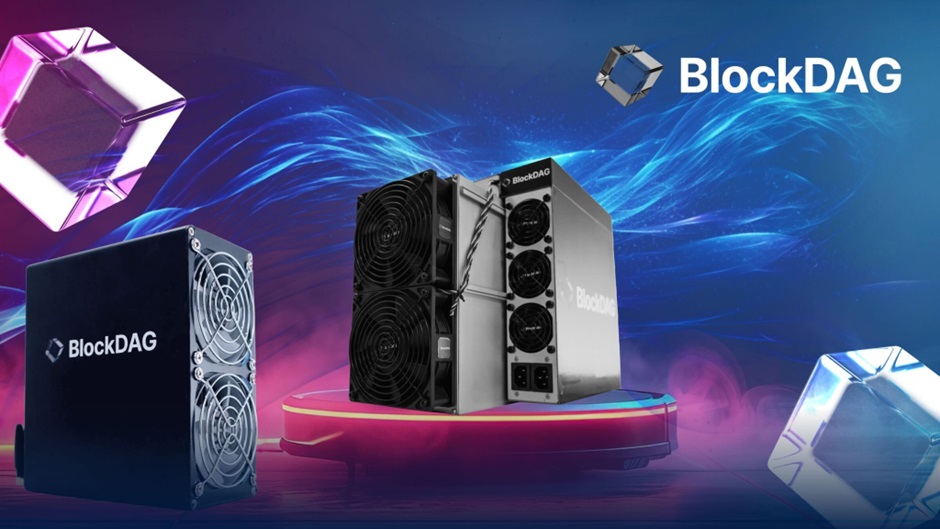
BlockDAG introduces the X-series mining rigs, designed to be environmentally sustainable and user-friendly, offering daily passive income prospects. These rigs are adaptable, supporting mining various cryptocurrencies, including Bitcoin, and positioning BlockDAG alongside major crypto projects regarding potential returns, with a speculative ROI of 10,000x for early investors.
In recognition of the substantial early interest and the rapid fundraising success, BlockDAG has announced a $2 million mega giveaway for 50 community members. Participants are encouraged to engage with BlockDAG’s social platforms and complete certain tasks to increase their chances of winning.

Concluding Thoughts

The relationship between Bitcoin ETF outflows and the cryptocurrency’s valuation highlights the intricate factors influencing Bitcoin’s price forecast. Meanwhile, Floki Inu’s comprehensive 2024 roadmap suggests a promising future for its valuation. On the presale front, BlockDAG emerges as a standout opportunity for investors seeking substantial returns, symbolizing the dynamic and evolving nature of the cryptocurrency investment landscape in 2024.


Invest In BlockDAG

Website: https://blockdag.network

Presale: https://purchase.blockdag.network

Telegram:https://t.me/blockDAGnetworkOfficial

Discord: https://discord.gg/Q7BxghMVyu
The Europe’s Poison Pill Challenge on How It Regulates BigTech

0

It is very hard to put a comment on Europe since across all core indicators, Europe is well ahead of Africa. But if not, the energies Europe have put on regulations, and specifically on American companies, have clouded it from seeing its own shortcomings. Yes, if you check Fortune Global 500, Europe may not have produced more than 4 NEW entrants in the last 30 years.

The list of new entrants into the club of the world’s largest companies, by revenue, belongs to China and the United States, with companies like Facebook’s Meta, Google’s Alphabet, ByteDance, and Alibaba.

Extrapolating from an ancient African proverb – men fight the wars, the women tell the stories – Europe has focused on regulating the world of technology, and in the process created some poison bills which continue to make it harder for most European companies to scale. Indeed, any tech company created in Europe today has a huge disadvantage on the first day compared with US and Chinese firms due to the asymmetric regulatory and compliance issues it must overcome in its home market.

Of course, you will ask: who is this village boy from Nigeria commenting on how Europe is balancing its budget with fines here and there? Relax: regulation is part of the market system, and someone can capture value offering that service. Europe’s strategy is working for it because it is #1 there! But it needs to check really well if that is a sustainable growth playbook. Yes, what should Facebook do when it cannot collect data to serve adverts for users who do not want to pay to be excluded? ‘The Commission is concerned that the binary choice imposed by Meta’s “pay or consent” model may not provide a real alternative’.

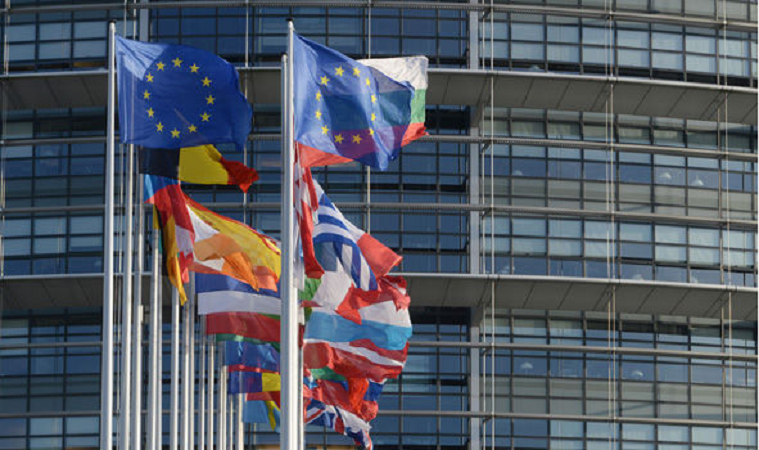
LinkedIn Summary: The European Union launched investigations Monday into Apple, Alphabet and Meta — the first under the newly implemented Digital Markets Act (DMA). The probes variously target Apple and Google’s app store rules; whether Google’s search results prioritize its own services; and how Apple might make it difficult for users to pick browsers other than Safari, per Bloomberg. Meta’s new Instagram and Facebook subscription fees will also come under scrutiny. Meanwhile, in the U.S., Apple is facing a sweeping antitrust lawsuit from the Department of Justice.

  • The DOJ suit could reveal new information about the tech giant’s “inner workings,” and some confidential business dealings, Axios reports.
  • Apple will release a new feature next month allowing it to wirelessly update iPhone software — while phones are still in their original packaging, Bloomberg reports.

A statement from the Commission reads partly:

“The Commission has opened proceedings to assess whether the measures implemented by Alphabet and Apple in relation to their obligations pertaining to app stores are in breach of the DMA. Article 5(4) of the DMA requires gatekeepers to allow app developers to “steer” consumers to offers outside the gatekeepers’ app stores, free of charge.

The Commission is concerned that Alphabet’s and Apple’s measures may not be fully compliant as they impose various restrictions and limitations. These constrain, among other things, developers’ ability to freely communicate and promote offers and directly conclude contracts, including by imposing various charges.

The Commission has opened proceedings against Apple regarding their measures to comply with obligations to (i) enable end users to easily uninstall any software applications on iOS, (ii) easily change default settings on iOS, and (iii) prompt users with choice screens which must effectively and easily allow them to select an alternative default service, such as a browser or search engine on their iPhones.

The Commission is concerned that Apple’s measures, including the design of the web browser choice screen, may be preventing users from truly exercising their choice of services within the Apple ecosystem, in contravention of Article 6(3) of the DMA.

Meta’s “pay or consent” model

Finally, the Commission has opened proceedings against Meta to investigate whether the recently introduced “pay or consent” model for users in the EU complies with Article 5(2) of the DMA which requires gatekeepers to obtain consent from users when they intend to combine or cross-use their personal data across different core platform services.

The Commission is concerned that the binary choice imposed by Meta’s “pay or consent” model may not provide a real alternative in case users do not consent, thereby not achieving the objective of preventing the accumulation of personal data by gatekeepers.”

EU Regulators Investigate Apple, Google and Meta’s Compliance with Digital Markets Act

BlockDAG’s $8.3 Million Presale & Borroe Finance Lead April’s Presale Charge As Ethereum Classic (ETC) Showcases Market Resilience

0

April 2024 is buzzing with excitement for cryptocurrency enthusiasts, with presales like BlockDAG and Borroe Finance making significant strides in attracting investment. Amidst this, Ethereum Classic (ETC) continues to show resilience, offering positive tidings to its investors with a promising price trajectory.

Ethereum Classic (ETC) on an Upward Trend

Ethereum Classic is experiencing a bullish phase, with a notable 17.82% increase in its price, currently valued at $30.15. With trading volumes spiking, indicating heightened trader interest, ETC’s market cap has impressively breached the $5 billion mark.

Forecasters remain optimistic about ETC’s growth trajectory, suggesting a potential climb beyond the $40 threshold. Should market dynamics maintain their bullish character, a push towards $60 could be on the horizon for ETC by the end of March. Conversely, any shift towards bearish sentiment could see ETC adjusting to lower support levels.

Borroe Finance’s Presale Captures Market Attention

Borroe Finance is making waves in the crypto presale scene of April 2024. Its ROE token underpins an AI-integrated marketplace tailored for the Web3 ecosystem, offering a novel solution for businesses to capitalise on future earnings. This approach aims to revolutionise revenue generation for Web3 content creators by providing more predictable and timely revenue streams.

BlockDAG’s Presale Success Sets New Standards

BlockDAG is swiftly becoming a beacon in the crypto presale domain, having raised $7.3 million, thanks to its captivating showcase in Tokyo’s Shibuya Crossing. This presale success reflects widespread investor confidence and interest in BlockDAG’s future.

The unveiling of its X-series mining rigs highlighted BlockDAG’s commitment to eco-friendly and efficient mining solutions. The range offers various models, from the portable X1 to the potent X100, each designed to optimize BDAG mining output.

BlockDAG’s investors are eyeing a potential 2400% ROI, with the price set to rise from the current $0.002 to a projected $0.05 upon listing. This promising outlook, coupled with a $2 million mega giveaway, is rallying the crypto community around BlockDAG, positioning it as a top contender for investment in 2024.

As Ethereum Classic (ETC) demonstrates market strength with potential for further gains, the spotlight is also on BlockDAG and Borroe Finance for their remarkable presale performances. These developments signify a vibrant April for the crypto market, with BlockDAG and Borroe Finance leading as top presale opportunities, offering substantial growth prospects for forward-thinking investors.

Invest in BlockDAG’s Future:

BlockDAG is fast becoming a formidable player in the cryptocurrency world. Its successful presale, advanced technology, and aggressive strategy emphasise its potential to revolutionise the decentralised finance sector. Focused on community engagement and employing a novel hybrid model, BlockDAG is positioned to leave a significant imprint on the cryptocurrency industry. It offers a compelling investment opportunity for those looking to broaden their portfolio and participate in the evolving finance landscape.

Join BlockDAG’s journey to redefine the crypto industry by participating in its promising presale. Position yourself for significant potential returns in the world of digital assets.


Explore BlockDAG’s Potential Further by investing in the BlockDAG Presale Now:

Website: https://blockdag.network

Presale: https://purchase.blockdag.network

Telegram: https://t.me/blockDAGnetworkOfficial

Discord: https://discord.gg/Q7BxghMVyu

Central Bank of Nigeria Sells Forex to BDCs at N1,251/$1 Fueling Naira Gains

0

The Central Bank of Nigeria (CBN) has initiated a move to bolster the forex market by issuing a circular to Bureau De Change operators (BDCs), informing them of the sale of $10,000 to each BDC at a rate of N1,251/$1.

According to the circular, each BDC is instructed to sell the allocated dollars to eligible customers at a rate not exceeding 1.5% above the purchase price. This translates to a maximum selling rate of N1,269/$1, assuming that BDCs adhere to the prescribed margin.

“We refer to our letter to you referenced TED/DIR/CON/GOM/001/071 in respect of the above subject wherein the CB approved a second tranche of sale of FX to eligible BDCs.

“We write to inform you of the sale of $10,000 to each BDC at the rate of N1,251/$1. The BDCs are to sell to eligible end users at a spread of NOT MORE THAN 1.5 per cent above the purchase price,” the circular said.

The resumption of dollar sales to BDC operators marks a significant development after a prolonged suspension by the central bank in 2021. This suspension was lifted earlier in the year following the revocation of licenses of over 4173 BDC operators in February.

Financial analysts interpret the CBN’s selling of forex to BDCs at N1,251/$1 as a strategy to prevent traders from locking in large transactions above the stipulated rate. Kalu Aja, a financial analyst, suggests that while the Naira appears to float, the CBN intervenes to strengthen the currency by selling its forex reserves to BDCs at a rate below the willing buyer/willing seller price. He added that it is the reason behind the recent naira’s gain in the FX market.

The naira experienced further appreciation at the parallel segment of the foreign exchange market, with currency traders in Lagos quoting the Naira at N1,440 to the greenback. This represents an appreciation of N30 or 2.04% from its previous rate of N1,470/$ on March 22.

At the FMDQ Exchange, which oversees official forex trading in Nigeria, the local currency rose by 1.64% or N23.41 to N1,408.08/$ on Monday, compared to N1,431.49/$ on March 22.

Aminu Gwadabe, president of the Association of Bureau De Change Operators of Nigeria (ABCON), said the CBN needs to adopt a paradigm shift in sourcing foreign exchange for the economy. Gwadabe emphasized the importance of resolving valid forex backlogs to enhance market stability and attract international investments.

“In summary, that is my observation: the increasing resilience, capacity, and arsenal of the Central Bank of Nigeria to defend our local currency through several measures,” Gwadabe said.

“My advice is for them to continue widening and undergo a paradigm shift in sourcing foreign exchange for the economy.”

However, economists have raised questions about the CBN’s selective approach to selling forex only to BDCs. They question why the CBN doesn’t extend this opportunity to all members of the Manufacturers Association of Nigeria (MAN) and the Small and Medium Enterprises Development Agency of Nigeria (SMEDAN).

“I would prefer the CBN subsidize exporters If you export and remit back to CBN you buy your dollars at $1:N1251,” Aja noted.

China Implements Guidelines to Phase Out US Processors and Software from Government Computers

0

China has introduced new guidelines aimed at gradually replacing US processors and software with domestic alternatives in its government computers and servers.

The rules, which were unveiled on December 26 and are now being enforced, signal a significant shift away from reliance on overseas technologies.

According to the Financial Times, the guidelines mandate that government agencies above the township level include criteria requiring “safe and reliable” processors and operating systems when making purchases. This means that CPUs from American companies like Intel and AMD, as well as Microsoft Windows and foreign-made database software, will be replaced with homegrown options.

The China Information Technology Security Evaluation Center has published a list of these “safe and reliable” products, which predominantly feature CPUs from Chinese companies such as Huawei and Phytium. These CPUs cover a range of architectures, including x86, Arm, and domestic designs.

China’s move to prioritize domestic products over foreign ones is part of its broader strategy outlined in the Made in China 2025 policy goals. This initiative aims to reduce the country’s reputation as the world’s factory and establish it as a global technology powerhouse in its own right.

The impact of these restrictions on US tech giants is significant. China represented Intel’s largest market last year, accounting for 27% of the company’s $54 billion in sales. Similarly, China generated $23 billion for AMD, representing 15% of its sales. While the restrictions will have less of an impact on Microsoft, which relies on China for about 1.5% of its revenues, they mark a notable shift in China’s procurement policies.

This move comes amid escalating tensions between Beijing and Washington, with the American government imposing restrictions on China’s ability to produce advanced chips. The ban on exporting advanced AI products from Nvidia to China is another recent development, prompting the creation of China-specific alternatives by the company.

In a parallel move, the US is also working to reduce its dependence on China and Taiwan for semiconductors through initiatives like the CHIPS Act. This legislation provides $52 billion in subsidies for companies to relocate manufacturing back to the US. Intel, for instance, was recently awarded the CHIPS Act’s largest sum to date: $8.5 billion in funding, along with $11 billion in loans and a 25% investment tax credit.

Apple and Huawei, major victims of the tech rivalry

China’s efforts to remove foreign CPUs and software from government buildings extend beyond American companies. In September, Apple’s shares experienced a 9% decline following news that China was expanding its ban on the use of iPhones in certain government offices, underscoring the broader trend of prioritizing domestic technology solutions.

The Cupertino giant has seen a significant decline in sales within China, a market that contributed $21 billion to Apple’s revenues in the fourth quarter, constituting 17 percent of its total sales. This figure represents a notable 13 percent drop compared to the previous year. Research firm Counterpoint reports that iPhone sales in the first six weeks of the current year also experienced a substantial 24 percent decrease compared to the same period last year.

Both Apple and Huawei have found themselves inadvertently caught in the crossfire of the US-China tech rivalry, impacting their growth in their markets. Apple’s challenges in China have been further compounded by various factors, including the Chinese government’s concerted effort to reduce the use of iPhones among state employees and the resurgence of Huawei as a domestic competitor. Despite facing US sanctions limiting its access primarily to the Chinese market, Huawei managed to launch a domestically developed smartphone capable of nearly 5G speeds, posing significant competition to Apple.

In light of these challenges, Tim Cook, Apple’s CEO, has emphasized the importance of China to the company’s operations.

“There’s no supply chain in the world that’s more critical to us than China,” Cook was quoted by China’s state-owned Global Times as saying.

Apple, which currently operates 57 stores in the greater China region, encompassing Hong Kong, Macau, and Taiwan, is seeking to expand its presence in the Chinese by upgrading its research center in Shanghai and establishing a new laboratory in Shenzhen.