
DD
MM
YYYY

PAGES

DD
MM
YYYY

spot_img

PAGES

Home Blog Page 3572

Bitcoin’s Bullish Outlook Amidst ETF Success and Global Economic Climate

0

The cryptocurrency market continues to captivate investors worldwide, and Bitcoin, the pioneering digital currency, remains at the forefront of this financial revolution. As we delve into the current trends, it’s evident that Bitcoin maintains a bullish stance, bolstered by the triumphant launch of Bitcoin Exchange-Traded Funds (ETFs) and the prevailing global macroeconomic sentiment.

Bitcoin has once again captured the attention of investors and analysts alike. The cryptocurrency, known for its volatility, has shown a bullish trend that persisted over the weekend of March 23, 2024.

The introduction of Bitcoin ETFs has been a game-changer, providing a regulated and accessible avenue for institutional and retail investors to gain exposure to Bitcoin without directly purchasing the digital asset. This development has not only legitimized Bitcoin’s presence in the traditional financial landscape but also attracted a new wave of investors seeking diversified investment portfolios.

The market has responded positively to Bitcoin’s performance, with trading volumes indicating a strong investor confidence. This surge can be attributed to several factors that have aligned to create a favorable environment for Bitcoin’s growth.

Key Factors Influencing the Bullish Trend
Several key developments have contributed to this optimistic outlook:

  1. Regulatory Clarity:
    Governments and financial institutions have provided clearer regulations, which have reduced uncertainty and attracted new investors to the market.

  2. Technological Advancements:
    Innovations in blockchain technology have enhanced the security and scalability of Bitcoin transactions, further bolstering investor trust.

An increasing number of businesses and financial entities have started accepting Bitcoin as a legitimate form of payment and investment, signaling mainstream acceptance.

Current economic conditions have led investors to seek alternative stores of value, with Bitcoin emerging as a viable option due to its decentralized nature.

While the bullish trend is a positive sign for Bitcoin enthusiasts, it is crucial for investors to remain cautious and informed. The cryptocurrency market is still susceptible to sudden shifts due to its inherent volatility.

Bitcoin’s performance over the past weekend reaffirms its potential as a significant player in the financial world. However, it is essential for stakeholders to stay abreast of market trends and exercise due diligence in their investment decisions.

Moreover, the global macroeconomic environment plays a pivotal role in shaping Bitcoin’s trajectory. Amidst inflationary pressures and currency devaluation concerns, Bitcoin is increasingly viewed as a hedge against economic uncertainty. Its finite supply contrasts starkly with the expansive monetary policies adopted by central banks worldwide, further cementing its appeal as ‘digital gold.’

The synergy between the success of Bitcoin ETFs and the broader economic context underscores a bullish outlook for Bitcoin. As the cryptocurrency continues to mature and integrate within financial systems, its potential for sustained growth appears promising.

Fantom’s $FTM token has almost tripled in four weeks

In the rapidly evolving world of cryptocurrency, Layer-1 blockchains are at the forefront of innovation, providing the foundational infrastructure necessary for decentralized applications.

Among these pioneering platforms is Fantom, a highly scalable and secure network that has been gaining significant traction in recent weeks. The native token of Fantom, known as FTM, has seen a remarkable surge in value, almost tripling within a span of just four weeks.

This impressive growth can be attributed to several factors. Firstly, Fantom’s performance-centric technology offers near-instant transaction finality and incredibly low fees, making it an attractive alternative to congested networks like Ethereum.

Lachesis is an innovative consensus mechanism that sets Fantom apart from other blockchain platforms. It is designed to achieve asynchronous Byzantine fault tolerance (aBFT), which ensures high security and maintains consensus even if some nodes fail or act maliciously.

This algorithm allows for transactions to be confirmed in seconds, providing near-instant finality. The speed and efficiency of Lachesis are crucial for decentralized applications that demand quick and dependable transaction processing.

The introduction of Lachesis has been a game-changer for Fantom, enabling it to handle a higher volume of transactions at a faster rate without compromising on security. This has made the platform particularly attractive for developers looking to build scalable decentralized applications (dApps) and for users seeking efficient and reliable transactions.

This impressive growth can be attributed to several key factors that have contributed to increasing investor confidence and demand for FTM.

Firstly, Fantom’s underlying technology offers significant advantages over other blockchain platforms, particularly in terms of scalability and transaction speed. The platform’s use of a unique consensus algorithm, known as Lachesis, allows for near-instant transaction finality and a high throughput, which is essential for decentralized applications that require fast and reliable transactions.

Secondly, the Fantom Foundation has been actively engaging with the developer community and fostering partnerships that expand the ecosystem’s reach and functionality. These collaborations have led to the creation of new decentralized finance (DeFi) applications and non-fungible token (NFT) marketplaces on the Fantom network, driving increased usage and locking in value within the platform.

Moreover, the broader market sentiment towards cryptocurrencies has been increasingly positive, with institutional investors and major corporations showing a growing interest in blockchain technology and digital assets. This shift in perception has resulted in a significant influx of capital into the crypto space, benefiting projects like Fantom that demonstrate strong fundamentals and real-world utility.

Lastly, strategic marketing efforts and community-building initiatives have played a crucial role in raising awareness about Fantom’s potential. By effectively communicating the platform’s advantages and future roadmap, the Fantom Foundation has managed to attract a loyal following of supporters who are invested in the token’s long-term success.

In conclusion, Fantom’s FTM token has almost tripled in value over four weeks due to its advanced technology, strategic partnerships, positive market sentiment, and effective community engagement. As the blockchain industry continues to evolve, Fantom stands out as a promising project with the potential to shape the future of decentralized applications and digital finance.

As more users recognize the benefits of Fantom’s high-throughput and developer-friendly environment, the upward trajectory of FTM’s market value is a testament to the blockchain’s growing prominence in the crypto space.

As we continue to witness the expansion of blockchain technology into various sectors, Layer-1 solutions like Fantom are poised to play a pivotal role in shaping the future of decentralized systems. The recent surge in FTM’s value is not only a milestone for Fantom but also an indicator of the burgeoning potential within the Layer-1 blockchain landscape.

Fluence’s ‘Cloudless Platform’ Goes Live as Alternative to AWS, Google Cloud

0

In an era where cloud computing has become synonymous with big tech giants like AWS and Google Cloud, a new player has emerged with a revolutionary proposition. Fluence, a decentralized platform, has officially launched its ‘Cloudless Platform’, offering a unique alternative to the centralized services that currently dominate the market.

The launch of Protocol Village marks a significant milestone for Fluence, as it represents a major leap forward in the realm of decentralized networks. This innovative platform is designed to enhance collaboration and interoperability between different protocols, fostering a more unified and efficient blockchain ecosystem.

The ‘Cloudless Platform’ by Fluence is designed to operate without the need for traditional cloud infrastructure. Instead, it leverages a network of independent nodes to provide computing resources and data storage. This approach not only challenges the status quo of cloud services but also aims to address some of the key concerns associated with them, such as privacy, security, and vendor lock-in.

Fluence’s platform operates on the principle of protocol interoperability, allowing various applications and services to communicate seamlessly. This is achieved through Protocol Village, a suite of protocols that ensure compatibility and smooth operation across different systems and services.

One of the standout features of Fluence’s platform is its commitment to open-source development. By fostering a community-driven approach, Fluence encourages innovation and collaboration among developers. This open ecosystem is expected to accelerate the development of new applications and services that can run on the ‘Cloudless Platform’.

As businesses and individuals become increasingly aware of the implications of data sovereignty and digital autonomy, Fluence’s ‘Cloudless Platform’ presents an attractive proposition. It offers users control over their data while providing a robust and scalable solution for their computing needs.

The launch of Protocol Village marks a significant milestone for Fluence as it sets out to redefine the landscape of cloud computing. With its decentralized model, Fluence is poised to empower users with greater freedom and flexibility in how they manage their digital resources.

The implications of Protocol Village are far-reaching. By providing a common ground for various protocols to interact, it paves the way for more seamless integration of services and applications. This not only benefits developers but also end-users who will enjoy a more cohesive experience across different blockchain platforms.

Looking ahead, the launch of Protocol Village is just the beginning. It sets the stage for a future where decentralized networks can operate more harmoniously, unlocking new possibilities for innovation and growth in the digital world.

As we move forward, it will be interesting to observe how the market responds to this alternative approach to cloud computing. Will Protocol Village and Fluence’s ‘Cloudless Platform’ disrupt the dominance of established players? Only time will tell.

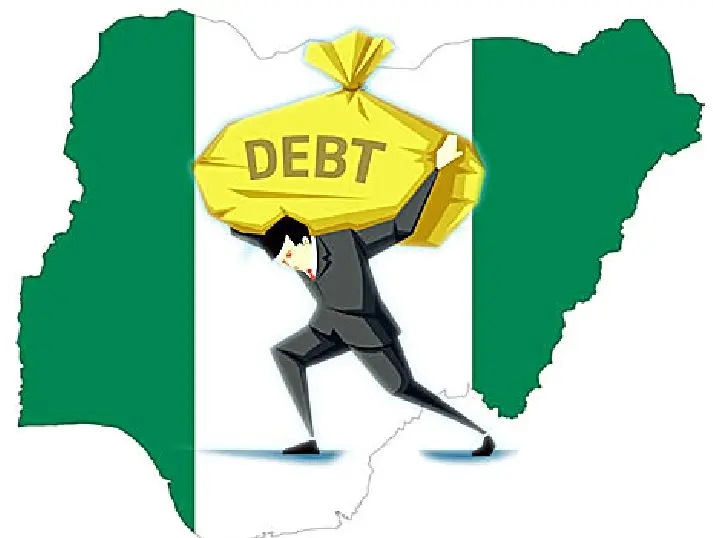
Nigeria’s Public Debt Hits N97.341 Trillion, Fueling Concerns Over Debt Sustainability

0

Nigeria’s public debt stock as of December 31, 2023, has reached a staggering N97.341 trillion (equivalent to 108.229 billion dollars), as revealed by data released by the Debt Management Office (DMO) in Abuja on Friday.

The DMO disclosed that this amount encompasses both domestic and external debt stocks of the federal government, the 36 state governments, and the Federal Capital Territory (FCT). Notably, there has been a significant increase of N9.43 trillion compared to the figures reported in the third quarter of 2023.

Explaining the surge, the DMO attributed it primarily to fresh domestic borrowing by the federal government aimed at financing the deficit in the 2024 budget, coupled with disbursements from multilateral and bilateral lenders.

“Total domestic debt stood at N59.12 trillion, representing 61 percent of the total public debt stock, while external debt amounted to N38.22 trillion, constituting the remaining 39 percent,” stated the DMO.

Furthermore, the DMO highlighted that Nigeria’s external debt composition is skewed towards loans from multilateral and bilateral sources, aligning with the country’s debt management strategy. Multilateral loans accounted for 49.77 percent, and bilateral loans constituted 16.02 percent of the external debt stock.

“This equates to a total of 63.79 percent, primarily concessional and semi-concessional loans. While the DMO continues to implement best practices in public debt management, the recent and ongoing revenue enhancement efforts by the authorities will bolster debt sustainability,” The DMO said.

The rising debt profile is spurred by certain states’ disproportionately high levels of public debt. Lagos, Delta, and Ogun states stand out with the highest debt amounts, while Ebonyi, Kebbi, and Jigawa recorded the lowest debt stock.

With the public debt stock at N97.341 trillion, the individual debt burden borne by Nigerians is estimated at a debt stock per capita of N446,000. This is in consideration of Nigeria’s estimated population of 218 million people, according to World Bank Open Data.

Concerns have continued to grow about Nigeria’s rising debt portfolio, especially as it significantly gulps the nation’s revenue generation. The federal government said it plans to allocate a substantial N8.25 trillion for debt servicing in 2024. This amounts to approximately 45 percent of the projected revenue and 29 percent of the anticipated expenditure for the fiscal year, fuelling concerns over the sustainability of Nigeria’s debt trajectory.

The potential impacts of such high public debt on Nigeria’s economy are manifold; with economists warning that it can exert upward pressure on interest rates, crowd out private sector investment, and constrain government expenditure on critical sectors such as healthcare, education, and infrastructure. Furthermore, they note that excessive debt servicing obligations divert resources away from productive investments, hindering economic growth and development.

Against this backdrop, stakeholders are calling for prudent fiscal management and strategies to enhance revenue generation to mitigate the risk of debt distress. They note the urgent need for prudent fiscal management, enhanced revenue generation, and effective debt management strategies to mitigate the risks of debt distress and safeguard Nigeria’s economic future.

Many warn that failure to address these challenges could exacerbate vulnerabilities, undermine macroeconomic stability, and impede efforts to achieve sustainable development goals.

Peter Schiff expressed concerns over Michael Saylor’s approach to Bitcoin investment

0

In a recent discourse on financial strategies, economist Peter Schiff expressed concerns over Michael Saylor’s approach to Bitcoin investment. Schiff, known for his critical views on cryptocurrency, argued that Saylor’s aggressive accumulation of Bitcoin could be fraught with high risk and might lead to adverse outcomes for his company. Schiff’s skepticism stems from the volatile nature of digital currencies and the potential for significant financial loss.

Saylor’s aggressive accumulation of Bitcoin could be fraught with high risk due to several factors. Firstly, the volatile nature of cryptocurrency markets means that the value of Bitcoin can fluctuate wildly, which could lead to significant financial losses. Additionally, regulatory uncertainties surrounding cryptocurrencies could pose legal and operational risks.

Furthermore, the concentration of a large portion of assets in Bitcoin may not align with traditional investment diversification principles, potentially increasing financial vulnerability. It’s crucial for investors to conduct thorough research and consider risk management strategies when dealing with cryptocurrencies.

Bitcoin, the pioneering cryptocurrency, is known for its high volatility. This characteristic can cause the value of Bitcoin to change dramatically in a very short period of time. Such unpredictability can significantly impact investors, potentially leading to substantial financial losses. It is crucial for individuals considering investing in Bitcoin to be aware of this risk and to have a strategy in place to mitigate potential losses.

Bitcoin’s volatility is primarily due to its relatively small market size, which means that it doesn’t take significant amounts of money to move the market price up or down. This is compounded by the fact that the cryptocurrency market is still very young and does not have the stability that comes with a mature market. Other factors contributing to Bitcoin’s volatility include varying liquidity, differing perceptions of its intrinsic value, market sentiment, and news of significant events such as regulatory updates or technological breakthroughs.

Market sentiment plays a significant role in the volatility of Bitcoin. It refers to the overall attitude of investors towards a particular market or asset. In the case of Bitcoin, positive news or developments can lead to a surge in buying activity, driving up prices rapidly. Conversely, negative news can cause panic selling, leading to a sharp decline in prices. Since the cryptocurrency market is highly speculative, it is particularly sensitive to changes in sentiment, which can be influenced by a wide range of factors including media coverage, investor behavior, and broader economic events.

Examples of positive news for Bitcoin that can affect market sentiment include announcements of large-scale institutional investments, countries adopting Bitcoin as legal tender, technological advancements in blockchain, and successful integration of Bitcoin into payment systems of major retailers. Additionally, favorable regulatory developments or endorsements from influential figures can also lead to increased investor confidence and a rise in Bitcoin’s value.

When Bitcoin is adopted as legal tender, it means that it is recognized by a country’s law as a valid form of payment for goods and services. It becomes an official currency alongside or instead of the traditional currency. This allows residents to use Bitcoin for everyday transactions such as buying groceries, paying bills, and taxes. The adoption also typically requires businesses to accept Bitcoin as payment, which can further integrate it into the economy and potentially stabilize its value over time.

S&P 500 Giants Lead Charge

0

The financial landscape is witnessing a significant upswing, buoyed by a dovish Federal Reserve and a burgeoning AI sector that continues to exceed expectations. This potent combination has been a driving force behind the sustained rally in the stock market, capturing the attention of investors and analysts alike.

As the market navigates through tumultuous economic waters, a handful of S&P 500 giants are charting a course towards growth, standing out as beacons of resilience. These industry leaders are not just surviving; they’re thriving, edging ever closer to pivotal buy points that signal strength and potential for long-term investment.

Leading the pack, we see a diverse array of sectors represented, from tech titans harnessing innovation to consumer staples providing essential goods. Each company showcases robust fundamentals and strategic market positioning, making them attractive to investors looking for stability in uncertain times.

These sectors include technology, where innovation is the currency of growth; consumer staples, providing indispensable goods that anchor consumer demand; healthcare, delivering essential services and pioneering advancements; financials, underpinning economic transactions; and industrials, driving infrastructure and growth.

These industry behemoths are not merely weathering market fluctuations; they are actively leveraging their sector-specific advantages to edge closer to critical buy points. This strategic positioning underscores their resilience and potential as investment prospects.

Investors are keenly observing these stocks as they approach their buy points, recognizing the unique blend of sector strength and favorable market indicators. The alignment of robust earnings with positive technical analysis paints a promising picture for those ready to invest.

The representation of these diverse sectors within the S&P 500 giants offers investors a spectrum of opportunities. As these leading stocks near buy points, it’s an invitation for investors to engage with the market’s potential, backed by the solidity of sector leaders.

In the current financial climate, marked by a dovish Federal Reserve and an AI-driven market surge, investors are keenly observing stocks that are approaching their buy points. While specific names of the three stocks nearing these pivotal positions have been mentioned in various financial news outlets, it is crucial for investors to conduct thorough research or consult financial advisors to identify these opportunities accurately.

The stock market’s momentum, fueled by strategic economic policies and technological growth, presents a dynamic landscape where timely and informed decisions are paramount. As such, identifying the right stocks near buy points requires a deep dive into market analysis and trends.

As these stocks near their buy points, savvy investors are taking notice. The convergence of favorable technical indicators with solid earnings reports creates a compelling narrative for potential growth. It’s not just about riding the wave; it’s about identifying the right moment to dive in.

For those poised to capitalize on these opportunities, the rewards could be significant. These S&P 500 giants offer a blend of security and upside that is hard to find in today’s volatile market landscape. As they approach their buy points, the question remains: who will take the leap?