


Amazing People, thank you for co-learning with us, to master the mechanics of the market system. Knowledge brings the liberation of the mind, and I am confident that we delivered as promised, through our world-class program in Tekedia Mini-MBA. #Win the future. You are #ready2lead the world. Congratulations.
Walmart Becomes The Latest Company to Stop Advertising on X, After Musk Outburst at Advertisers

American multinational retail corporation, Walmart, has become the latest company to stop advertising on X (formerly Twitter).
Announcing this move on Friday, a spokesperson at the company said,
“We aren’t advertising on X, as we have found other platforms to better reach our customers”.
Speaking on Walmart’s decision, the head of operations at X, Joe Benarroch told CNN via a statement that disclosed that brands such as Wlamart and several others who advertise on the micro-blogging platform have continued to garner massive impressions and followers.
In his words,
“Walmart has a wonderful community on X, and with half a billion people on X, every year the platform experienced 15 billion impressions about the holidays alone with more than 50 percent of X users doing most or all of their shopping online”.
Benarroch further added that Walmart’s decision to halt its ads on X, is not a direct result of Musk’s recent outburst, noting that the giant retail company is still active on the platform.
Walmart joins the likes of other big brands such as IBM, Disney, Apple, and Amazon, amongst others, that have paused their advertisement on X.
Recall that earlier this week, while speaking at at the DealBook Summit in New York, X owner, Elon Musk hit hard at brands that have paused advertising on the platform, accusing them of blackmail.
Musk stated that if anybody is going to blackmail him with advertising, they should blackmail him with money instead. He further added that he would not hesitate to call out brands that want to kill the company, for the public to hold them responsible.
While defending his speech, X CEO, Linda Yaccarino said that Musk gave a candid interview at DealBook, noting that X is enabling information independence that is comfortable for some people.
In her words,
“Today Elon Musk gave a wide-ranging and candid interview at Dealbook 2023. He also offered an apology, an explanation, and an explicit point of view about our position. X is enabling information independence that’s uncomfortable for some people. We’re a platform that allows people to make their own decisions.
“And here’s my perspective when it comes to advertising: X is standing at a unique and amazing intersection of Free Speech and Main Street, and the X community is powerful and is here to welcome you. To our partners who believe in our meaningful work. Thank You”
The exit of advertisers on X began when Musk promoted and endorsed anti-Semitic and racist statements on the platform. Things started to go bad when a report from liberal watchdog group Media Matters said that several ads had appeared next to antisemitic posts.
It got worse when Musk commented, “the actual truth” on a post that claimed that Jewish people have a “dialectical hatred” of white people. His inflammatory posts on the microblogging platform, among other things have led to the exit of about 200 big advertisers on the platform.
American journalists Casey Newton, said that every day more brands are waking up to the reality that X is a cesspool. He added that the global town square is now dispersed across many different platforms and increasingly most conversations are taking place elsewhere.
According to reports, if advertisers continue to pause their ads on X, it could cost the company up to $75 million this quarter, which could spell disaster for the company. Musk acknowledged that an extended boycott could bankrupt X, stating that the public would blame the brands for the collapse, rather than put the blame on him.
Meanwhile, X seems to have a new survival plan to stay afloat as advertising revenue continues to decline. A report by the Financial Times disclosed that X is ramping up a new advertising strategy.
As brands continue to exit the platform, the company is looking to turn to small and medium-sized advertisers to generate revenue.
A spokesperson at X said,
“Small and medium businesses are a very significant engine that we have definitely underplayed for a long time”. The spokesperson added that roping in small and medium brands was “always part of the plan” and the company will now go even further with it.
Bitcoin Spot ETF will “unleash tens of thousands of Wall Street Salesmen” – Anthony Scaramucci

Anthony Scaramucci, the founder of SkyBridge Capital and a former White House communications director, has expressed his bullish views on Bitcoin in a recent interview with CNBC. He said that the approval of a Bitcoin spot ETF by the U.S. Securities and Exchange Commission (SEC) will “unleash tens of thousands of Wall Street salesmen” who will promote the cryptocurrency to their clients.
Scaramucci argued that Bitcoin is a superior store of value than gold or fiat currencies, and that it has the potential to become a global reserve asset. He said that the current market capitalization of Bitcoin, which is around $1.2 trillion, is only a fraction of the total value of gold, which is estimated at $10 trillion. He also said that Bitcoin has a fixed supply of 21 million coins, unlike fiat currencies that can be printed endlessly by central banks.
He added that the launch of a Bitcoin spot ETF, which would allow investors to buy and hold the actual Bitcoin rather than a derivative product, would increase the demand and liquidity of the cryptocurrency. He said that this would attract more institutional and retail investors, as well as hedge funds and family offices, to invest in Bitcoin. He estimated that “tens of billions” of dollars would flow into Bitcoin as a result of the spot ETF approval.
However, the SEC has repeatedly delayed or rejected applications for a spot ETF, citing concerns over market manipulation, fraud and investor protection. The latest deadline for a decision on the VanEck Bitcoin Trust, one of the most prominent proposals, is November 14, 2023. If the SEC does not approve it by then, it will have to either deny it or initiate a rule change process that could take several months.
So, what would happen to the price of bitcoin if the spot ETF were not approved? There are different scenarios and opinions on this question, but here are some possible outcomes:
The price drops temporarily but recovers quickly. Some analysts believe that the market has already priced in the low probability of a spot ETF approval, and that a rejection would not have a significant impact on the long-term trend of bitcoin. They argue that there are other positive factors supporting the demand and adoption of bitcoin, such as institutional interest, innovation and regulation in other jurisdictions, and the growth of the decentralized finance (DeFi) sector. Moreover, they point out that there are already other types of bitcoin-related products available to investors, such as futures-based ETFs, trusts and funds.
The price drops significantly and stays low for a while. Some analysts believe that a spot ETF rejection would be a major blow to the credibility and confidence of the bitcoin market, and that it would trigger a sell-off among investors who were hoping for a positive outcome.
They argue that a spot ETF would have been a game-changer for the industry, as it would have opened the door to a massive influx of capital from retail and institutional investors who are currently deterred by the complexity and risk of buying and storing bitcoin directly. Moreover, they point out that the lack of a spot ETF could widen the gap between bitcoin and other asset classes, such as stocks and bonds, which have more regulated and diversified investment options.
The price does not change much or increases slightly. Some analysts believe that a spot ETF approval or rejection would not have a major impact on the price of bitcoin, as it is not the main driver of its value. They argue that bitcoin is primarily influenced by its own supply and demand dynamics, which are determined by factors such as its scarcity, security, innovation and network effects.
Moreover, they point out that bitcoin has shown resilience and growth in the past despite regulatory uncertainty and setbacks, and that it has proven to be uncorrelated with other asset classes, making it an attractive hedge against inflation and market volatility.
Scaramucci also commented on the recent volatility of Bitcoin, which dropped from an all-time high of over $69,000 to below $55,000 in a matter of days. He said that this was normal for a new and emerging asset class, and that he was not worried about the short-term price movements. He said that he was focused on the long-term potential of Bitcoin, and that he believed that it would reach $100,000 by the end of 2024.
BlackRock vs SEC as Frank Templeton files an Updated Spot ETF BTC Application

BlackRock, the world’s largest asset manager, has not given up on its ambition to launch a spot Bitcoin?ETF in the US. The company has been in talks with the Securities and Exchange Commission (SEC) to address the regulator’s concerns and demonstrate the feasibility of such a product.
A spot Bitcoin?ETF would track the price of the underlying cryptocurrency directly, rather than relying on futures contracts or other derivatives. This would provide investors with a more transparent and cost-effective way to gain exposure to the digital asset class.
However, the SEC has been reluctant to approve any spot Bitcoin?ETF proposals, citing issues such as market manipulation, custody, liquidity, and investor protection. The regulator has repeatedly delayed or rejected applications from various firms, including VanEck, Valkyrie, and WisdomTree.
BlackRock, which already offers two funds that invest in Bitcoin futures, believes that it can overcome these challenges and convince the SEC to greenlight its spot Bitcoin?ETF. The company has been working closely with the regulator to address its questions and provide evidence of the maturity and robustness of the Bitcoin market.
According to sources familiar with the matter, BlackRock has presented data and analysis on various aspects of the Bitcoin ecosystem, such as price discovery, volatility, arbitrage, trading volume, and custody solutions. The company has also highlighted the benefits of a spot Bitcoin?ETF for investors, such as diversification, hedging, and innovation.
BlackRock is confident that its spot Bitcoin?ETF would meet the SEC’s standards and expectations and hopes to receive a positive response from the regulator soon. The company believes that a spot Bitcoin?ETF would be a game-changer for the crypto industry and would attract significant inflows from institutional and retail investors alike.
Franklin Templeton submitted an update for its spot Bitcoin ETF application.
Franklin Templeton, one of the world’s largest asset managers, has filed an amendment to its Bitcoin spot ETF application with the US Securities and Exchange Commission (SEC). The firm is seeking to launch the Franklin Templeton Bitcoin ETF, which would track the performance of Bitcoin based on the prices from selected spot exchanges. The ETF would not use derivatives or futures contracts, but rather hold Bitcoin directly in a custodial arrangement with NYDIG Trust Company.

The amendment, submitted on November 29, 2023, provides additional details on the proposed ETF’s investment objective, strategy, risks, fees, and valuation methods. The document also outlines how the ETF would comply with the SEC’s requirements for investor protection, liquidity, transparency, and market integrity. According to the filing, the ETF would have a total annual operating expense ratio of 0.75%, which includes a management fee of 0.50% and other expenses of 0.25%. The ETF would trade on the NYSE Arca exchange under the ticker symbol FTBT.
The Franklin Templeton Bitcoin ETF is one of several spot Bitcoin ETF applications that are currently under review by the SEC. The regulator has not yet approved any such products in the US, despite growing demand from investors and increasing competition from other jurisdictions that have already authorized Bitcoin ETFs. The SEC has expressed concerns about the potential for fraud, manipulation, and volatility in the Bitcoin market, as well as the lack of reliable and consistent pricing data.
Franklin Templeton believes that its Bitcoin spot ETF would address these issues by using a robust methodology to select the spot exchanges that would provide the reference price for the ETF. The firm also claims that its custodial arrangement with NYDIG would ensure the security and safety of the Bitcoin holdings, as well as facilitate the creation and redemption of ETF shares.
Moreover, the firm argues that its Bitcoin spot ETF would offer investors a convenient and cost-effective way to gain exposure to Bitcoin without having to deal with the technical challenges of buying, storing, and transferring the digital asset.
The SEC has not yet announced a decision date for the Franklin Templeton Bitcoin ETF application, but it is expected to do so within 45 days of receiving the amendment. If approved, the Franklin Templeton Bitcoin ETF would be the first spot Bitcoin ETF in the US, and a major milestone for the crypto industry.
Unlocking Economic Potential: Examining the Effects of the African Continental Free Trade Area on Local Trade – An Overview
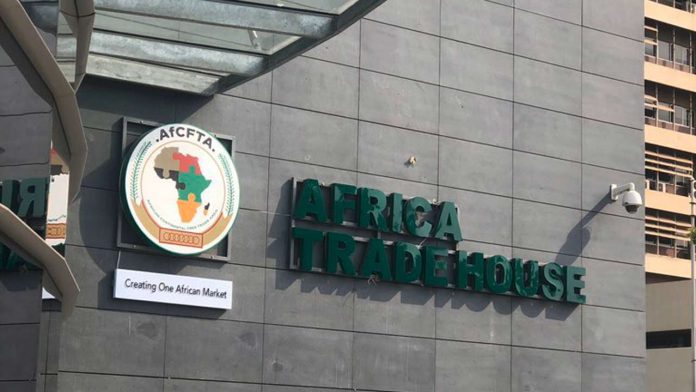
A revolutionary project with the potential to completely change the continent’s economic environment is the African Continental Free Trade Area (AfCFTA). In order to promote intra-African commerce and unleash hitherto unheard-of economic potential, the AfCFTA was introduced in 2018 with the goal of establishing a single market for products and services amongst 54 African nations. In this overview, I examine the complex relationships between the AfCFTA and local trade, as well as the ramifications for African firms, economies, and populations.
Brief Historical Context
The historical background of intra-African trade reveals a scene characterized by enduring obstacles, particularly trade limitations, protectionist policies, and the long-lasting effects of colonial legacies. These obstacles have made it more difficult for African countries to cooperate economically over time. Thus, the African Continental Free Trade Area (AfCFTA) appears to be a daring endeavor meant to overcome these enduring obstacles and promote a more integrated and interconnected African economy.
Trade restrictions have historically acted as strong obstacles that have restricted the movement of goods and services amongst African countries. Protectionist policies, driven by national interests, made matters worse and created a climate in which economic cooperation between countries was fraught with difficulties. Furthermore, trade dynamics have been impacted by the long-lasting effects of colonialism, which have shaped economic relationships in ways that frequently exacerbate inequality and obstruct peaceful collaboration.
In essence, the AfCFTA is an attempt to transform in order to overcome these historical limitations. Its goal is to establish a platform where countries can conduct business more easily, free from the constraints of protectionism and historical divisions, by advocating for a continental free trade area. The goal of this massive project is to promote unity among African countries, economic growth, and cooperation.
The AfCFTA’s development is evidence of the commitment to changing the continent’s economic environment. The initiative recognizes the significance of overcoming past challenges and looks forward to a time when intra-African trade is not only possible but flourishing. By pursuing this goal, the AfCFTA not only attends to economic concerns but also advances the more general goal of promoting an integrated and inter-connected Africa, where shared prosperity becomes a real possibility.
Economic Integration and Market Access:
The African Continental Free Trade Area (AfCFTA) is based on a commitment to removing obstacles that have long impeded market access and economic integration throughout the continent. By removing tariffs and trade restrictions, this ambitious program aims to build a single and seamless market, thereby fostering an atmosphere that encourages increasing intra-African commerce.
1. Trade Facilitation and Tariff Elimination: The goal of the AfCFTA is to gradually remove tariffs on 90% of goods exchanged amongst participating nations. By strategically lowering tariffs, products become more affordable and more widely available to a wider range of consumers. In addition, the removal of non-tariff trade obstacles, such onerous customs processes and bureaucratic red tape, simplifies trade, lowers transaction costs, and boosts total productivity.
2. Supporting SMEs (Small and Medium-sized Enterprises): Many African economies are built on the backs of small and medium-sized businesses. With improved access to markets around the continent, the AfCFTA offers small businesses a singular chance to broaden their horizons. Lower trade barriers allow SMEs to more easily handle regulatory complexity, which encourages entrepreneurship and creates a dynamic business climate.
3. Encouraging Comparative Advantage and Specialization: AfCFTA-driven economic integration pushes nations to concentrate on sectors in which they have a comparative advantage. Because countries can allocate resources more strategically as a result of this specialization, productivity and efficiency are increased. Member nations can create sectors that make a substantial contribution to the continent’s overall economic prosperity by highlighting their advantages and areas of expertise.
4. Enabling Foreign Direct Investment: The continent’s investment climate becomes more alluring as trade barriers are removed. Foreign investors are likely to be drawn to the enormous opportunities presented by a unified African market as regional markets become more accessible. This flood of foreign direct investment has the potential to accelerate economic expansion, promote the creation of jobs, and advance important industries.
5. Integration of the Supply Chain: The integration of supply chains among African countries is encouraged by the AfCFTA. This integration lessens reliance on outside markets while also ensuring a more effective flow of goods. In order to promote resilience and adaptability in the face of uncertainty in the global economy, member nations can work together to build strong supply chains that span from production to distribution.
6. Harmonizing Trade Policies: Harmonizing trade laws and regulations is necessary to achieve full economic integration. The AfCFTA acknowledges the requirement for consistency in customs, standards, and certification policies. Member states can facilitate smoother cross-border trade and lay the groundwork for a more cooperative and interconnected economic community by working toward a common regulatory framework.
Essentially, the AfCFTA’s improved market access and economic integration encourages economic growth while laying the foundation for an increasingly integrated and resilient African economy. The potential for a vibrant and united market is becoming more and more apparent as member nations cooperate and overcome obstacles, indicating a new era of economic prosperity for the continent.
Employment Generation and Economic Development
The potential for economic growth and the creation of jobs increases as trade barriers decline. By promoting efficiency and specialization, the AfCFTA allows nations to concentrate on sectors in which they have a comparative advantage. This promotes overall economic development and poverty reduction by increasing productivity and opening up job opportunities.
Development of Infrastructure: Strong infrastructure is necessary for the AfCFTA to realize its full potential. Enhancing communication, logistics, and transportation networks becomes essential to enable seamless cross-border trade in goods and services. This necessitates cooperative efforts between member states to finance infrastructure improvements and investments in order to guarantee the free trade area’s success.
Challenges and Solutions:
Despite the enormous promises made by the AfCFTA, difficulties are still to come. Careful thought must be given to matters like political stability, non-tariff trade barriers, and regulatory harmonization. In order to ensure the sustainable and equitable growth of the African economy, we examine potential remedies and legislative actions in this section.
Societal Impacts: Beyond just economic benefits, the AfCFTA has the potential to revolutionize society. African society becomes more interconnected as a result of increased cross-border interactions that promote cultural exchange. Better economic circumstances also improve healthcare, education, and the general standard of living for people living on the continent.
In summary:
To sum this piece up, the African Continental Free Trade Area is a ray of hope for a wealthier and more integrated Africa. Through the facilitation of job creation, economic potential unlocking, and social development promotion, the AfCFTA steers the world towards a more promising future. The effect of AfCFTA on local trade is expected to be a pivotal point in the continent’s economic history, provided member states cooperate to overcome obstacles and seize opportunities.