DD
MM
YYYY

PAGES

DD
MM
YYYY

spot_img

PAGES

Home Blog Page 3602

Embracing Cryptocurrencies in Slot Machines: Unlocking the Future of Casino Gaming

0

The landscape of casino gaming has undergone a significant transformation in recent years thanks to the incorporation of cryptocurrencies into slot machines. With the increasing popularity of digital currencies such as Bitcoin, Ethereum, and Litecoin, online casinos are now adopting this innovative payment method to provide players with an effortless and safe way to enjoy their preferred slot games. Join us as we delve into the realm of cryptocurrency-driven gambling and discover how it is reshaping the slot machine experience.

Improved Confidentiality and Safety Features

With digital currencies, players have unmatched safety and privacy provisions while depositing money in their casino accounts. Cryptocurrencies allow for transactions that do not reveal the identity of the buyer and that do not require any third-party payment processors gathering customers’ data, thus reducing the risk of identity theft or financial fraud. Moreover, every transaction is encrypted safely by means of blockchain technology and recorded on decentralized ledger ensuring visibility and non-alteration – t is widely used in the gate of olympus slot, for example.

Instant Transactions

The speed at which cryptocurrency transactions can be effected is perhaps one of the biggest pros of using them in slot machines. Conventional banking options may take days for processing but digital cash transfers are almost always instantaneous allowing gamblers to put their money where their mouse is without any delays. This quick and easy process increases the fun whilst playing as it means that gamers can get to their money straight away.

Lower Charges on Transactions

In general, cryptocurrency transactions come with lower fees than those charged by traditional banks or money transmitters. International transactions through conventional payment processors usually attract significant transaction fees and processing costs. On the other hand, digital currencies have very low transaction fees, which make them an appealing choice for those who want to stretch their gaming money further. Reduced fee structures mean that players could afford extra bets on their popular slots and this might lead to higher prizes too!

Ease of Use and Worldwide Coverage

Cryptocurrency use in online casinos has expanded their reach worldwide by overcoming geographical and national barriers. Fiat currencies are not like cryptos in that the former have many kinds of controls, as well as charges for changing one currency into another, but the latter can be used worldwide and by anyone. This global availability creates a chance for more people at different places to engage in casino games while still having all the comfort they need in their houses.

Provably Fair Gaming

Cryptocurrency-based slot machines often implement provably fair algorithms, ensuring transparency and fairness in gameplay. These programs use special encryption-based techniques that make every spin’s outcome random and thus prevent any bias which could compromise the integrity of such games. By looking through a blockchain-powered ledger recording every transaction and result immediately, gamblers will know if they played fair games or not.

Conclusion

To summarize, the incorporation of cryptocurrencies into slot machines is a major breakthrough for the advancement of casino gaming. By providing improved security, immediate transactions, reduced charges, worldwide availability, and verifiably fair gameplay, digital currencies offer numerous advantages to both players and operators. As the demand for virtual money keeps escalating, it is anticipated that an increasing number of internet-based casinos will embrace cryptocurrency payments, thereby transforming the slot game experience.

Acting CEO of First Bank of Nigeria Is Olusegun Alebiosu

0

Join me to congratulate the Acting CEO of  First Bank, Olusegun Alebiosu. Mr. Alebiosu will lead one of the most important Nigerian institutions. Before Nigeria, there was the First Bank of Nigeria, a 130-year heritage. He is going to work to secure my retirement as I am well invested in FirstBank’s parent company as a shareholder. Yes, that Naija Big Offer!

As a commentator, this is a rare appointment making Alebiosu ascension very unique, showcasing that risk and compliance management is moving to the top echelon in Nigerian banking. Nigerian banks rarely elevate Chief Risk/Compliance Officers to lead the institutions. The operations, marketing, investment/corporate finance chiefs run those shows. Things are changing.

That said, we can extrapolate that it is possible that the last CEO left due to risk/compliance related matters; I had expressed my shock that he resigned like a janitor, since you do not expect bank chiefs to come to work, resign, and stop work that same day. Whatever might have happened, if any, Mr Olusegun Alebiosu, as a risk zen-master, needs to fix the matter.

It looks like this is factual. Yes, the CEO of FirstBank of Nigeria has resigned in the most intriguing way considering that his contract expires at the end of the year, Dec 31, 2024. I just hope it is well with him and his family as bank leaders do not resign like janitors with no notice! But if it is for another career opportunity, good luck to him.

I wish the elephant fine and Olusegun Alebiosu the best of luck. He just elevated risk/control/compliance profession in Nigeria.

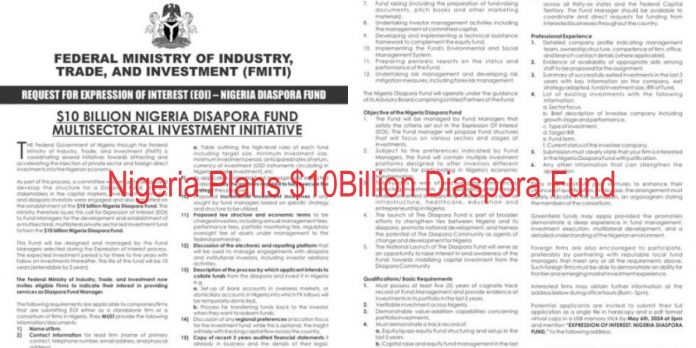
Nigerian Government Unveils Plans for $10 Billion Diaspora Fund to Spur Investment

4

In a bid to galvanize investment from Nigerian citizens living abroad, the federal government has announced its intention to establish a $10 billion diaspora fund. 

Doris Uzoka-Anite, the Minister of Industry, Trade, and Investment, disclosed this initiative via a post on X, where she outlined the government’s call for bids from asset managers to set up the fund.

The primary aim of the fund, as noted by Uzoka-Anite, is to provide support to critical sectors such as infrastructure, healthcare, and education, ultimately driving economic growth. She stressed that the fund will be overseen by an advisory board comprising limited partners, inviting eligible firms to express their interest in managing the fund.

“This fund is part of broader efforts to strengthen ties between Nigeria and its diaspora, promoting national development,” stated Uzoka-Anite, noting the pivotal role of diaspora engagement in advancing the nation’s socio-economic agenda.

She added: “Subject to the preferences indicated by fund managers, the fund will contain multiple investment platforms designed to offer investors different mechanisms for participating in Nigeria’s economic transformation.

“This fund is a way of encouraging remittances, attracting investments, and facilitating philanthropic endeavors aimed at supporting various sectors such as infrastructure, healthcare, education, and entrepreneurship in Nigeria.

“The launch of the diaspora fund will serve as an opportunity to raise interest in and awareness of the fund: towards mobilizing capital investment from the diaspora community.”

Elaborating on the objectives of the Nigeria Diaspora Fund, Uzoka-Anite explained that it will be managed by fund managers meeting specific criteria, focusing on various sectors and stages of investments. 

“The fund will be managed by Fund Managers that satisfy the criteria set out in the Expression Of Interest (EOI). The Fund manager will propose Fund structures that will focus on various sectors and stages of investments,” she said.

The fund is structured to offer multiple investment platforms, tailored to the preferences of diaspora investors, thereby facilitating their contributions to Nigeria’s economic transformation.

Furthermore, Uzoka-Anite outlined the investment parameters, highlighting that the fund will have an investment period of three to five years and a lifespan of ten years, extendable by two years. This framework provides diaspora investors with a substantial window to contribute to Nigeria’s socio-economic progress through sustained investment in key sectors.

The proposed asset offerings for the diaspora fund may include infrastructure, credit, and venture capital funds, presenting a diverse array of investment opportunities for diaspora investors. Interested firms, including joint ventures and greenfield funds, are encouraged to submit their applications by May 6 to participate in managing the fund.

“The launch of the diaspora fund is poised to raise awareness and mobilize capital investment from the diaspora community, marking a significant milestone in Nigeria’s journey towards sustainable economic prosperity,” she said.

This announcement aligns with the government’s broader strategy to leverage innovative financing mechanisms, including the issuance of domestic foreign currency-denominated bonds and a diaspora bond, aimed at boosting remittances and attracting investments from Nigerians in the diaspora. 

On April 3, the federal government announced its intention to commence issuing domestic foreign currency-denominated bonds starting from the second quarter (Q2) of 2024. Subsequently, on April 21, the federal government revealed plans to launch a diaspora bond as a means to enhance remittance inflows into the country.

Stanbic IBTC Holdings Profit Grew by 58% in Q1 2024, as Snap Doubles Digital Growth

0

Stanbic IBTC Holdings PLC, an integral entity within the financial landscape of Nigeria,  has announced its first quarter (Q1) earnings ended March 31, 2024.

The bank posted an increase of 58.13 percent from N28.86 billion reported in the first quarter (Q1) ended March 31, 2023. Also, it reported a pre-tax profit of N62.7 billion, representing a 73% year-on-year growth, compared to the N36.3 billion pre-tax profit posted in Q1 2023.

Stanbic Holdings’ major source of earnings is reported to have come from interest income, which saw the company post a net interest income of N76.8 billion, highlighting a 111.4% YoY growth of the N36.4 billion net interest income posted in Q1 2023. Like other financial institutions in Nigeria, Stanbic enjoyed significant earnings from increased interest rates in the country.

Check Out Stanbic IBTC Holdings Q1 2024 earnings report

– Net interest income: N76.9 billion, +111% YoY

– Non-interest revenue: N61.3 billion, +38% YoY

– Total income: N138.2 billion, +71% YoY

– Net impairment charge on financial assets: N7.1 billion, +117% YoY

– Income after credit impairment charges: N131.1 billion, +69% YoY

– Profit before tax: N62.7 billion, +73% YoY

– Profit for the period: N45.6 billion, +58% YOY

– Earnings per share: N3.45, +59.7% YoY

– Cash and cash equivalent at the end of the period: N1.44 trillion, +133% YoY

– Loans and advances: N2.2 trillion, +9% YTD,

– Total assets: N6.O trillion, +16% YTD

  • Net Cash flows from operating activities N791,606 million
  • Cash flows used in Operations N754,664
  • Increase in assets N197,781 million
  • Increase in deposits and other liabilities N559,748 million
  • Net Cash flows used in investing activities N50,580 million
  • Net Increase in cash and bank balances N983,006 million

Stanbic total assets for 2023 recorded a 70 per cent growth to N5.1 trillion, from the N3.0 trillion posted in FY 2022. This growth in asset was driven to a 69 per cent increase in the group’s loans and advances as well as the 108 percent growth in cash and cash equivalents.

The company showcased a remarkable financial first quarter performance ended March 2024. Through its remarkable growth over the years, the bank stands as a beacon of financial ingenuity and stability. Recall that in 2022, it was awarded the overall best bank in retail and SME segments.

Notably, Stanbic Holdings takes pride in its strategic investment and management of controlling shares across its ten direct subsidiaries.

These includes; Stanbic IBTC Bank Limited, Stanbic IBTC Pension Managers Limited, Stanbic IBTC Asset Management Limited, Stanbic IBTC Capital Limited, Stanbic IBTC Insurance Limited, Stanbic IBTC Stockbrokers Limited, Stanbic IBTC Ventures Limited, Stanbic IBTC Insurance Brokers Limited, Stanbic IBTC Trustees Limited, Zest Payment Limited (formerly Stanbic IBTC Financial Services Limited) and one indirect subsidiary, namely: Stanbic IBTC Nominees Limited.

Snap Q1 2024 Earnings Surpassed Analysts Earnings, Records Double-digit Growth

Meanwhile, American technology company Snap has reported its first quarter (Q1) earnings for 2024, surpassing analysts’ expectations, and also recorded a return to double-digit revenue growth.

The company recorded a first-quarter revenue of $1,195 million, compared to $989 million in the prior year, highlighting a 21% year-over-year increase. Meanwhile, LSEG expected $1.12 billion.

Speaking on the Q1 2024 earnings report, Snap CEO Evan Spiegel said,

“The value we provide our community and advertising partners has translated into improved financial performance. Our large, growing, and hard-to-reach community, brand-safe environment, and full-funnel advertising solutions have made us an increasingly important partner for businesses of all sizes”.

Snap Q1 2024 Financial Summary

•Net loss was $305 million, compared to $329 million in the prior year.

•Adjusted EBITDA was $46 million, compared to $1 million in the prior year.

• Operating cash flow was $88 million, compared to $151 million in the prior year.

• Free Cash Flow was $38 million, compared to $103 million in the prior year.

Snap has been working to rebuild its advertising business after the digital ad market significantly declined in 2022. In a bid to improve ads on the platform, the company implemented several measures.

For instance, it announced two new brand safety solutions for advertisers: a third-party measurement product in partnership with Integral Ad Science, a leading global media measurement and optimization platform, to provide advertisers with increased transparency across their Snapchat campaigns, and a first-party tool that allows advertisers greater control over where their ads appear.

The input on its ads business has begun to yield positive results after the company disclosed that revenue growth was primarily driven by improvements in its advertising platform, as well as demand for its direct-response advertising solutions. The company noted that the number of small and medium-sized advertisers on Snapchat increased 85% year-over-year.

Also, Snap disclosed that the overall time spent watching content globally grew year-over-year, driven primarily by increases in total time spent watching Spotlight and Creator Stories. It added that it has built more advanced ranking models over the past year that are driving improvements in content engagement.

The app’s daily users surged to 422 million in Q1 2024, an increase of 39 million, or 10% year-over-year. Snapchat+ subscribers also more than tripled year-over-year, surpassing 9 million subscribers in the quarter. The company, which laid off 10% of its workforce in February, now says it expects its headcount to “grow modestly as it moves through 2024.”

Notably, Snap plans to continue to invest in generative AI models for the creation of Lenses on the platform, noting that the number of ML and AI Lenses viewed by users increased by more than 50% year-over-year.

As it gears up for Q2, the company announced that it anticipates continued growth of its global community, with a focus on executing against its roadmap to deliver improvements to its DR advertising platform to drive improved results for its advertising partners and accelerate topline growth.

Snap says it expects a Q2 guidance range for revenue from $1,225 million to $1,255 million, implying year-over-year revenue growth of 15% to 18%.

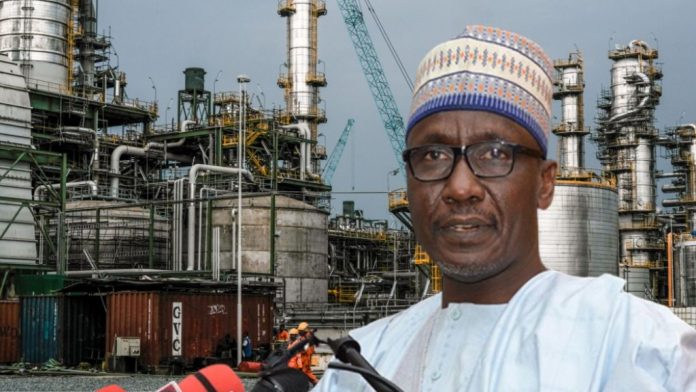
NNPCL and African Refinery Reach Agreement to Strengthen Local Refining Capacity of Port-Harcourt Refinery

0

The Nigerian National Petroleum Company Ltd (NNPCL) has made a fresh move in its quest to bolster Nigeria’s local refining capacity by entering into an agreement with the African Refinery. 

The agreement entails the co-location of a 100,000 barrels per day (bpd) refinery within the Port-Harcourt Refinery complex, heralding a transformative phase in the nation’s petroleum industry.

In a press statement disseminated on the company’s official platform, NNPCL disclosed details of the collaboration, noting its potential to revolutionize Nigeria’s energy sector. 

Once operational, the new refinery is slated to produce an array of essential petroleum products, including Premium Motor Spirit (PMS), Automotive Gas Oil (AGO), Aviation Turbine Kerosene (ATK), and Liquefied Petroleum Gas (LPG), catering to both local and international markets.

“The signing of the agreement is a significant step towards setting in motion the process of building a new refinery which, when fully operational, will supply PMS, AGO, ATK, LPG, and other petroleum products to the local and international markets and provide employment opportunities for Nigerians,” highlighted NNPCL in its press release.

This strategic collaboration is said to underscore Nigeria’s commitment to enhancing local refining capabilities and reducing dependence on imported petroleum products. Over the years, the administration of President Muhammadu Buhari has implemented various initiatives to address this issue, including granting licenses to modular refineries and providing substantial support to the 650,000 bpd Dangote Refinery in Lagos, in which NNPCL holds a 20% stake.

However, despite these efforts, challenges persist in the nation’s refining sector. The long-awaited rehabilitation of the Port Harcourt Oil Refinery, nearing completion according to NNPCL’s announcement last month, has encountered delays in commencing operations. 

While the mechanical completion of the PHRC was declared in December, the refinery has yet to commence operations, prompting scrutiny from the Senate Ad-Hoc Committee to Investigate the Turnaround Maintenance of Nigeria’s Refineries.

The committee said the Port Harcourt Refinery is not ready but will begin operation before the end of December.

In the face of these challenges, Nigeria continues to rely on imported petroleum products, further exacerbating concerns surrounding fuel subsidy removal and currency devaluation. 

Nevertheless, recent developments, such as the supply of diesel and aviation fuel from the Dangote Refinery, offer a glimmer of hope that Nigeria may soon achieve self-sufficiency in petroleum refining.

While the signing of the share subscription agreement between PHRC and African Refinery is remarkable in Nigeria’s journey towards energy independence, the question of ‘how much longer will it take?’ has been echoing – especially as fuel scarcity seems to be resurfacing in many cities across the country.

On Thursday, the president of the Trade Union Congress (TUC), Festus Osifo, said the federal government appears to be reneging on its assurance that the old Port Harcourt Refinery will commence operations by the first week of April.

The union has expressed optimism that the refinery would help curtail the high cost of petrol, by ensuring the availability of the products across the country.

“Although the inspection, both the contractors and those that are employees of company, they told us clearly that the refinery is going to come into fruition on the 1st week of April,” Osifo said.

“Today, we are approaching the first week of April this year. Now, we are approaching the end of April and the refinery production has not resumed in the old Port Harcourt Refinery.

“We wish tohereby, call on the federal government to do everything within its arsenal to ensure that the old Port Harcourt Refinery starts production immediately.

“You could go outside today and you could see queues everywhere in FCT and in some other neighbouring states. But we certainly believe that if our refineries were working optimally, today we would continue to have enough supply”.