DD
MM
YYYY

PAGES

DD
MM
YYYY

spot_img

PAGES

Home Blog Page 3607

Nigerian Senate Considers Diaspora Voting Bill Amidst Questions on Elections Credibility

0

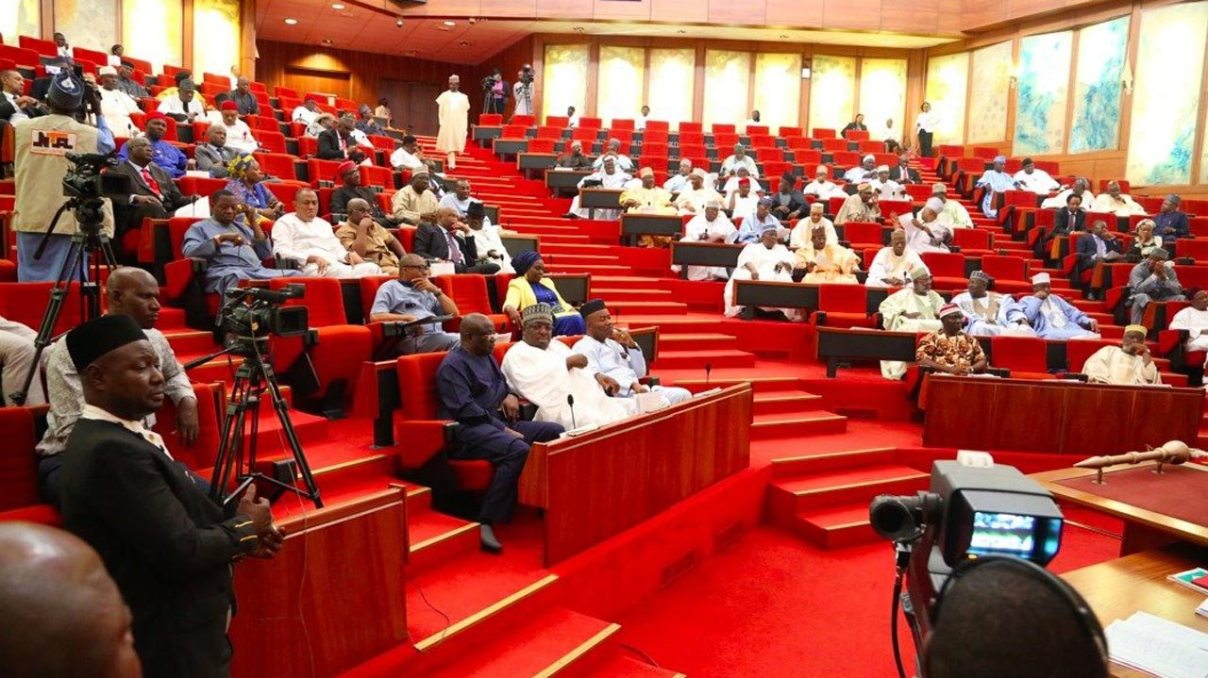
The Nigerian Senate is reportedly reconsidering a proposed bill that would grant Nigerian nationals living abroad the right to participate in the country’s general elections.

The move comes amid the deluge of controversial elections that have characterized the Nigerian electoral system for years, with no plan in place to address it.

Senate Leader Opeyemi Bamidele (APC-Ekiti) disclosed this during a virtual discussion hosted by the Engage Diaspora Foundation in collaboration with the Directorate of Diaspora and International Affairs.

The dialogue, themed “A Pivotal Step Toward Achieving Diaspora Voting Right,” focused on the bill that aims to amend the 1999 Constitution to enable Nigerians in other countries to vote in national elections.

Bamidele revealed that the bill had undergone its first reading and was scheduled for a second reading in the Senate.

The move comes after the 9th Senate rejected a similar diaspora voting bill in March 2022. The previous bill sought to extend voting rights to Nigerians outside the country, addressing the concerns and desires of the diaspora community.

In his presentation, Bamidele assured Nigerians in the diaspora that the 10th Senate would make additional efforts to pass the bill this time. He stated, “We will do our best to make sure that this time around, we achieve your desire in this regard.”

Nigeria has a significant diaspora population, with millions of Nigerians living abroad. The top ten countries with Nigerian populations include the USA, the UK, Germany, Italy, Canada, France, South Africa, Ireland, China, and the Netherlands.

Will their votes count?

However, questions have been raised about the credibility and impact of diaspora votes. The Nigerian electoral system has faced challenges such as malpractices and violence, leading to a lack of trust among the electorate. This is despite the 2022 Electoral Act, believed to be the game changer will bring sanity to the system.

In 2023 alone, a high number of electoral cases, including the presidential election, was decided by the court – a situation that pro-democracy advocates say thwarts the will of the people.

However, proponents of diaspora voting argue that extending the right to Nigerians abroad is essential for a more inclusive democratic process. Still, skeptics raise concerns about the effectiveness and impact of diaspora votes, considering the existing challenges within the Nigerian electoral system.

As the Senate revisits the diaspora voting bill, it remains to be seen how the concerns surrounding the credibility of elections will be addressed.
Shekel Mobility Secures $7M in Funding to Boost Vehicle Financing Efforts in Africa

0

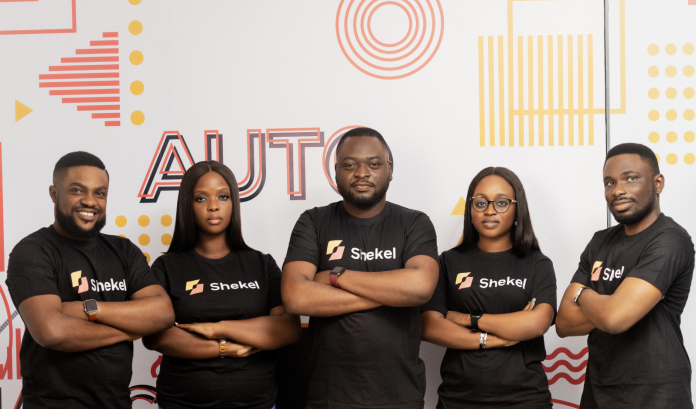
Shekel Mobility, a B2B mobility Fintech startup that caters to car dealerships in Africa, has secured $7 million in funding to boost vehicle financing efforts in Africa.

The funding round comprised several investors which include Y Combinator, Ventures Platform, Unpopular Ventures, Rebel Fund, Maiora Capital, PageOne Lab Inc, Heirloom VC, Phoenix Investment Club, Pioneer Ventures, and some other Angel investors.

Zenith Bank, VFD Microfinance Bank, and Fluna, amongst others, also provided the debt component.

With this new funding, Shekel Mobility will launch another product, Shekel Business to modernize the formal trading operations in the auto dealership sector.

The company’s Co-founder Benjamen Oladokun disclosed that the product is aimed towards digitalizing informal trading procedures within the auto dealership sector.

In his words,

“One of the fundamental things we’ve built is the ability to buy a car without collateral. We started out lending to dealers, but now we are looking to provide additional digital tools and physical infrastructure to reduce the cost of owning car dealerships”.

He further noted that the investment will significantly expand the company’s impact, adding that the funding round is geared towards assisting car dealers in Africa.

Founded by Benjamen Oladokun, Sanmi Olukanmi, and Valentine Mayaki, Shekel Mobility is a platform that offers a simpler, smarter, and faster way to launch and grow your car dealership locally or virtually.

The startup helps emerging businesses reach their full potential by digitizing their financial processes and providing them with access to credit. With the help of Shekel Mobility, business owners can sustain and scale their businesses.

Shekel aims to build the largest auto dealership ecosystem powering $10 billion by the year 2025. It is already financing over 1,000 car dealers in its network, and also helps to facilitate car dealers in discovering, financing, and selling cars within the African used car market. Auto dealers are the most critical stakeholders in the automobile value chain. Yet, they have been neglected up until now.

Since its launch, the Y Combinator-backed startup has facilitated transactions exceeding $56 million and has contributed to the expansion of more than 1,400 auto dealerships by enhancing their inventories and facilitating sales across 7,000 cars.

According to company data, Shekel Mobility dealers have been able to triple their sales so far by growing their inventory through access to affordable financing.

At Shekel Mobility, the company is in a mission to help auto dealerships realize their full market potential by providing them with the tools and resources they require to grow sustainably and optimally.

It also empowers businesses by providing financial and management services like credit facilities to dealers, enabling secure cross-border transactions and connections, and automating business operations while ensuring an ecosystem built with end-to-end security.

Labor Unions, NLC and TUC, Order A Nationwide Strike, Despite Restraining Court Order in Nigeria

0

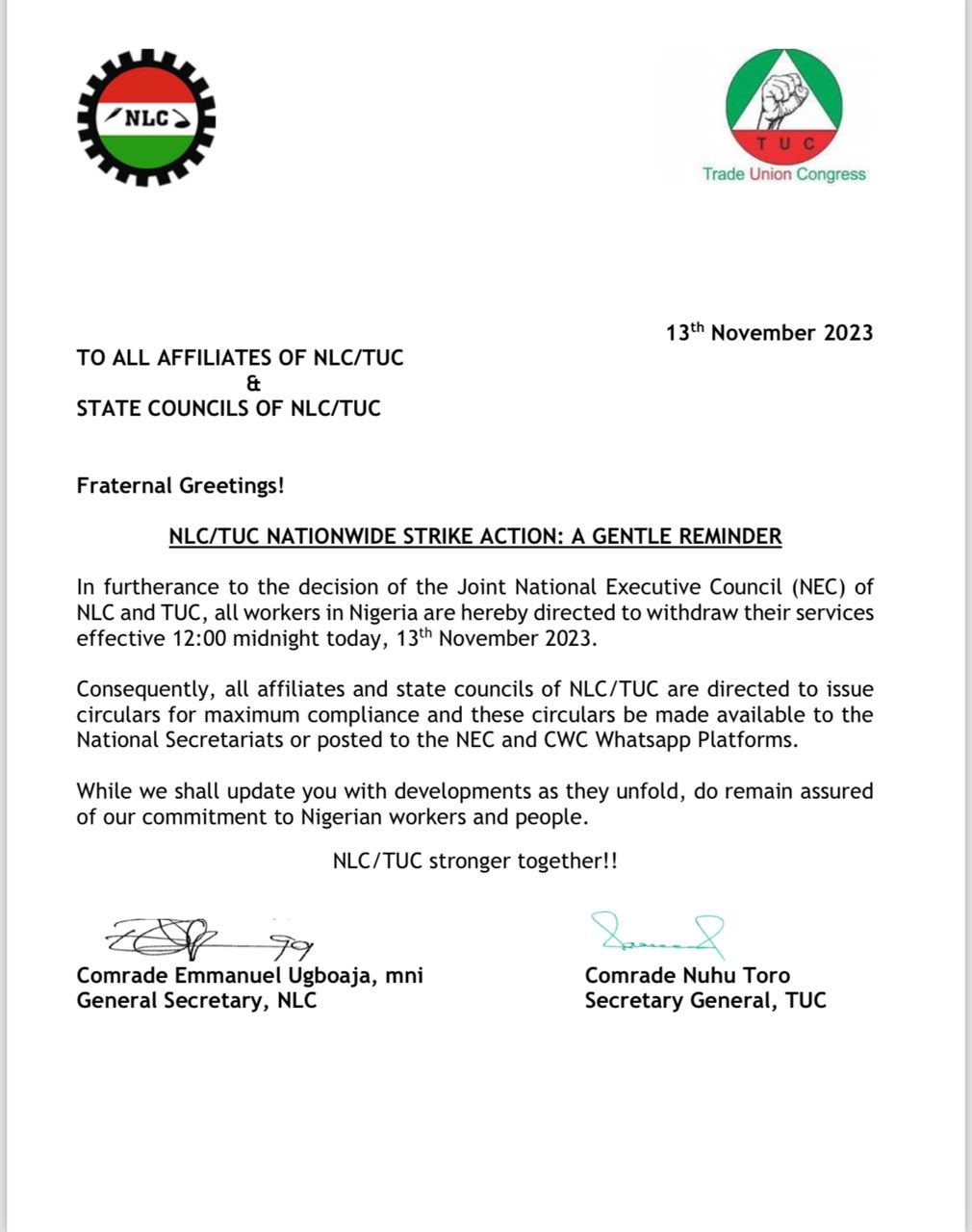
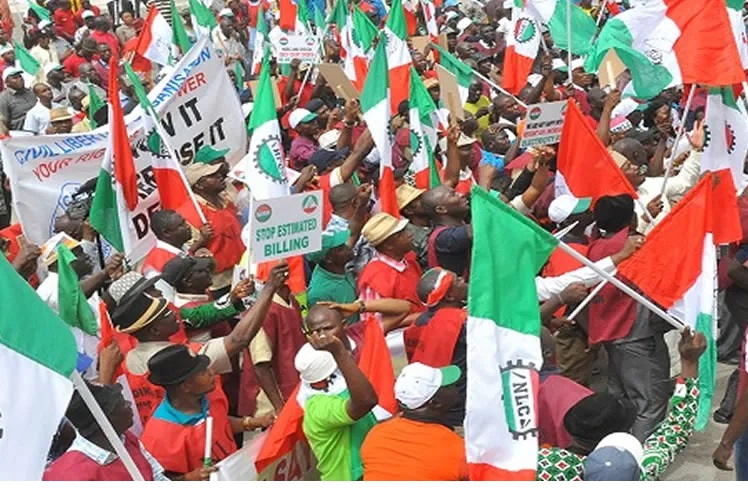
The Nigeria Labour Congress (NLC) and the Trade Union Congress (TUC) have instructed workers across the country to commence a nationwide strike, defying a court order that restrained them from embarking on the industrial action.

The strike comes in response to the assault on the National President of the NLC, Joe Ajaero, in Imo State last week during a demonstration over salary and pension arrears.

The unions issued a joint statement on Monday, directing workers to withdraw their services from midnight, citing the decision of the Joint National Executive Council (NEC) of NLC and TUC.

“In furtherance to the decision of the Joint National Executive Council (NEC) of NLC and TUC, all workers in Nigeria are hereby directed to withdraw their services effective 12:00 midnight today, 13th November 2023,” the unions said in a joint statement.

“Consequently, all affiliates and state councils of NLC/TUC are directed to issue circulars for maximum compliance and these circulars be made available to the National Secretariats or posted to the NEC and CWC Whatsapp Platforms.”

Despite the court order issued by the National Industrial Court (NIC) to restrain the unions from going on strike, the NLC and TUC pressed forward with their decision. The unions had demanded justice for the assault on Joe Ajaero and called for the resignation of police officials involved in the incident.

The strike announcement follows last week’s picketing of the Nnamdi Azikiwe International Airport in Abuja by the unions, causing disruptions and leaving travelers stranded. The unions have expressed concerns about the suppression of peaceful protests and gatherings of workers in Nigeria.

The office of the Attorney-General of the Federation (AGF) has responded to the unions’ insistence on the strike, advising against it and emphasizing the court order issued on Friday to stop the planned strike.

In a statement by Kamarudeen Ogundele, the spokesperson for the Attorney General of the Federation (AGF) and Minister of Justice, Lateef Fagbemi, the office reminded the unions of the restraining order issued by the National Industrial Court in Abuja on Friday. The order prohibits the unions from proceeding with the planned strike.

“The interim order was granted on 10 November by the President of the National Industrial Court of Nigeria, Justice B. B. Kanyip.

“The unions have been served the court order and, therefore, must surrender themselves to the authority of the court which is already seized with the facts of the case.

“Any action taken contrary to the order will be tantamount to contempt of court,” Mr Ogundele stated in a statement.

Despite the legal intervention and warnings, the NLC and TUC proceeded with the nationwide strike. The AGF’s office emphasized the need for the unions to respect the court order and adhere to the rule of law, urging workers to report for duties and assuring them of safety within the bounds of the law.

The situation adds another layer of complexity to the ongoing dispute between the unions and the government, with potential legal repercussions for defying the court order.

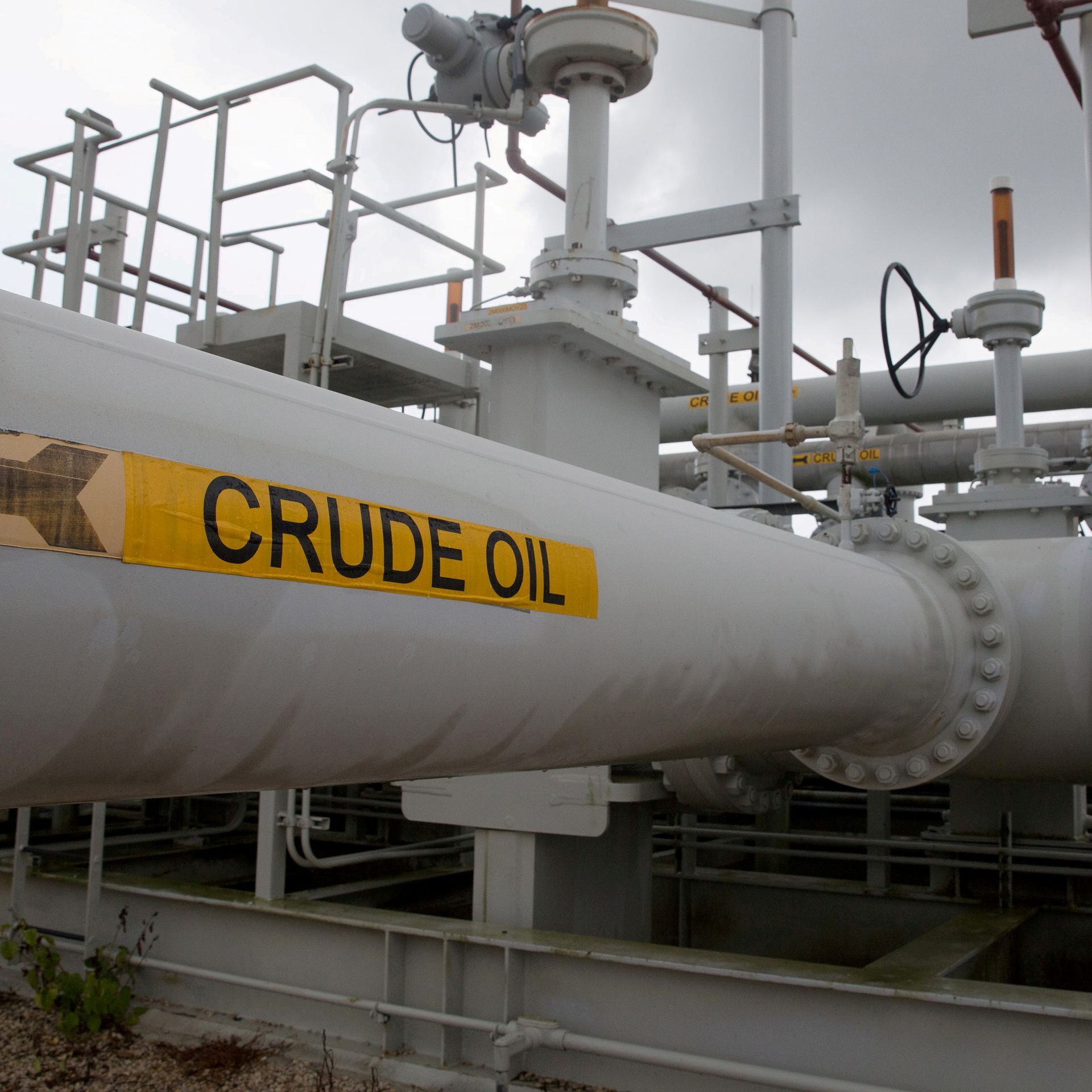
Nigeria Must Find Crude Oil for Dangote Refinery and Other Refinery Investors

0

Nigeria must find crude oil for Dangote Refinery and other refinery investors. Even if we have been forward-prepaid, via our endless borrowing, by big Wall Street banks for these assets, Nigeria as a nation cannot cripple these entrepreneurs. I understand that if you secure loans with our crude oil, looking at your daily production, you may not have extra to send to Dangote Refinery, etc, and if that is the case, the people who executed these transactions without looking at the whole obligations must be brought to answer questions.

“According to a report by BusinessDay, quoting sources at the Ministry of Petroleum Resources in Abuja, Nigeria is currently at risk of losing a substantial portion of its equity in the Dangote refinery due to its failure to fulfill the obligations outlined in the agreement for the equity acquisition.

“Against this backdrop, the report notes that the NNPC is urgently seeking to source crude oil from domestic producers, raising concerns among investors in the industry. Since the 650,000 barrels-a-day Dangote refinery was commissioned in May, it has remained inactive, awaiting the supply of crude oil”

Find the crude oil and send it to refineries in Nigeria.

Nigeria At Risk of Losing High Portion of Its 20% Equity in Dangote Refinery

Nigeria At Risk of Losing High Portion of Its 20% Equity in Dangote Refinery

3

The Nigerian National Petroleum Company Limited (NNPC) is reportedly facing challenges in meeting its obligation to supply crude oil worth $1 billion to the Dangote refinery, part of its payment for the acquisition of a 20 percent equity stake in the refinery.

According to a report by BusinessDay, quoting sources at the Ministry of Petroleum Resources in Abuja, Nigeria is currently at risk of losing a substantial portion of its equity in the Dangote refinery due to its failure to fulfill the obligations outlined in the agreement for the equity acquisition.

Against this backdrop, the report notes that the NNPC is urgently seeking to source crude oil from domestic producers, raising concerns among investors in the industry.

Since the 650,000 barrels-a-day Dangote refinery was commissioned in May, it has remained inactive, awaiting the supply of crude oil. The NNPC must fulfill its crude supply obligation to avoid the risk of losing part of its equity in the refinery.

The Nigerian government’s equity in the refinery is valued at $2.7 billion, with a payment mechanism that includes both cash and crude oil supply. As part payment, the government has paid $1 billion in cash, guaranteeing about seven percent of the equity.

The agreement also stipulated that the NNPC would provide crude oil worth $1 billion to the refinery upon completion, with the remaining $700 million to be paid through earned dividends from the plant’s operations, according to findings by BusinessDay.

The NNPC’s strategy to source crude oil from domestic producers has raised alarms, with concerns that it could deter investors from the industry. The government’s failure to meet its obligations under the equity acquisition agreement puts a significant portion of its equity in the Dangote refinery at risk.

It was recently reported that the NNPC plans to supply the Dangote refinery with up to six cargoes of crude oil in December for test runs. However, challenges in meeting the crude supply obligation raise uncertainties about the timeline for the refinery’s full commercial operations.

The Dangote refinery, built in Lekki, Lagos, by Africa’s wealthiest billionaire Aliko Dangote, was commissioned in May and is expected to play a crucial role in meeting Nigeria’s refined products needs and catering to the African and global market demand. However, the refinery has repeatedly failed to meet its operation commencement deadline, signaling underlying hindrances not known by the public.

The Nigerian government and the NNPC have kept details of the transaction private, contributing to concerns about transparency in the equity acquisition and payment process. Opposition from domestic producers and the potential loss of equity further complicate the aftermath of the long-anticipated Dangote refinery’s entry into operation.

Last Thursday, Bloomberg, citing analysts monitoring the plant’s progress, reported that the complete ramp-up of the refinery—a pivotal development for both regional and global crude and fuel markets—will require several months.

“The refinery is likely to be started up in a phased fashion, with the crude distillation unit being the first unit,” Ronan Hodgson, an analyst at Facts Global Energy, was quoted as saying.

Citing two NNPC officials who asked not to be named, BusinessDay reports that the facility is accumulating crude stocks for test runs, but the commencement of commercial production remains uncertain.