DD
MM
YYYY

PAGES

DD
MM
YYYY

spot_img

PAGES

Home Blog Page 3608

Don’t Miss Out! Meme Moguls Pump BlockDAG’s Presale – Is This Your Chance to Get Rich?

0

The rise of Memecoins has forever altered the cryptocurrency landscape. Remember the frenzy surrounding Dogecoin and Shiba Inu? Their meteoric ascent and subsequent dips have captivated investors, leaving them pondering the future.

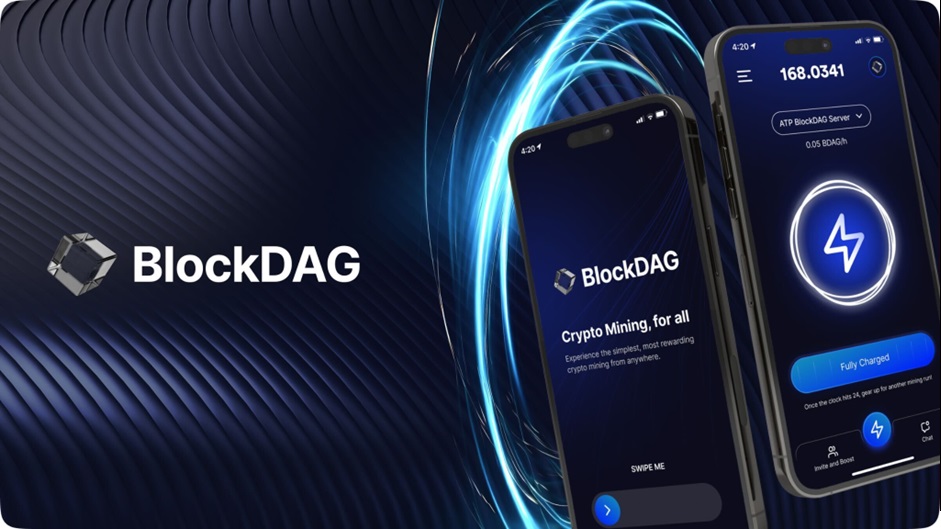
For Meme Moguls entrenched in the meme coin market, a game-changing platform called BlockDAG (BDAG) beckons as the next frontier. Explore the vast potential of the BlockDAG presale and unravel why it presents a unique opportunity to stay ahead of the curve, especially in light of Meme Moguls Tokens Locked.

Meme Mogul: A Recognizable Name

The recent Meme Moguls Tokens Locked signifies a significant milestone, elevating its credibility and long-term growth trajectory. Early adopters who reaped the rewards are now seeking new avenues as their investment horizons expand post-locking.

Unleashing the Potential of BlockDAG Presale for Meme Mogul Investors

What lies beyond the era of Meme Moguls Tokens Locked? Fear not, for the journey is far from over. BlockDAG emerges as an enticing prospect for Meme Mogul investors to continue their success story. Engaging in the presale enables investors to harness the platform’s unique attributes and potential for exponential growth.

But what sets BlockDAG apart? Its innovative technology and forward-looking approach distinguish it from its peers. With a decentralised architecture ensuring transparency and security and a scalable infrastructure facilitating seamless transactions, BlockDAG empowers Meme Mogul investors to optimise their returns upon launch.

Armed with insights into BlockDAG’s groundbreaking features, Meme Mogul investors are positioning themselves for significant gains in the dynamic crypto realm.
BlockDAG: An Attraction For Meme Moguls Investors

Investing with BlockDAG instils confidence in Meme Mogul investors to navigate the crypto landscape adeptly and make informed investment decisions. Its promising attributes and growing community interest render it an appealing choice for those seeking to maximise returns.

While traditional blockchains often encounter sluggish transaction speeds and hindering opportunities, BlockDAG remedies this with its Directed Acyclic Graph (DAG) structure, facilitating near-instant transactions. The recent emphasis on Meme Moguls Tokens Locked underscored the significance of such features, prompting investors to pivot to BlockDAG.

Picture acquiring that coveted limited edition Meme Mogul NFT without delays. Indeed, transaction lags catalysed for investors to transition away from conventional blockchains.

In contrast, BlockDAG ensures scalability post-launch, slated after its 45th and final presale batch. Its network accommodates a significantly higher transaction volume than competitors, fostering widespread adoption in the long run. While transaction fees on mainstream blockchains can be exorbitant, eating into profits, BlockDAG transactions boast considerably lower costs, empowering the community to invest more and retain earnings.

Unveiling The Curtains

Seize the opportunity to join the Meme Moguls Tokens Locked movement as BlockDAG grows monumentally. Delve into the presale, grasp its potential, and embark on an exhilarating investment journey. Embrace the revolution and chart a course towards financial prosperity with BlockDAG.


Invest In BlockDAG Now

Website: https://blockdag.network

Presale: https://purchase.blockdag.network

Telegram:https://t.me/blockDAGnetworkOfficial

Discord: https://discord.gg/Q7BxghMVyu
Nigeria’s Central Bank Must Pause Banking Recapitalization Until the Economy Stabilizes

0

Caution there for Nigeria’s central bank: “A new report from Ernst and Young has sent shockwaves through the Nigerian banking sector, revealing that 17 out of 24 banks could potentially fall short of meeting the capital requirement set by the Central Bank of Nigeria (CBN) if it is increased by 15-fold from its current N25 billion.”

Good People, the central bank must watch carefully before bringing another vector into the Nigerian economy. Yes, we do not want a further reduction in competition. While Zenith Bank can meet any new minimum paid-up share capital for a national commercial banking license at 15x on the old N25 billion, banks like Unity Bank may not.

Zenith Bank had rains last year, and possibly hit more than N1 trillion on PBT, even as Unity Bank was recording losses, and is expected to record losses in some quarters this year. Yes, it was all about choices made!

Simply, Nigerian banking is emerging into two classes: big or dying. I think those guys in CBN are smart enough to avoid anything that would engineer more chaos in the system.  We ask them to pause any recapitalization exercise until we can stabilize the economy!

“While the CBN governor gave no indication as to the magnitude of the proposed hike in the capital base, we have assumed what the proposed increment will be based on three different scenarios underpinned by current macroeconomic conditions. On the back of that, we were able to determine the number of banks (across the three license types) that may fall below the new minimum capital thresholds.

“In a worst-case scenario, i.e., given a capital multiplier of 15, about 17 out of 24 banks would not meet the new minimum capital,” the report states.

About 17 out of 24 Banks Would not Meet the New CBN’s Minimum Capital – Ernst & Young

About 17 out of 24 Banks Would not Meet the New CBN’s Minimum Capital – Ernst & Young

0

A new report from Ernst and Young has sent shockwaves through the Nigerian banking sector, revealing that 17 out of 24 banks could potentially fall short of meeting the capital requirement set by the Central Bank of Nigeria (CBN) if it is increased by 15-fold from its current N25 billion.

The report delves into the potential consequences of this shortfall, offering insights into various options available to banks that might find themselves outside the capital requirements mandated by the CBN. It suggests that such banks may need to consider mergers and acquisitions (M&A) to shore up their capital base, a strategy reminiscent of the consolidation witnessed during the last recapitalization exercise in 2004/2005, which saw the number of banks reduced from 89 to 25.

“While the CBN governor gave no indication as to the magnitude of the proposed hike in the capital base, we have assumed what the proposed increment will be based on three different scenarios underpinned by current macroeconomic conditions. On the back of that, we were able to determine the number of banks (across the three license types) that may fall below the new minimum capital thresholds.

“In a worst-case scenario, i.e., given a capital multiplier of 15, about 17 out of 24 banks would not meet the new minimum capital,” the report states.

The report underscores the urgent need for Nigerian banks to reassess their capital positions and formulate strategic plans to meet the requirements of the proposed capital revaluation by the CBN.

One of the key factors driving the need for this proposed capital revaluation is the recent devaluation of the naira in 2023. The report notes that while the exchange rate stood at N132.9/$ during the last exercise in 2005, the naira now exchanges for over N1400/$. Additionally, it notes that the N25 billion capital base in 2005 amounted to $188.2 million, which has significantly dwindled to a mere $18.4 million using the recent exchange rate.

This analysis presents a stark contrast to the stance of the CBN Governor, who previously indicated that the planned recapitalization aims to support Nigeria’s target of achieving a $1 trillion economy.

In November 2023, the Governor of the CBN hinted at the possibility of raising the minimum capital requirement for banks, citing the need for banks to have adequate capital to support an economy striving for a GDP of $1 trillion, as targeted by the Nigerian Federal Government.

Since the banks’ recapitalization in 2005, bank liquidation in Nigeria has significantly diminished, with no incident of depositors losing money to a failed bank. However, the financial sector has significantly changed since then, with the emerging fintech market which has spurred non-traditional financial institutions to record-breaking market capitalization, underscoring the need for the banks to recapitalize.

Also, the volatility of the Nigerian forex market has exposed the weaknesses of the banks, highlighting the vulnerability of their financial strength when measured in dollars. Given the current situation, experts say many banks will merge if the CBN makes its recapitalization move. Therefore, stakeholders are urged to collaborate closely with regulators and explore innovative strategies to ensure the continued resilience and stability of the banking sector.

How Governments in Africa and Other Continents Perceive Cryptocurrencies

0

The global landscape of cryptocurrency regulation is a complex and evolving field, with various governments across continents adopting differing stances towards this disruptive financial technology. In Africa, as in other parts of the world, the perception and regulatory approach to cryptocurrencies vary significantly from country to country.

Some African nations have embraced the potential of cryptocurrencies to bolster financial inclusion and stimulate economic growth, recognizing the benefits of blockchain technology. For instance, Nigeria, despite initial resistance, has seen widespread adoption among its population, leading to the Central Bank of Nigeria (CBN) developing a framework for a digital currency, the eNaira, which aims to complement the traditional Naira.

Conversely, other African countries have taken a more cautious or even prohibitive approach. Countries like Algeria, Morocco, and Libya have imposed bans on the use of cryptocurrencies, citing concerns over financial stability, security, and regulatory control.

On other continents, the regulatory landscape is equally diverse. The United States has recently shown a more proactive approach with President Biden’s Executive Order on Ensuring Responsible Development of Digital Assets, which seeks to create a comprehensive regulatory framework while acknowledging the industry’s potential benefits and risks.

In Europe, the European Union is working towards harmonizing cryptocurrency regulations among its member states. The proposed Markets in Crypto-Assets (MiCA) regulation aims to provide legal clarity and ensure consumer protection across the EU.

Asia presents a mixed picture as well. While countries like Japan have established themselves as crypto-friendly markets with clear regulations in place, others like China have taken a hardline approach by banning all cryptocurrency transactions and mining activities.

The perception of cryptocurrencies by governments worldwide is shaped by a myriad of factors including economic policy, financial security, technological advancement, and public sentiment. As such, the regulatory responses are tailored to address these unique challenges and opportunities presented by digital currencies.

Comparatively, other continents exhibit a wide spectrum of regulatory frameworks. In North America, the United States is actively working towards establishing a comprehensive regulatory environment for digital assets. The European Union is also seeking to standardize cryptocurrency regulations across its member states with proposed legislation like MiCA.

Asia shows a stark divide with countries like Japan fostering a crypto-friendly environment, while China has implemented stringent bans on cryptocurrency transactions and mining but experimenting CBDC.

Overall, Africa’s approach to cryptocurrency regulation is diverse and evolving, mirroring the global sentiment where some view digital currencies as an opportunity for innovation and growth, while others exercise caution due to potential risks. The continent’s varied stance is indicative of the broader international debate on how best to integrate cryptocurrencies into existing financial systems while ensuring security and stability.

The future of cryptocurrency regulation will likely continue to be characterized by this dichotomy as nations grapple with balancing innovation with consumer protection.

Investor Education and Awareness are Critical in Combating Crypto Ponzi Schemes

0

SEC charges 17 people in $300 million crypto Ponzi scheme targeting Latino investors.

In the rapidly evolving world of cryptocurrency, it’s essential for investors to have a clear understanding of where they are putting their money. Ponzi schemes, named after Charles Ponzi who became infamous for using this technique in the early 20th century, are fraudulent investing scams which promise high rates of return with little risk to investors.

They generate returns for older investors by acquiring new investors. This is similar to a pyramid scheme in that both are based on using new investors’ funds to pay the earlier backers.

Recently, the U.S. Securities and Exchange Commission (SEC) has recently brought charges against 17 individuals allegedly involved in orchestrating a cryptocurrency Ponzi scheme that amassed over $300 million.

The scheme reportedly targeted Latino investors, leveraging community ties and trust to propagate the fraudulent activities. This case underscores the importance of investor vigilance and due diligence in the rapidly evolving crypto market.

The SEC’s complaint outlines how the individuals created an elaborate network of false promises and misleading information to lure investors into the scheme. Promising high returns on investments in crypto assets, the perpetrators went to great lengths to present their operation as legitimate and profitable.

However, as with most Ponzi schemes, the returns paid to earlier investors were not from any actual profit earned by the operation but rather from funds contributed by newer investors. This unsustainable model inevitably collapsed, leaving many investors out of pocket, some with life-altering losses.

The SEC’s intervention highlights the increasing scrutiny on fraudulent activities within the cryptocurrency market, especially those targeting vulnerable communities. The charges serve as a stark reminder of the need for due diligence when investing in seemingly lucrative opportunities in this volatile and often opaque sector.

Investor education and awareness are critical in combating such schemes. Potential investors are urged to verify credentials, seek independent financial advice, and be wary of investments that promise guaranteed or unusually high returns.

For the average investor, distinguishing between a legitimate investment opportunity and a Ponzi scheme can be incredibly challenging, especially in the crypto space where regulation is still catching up. Education and awareness are the first lines of defense against these fraudulent schemes.

Investors should be encouraged to conduct thorough due diligence on any investment opportunities. This includes researching the credentials of the people behind the project, understanding the technology used, and critically assessing promised returns against market realities.

Furthermore, awareness campaigns led by financial authorities can help disseminate critical information to the public. These campaigns can teach potential investors about the common red flags associated with investment frauds, such as guaranteed returns, overly consistent returns, unregistered investments, secretive or complex strategies, issues with paperwork, and difficulty receiving payments.

The case also underscores the importance of regulatory oversight in the rapidly evolving digital asset space. As the market matures, establishing clear legal frameworks and enforcement mechanisms will be paramount in protecting investors and maintaining market integrity.

While cryptocurrencies offer new avenues for investment, they also present new challenges in terms of investor protection. Education and awareness are indispensable tools that empower investors to make informed decisions and recognize the warning signs of a Ponzi scheme. As the crypto market continues to mature, it’s imperative that these educational efforts are strengthened and supported by all stakeholders involved.