DD
MM
YYYY

PAGES

DD
MM
YYYY

spot_img

PAGES

Home Blog Page 3609

Headline Inflation in Nigeria Surges to 31.70% in February 2024

0

The latest data released by the Nigerian Bureau of Statistics (NBS) reveals a significant surge in headline inflation for February 2024, with the rate soaring to 31.70% compared to January 2024’s rate of 29.90%. This increase of 1.80% points highlights a concerning trend in the country’s economic trajectory.

On a year-on-year basis, the headline inflation rate witnessed a staggering rise of 9.79% points from February 2023, marking a significant jump from 21.91% to 31.70%. This substantial increment underscores the persistent challenges faced by Nigeria in stabilizing its economy.

“The headline inflation rate (year-on-year basis) increased in the month of February 2024 when compared to the same month in the preceding year (i.e., February 2023),” according to the NBS report.

The report attributes this surge in inflation to various factors, including rising prices of essential commodities.

“The rise in Food inflation on a year-on-year basis was caused by increases in prices of Bread and cereals, Potatoes, Yam and other Tubers, Fish, Oil and fat, Meat, Fruit, Coffee, Tea, and Cocoa,” the NBS report explained.

Breaking down the data further, the urban inflation rate for February 2024 reached 33.66%, marking a 10.87% point increase from the previous year. In comparison, the rural inflation rate stood at 29.99%, indicating an 8.89% point rise from February 2023. These figures underscore the widespread impact of inflation across both urban and rural areas of Nigeria.

“On a year-on-year basis, in February 2024, the Urban inflation rate was 33.66%, this was 10.87% points higher compared to the 22.78% recorded in February 2023,” the NBS report detailed.

Food inflation, a critical component affecting household budgets, surged to 37.92% year-on-year in February 2024, up by 13.57% points from the same period last year.

“The rise in the Food inflation on a Year-on-Year basis was caused by a rise in the rate of increase in the average prices of Bread and Cereals, Potatoes, Yam & Other Tubers, Fish, Coffee, Tea, and Cocoa,” the NBS report said.

Additionally, core inflation, which excludes volatile food and energy prices, rose to 25.13% year-on-year in February 2024, marking a 6.76% point increase from February 2023. This upward trend in core inflation suggests broader economic challenges beyond the food and energy sectors, impacting various consumer goods and services.

“The ‘All items less farm produces and energy’ or Core inflation stood at 25.13% in February 2024 on a year-on-year basis; up by 6.76% when compared to the 18.37% recorded in February 2023,” the report said.

State-by-state food inflation

In February 2024, food inflation on a year-on-year basis was most pronounced in Kogi (46.32%), Rivers (44.34%), and Kwara (43.05%), while Bauchi (31.46%), Plateau (32.56%), and Taraba (33.23%) experienced the slowest increase in food inflation year-on-year.

However, on a month-on-month basis, February 2024 saw the highest food inflation in Adamawa (5.61%), Yobe (5.60%), and Borno (5.60%), whereas Cross River (2.08%), Niger (2.56%), and Abuja (2.60%) observed the least escalation in food inflation on a month-on-month basis.

The inflationary pressures have prompted calls for urgent action from civil society groups and labor unions. With the minimum wage stagnant at N30,000 per month, the rising inflation has severely eroded the purchasing power of Nigerian workers.

In response to the escalating inflation, labor unions have proposed revised wage structures ranging from N794,000 to N485,000 across the six geopolitical zones. These proposals aim to alleviate the financial strain faced by workers amidst the challenging economic conditions.

Despite efforts to address inflationary challenges, the Nigerian economy remains vulnerable to external shocks and internal structural weaknesses. Policymakers face the daunting task of implementing measures to stabilize prices, boost productivity, and enhance economic resilience in the face of persistent inflationary pressures.


Abamade Trade Fair and Exhibition Is April 19, 2024 at Aba Sports Club

0

The Enyimba City, Aba, will host the world on April 19, 2024, showing the creativity, the ingenuity, and the maker spirit of Aba. Yes, you’re cordially invited to the Abamade Trade Fair and Exhibition at Aba Sports Club. Come and see products created by builders and makers in Aba. More so, if you are a maker, reach out to the team (the contacts on the billboard), for a spot to exhibit; it is 100% free.

We’re expecting His Excellency, Dr Alex Otti, to grace this event because his vision of a Greater Abia will go through empowering innovators and builders in Abia. Abia is a home of innovation with a slogan of “prosperity through enterprise”. We offer many benefits to investors including a top-grade human capital.

*If you are organizing a productive event in Abia State, let me know, for some shouts. Let us see how to support you as you bring people together, to advance the mission of making Abia State the #1 in Nigeria on opportunity and human welfare.

Prof Ndubuisi Ekekwe

Member, Abia State Global Economic Advisory Council

Co-Chair, Abia State Economic Transformation Council

Coinbase Issues A Rebuttal to Senators Urging the SEC to Pause Crypto ETF Approvals

0

Online secure cryptocurrency platform Coinbase, through its chief legal officer Paul Grewal, has faulted a letter by two US senators urging the Securities and Exchange Commission (SEC) to more tightly regulate Bitcoin ETFs and reject any further crypto ETF applications.

In the letter, Rhode Island Senator Jack Reed and California Senator Laphonza Butler urged the chairman of the US SEC Gary Gensler, to step in to ensure broker-dealers are giving investors the proper disclosures around the $BTC ETFs, which they say should be properly referred to as ETPs.

Part of the letter reads,

We write to urge the Securities and Exchange Commission (SEC) to take steps to protect investors following its recent approval of the listing and trading of certain spot bitcoin exchange-traded products (ETPs). The SEC’s approvals have provided a green light for Wall Street to sell volatile cryptocurrency investments to ordinary Americans through their brokerage and retirement Given the significant and unique risks posed by cryptocurrency, it is critical that Americans receive accurate, comprehensive information about Bitcoin ETPs.

“In a recent review by FINRA, roughly 70% of brokers’ communications with retail investors regarding cryptocurrency violated fair disclosure rules. In some cases, brokers’ communications falsely equated cryptocurrency with cash; in others, they provided misleading explanations of cryptocurrency’s risks. These alarming deficiencies raise significant concerns that brokers and advisers may now provide incomplete or deceptive information about Bitcoin ETPs to retail investors.

“The naming and marketing of many bitcoin ETPs appear to obfuscate important characteristics about these investments. We urge the SEC to take several specific steps under its existing authority to address these issues: (I) carefully scrutinize brokers’ and advisers’ communications regarding bitcoin ETPs to ensure investors receive complete and accurate information about these products; (2) examine brokers and advisers that recommend cryptocurrency ETPs to ensure they are acting in the best interests of their clients, as required by SEC rules; and (3) ensure that bitcoin ETPs do not use inappropriate and confusing naming conventions in SEC filings and other investor documents.

“These steps would help protect investors from fraud and abuse, which may be enabled by the current light-touch regulatory regime applicable to bitcoin ETPs. Finally, we believe the SEC should strictly limit the precedential application of these approvals. While the Bitcoin market has displayed serious weaknesses, it is nonetheless far more established and scrutinized than the market for any other cryptocurrency.

However vulnerable bitcoin may be to fraud and manipulation, markets for other cryptocurrencies are far more exposed to misconduct. We do not believe that other cryptocurrencies show the trading volumes or integrity to support associated ETPs. Nor do we believe that markets for futures on other cryptocurrencies are likely to demonstrate the tight correlation with spot markets that would enable meaningful market surveillance to deter and detect bad actors”.

Grewal via a post on X, criticized the senators’ letter, which had claimed the approval of further crypto ETFs beyond Bitcoin would expose investors to “enormous risks.”

He wrote,

“Respectfully Senators, the evidence points exactly the opposite way”.

Grewal further explained that the market for many cryptocurrencies smaller than Bitcoin, notably Ether $3,701, demonstrated quality metrics that “exceed even the largest traded equities.” Grewal added there was direct evidence that Ether’s futures and spot markets were just as correlated as Bitcoin’s.

Recall that on the 9th of March, Coinbase and crypto asset manager Grayscale met with SEC officials to discuss a rule change for the launch of spot Ether ETFs, where Coinbase argued that if the SEC approved Bitcoin ETFs, they should approve Ether ETFs as well.

Since launching spot Bitcoin ETFs on Jan. 11, many in the industry are hopeful that other crypto assets could become featured in a United States spot crypto ETF, including Ether.

Following SEC approval of ETF, Goldman Sachs stated that Institutional investors may benefit from the approval of spot bitcoin ETFs, as these products will allow them to trade a proxy with low management fees and engage more actively in arbitrage strategies and options hedging.

It is worth noting that several spot Ether ETFs are now awaiting approval by the U.S. Securities and Exchange Commission, many of which will receive a final decision from the securities regulator around May, according to analysts.

Rehabilitated Port Harcourt Oil Refinery Set to Commence Operations in Two Weeks – NNPCL

0

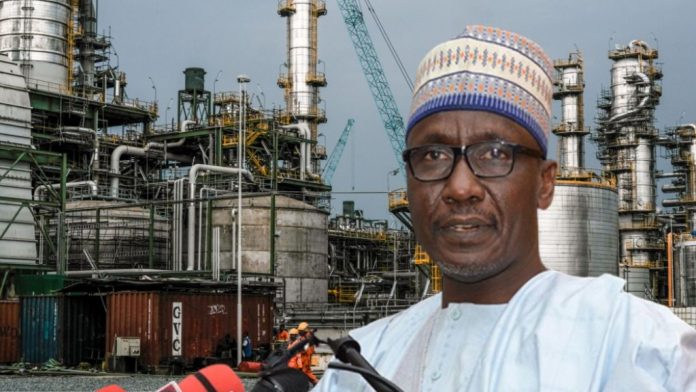
The Nigerian National Petroleum Company Limited (NNPCL) has announced that the long-awaited rehabilitation of the Port Harcourt Oil Refinery is nearing completion, with operations set to commence in two weeks.

Mele Kyari, the Group Chief Executive Officer of NNPCL, made this assurance during an interactive session with the Senate on Thursday.

“Now, we have crude oil already stocked in it. It is currently undergoing regulatory compliance test before we restream it. I assure you that this refinery will start in next two weeks,” Kyari said, emphasizing the commitment of NNPCL to meet its promises regarding refinery rehabilitation.

He further elaborated on the progress made, highlighting the mechanical completion of the Port Harcourt Refinery in December and the ongoing regulatory compliance tests before its restart.

“We completed the mechanical completion of PHRC in December. Now, we have crude oil already stocked in it. It is currently undergoing regulatory compliance test before we restream it. I assure you that this refinery will start in the next two weeks,” Kyari assured.

Providing insight into the status of other refineries, Kyari mentioned the progress on the Warri refinery and the expected completion of the Kaduna refinery by December.

“For Warri, we have also done mechanical work on it. It is undergoing regulatory compliance processes that we are doing with our regulators. Kaduna will be ready by December this year, but we have not reached that stage. We believe that it will also be ready on schedule,” he said.

Kyari assured that promises made about the rehabilitation of these refineries will be kept.

He stressed the importance of cooperation from all stakeholders in the rehabilitation process, emphasizing the collective effort required to achieve success.

“We are all serving this country dutifully and loyally. Nigerians must understand that gradually, we shall get this task done,” he said.

The Senate Ad-hoc Committee is slated to conduct on-the-spot assessments of the refineries in Kaduna, Warri, and Port Harcourt, further underscoring the government’s commitment to transparency and accountability in the rehabilitation efforts.

This announcement coincides with a report by the Organization of Petroleum Exporting Countries (OPEC) indicating an increase in Nigeria’s crude oil production. According to OPEC’s Monthly Oil Market Report (MOMR) for March, Nigeria’s crude oil production rose to 1.476 million barrels per day (bpd) in February, reflecting a notable uptick from January’s figures.

Poor oil output has been a major concern in Nigeria’s move to rehabilitate its refineries, with the country still grappling with supply shortfalls for Dangote Refinery. The newly-launched 650,000bpd capacity plant, which started operation in January, broke ranks with its tradition of sourcing crude oil exclusively from Nigeria in February.

Trafigura Group reportedly brokered a deal to supply Dangote Refinery with 2 million barrels of WTI Midland crude, underscoring the enormity of Nigeria’s poor oil output amid its push to revitalize dormant refineries.

The refinery’s move to source crude oil from the US comes amid its supply deal with the Nigerian National Petroleum Company Limited (NNPCL). The NNPCL is obligated to supply crude oil worth $1 billion to the refinery as part of its payment for the acquisition of a 20 percent equity stake in the project.

This situation raises concerns regarding the ability of the Port Harcourt refinery to secure an adequate supply of crude once it begins production.

Subsea Cable Failures Unleash Internet Outage Across Africa, Disrupting Economic Activities

0

On Thursday, a widespread internet outage hit West, Central  and Southern Africa, plunging countries across the continent into connectivity chaos. 

Reports from the Internet observatory Netblocks indicated that multiple subsea cables experienced failures, leading to extensive disruptions that reverberated throughout the affected nations.

While the precise cause of the cable failures remains shrouded in uncertainty, the impact of the outage was keenly felt across various sectors. African subsea cable operator SEACOM confirmed the outage, revealing that its West African Cable System had succumbed to the disruptions. 

As a contingency measure, customers reliant on this cable were automatically redirected to the Google Equiano cable, which SEACOM utilizes, albeit with potential limitations in bandwidth and capacity.

Netblocks’ data painted a grim picture of the situation, with severe outages reported in Ivory Coast, a critical economic hub in the region. Additionally, Liberia, Benin, Ghana, and Burkina Faso experienced significant disruptions, exacerbating challenges for businesses, government agencies, and ordinary citizens reliant on stable internet connectivity. 

The undersea cables were impacted with varying degree of damages.

Cloudflare, a prominent internet firm, echoed these findings, highlighting major disruptions in Gambia, Guinea, Liberia, Ivory Coast, Ghana, Benin, and Niger.

“There seems to be a pattern in the timing of the disruptions, impacting from the north to the south of Africa,” Cloudflare Radar said.

Cloudflare’s analysis revealed a discernible pattern in the timing of the disruptions, suggesting a coordinated impact that traversed geographical boundaries from the northern to the southern regions of Africa. This synchronized disruption further underscored the systemic nature of the outage, raising questions about the underlying causes and vulnerabilities of the region’s digital infrastructure.

In a statement on Thursday, telecommunications company, MTN Nigeria, explained that the network outage experienced by its subscribers was a “result of damage to international undersea cables across East & West Africa”.

“The repair process is ongoing to resolve the situation as soon as possible. Please look out for further updates,” the company said.

The impacts weigh heavily 

The economic ramifications of the internet outage were profound, with businesses across various industries grappling with the sudden loss of connectivity. 

Businesses across various sectors, from finance to manufacturing and e-commerce, rely heavily on uninterrupted internet connectivity to conduct operations, communicate with clients and customers, and facilitate transactions. The sudden disruption in internet services dealt a severe blow to productivity and revenue generation, exacerbating operational challenges in an already challenging economic environment.

E-commerce platforms, which have witnessed significant growth in recent years, bore the brunt of the outage as online retailers struggled to process orders and manage inventory. Customers faced difficulties accessing websites and completing transactions, leading to potential revenue losses and damage to brand reputation.

In the financial sector, banks and financial institutions grappled with disruptions to online banking services, hindering customers’ ability to conduct transactions, access account information, and make payments. The outage underscored the vulnerability of digital banking infrastructure and raised concerns about cybersecurity vulnerabilities amid heightened reliance on online financial services.

Furthermore, the outage had broader implications for economic activities dependent on internet connectivity, including remote work arrangements, education, and telemedicine services. Remote workers encountered challenges accessing work-related applications and communication platforms, disrupting workflow and collaboration efforts. Similarly, students and educators faced obstacles in accessing online learning resources, exacerbating existing disparities in access to education.

The economic impact of the internet outage extended beyond immediate disruptions to business operations and consumer activities. Analysts note that investor confidence in the region’s digital infrastructure and business environment may suffer as concerns about the reliability and resilience of critical infrastructure, such as subsea cables, are heightened.

E-commerce platforms, financial institutions, and online service providers faced operational hurdles, disrupting transactions, communications, and day-to-day business activities. Moreover, the outage cast a shadow over the region’s digital transformation efforts, highlighting the fragility of critical infrastructure and the pressing need for robust contingency plans and redundancy measures.