DD
MM
YYYY

PAGES

DD
MM
YYYY

spot_img

PAGES

Home Blog Page 3609

INEC Declares APC’s Usman Ododo Winner of Controversial Kogi State Governorship Election

0

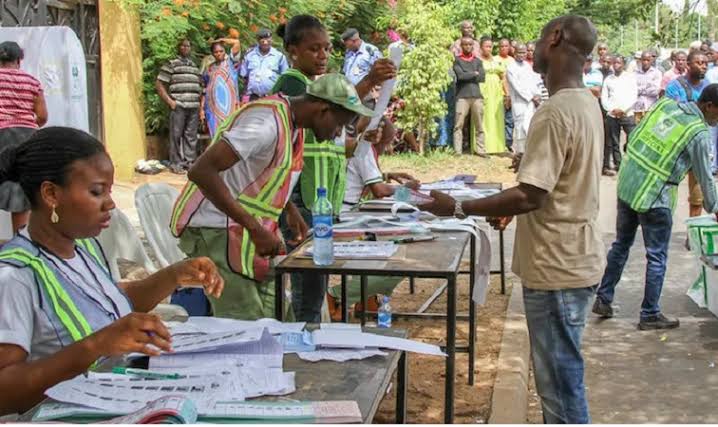
In a closely watched and keenly contested race, the All Progressives Congress (APC) candidate, Usman Ododo, has been declared the winner of the November 11, 2023, Kogi State Governorship Election, by the Independent National Electoral Commission (INEC).

The State Returning Officer, Prof Johnson Urama, declared Ododo as the winner at 10:23 pm on Sunday, announcing that he had satisfied the legal requirements for victory.

“Ahmed Usman Ododo of APC, having satisfied the requirement of the law is hereby declared the winner and is returned elected,” Urama declared.

Ododo secured a decisive win with 446,237 votes, defeating his closest rival, Murtala Ajaka of the Social Democratic Party (SDP), who scored 259,052 votes. Dino Melaye of the Peoples Democratic Party (PDP) polled 46,362 votes. The APC candidate dominated the election by winning over half of the 21 local government areas (LGAs) in the state.

The victory solidifies Ododo’s position as the governor-elect and comes after results from the 21 LGAs were collated late on Sunday. Ododo, a former Auditor General of Local Government in Kogi under Governor Yahaya Bello, was the anointed candidate of the outgoing governor, who is completing his double terms of eight years.

However, the election was not without controversy. Melaye and some civil rights groups raised concerns over “filled result sheets” in the Ogori/Magongo Local Government Area. Melaye also called for the suspension of the exercise citing violence and vote-buying. In response, the Independent National Electoral Commission (INEC) suspended the election in nine wards in the local government area.

Late on Sunday, INEC announced that fresh polls would be conducted in 59 polling units in Ogori/Magongo on November 18, 2023. INEC specified that the decision to hold fresh elections is contingent on the Returning Officer’s determination of the application of the Margin of Lead Principle.

In his declaration, Prof Johnson Urama noted that the total number of Permanent Voter Cards in the affected polling units was insignificant in comparison to the substantial lead Ododo had over his closest rival. This suggested that the initially scheduled elections in the 59 polling units would no longer be held.

Despite the outcome, both Ajaka and Melaye have rejected the results, expressing disappointment in INEC and accusing security agencies of collusion with the ruling APC in Kogi.

The final results for the 21 LGAs showed a total of 1,932,474 registered voters, 794,500 accredited voters, and a total valid vote count of 782,289. The rejected votes amounted to 9,601, making the total votes cast 791,890.

However, Ajaka had said earlier it would be a waste of time to challenge the outcome of the poll in court if he loses to Usman Ododo. He alleged that the election was rigged with the support of the INEC.

INEC Declares Hope Uzodinma Winner of Imo State Governorship Election

0

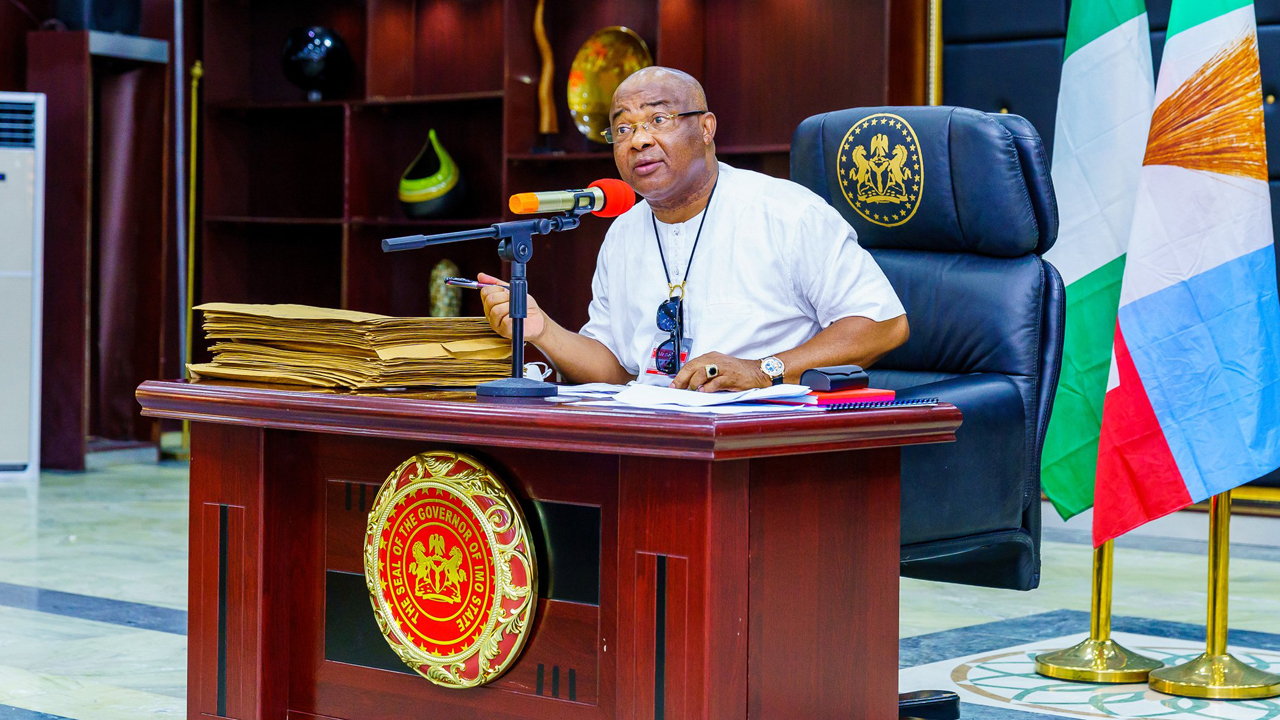
Hope Uzodinma of the All Progressives Congress (APC) has been declared the winner of the Imo State governorship election by the Independent National Electoral Commission (INEC).

The election results, announced on Sunday, revealed Uzodinma’s sweeping success across all 27 Local Government Areas of the state.

The state Returning Officer, Prof. Abayomi Fasina, who is also the Vice-Chancellor of Federal University, Oye-Ekiti, Ekiti State, disclosed the results at INEC’s state collation center in Owerri, the state capital.

The election, which featured candidates from 18 different parties, was primarily characterized as a four-horse race, with Governor Uzodimma seeking re-election under the APC, Samuel Anyanwu of the Peoples Democratic Party (PDP), Athan Achonu of the Labour Party, and Jack Ogunewe of the Action Alliance.

As the results unfolded, it became evident that Uzodinma’s dominance was unparalleled, with none of the other candidates securing victory in any local government.

Imo State, with a total of 2,419,922 registered voters and 2,318,919 Permanent Voter Cards (PVCs) collected, witnessed a keenly contested election. Prof. Fasina presided over the collation process, which briefly halted at 08:30 am on Sunday before reconvening to announce the final results.

Governor Uzodimma emerged victorious with 540,308 votes, while Samuel Anyanwu of the PDP secured a distant second with a total of 71,503 votes. Athan Achonu of the Labour Party polled 64,081 votes to claim the third position in the election.

Anthony Ejiogu of the All Progressives Grand Alliance secured 6,392 votes to come fourth, and Jack Ogunewe of the Action Alliance rounded off the top five with 5,756 votes.

In his declaration, Prof. Fasina stated, “I, Prof. Abayomi Fasina, I was the Returning officer for the Imo state governorship election held on November 11, 2023. That the candidate of the All Progressives Congress, Good Hope Uzodimma, having scored the highest number of votes and satisfied the requirements of the law, is hereby declared the winner of the election and returned elected.”

The breakdown of results from the various LGAs illuminated the scale of Uzodinma’s triumph:

Oru West LGA

Accredited voters: 42,965
APC: 38,026
LP: 1,867
PDP: 987
Total valid votes: 41,373
Total votes cast: 42,318

Njaba LGA

Accredited voters: 12,098
APC: 8,110
LP: 995
PDP: 2,404
Valid votes: 11,736
Total votes: 12,030

Owerri North LGA

Registered voters: 134,555
Accredited voters: 18,398
APC: 8,536
LP: 4,386
PDP: 3,449
Valid votes: 17,440
Total votes cast: 18,016

Nwangele LGA

Registered voters – 55535
Accredited voters – 33259

APC – 29282
LP – 895
PDP – 2132

Valid votes – 32597
Votes cast – 32959

Owerri Municipal LGA

Registered voters – 134169
Accredited voters – 11110

APC – 5324
LP – 2914
PDP – 2180

Valid votes – 10813
Votes cast – 11054

Orsu LGA

Accredited voters – 19139
APC – 18003
LP – 813
PDP – 624
Valid votes 19589
Votes cast 19795

Okigwe LGA

Registered voters – 75410
Accredited voters – 63935
APC – 55585
LP – 2655
PDP – 1688
Valid votes – 62970
Total votes cast – 63935

Ideato South LGA

Registered voters – 79361
Accredited voters – 21935
APC – 16891
LP – 1649
PDP – 2469
Valid votes – 21370
Total votes cast – 21650

Onuimo LGA

Registered voters – 36717
Accredited voters – 18405
APC – 13434
LP – 1753
PDP – 2676
Valid votes – 18240
Total votes cast – 18276

Ngor-Okpala LGA

Registered voters – 102048
Accredited voters – 22111
APC – 14143
LP – 2716
PDP – 3451
Valid votes – 21492
Total votes cast – 22003

Oru East LGA

Registered voters – 85080
Accredited voters – 74324
APC – 67315
LP – 3443
PDP – 2202
Valid votes – 74286
Total votes cast – 74290

Isu LGA

Registered voters – 55203
Accredited voters – 15974
APC – 11312
LP – 1253
PDP – 2508
Valid votes – 15776
Total votes cast – 15932

Ahiazu Mbaise LGA

Registered voters – 98887
Accredited voters – 16097
APC – 8369
LP – 2214
PDP – 3507
Valid votes – 15353
Total votes cast – 15878

Nkwerre LGA

Registered voters – 59926
Accredited voters – 26993
APC – 22488
LP – 1320
PDP – 2632
Valid votes – 26764
Total votes cast – 26906

Aboh Mbaise LGA

Registered voters – 111207
Accredited voters – 16084
APC – 9638
LP – 2455
PDP – 1724
APC – 9205
LP – 2597
PDP – 3305
Valid votes – 15712
Total votes cast – 16223

Isiala Mbano LGA

Registered voters – 99076
Accredited voters – 15911
APC – 10860
LP – 2419
PDP – 1659
Valid votes – 15202
Total votes cast – 15531

Obowo LGA

Registered voters – 68690
Accredited voters – 22214
APC – 17514
LP – 3404
PDP – 712
Total valid votes – 21907
Total votes cast – 22171

Ezinihitte Mbaise LGA

Registered voters – 91272
Accredited – 16971
APC – 8473
LP – 3332
PDP – 2737
Valid votes – 16282

Oguta LGA

Registered voters – 95152
Accredited voters – 64260
APC – 57310
LP – 1941
PDP – 2653
Valid votes – 63675
Total votes cast – 63947

Ikeduru LGA

Registered voters – 119987
Accredited voters – 33662
APC – 22356
LP – 1377
PDP – 7258
Valid votes – 32183
Total votes cast – 32712

Ehime Mbano LGA

Registered voters – 79212
Accredited voters – 13027
APC – 6632
LP – 4958
PDP – 681
Valid votes – 12484
Total votes cast – 12782

Orlu LGA

Registered voters – 103223
Accredited voters – 49229
APC – 37614
LP – 2424
PDP – 3690
Valid votes – 48027
Total votes cast – 48386

Ohaji Egbema LGA

Registered voters – 107456
Accredited – 21366
APC – 14962
LP – 1506
PDP – 3694
Valid votes – 20755
Total votes cast – 21249

Ideato North LGA

Registered voters – 86905
Accredited voters – 9609
APC – 5271
LP – 1522
PDP – 2062
Valid votes – 9161
Total votes cast – 9550

Ihitte Uboma LGA

Registered voters – 52108
Accredited voters – 17537
APC – 11099
LP – 2766
PDP – 3077
Valid votes – 17358
Total votes cast – 17537

Mbaitoli LGA

Registered voters – 153283
Accredited Voters – 24186
APC – 12556
LP – 4007
PDP – 5343
Valid votes 23014
Total votes cast 23986

Following his declaration as the winner, Uzodinma is set to be sworn in for a second term in office on January 14, 2024. However, the outcome has sparked discontent among opposition parties, with allegations of rigging surfacing.

Opposition parties, notably the Labour Party, have expressed disappointment over the election results, claiming that the Independent National Electoral Commission (INEC) favored the incumbent through irregularities. Nathan Achonu, the Labour Party’s candidate, has declared his intention to challenge the result in court, a move supported by the party.

Yunusa Tanko, the spokesman for the Labour Party’s Campaign Organization, voiced their concerns and justified their decision to contest the election outcome. Tanko highlighted instances of harassment, intimidation, and logistical challenges faced by their supporters during the electoral process.

“Achonu is right to reject the election results. Definitely, he will be heading to the court in line with electoral provision to seek redress. That election is nothing but a scam. You know it is something we expected may happen. It is just that we have no power over what is going on in that state,” Tanko stated.

The spokesman further detailed the challenges encountered by the Labour Party during the election, including alleged intimidation of supporters, the booking of hotels preventing accommodation for their personnel, and heightened insecurity.

“We, therefore, support any action our Imo candidate is taking, including going to court,” Tanko affirmed, signaling the party’s commitment to pursuing legal avenues to address their grievances.

The System of Free Enterprise and Private Property is a Pillar of Modern Capitalism

0

The system of free enterprise and private property is one of the pillars of modern capitalism. It allows individuals and businesses to own, use, and exchange resources according to their own preferences and interests, without excessive interference from the state. We will explain the benefits and challenges of this system, as well as some of the common misconceptions and criticisms that it faces.

One of the main benefits of free enterprise and private property is that it fosters economic efficiency and innovation. By allowing the market to allocate resources based on supply and demand, prices reflect the true value and scarcity of goods and services and provide incentives for producers and consumers to optimize their choices.

Moreover, by granting property rights to individuals and businesses, they have the freedom and security to invest in their assets, improve their productivity, and create new products and services that meet the needs and wants of the society.

Another benefit of free enterprise and private property is that it promotes individual liberty and responsibility. By giving people the opportunity to pursue their own goals and interests, they can express their creativity, talents, and preferences, and enjoy the fruits of their labor. At the same time, they also bear the consequences of their actions, and have to respect the rights and interests of others. This creates a sense of accountability and morality among the members of the society.

However, free enterprise and private property also face some challenges and limitations. One of them is that it may lead to inequality and injustice. Since people have different abilities, opportunities, and luck, some may accumulate more wealth and power than others, creating gaps in income, wealth, and social status.

This may result in unfair competition, exploitation, discrimination, and social unrest. Therefore, some degree of government intervention may be necessary to ensure a fair distribution of resources, protect the rights of the weak and vulnerable, and provide public goods and services that benefit the society as a whole.

Another challenge of free enterprise and private property is that it may cause externalities and market failures. Externalities are the costs or benefits that affect third parties who are not directly involved in a market transaction. For example, pollution is a negative externality that harms the environment and public health.

Market failures are situations where the market fails to achieve an efficient or desirable outcome. For example, monopoly is a market failure that results in higher prices and lower output than the competitive level. In these cases, government regulation or intervention may be needed to correct the market inefficiencies or failures and ensure social welfare.

Finally, free enterprise and private property are often misunderstood or criticized by some people who have different views or values. Some may argue that this system is based on greed, selfishness, and materialism, and that it neglects the common good, social justice, and environmental sustainability.

Others may claim that this system is incompatible with democracy, human rights, and cultural diversity, and that it imposes a uniform and oppressive model of development on the world. These arguments are not necessarily true or valid, but they reflect the different perspectives and preferences that people have regarding economic systems.

Free enterprise and private property are important elements of modern capitalism that have both advantages and disadvantages. They are not perfect or flawless, but they are not evil or harmful either. They are complex and dynamic phenomena that require careful analysis and evaluation. They are also subject to change and adaptation according to the changing needs and circumstances of the society.

Gucci Launches Archival Exhibition, Robinhood Crypto Trading Revenues Decline in Q3

0

Gucci, the iconic Italian luxury fashion house, has announced a new digital initiative that will showcase its rich heritage and creativity in the sandbox metaverse. The project, titled Gucci Archive, is a virtual exhibition that will feature over 100 pieces from the brand’s archives, spanning from the 1920s to the present day.

The exhibition will be hosted on a custom-made land in the sandbox, a decentralized gaming platform that allows users to create, own and monetize their own voxel worlds. The land, which is designed by Gucci’s creative director Alessandro Michele, will resemble a museum with different rooms and galleries, each dedicated to a different theme or era of Gucci’s history.

Visitors will be able to explore the exhibition using their own avatars, which can be customized with Gucci accessories and outfits. They will also be able to interact with other visitors, as well as with digital artworks and animations that will enhance the immersive experience. The exhibition will also feature a virtual gift shop, where visitors can purchase exclusive Gucci NFTs and other digital collectibles.

Gucci Archive is part of Gucci’s ongoing efforts to embrace the metaverse and connect with new audiences through innovative and engaging digital experiences. The brand has previously collaborated with platforms such as Roblox, Zepeto and Genies, as well as launched its own Gucci app and Gucci Garden virtual museum.

Gucci Archive will be open to the public from November 15th to December 15th, 2023. To access the exhibition, visitors will need to download the sandbox app and register for a free account. They will also need to have some SAND tokens, the native currency of the sandbox, to enter the land and purchase items from the gift shop. Gucci Archive is a unique opportunity for fashion lovers and metaverse enthusiasts alike to discover and celebrate the legacy and vision of one of the most influential brands in the world.

Robinhood crypto trading revenues experience ongoing decline in Q3.

Robinhood, the popular online brokerage platform, has reported a significant drop in its crypto trading revenues for the third quarter of 2021. According to its latest earnings report, the company generated $51 million from crypto transactions in Q3, down 78% from the previous quarter when it earned $233 million. This decline reflects the overall slowdown in the crypto market, which saw lower trading volumes and volatility in the past few months.

The company also revealed that crypto trading accounted for only 8% of its total revenue in Q3, compared to 41% in Q2. The majority of its revenue came from equities and options trading, which increased by 11% and 16%, respectively. Robinhood attributed its strong performance in these segments to its growing user base and engagement, as well as its commission-free model and user-friendly interface.

However, the company also faced some challenges and headwinds in Q3, such as increased regulatory scrutiny, legal disputes, cybersecurity incidents, and competition from other platforms. The company said it expects these factors to continue to impact its business in the near future and warned that its revenue and profitability may fluctuate significantly from quarter to quarter.

Robinhood also acknowledged that its crypto trading service depends heavily on the demand for Dogecoin, the meme-inspired cryptocurrency that surged in popularity earlier this year. The company said that Dogecoin transactions represented 62% of its crypto revenue in Q3, down from 75% in Q2. The company added that if the demand for Dogecoin declines and is not replaced by new demand for other cryptocurrencies, its crypto revenue may decline further.

The company also said that it plans to expand its crypto offerings and features, such as adding more coins, enabling deposits and withdrawals, and launching a crypto wallet. The company said that these initiatives are aimed at enhancing its competitive position and attracting more customers to its platform. The company also expressed its optimism about the long-term potential of the crypto industry and said that it believes that crypto assets will play a key role in the future of finance.

Political Appointments in Nigeria, Cutting Down the Cost of Governance, The Guilty Mind

0

Every company shareholder would prefer to hire a manager or a CEO who will save the company more money and not embark on a spending spree to exhaust the company’s finances, this is just common sense.

There are some spending the Nigerian government has been embarking on lately that are totally unnecessary and frivolous; some although necessary but due to the economic phase the country is in now calls for a pause on it. 

It was even one of the core political manifestos which President Bola Ahmed TINUBU built on during his campaign that he would reduce the cost of governance thereby cutting down the cost the Nigerian government spends on staffing, project execution and other pecks but with the trajectory the presidency have been going since they were inaugurated into power I doubt if that promise was really a promise or just a fluke. 

This government arguably has the highest number of cabinet members in the history of Nigeria having appointed 42 ministers and a lot of other political appointments have been made and they are not stopping yet. Every day someone is appointed a special assistant to the president on xyz or senior special assistant to the president on xyz. You do not need a special intellectual ability to understand that most of these appointments are totally unnecessary; they are dashed out just for political compensation; making sure that the national cake goes around to those who contributed a thing or two for his election, but it is totally insensitive to be doing this at the moment. 

Most of the political portfolios handed over to these recent appointees overlap with portfolios already handed down to other appointees. Jokes are currently making rounds on social media that with the way the presidency is sharing appointments every Nigerian will get an appointment, you will just have to create the portfolio for yourself. Let’s not forget that these appointees are to be paid salaries, allowances and other mouth-watering pecks that come with that office, it is not cheap. 

These are some of the funny appointments the president has made and is yet to make; 

  • Special Assistant on Exports
  • Senior Special Assistant on inflation
  • Coordinating Adviser on productivity
  • Technical Adviser on Remittances
  • Senior Special Assistant on Naira
  • Head of Policy crude oil output
  • Implementation Coordinator Oransanya Report (credit; Kalu Ajah on X). 
  • There are special assistants and senior special assistants to the presidency on everything now.

The presidency really needs to pay attention to their spending habits and take it easy on extravagant spending because Nigeria is broke. Just a few weeks ago, the president went to New York and went alongside tens of his aides and they spent hundreds of thousands of dollars on transportation, accommodation and other logistic costs for that trip alone. 

The legislature that ought to call the executive to order on their spending habit, unfortunately, wants to take a slice of the national cake. The legislators want an official car of over 150 million naira cost per person. This is insane. 

The economy has been nose-diving and has gone from bad to worse due to the political and economic decisions the presidency has taken since they came into power; first, they removed the fuel subsidy, secondly, they embarked on devaluation of the naira, still on that they are expending much on governance. They really need to go back to the drawing board and re-strategize. We do not have the money that you all are chopping like this. You cannot be borrowing to live lavishly because you know that in the next 4 or 8 years you will leave the debt for another person. 

The presidency maybe they have been disconnected from the realities on the ground, but they should pity Nigerians, please cut down the cost of governance, Nigeria is broke, and everyone is suffering. 

The Guilty Mind

In the criminal justice system, the guilty mind is one of the two essential ingredients that must be available before a crime is said to have been committed. Having committed an act which could be criminal in nature is not enough to ground the conviction of the suspect, the prosecutor must prove beyond reasonable doubt that the suspect had the guilty mind or had the intent to carry out the guilty act before conviction for the crime can be granted. This guilty mind is sometimes called “criminal intent” but in the legal register, this is often referred to as the “mens rea”.

The word mens rea is of Latin origin and when loosely translated into English it means “guilty mind”. It is simply the mental state of a defendant who is accused of committing a crime. There must be a litmus test to prove that the guilty mind was present on the accused at the time the crime was committed. 

By the implication of the principle of mens rea, it stipulates that doing something by accident does not qualify as a crime. Therefore, if you mistakenly kill someone by accident, you ought to be convicted of murder but if it cannot be established that you have the prior intention to kill that person you will be charged with a lesser offense which is manslaughter. 

The act itself does not qualify as a crime, it is the intention that counts but there is an exception to this defense of not having the criminal intent to commit the act one of the exceptions is that if you mistakenly do an act and you become nonchalant about it, even if you have no previous intention you will still be held for the full offense. 

There is a case that comes to mind to buttress this exception and it is the case of Fagan v Metropolitan Police Commissioner, (1969). What happened in the case was that Mr Faggan accidentally drove his car onto the feet of a police officer he had no prior intention to ram into the police officer, it happened by accident, in that instance, he has not committed an assault on the policeman since there was no intention to do that. The twist to the story is that Mr Faggan, having noticed that he accidentally rammed into a policeman decided not to immediately remove the car from the body of the policeman. 

At prosecution for assaulting a policeman, Mr Faggan pleaded the defense of lack of the prior intention to commit the crime but the court held that although it has been established that he had no prior intention to commit the offense deciding to leave the car there on the body of the policeman was a combination of act and intention, which meant he was guilty of the offense.