DD
MM
YYYY

PAGES

DD
MM
YYYY

spot_img

PAGES

Home Blog Page 361

MPA Accuses OpenAI of Copyright Breach Over Sora 2 AI Videos as Legal Pressure Mounts on the AI Industry

0

The Motion Picture Association (MPA) has demanded that OpenAI take “immediate and decisive action” to curb what it calls widespread copyright infringement on its new video creation platform, Sora 2, as pressure mounts on the broader AI industry over unauthorized use of copyrighted works.

The call from the powerful Hollywood lobby group follows an explosion of AI-generated videos circulating online since the release of Sora 2 last week. Users have created short films featuring recognizable characters and scenes lifted from popular franchises, including a viral clip of James Bond playing poker with OpenAI CEO Sam Altman and another showing Nintendo’s Mario character in a police chase rendered in realistic, body cam-style footage.

“Since Sora 2’s release, videos that infringe our members’ films, shows, and characters have proliferated on OpenAI’s service and across social media,” MPA CEO Charles Rivkin said in a statement on Monday.

He emphasized that OpenAI must take full responsibility for copyright protection rather than shifting the burden to creators.

“OpenAI must acknowledge it remains their responsibility – not rightsholders’ – to prevent infringement on the Sora 2 service. Well-established copyright law safeguards the rights of creators and applies here,” Rivkin said.

OpenAI has yet to formally comment on the MPA’s statement, but in a blog post responding to concerns, Altman pledged that the company would soon give rightsholders “more granular control” over how their characters are used. He said OpenAI would transition from its previous opt-out system, which required studios to ask for exclusion from Sora’s dataset, to an opt-in model, meaning copyrighted works could not be used without explicit authorization.

However, Altman admitted that enforcement would take time, noting that “there may be some edge cases of generations that get through that shouldn’t, and getting our stack to work well will take some iteration.”

The confrontation with the MPA is part of a growing wave of legal and ethical scrutiny facing AI companies over how their models are trained and used. Over the past year, several of the world’s largest AI developers — including OpenAI, Google, Anthropic, and Stability AI — have been sued by authors, artists, and media companies who allege that their works were used without consent to train generative models capable of recreating similar styles, characters, or narratives.

Earlier this year, The New York Times filed a landmark lawsuit against OpenAI and Microsoft, accusing them of using millions of its copyrighted articles to train the GPT models that power ChatGPT and Copilot, without payment or permission. Meanwhile, visual artists and photographers have filed separate class-action suits against Stability AI’s Stable Diffusion and Midjourney, alleging that the companies scraped billions of images from the internet in violation of copyright protections.

In June, Disney and Universal sued Midjourney, claiming it used and distributed AI-generated characters from their films despite repeated warnings. Disney followed up in September with a cease-and-desist letter to Character.AI, demanding the company stop using its characters to generate dialogue and digital scenes.

Legal experts say the MPA’s intervention against OpenAI could mark a major inflection point in how copyright laws are applied to AI-generated content. Hollywood studios have long relied on licensing and royalties to protect their intellectual property — a system now being tested by the ability of AI to mimic cinematic production at scale.

The MPA’s statement also underscores broader fears in the entertainment industry that generative AI could erode the value of creative labor. Many film studios, artists, and writers argue that AI companies should be required to obtain licenses before training on creative material. Industry unions, including the Writers Guild of America (WGA) and Screen Actors Guild (SAG-AFTRA), have similarly demanded legal safeguards to prevent AI from replacing human creativity in film and television production.

Sora 2 represents one of OpenAI’s most ambitious product launches, promising the ability to generate lifelike, cinematic-quality videos from text prompts. But as the MPA’s letter makes clear, the technology’s rollout has also placed the company squarely in the middle of one of the most consequential legal battles in the history of digital media.


A Look Into Israel-Hamas Ceasefire Developments

0

Reports from multiple international sources confirm that Israel and Hamas have reached an agreement on the first phase of a U.S.-brokered ceasefire plan for Gaza.

This marks a significant breakthrough after nearly two years of conflict, though full implementation and subsequent phases remain uncertain. The deal was announced by U.S. President Donald Trump following intense negotiations in Sharm el-Sheikh, Egypt, mediated by Egypt, Qatar, and Turkey.

While not yet fully ratified, it is expected to take effect within 24 hours of Israel’s cabinet approval, scheduled for this evening. The first phase focuses on halting hostilities, hostage releases, and partial Israeli withdrawals.

Hamas to release ~20 living Israeli hostages and remains of ~28 deceased within 72 hours of ceasefire start. Israel to release hundreds of Palestinian prisoners in return. Trump stated releases could begin as early as Monday or Tuesday.

Israeli Military Actions

Partial troop withdrawal to a buffer zone along Gaza’s edges, retaining control of ~53% of the territory initially. Full withdrawal and Hamas disarmament slated for later phases. Rafah crossing (Egypt-Gaza) to reopen for aid influx, with EU and Palestinian Authority oversight. UN ready to “scale up” reconstruction efforts.

Part of Trump’s 20-point framework, including eventual Gaza governance, reconstruction 3-5 years, and regional normalization. Second phase negotiations to start immediately. This builds on a fragile January 2025 truce that lasted only weeks before collapsing.

Hamas has emphasized guarantees against Israeli violations, while Israel insists on Hamas disarmament and no return to pre-October 7, 2023, conditions. The war, triggered by Hamas’s October 7, 2023, attack killing ~1,200 Israelis and taking 251 hostages, has killed over 67,000 Palestinians and devastated Gaza.

Celebrations erupted in Tel Aviv and Khan Younis upon the announcement, with families of hostages expressing “excitement and apprehension.” UN Secretary-General António Guterres hailed it as a step for aid and recovery. Qatar’s foreign ministry confirmed all provisions are agreed.

Critics, including some Palestinian voices, worry it’s “Oslo 2.0” without addressing root issues like occupation. Hamas rejects immediate disarmament, and Israeli hardliners in Netanyahu’s coalition may push back. Enforcement by guarantors— U.S., Egypt, Qatar will be key, given past violations.

Trump plans to travel to Egypt for a signing ceremony. Some accused figures like Gary Lineker of silence on the deal after years of anti-Israel posts, suggesting bias. Others decried ongoing IDF actions like tank fire near crowds despite the agreement.

Posts highlighted U.S. aid to Israel ~$33B since 2023 and calls for accountability, with one noting Spain’s new arms embargo as “too late.” This phase offers real hope for de-escalation, but history shows ceasefires here are fragile—sustained diplomacy will determine if it endures.

Impact of the Israel-Hamas Ceasefire on West Bank Tensions

The West Bank has seen a surge in violence since October 2023, driven by Israeli settler attacks, military raids, and Palestinian militant responses, resulting in over 700 Palestinian deaths and the displacement of thousands.

While the ceasefire could indirectly ease some pressures, early indicators suggest ongoing or even heightened risks if root causes like settlement expansion and administrative detentions are not addressed.

The ceasefire’s scope is Gaza-centric, with no explicit provisions for the West Bank in Trump’s 20-point framework. This has fueled skepticism among Palestinian leaders and activists, who view the deal as incomplete without tackling occupation-wide issues.

Partial Gaza pullback might free up troops, risking intensified raids; conversely, diplomatic momentum could pressure Netanyahu for restraint. No slowdown observed; Al Jazeera reports ongoing abductions and clashes in Ramallah, with Palestinians accusing Israel of using the ceasefire as a “diversion.”

Palestinian Responses

Rising militancy from groups like Lions’ Den, fueled by Gaza solidarity and economic despair unemployment >40%. De-escalation in Gaza might reduce recruitment and arms flows, but unmet demands could spark protests or attacks.

Prisoner exchanges hundreds released may include some West Bankers, easing overcrowding, but broader governance talks Phase 2 could open doors for PA reforms. Jubilation in Gaza contrasts with West Bank caution; PA President Abbas welcomed the deal but demanded “end to occupation” extensions.

Iranian-backed groups (e.g., PIJ) link West Bank actions to Gaza; Houthi threats tied to broader axis. If ceasefire holds, it could isolate militants and encourage Arab normalization (e.g., Saudi incentives), reducing proxy support.

Iran endorsed Hamas’s partial acceptance but opposes disarmament, signaling potential West Bank proxy escalations if Phase 2 stalls. The January 2025 truce provided temporary relief in Gaza but saw “implementation issues and Israeli escalations in the West Bank,” per the Friends Committee on National Legislation, including a 20% spike in settler violence during that period.

This pattern underscores fragility—ceasefires often shift, rather than resolve, focus to the West Bank. Israeli officials, including Netanyahu, prioritize “total victory” over Hamas but have not signaled West Bank concessions, amid coalition pressures from ultranationalists.

Internationally, the UN and EU urge integrating West Bank reforms into Phase 2 negotiations, with Guterres warning of “destabilization” if ignored. Without enforcement via U.S./Qatar guarantors, the ceasefire could embolden settlers.

Economically, stalled reconstruction in Gaza might exacerbate West Bank grievances, potentially leading to unified intifada-like unrest. Minimal direct relief, with tensions likely persisting or worsening in hotspots like Jenin. Success hinges on Phase 2 talks starting “immediately,” potentially expanding to West Bank security coordination and settlement freezes.

Global advocacy—like the Ireland’s push for an Occupied Territories Bill—must intensify to prevent “normalization” without accountability. Optimists see this as a “fragile peace” gateway, but as one analyst noted, “reconstruction often means profit… not justice,” risking buried war crimes.

Cynthia Lummis Introduces Bill to Exempt Small BTC Payments From Taxation, as North Dakota Plans to Launch Stablecoin

0

U.S. Senator Cynthia Lummis (R-WY), a prominent Bitcoin advocate, is actively working to introduce a de minimis tax exemption that would eliminate capital gains taxes and reporting requirements on small Bitcoin transactions.

This effort aims to make everyday BTC spending—such as buying coffee or small purchases—practical by removing the IRS’s current treatment of crypto as property, which triggers taxable events for even minor sales or uses.

Transactions under $300 would be exempt, with an annual cap of $5,000 in total tax-free spending. This builds on her earlier pushes for a $600 threshold in 2022 and a $300 amendment in mid-2025.

The bill also addresses double taxation on mining/staking rewards taxed only upon sale, crypto lending, wash sales, and charitable contributions to create parity with traditional assets.

Lummis introduced standalone digital asset tax legislation in July 2025 after a budget bill omitted crypto provisions. On October 7, 2025, she reiterated the push live on Fox TV, urging removal of capital gains taxes on small BTC payments to boost adoption. She followed up on October 9, 2025, announcing she’s drafting the bill and calling for public support.

The proposal has garnered strong support from the Bitcoin community for reducing compliance burdens and encouraging retail use, but critics argue it favors Bitcoin over altcoins like Litecoin or Dogecoin, potentially fragmenting the broader crypto market.

Lummis has tied this to her larger vision, including funding for a U.S. Strategic Bitcoin Reserve, which she said could begin imminently. This aligns with her long-standing pro-crypto stance, including personal BTC investments and prior bills like the 2022 Lummis-Gillibrand Responsible Financial Innovation Act.

If passed, it could significantly lower barriers to BTC as a medium of exchange, though implementation would require IRS guidance and further congressional votes.

Eliminating capital gains taxes on small BTC transactions would make it more practical to use Bitcoin for everyday purchases, as users wouldn’t need to track and report minor taxable events. This could drive mainstream adoption as a medium of exchange, not just a store of value.

Currently, every BTC transaction triggers a taxable event, requiring users to calculate gains or losses. The exemption would simplify tax reporting, especially for casual users, lowering barriers to entry and encouraging broader retail use.

Merchants accepting Bitcoin could see increased demand, as tax-free small transactions make crypto payments more appealing. This could spur growth in BTC-compatible payment systems and point-of-sale infrastructure.

The proposal could set a model for treating cryptocurrencies like traditional currencies for small transactions, aligning tax policy with practical use cases. It may prompt further reforms to address other crypto tax complexities.

Implementing the exemption requires clear IRS guidance on tracking the $5,000 annual cap and distinguishing exempt transactions. This could strain IRS resources or lead to enforcement gaps if not clearly defined.

Lummis’s push, tied to her Strategic Bitcoin Reserve advocacy, signals growing congressional support for pro-crypto policies, especially under a potentially crypto-friendly administration. However, passage depends on bipartisan support and navigating a crowded legislative agenda.

The proposal’s emphasis on Bitcoin has sparked debate. Supporters argue it strengthens BTC’s dominance, but critics, including some altcoin advocates, warn it could marginalize other cryptocurrencies fragmenting the market and favoring a single asset.

A clear tax exemption could boost investor and consumer confidence in Bitcoin, potentially increasing its price and market stability. However, if the bill fails or faces delays, it could dampen enthusiasm in the crypto community.

Some argue the bill unfairly prioritizes Bitcoin, potentially alienating altcoin communities. This could deepen divides within the crypto space, impacting collaborative efforts on broader regulatory clarity.

Despite Lummis’s advocacy, the bill faces a tough path through Congress, especially if tied to contentious issues like the Strategic Bitcoin Reserve. Opposition from anti-crypto lawmakers or those prioritizing altcoin neutrality could stall progress.

Critics may argue the exemption reduces federal tax revenue, though the impact is likely minimal given the focus on small transactions. This could still spark debate in budget-conscious congressional discussions.

If passed, the exemption could position Bitcoin as a viable everyday currency, aligning with Lummis’s vision of integrating crypto into the U.S. financial system. It may also pave the way for similar exemptions for other digital assets, though the current Bitcoin focus could complicate broader crypto tax reform.

North Dakota to Launch “Roughrider” Stablecoin, A State-Backed Digital Dollar Initiative

North Dakota has announced plans to launch a USD-backed stablecoin called the “Roughrider Coin.” This marks a significant step for the state in embracing blockchain technology for financial services, positioning it as the second U.S. state to issue a government-backed stablecoin after Wyoming’s Frontier Stable Token (FRNT).

The announcement was made on October 8, 2025, by the Bank of North Dakota (BND) in partnership with fintech giant Fiserv, and it’s generating buzz across crypto and finance communities on X.

The stablecoin is fully backed 1:1 by U.S. dollars, ensuring stability and pegged value. It will be issued on Fiserv’s FIUSD digital asset platform, which leverages blockchain infrastructure from Paxos Trust Co. for secure, interoperable operations with other stablecoins.

A beta version is under development, with the first tests in North Dakota banks and credit unions scheduled for 2026. Initial rollout will focus on institutional use, not direct consumer access. Accelerating bank-to-bank transactions reducing settlement times from days to minutes.

Supporting loan disbursements, overnight lending, and cross-border payments. Potential future expansion to merchant adoption and global money movement.

“Roughrider” honors Theodore Roosevelt’s volunteer cavalry unit from the Spanish-American War, reflecting North Dakota’s history—Roosevelt ranching in the state’s Badlands helped shape his conservation ethos.

This ties into the state’s innovative spirit, especially with the upcoming Theodore Roosevelt Presidential Library opening in Medora in 2026. The project aligns with the federal GENIUS Act passed in July 2025, which provides a national framework for payment stablecoins, enabling faster and more secure global transactions.

The North Dakota Industrial Commission including Governor Kelly Armstrong, Attorney General Drew Wrigley, and Agriculture Commissioner Doug Goehring has approved BND’s development efforts. BND, the only state-owned bank in the U.S. established in 1919, is collaborating with Fiserv, a payments processor handling billions of transactions annually.

BND President and CEO Don Morgan emphasized that this evolves the bank’s 106-year mission to support local agriculture, commerce, and industry without disrupting customer experiences—most changes will occur “behind the scenes.”

Fiserv COO Takis Georgakopoulos highlighted the shift to “instant, interoperable, and borderless” payments. Governor Kelly Armstrong described it as a “cutting-edge approach to creating a secure and efficient financial ecosystem,” capitalizing on federal law changes to keep North Dakota’s financial sector resilient.

Rick Clayburgh of the North Dakota Bankers Association noted it could offer “great opportunities” for local institutions navigating fintech. This initiative underscores a growing trend of U.S. states experimenting with digital currencies to enhance efficiency and compete with private stablecoins like USDT or USDC.

Unlike volatile cryptocurrencies, Roughrider aims for the speed of blockchain with the reliability of fiat backing. Early X discussions highlight excitement about state-level adoption like potential Solana integration for rails and comparisons to Wyoming’s FRNT, which launched on multiple blockchains in August 2025.

Some users speculate on future consumer access, while others flag regulatory hurdles or bank deposit risks.No initial investment costs for BND in the pilot, and public investment isn’t planned yet—focus is on institutional viability first.

This could signal more states following suit, blending traditional banking with Web3. What aspect intrigues you most— the tech, history, or potential impact?

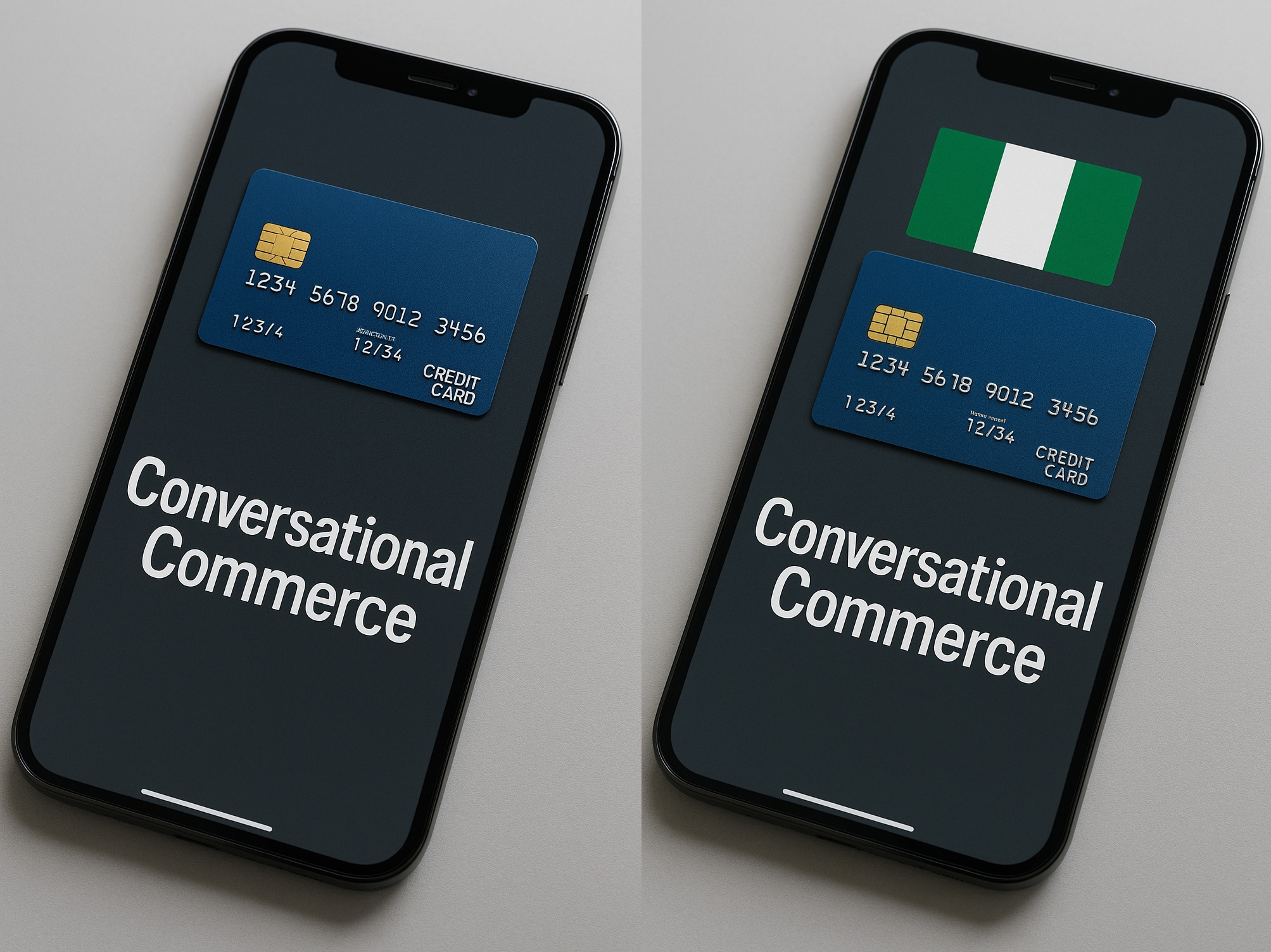
The Dawn of Conversational Commerce

0

A remarkable evolution is happening in global digital finance and Nigeria’s startup community must pay close attention. ChatGPT, the world’s most famous conversational machine, is being integrated into the future of payments. When that architecture matures, those who power ChatGPT will, inevitably, power the ChatGPT Store, the next frontier of commerce in the digital age.

India just unveiled a glimpse of that future. Through a partnership between the National Payments Corporation of India (NPCI), Razorpay, and OpenAI, a pilot program now enables AI-powered payments directly within ChatGPT. The initiative runs on India’s Unified Payments Interface (UPI), a platform already processing over 20 billion transactions monthly. With this fusion, India has effectively taught AI to collect money through conversation where commerce meets cognition.

India’s National Payments Corporation of India (NPCI), in partnership with fintech firm Razorpay and OpenAI, has launched a pilot program introducing AI-powered payments through ChatGPT, marking a new phase in the country’s digital finance evolution.

The initiative allows users to make purchases directly within ChatGPT using India’s Unified Payments Interface (UPI) network — a system that already handles more than 20 billion transactions monthly.

This moment is not just about payment; it is about the redefinition of interfaces. In the same way web browsers unlocked the Internet and app stores unlocked smartphones, conversational platforms like ChatGPT will unlock a new marketplace of interactions. For Nigerian innovators, this is an early call: the companies that build AI-anchored experiences today will become the merchants of tomorrow’s digital empires. And any company – hello Flutterwave, Interswitch, Touch and Pay, etc – which wins the ChatGPT checkout will be in a solid position in Nigeria.

OpenAI, NPCI, and Razorpay Partner to Launch AI-Driven UPI Payments on ChatGPT in India

Can XLM & XRP Surpass 2018 High? Digitap’s No-KYC Setup Drives Massive Whale Interest

0

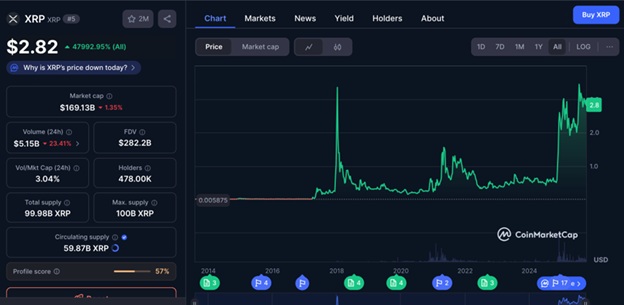
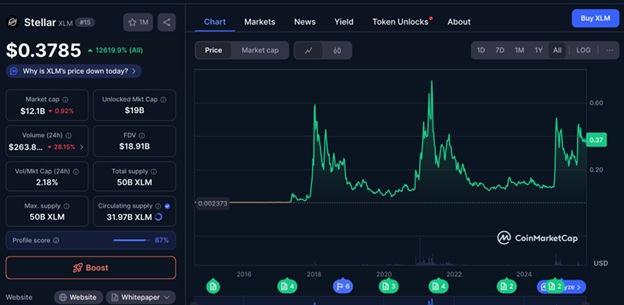
Market optimism is building once again as long-term holders prepare for the next wave of liquidity in the crypto sector. Among the more established players, Ripple (XRP) and Stellar (XLM) are being closely analyzed to see whether they can revisit previous highs of ~$3.40 and ~$0.70, respectively.

Yet the conversation isn’t just about legacy remittance networks—it’s about a project rapidly earning attention for inclusive finance. Digitap ($TAP), the world’s first omni bank, combines financial privacy with practical usability and offers zero-KYC onboarding that’s drawing interest from whale investors.

Digitap ($TAP): Where Privacy Meets Global Access

Digitap has entered the market with a clear goal: to make financial participation universal. While most banking systems rely on heavy identification checks that exclude much of the developing world, Digitap’s architecture takes a different path. The growing overlap between compliance, anonymity, and accessibility has made Digitap a serious talking point among analysts.

Its zero-KYC framework, permitted in compliant jurisdictions, allows users to open digital accounts, transact, and earn yield without exposing personal data unnecessarily. This appeals not only to privacy-conscious individuals but also to institutional players seeking scalable, regulatory-aligned alternatives to traditional banking.

At its core, Digitap functions as a full-service omni bank that merges both fiat and crypto accounts. Users can manage multi-currency IBANs, make instant global payments, and transfer value freely—all within a live working ecosystem. The project’s financial logic rests on accessibility rather than speculation.

Analysts note that the interest from large wallets and early venture participants reflects growing confidence in Digitap’s model. As global financial systems become more restrictive, projects offering both inclusion and privacy stand out as the best cryptos to invest in right now.

XRP ($XRP): Banking Bridges and Regulation Clarity

XRP has had a turbulent journey since 2018. Once seen as a disruptor to global remittances, it faced years of regulatory scrutiny. However, Ripple’s partial legal clarity in the United State has shifted sentiment. The project is now back in focus, especially as cross-border payments gain new importance.

At around $2.82, XRP has recovered from its lows, and traders are again watching liquidity metrics closely. Institutional adoption remains the biggest driver. Ripple’s partnerships with global banks and financial providers continue to grow. The difference this time is that XRP’s fundamentals are catching up to its long-term narrative.

Still, competition is intensifying. Even as XRP works to reclaim its previous highs, some traders are already reallocating portions of their holdings into early stage projects with more aggressive return potential, including Digitap, which is now frequently cited among the best crypto coins to invest in for those seeking growth.

Stellar ($XLM): A Shared Vision, Different Execution

Stellar was built to make global money transfers cheaper and faster. Over the years, it has partnered with remittance providers, fintech platforms, and even central banks exploring digital currencies. Its shared origins with Ripple give it a similar mission but a different governance structure. Where Ripple leans corporate, Stellar focuses on open access financial inclusion.

At around $0.37, Stellar remains at half the price of its previous peak nearing $0.70. However, on-chain data indicates a steady increase in active accounts and daily transactions. While not as explosive in performance as some newer chains, XLM’s consistent growth reflects its practical utility. The network has also leaned into stablecoin integrations, making it a quiet enabler of everyday cross-border value transfer.

That said, the market environment has changed since Stellar first launched. Privacy, user control, and integrated fiat on-ramps are now key differentiators. While Stellar still holds long-term value as a payment infrastructure coin, analysts suggest the bigger story may be unfolding within newer ecosystems designed around full financial sovereignty and immediate usability. Projects have to deliver, not just talk.

Why Digitap’s Model is Attracting Whale Interest

Digitap’s ecosystem is perfectly designed for a new era of financial inclusion. It’s already live, serving both individuals and businesses with a unified digital account structure. The platform’s compliant, zero-KYC setup bridges regulatory requirements with user autonomy, something traditional banks and many crypto exchanges still struggle to achieve.

Investors can become early adopters today with $TAP selling at just $0.0159—which could be the lowest ever entry. $TAP will jump 22% to $0.0194 in the next round, meaning anyone buying now can lock in gains almost instantly.

In contrast, XRP and XLM, while respected and established, may deliver smaller percentage returns due to their size and maturity. Taking into account 124% staking yields and deflationary economics, it’s easy to see why whales are showing interest in Digitap’s zero-KYC financial inclusion project over legacy remittance frameworks.


Discover how Digitap is unifying cash and crypto by checking out their project here:

Presale: https://presale.digitap.app

Website: https://digitap.app

Social: https://linktr.ee/digitap.app