DD
MM
YYYY

PAGES

DD
MM
YYYY

spot_img

PAGES

Home Blog Page 3615

Stablecoin fail to maintain Peg consistently, SUI Crypto Partners Microsoft, NEAR foundation introduces Data Availability Solution

0

Stablecoins, which are digital tokens that claim to be backed by fiat currencies or other assets, have been growing in popularity and adoption in recent years. However, a new report from the Bank of International Settlements (BIS) casts doubts on their ability to maintain their pegs consistently and reliably.

The report, titled “Stablecoins: risks, potential and regulation”, analyzes the performance of several major stablecoins during periods of market stress and volatility. It finds that some stablecoins exhibit significant deviations from their target values, especially when there is high demand for them or when their issuers face operational or regulatory challenges.

The report also warns that stablecoins pose a number of risks to financial stability, monetary policy and consumer protection. It argues that stablecoins need to be regulated and supervised in a comprehensive and consistent manner, both at the national and international levels. It also suggests that central bank digital currencies (CBDCs) could offer a more robust and efficient alternative to stablecoins, as they would be backed by the full faith and credit of the central bank.

CBDCs are not a panacea for the problems of currency devaluation and inflation. They are a tool that can complement other policies and reforms to address the underlying causes of these phenomena. However, they can offer a viable solution for enhancing the efficiency, resilience, and competitiveness of national currencies in the digital age.

The report concludes that stablecoins are not a panacea for the challenges of cross-border payments and financial inclusion, and that they need to be carefully assessed and monitored by regulators and policymakers. It also calls for more research and experimentation on the potential benefits and risks of CBDCs and other forms of digital money.

Central Bank Digital Currency in face of Currency Devaluation and Inflation

The world is witnessing a surge in inflation and currency devaluation, especially in emerging markets and developing countries. The causes are manifold: the COVID-19 pandemic, supply chain disruptions, fiscal and monetary stimulus, geopolitical tensions, etc. These factors have eroded the purchasing power of many national currencies and raised doubts about their stability and credibility.

In this context, some central banks are exploring the possibility of issuing their own digital currencies, or CBDCs. A CBDC is a form of legal tender that is issued and controlled by the central bank but exists in digital form. Unlike cryptocurrencies, which are decentralized and operate on blockchain technology, CBDCs are centralized and can use different technologies.

The potential benefits of CBDCs are numerous. They can enhance financial inclusion, reduce transaction costs, increase transparency, improve monetary policy effectiveness, and foster innovation. They can also provide a safe and reliable alternative to cash, which is often scarce or costly in some countries. Moreover, they can help preserve the sovereignty and autonomy of national currencies in the face of global competition and digitalization.

However, CBDCs also pose significant challenges and risks. They can disrupt the existing financial system, affect the profitability and intermediation role of commercial banks, create cybersecurity and privacy issues, and raise legal and regulatory questions. They can also have unintended consequences on the macroeconomic stability and international monetary system, especially if they are used across borders or as a reserve currency.

Therefore, central banks need to carefully weigh the pros and cons of CBDCs before deciding to issue them. They need to design them in a way that maximizes their benefits while minimizing their risks. They also need to coordinate with other central banks and international organizations to ensure a harmonized and coherent approach to CBDCs.

SUI Crypto Partners Microsoft, NEAR foundation introduces Data Availability Solution

Sui, a cryptocurrency that aims to provide decentralized data storage and management, has seen a significant increase in its value in the past week. The coin surged by 12% on Wednesday, reaching a new high of $0.597. The main catalyst for this rally was the announcement of a partnership with Microsoft, the tech giant that has been investing heavily in blockchain and cloud computing.

According to the official press release, Microsoft will integrate Sui’s data platform into its Azure cloud service, allowing users to store and access their data securely and efficiently across multiple devices and locations. Sui’s platform uses a network of nodes that are rewarded with Sui tokens for providing storage space and bandwidth. This creates a peer-to-peer system that is more scalable, resilient and cost-effective than traditional centralized servers.

The partnership with Microsoft is a major milestone for Sui, as it validates its vision and technology, and exposes it to a wider audience of potential customers and investors. Sui’s founder and CEO, expressed his excitement and gratitude in a blog post:

“We are thrilled to join forces with Microsoft, one of the most innovative and influential companies in the world. This collaboration will enable us to bring our data platform to the next level and offer a better service to our users and partners. We are grateful for Microsoft’s trust and support, and we look forward to working together to create a more decentralized and democratic data economy.”

Sui’s price is expected to continue its upward trend, as more users and developers adopt its platform and benefit from its features. Sui is also planning to launch more products and services in the near future, such as a decentralized identity system, a data marketplace and a governance mechanism. Sui is one of the most promising projects in the crypto space, and it has the potential to revolutionize the way we store and manage our data.

Near foundation introduces data availability solution to ease Ethereum’s burden

Near Foundation, a leading blockchain platform that aims to enable a decentralized web, has announced a new data availability solution that could help ease the congestion and high fees on the Ethereum network. The solution, called Aurora Data Bridge, is a cross-chain bridge that allows Ethereum developers and users to access data stored on the Near Protocol, a scalable and low-cost layer-1 blockchain.

According to Near Foundation, the Aurora Data Bridge leverages the sharded architecture of Near Protocol to provide fast and cheap data availability for Ethereum applications. The bridge uses a novel proof-of-custody scheme that ensures the security and integrity of the data transferred between the two chains. The bridge also supports arbitrary data types, such as NFTs, ERC-20 tokens, and smart contract state.

The Aurora Data Bridge is part of the Aurora project, which is a full-stack platform that enables Ethereum applications to run seamlessly on Near Protocol. Aurora aims to offer a scalable and interoperable solution for the Ethereum ecosystem, without compromising on security or user experience. Aurora claims to be fully compatible with Ethereum’s tooling, standards, and contracts, as well as offering lower fees and faster transactions.

Near Foundation believes that the Aurora Data Bridge could help alleviate some of the challenges faced by Ethereum developers and users, such as network congestion, high gas fees, and limited scalability. By providing an alternative data availability layer, the bridge could enable more efficient and innovative use cases for Ethereum applications, such as decentralized exchanges, gaming, DeFi, and NFTs.

The Aurora Data Bridge is currently in beta testing and is expected to launch in Q1 2022. Near Foundation invites interested developers and users to join the Aurora Discord channel and sign up for the Aurora newsletter to stay updated on the project’s progress and features.


Peter Obi Criticizes Allocation of N60 Billion for SUVs, Advocates Responsible Use of Public Resources

0

Peter Obi, the former presidential candidate of the Labour Party in the last Nigeria general election, has voiced strong criticism against the recent allocation of N60 billion by federal lawmakers for the purchase of SUV vehicles.

In a statement posted on X on Thursday, Obi expressed concern over what he considers a “troubling trend” of extravagant government spending, particularly in light of the limited resources available in Nigeria.

The former Anambra State governor contends that the allocation of SUVs for approximately 400 legislators exemplifies a larger issue in the country. He laments the neglect of crucial areas of development while substantial resources are directed towards unnecessary luxuries and conveniences for elected officials who are meant to serve the public.

“We have continued to abandon the critical areas of development measurement while expending scarce resources on needless luxury and creating comforts for those elected to serve the people,” he lamented.

One of the primary areas of concern highlighted by Obi is the state of primary healthcare, a critical aspect of public health and a key indicator of development. He points out that Nigeria’s infant mortality rates have surpassed that of India, a country with a population seven times larger.

Obi finds it distressing that a significant sum has been allocated for vehicles, an expenditure greater than what has been designated for primary healthcare.

“Our primary healthcare, which is the foundation of health, a critical development index measure, has collapsed, leading to our surpassing India, a country 7 times our population, in infant mortality, a very saddening situation,” said Obi.

“To allocate such a huge amount, which is more than what we allocated to our primary health care, is nothing but troubling,” he added.

Drawing from his experience as a former governor of Anambra State, Obi highlights his prudent use of resources. He suggests that with proper negotiation, one-third of the allocated amount could have been used to purchase locally manufactured SUVs from companies like Innoson Motors, PAN, or other local auto assembly plants. This, he argues, would not only stimulate the economy but also generate and maintain jobs.

He narrated, “Upon my being sworn in as the then Governor of Anambra State, I observed that our State High Court Judges, State Government Permanent Secretaries and newly appointed State Commissioners had no vehicles. The Anambra State Government had then ordered for two bulletproof SUV vehicles for my use. I canceled the order and used the same money to negotiate a concessionary pricing with Peugeot Automobiles to supply us with Sixty 406 vehicles which were enough for all the cabinet members including myself and my deputy governor.”

Obi emphasizes that such extravagant expenditures would not have been considered during his administration. He calls on all parties involved to steer away from this pattern of wasteful use of public resources, emphasizing that a more responsible and transparent Nigeria is achievable.

This statement from Obi adds to the ongoing discourse regarding the allocation of public funds. The purchase of multi billion naira SUVs by Nigerian lawmakers stirred strong criticism from members of the public who see it as a misplaced priority, especially as the country is grappling with soaring public debt.

Nigerian Government Replies Obi, Says Supplementary Budget Is A Necessary Response to Nigeria’s Challenges

0

The Minister of Information and National Orientation, Mohammed Idris, has come forward to defend the 2023 Supplementary Budget recently signed into law by President Bola Ahmed Tinubu. The minister emphasized that the budget is a necessary response to the current economic challenges facing the country.

This statement from Minister Idris follows criticism from the Labour Party’s presidential candidate, Peter Obi, who raised concerns over the approval of the N2.17 trillion supplementary budget by President Tinubu. Obi argued that certain emergencies and critical national needs were overlooked in the budget allocations.

“The government’s overall attitude does not indicate that it is aware that the country is in a huge crisis, nor is the government in tune with the plight of the generality of our people,” he said.

Obi added that, given the current challenging circumstances, Nigerians expect the government to demonstrate empathy and practicality rather than indulging in lavish expenditures. But instead, the Supplementary Budget, which includes luxury items for the president and his wife, portrays a government that is totally uncaring and insensitive to the suffering of the majority, and indifferent to the mood of the nation.

In response to this assertion, Minister Idris urged Obi to thoroughly familiarize himself with the details of the N2.17 trillion 2023 supplementary budget. He highlighted that the budget includes allocations for crucial sectors such as security, agriculture, infrastructure, worker wage increases, student loan schemes, and social safety nets.

According to Minister Idris, “The broad provisions in the supplementary budget is a reflection of President Tinubu’s strong desire and eagerness to support the vital functions of government, address urgent security needs, and fast-track the country’s recovery process from the economic impact occasioned by the removal of fuel subsidy.”

Furthermore, Minister Idris clarified that the supplementary budget was formulated through active engagement and consultation with relevant stakeholders. This ensured that the budgetary provisions align with the needs and expectations of Nigerians.

He also urged political opposition parties to exercise their right to differing opinions in an informed and balanced manner. Minister Idris emphasized the importance of refraining from misrepresenting facts for political gain.

In alignment with President Tinubu’s commitment to accountability and transparency in government expenditure, Minister Idris assured that all items in the supplementary budget have been meticulously scrutinized to ensure the efficient utilization of public funds.

The 2023 Supplementary Budget has been a subject of significant discussion and scrutiny. Many Nigerians have expressed concern that the budget will make any positive impact on the country’s economy, especially as the country grapples with the rising cost of living.

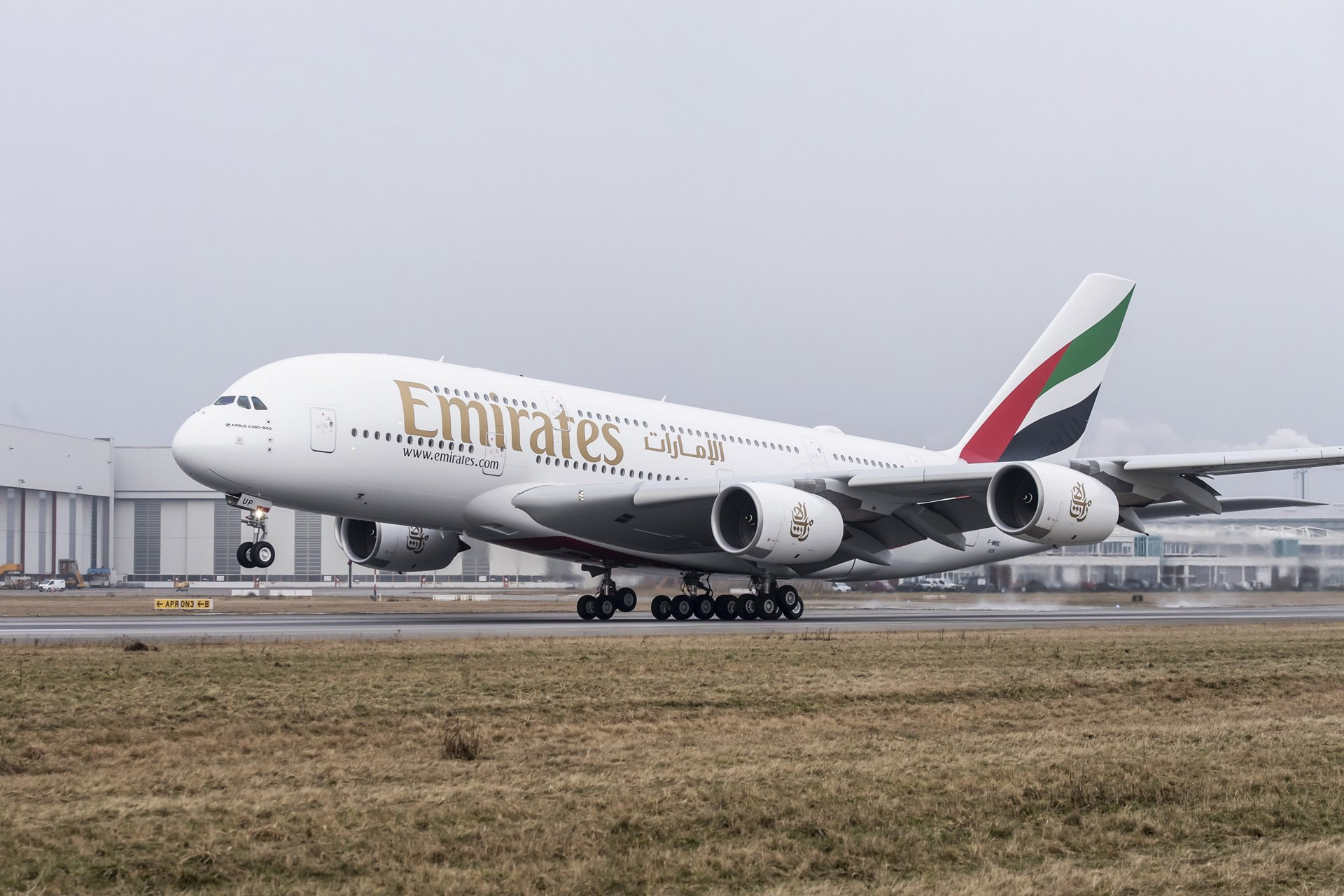
Emirates Group Posts $2.7bn Profit, Best-Ever Six-Month Financial Result

0

The Emirates Group, one of the world’s leading aviation and travel conglomerates, announced today its best-ever six-month financial result, marking a remarkable rebound from the challenges posed by the COVID-19 pandemic.

This milestone comes approximately a year after the suspension of its flight operations in Nigeria, which was considered one of its key markets.

For the 2023-24 half-year period, the Emirates Group reported a net profit of AED 10.1 billion (US$ 2.7 billion), a staggering 138% increase from the previous year’s record half-year profit of AED 4.2 billion (US$ 1.2 billion).

The impressive financial performance is attributed to strong operating profitability, reflected in the EBITDA of AED 20.6 billion (US$ 5.6 billion), up from AED 15.3 billion (US$ 4.2 billion) during the same period last year.

Revenue for the first half of 2023-24 stood at AED 67.3 billion (US$ 18.3 billion), a notable 20% surge from AED 56.3 billion (US$ 15.3 billion) recorded the previous year. This growth was primarily driven by the resurgent demand for air travel worldwide, following the easing of pandemic-related travel restrictions.

The Emirates Group maintained a robust cash position of AED 42.7 billion (US$ 11.6 billion) as of September 30, 2023, compared to AED 42.5 billion (US$ 11.6 billion) on March 31, 2023. Leveraging its strong cash reserves, the Group supported its business needs, including debt payments. To date, Emirates has successfully repaid AED 9.2 billion of its COVID-19-related loans. Additionally, the Group disbursed AED 4.5 billion in dividends to its owner at the conclusion of the 2022-23 financial year.

HH Sheikh Ahmed bin Saeed Al Maktoum, Chairman and Chief Executive of Emirates Airline and Group, expressed his satisfaction with the impressive performance, stating, “We are seeing the fruition of our plans to return stronger and better from the dark days of the pandemic. The Group has surpassed previous records to report our best-ever half-year performance.”

He credited the achievement to the dedication and talent within the organization, the resilience of the business model, and the visionary policies of Dubai that have fostered a robust aviation sector.

Looking ahead to the second half of 2023-24, Sheikh Ahmed highlighted the expectation of continued healthy demand across business divisions. However, he acknowledged potential challenges such as rising fuel prices, a strengthening US dollar, inflationary costs, and geopolitical factors, which the Group will carefully monitor.

To accommodate increased operations, the Emirates Group’s employee base grew by 6%, reaching a total of 108,996 as of September 30, 2023. Both Emirates and dnata are actively recruiting to meet future requirements.

Emirates Airlines, a flagship of the Emirates Group, expanded its global flight operations during the first half of 2023-24, restoring A380 operations to several destinations and launching daily non-stop services to Montreal, Canada. The airline also strengthened its connectivity options through codeshare and interline agreements with eight partner airlines.

Emirates operated passenger and cargo services to 144 airports, utilizing its entire Boeing 777 fleet and 104 A380s. The deployment of 10 retrofitted A380 aircraft with refreshed cabin interiors and Premium Economy services on select routes further enhanced the customer experience.

The airline achieved outstanding results, with a record profit of AED 9.4 billion (US$ 2.6 billion) for the first half of 2023-24, compared to AED 4.0 billion (US$ 1.1 billion) in the same period the previous year. Emirates’ revenue, including other operating income, totaled AED 59.5 billion (US$ 16.2 billion), a 19% increase from AED 50.1 billion (US$ 13.7 billion) in the corresponding period last year.

With ongoing challenges and increased operations, Emirates’ EBITDA surged by 33% to AED 19.5 billion (US$ 5.3 billion) during the first half of the year.

dnata, the Emirates Group’s ground handling, catering, retail, and travel services division, also reported strong revenue growth in the first half of 2023-24. The division’s notable achievements include significant new contracts in catering and airport services, strategic investments, and the implementation of innovative technology to enhance its operations.

dnata’s revenue, including other operating income, reached AED 9.3 billion (US$ 2.5 billion), up 27% from AED 7.3 billion (US$ 2.0 billion) in the same period last year. The division’s overall profit stood at AED 709 million (US$ 193 million), a substantial increase from AED 236 million (US$ 64 million) in the corresponding period the previous year.

dnata’s airport operations remained a key contributor to revenue, recording AED 4.1 billion (US$ 1.1 billion), an 18% increase. The division’s flight catering and retail operations contributed AED 3.5 billion (US$ 942 million) to revenue, up 45%. dnata’s travel division contributed AED 1.4 billion (US$ 375 million) to revenue, reflecting a 16% increase.

The Emirates Group’s exceptional performance in the first half of 2023-24 signals a strong recovery and underscores its resilience in the face of ongoing challenges in the global aviation and travel industry. Emirate Airlines suspended its operation in Nigeria due to its inability to repatriate earned funds running into $100 million.

OpenAI Chatbot ChatGPT Suffers Periodic Outages Due to Suspected DDoS Attack

0

Artificial Intelligence company OpenAI recently disclosed that its AI chatbot ChatGPT, suffered periodic outages due to a suspected DDoS (Distributed Denial-of-service) attack.

This was disclosed after several users who attempted to access the chatbot were met with a message stating that “ChatGPT is at capacity right now”, also some users were met with messages “There was an error generating the response”, with several others unable to log in to the service.

OpenAI CEO Sam Altman had initially blamed the problem on the platform’s newly launched features, which were unveiled at the company’s developer conference held on Monday.

He wrote,

“Usage of our new features from dev day is far outpacing our expectations. We were planning to go live with GPTs for all subscribers on Monday but still haven’t been able to. We are hoping to soon. there will likely be service instability in the short term due to load. sorry”.

However, the platform continued to witness periodic outages, and upon further investigation, it was discovered that such occurrences were caused by (DDoS) attack that affected the company and its products.

The company wrote,

“We are dealing with periodic outages due to an abnormal traffic pattern reflective of a DDoS attack. We are continuing work to mitigate this.”

OpenAI did not disclose the gravity of the suspected DDoS Attack. Meanwhile, in a series of Telegram messages seen by TechCrunch, hacktivist group Anonymous Sudan took credit for the alleged attack. It claimed that its reason for attacking OpenAl is due to the company’s general bias towards Israel and against Palestine.

Speaking on OpenAI’s recent attack, global cybersecurity advisor with software company ESET, Jake Moore said, DDoS attacks are a clever way of targeting a company without having to hack the mainframe and that the perpetrators can remain largely anonymous.

“This makes it that much more difficult to protect from when the landscape is completely unknown apart from having the strongest DDoS protection available. Unfortunately, OpenAI remains one of the most talked about and current technology companies making it a typical target for hackers wanting their kudos”, he added.

The suspected attack follows OpenAI’s first-ever developer conference earlier this week, where it claimed ChatGPT has reached the milestone of 100m weekly users.

DDoS Attacks

As technology becomes more advanced, there are reports that Distributed Denial-of-service (DDoS) attacks have continued to increase.

A recent study disclosed that the number of DDoS attacks is up 40% over the last six months, increasingly targeting sectors such as banking, e-commerce, and education.

These attacks have been proven to have a significant impact on organizations, causing financial loss and reputational damage and, as they are growing more frequent, DDoS disruptions continue to pose a real threat to businesses. 

The continued rise in DDoS attacks has alerted major cybersecurity institutions such as the U.S. Cybersecurity and Infrastructure Security Agency (CISA), which has recently issued a warning on the dangers of this malicious tactic. 

The CISA advises organizations that suspect they have fallen victim to a DDoS attack to identify the source and mitigate the situation by applying firewall rules.