DD
MM
YYYY

PAGES

DD
MM
YYYY

spot_img

PAGES

Home Blog Page 3616

Tekedia Unveils a 1:1 (one-to-one) Live Video Consultation with Ndubuisi Ekekwe

0

Tekedia Institute unveils a 1:1 (one-to-one) live video consultation with Ndubuisi Ekekwe.

Book a 1:1 (one-to-one) live video consultation and get top-grade personalized professional advice with Prof Ndubuisi Ekekwe. Discuss your business or your career with an expert the South African press called a “doctor of innovation”. If the 1:1 is not for you, you can gift a session to another person (friends, family member, coworkers, mentees, etc).

The video call duration is 60 minutes and costs $300 or N200,000. Click here to learn more and sign-up.

Central Bank Digital Currency Can Replace Cash – IMF Managing Director

0

In a recent speech, the Managing Director of the International Monetary Fund (IMF), Kristalina Georgieva, discussed the potential benefits and challenges of central bank digital currency (CBDC), a new form of money that is issued digitally by the central bank and can be used as legal tender. She argued that CBDC could replace cash in some situations, especially in countries where the demand for cash is declining and the use of digital payments is increasing.

According to Georgieva, CBDC has several advantages over cash, such as lower transaction costs, faster settlement, greater financial inclusion, and enhanced monetary policy transmission. She also acknowledged some of the risks and trade-offs involved in issuing CBDC, such as cybersecurity threats, privacy concerns, financial stability implications, and cross-border spillovers.

She emphasized that the design and implementation of CBDC should be carefully tailored to the specific circumstances and needs of each country, and that international cooperation and coordination are essential to avoid negative externalities and ensure a level playing field.

Why CBDCs are the future of money

Cash is becoming obsolete. More and more people are using digital payments, such as credit cards, mobile wallets, and online platforms, to buy goods and services. But what if there was a better way to pay digitally? A way that is more secure, efficient, and inclusive than the current system?

That’s where central bank digital currencies (CBDCs) come in. CBDCs are a new form of money that are issued and backed by the central bank of a country. They are not physical coins or notes, but digital tokens that can be stored and transferred electronically. Unlike cryptocurrencies, such as Bitcoin, CBDCs are not decentralized or anonymous. They are regulated and controlled by the central bank, which can monitor and verify every transaction.

CBDCs have many potential benefits for both individuals and businesses. For individuals, CBDCs can provide faster, cheaper, and more convenient access to money. They can also reduce the risks of fraud, theft, and counterfeiting. For businesses, CBDCs can lower transaction costs, increase efficiency, and enable new business models. They can also foster innovation and competition in the financial sector.

But perhaps the most important benefit of CBDCs is that they can replace cash. Cash is costly to produce, distribute, and maintain. It is also vulnerable to loss, damage, and theft. Moreover, cash is inefficient and exclusionary. It slows down economic activity and limits financial inclusion. Many people around the world do not have access to bank accounts or formal financial services. They rely on cash for their daily needs, but they face many challenges and barriers to participate in the digital economy.

CBDCs can solve these problems by providing a universal and accessible form of money. Anyone with a smartphone or a digital wallet can use CBDCs to pay for anything, anywhere, anytime. CBDCs can also enable cross-border payments and remittances, which are often expensive and slow with the current system. CBDCs can also support financial inclusion by offering low-cost and user-friendly financial services to the unbanked and underbanked populations.

CBDCs are not just a hypothetical idea. Many central banks around the world are actively researching, developing, and testing CBDCs. Some countries, such as China, Sweden, and the Bahamas, have already launched pilot projects or trials of CBDCs. Others, such as Canada, Japan, and the UK, are exploring the feasibility and design of CBDCs. The global interest and momentum for CBDCs is growing rapidly.

CBDCs are the future of money. They can offer a better way to pay digitally than cash or existing payment systems. They can also enhance the efficiency, security, and inclusiveness of the monetary system. CBDCs can transform the way we use money and create new opportunities for economic growth and development.

Georgieva concluded her speech by stating that the IMF is ready to support its member countries in exploring and developing CBDC, by providing technical assistance, policy advice, and capacity building. She also announced that the IMF will soon launch a new website dedicated to CBDC, where it will share its research, analysis, and best practices on this topic. She invited all interested parties to visit the website and join the conversation on CBDC.

Would You Invest In Binance Changpeng Zhao’s Next Business?

0

Changpeng Zhao, also known as CZ, is the founder and former CEO of Binance, the world’s largest cryptocurrency exchange by trading volume. He is also one of the most influential figures in the crypto industry, with a net worth of over $1.9 billion as of November 2023.

But CZ is not just a successful entrepreneur. He is also a visionary who has a clear idea of where the future of finance is heading. He believes that blockchain technology and decentralized applications (DApps) will revolutionize the way people interact with money, assets, and services.

That’s why he is always looking for new opportunities to invest in and support innovative projects that align with his vision. He has backed dozens of startups and initiatives in the crypto space, such as Trust Wallet, CoinMarketCap, Swipe, Travala, and many more.

But what if CZ decided to start a new business venture outside of Binance? What if he wanted to apply his expertise and resources to a different industry or domain? Would you invest in his next business?

There are many reasons why you might want to consider doing so. Here are some of them:

CZ has proven himself as a leader who can execute and scale a global business in a highly competitive and dynamic market. He has built Binance from scratch in less than four years, overcoming multiple challenges and regulatory hurdles along the way. He has also managed to maintain a loyal and engaged community of users, partners, and developers around the world.

CZ has a deep understanding of the blockchain technology and its potential applications across various sectors and use cases. He has been involved in the crypto space since 2013, when he sold his house to buy Bitcoin. He has also worked as a developer for several blockchain projects, such as Blockchain.info and OKCoin. He knows how to identify and evaluate the technical and commercial viability of new ideas and solutions.

CZ has a strong network of connections and influence in the crypto industry and beyond. He has established strategic partnerships with leading players in the fields of finance, technology, media, entertainment, travel, gaming, and more. He has also been featured in numerous publications and events as an expert and thought leader on blockchain and crypto topics. He has access to valuable resources and information that can help him launch and grow his next business.

CZ has a passion for innovation and social impact. He is not driven by money or fame, but by his vision of creating a more inclusive, transparent, and efficient financial system for everyone. He is always looking for ways to improve the user experience, lower the barriers to entry, and increase the adoption of blockchain and crypto solutions. He is also committed to giving back to the society through philanthropic initiatives, such as the Binance Charity Foundation.

These are just some of the reasons why you might want to invest in CZ’s next business. Of course, there are no guarantees that his next venture will be as successful as Binance or that it will align with your personal goals and values. But if you believe in his vision and trust his abilities, you might want to follow his footsteps and join him on his journey to shape the future of finance.

Binance Records Withdrawal Exceeding $1 Billion From Users, After CEO Pleaded Guilty to Money Laundering Case

Meanwhile, recent reports have disclosed that Binance, one of the world’s leading crypto exchange platforms, has recorded a withdrawal of more than $1 billion, as customers are reacting to the CEO Changpeng Zhao’s step down after he pleaded guilty to a money laundering case.

According to data provider Kaiko, it disclosed that the issue has also led to a drop in liquidity by 25% over the same time frame as market makers pull back their positions. The exchange’s native token BNB, is also down more than 8% in the last 24 hours.

Speaking on this, market analyst Grzegorz Drozdz said,

“The cryptocurrency that seems to have suffered the most, losing more than 9%, is the BNB token from Binance. Of the top 100 cryptocurrencies, as many as 98 have seen a noticeable rebound over the past 24 hours. Bitcoin, meanwhile, fell 4% before rebounding and remaining with a loss of 1.3%”.

Drozdz added that it may be a net positive for the industry now that the dispute with regulators is behind Binance and that the company has pledged to increase security measures.

The withdrawals recorded on Binance so far, are reportedly significant and close to what happened when the exchange and its founder in June this year, were charged with 13 securities violations by the SEC.

In June 2023, the U.S. regulator alleged that Zhao and his exchange worked to subvert their controls to allow high-net-worth U.S. investors and customers to continue trading on Binance’s unregulated international exchange.

This saw Binance and its U.S. affiliate hit with more than $790 million in withdrawals in 24 hours after the Securities and Exchange Commission (SEC) filed a lawsuit against them.

Binance’s native BNB token was down over 12% when the lawsuit was announced, while its BUSD stablecoin lost another 1% of its market cap.

With the recent withdrawals recorded on Binance following Zhao’s step down and his money laundering case, Nansen a blockchain analytics platform, announced that assets of more than 65 billion dollars remain on the platform, meaning that Binance is likely to withstand a sudden rush of investors away from the platform.

Notably, Binance has agreed to pay $4.3 billion in fines to the U.S. government. As part of the settlement with the Department of Justice, the company’s CEO Zhao, is personally paying $50 million and is barred from any involvement with Binance.

Zhao’s guilty plea and the resulting settlement represent a stark contrast to Binance’s earlier claims of progress in global regulatory compliance. The company had emphasized its commitment to strengthening client checks and building the best security and compliance platform in the crypto industry.

Several experts have said that Binance is likely to make it through the ordeal despite a turbulent situation. They cited the company’s decision to comply with the process and implement a three-year strategy to get its operations into compliance, and the amount of assets held within the company’s reserves.

Yesha Yadav, Milton R. Underwood professor of law and associate dean at Vanderbilt University, said,

“The sum of $4 billion is clearly very large and will create real pain for Binance’s balance sheet”.

He however added that the fine does not appear to be dealing a fatal blow to the exchange, which he doubts that Binance will face risks to its solvency in paying this fine.

However, despite the recent challenges, Binance still accounts for about all of the global crypto trading volumes,

The Rule In Foss v Harbottle and The Majority Rule; Legislative Drafting In Nigeria

0

The minority rights protection serves as an exception and protection from the harsh effects of the principle of Corporate Law established in the English case of Foss v Harbottle. This article will be looking at the legal rationale established in that case and its application in Nigeria today as a Common Law jurisdiction itself.

What is the principle of majority rule?

It is a well established principle that a company is a separate legal person from its members. Once it is accepted that the company is a legal person, it follows that if a wrong is done to the company, the company is the proper person to bring an action. 

Therefore,as a rule, when a company is incorporated and is a going concern, the wish of the majority must prevail as it is important that the principle of democracy should prevail.

A company must therefore, act in accordance with the decisions taken by the majority of its members willing and able to vote.

Also, it is part of the rule that once powers have been delegated to directors, the majority cannot derogate from the powers of the directors for the day-to-day management of the company. However, the power of the majority rule extends to every facet of the company’s affairs. The majority of members have the power to :

  1. Alter the Memorandum and Articles of Association of the company.
  1. They appoint and dismiss the directors.
  1. If they so desire, they can put an end to the business.

What is the rationale for the rule in Foss v Harbottle?

In the English case of Foss v Harbottle, the court in a suit between a company’s shareholders and directors over a secret profit allegation held that the company’s board of directors was still in existence, and since it was still possible to call a general meeting of the company, there was nothing stopping the company from obtaining redress in its corporate character and that the action of the claimants who were shareholders in the company could not be sustained.

This principle has been held to apply not only to incorporated bodies but also to unincorporated associations and has been adopted in Nigerian cases like Abu Bakare v Smith (1973) 6 SC 31.

The rationale of the rule in Foss v Harbottle is based on the following :-

  1. If every individual member of a company were permitted to sue anyone who had injured the company through a breach of duty, there could be as many actions as there are shareholders, that is, it prevents the multiplicity of suits.
  1. Legal proceedings would never cease and there would be enormous wastage of time and money.
  1. A defendant in a corporate litigation matter will be better protected if the company is the main plaintiff because the defendants rights like counterclaim, set-off,etc, are preserved if the company is sued.
  1. If an individual member could sue a person who had caused loss to the company and the company then ratified that person’s act at a general meeting, then a legal proceeding would be quite useless, for a court will naturally hold that the will of the majority prevails. This is essentially based on the Partnership doctrine that the court will not interfere in matters of internal management. Courts will generally not act in vain. This is based on one of the maxims of Equity that ” Equity will not act in vain”. This has been established in many common law cases so far. 

Legislative Drafting In Nigeria 

This article will be looking at the practice of legislative drafting which is the process of creating a law(legislation) through the legal skill of  preparing a bill(proposed law) through draftsmanship. 

What are the stages of legislative drafting? 

  1. Receiving and understanding the instructions to draft a bill. 
  1. Analyzing the instruction, areas of danger, and practicability of the proposed law. 
  1. Designing the draft. 
  1. Composition/actual preparation of the bill using precedents where available.

 Further scrutiny.

What are the parts of a legislation? 

– Legislations are divided into sections containing one idea, and if long, it should be broken into subsections dealing with related ideas. 

– Sections are numbered in unbracketed Arabic numerals. 

– Subsections in bracketed Arabic numerals. 

– Paragraphs in bracketed small alphabets. 

– Subparagraphs in bracketed Roman numerals. 

– Punctuation marks form part of a legislation.

In summary, legislations are divided into 4 segments : 

  1. Preliminary provisions. 
  1. Principal segments. 
  1. Miscellaneous provisions. 
  1. Final provisions. 

What are the components of the preliminary provisions of a legislative draft? 

  1. The long title 
  1. The preamble 
  1. The enacting clause 
  1. The short title 
  1. The commencement  
  1. The interpretation clause 
  1. The application clause.

What are the components of a legislative draft’s principal provisions? 

  1. The substantive provisions 
  1. The administrative provisions

What are the components of the miscellaneous section of a legislative draft? 

  1. The offenses and penalties clause 
  1. Supplementary provisions on making of subsidiary legislation 
  1. Indemnity clauses 
  1. Services of notices 
  1. Powers of entry clauses 
  1. Search, seizure and arrest clause 

What are the components of the final provisions chapter of a legislative draft? 

  1. The transitional provisions 
  1. Repeal & consequential amendments 
  1. Schedules. 

What are the tools of judicial interpretation necessary for understanding the intention of a legislative draft? 

Courts cannot invite lawmakers to explain the law, they must find their intention. Where there are mistakes, the court can correct them, and where there are gaps/lacunae in a law, the courts cannot fill these gaps.  

The available tools of judicial interpretation revolve mainly around the following:- 

  1. The Interpretation Act/laws of Nigeria/various states. 
  1. Definition clauses in a law 
  1. Law dictionaries 
  1. Case Law (Stare Decisis).  
  1. Rules of interpretation (the mischief rule, the golden rule, the literal rule, the Ejusdem Generis rule, etc.,).

If Cryptocurrency Exchanges Want To Operate In U.S. “they must play by the rules”

0
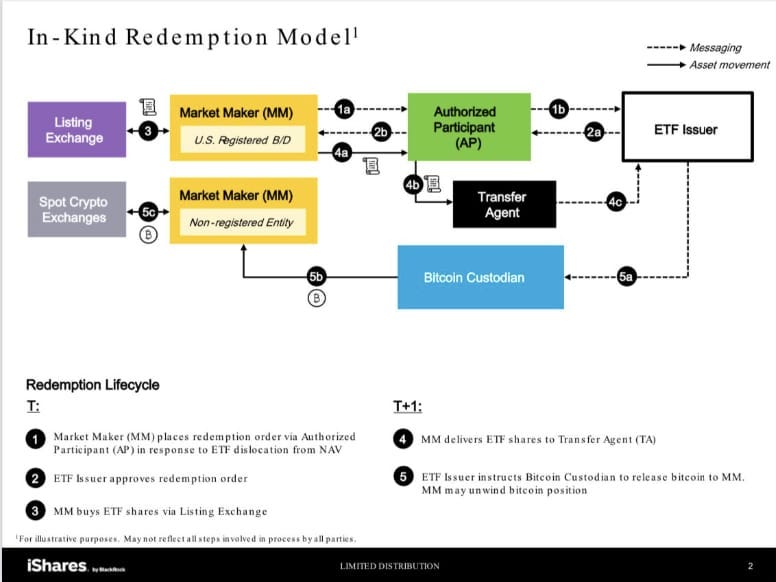
BlackRock, the world’s largest asset manager, has met with the U.S. Securities and Exchange Commission (SEC) to discuss its proposed spot Bitcoin ETF, according to a new filing. The company revealed more details about its product, which aims to provide investors with exposure to the actual Bitcoin cryptocurrency, rather than futures contracts or other derivatives.

According to the filing, BlackRock met with SEC staff on November 16, 2023, and presented its case for why its spot Bitcoin ETF should be approved. The company argued that its product would offer several benefits to investors, such as:

Lower costs and risks compared to futures-based ETFs, which incur higher fees, margin requirements, and rollover risks. Greater transparency and liquidity compared to private funds or trusts, which may trade at significant premiums or discounts to their net asset value (NAV). Enhanced security and custody arrangements, as BlackRock would partner with reputable third-party custodians that are regulated and audited.

Diversification and innovation opportunities, as a spot Bitcoin ETF would allow investors to access a new asset class that has low correlation with traditional markets and offers exposure to the potential of blockchain technology.

BlackRock also addressed some of the concerns that the SEC has raised about spot Bitcoin ETFs in the past, such as:

Market manipulation and fraud, which BlackRock claimed could be mitigated by using multiple data sources, robust surveillance tools, and independent valuation methods. Investor protection and education, which BlackRock pledged to provide through clear disclosures, risk warnings, and investor outreach programs.

Regulatory coordination and oversight, which BlackRock suggested could be enhanced by working closely with other regulators, such as the Commodity Futures Trading Commission (CFTC), the Financial Industry Regulatory Authority (FINRA), and state authorities.

BlackRock is one of several companies that have filed for a spot Bitcoin ETF in the U.S., hoping to capitalize on the growing demand for crypto-related products. However, so far, the SEC has only approved futures-based Bitcoin ETFs, which track the price of Bitcoin through contracts traded on regulated exchanges. The SEC has repeatedly expressed its reservations about spot Bitcoin ETFs, citing the lack of regulation and transparency in the underlying crypto market.

It is unclear whether BlackRock’s meeting with the SEC will sway the regulator’s stance on spot Bitcoin ETFs, or when a decision will be made. The SEC has not set a deadline for reviewing BlackRock’s application, which was filed in October 2023. However, some analysts believe that the SEC may be more open to approving spot Bitcoin ETFs in 2024, as the crypto market matures, and more regulatory clarity emerges.

U.S. Treasury Secretary says if cryptocurrency exchanges want to operate in the U.S. “they must play by the rules.” If they do not, the U.S. government will take action.” The U.S. Treasury Secretary has issued a stern warning to cryptocurrency exchanges that operate in the U.S. market, saying that they must comply with the existing regulatory framework or face the consequences.

In a speech at the Financial Crimes Enforcement Network (FinCEN) conference, the Treasury Secretary said that the U.S. government is committed to ensuring that the cryptocurrency sector does not pose a threat to the national security, financial stability, or consumer protection.

He said that cryptocurrency exchanges are subject to the same rules and regulations as traditional financial institutions, such as anti-money laundering (AML), counter-terrorism financing (CTF), and sanctions compliance.

He added that the Treasury Department, along with other federal agencies, is closely monitoring the activities of cryptocurrency exchanges and will not hesitate to take action against those who violate the law.

He said: “We want to foster innovation and responsible use of cryptocurrencies, but we also want to prevent them from being used for illicit purposes. Cryptocurrency exchanges that want to operate in the U.S. must play by the rules. If they do not, the U.S. government will take action.”

Kingdom of Bhutan spent millions building its own Bitcoin mining operation— Forbes

Meanwhile, the small Himalayan nation of Bhutan has made a bold move to embrace the cryptocurrency revolution. According to a recent report by Forbes, the Kingdom of Bhutan has spent millions of dollars building its own Bitcoin mining operation, hoping to use the profits to boost its economy and diversify its sources of income.

Bhutan is a landlocked country with a population of about 800,000 people, mostly dependent on hydropower, tourism and agriculture. However, the Covid-19 pandemic has severely affected these sectors, causing a sharp decline in the country’s gross domestic product (GDP) and foreign exchange reserves. To make matters worse, Bhutan faces a chronic trade deficit with its neighbors, especially India, which supplies most of its essential goods and services.

To address these challenges, Bhutan has decided to tap into the potential of Bitcoin, the world’s largest and most popular cryptocurrency. Bitcoin is a decentralized digital currency that operates on a peer-to-peer network of computers, without the need for intermediaries or central authorities.

Bitcoin transactions are verified and recorded on a public ledger called the blockchain, which ensures transparency and security. Bitcoin miners are the ones who perform this verification process, using specialized hardware and software to solve complex mathematical problems and earn new bitcoins as a reward.

Bhutan has invested in building its own Bitcoin mining facility, using its abundant and cheap hydropower resources to run the machines. The facility is located in a remote area of the country, away from populated centers and potential threats. The facility is also equipped with advanced cooling systems and security measures to ensure optimal performance and safety.

According to Forbes, Bhutan hopes to use the Bitcoin mining operation as a source of income and innovation for its economy. The country plans to sell some of the bitcoins it mines on the global market, generating foreign exchange and reducing its trade deficit. The country also intends to use some of the bitcoins to fund social welfare programs, such as health care, education and environmental protection.

Moreover, Bhutan aims to foster a culture of entrepreneurship and technological development among its citizens, by encouraging them to learn about and participate in the cryptocurrency ecosystem.

Bhutan’s decision to embrace Bitcoin is not without risks and challenges. The cryptocurrency market is highly volatile and unpredictable, subject to fluctuations in supply and demand, as well as regulatory uncertainties and cyberattacks. Bitcoin mining also consumes a lot of energy and generates a lot of heat and noise, which could have environmental and social impacts.

Furthermore, Bhutan may face opposition or pressure from other countries or institutions that are skeptical or hostile towards Bitcoin and its implications for the global financial system.

However, Bhutan is not alone in its quest to harness the power of Bitcoin. Several other countries, especially in Africa and Latin America, have also shown interest or taken steps to adopt Bitcoin as a legal tender or a reserve asset. These countries share some of the same challenges as Bhutan, such as economic instability, currency devaluation, inflation, corruption and financial exclusion. They also see Bitcoin as an opportunity to empower their people, enhance their sovereignty and integrate into the global economy.

Bhutan’s experiment with Bitcoin is an example of how a small country can use innovation and courage to overcome its limitations and pursue its aspirations. Whether it succeeds or fails, Bhutan’s venture will surely inspire other nations and individuals to explore the possibilities and challenges of the cryptocurrency revolution.