DD
MM
YYYY

PAGES

DD
MM
YYYY

spot_img

PAGES

Home Blog Page 3616

OpenAI responds to Musk’s lawsuit, says “he wanted full control”

0

In the latest development of the ongoing dispute between Elon Musk and OpenAI, the latter has responded to Musk’s lawsuit with a detailed rebuttal, shedding light on the intricacies of their disagreement.

The conflict revolves around the original mission of OpenAI as a nonprofit organization and its alleged deviation from that mission. In a blog post published on Tuesday, OpenAI announced its intention to dismiss “all of Elon’s claims” and provided its own account of the events leading up to the dispute.

The mission of OpenAI, as reiterated by the organization, is to ensure that artificial general intelligence (AGI) benefits all of humanity, encompassing the construction of safe and beneficial AGI and the distribution of its benefits. OpenAI highlighted the significant resources required for achieving this mission, stating that the realization of AGI would necessitate far more resources than initially anticipated.

Elon Musk, a key figure in the early stages of OpenAI, had suggested a substantial initial funding commitment of $1 billion to the organization. However, it is revealed that OpenAI has raised less than $45 million from Musk himself, with additional funding exceeding $90 million from other donors. This contrast in financial support sets the stage for the underlying tension between Musk and OpenAI.

The divergence in perspectives between Musk and OpenAI became apparent in discussions about transitioning the organization into a for-profit entity to acquire the necessary resources for AGI development.

“We spent a lot of time trying to envision a plausible path to AGI. In early 2017, we came to the realization that building AGI will require vast quantities of compute. We began calculating how much compute an AGI might plausibly require,” OpenAI said in the blog post. “We all understood we were going to need a lot more capital to succeed at our mission—billions of dollars per year, which was far more than any of us, especially Elon, thought we’d be able to raise as the non-profit.”

We and Elon recognized a for-profit entity would be necessary to acquire those resources, the company added.

Musk purportedly advocated for either merging OpenAI with Tesla or assuming full control of the organization. However, disagreements arose regarding the extent of Musk’s control over OpenAI, leading to an impasse in negotiations.

“As we discussed a for-profit structure in order to further the mission, Elon wanted us to merge with Tesla or he wanted full control,” including “majority equity, initial board control, and to be CEO,” according to the post, which is authored by OpenAI co-founders Greg Brockman, Ilya Sutskever, John Schulman, Sam Altman, and Wojciech Zaremba. “We couldn’t agree to terms on a for-profit with Elon because we felt it was against the mission for any individual to have absolute control over OpenAI.”

Musk’s lawsuit against OpenAI alleges that the organization has become a “closed-source de facto subsidiary” of Microsoft, prioritizing profit-making over its original nonprofit mission. This accusation forms the basis of Musk’s claim of breach of contract, although no formal agreement between Musk and OpenAI has been publicly disclosed.

In response, OpenAI said the shift to a for-profit was a mutual agreement, which was not honored because they couldn’t reach a consensus on other issues.

“In late 2017, we and Elon decided the next step for the mission was to create a for-profit entity. Elon wanted majority equity, initial board control, and to be CEO. In the middle of these discussions, he withheld funding. Reid Hoffman bridged the gap to cover salaries and operations,” it said.

We couldn’t agree to terms on a for-profit with Elon because we felt it was against the mission for any individual to have absolute control over OpenAI, the company added.

Musk was said to have sent an email to other members of the board in early February 2018, suggesting that OpenAI should “attach to Tesla as its cash cow”, commenting that it was “exactly right… Tesla is the only path that could even hope to hold a candle to Google. Even then, the probability of being a counterweight to Google is small. It just isn’t zero”

OpenAI contends that Musk’s departure from the organization was amicable, with Musk expressing support for OpenAI’s pursuit of its mission independently.

“Elon soon chose to leave OpenAI, saying that our probability of success was 0, and that he planned to build an AGI competitor within Tesla. When he left in late February 2018, he told our team he was supportive of us finding our own path to raising billions of dollars,” it said.

In an earlier response to the lawsuit, Altman and OpenAI CSO Jason Kwon addressed staff in a memo quoted by the Wall Street Journal, refuting Musk’s claims and suggesting personal motivations behind the legal action. “We believe the claims in this suit may stem from Elon’s regrets about not being involved with the company today,” the memo stated.

Despite Musk’s departure, OpenAI has continued to make strides in advancing its mission, including the development of widely accessible AI tools that benefit various sectors, such as agriculture, healthcare, and language preservation.

“We’re sad that it’s come to this with someone whom we’ve deeply admired—someone who inspired us to aim higher, then told us we would fail, started a competitor, and then sued us when we started making meaningful progress towards OpenAI’s mission without him,” OpenAI noted in the blog post.


The Naira’s Engineering Thermodynamics and Material Strength

0

Poor Naira: “The official exchange rate of the Nigerian naira against the US dollar experienced a sharp decline, ending its three-day winning streak on Tuesday, March 5, 2024. According to data published by the Financial Markets Dealers Quotations (FMDQ), quoted by Nairametrics, the naira fell by 4.26% to N1602.43 per US dollar, compared to N1534.19/$1 recorded previously.”

I took two courses in FUTO which I did not really like (boring stuff for an EEE major). One was ENG 301 – Strength of Materials, and another was ENG 207 – Engineering Thermodynamics. In thermodynamics, the Prof (then Dr Onwuka), noted that an object will float in a fluid if its density is less than the fluid’s density. If the object’s density is greater than the fluid’s density, it will sink. If the object’s density is equal to the fluid’s density, it will remain suspended in the fluid. For the strength of material, they noted that in a floating engineering design, you must consider longitudinal forces from other forces like wind, to have a robust design.

The questions for Naira today are:

(1) Can Naira float on the fluid density which is Nigeria’s economy which remains finance-driven with no clear strategy on a production-driven playbook?

(2) Also, even if it can float on that economic density on a finance-first policy, can it surmount the longitudinal forces where it seems the young people are disconnected from any national vision?

Naira needs great engineering thermodynamics and material strength within the context of economics to advance. If you cannot, SUSPEND floating Naira.

Naira Plummets as Binance Largely Quits the Nigerian Market

Naira Plummets as Binance Largely Quits the Nigerian Market

0

The official exchange rate of the Nigerian naira against the US dollar experienced a sharp decline, ending its three-day winning streak on Tuesday, March 5, 2024.

According to data published by the Financial Markets Dealers Quotations (FMDQ), quoted by Nairametrics, the naira fell by 4.26% to N1602.43 per US dollar, compared to N1534.19/$1 recorded previously.

This decline coincides with the announcement from the cryptocurrency trading platform Binance that it will cease trading activities involving the Nigerian currency. The move by Binance is expected to have contributed to the downward pressure on the naira in the forex market.

According to data from the Nigeria Autonomous Foreign Exchange Market (NAFEM), where forex is officially traded, the domestic currency depreciated by 4.26% at the end of trading, closing at N1,602.43 to a dollar. This represents a loss of N68.24 compared to the previous day’s closing rate of N1,534.19.

The intraday high was recorded at N1,652.40/$1, while the intraday low was N1,450/$1, indicating a spread of N202.40/$1. Forex turnover at the close of trading stood at $291.78 million, representing a 63.26% increase compared to the previous day. Forex turnover has been averaging over $200 million in the past week, indicating a pickup in trading activity in the official market.

On the parallel market, the naira depreciated against the dollar, trading at N1,630/$1, reflecting a 1.84% decline compared to the previous day’s rate of N1,600. Similarly, the Great British Pound (GBP) depreciated by 7.32% to close at £1/N2050, while the naira weakened against the Euro by 0.57%, trading at N1750/EUR1.

Despite several policy measures introduced by the Central Bank of Nigeria (CBN) to address the forex crisis, the exchange rate between the naira and the dollar remains above N1,600/$1, marking a 43% depreciation in 2024. This places the naira as one of the worst-performing currencies in Sub-Saharan Africa.

Other implications of Binance’s exit

The repercussions of Binance’s exit extend far beyond immediate exchange rate fluctuations. Firstly, business leaders point out that it underlines the regulatory ambiguities surrounding cryptocurrency trading in Nigeria.

They note that the absence of clear regulatory frameworks has fostered a fragmented landscape, with certain platforms encountering restrictions or outright bans. Binance’s departure denotes the hurdles confronting cryptocurrency exchanges operating in Nigeria and raises questions about the government’s stance on digital currencies.

Moreover, there is concern that the departure of Binance could impede Nigeria’s efforts towards financial inclusion. Cryptocurrency platforms have played a pivotal role in expanding access to financial services, particularly for marginalized communities. By providing a platform for trading digital assets, these platforms have empowered individuals to participate in global financial markets and explore alternative investment opportunities.

The departure of a major player like Binance is said to threaten to stall progress toward financial inclusion and limit avenues for economic empowerment.

Additionally, economists warn that Binance’s exit may signal a loss of investor confidence in Nigeria’s economic prospects. The cryptocurrency market is highly responsive to regulatory developments and market conditions, and Binance’s departure could be interpreted as a vote of no confidence in the country’s regulatory environment and economic stability. This could dissuade other investors, both domestic and international, from entering the Nigerian market, exacerbating the challenges faced by the economy, they said.

Despite efforts by the Central Bank of Nigeria (CBN) to stabilize the forex market and bolster the naira, challenges persist, underpinning the need for comprehensive reforms and a cohesive regulatory framework.

Looking ahead, stakeholders have been urged to address the underlying factors driving currency volatility and investor uncertainty to cultivate a more resilient and inclusive financial ecosystem. This necessitates not only addressing regulatory gaps but also fostering transparency, accountability, and investor confidence.

Experts say that only through concerted efforts can Nigeria navigate the challenges posed by external shocks and chart a course toward sustainable economic growth and prosperity.

New Updates on LinkedIn Will Make It Perfect Tool for Premium Members

1

You just graduated and want to find a job. Maybe you are looking for a part-time job or just exploring your side-hustle options.

Where will you go? LinkedIn obviously.

Do you think you are the only one? Hell, no.

The number one social media platform for the recruiters and job hunters is LinkedIn. According to stats, LinkedIn has more than 1 billion active users currently and with GenZ entering the job market, it is expected to blow up more.

I mean, who would have the time to manually drop CVs or look for jobs the old-fashioned way? That too, in the era of the internet, when companies like Xfinity are making fast internet accessible and affordable for all. To ensure that every user feels valued, they also have dedicated 24/7 Xfinity customer service where you can easily report technical issues or seek guidance.

LinkedIn Updates That Will Enhance User Experience

Just last year when remote jobs were all the hype, many people were abandoning LinkedIn and shifting to other professional working sites. However, having a LinkedIn account makes it official because that is where most companies will look for verification. Now that world is back on its feet and job market is becoming more competitive due to recession, LinkedIn is back in action.

Moreover, they are now going above and beyond with all the features and policy updates to ensure that the users get a much better user experience. In the first few months of 2024, LinkedIn announced multiple new features and launched an aggressive marketing campaign for its users.

Here is everything that is happening at LinkedIn that every user must know about.

Ad Campaign for Premium Subscription

Have you ever seen Facebook or Instagram launching an ad campaign? Me neither but LinkedIn has done it already.

There is no doubt that LinkedIn has more than 1 billion active users but only 175.5 million LinkedIn users are on their premium subscription. This means that company is missing a large chunk of paid users and they are now trying to encourage more people to upgrade.

This might seem weird but so far, most of the social media companies are trying to maximize their revenue by encouraging their users to upgrade or buy features. From the subscription fee charged by LinkedIn to the verification fee charged by X and Facebook, almost every free platform is trying hard and LinkedIn is no exception.

According to experts, unless the platform offers something extra, there is no way they can justify premium membership fee.

AI-Powered Options

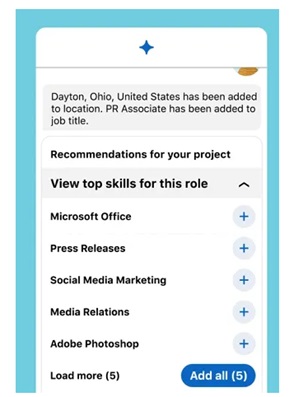
AI is everywhere, from easy prompts to refining filters, you will notice AI features in nearly every app and every business. To follow the chain, LinkedIn has finally decided to jump on the AI bandwagon as well. Now, with LinkedIn, you will be able to easily improve and narrow down your searches.

Now when you search a job, service or a designation on LinkedIn, you will get a lot of recommendations and you can easily select the one you like. Moreover, recruiters can also instantly pre populate the projects filter out the searches and eventually speed up the hiring process.

Moreover, once you have shortlisted the candidates you can easily tag them based on where they stand in the recruitment process. This feature is very important for companies that have lengthy interview process and require more time. Now candidates can keep tabs on where they stand and if they will be continuing with the company.

Data Privacy Approaches In Marketing

Talking about privacy and prioritizing the data safety is one of the very few decision making factors for users right now. companies that were once tangled in data breach scandals or have been part of some kind of data issue have not just lost face in front of users but have seen a major decline in overall active user numbers.

To ensure that users feel at ease while using LinkedIn, privacy feature guide has bene released by the company. According to the guide, the company will be addressing five main privacy features. The guide was released in the form of 36 36-page detailed ledger. The guide contains details about data strategy that will ensure users more control along with AI and machine learning for filtering out better searches. Moreover, it also has detailed about the measurement foundations, hyper personalization based on brand and finally to improve the marketing efforts by partnering directly with the LinkedIn.

Wrap Up

Simply put, LinkedIn is trying hard to engage more users’ everyday with all the essentials features that they see other job portals using. From using refined filters, and AI and improving data, the company is trying hard to offer good value for money for its premium users. However, only time will tell if LinkedIn will stand the test of time and meet the changing expectations of the new generation.

Exploring Avalanche and Polkadot’s Short-Term Trends and Scorpion Casino’s Consistent Passive Income Promise

0

In the swiftly changing terrain of cryptocurrency, savvy investors remain vigilant, constantly scouring the market for trends that promise high returns. This vigilance brings into focus three distinct opportunities: Scorpion Casino, Avalanche, and Polkadot.

While Scorpion Casino offers a stable route to passive income, Avalanche and Polkadot provide insights into the fluctuating nature of short-term market trends. This comparative exploration aims to illuminate the unique aspects of each, equipping investors with the insights needed to navigate the complex terrain of cryptocurrency investments wisely.

Scorpion Casino: A New Era of Passive Income

Scorpion Casino (SCORP) emerges as a frontrunner in the innovative convergence of online gaming and blockchain technology. With a compelling presale raising over $6 million and more than 350,000,000 tokens already sold, SCORP sets a new standard for accessibility and potential returns.

The casino platform, backed by a sturdy tokenomics system that includes buy-backs and burns, offers a myriad of gaming options – from sports betting to classic casino games. What sets Scorpion Casino apart is its revenue-sharing system, designed to provide consistent passive income to token holders, irrespective of the crypto market’s volatility.

This approach, supported by the recent listing on XT.com and an anticipated exchange listing price of $0.05 per $SCORP, positions Scorpion Casino as a lucrative option for those seeking to diversify their income streams.

Avalanche: A Resilient Competitor

Avalanche (AVAX) has been a noteworthy player in the crypto space, known for its high throughput and low latency. Despite facing challenges, including a temporary halt in block production, its recovery and the positive outlook from experts illustrate its resilience.

Trading between support and resistance levels of $38.55 and $44.22, respectively, and with technical indicators showing bullish signals, AVAX presents a promising investment opportunity. However, its focus remains on building a scalable blockchain infrastructure rather than offering direct avenues for passive income.

Polkadot: The Interoperability Pioneer

Polkadot (DOT) stands out for its unique approach to solving blockchain interoperability issues, facilitating the transfer of any data or asset types across blockchains. With its price trading between $8 and $11 and technical indicators leaning towards a bullish sentiment, DOT represents a solid investment with long-term growth potential.

Yet, similar to Avalanche, Polkadot’s primary appeal lies in its technological contributions rather than direct passive income opportunities.

Scorpion Casino Takes the Lead

While Avalanche and Polkadot offer valuable contributions to the blockchain ecosystem and present robust investment opportunities, Scorpion Casino distinctively carves its niche by merging the thrill of online gaming with the benefits of blockchain technology.

Its strategic focus on providing daily passive staking income from a global, licensed, and regulated platform makes $SCORP not just a cryptocurrency but a gateway to a new form of financial empowerment. For those eyeing the next big crypto investment, especially in the realm of trending cryptos and passive income, Scorpion Casino beckons as a golden opportunity.

Find out more about SCORP: