DD
MM
YYYY

PAGES

DD
MM
YYYY

spot_img

PAGES

Home Blog Page 3619

Are Exchange-Traded Funds Good for Long-Term Investments

0

Exchange-Traded Funds (ETFs) have become increasingly popular as long-term investment vehicles, similar to stocks. They offer diversification, low expense ratios, and the flexibility of trading like individual stocks. However, whether ETFs are suitable for long-term investments like stocks depends on various factors including investment goals, risk tolerance, and market conditions.

Exchange-traded funds (ETFs) are investment funds that trade on stock exchanges, and can be bought and sold like common stock. ETFs can contain financial assets such as stocks, bonds, currencies, debts, futures contracts, and/or commodities such as gold bars. They can be a way to access a wide variety of asset classes, including domestic and international stocks, bonds, and commodities. ETFs can also be tax efficient and have lower operating expense ratios (OERs) than actively managed mutual funds. ETFs combine aspects of mutual funds and conventional stocks. They can be bought or sold intraday at different prices, and can help to diversify your investments.

Before diving deeper into ETFs, let’s address a common question: What is a mutual fund? A mutual fund is an investment vehicle made up of a pool of funds collected from many investors for the purpose of investing in securities such as stocks, bonds, money market instruments, and other assets.

Mutual funds are operated by professional money managers, who allocate the fund’s assets and attempt to produce capital gains or income for the fund’s investors. A mutual fund’s portfolio is structured and maintained to match the investment objectives stated in its prospectus.

Diversification is one of the key advantages of ETFs. Unlike individual stocks, which expose investors to the performance of a single company, ETFs typically track an index or a basket of assets, spreading out the risk. This makes them an attractive option for long-term investors looking to mitigate volatility.

Another aspect to consider is the cost-efficiency of ETFs. They generally have lower expense ratios compared to mutual funds due to their passive management structure. This means that over the long term, the cost savings can compound and potentially lead to higher returns.

Liquidity is also a significant factor. ETFs can be bought and sold throughout the trading day at market price, which can be beneficial for investors who may need to quickly adjust their portfolios in response to market movements.

However, it’s important to note that not all ETFs are created equal. Some may focus on niche markets or employ complex strategies that may not be suitable for all long-term investors. Therefore, it’s crucial to conduct thorough research or consult with a financial advisor before incorporating ETFs into a long-term investment strategy.

While ETFs offer several benefits that can make them good for long-term investments like stocks, they are not without their nuances. Investors should carefully consider their individual circumstances and perform due diligence to ensure that ETFs align with their long-term investment objectives.

For instance, the liquidity of an ETF can vary significantly depending on the underlying assets and the market conditions. Additionally, while ETFs generally have lower fees than actively managed mutual funds, they can still incur trading costs that can add up over time.

Another nuance of ETF investing is the potential for tracking error. This occurs when there is a discrepancy between the performance of the ETF and the index it is supposed to replicate. Factors such as fund management style and transaction costs can contribute to this issue.

Investors should also be aware of the tax implications associated with ETFs. While they are often touted for their tax efficiency, certain types of ETFs can generate unexpected tax bills. For example, commodity ETFs may be structured as partnerships, which can result in K-1 tax forms and unrelated business taxable income (UBTI).

While ETFs can be a valuable addition to a long-term investment strategy, it’s essential to understand their nuances before incorporating them into your portfolio. By doing so, you can make informed decisions that align with your financial goals and risk tolerance.

The Legends of Money As Trump Goes for $3 billion on Truth Social

1

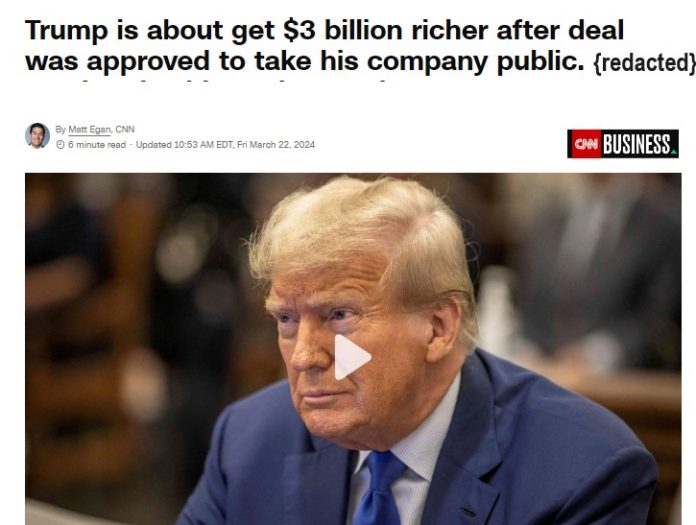
Legends – anywhere they go, they find how to extract value. Today, Donald Trump is about to be rewarded with $3 billion for Truth Social: “Shareholders voted to approve Trump Media’s merger with a blank-check company, following years of legal and regulatory obstacles. Trump will own a dominant stake in a public company, with shares worth more than $3 billion at current market prices.”

We rant here, post day and night, but one businessman with deal sagacity has created a $3 billion fortune in less than 4 years from social media! 

Do not be jealous, just try to understand how they create this value. Because if you are in that virtuous circle of value capture and acceleration, you will always be rolling, whether in real estate, fashion, social media, etc. 

In the greatest Igbo novel ever written (by my call),  Tony Ubesie’s “Isi Akwu Dara N’ala” explained the transformation of Chike, the husband of Ada, in the context of “osisi na ami ego” [literally, a tree which produces money as the leaves]. Heavens opened for Chike, and he harvested money from  trees – and those trees were factories, and industries.  Ubesie was at his finest, producing a trilogy of James Hadley Chase (There’s Always a Price Tag), Thomas Hardy (The Mayor of Casterbridge) and Bertha M Clay (Beyond Pardon) all lumped together. 

Legends – they win at night, they win at day; they always find how to make money in anything, even though we the people may not understand. Post, share, hate, and like, Trump adds $3 billion for the same thing!

Having Raised $6.8M in Presale, BlockDAG Leads Optimism (OP) Price Surge & Kaspa News

0

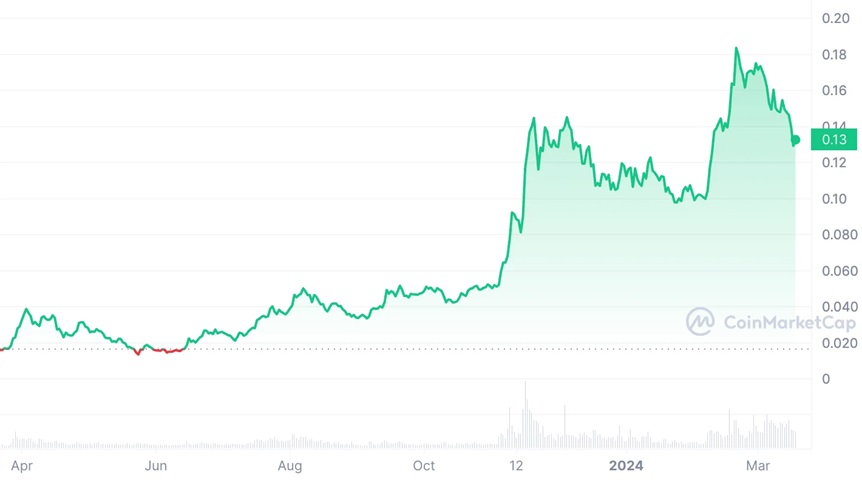
Optimism (OP) and Kaspa make headlines in the dynamic cryptocurrency market, captivating investors with their growth potential. Predictions indicate a sharp increase in Optimism (OP) Price, reaching $10 by April 2024, as highlighted by CoinCodex. Concurrently, Kaspa has captured attention with growth, marking its prominence in Kaspa News.

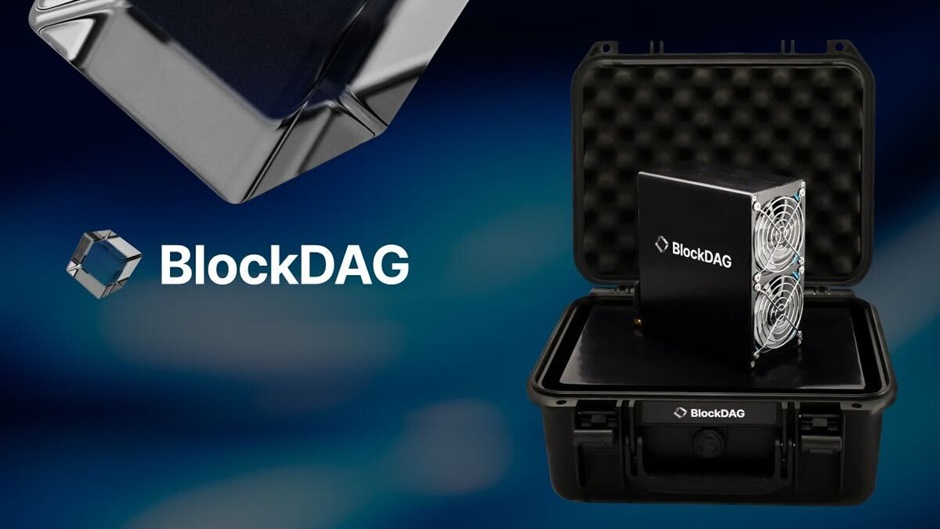
Amidst these prospects, BlockDAG, one of the best crypto coins to watch, offers an alternative that excels in scalability, security, and transaction efficiency. This advancement challenges the traditional blockchain solutions of Optimism and Kaspa, promising a broader application across the crypto space and highlighting its potential as a formidable choice for future blockchain projects.

Optimism (OP) Price Set to Soar: Predictions Highlight Growth

Optimism (OP) draws investor interest, with projections showing significant growth. One of the crypto coins to watch, Optimism (OP) Price, is expected to reach $10 by April 2024 and $100 by August 2044; its potential for returns looks promising. According to Coincodex, short-term forecasts predict an Optimism (OP) price to rise to $11.42 by April 2024, underlining its growth prospects??. With the platform’s focus on sustainability of Ethereum Virtual Machine (EVM), Optimism (OP)’s price might peak at $7.80 by the end of 2024, subject to market dynamics??.

The Bedrock upgrade, reducing gas fees by up to 40%, demonstrates Optimism’s commitment to improving usability and efficiency??. These factors combined position Optimism as an attractive investment within the crypto market despite the inherent risks and volatility. However, BlockDAG could be an excellent choice for calculated risk-takers.

BlockDAG’s energy-efficient design addresses environmental concerns associated with crypto mining. While Optimism offers a robust Layer 2 solution for Ethereum, BlockDAG’s flexibility and scalability make it a compelling choice for a broader array of applications across the crypto space, showcasing its potential as a robust alternative to traditional blockchain solutions.

Kaspa News: A Must-Watch Coin Amid 855% YTD Growth

Kaspa is making headlines in the crypto world with several recent developments, marking it as one of the crypto coins to watch. A crucial upgrade to its meme pool design has also dramatically improved transaction efficiency, especially under high load, demonstrating Kaspa’s commitment to technological innovation??. As per Coincodex, Kaspa showcased an impressive 855% YTD growth this year, with forecasts suggesting more all-time highs??. Furthermore, a 36% growth spike following prominent exchange listings positions Kaspa as a standout project, even as most altcoins face market challenges??.

Despite Kaspa’s impressive performance, choosing BlockDAG technologies offers unique benefits such as improved scalability and transaction efficiency through parallel block additions. BlockDAG’s energy efficiency and adaptability under varying network loads also present a more sustainable and flexible blockchain solution. It is a compelling choice for many applications beyond what single projects like Kaspa might offer?.

BlockDAG Surpasses Optimism and Kaspa: A Leap Forward in Blockchain Technology

BlockDAG technology revolutionises blockchain with its Directed Acyclic Graph (DAG) architecture, significantly enhancing scalability, security, and transaction speeds. Unlike traditional blockchains that add blocks linearly, BlockDAG allows for the simultaneous addition of multiple blocks. This feature drastically reduces bottlenecks and improves transaction throughput, making BlockDAG a crucial development among crypto coins.

Unlike Optimism, which focuses on scaling Ethereum through Optimistic Rollups to improve transaction speeds and lower fees, BlockDAG offers a broader scalability solution applicable across various blockchain applications. Kaspa, leveraging BlockDAG, has made headlines in Kaspa news for its rapid transaction processing capabilities. However, BlockDAG’s overall architectural advantages make it a superior choice for future blockchain projects, promising a more scalable, secure, and efficient framework than Optimism (OP) and Kaspa’s current implementations.

The Wrap-Up

Optimism (OP) Price and Kaspa News stand out in the rapidly evolving cryptocurrency market, marking significant milestones and investor interest. However, BlockDAG technology emerges as a superior choice. Its architectural advantages in scalability, security, and energy efficiency challenge traditional blockchain solutions and offer broader applications across the crypto space. This makes BlockDAG a pivotal development to watch, potentially reshaping the future of blockchain technology.


Invest in BlockDAG Presale:

Website: https://blockdag.network

Presale: https://purchase.blockdag.network

Telegram:https://t.me/blockDAGnetworkOfficial

Discord: https://discord.gg/Q7BxghMVyu

Fundamental Investing Principles and Philosophies – Tekedia Mini-MBA

0

Join me tomorrow at Tekedia Mini-MBA Live where I will teach “Fundamental Investing Principles and Philosophies”. Who are you as an investor?

-Growth Maker: you buy low and wait for the value of the company to grow quickly. Say, you came in at N4 per share, and hope it rises to N20.

-Value Picker: they focus on extremely beaten down equities. Think of people who bought some airline stocks at the peak of the covid-19 knowing that everything will be fine one day. Think of John Templeton who bought valueless stocks as World War 11 heated up, holding them, and then became the stock picker of the 20th century.

– Income Chaser: these people do not necessarily care if the value of the stocks they hold go up or not, their major focus is the company’s ability to pay dividends. Most are retired people and they focus on fixed income since they’re no longer working. So, getting dividends will be the only way to run their lives. To do that, they buy companies which pay dividends because they need cash once in a while to operate.

Join us as we examine the physics of investing tomorrow.

Crypto Markets on Whirlwind of activities following FOMC reports

0

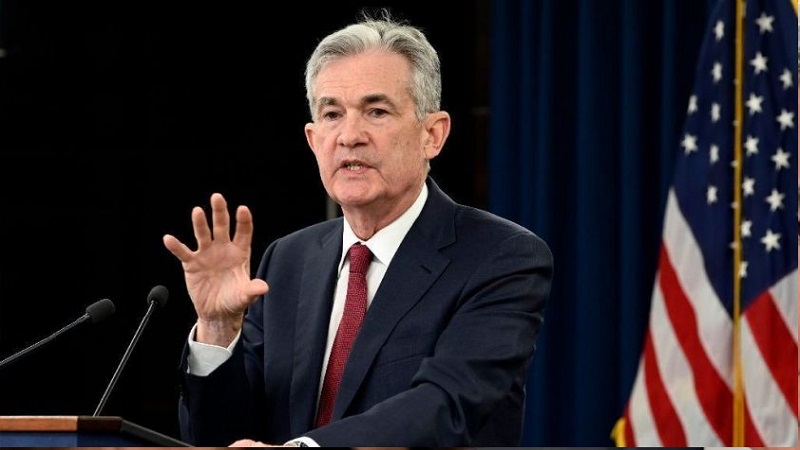
The crypto market has been a whirlwind of activity following the recent announcement from the Federal Reserve’s Federal Open Market Committee (FOMC). Investors and traders alike have been keenly observing the effects of policy changes on digital assets. The market’s reaction was swift, with significant price fluctuations across various cryptocurrencies.

Liquidation in the context of cryptocurrency refers to the forced closing of leveraged positions due to a partial or total loss of the trader’s initial margin. This occurs when the market moves against the trader’s position, and their account balance falls below the maintenance margin requirement.

Bitcoin prices climbed above $63,000 initially, fueled by optimism about continued low interest rates. However, after the Fed signaled a possible shift in monetary policy later this year, the market saw a sharp correction with Bitcoin dropping below $60,000 and leading to significant liquidations.

A sudden drop in Bitcoin’s value triggered a cascade of margin calls and stop-loss orders. Additionally, market speculation and rumors about regulatory changes created an environment of uncertainty that further fueled the sell-off.

Understanding the Federal Reserve’s Influence

The Federal Reserve, being the central banking system of the United States, plays a pivotal role in monetary policy and economic stability. Its decisions on interest rates and financial regulations can send ripples through all financial markets, including the burgeoning crypto sector.

Impact on Cryptocurrency Prices

The announcement led to immediate volatility in the crypto markets. Some investors saw this as an opportunity to buy assets at a lower price, while others decided to sell off their holdings to avoid potential losses. This tug-of-war between bullish and bearish sentiments often leads to erratic price movements.

While short-term volatility can be alarming, it’s essential for investors to consider the long-term implications of such announcements. The crypto market is still relatively young and can be influenced by various external factors. However, it also has shown resilience and an ability to recover over time.

Investors may adopt several strategies to navigate these turbulent times. Diversifying portfolios, setting stop-loss orders, and keeping abreast of market trends are just a few ways to mitigate risk.

Bitcoin’s recent price trajectory has been a rollercoaster of highs and lows, reflecting the volatile nature of cryptocurrency markets. Initially, prices soared above the $63,000 mark, driven by a wave of optimism surrounding the continuation of low interest rates. This bullish sentiment was short-lived, however, as the Federal Reserve hinted at a potential shift in monetary policy later in the year.

The mere suggestion of a change in economic stance sent shockwaves through the market. Bitcoin’s value plummeted below $60,000, triggering a cascade of liquidations across trading platforms. Investors and traders alike felt the impact, as portfolios devalued rapidly in response to the Fed’s signals.

This sharp correction serves as a reminder of the inherent risks associated with digital currencies. While their potential for high returns is undeniable, so too is their susceptibility to market forces and regulatory announcements. As such, participants in this space must remain vigilant and informed to navigate these turbulent waters successfully.

The recent Federal Reserve announcement has undoubtedly shaken the crypto market. However, it also presents an opportunity for investors to reassess their strategies and potentially capitalize on the market’s movements. As always, staying informed and cautious is key in navigating such volatility.

SOL’s CVD has risen in contrast to the downtrend in ETHER’s CVD

The cryptocurrency landscape has witnessed significant shifts since the onset of 2024, with Solana and Ethereum being at the forefront of discussion. This analysis aims to dissect the market performance of both cryptocurrencies, providing a comprehensive overview of their trajectory in the financial markets.

In today’s financial analysis, we delve into the contrasting movements observed in the Cumulative Volume Delta (CVD) of two major cryptocurrencies: SOL and ETH. Recently, SOL’s CVD has experienced a significant surge, marking a sharp increase that stands in stark contrast to the downtrend observed in ETH’s CVD.

This divergence in trends may indicate a shift in investor sentiment or market dynamics between these two digital assets. As we unpack the implications of these movements, it’s crucial to consider the broader market context and potential drivers behind this volatility.

To understand the recent movements in SOL’s and ETH’s Cumulative Volume Delta (CVD), it’s important to consider the broader context of the cryptocurrency market. The CVD is a metric that reflects the aggregated volume of buy and sell orders, providing insight into market pressure and potential price movements.

Solana, known for its high throughput capabilities, has seen a remarkable journey. The platform’s focus on scalability without compromising on decentralization has attracted a plethora of developers and investors alike. The introduction of innovative protocols and consistent network upgrades have bolstered Solana’s position in the market.

Ethereum, on the other hand, continues to be a dominant force in the decentralized finance (DeFi) space. The transition to Ethereum 2.0 has been a pivotal moment for the network, introducing proof-of-stake mechanisms that promise enhanced efficiency and sustainability.

When comparing market performance, it’s crucial to consider various metrics such as market capitalization, transaction volume, and network activity. Since 2024, both Solana and Ethereum have experienced fluctuations reflective of broader market trends and individual ecosystem developments.

Solana’s market capitalization has shown impressive growth, indicative of increasing investor confidence and adoption rates. Ethereum, while maintaining a higher market cap due to its established presence, has faced stiff competition from emerging platforms like Solana.

Transaction volume is another telling indicator. Solana’s expedited processing times have resulted in a surge of transactions on its network, challenging Ethereum’s once unchallenged supremacy in this domain.

In conclusion, while Ethereum maintains its status as a foundational pillar in the cryptocurrency world, Solana’s ascendancy in market performance since 2024 cannot be overlooked. The dynamic interplay between these two giants will undoubtedly shape the future landscape of blockchain technology and digital assets.

SOL’s sharp CVD rise could be attributed to several factors, including positive developments within the SOL ecosystem, increased adoption, or favorable market conditions. Conversely, ETH’s CVD downtrend might be linked to market saturation, competitive pressures, or a shift in investor focus on alternative assets. These trends are reflective of the dynamic and ever-evolving nature of the cryptocurrency market.