DD
MM
YYYY

PAGES

DD
MM
YYYY

spot_img

PAGES

Home Blog Page 3621

Register for Investment and Portfolio Management Program

0

Registration for Tekedia Institute Investment and Portfolio Management program continues. The first live  Zoom session comes up on Saturday at 4-6pm WAT. Register today and master the mechanics of investing, from our award winning faculty.

Tekedia Investment and Portfolio Management program is designed to provide learners with hands-on experience in performing investment research, investing capital, and managing a portfolio.  The program runs for 8 weeks and it is  completely virtual. Besides some pre-recorded courseware developed by eminent capital market experts, the program includes live Zoom sessions.

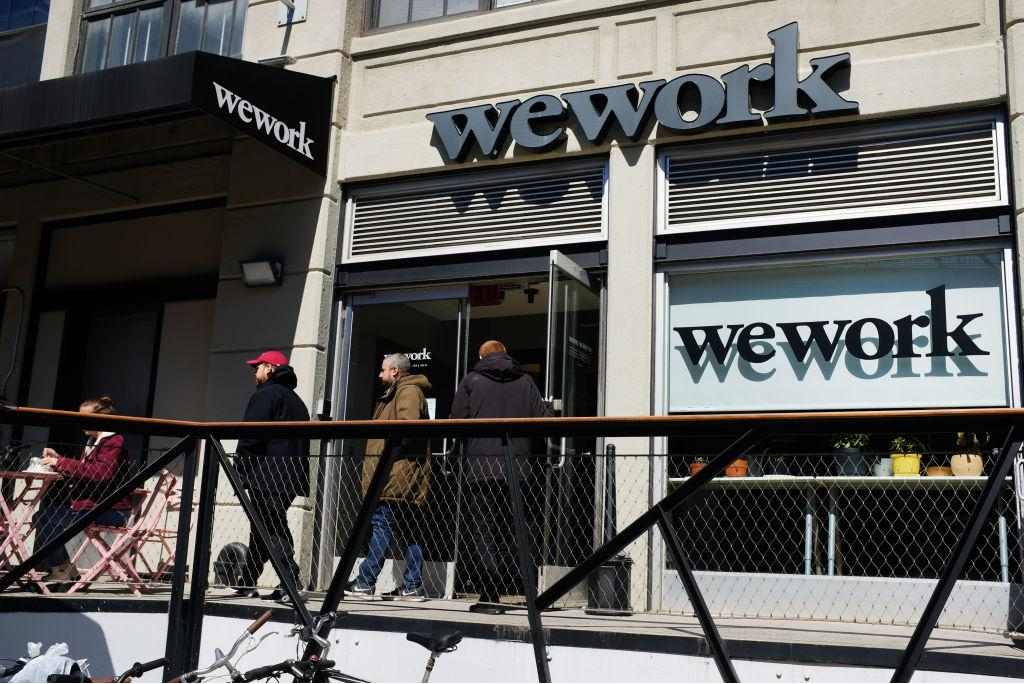
WeWork files for bankruptcy, Wiping $47 Billion Created

0

As WeWork files for bankruptcy, demonstrating the power of capitalism which giveth and also taketh, I re-share this piece which I wrote in 2019, making a point that the exit of the founder would imperil the company. Today, a company which was at its peak valued at $47 billion is largely worth nothing today.

“Now, SoftBank is possibly going to lose billions of dollars (in the interim); other investors will also have red eyes. …Simply, for WeWork, there is no winner here as they have just lost a leader and possibly imperiled the company in the process “, I wrote in 2019.

An African proverb is clear – “no man, no matter how wealthy, can prepare enough food for his kinsmen, but if those kinsmen make food for him, he will be unable to consume the whole food”. Too bad, the food was too much for the WeWork team.

The Japanese investment giant SoftBank posted a net loss of $6.2 billion for the quarter ending Sept. 30 — and much of that can be owed to the decline and bankruptcy of WeWork. SoftBank has been WeWork’s main investor since 2017, and bailed out the company for $9.5 billion just three years ago, after WeWork’s botched IPO attempt. In total, SoftBank has lost more than $14 billion on WeWork; earlier this year, SoftBank founder Masayoshi Son called the investment “a stain on my life.” (LinkedIn News)


WeWork Inc. (NYSE: WE) (“WeWork” or “the Company”), the leading global flexible space provider, today announced that it has commenced a comprehensive reorganization to strengthen its capital structure and financial performance and best position the Company for future success. The Company maintains the strong support of its key financial stakeholders and has entered into a Restructuring Support Agreement (“RSA”) with holders representing approximately 92% of its secured notes to drastically reduce the Company’s existing funded debt and expedite the restructuring process. During this period, WeWork will further rationalize its commercial office lease portfolio while focusing on business continuity and delivering best-in-class services to its members, as global operations are expected to continue as usual.

To successfully achieve its goals, WeWork Inc. and certain of its entities filed for protection under Chapter 11 of the U.S. Bankruptcy Code, and intend to file recognition proceedings in Canada under Part IV of the Companies’ Creditors Arrangement Act (the “CCAA Recognition Proceedings”). WeWork’s locations outside of the U.S. and Canada are not part of this process. WeWork’s franchisees around the world are similarly not affected by these proceedings.

WeWork has a deliberate and value maximizing lease rejection plan that is expected to position the company for operational and financial success. As part of today’s filing, WeWork is requesting the ability to reject the leases of certain locations, which are largely non-operational and all affected members have received advanced notice.

David Tolley, CEO of WeWork said, “It is the WeWork community that makes us successful. Our more than half-million members around the world turn to us for the best-in-class spaces, hospitality, and technology that our 2,500 dedicated employees and valued partners provide. WeWork has a strong foundation, a dynamic business, and a bright future.”

“Now is the time for us to pull the future forward by aggressively addressing our legacy leases and dramatically improving our balance sheet,” Tolley continued. “We defined a new category of working, and these steps will enable us to remain the global leader in flexible work. I am deeply grateful for the support of our financial stakeholders as we work together to strengthen our capital structure and expedite this process through the Restructuring Support Agreement. We remain committed to investing in our products, services, and world-class team of employees to support our community.”

WeWork is filing with the Court a series of customary “First Day Motions” to facilitate a smooth transition into the process and to support operations throughout its cases, which it expects to be approved in short order. The Company will continue servicing its existing members, vendors, partners, and other stakeholders in the ordinary course of business. WeWork expects to have the financial liquidity to execute these proceedings and continue business in the ordinary course.

Restrictions On Rights To Land, Special Contracts & Certificates Of Occupancy Under Nigerian Law

0

This article will be focused on the topics of:-

– The legal basis for a restriction of rights to ownership of land.

– Special Contracts Under Nigerian Land Law

– Certificates Of Occupancy Under The Land Use Act

– Licenses to excavate land for building materials

What is the legal basis for a restriction on the right to own land under Nigerian law?

– It is unlawful by virtue of the Land Use Act for a state governor to grant a statutory right of occupancy ot consent to the assignment or subletting of a statutory right of occupancy to a person under 21 years of age provided that :- 

a). Where a guardian or trustee of a person under 21 years has been duly appointed for such purpose, the governor may grant or consent to the assignment or subletting of a statutory right of occupancy to such a guardian or trustee on behalf of the underaged person.

b). A person under 21 years who receives a statutory right of occupancy upon the death of the holder, shall have the same liabilities and obligations under and in respect of his right of occupancy as if he were of full age, notwithstanding the fact that no guardian or trustee has been appointed for him.

What is the provision of the Land Use Act regarding special contracts?

A statutory right of occupancy granted under the relevant provisions of the act shall be for a definite term and may be granted subject to the terms of any contract which may be made by the government and the holder not being inconsistent with the provisions of this act. 

What are the conditions and implied provisions of law regarding certificates of occupancy?

– The governor is to issue a certificate under his hand in evidence of such right of occupancy when:-

a). Granting a statutory right of occupancy to any person.

b). When any person is in occupation of land under a customary right of occupancy and applies in the prescribed manner.

c). When any person is entitled to a statutory right of occupancy.

– Such a certificate shall be called a certificate of occupancy and there shall be paid therefore, by the person in whose name it is issued,such fee as may be prescribed if any.

– The Certificate can be cancelled where the person to whom it is issued, without lawful excuse, refuses or neglects to accept or pay for the certificate. 

– The holder binds himself to pay to the governor the amount found to be payable in respect of any inexhausted improvements existing on the land at the date of his entering into occupation.

– The holder binds himself to pay to the governor the rent fixed by the governor and any rent which may be agreed or fixed on revision in accordance with the Land Use Act.

What is the extent of a state governor’s powers to grant licenses to take building materials?

– It shall be lawful for the governor to grant a license to any person to enter upon any land which is not the subject of a statutory occupancy right or mining lease or right under the Minerals & Mining Act or any other enactment, and remove or extract therefrom any stone, gravel, clay, sand or other similar substance not being a mineral under the Minerals & Mining Act that may be required.

– No license in this regard shall be granted in respect of an area exceeding 400 hectares.

– Such a license cannot be transferred without the consent of the applicable state governor.

What is the regulatory requirement for occupancy rights holders regarding beacons?

– The occupier of a statutory right of occupancy shall at all times maintain all beacons or landmarks by which the boundaries of the land comprised in the statutory right of occupancy are defined and when in default the governor will via a written notice, require the occupier to do so.

The Exclusive Rights Of Statutory Occupiers/Owners Of Land & Regulatory Rental Rights Concerning Land Under Nigerian Law

This article will be focused on the exclusive rights of holders of occupancy grants and rents on occupancy rights under Nigerian law.

What are the exclusive rights of occupiers under Nigerian law?

– Subject to the other provisions of the Land Use Act & any laws relating to way leaves, to prospecting for minerals or mineral oils or to mining or to oil pipelines & subject to the Terms and Conditions of any contract made under the act, the occupier shall have exclusive rights to the land the subject of the statutory right of occupancy against all persons other than the governor.

What is the provision of the Land Use Act regarding the right to improvements?

– During the term of a statutory right of occupancy the holder :-

a). Shall have the sole right to absolute possession of all the improvements in the land.

b). May, subject to the governor’s consent, transfer, assign or mortgage any improvements on the land, which have been effected pursuant to the terms and conditions of the Certificate of Occupancy relating to the land.

What is the provision of the law regarding rents?

– In determining the amount of the original rent to be fixed for any particular land and the amount of the revised rent to be fixed on any subsequent revisions, the governor :-

a). Shall take into consideration the rent previously fixed in respect of any other land in the immediate neighborhood and shall have regard to all the circumstances of the case.

b). Shall not take into consideration any value due to capital expended upon the land by the same or previous occupier during his term or terms of occupancy, or any increase in the value of the land the rental of which is under consideration due to the employment of such capital.

What is the extent of a governor’s power to grant rights of occupancy free of rent or at reduced rent?

-The governor may grant a statutory right of occupancy free of rent or at a reduced rent in any case in which he is satisfied that it would be in the public interest to do so.

Is the acceptance of rent a valid waiver of a forfeiture under Nigerian law?

– No it isn’t. Subject to the relevant provisions of the Land Use Act, the acceptance by or on behalf of the governor of any rent shall not operate as a waiver by the government of any forfeiture accruing by reason of the breach of any covenant or condition, express or implied, in a Certificate of Occupancy. 

What is the provision of the law regarding penal rents?

When in any certificate of occupancy the holder has covenanted to develop or effect improvements on the land being the subject of the certificate and has breached such a covenant, the governor may :-

– Revise the penal rent to be paid upon the expiration of 12 months from the breach & such rent will be reviewed every 12 months from the continuance of the breach.

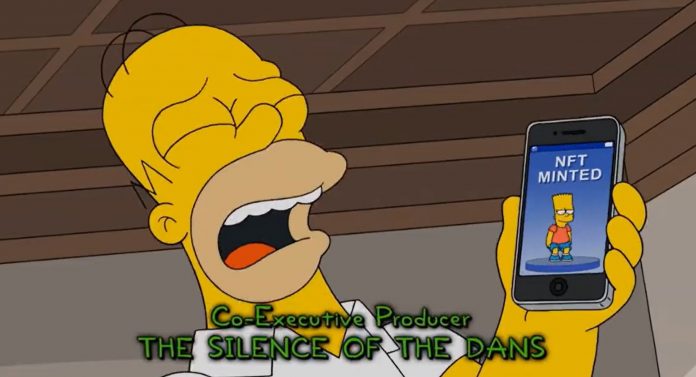
NFT Themed Arts Appear in new The Simpsons video, Hong Kong Explores Spot Bitcoin ETFs

0

The Simpsons, the longest-running animated sitcom in history, has recently released a new video that features various NFTs themed arts. The video, titled “Crypto in Springfield”, is a parody of the popular Netflix documentary series “Explained”, and it humorously explains the concept and history of cryptocurrencies and NFTs.

The video showcases some of the most famous NFTs in the crypto space, such as CryptoPunks, Bored Ape Yacht Club, and Beeple’s “Everydays”. It also references some of the celebrities and influencers who have been involved in the NFT craze, such as Elon Musk, Snoop Dogg, and Paris Hilton. The video also pokes fun at some of the controversies and challenges that the NFT industry faces, such as environmental impact, security breaches, and legal disputes.

The Simpsons is not the first mainstream media to feature NFTs in its content. Earlier this year, Saturday Night Live aired a skit that explained NFTs through a rap song. The skit also featured some of the iconic NFTs, such as Nyan Cat and Grumpy Cat. Moreover, South Park, another popular animated sitcom, also made an episode that satirized the NFT hype and its social implications.

The Simpsons’ video is a testament to the growing popularity and awareness of NFTs among the general public. It also demonstrates how NFTs can inspire creativity and innovation in various forms of art and entertainment. As more and more people become interested in NFTs and their potential, we can expect to see more NFTs themed arts in different media platforms and genres.

NFTs in The Simpsons?

NFTs, or non-fungible tokens, are digital assets that represent unique and scarce items such as art, music, videos, or collectibles. They are created and stored on a blockchain, which ensures their authenticity and ownership. NFTs have become a popular way for artists and creators to monetize their work and connect with their fans.

But what if NFTs were introduced in the world of The Simpsons, the longest-running animated sitcom in history? How would the characters react to this new phenomenon? And what kind of NFTs would they create or buy?

Here are some possible scenarios:

Homer Simpson, always looking for a quick buck, decides to sell his famous “D’oh!” catchphrase as an NFT. He hopes to make millions from his loyal fans, but soon realizes that he has to pay a hefty fee to the blockchain network every time he says it. He ends up losing more money than he earns and becomes frustrated with the technology.

Marge Simpson, who loves painting and art, discovers that she can create and sell her own NFTs online. She uploads some of her portraits of her family and friends and is surprised by the positive feedback and bids she receives. She enjoys the creative freedom and the recognition, but also worries about the environmental impact of NFTs and the security of her digital wallet.

Bart Simpson, the prankster and troublemaker, sees NFTs as an opportunity to cause some chaos. He hacks into the Springfield Elementary School’s computer system and creates fake NFTs of Principal Skinner’s embarrassing photos and videos. He then auctions them off to the highest bidder, hoping to expose Skinner’s secrets and humiliate him. However, he is caught by Lisa Simpson, who is an avid supporter of NFTs and blockchain technology.

Lisa Simpson, the smart and socially conscious one, is fascinated by NFTs and their potential to revolutionize the world. She believes that NFTs can empower artists, creators, and activists to express themselves and raise awareness about important issues. She creates her own NFTs of her saxophone solos, her essays on various topics, and her campaigns for animal rights and environmental protection. She also educates others about the benefits and challenges of NFTs, and advocates for more sustainable and ethical practices.

Maggie Simpson, the baby of the family, is too young to understand what NFTs are. However, she accidentally becomes an NFT star when Homer uploads a video of her sucking on her pacifier as an NFT. The video goes viral and attracts many buyers who find it adorable and hilarious. Maggie becomes famous overnight but remains oblivious to her fame and fortune.

Hong Kong evaluating possibility of permitting Spot Bitcoin ETFs and Buy Options for Investors

Hong Kong is considering allowing Bitcoin and other digital assets to be traded on its stock exchange, according to Bloomberg. This would make it one of the first major financial hubs to embrace cryptocurrency ETFs, which are funds that track the performance of a basket of cryptocurrencies.

Cryptocurrency ETFs have been gaining popularity among investors who want to diversify their portfolio and gain exposure to the fast-growing crypto market without having to buy and store the underlying assets themselves. However, they also face regulatory hurdles and challenges in terms of liquidity, security and transparency.

Hong Kong’s Securities and Futures Commission (SFC) has been studying the feasibility and risks of allowing cryptocurrency ETFs to be listed and traded on its platform, Bloomberg reported, citing people familiar with the matter. The SFC has not made any official announcement or decision on the matter yet, but it is expected to consult with the industry and the public before making any policy changes.

Hong Kong to allow regular investors buy Bitcoin and crypto ETF

The SFC issued a consultation paper on November 3, 2023, proposing to amend the existing rules on investment products that track digital assets. The proposed changes would enable retail investors to buy and sell crypto ETFs that are authorized by the SFC and listed on the Hong Kong Stock Exchange (HKEX).

Crypto ETFs are funds that track the performance of a basket of cryptocurrencies or crypto-related assets, such as mining companies or blockchain firms. They offer investors exposure to the crypto market without having to buy, store or manage the underlying assets directly.

Currently, only professional investors with at least HK$8 million (US$1 million) in assets are allowed to invest in crypto ETFs in Hong Kong. The SFC said that the new framework would open up the market to a wider range of investors, while ensuring adequate investor protection and market integrity.

The SFC said that it would apply the same regulatory standards and requirements to crypto ETFs as it does to conventional ETFs, such as disclosure, valuation, custody, risk management and compliance. However, it also said that it would impose additional conditions on crypto ETFs, such as:

The crypto ETF must have at least one market maker to provide liquidity and price discovery. The crypto ETF must use a regulated custodian to safeguard the crypto assets and conduct regular audits. The crypto ETF must have a robust system to monitor the trading activities and prices of the underlying crypto assets and report any suspicious transactions or market manipulation. The crypto ETF must disclose the risks and characteristics of the crypto assets and the ETF structure to investors in a clear and prominent manner.

The SFC said that it welcomes comments from the public and the industry on the proposed amendments until December 31, 2023. It said that it aims to finalize and implement the new framework in the first half of 2024.

The SFC’s move is seen as a positive step for the development of the crypto industry in Hong Kong, as it would increase the accessibility and legitimacy of crypto assets for investors. It would also enhance Hong Kong’s competitiveness as a leading financial hub in Asia, as other jurisdictions such as Singapore, Canada and Switzerland have already launched or approved crypto ETFs for retail investors.

If Hong Kong approves cryptocurrency ETFs, it could boost its competitiveness as a global financial center and attract more investors and innovation to its crypto sector. It could also set a precedent for other jurisdictions that are looking to regulate and legitimize the crypto industry.

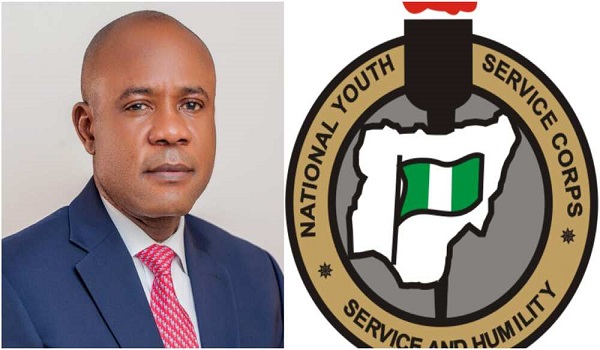
Court Authenticates Enugu’s Mba NYSC Certificate, Awards Him N5m in Damages

0

A Federal High Court in Abuja has ruled in favor of Enugu State Governor Peter Mbah, awarding him N5 million in damages against the National Youth Service Corps (NYSC).

The court’s decision follows allegations made by the NYSC that Governor Mbah’s discharge certificate was fake.

Justice Inyang Ekwo, in his judgment, found the Director General of the NYSC and the corps guilty of misrepresenting material facts. He held that the certificate presented by Governor Mbah to the Independent National Electoral Commission (INEC) was genuine and validly issued by the NYSC.

The court’s findings revealed that although Governor Mbah was mobilized for NYSC service in 2001, he completed his service in 2003. During his service, he sought and received permission from the NYSC to attend the Nigerian Law School and was subsequently reinstated into the NYSC in 2003.

Furthermore, the court noted that the evidence presented regarding Governor Mbah’s service at a law firm was not challenged by the NYSC. Justice Ekwo criticized the NYSC for failing to charge the governor with forgery if they believed that the NYSC certificate was not genuinely issued to him.

The court concluded that the NYSC’s actions were mischievous and in bad faith, as they had wrongly denied the authenticity of Governor Mbah’s NYSC certificate.

Governor Mbah had initiated legal action against the NYSC and its Director of Corps Certification, Mr. Ibrahim Muhammad, after they published a disclaimer denying the issuance of a discharge certificate to him on January 6, 2003.

In a previous ruling on May 15, the court had restrained the NYSC, Mr. Muhammad, and their agents from engaging in such publications until the substantive matter was heard and determined. This order was issued following an ex parte motion brought by Governor Mbah’s counsel, Mr. Emeka Ozoani, SAN.

The NYSC had argued, in its preliminary objection, that Governor Mbah did not follow the proper procedure, including appealing to the President, before instituting the lawsuit. They contended that an appeal to the President was a prerequisite for initiating legal action against the defendants.

However, the court’s judgment has raised questions about its authority to determine the authenticity of an NYSC certificate. Some argue that the NYSC, as the issuing authority, should have the right to authenticate the certificates it provides to youth corps members, rather than the court.