DD
MM
YYYY

PAGES

DD
MM
YYYY

spot_img

PAGES

Home Blog Page 3622

Africa’s Food and Agricultural Industry Poised to Reach $1tn by 2030, says AfDB President

0
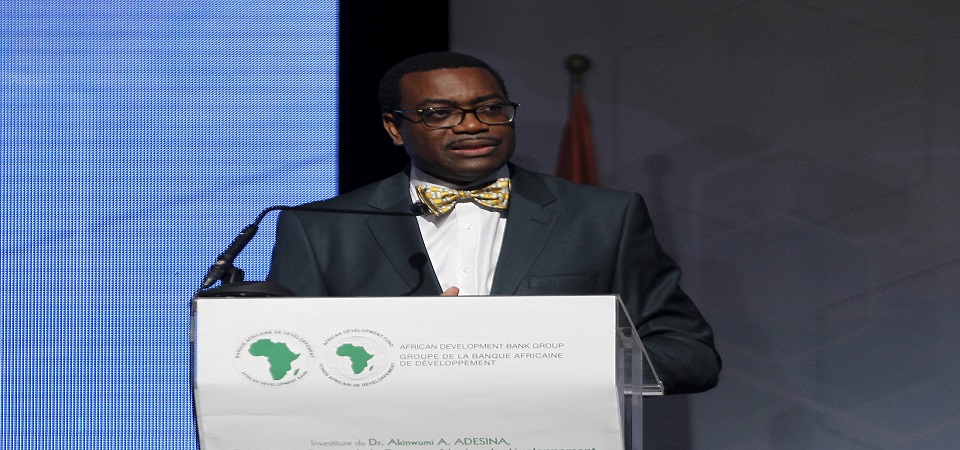
AfDB president Akinwumi Adesina
Akinwumi Adesina

In a groundbreaking announcement at the Norman E. Borlaug Dialogue organized by the World Food Prize Foundation, the President of the Africa Development Bank (AfDB), Dr. Akinwunmi Adesina, revealed that Africa’s food and agricultural industry is projected to be worth an estimated $1 trillion by 2030.

Adesina highlighted the pivotal role of 34 African leaders who have given their endorsement to country food and agriculture delivery compacts. These compacts are instrumental in developing action-oriented plans with clear outcomes, aiming to ensure food security and unlock the full agricultural potential of the continent within a five-year timeframe.

“This development aligns perfectly with the central tenets of the Bank’s Feed Africa strategy, initiated in 2016,” Adesina emphasized, underscoring the Bank’s commitment to driving sustainable agricultural growth across the continent.

Since its inception, the Feed Africa strategy has provided vital support to over 250 million individuals, empowering them with enhanced agricultural technologies that have significantly improved their livelihoods.

Partnerships are playing a crucial role in this initiative, with pledges exceeding $70 billion in support of the food compacts. The AfDB itself is poised to contribute $10 billion over the next five years, further solidifying its commitment to the ambitious goals.

Adesina also highlighted the significance of the Dakar 2 project, which symbolizes the collective determination of African leaders to ensure the continent attains self-sufficiency in food production.

President Sahle-Work Zewde of Ethiopia, who was present at the Borlaug Dialogue, echoed the sentiment of African leaders, stating, “As African leaders, we are all committed to self-sufficiency in food production. Today, Ethiopia, for the first time in its history, is self-sufficient in wheat production and is a wheat exporter to its neighbors.”

Tackling the challenges

Despite these positive strides, challenges remain. Africa, possessing 65% of the world’s untapped arable land, still heavily relies on food imports. There is skepticism regarding the continent’s ability to achieve food self-sufficiency in the near future, given that nearly three-quarters of African governments have reduced their agricultural budgets while increasing spending on arms.

A report by humanitarian organization Oxfam International earlier this year revealed that in the past 12 months, over 20 million more people in Africa have been pushed into severe hunger, equivalent to the entire population of Botswana, Namibia, and Zimbabwe combined. Currently, a fifth of the African population (278 million) is undernourished, and 55 million children under the age of five suffer from severe malnutrition.

Fati N’Zi-Hassane, Oxfam in Africa Director, pointed out, “The hunger African people are facing today is a direct result of inadequate political choices. In a year marred with global inflation and climate disasters, African leaders should have stepped up to their responsibility.”

Chronic underinvestment in agriculture is identified as a key factor contributing to the widespread hunger experienced in 2022. Oxfam reported that 48 out of 54 African governments allocate an average of only 3.8 percent of their budgets to agriculture, with some spending as little as one percent. Additionally, nearly three-quarters of these governments have reduced their agricultural spending since 2019, failing to honor their Malabo commitments to invest at least 10% of their budget in agriculture.

As the global population is projected to reach nine billion by 2050, the urgency for Africa to enhance agricultural productivity becomes increasingly apparent in order to meet the growing demand for food. The AfDB’s ambitious plans aim to address this pressing need, positioning Africa as a leading force in the global food and agricultural industry by 2030.

“Our Democracy is The Victim” – Peter Obi Criticizes Supreme Court of Nigeria Judgment (full text)

0

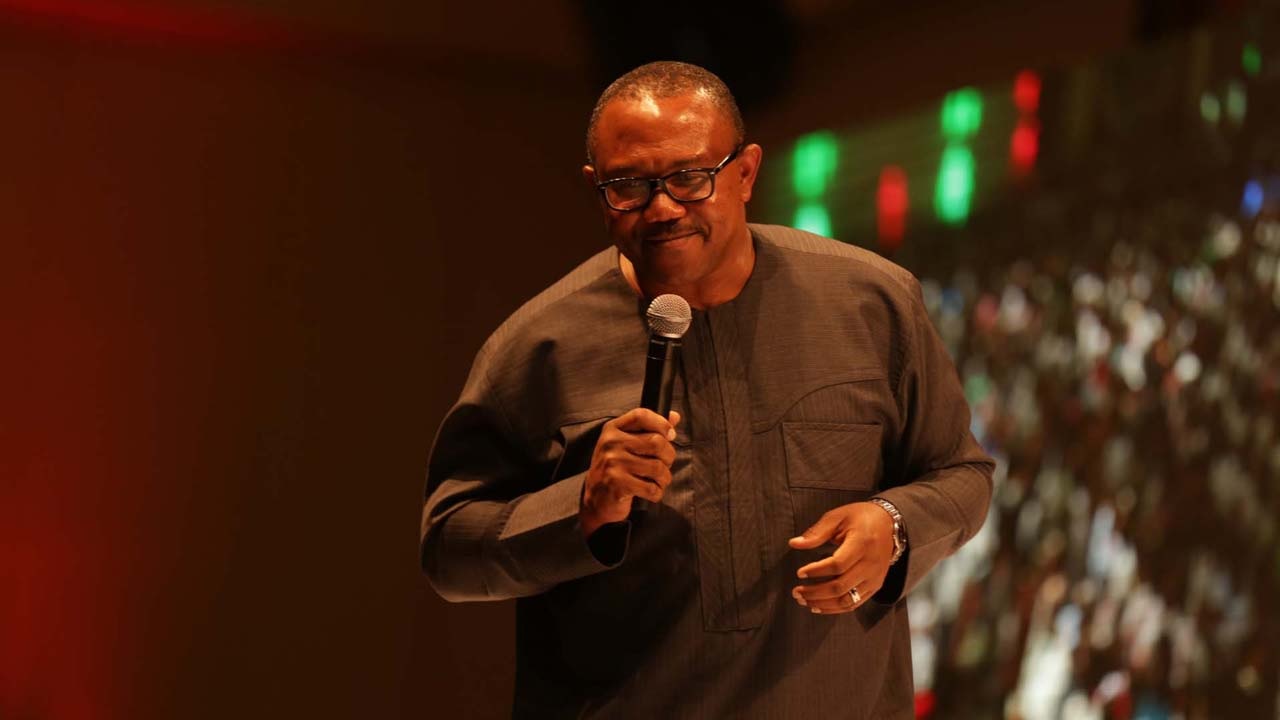
Presidential candidate of the Labour Party, Peter Obi, has strongly criticized the Supreme Court’s judgment of October 26, 2023, regarding the 2023 Nigeria Presidential Election, describing it as a breach of the confidence Nigerians have in the judiciary.

He made these remarks during a press conference in Abuja, where he delivered a statement titled “From Courtrooms to National Conscience: Our Democracy is the Victim.”

Obi, having his first press conference since the Supreme Court’s judgment, expressed his disappointment and concern, stating, “Without equivocation, this judgment amounts to a total breach of the confidence the Nigerian people have in our judiciary. To that extent, it is a show of unreasonable force against the very Nigerian people from whom the power of the Constitution derives.”

He expressed his disappointment in the court’s decision, which he believed ignored overwhelming evidence of election rigging, non-compliance with rules, and allegations of perjury and forgery. He criticized the court for not upholding constitutional qualifications for presidential candidates.

The former Anambra State governor stated that the Supreme Court’s ruling shattered the confidence of the Nigerian people in the judiciary and emphasized the need for a new Nigeria where things work, resources are managed prudently, and transparency and accountability are priorities. He acknowledged that, as the legal remedies have been exhausted, they would continue their mission for a better country and operate as an opposition party.

He criticized INEC for incompetence and the judiciary for disregarding constitutional principles and precedent. He stressed their commitment to constitutional values and their focus on promoting national interest, unity, and cohesion.

However, the Labour Party leader thanked Nigerians for their support and expressed his belief in the possibility of a new Nigeria based on character, competence, compassion, integrity, and respect for the rule of law. He vowed to persist in their journey toward a better future for the nation.

Read the full press briefing below:

Remarks at a Press Conference by Mr. Peter Gregory Obi, CON Presidential Candidate of the Labour Party on The Supreme Court Judgment of 26th October 2023 On the 2023 Nigeria Presidential election held in Abuja, FCT, on [Monday 6th November, 2023Protocols,

1.Fellow countrymen and women. Gentlemen of the Media, Good day, and welcome to this press conference. Kindly permit me to make some brief remarks on the recent ruling of the Supreme Court, the highest court in Nigeria.

2.About a fortnight ago, I was traveling abroad on a prior scheduled engagement when I received the notice that the Supreme Court would give judgment on Thursday 26th October 2023 on our challenge of the ruling of the Presidential Election Petitions Court (PEPC). That judgment has since been delivered as scheduled. The leadership of the Labour Party has already pronounced its position on the judgment.

3.As someone who has previously benefited from the rulings of the Supreme Court on electoral matters, I have, after a period of deep and sober reflection, decided to personally and formally react to the recent judgment as most Nigerians have. Because we are confronted with very
weighty issues of national interest, I will speak forthrightly. As students young lads at CKC, Onitsha, we were taught values and admonished to always; “choose the harder right, instead of the easier wrong.”

4.Setting legal issues aside, the Supreme Court exhibited a disturbing aversion to public opinion just as it abandoned its responsibility as a court of law and policy. It is, therefore, with great dismay that I observe that the Court’s
decision contradicts the overwhelming evidence of election rigging, false claim of a technical glitch, substantial non-compliance with rules set by INEC itself as well as matters of perjury, identity theft, and forgery that have been brought to light in the course of this election matter. These were hefty allegations that should not be treated with levity. More appalling, the Supreme Court judgment willfully condoned breaches of the Constitution relative to established qualifications and parameters for candidates in presidential elections. With this counter-intuitive judgment, the Supreme Court has transferred a heavy moral burden from the courtrooms to our national conscience. Our young democracy is ultimately the main victim and casualty of the courtroom drama.

5.Without equivocation, this judgment amounts to a total breach of the confidence the Nigerian people have in our judiciary. To that extent, it is a show of unreasonable force against the very Nigerian people from whom the power of the Constitution derives. This Supreme Court ruling may represent the state of the law in 2023 but not the present demand for substantive justice.
The judgment mixed principles and precepts. Indeed, the rationale and premise of the Supreme Court judgment, have become clearer in the light of the deep revealing and troubling valedictory remarks by Hon. Justice Musa Dattijo
Muhammad, (JSC) on Friday 27th October 2023.

6.In disagreeing very strongly with the ruling of both the Presidential Petitions Court (PEPC) and the Supreme Court on the outcome of the 25th February 2023 Presidential election as declared by Independent National Electoral Commission (INEC), as democrats who believe in the rule of law, we recognize that the Supreme Court is the end stage of the quest for legal closure to the matter. As a party and as candidates, Datti and I have now exhausted all legal and constitutional remedies available to us. However, this end is only another beginning in our quest for the vindication of the hope of the common man for a better country. After all, sovereignty belongs to the people! If only for historical purposes, it behooves us to place our disagreement with and deep reservations about this judgment on public record.

7.We have long been aware of how weak national institutions have negatively affected our democracy. This year 2023 has been quite remarkable and revealing.
INEC has displayed incompetence in the conduct of its statutory duty. The judiciary has largely acted in defiance of constitutional tenets, precedents, and established ground rules. Political expediency has preceded judicial responsibility. A mechanical application of technicalities has superseded the pursuit of justice and fairness. Both INEC and the Supreme Court as the referees, respectively shifted the goalposts in the middle of the game.

8.Where the value and import of the recent Supreme Court ruling ends is where
our commitment to a New Nigeria begins. Our mission and mandate remain unchanged. From the very onset, our mission has been more about enthroning a new Nigeria. It is a new nation where things work, where the country is led from its present waste and consumption orientation to a production-driven economy. Our commitment is to a nation anchored on the principles of prudent management of resources to quickly pull millions out of multidimensional
poverty, ensuring transparency and accountability in the equitable
distribution of opportunities, resources, and privileges. In the new Nigeria, we aim to address all unmet needs by showing compassion for all those left behind by the present system.

9.Going forward, we in the Labour Party and the Obidient Movement is now effectively in opposition. We are glad that the nation has heard us loud and clear. We shall now expand the confines of our message of hope to the rest of the country. We shall meet the people in the places where they feel pain and answer their needs for hope. At marketplaces, motor parks, town halls, board rooms, and
university and college campuses, we all carry and deliver the message of a new Nigeria. As stakeholders and elected Labour Party officials, we shall remain loyal to our manifesto. We will continue to canvas for good governance and focus on issues that promote national interest, unity, and cohesion. We will continue to give primacy to our Constitution, the rule of law, and the protection of ordered liberties. We will offer the checks and balances required in a functional democracy and vie robustly in forthcoming elections to elect those who share our vision of a new Nigeria.

10.Given our present national circumstances, there is a compelling need for a strong political opposition. We shall, therefore, remain in opposition, especially because of the policies and the governance modalities that we in the Labour Party campaigned for, especially reducing the cost of governance, moving the nation from consumption to production, reducing inflation, ending insecurity, promoting the rule of law, guaranteeing the responsibility to protect, and stabilizing the Nigerian currency; are not the priorities of the present administration nor is it interested in achieving Sustainable Development Goals (SDGs).

11.If there is one thing that has immensely gladdened my heart in the course of the struggle of the past 18 months, it is the passionate desire of our people, especially our young people from across ethnic and religious divides, to construct a new and restructured Nigeria that will work for all Nigerians. That goal remains my guiding light and abiding inspiration.

12.Finally, I thank all Nigerians who believed in what is now only a revolution postponed. We deeply appreciate the unalloyed non-partisan moral support millions of youth and ordinary Nigerians across ethnic, religious, and geopolitical divides have continued to give to Dr. Datti Baba-Ahmed and me.

13.We extend our heartfelt gratitude to the Nigerians who have supported this mission from the onset? We salute the leadership and members of the Labour Party, the Obidient Movement, the Obi-Datti Presidential Campaign Council, Nigerians in the Diaspora, Support Groups, and all people of goodwill who worked diligently and hoped for the realization of the beginnings of a New Nigeria in this election cycle.

14.Nigerians who supported our cause have done so out of patriotism and their sincere conviction that our nation requires and deserves dedicated and visionary leaders who will lead Nigeria toward a brighter future. The energy and dedication of Nigerian Youths and the Obedient Movement have been simply amazing. I appreciate and salute them! I want to assure them that this is not the end of our journey; but in fact, the beginning. Nigeria heard you. The world has taken note and will not forget so easily. We shall endure, and persist until we get to our destination because a new Nigeria is our destination. A destination, not an event.

15.We thank, in a special way, our legal team. We also thank our elder States-Men, whose wise counsel was immeasurable To them, we wish to state
unequivocally that this judicial outcome – an obvious misrepresentation of substantial justice – has by no means foreclosed the realization of a new Nigeria that is Possible.

16.On a personal note, I take personal pride and express gratitude to those who share our vision; and who have also exhibited rare courage to challenge the nefarious system, the genuineness of individuals’ identities and their defining
and qualifying particulars up to the highest extent allowed by law. Nigeria holds out hope of infinite possibilities leading to our desirable greatness. I remain consistent in my belief in the possibility of a new Nigeria built on character competence, capacity, compassion, integrity, and respect for the rule of law based on justice and fairness.

MetaMask and Blockaid collaborate, Saudi Arabia’s Neom proposes investing $50M in Animoca Brandsai

0

MetaMask, the popular Ethereum wallet and browser extension, has announced a new partnership with Blockaid, a blockchain security and analytics platform, to provide native security alerts for MetaMask users.

The integration will allow MetaMask users to receive real-time notifications of suspicious or malicious activity on the Ethereum network, such as phishing attacks, rug pulls, exit scams, or contract exploits. Users will also be able to access detailed reports and analysis of the security risks and vulnerabilities of any smart contract or decentralized application (DApp) they interact with.

According to a blog post by MetaMask, the collaboration aims to enhance the user experience and security of the rapidly growing DeFi ecosystem, which has seen an increase in both innovation and complexity. MetaMask claims that its wallet extension has over 10 million monthly active users, making it one of the most widely used tools for accessing the decentralized web.

Blockaid, on the other hand, is a blockchain security and analytics platform that leverages artificial intelligence and machine learning to monitor and detect anomalous behavior on various blockchains. Blockaid also provides security audits, threat intelligence, and incident response services for blockchain projects and enterprises.

By integrating Blockaid’s security alerts into MetaMask’s wallet extension, the two companies hope to provide users with more visibility and control over their transactions and interactions on the Ethereum network. Users will be able to customize their alert preferences and settings, as well as report any suspicious or malicious activity they encounter.

The integration is expected to launch in early 2022 and will be available for both desktop and mobile versions of MetaMask. Users who wish to participate in the beta testing can sign up on MetaMask’s website.

Backpack launching cryptocurrency exchange with Dubai License

Backpack, a leading online platform for backpackers and travelers, has announced that it will launch a cryptocurrency exchange with a Dubai License. The exchange, which will be called Backpack Crypto, will allow users to buy, sell, and trade various digital assets using Backpack’s native token, BPK.

Backpack Crypto aims to provide a secure, convenient, and low-cost way for backpackers to access the global crypto market and benefit from the opportunities and advantages that cryptocurrencies offer. Backpack Crypto will operate under the regulatory framework of the Dubai Financial Services Authority (DFSA), which recently issued a comprehensive set of rules for crypto service providers.

Backpack’s founder and CEO, John Smith, said that launching a crypto exchange with a Dubai License was a strategic move that aligned with Backpack’s vision of empowering backpackers with innovative financial solutions. “We believe that cryptocurrencies are the future of money and that backpackers should have access to this new and exciting asset class. By launching Backpack Crypto with a Dubai License, we are not only complying with the highest standards of security and compliance, but also positioning ourselves as a global leader in the crypto space,” he said.

Backpack Crypto will offer a range of features and services to its users, including:

A user-friendly interface that supports multiple languages and currencies. A high-performance trading engine that supports spot, margin, and futures trading. A robust security system that employs multi-layer encryption, cold storage, and biometric authentication. A low-fee structure that rewards users with discounts and rebates for holding and using BPK tokens. A loyalty program that rewards users with BPK tokens for referrals, trading activity, and social media engagement.

A community platform that connects users with other backpackers and crypto enthusiasts around the world. A learning center that provides users with educational resources and tutorials on crypto trading and investing

Backpack Crypto is expected to launch in the first quarter of 2024. Users who sign up for early access will receive a bonus of 100 BPK tokens and a chance to win a trip to Dubai. To learn more about Backpack Crypto and register for early access.

Saudi Arabia’s Neom megaproject proposes investing $50 million in Animoca Brands

Saudi Arabia’s ambitious Neom megaproject, which aims to create a futuristic city in the desert, has announced its intention to invest $50 million in Animoca brands, a leading blockchain gaming company. The investment is part of Neom’s strategy to become a global hub for innovation and technology, as well as to diversify its economy away from oil.

Animoca brands is a Hong Kong-based company that develops and publishes games and digital collectibles based on popular intellectual properties such as Formula 1, Marvel, WWE, and The Sandbox. The company leverages blockchain technology to create unique and scarce digital assets that can be owned, traded, and used by players across different platforms and games.

The partnership between Neom and Animoca brands will enable the development of new gaming experiences and ecosystems that will enhance Neom’s vision of creating a smart and sustainable city that offers its residents and visitors a high quality of life. The investment will also support Animoca brands’ growth and expansion in the Middle East and North Africa region, as well as globally.

Neom’s CEO Nadhmi Al Nasr said: “We are delighted to partner with Animoca brands, a pioneer and leader in the field of blockchain gaming. This investment reflects our commitment to fostering innovation and creativity, as well as attracting the best talent and companies in the world to Neom.

We believe that gaming and digital entertainment are among the key sectors that will drive the future of the global economy, and we look forward to collaborating with Animoca brands to create cutting-edge gaming solutions that will enrich the lives of Neom’s citizens and visitors.”

Animoca brands’ co-founder and chairman Yat Siu said: “We are honored and excited to receive this strategic investment from Neom, one of the most visionary and transformative projects in the world today. We share Neom’s passion for using technology to shape a better future for humanity, and we are thrilled to join forces with them to explore the potential of blockchain gaming and digital assets.

This partnership will not only strengthen our position as a global leader in blockchain gaming, but also open up new opportunities and possibilities for our existing and upcoming games and platforms.”

JPMorgan says Sec refusal of Spot Bitcoin may lead to increased lawsuits.

JPMorgan, one of the largest investment banks in the world, has issued a warning to its clients about the possible legal risks of investing in spot Bitcoin. The bank said that rejection of a Bitcoin exchange-traded fund (ETF) by the US Securities and Exchange Commission (SEC) could trigger more lawsuits from investors who claim they were misled or defrauded by unregulated platforms.

According to JPMorgan, the SEC’s decision to deny the application of VanEck, a leading asset manager, for a Bitcoin ETF signals that the regulator is not comfortable with the current state of the Bitcoin market. The SEC cited concerns about fraud, manipulation, and inadequate investor protection as reasons for its denial.

The bank argued that this could have negative implications for the spot Bitcoin market, which operates outside of the SEC’s jurisdiction and relies on self-regulation by industry participants. JPMorgan said that investors who buy or sell Bitcoin on these platforms may face legal challenges if they suffer losses due to market volatility, hacking, or operational issues.

JPMorgan also noted that the lack of a clear regulatory framework for Bitcoin in the US could expose investors to additional risks, such as tax liabilities, sanctions violations, or money laundering allegations. The bank advised its clients to exercise caution and due diligence when dealing with spot Bitcoin transactions.

The bank’s warning comes as Bitcoin continues to trade near record highs, attracting more attention from institutional and retail investors. However, the regulatory uncertainty and legal risks surrounding the cryptocurrency may limit its mainstream adoption and acceptance. JPMorgan said that it expects more regulatory clarity and oversight for Bitcoin in the future, which could pave the way for a more stable and secure market.

UK Treasury releases final proposals for crypto asset regulation

0

The UK Treasury has published its long-awaited consultation paper on the regulatory framework for crypto assets and stablecoins, following the recommendations of the Crypto assets Taskforce in 2018. The paper sets out the government’s vision for a “safe, transparent and innovative” crypto market that supports innovation and competition, while protecting consumers and financial stability.

The paper proposes a new category of regulated tokens, called “stable tokens”, which are crypto assets that have mechanisms to stabilize their value in relation to an underlying asset or basket of assets. These tokens could include stablecoins, which are often pegged to fiat currencies or other assets, as well as algorithmic tokens, which use smart contracts or other methods to adjust their supply and demand. The paper suggests that stable tokens could pose significant risks to consumers and the financial system, especially if they are used for payment purposes or as a store of value.

The paper proposes that stable tokens that are used as a means of payment, or that have the potential to reach mass adoption, should be subject to the same regulatory standards as traditional payment services and electronic money. This would include requirements on capital, governance, risk management, consumer protection, anti-money laundering and counter-terrorism financing. The paper also proposes that issuers of stable tokens should be authorized by the Financial Conduct Authority (FCA), and that they should provide clear and accurate information to users about the nature and risks of their tokens.

The paper also addresses the regulation of other types of crypto assets, such as exchange tokens (e.g. Bitcoin) and utility tokens (e.g. Ethereum), which do not fall within the existing regulatory perimeter. The paper recognizes that these tokens can offer benefits such as increased efficiency, transparency and resilience, but also pose challenges such as market abuse, fraud, cybercrime and environmental impact. The paper proposes to apply a “proportionate and risk-based” approach to these tokens, depending on their use cases and potential harm.

The paper suggests that some activities involving exchange tokens and utility tokens should be brought within the scope of financial regulation, such as:

The promotion of certain types of crypto assets to retail consumers, which would be subject to the FCA’s rules on financial promotions. The provision of crypto asset services, such as custody, exchange, brokerage and advice, which would be subject to registration and supervision by the FCA. The issuance of security tokens, which are crypto assets that have characteristics of securities or other regulated investments, which would be subject to the existing rules on securities offerings.

The paper also outlines the government’s intention to work with international partners to develop global standards and best practices for crypto regulation, as well as to monitor emerging trends and risks in the crypto market. The paper invites feedback from stakeholders on its proposals by March 2024, with the aim of introducing legislation in the next parliamentary session.

In October 2023, the UK government published an update on its legislative approach for bringing fiat-backed stablecoins into the UK’s regulatory perimeter for financial services. This document provides additional detail following the UK regulatory approach to cryptoassets, stablecoins, and distributed ledger technology in financial markets consultation response published in April 2022.

The UK’s proposed approach also covers other entities involved in stablecoin activities for payments in the UK, such as wallet providers, exchanges, custodians, and intermediaries. These entities would also have to be authorized by the FCA and comply with the relevant rules and obligations applicable to their functions and services, such as:

Conduct: The entities would have to adhere to the conduct of business rules and standards set by the FCA, such as treating customers fairly, acting honestly and professionally, and managing conflicts of interest.

AML/CTF: The entities would have to comply with the AML/CTF regulations and obligations, such as conducting customer due diligence, monitoring transactions, reporting suspicious activities, and keeping records.

Data protection: The entities would have to comply with the data protection laws and regulations, such as obtaining consent, ensuring security, respecting privacy, and notifying breaches.

The UK’s proposed approach does not cover other types of stablecoins that are not backed by fiat currencies, such as those backed by commodities, cryptoassets, or algorithms. These stablecoins would remain outside the UK’s regulatory perimeter for financial services, unless they have the characteristics of a security or a financial instrument. However, the UK government has indicated that it will keep these stablecoins under review and may consider extending the regulation to them in the future if necessary.

The UK’s proposed approach also does not cover stablecoin activities that are not related to payments, such as lending, investing, or trading. These activities would be subject to the existing regulatory framework for cryptoassets and financial services, depending on the nature and features of the stablecoins and their activities.

The UK government has stated that it intends to introduce legislation to implement its proposed approach to stablecoin regulation as soon as parliamentary time allows. The FCA and the BoE will also publish further guidance and consultation papers on their respective approaches for regulating stablecoin issuers and custodians, and systemic digital settlement asset payments systems and service providers respectively.

The Compliance Implications for Stablecoin Issuers and Users

The UK’s proposed approach to stablecoin regulation has significant implications for both stablecoin issuers and users in terms of compliance costs and benefits.

For stablecoin issuers, the proposed approach means that they will have to obtain an e-money license from the FCA and comply with a range of rules and obligations that are similar to those applicable to traditional payment service providers. This will entail significant compliance costs in terms of time, money, and resources. For example, stablecoin issuers will have to:

Apply for an e-money license from the FCA, which may take several months and involve fees and documentation. Safeguard the funds backing their stablecoins in segregated accounts or low-risk assets, which may reduce their returns or profitability.

Ensure that users can redeem their stablecoins at any time at par value in the reference currency, which may expose them to exchange rate or liquidity risks. Maintain adequate capital to cover operational and financial risks, which may limit their leverage or growth potential.

Implement sound governance arrangements, risk management processes, internal controls, and audit mechanisms, which may require hiring qualified staff or consultants. Provide clear and transparent information to users about their rights and obligations, the risks and costs associated with using stablecoins, and how to lodge complaints or seek redress, which may entail developing user-friendly interfaces or materials.

Report regularly to the FCA on their financial situation, risk profile, compliance status, and other relevant information, which may involve collecting and analyzing data or preparing reports.

Moreover, if stablecoin issuers are deemed systemically important by the BoE, they will also have to comply with enhanced prudential supervision and oversight by the BoE. This will entail additional compliance costs in terms of time, money, and resources. For example, systemically important stablecoin issuers will have to:

Maintain sufficient liquid assets to meet redemption requests under normal and stressed conditions, which may reduce their returns or profitability. Maintain adequate capital buffers to absorb losses and ensure continuity of operations, which may limit their leverage or growth potential. Ensure that their systems, processes, and controls are resilient to cyberattacks, frauds.

A fire outbreak has occurred at the Canadian High Commission in Abuja

0

A fire outbreak has occurred at the Canadian High Commission in Abuja, Nigeria, on Monday morning, according to local media reports. The cause of the fire is still unknown, but eyewitnesses said they saw smoke billowing from the building around 9 a.m. local time.

The fire service was alerted and arrived at the scene shortly after. They were able to contain the fire and prevent it from spreading to other parts of the compound. No casualties have been reported so far, and the extent of the damage is yet to be assessed.

Just last week the US embassy in Nigeria had issued a security alert for its citizens and other foreigners living or traveling in the country. The alert warns of possible attacks on hotels, restaurants, shopping malls, and other places frequented by expatriates and tourists in Abuja, Lagos, and other major cities.

According to the alert, the attacks could be carried out by terrorist groups or criminal elements seeking to kidnap or extort money from their victims. The embassy advises US citizens to exercise caution, avoid crowds, monitor local media, and review their personal security plans.

The alert comes amid rising insecurity in Nigeria, where armed groups have been launching attacks on schools, villages, military bases, and oil facilities. The government has been struggling to contain the violence, which has displaced millions of people and killed thousands.

One of the main sources of insecurity in Nigeria is the Islamist militant group Boko Haram, which has been waging a brutal insurgency in the northeast of the country since 2009. Boko Haram aims to establish an Islamic state based on a strict interpretation of Sharia law and opposes Western education and influence.

The group has carried out numerous attacks on civilians and security forces, including suicide bombings, mass kidnappings, and raids on towns and villages. Boko Haram has also expanded its operations to neighboring countries such as Niger, Chad, and Cameroon, where it has clashed with regional forces.

The US has been providing assistance to Nigeria in its fight against terrorism, especially against the Islamist militant group Boko Haram, which has pledged allegiance to the Islamic State. The US also supports the Multinational Joint Task Force, a regional coalition of countries that are combating Boko Haram and its splinter factions.

The US embassy in Nigeria urges its citizens to enroll in the Smart Traveler Enrollment Program (STEP), which allows them to receive updates on security information and contact the embassy in case of emergency. The embassy also provides a list of emergency numbers and resources for US citizens in Nigeria on its website.

The Canadian High Commission in Abuja is the diplomatic mission of Canada to Nigeria. It also serves as the regional hub for Canadian development, trade and political activities in West Africa. The High Commission offers consular services to Canadian citizens and visa services to Nigerians and other nationals who wish to travel to Canada.

The High Commission has not issued any official statement on the incident as of the time of writing this post. We will update this post as more information becomes available.