DD
MM
YYYY

PAGES

DD
MM
YYYY

spot_img

PAGES

Home Blog Page 3624

AI Tokens Jump On Irrational Euphoria

0

The recent surge in the prices of AI tokens, such as GPT-3, OpenAI and DeepMind, has been driven by a wave of irrational euphoria among investors and enthusiasts. These tokens, which represent the access to or ownership of artificial intelligence services and platforms, have seen their market capitalization skyrocket in the past few months, reaching billions of dollars.

However, this frenzy is not based on any solid fundamentals or realistic expectations of the future value of these tokens. Rather, it is fueled by hype, speculation and fear of missing out (FOMO). Many investors are buying these tokens without understanding the underlying technology, the challenges and risks involved, or the regulatory and ethical implications of AI.

In this blog post, we will examine some of the reasons why AI tokens are overvalued and why they are likely to crash soon. We will also provide some advice on how to invest wisely and responsibly in AI-related projects and assets.

One of the main reasons why AI tokens are overvalued is that they are based on unrealistic assumptions about the potential and progress of artificial intelligence. Many people believe that AI is on the verge of achieving human-level or superhuman intelligence, and that this will create enormous value and opportunities for those who own or control AI. However, this is a misconception that ignores the limitations and difficulties of AI research and development.

AI is not a monolithic entity that can be easily measured or compared. Rather, it is a diverse and complex field that encompasses many subfields, applications and domains. AI systems can perform well on specific tasks or problems, but they are not generalizable or adaptable to new situations or contexts. AI systems also require a lot of data, computing power and human supervision to function properly and safely.

Moreover, AI is not a magic bullet that can solve all the world’s problems or create unlimited wealth. AI can also have negative impacts on society, such as displacing workers, increasing inequality, eroding privacy, undermining democracy, or causing harm or accidents. AI also faces ethical and moral dilemmas that require careful consideration and regulation. AI is not a neutral or objective technology, but rather a reflection of human values, biases and interests.

Therefore, AI tokens that claim to represent the access to or ownership of AI are not only misleading but also dangerous. They create a false sense of security and confidence among investors and users, who may not be aware of the risks and challenges involved in AI. They also create a distorted incentive structure that encourages short-term gains over long-term sustainability and social responsibility.

Why AI tokens are likely to crash soon.

Another reason why AI tokens are likely to crash soon is that they are subject to high volatility and uncertainty. The prices of these tokens are determined by supply and demand in the market, which can be influenced by various factors, such as news, rumors, emotions, trends or events. These factors can create sudden spikes or drops in the prices of these tokens, which can lead to panic buying or selling among investors.

Furthermore, these tokens are not backed by any tangible assets or guarantees. They are essentially digital tokens that rely on the trust and faith of the users and the community. If this trust is broken or eroded, the value of these tokens can plummet to zero. This can happen due to technical glitches, security breaches, hacking attacks, frauds, scams or regulatory actions.

For example, in 2017, a project called DAO (Decentralized Autonomous Organization) raised over $150 million worth of Ethereum tokens to create a decentralized venture capital fund that would invest in various projects using smart contracts.

However, a hacker exploited a vulnerability in the code and stole over $50 million worth of tokens from the fund. This caused a massive drop in the price of Ethereum and triggered a controversial hard fork (a split in the blockchain) to reverse the theft.

Another example is BitClout, a social media platform that allows users to buy and sell tokens that represent the influence or popularity of celebrities, influencers or public figures. The platform claims to be decentralized and powered by its own blockchain and cryptocurrency.

However, many critics have accused BitClout of being a scam or a pyramid scheme that exploits users’ data and money without their consent or knowledge. The platform has also faced legal threats from some of the celebrities whose names and images have been used without their permission.

Therefore, investing in AI tokens is a risky and speculative activity that can result in huge losses or even total loss of funds. Investors should be cautious and diligent before buying these tokens and should not invest more than they can afford to lose.

How to invest wisely and responsibly in AI-related projects and assets

While we do not recommend investing in AI tokens as they are currently structured and marketed, we do acknowledge that there are legitimate and valuable projects and assets related to artificial intelligence that deserve attention and support. These include:

Research institutions and organizations that conduct cutting-edge research on AI and its applications, such as universities, labs, foundations or NGOs. Companies and startups that develop innovative and useful products and services based on AI, such as software, hardware, platforms or solutions.

Communities and networks that foster collaboration and education on AI and its impacts, such as forums, blogs, podcasts, events or courses. Initiatives and movements that promote ethical and responsible use of AI and its benefits for society, such as standards, guidelines, principles or policies.

These projects and assets can be evaluated and invested in based on various criteria, such as:

The quality and credibility of the team, the vision and the mission behind the project or asset. The problem or need that the project or asset is trying to solve or address, and the value proposition or solution that it offers. The market potential and competitive advantage of the project or asset, and the traction or growth that it has achieved or expects to achieve. The social and environmental impact of the project or asset, and the alignment with the values and goals of the investors.

Investing in these projects and assets can be done through various channels and mechanisms, such as:

Donating or sponsoring to support the research or development of the project or asset. Buying or holding equity or shares in the company or startup that owns or operates the project or asset. Participating or contributing to the community or network that supports or benefits from the project or asset. Advocating or endorsing the initiative or movement that advocates or endorses the project or asset.

Investing in these projects and assets can also provide various benefits and returns, such as:

Gaining access to or ownership of the project or asset and enjoying its features or functions. Earning income or dividends from the profits or revenues generated by the project or asset. Learning from or collaborating with the experts or peers involved in the project or asset. Making a positive difference in the world by supporting a good cause or a noble vision.

AI tokens are a new phenomenon that has emerged in the crypto space, but they are not a reliable or sustainable way to invest in artificial intelligence. They are based on unrealistic assumptions and expectations about AI, and they are subject to high volatility and uncertainty. They also create a distorted incentive structure that encourages short-term gains over long-term sustainability and social responsibility.

Instead of investing in AI tokens, investors should invest in legitimate and valuable projects and assets related to AI that have a clear vision, a solid value proposition, a strong market potential and a positive social impact. These projects and assets can be evaluated and invested in based on various criteria, channels, mechanisms, benefits and returns.

By investing wisely and responsibly in AI-related projects and assets, investors can not only protect their funds but also support the advancement and improvement of artificial intelligence for the benefit of humanity.
Argentina Newly Elected President Javier Milei Plans to Replace the Peso with the US Dollar

0
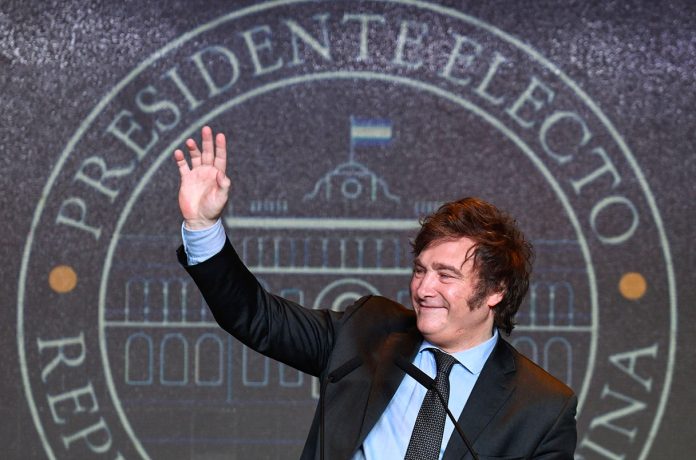
TOPSHOT - Argentine presidential candidate for the La Libertad Avanza alliance Javier Milei waves to supporters after winning the presidential election runoff at his party headquarters in Buenos Aires on November 19, 2023. Libertarian outsider Javier Milei pulled off a massive upset Sunday with a resounding win in Argentina's presidential election, a stinging rebuke of the traditional parties that have overseen decades of economic decline. (Photo by Luis ROBAYO / AFP) (Photo by LUIS ROBAYO/AFP via Getty Images)

In a shocking move, Argentina’s newly elected President Javier Milei announced yesterday that he plans to replace the peso with the US Dollar and shut down the central bank. This is part of his radical agenda to end inflation, restore fiscal discipline and attract foreign investment.

The risk of dollarization is a phenomenon that occurs when a country’s currency loses its value and people start to use a foreign currency, usually the US dollar, as a medium of exchange, store of value and unit of account. This can have serious consequences for the country’s economic stability, monetary policy and financial sovereignty.

Milei, a libertarian economist and outspoken critic of the previous government, won the presidential election last month with 52% of the vote, defeating the incumbent Alberto Fernández. He campaigned on a platform of free markets, low taxes, minimal regulation and sound money. He also promised to dismantle the welfare state, privatize state-owned enterprises and renegotiate the country’s debt with the International Monetary Fund.

In his first speech as president, Milei said that the peso has lost more than 90% of its value in the last decade, making it one of the most unstable and worthless currencies in the world. He blamed the central bank for printing money recklessly and fueling inflation, which reached 50% last year. He argued that adopting the US Dollar as the official currency would eliminate inflation, stabilize prices and restore confidence in the economy.

He also said that he would shut down the central bank, which he called “a parasitic institution that only serves to finance the political class and their cronies”. He said that he would transfer its functions to the Treasury and create a currency board that would ensure a fixed exchange rate between the Dollar and the peso. He claimed that this would make monetary policy transparent and accountable and prevent any future manipulation of the currency.

Milei’s announcement was met with mixed reactions from different sectors of society. Some praised him for taking bold and decisive action to solve the country’s chronic economic problems. Others criticized him for imposing a radical and risky experiment that could have unforeseen consequences. Some expressed concern about the loss of monetary sovereignty and the dependence on a foreign power. Others questioned the legality and feasibility of his plan, which would require constitutional amendments and congressional approval.

Dollarization can happen for various reasons, such as high inflation, currency depreciation, political instability, lack of confidence in the domestic currency, or trade integration with countries that use the dollar. Some countries may choose to adopt the dollar officially, such as Ecuador, El Salvador and Panama, while others may experience partial or unofficial dollarization, such as Argentina, Bolivia and Zimbabwe.

The main advantages of dollarization are that it can reduce inflation, lower transaction costs, increase trade and investment, and enhance credibility and discipline. However, these benefits come at a high price. The main disadvantages of dollarization are that it eliminates the exchange rate flexibility, limits the monetary policy autonomy, reduces the seigniorage revenue, exposes the country to external shocks, and undermines the national identity and sovereignty.

Therefore, dollarization is not a simple or easy solution for countries facing economic challenges. It involves complex trade-offs and risks that need to be carefully assessed and managed. Countries that opt for dollarization should also implement structural reforms to improve their fiscal policy, financial system, institutional quality and competitiveness. Countries that want to avoid or reverse dollarization should pursue sound macroeconomic policies to restore confidence in their currency and strengthen their resilience to shocks.

Milei said that he was aware of the challenges and risks involved in his plan, but that he was confident that it would succeed. He said that he had studied the examples of other countries that had dollarized their economies, such as Ecuador, Panama and El Salvador, and that he had learned from their mistakes and successes. He said that he would implement his plan gradually and carefully, with the help of international experts and institutions. He also said that he would consult with the public and seek consensus with other political forces.

Milei’s plan is expected to face strong opposition from his political rivals, trade unions, social movements and some sectors of the business community. It is also likely to generate uncertainty and volatility in the financial markets, as investors and savers adjust to the new monetary regime. However, Milei said that he was ready to face any challenge and overcome any obstacle. He said that he was determined to make Argentina “the most prosperous and free country in Latin America”.

OpenAI Investors Consider Suing the Board after firing Sam Altman amid 700 Staff Resigning

0

The news of Sam Altman’s dismissal as the CEO of OpenAI, the research organization dedicated to creating artificial general intelligence (AGI), has shocked the AI community and sparked a legal dispute among its investors. According to sources familiar with the matter, some of the investors who backed OpenAI with $1 billion in 2019 are unhappy with the board’s decision to fire Altman and are considering taking legal action against them.

The reasons behind Altman’s firing are not clear, but some speculate that it has to do with his controversial vision for OpenAI and its future products. Altman, who was previously the president of Y Combinator, joined OpenAI as its CEO in March 2019, with the goal of leading the organization towards creating AGI that can benefit humanity. He also oversaw the launch of OpenAI’s commercial arm, OpenAI LP, which aimed to generate revenue from its AI technologies while maintaining its ethical and social mission.

However, some of the investors who funded OpenAI LP were reportedly dissatisfied with Altman’s leadership and direction, especially after the release of GPT-3, the powerful natural language processing system that can generate coherent and diverse texts on almost any topic.

GPT-3 has been hailed as a breakthrough in AI research, but it has also raised concerns about its potential misuse and impact on society. Some investors feared that Altman was planning to use GPT-3 and other AI systems to create a new platform that would compete with existing tech giants and disrupt various industries.

700 employees OpenAI tell the board to resign.

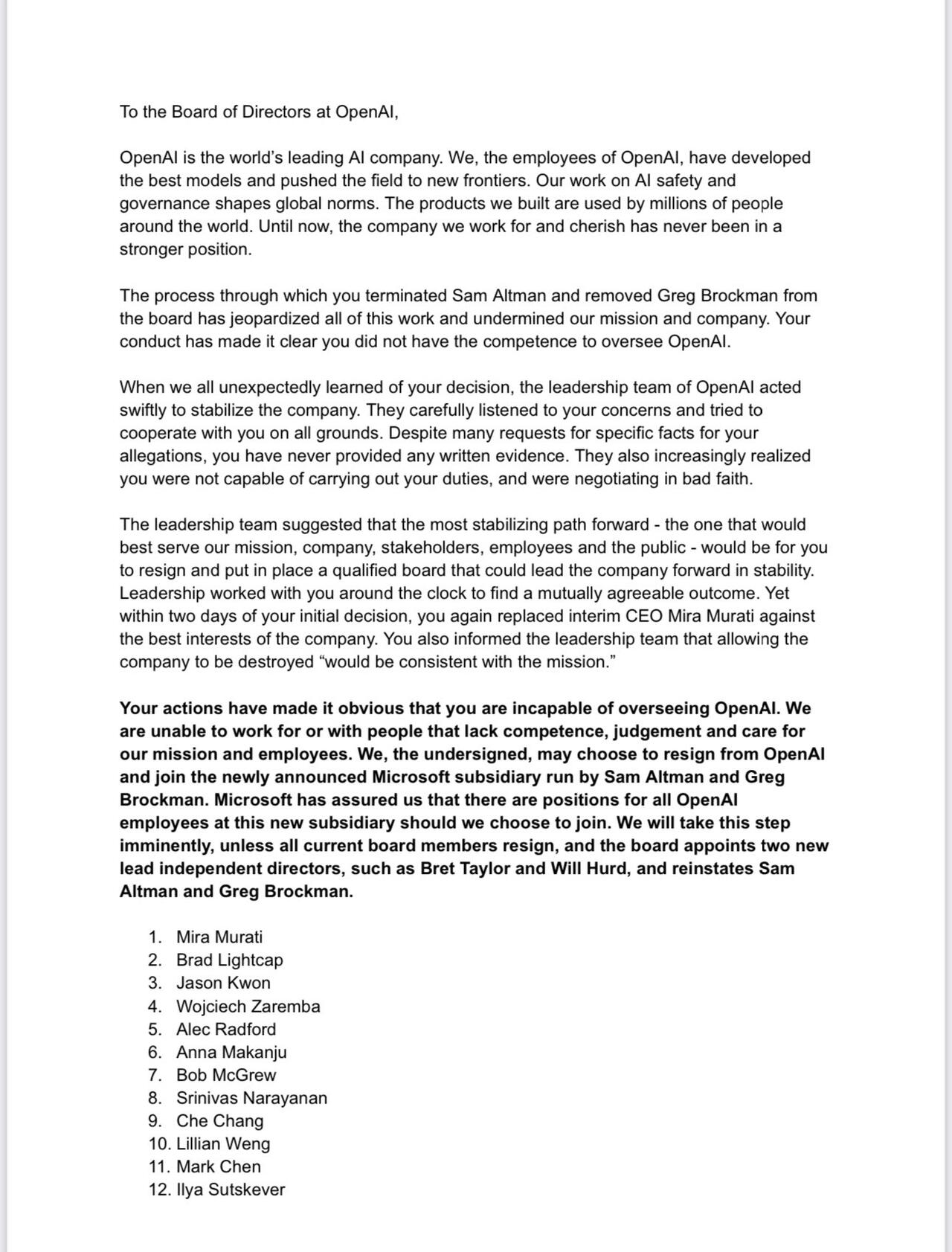
700 employees of OpenAI, the leading artificial intelligence research organization, have signed a letter demanding that the board of directors resign immediately. The letter, which was leaked to the media, accuses the board of mismanagement, lack of transparency, and ethical violations.

The letter states that the board has failed to uphold the vision and mission of OpenAI, which is to ensure that artificial intelligence is aligned with human values and can benefit all of humanity. The letter also claims that the board has interfered with the research agenda, suppressed dissenting voices, and favored certain projects over others without clear criteria or justification.

The letter cites several examples of the board’s alleged misconduct, such as:

The controversial decision to create and license GPT-3, a powerful natural language processing system, to Microsoft, without consulting the researchers or the broader AI community.

The lack of oversight and accountability for the OpenAI Codex project, which aims to create a general-purpose programming system that can generate code from natural language.

The dismissal of several prominent researchers who raised ethical concerns or criticized the direction of OpenAI.

The secrecy and exclusivity surrounding the OpenAI Scholars program, which provides funding and mentorship to underrepresented groups in AI.

The neglect and marginalization of other important research areas, such as fairness, safety, and social impact of AI.

The letter concludes by calling for a complete overhaul of the governance structure of OpenAI, including:

The resignation of the current board members: Sam Altman (CEO), Ilya Sutskever (Research Director), Greg Brockman (CTO), Elon Musk (Founder), Reid Hoffman (Founder), Peter Thiel (Founder), Jessica Livingston (Founder), and Srinivasan Balaji (Investor).

The establishment of a new board that reflects the diversity and expertise of the OpenAI community and the broader AI stakeholders. The creation of a transparent and democratic process for electing and evaluating board members and setting the strategic direction of OpenAI.

The adoption of a code of ethics and conduct that guides the research and development of OpenAI and ensures its alignment with human values and social good.

The letter ends by expressing hope that OpenAI can regain its reputation and credibility as a leader in artificial intelligence research and innovation and reaffirming the commitment of the signatories to work towards this goal.

According to one source, who spoke on condition of anonymity, some investors felt that Altman was “too ambitious and reckless” and that he was “putting OpenAI’s reputation and mission at risk”. They also claimed that Altman was not transparent enough with the board and the investors about his plans and strategies, and that he did not consult them before making important decisions. The source said that some investors tried to persuade Altman to change his course and align with their interests, but he refused to do so.

The tension between Altman and some of the investors reached a boiling point last week, when the board of OpenAI decided to fire him as the CEO. The board consists of seven members, including co-founders Elon Musk and Peter Thiel, as well as Reid Hoffman, Jessica Livingston, Greg Brockman, Ilya Sutskever, and Srinivasan Balaji. The board did not disclose the reasons for Altman’s dismissal but issued a statement thanking him for his contributions and announcing that Brockman, the CTO of OpenAI, will take over as the interim CEO.

The firing of Altman has triggered a backlash from some of the investors who supported him and his vision for OpenAI. They believe that the board acted unfairly and violated their contractual rights as shareholders of OpenAI LP. They also argue that Altman was the best person to lead OpenAI towards achieving its goal of creating AGI that can benefit humanity. They are now considering suing the board for breach of fiduciary duty, wrongful termination, and other claims.

The legal dispute could have serious implications for OpenAI and its future projects. It could also affect the relationship between OpenAI and its partners, customers, and collaborators, who rely on its AI technologies and services. Moreover, it could damage the reputation and credibility of OpenAI as a leading AI research organization that aims to ensure that AGI is aligned with human values and can be used for good.

Microsoft CEO Satya Nadella Reveals Possibility of Sacked OpenAI CEO Sam Altman’s Return to The Company

0

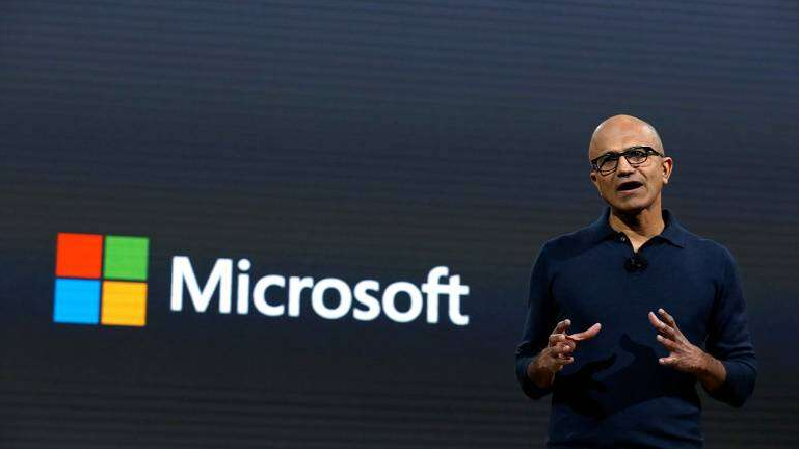
During an interview session with CNBC and Bloomberg TV last night, Microsoft CEO Satya Nadella revealed the possibility of ousted OpenAI CEO Sam Altman, returning to the company despite his departure.

This is coming after Microsoft had quickly appointed Altman and former OpenAI president Greg Brockman and several other employees to lead Microsoft’s new advanced AI research team.

During the interview Satya said,

“We think we are leading in this next generation of AI technology, we continue to be committed to OpenAI and we continue to be committed to Sam and Greg and the team irrespective of where they are.

“I think about Sam as chosen multiple times now to work with us and that is fantastic to see. I think the real thing is that the capability that Microsoft has across the tech stacks is what attracts great people like Sam and we are thrilled about it”.

Asked whether Altman would return to OpenAI, Nadella said, “That’s for you know, OpenAI board and management and the employees to choose. Microsoft chose to explicitly partner with OpenAI and that depends on the people at OpenAI staying there or coming to Microsoft, so I’m open to both options”.

He further maintained that Microsoft will open its doors to Sam, Greg, and OpenAI employees as part of its commitment and partnership to the AI technology company.

OpenAI’s decision to sack Sam Altman is reported to have infuriated the CEO of Microsoft, Satya Nadella, who is a major OpenAI investor and partner of the company. Nadella was said to be playing a key mediating role between the board and Altman and further pledged to support Altman no matter the outcome.

Recall that Altman was reported to have walked out from negotiations after the company tried to reinstate him. He further gave conditions to be met if he would consider a return to the company.

According to sources, Altman made two key demands concerning his reinstatement as CEO of OpenAI, both of which were non-negotiable. First, he demanded that the board members who fired him resign immediately from the board and that new members be elected by the investors as well as Nadella.

The second condition, according to reports is that Altman demanded that all future virtual meetings, across all verticals and levels to take place through Microsoft Teams, and not Google Meet through which he was fired.

Microsoft CEO Nadella during his recent interview said it’s clear something has to change around the governance at OpenAI, noting that he will have a good dialogue with the board on that, and walk through that as that evolves.

It is likely that if Altman’s conditions are not met, there is a possibility of him not returning to the company as he is already excited about his new adventure at Microsoft, with plans to replicate his successes while at OpenAI, which saw him raise the company’s valuation to $80 billion in a few years.

It is worth noting that OpenAI has been under heavy criticism since the firing of its most influential personality and former CEO Sam Altman.

In a recent development, nearly all OpenAI staff members have threatened to quit unless all board members resign and ex-CEO Sam Altman is reappointed, according to the latest count of staffers who have signed a letter demanding his return.

The number of employees who have signed has been rising through the day on Monday, and now includes nearly all of OpenAI’s workforce of 770.

Also, some OpenAI investors, are exploring legal recourse against the company’s board, sources familiar with the matter disclosed.

These investors worry they could lose hundreds of millions of dollars they invested in OpenAI, following the recent turmoil at the company.

Due to the heatt the company has been receiving from every corner, Co-founder of OpenAI who helped oust Sam Altman has recently put out a post on X, apologizing for his role in kicking out Altman from the company.

He wrote,

“I deeply regret my participation in the board’s actions. I never intended to harm OpenAI. I love everything we’ve built together and I will do everything I can to reunite the company.”

Responding to the Tweet, X and Tesla CEO Elon Musk wrote,

“Why did you take such a drastic action? If OpenAI is doing something potentially dangerous to humanity, the world needs to know”.

The matter currently ongoing between OpenAI and Sam Altman has continued to be one of the most talked about topics on the internet, as people anticipate the next outcome.

Salesforce is making a bold play for disgruntled OpenAI staff, with Salesforce CEO Mark Benioff saying the cloud-based software firm “will match any OpenAI researcher who has tendered their resignation full cash and equity” to join its AI team. So far, more than 700 of 770 of OpenAI staffers have signed a letter calling for Sam Altman’s reinstatement as OpenAI CEO. Otherwise, they “may choose to resign” and try to follow Altman to Microsoft, though The Verge, citing anonymous sources, reports Altman is trying to flip at least two board members to reclaim his CEO role at OpenAI. (LinkedIn News)

Shoptreo, A Tekedia Capital Portfolio, Is Africa’s Leading B2B Fashion Ecommerce Startup

0

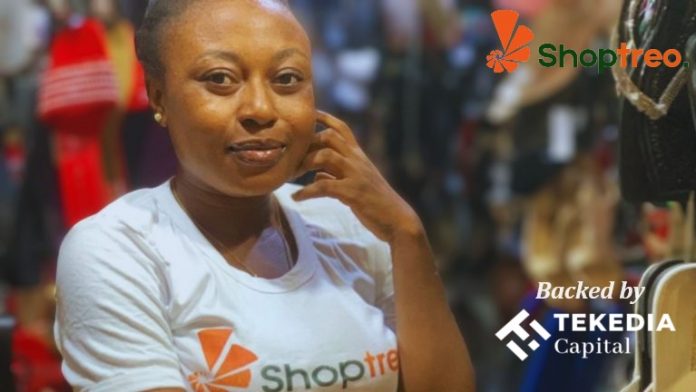
I am very excited to welcome the Aba boys to Tekedia Capital. Shoptreo is a pioneering B2B fashion platform in Nigeria, which connects fashion manufacturers (yes, tailors, shoemakers, etc) in the informal sector to distributors and bulk sellers globally. Powered by the trio of innovation, customer-centricity, and pursuit of excellence, they have great results.

They’ve also expanded to Kano for textile, and recently closed a deal to supply 10,000 pairs of shoes to Jamaican companies, providing enormous economic opportunities to shoe manufacturers in Nigeria.

Made in Nigeria and Made in Africa, being scaled. Welcome Shoptreo, backed by Tekedia Capital, Africa’s most active investment powerhouse for startups. To learn more about Shoptreo, go here  and for Tekedia Capital here .