DD
MM
YYYY

PAGES

DD
MM
YYYY

spot_img

PAGES

Home Blog Page 3627

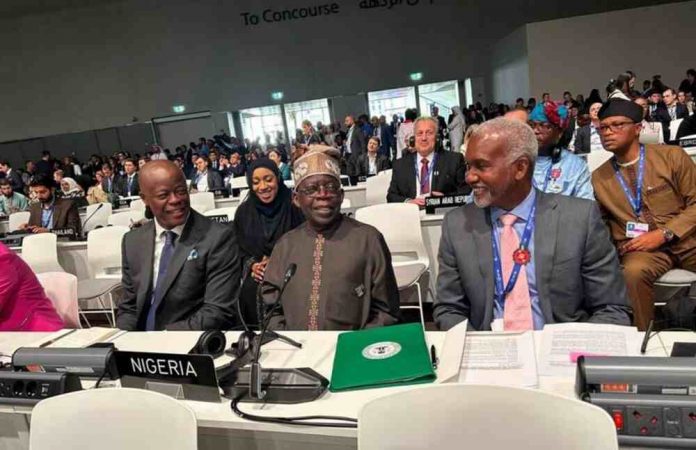
If Bribe is Requested from You, Report to us – Tinubu urges Qatari Investors

0

In a resolute declaration of Nigeria’s commitment to combat corruption and enhance its business environment, President Bola Tinubu addressed Qatari investors at the Nigeria-Qatar Business and Investment Forum in Doha on Sunday.

The President urged investors not to succumb to bribery demands and pledged decisive action against any official engaging in corrupt practices.

“I am here to give you the assurance that reforms are going on; forget about whatever you heard in the past. Whatever is the obstacle or problem that some of you might have experienced; it is in the past because there is no obstacle in the future,” Tinubu said.

“Do not offer a bribe to any of our people, and if it is requested or taken from you, report to us. You will have access to me. Nigeria will no longer be defined by the past, but by what we do now and moving forward. Do not let perceptions become a hindrance to your will to invest. Nigeria is serious about revolutionizing investment promotion.

Acknowledging past challenges, Tinubu assured investors of ongoing reforms aimed at fostering a conducive investment climate. “Forget about whatever you heard in the past. Whatever obstacles existed are now a thing of the past,” he affirmed.

Highlighting the government’s strides against corruption and insecurity, Tinubu lauded the appointment of Nuhu Ribadu, a renowned anti-corruption advocate, as National Security Adviser.
“We have a man who has won many global awards for anti-corruption as an anti-corruption czar,” Tinubu remarked.

In the statements, which were made during a meeting with His Highness, Sheikh Tamim bin Hamad Al Thani, Emir of Qatar, President Tinubu emphasized Nigeria’s openness to investment and underscored the country’s ongoing reforms.

Tinubu hailed the potential of Nigerian youths as invaluable partners for Qatari industries, citing their energy, talent, and reliability. He emphasized Nigeria’s readiness for serious business despite short-term challenges, lauding the government’s collaborative approach to implementing solutions.

In response, Sheikh Tamim bin Hamad Al Thani expressed confidence in Nigeria’s potential and affirmed Qatar’s willingness to explore investment opportunities.

“The investments we make belong to future generations. We are open to creating new opportunities in Nigeria,” Sheikh Tamim remarked, signaling Qatar’s commitment to bilateral cooperation.

President Tinubu appointed Wale Edun, the Coordinating Minister of the Economy and Minister of Finance, to lead discussions with Qatari authorities on investment identification and implementation. Additionally, the Minister of Solid Minerals Development, Dr. Dele Alake, presented opportunities in Nigeria’s mineral sector during bilateral deliberations.

The forum culminated in the signing of seven bilateral agreements spanning education, employment regulation, business council establishment, youth and sports cooperation, tourism, combating illicit trade, and narcotic substances. Nigerian ministers and Qatari officials inked the agreements, symbolizing a significant step towards deeper economic cooperation between the two nations.

In attendance were high-ranking officials including Coordinating Minister of Health and Social Welfare, Professor Muhammad Ali Pate, Minister of Trade, Industry, and Investment, Dr. Doris Uzoka-Anite, and Minister of State for Petroleum Resources (Gas), Mr. Ekperipe Ekpo, among others.

However, analysts have warned that Nigeria’s antecedents, including recent measures such as the clampdown on Bureau de Change operators (BDCs) and cryptocurrency exchanges, could pose concerns for potential investors. These actions have raised uncertainties regarding the government’s approach to economic policies and regulatory frameworks, potentially deterring foreign investment.

The crackdown on BDCs, which occurred in response to concerns about currency speculation and illicit financial activities, has sparked concerns about the stability of Nigeria’s foreign exchange market and the ease of doing business in the country. Similarly, the ban on cryptocurrency transactions has created uncertainty among investors and entrepreneurs operating in the digital asset space, as it raises questions about the regulatory environment for innovative financial technologies.

While President Tinubu’s assurances and pledges to combat corruption and create a conducive business environment are commendable, investors may remain cautious until they see concrete actions and consistent policy implementation. The success of Nigeria-Qatar economic cooperation hinges not only on diplomatic engagements and bilateral agreements but also on the government’s ability to address investor concerns and foster a transparent and predictable regulatory environment.

Despite these challenges, the bilateral engagements between Nigeria and Qatar represent a significant opportunity for both countries to deepen economic ties and explore mutually beneficial investment opportunities. Economic experts said that by addressing investor concerns and demonstrating a commitment to reform and transparency, Nigeria can attract much-needed foreign investment to drive economic growth and development.
Abia State Government maintains a 3½% equity in Geometric Power Aba – GP Management

0

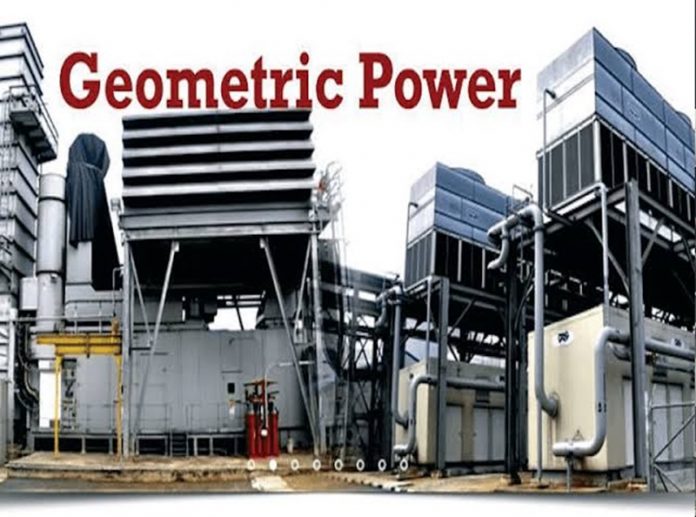
The Management of the Geometric Power Plant Aba has moved to address the ongoing controversy surrounding the purported stake of the Abia State Government in the esteemed power project.

In a bid to offer clarity, Mr. Chijioke Ogbodo, the spokesperson for the power entity, has stated unequivocally that the Abia State Government maintains a 3½% equity in the $800 million power plant. This declaration seeks to quell the recent discord stemming from conflicting assertions made by representatives of former Governor Okezie Ikpeazu and those of the incumbent Governor, Alex Otti.

The imbroglio was exacerbated following assertions by Prof. Nnaji, suggesting the absence of any investment by the Abia State Government in the project. However, former Commissioner for Trade and Investment during the Ikpeazu administration, Chief John Okiyi Kalu, vehemently refuted this claim, saying the previous administration made a payment of $3.56 million to Geometric Power through Stanbic Bank.

Kalu further advanced the position that Ikpeazu’s administration had allocated 5% equity in the project. Conversely, Mr. Ferdinand Ekeoma, the media adviser to Governor Otti, rebutted these contentions, citing a lack of tangible evidence to substantiate the claims. Ekeoma said that the previous administration failed to disclose any such investment in the handover documentation provided to Governor Otti.

In response, Commissioner for Information, Prince Okey Kanu, reiterated the State Government’s commitment to conducting comprehensive inquiries to ascertain the veracity of the purported investment. However, the conflicting narratives have left many stakeholders and observers questioning the true extent of Abia State’s involvement in the Geometric Power project.

The Geometric Power Plant Aba, a privately-driven initiative, aims to generate a robust 188 megawatts of power, with 100 megawatts earmarked for distribution within the nine Local Government Areas comprising the Aba re-fenced area. The surplus capacity, totaling 88 megawatts, is intended for export to the national grid, thereby holding the promise of ameliorating power deficits in Aba and its environs.

During the formal inauguration of the project in February 26, Owner Professor Barth Nnaji avowed to ensure a consistent power supply to Aba, contingent upon a steady gas supply to the plant. The Geometric Power Plant Aba stands as the largest single investment in the South East, eliciting optimism for a transformative power paradigm in the region.

The recent disclosure of a formal communication, reportedly addressed to Governor Alex Otti from the Chairman/CEO of Geometric Power corroborates the previous administration’s payment for a 3.5% equity stake, amounting to $3.56 million in the company. However, Governor Otti, during a televised interview with Channels Television, professed a lack of evidence regarding the state’s investment in the Geometric Power Aba project.

In response, Kalu underscored that the transaction was meticulously recorded in the handover documentation provided to Governor Otti and was further detailed in the state’s 2022 financial report disseminated during the Otti administration. He expressed incredulity over Governor Otti’s disavowal of the investment’s existence, insinuating a possible discrepancy between his statements and documented evidence.

The leaked correspondence from Prof. Barth Nnaji to Governor Otti, confirming Abia’s financial commitment to the project, has precipitated a chorus of queries regarding the transparency and accountability of the current administration. The glaring disparity between Governor Otti’s public proclamations and the documented evidence has engendered widespread skepticism regarding the stewardship of state investments.

As discussions continue regarding Abia State’s involvement in the Geometric Power Plant, stakeholders, and citizens eagerly anticipate additional clarity from the government to clear up the existing uncertainty surrounding this crucial infrastructure project.

Coindesk 20 and how indices help distinguish value from sentiment

0

In my youth, I had two homes, depending on when… Ireland and Trinidad.

I had two interesting observation points from where I could see the beginning of the dominance of Japanese vehicles in the marketplace. Dominant brands of the masses in Europe were British Leyland (different sub marques), Chrysler-Hillman, Citroen, Fiat, Ford, Opel, Renault, SAAB, Vauxhall, Volkswagen and Volvo.

Lots of people said bad things about the Japanese cars, but over a decade, they dominated the car markets, (particularly Toyota),  while many of the indigenous brands, especially in the UK, were either bought or died out.

I can remember a time in Nigeria when the only bleach folks would buy was ‘JiK’. Nobody would put their hands in dish washing if it was not ‘Morning Fresh’. Those that drunk vodka would only drink Smirnoff and the word ‘stout’ wasn’t even in the lexicon, only Guinness. If it wasn’t Lipton, it wasn’t tea, and elders in villages still spoke of ‘Quaker Oats’.

These days people are a lot less brand-loyal even in the most brand persistent of geos.

Arguments in favour of Cryptocurrencies are often variations of two types:

  1. Freedom from external control of, and sovereign border problems with personal assets
  2. A store of value that is less inflationary than FIAT.

The reality of Cryptocurrencies is that 1. Every ‘Cryptographic Network’ with a corporate or individual owner, has a control prerogative, and this may work out more risky than if the control were by a sovereign entity. We need to liberate ourselves from this naïve perception of Crypto-Corporates as being any more humane than Oil Giants or Big Pharma. The only options that truly offer this is where the network builders divested themselves of ownership (as with Bitcoin and Handshake).

  1. Only ‘Nakamoto Consensus’ Proof of Work (PoW) Blockchains offer true non-inflationary value (again, Bitcoin and Handshake are examples). BTC max circulation is 21m units, while HNS is 2.04 bn units.

But there is a third inflationary pressure in the Cryptocurrency asset class which nobody ever talks about. There are currently 193 countries acknowledged by the UN, which means there is a limit of 193 FIATs. Nobody can declare the existence of a nation in the morning and expect ascendancy to the UN with open arms, and enjoy the knock on benefits, such as being able to issue a national currency that its citizens will accept, and the world will acknowledge.

Any individual, group or company however, can randomly decide to create an ecosystem with its own cryptocurrency.  ‘Nakamoto Consensus’ Proof of Work (PoW) Blockchains are at the high end, with ERC 20 tokens at the ‘sh$tcoin’ end, but ultimately, increasing network numbers renders the Asset Class as a whole, inflationary.

No brand in the asset class is ‘untouchable’ or ‘sacrosanct’.

There is no proprietary hold on the technology, so there is scope for even ‘Nakamoto Consensus to be duplicated, or even improved upon.

Just as ‘Morning Fresh’ ran out of freshness in Nigeria, the Cryptocurrency Asset Class needs to understand, just because you don’t hear the knocking, doesn’t mean there isn’t a Toyota just outside the door.

When a product becomes surrounded by many technical equals or even superiors, brand is subjective, and its dominance is vulnerable, even the Bitcoin ‘brand’.

An article on LinkedIn earlier today by Sriram Ananthakrishnan acknowledges the meteoric rise of gold price, but nobody in my online reach is paying much attention to it.

Much is in play, and all Asset Classes are being heavily promoted by the Investment and Trading professionals linked to them.

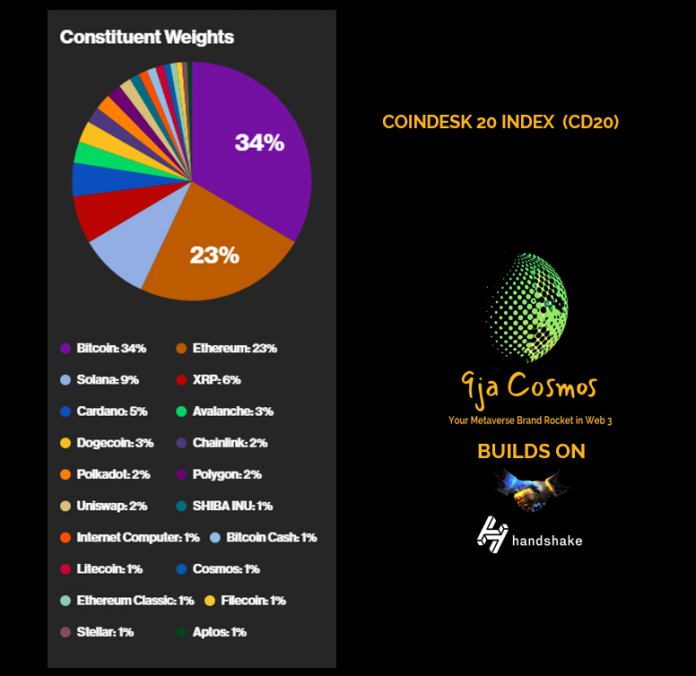
This finally brings us to the reason why the Coindesk 20 (CD 20) is so important.

Throughout economic history, we have seen different asset classes enjoy strong sentiment at different times. Equities, Commodities, Real Estate, Bonds, Trusts, FIATs, and over the last few years, Cryptocurrencies have entered the market, chasing investment.

Different global events have made different instruments or asset classes attractive. This has often meant the disposal of other assets, and consequently, a depression of other asset classes through no inherent fault of their own, as folks liquidated to chase the latest bandwagon.

In the dot com boom more than 20 years ago, many flash-in-the-pan equities enjoyed meteoric rises only to completely disintegrate later. Greed drove people to liquidate shares of old established companies who were deemed ‘safe’ but whose shares didn’t rise with any degree of urgency.

The US for example, has the Dow Jones Industrial Average, the Standard & Poor’s 500, and the Nasdaq Composite. These indices are particularly useful in a time of investment famine or abandonment, because they show endurance of particular stocks, against their class average.

Among FIATs we have the IMF Reserve, also called the SDR (Special Drawing Rights) Basket, whose ‘constituent weights’ are:

USD 43.38% EUR 29.31% CNY 12.28% JPN 7.59% GBP 7.44%


This is a fairer index on which to bench the performance of any FIAT, because it shields it from irrational analytics influenced by volatile swings in a single currency, such as the $USD when it is swinging on sentiment while awaiting a decision of Congress to raise the Debt Ceiling.

The CD20 offers a new mechanism within which to objectively look at what is happening with the subjective value of different Cryptocurrencies. It is a young index, and it won’t be perfect right away. It will probably include a few ERC 20 tokens, which can bring periodic instability to the index, but over time it will improve.

As sovereign equity indices emerged representing different sub classes, so too, we hope the future of Cryptocurrency indices will reflect different sub classes, such as whether coin or token, consensus construct and tokenomics, and whether the ecosystem supports diverse building, or is offering ‘store of value’ only.

This would help investors and builders further differentiate currency performance, without undue reliance on assets in other classes, which might be a flawed approach.

9ja Cosmos is here…

Get your .9jacom and .9javerse Web 3 domains  for $2 at:

.9jacom Domains

.9javerse Domains

Visit 9ja Cosmos LinkedIn Page

Visit 9ja Cosmos Website

Preview our Sino Amazon/Sinosignia releases


High-Potential Bullish Breakouts in the 2024 Bull Market: BlockDAG Presale with 5000x ROI Leads Solana NFTs & Arbitrum

0

In crypto, resilience amid challenges is a key indicator of a project’s potential. Solana’s recent price fluctuations and the underperformance of its NFT sector, coupled with Arbitrum’s network outages and the quest for ecosystem enhancements, highlight the hurdles faced by even the most promising platforms.

Amidst this backdrop, BlockDAG Presale (BDAG) stands out with its impressive presale success, raising over $2.4 million. With a presale price of just $0.0015 and a projected launch price of $0.05, BlockDAG offers a potential ROI of approximately 3233%, positioning itself as a strong competitor and a promising investment opportunity in the crypto space.

Solana NFT’s Resilience Amidst Challenges

Solana experienced a stunning increase, hitting almost $137, following a three-week decrease. But before it recovered, it fell to $93.94, raising questions about its viability. Dwindling DeFi activity and sluggish meme coin launches are two issues facing its ecosystem.

A break below the $120 support level indicates a reversal from the positive trend and increases the likelihood of further falls. Concerns are heightened by the NFT sector’s poor performance and network disruptions. If the $86 level of support breaks, the focus might shift to $70.

BlockDAG: Turns Everyday Investors to Crypto Whales

BlockDAG (BDAG) is rapidly emerging as a notable force in the cryptocurrency sector, inspired by the Kaspa protocol. The project differentiates itself with a cutting-edge hybrid consensus mechanism that enhances the DAG protocol used by Kaspa, ensuring superior transaction security.

BlockDAG’s successful presale, raising over $2.4 million, reflects the strong investor confidence in its future prospects. With a strategic plan and an ambitious target of $600 million by the end of 2024, BlockDAG is drawing investors with its presale price of $0.0015 in the second batch and a promising launch price of $0.05 per coin, offering a potential ROI of approximately 3233%.

With $1.5 million in miner sales, BlockDAG is positioned as a strong competitor to Kaspa. Early investors have already enjoyed a 50% return on their investments, with the potential for a 50x ROI during the presale and up to a 5000x ROI post-launch. This makes BlockDAG an attractive investment opportunity for 2024.

Furthermore, BlockDAG is making a name for itself in the crypto mining industry as the fastest PoW network, aiming for a transaction speed of 30 blocks per second with a confirmation speed of 10 blocks per second. Its mining solutions are both fast and environmentally friendly, catering to users with various levels of technical expertise.

Gibraltar Testnet Integration with Arbitrum (ARB)

Arbitrum Network wants more integrations to enhance its ecosystem. It has also played a part in driving up Arbitrum’s price. In the past week, Arbitrum’s market value has increased by 11%. The most recent change is that the Gibraltar testnet is now accessible to developers on the Arbitrum network. The testnet aims to improve the sequencer solution provided by Arbitrum.

The development is significant given the recent Arbitrum Staking outage brought on just a few sequencing issues. But the network outage has also undermined investor trust, which could eventually affect the price of the shares.

Choosing The Right Option

The ability to know challenges is a crucial determinant of a cryptocurrency project’s potential. Solana and Arbitrum, despite their promise, have encountered obstacles that cast a shadow on their prospects. In contrast, BlockDAG (BDAG) shines as a project of resilience and potential in the crypto-sphere.

Its remarkable presale success, with over $2.4 million raised, and the enticing ROI potential of approximately 3233% underscore its robustness and appeal to investors. As the crypto market continues to evolve, BlockDAG positions itself as a formidable player, offering a promising investment opportunity amidst the uncertainties faced by its contemporaries.

Invest In BlockDAG Presale:

Website: https://blockdag.network

Presale: https://purchase.blockdag.network

Telegram:https://t.me/blockDAGnetworkOfficial

Discord: https://discord.gg/Q7BxghMVyu

Nigeria Can Have Regional-Based Development with State-level Fiscal Federalism

0

Good People, my postulation that Nigeria must pursue development via a regional framework does not mean that we cannot still push for fiscal federalism (states keep their wealth but pay tax to the federal government). Yes, they’re not mutually exclusive which means you can have a state-level fiscal federalism and also a regional-based development.

As I noted, excluding about four states (Lagos, Delta, Rivers and Akwa Ibom), catalytic and transformal projects in Nigeria at state levels may be challenging as most states do not have the resources. From 2016 to 2022, Nigeria’s federal capital budget performance was less than 40% which means that even in the small budget we have for 220 million people, we cannot even execute all the components fully. At the state level, on average, that number is lower. 

So, what is the solution? Let regions pool resources and execute projects which can benefit and transform them.

Take an example: in the United States, the states of New York and New Jersey are independent with full fiscal autonomy on the tenets of American federalism, yet, these two states co-developed their port system: “The Port Authority is jointly controlled by the governors of New York and New Jersey, who appoint the members of the agency’s Board of Commissioners”.

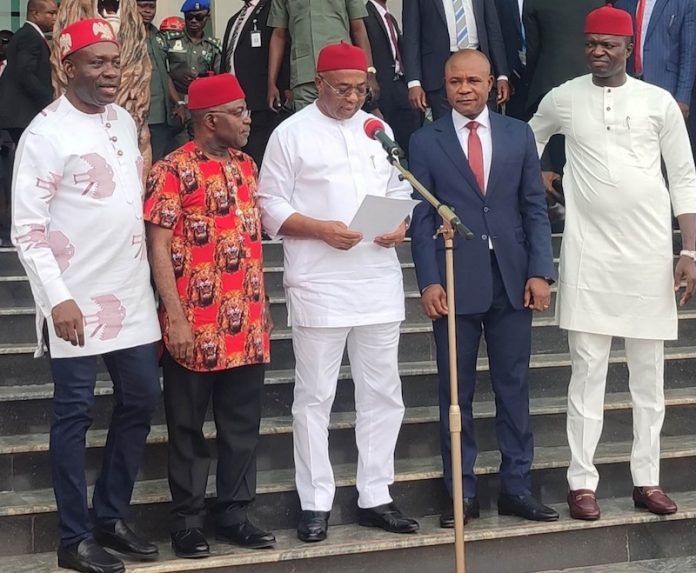
So, my proposal on a regional-based development does not mean we cannot still pursue fiscal federalism at the state level. Failure to pursue developments at regional level could lead to lost decades as most states have no capacity to execute any meaningful capital projects. If you expect Kano State’s budget, which is less than Imo State’s N592 billion, to do something huge, you are not paying attention.

And while Lagos with its close to N2 trillion budget can do whatever it wants to do, Imo State cannot dream big. However, if Imo and other Southeast states pool resources, they can build something catalytic for shared-development.