DD
MM
YYYY

PAGES

DD
MM
YYYY

spot_img

PAGES

Home Blog Page 363

Cynthia Lummis Introduces Bill to Exempt Small BTC Payments From Taxation, as North Dakota Plans to Launch Stablecoin

0

U.S. Senator Cynthia Lummis (R-WY), a prominent Bitcoin advocate, is actively working to introduce a de minimis tax exemption that would eliminate capital gains taxes and reporting requirements on small Bitcoin transactions.

This effort aims to make everyday BTC spending—such as buying coffee or small purchases—practical by removing the IRS’s current treatment of crypto as property, which triggers taxable events for even minor sales or uses.

Transactions under $300 would be exempt, with an annual cap of $5,000 in total tax-free spending. This builds on her earlier pushes for a $600 threshold in 2022 and a $300 amendment in mid-2025.

The bill also addresses double taxation on mining/staking rewards taxed only upon sale, crypto lending, wash sales, and charitable contributions to create parity with traditional assets.

Lummis introduced standalone digital asset tax legislation in July 2025 after a budget bill omitted crypto provisions. On October 7, 2025, she reiterated the push live on Fox TV, urging removal of capital gains taxes on small BTC payments to boost adoption. She followed up on October 9, 2025, announcing she’s drafting the bill and calling for public support.

The proposal has garnered strong support from the Bitcoin community for reducing compliance burdens and encouraging retail use, but critics argue it favors Bitcoin over altcoins like Litecoin or Dogecoin, potentially fragmenting the broader crypto market.

Lummis has tied this to her larger vision, including funding for a U.S. Strategic Bitcoin Reserve, which she said could begin imminently. This aligns with her long-standing pro-crypto stance, including personal BTC investments and prior bills like the 2022 Lummis-Gillibrand Responsible Financial Innovation Act.

If passed, it could significantly lower barriers to BTC as a medium of exchange, though implementation would require IRS guidance and further congressional votes.

Eliminating capital gains taxes on small BTC transactions would make it more practical to use Bitcoin for everyday purchases, as users wouldn’t need to track and report minor taxable events. This could drive mainstream adoption as a medium of exchange, not just a store of value.

Currently, every BTC transaction triggers a taxable event, requiring users to calculate gains or losses. The exemption would simplify tax reporting, especially for casual users, lowering barriers to entry and encouraging broader retail use.

Merchants accepting Bitcoin could see increased demand, as tax-free small transactions make crypto payments more appealing. This could spur growth in BTC-compatible payment systems and point-of-sale infrastructure.

The proposal could set a model for treating cryptocurrencies like traditional currencies for small transactions, aligning tax policy with practical use cases. It may prompt further reforms to address other crypto tax complexities.

Implementing the exemption requires clear IRS guidance on tracking the $5,000 annual cap and distinguishing exempt transactions. This could strain IRS resources or lead to enforcement gaps if not clearly defined.

Lummis’s push, tied to her Strategic Bitcoin Reserve advocacy, signals growing congressional support for pro-crypto policies, especially under a potentially crypto-friendly administration. However, passage depends on bipartisan support and navigating a crowded legislative agenda.

The proposal’s emphasis on Bitcoin has sparked debate. Supporters argue it strengthens BTC’s dominance, but critics, including some altcoin advocates, warn it could marginalize other cryptocurrencies fragmenting the market and favoring a single asset.

A clear tax exemption could boost investor and consumer confidence in Bitcoin, potentially increasing its price and market stability. However, if the bill fails or faces delays, it could dampen enthusiasm in the crypto community.

Some argue the bill unfairly prioritizes Bitcoin, potentially alienating altcoin communities. This could deepen divides within the crypto space, impacting collaborative efforts on broader regulatory clarity.

Despite Lummis’s advocacy, the bill faces a tough path through Congress, especially if tied to contentious issues like the Strategic Bitcoin Reserve. Opposition from anti-crypto lawmakers or those prioritizing altcoin neutrality could stall progress.

Critics may argue the exemption reduces federal tax revenue, though the impact is likely minimal given the focus on small transactions. This could still spark debate in budget-conscious congressional discussions.

If passed, the exemption could position Bitcoin as a viable everyday currency, aligning with Lummis’s vision of integrating crypto into the U.S. financial system. It may also pave the way for similar exemptions for other digital assets, though the current Bitcoin focus could complicate broader crypto tax reform.

North Dakota to Launch “Roughrider” Stablecoin, A State-Backed Digital Dollar Initiative

North Dakota has announced plans to launch a USD-backed stablecoin called the “Roughrider Coin.” This marks a significant step for the state in embracing blockchain technology for financial services, positioning it as the second U.S. state to issue a government-backed stablecoin after Wyoming’s Frontier Stable Token (FRNT).

The announcement was made on October 8, 2025, by the Bank of North Dakota (BND) in partnership with fintech giant Fiserv, and it’s generating buzz across crypto and finance communities on X.

The stablecoin is fully backed 1:1 by U.S. dollars, ensuring stability and pegged value. It will be issued on Fiserv’s FIUSD digital asset platform, which leverages blockchain infrastructure from Paxos Trust Co. for secure, interoperable operations with other stablecoins.

A beta version is under development, with the first tests in North Dakota banks and credit unions scheduled for 2026. Initial rollout will focus on institutional use, not direct consumer access. Accelerating bank-to-bank transactions reducing settlement times from days to minutes.

Supporting loan disbursements, overnight lending, and cross-border payments. Potential future expansion to merchant adoption and global money movement.

“Roughrider” honors Theodore Roosevelt’s volunteer cavalry unit from the Spanish-American War, reflecting North Dakota’s history—Roosevelt ranching in the state’s Badlands helped shape his conservation ethos.

This ties into the state’s innovative spirit, especially with the upcoming Theodore Roosevelt Presidential Library opening in Medora in 2026. The project aligns with the federal GENIUS Act passed in July 2025, which provides a national framework for payment stablecoins, enabling faster and more secure global transactions.

The North Dakota Industrial Commission including Governor Kelly Armstrong, Attorney General Drew Wrigley, and Agriculture Commissioner Doug Goehring has approved BND’s development efforts. BND, the only state-owned bank in the U.S. established in 1919, is collaborating with Fiserv, a payments processor handling billions of transactions annually.

BND President and CEO Don Morgan emphasized that this evolves the bank’s 106-year mission to support local agriculture, commerce, and industry without disrupting customer experiences—most changes will occur “behind the scenes.”

Fiserv COO Takis Georgakopoulos highlighted the shift to “instant, interoperable, and borderless” payments. Governor Kelly Armstrong described it as a “cutting-edge approach to creating a secure and efficient financial ecosystem,” capitalizing on federal law changes to keep North Dakota’s financial sector resilient.

Rick Clayburgh of the North Dakota Bankers Association noted it could offer “great opportunities” for local institutions navigating fintech. This initiative underscores a growing trend of U.S. states experimenting with digital currencies to enhance efficiency and compete with private stablecoins like USDT or USDC.

Unlike volatile cryptocurrencies, Roughrider aims for the speed of blockchain with the reliability of fiat backing. Early X discussions highlight excitement about state-level adoption like potential Solana integration for rails and comparisons to Wyoming’s FRNT, which launched on multiple blockchains in August 2025.

Some users speculate on future consumer access, while others flag regulatory hurdles or bank deposit risks.No initial investment costs for BND in the pilot, and public investment isn’t planned yet—focus is on institutional viability first.

This could signal more states following suit, blending traditional banking with Web3. What aspect intrigues you most— the tech, history, or potential impact?

The Dawn of Conversational Commerce

0

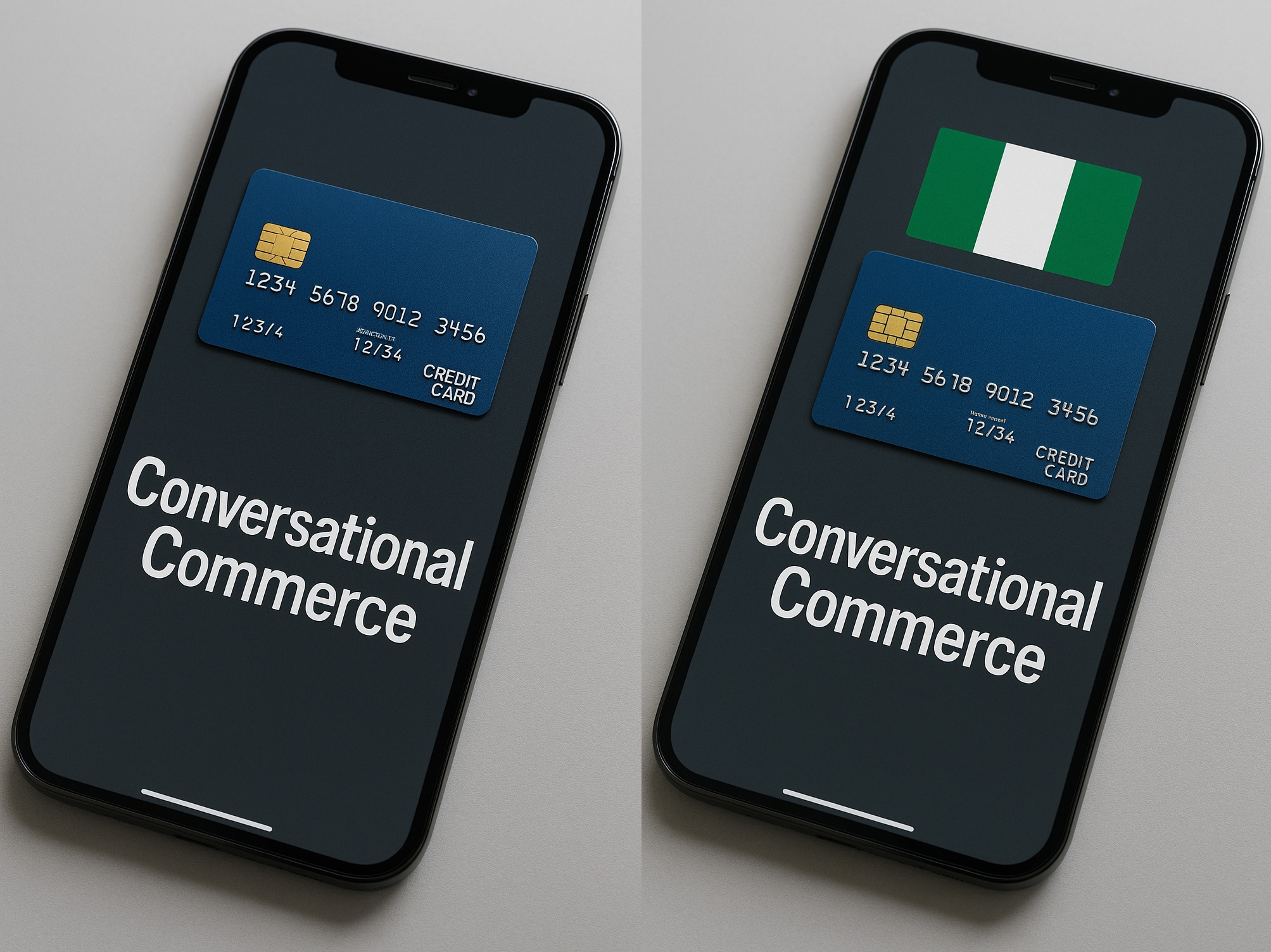
A remarkable evolution is happening in global digital finance and Nigeria’s startup community must pay close attention. ChatGPT, the world’s most famous conversational machine, is being integrated into the future of payments. When that architecture matures, those who power ChatGPT will, inevitably, power the ChatGPT Store, the next frontier of commerce in the digital age.

India just unveiled a glimpse of that future. Through a partnership between the National Payments Corporation of India (NPCI), Razorpay, and OpenAI, a pilot program now enables AI-powered payments directly within ChatGPT. The initiative runs on India’s Unified Payments Interface (UPI), a platform already processing over 20 billion transactions monthly. With this fusion, India has effectively taught AI to collect money through conversation where commerce meets cognition.

India’s National Payments Corporation of India (NPCI), in partnership with fintech firm Razorpay and OpenAI, has launched a pilot program introducing AI-powered payments through ChatGPT, marking a new phase in the country’s digital finance evolution.

The initiative allows users to make purchases directly within ChatGPT using India’s Unified Payments Interface (UPI) network — a system that already handles more than 20 billion transactions monthly.

This moment is not just about payment; it is about the redefinition of interfaces. In the same way web browsers unlocked the Internet and app stores unlocked smartphones, conversational platforms like ChatGPT will unlock a new marketplace of interactions. For Nigerian innovators, this is an early call: the companies that build AI-anchored experiences today will become the merchants of tomorrow’s digital empires. And any company – hello Flutterwave, Interswitch, Touch and Pay, etc – which wins the ChatGPT checkout will be in a solid position in Nigeria.

OpenAI, NPCI, and Razorpay Partner to Launch AI-Driven UPI Payments on ChatGPT in India

Can XLM & XRP Surpass 2018 High? Digitap’s No-KYC Setup Drives Massive Whale Interest

0

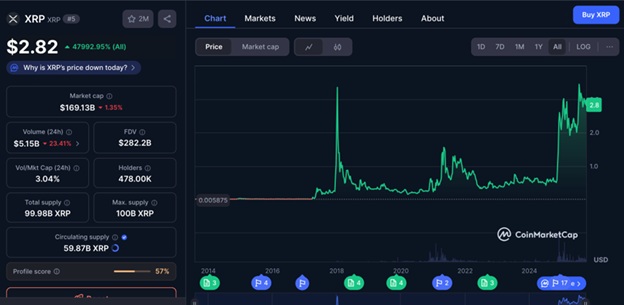
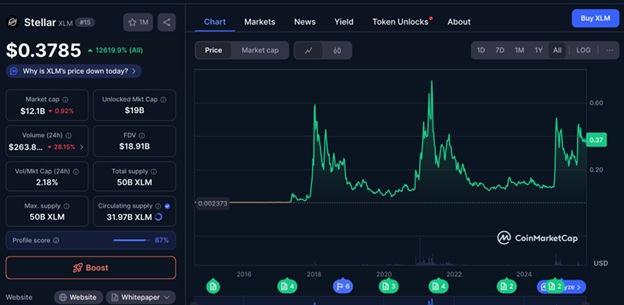
Market optimism is building once again as long-term holders prepare for the next wave of liquidity in the crypto sector. Among the more established players, Ripple (XRP) and Stellar (XLM) are being closely analyzed to see whether they can revisit previous highs of ~$3.40 and ~$0.70, respectively.

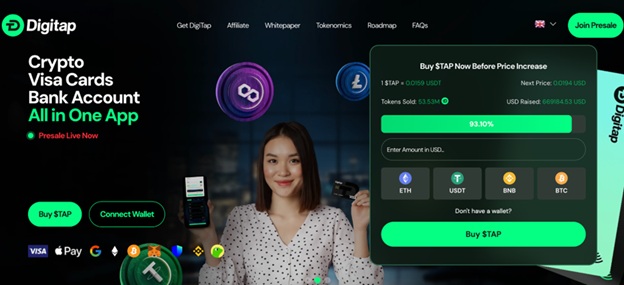
Yet the conversation isn’t just about legacy remittance networks—it’s about a project rapidly earning attention for inclusive finance. Digitap ($TAP), the world’s first omni bank, combines financial privacy with practical usability and offers zero-KYC onboarding that’s drawing interest from whale investors.

Digitap ($TAP): Where Privacy Meets Global Access

Digitap has entered the market with a clear goal: to make financial participation universal. While most banking systems rely on heavy identification checks that exclude much of the developing world, Digitap’s architecture takes a different path. The growing overlap between compliance, anonymity, and accessibility has made Digitap a serious talking point among analysts.

Its zero-KYC framework, permitted in compliant jurisdictions, allows users to open digital accounts, transact, and earn yield without exposing personal data unnecessarily. This appeals not only to privacy-conscious individuals but also to institutional players seeking scalable, regulatory-aligned alternatives to traditional banking.

At its core, Digitap functions as a full-service omni bank that merges both fiat and crypto accounts. Users can manage multi-currency IBANs, make instant global payments, and transfer value freely—all within a live working ecosystem. The project’s financial logic rests on accessibility rather than speculation.

Analysts note that the interest from large wallets and early venture participants reflects growing confidence in Digitap’s model. As global financial systems become more restrictive, projects offering both inclusion and privacy stand out as the best cryptos to invest in right now.

XRP ($XRP): Banking Bridges and Regulation Clarity

XRP has had a turbulent journey since 2018. Once seen as a disruptor to global remittances, it faced years of regulatory scrutiny. However, Ripple’s partial legal clarity in the United State has shifted sentiment. The project is now back in focus, especially as cross-border payments gain new importance.

At around $2.82, XRP has recovered from its lows, and traders are again watching liquidity metrics closely. Institutional adoption remains the biggest driver. Ripple’s partnerships with global banks and financial providers continue to grow. The difference this time is that XRP’s fundamentals are catching up to its long-term narrative.

Still, competition is intensifying. Even as XRP works to reclaim its previous highs, some traders are already reallocating portions of their holdings into early stage projects with more aggressive return potential, including Digitap, which is now frequently cited among the best crypto coins to invest in for those seeking growth.

Stellar ($XLM): A Shared Vision, Different Execution

Stellar was built to make global money transfers cheaper and faster. Over the years, it has partnered with remittance providers, fintech platforms, and even central banks exploring digital currencies. Its shared origins with Ripple give it a similar mission but a different governance structure. Where Ripple leans corporate, Stellar focuses on open access financial inclusion.

At around $0.37, Stellar remains at half the price of its previous peak nearing $0.70. However, on-chain data indicates a steady increase in active accounts and daily transactions. While not as explosive in performance as some newer chains, XLM’s consistent growth reflects its practical utility. The network has also leaned into stablecoin integrations, making it a quiet enabler of everyday cross-border value transfer.

That said, the market environment has changed since Stellar first launched. Privacy, user control, and integrated fiat on-ramps are now key differentiators. While Stellar still holds long-term value as a payment infrastructure coin, analysts suggest the bigger story may be unfolding within newer ecosystems designed around full financial sovereignty and immediate usability. Projects have to deliver, not just talk.

Why Digitap’s Model is Attracting Whale Interest

Digitap’s ecosystem is perfectly designed for a new era of financial inclusion. It’s already live, serving both individuals and businesses with a unified digital account structure. The platform’s compliant, zero-KYC setup bridges regulatory requirements with user autonomy, something traditional banks and many crypto exchanges still struggle to achieve.

Investors can become early adopters today with $TAP selling at just $0.0159—which could be the lowest ever entry. $TAP will jump 22% to $0.0194 in the next round, meaning anyone buying now can lock in gains almost instantly.

In contrast, XRP and XLM, while respected and established, may deliver smaller percentage returns due to their size and maturity. Taking into account 124% staking yields and deflationary economics, it’s easy to see why whales are showing interest in Digitap’s zero-KYC financial inclusion project over legacy remittance frameworks.


Discover how Digitap is unifying cash and crypto by checking out their project here:

Presale: https://presale.digitap.app

Website: https://digitap.app

Social: https://linktr.ee/digitap.app

Whitelisting for a Protocol of Proof: Be Early to Zero Knowledge Proof (ZKP)’s Revolution

0

In a digital landscape flooded with hype, speculation, and performative tokens, one project is challenging the rules of engagement, not by raising the stakes of marketing, but by redefining the very nature of truth. Zero Knowledge Proof (ZKP) is building a blockchain protocol that doesn’t reward the loudest voice or the most popular meme, but the most verifiable knowledge.

And at the heart of this movement lies a single, urgent opportunity: the upcoming whitelist. This isn’t just early access, it’s an exclusive seat at the table where fact becomes value, and reputation is earned on-chain.

Why Whitelisting Matters in a Protocol of Proof

Most whitelists in crypto are just access passes to presale tokens. But in the case of Zero Knowledge Proof (ZKP), the whitelist represents something much deeper, early participation in a credibility-driven economy. Those who get in first aren’t just buying into a project; they’re joining a mechanism that transforms verified claims into blockchain assets through a three-role structure of claimants, verifiers, and challengers.

Getting whitelisted means you’re at the forefront of this process. You gain the chance to prove what you know, test what others say, and get rewarded for exposing falsehoods. This isn’t passive staking or idle token-holding. It’s interactive, intellectual, and economically real.

By securing a whitelist spot, users position themselves to:

  • Submit claims and stake tokens on their validity
  • Serve as verifiers who evaluate the truth of submitted knowledge
  • Challenge weak or false claims with economic consequences
  • Build an on-chain credibility score tied to their performance

In short, the whitelist is your gateway to becoming a core participant in the blockchain’s next evolutionary leap, one where truth isn’t an opinion, but a consensus of verified knowledge.

Early Means Impact, The Advantage of First Movers

Zero Knowledge Proof (ZKP) is not a project that rewards passivity. Its core design favors those who act, question, verify, and challenge. In this environment, early access creates asymmetrical opportunity.

Being on the whitelist means you can start building your credibility footprint before the ecosystem matures. You can establish yourself as a respected verifier or skilled claimant when reputational scores are still forming. Since these scores persist over time and impact the trust others place in your future contributions, early action translates directly to long-term influence within the protocol.

Moreover, early participants are more likely to influence:

  • The initial resolution of claims
  • Early reputation hierarchies
  • Tokenomics tied to knowledge staking and slashing
  • Emerging governance mechanisms over time

While latecomers may participate, the system is designed to reward those who help bootstrap trust from the start. Whitelisting is not just your entry, it’s your foundation.

A Presale That’s Built on Proof, Not Promises

Unlike most presales that promise utility long after launch, Zero Knowledge Proof (ZKP) is delivering a framework where the utility is clear from day one: convert knowledge into value. By allowing users to stake on claims, earn from verifying truth, and lose from defending misinformation, the protocol builds economic structure around something tangible, facts.

The whitelist ensures you’re among the first to:

  • Receive the ZKP crypto coin before wider access
  • Begin participating in the knowledge economy
  • Lock in early roles within the token-based incentive model

It also offers a chance to support a crypto project that prioritizes responsibility over speculation, rewarding those who seek truth, not just returns. As a result, the whitelist isn’t just a technical step in a launch, it’s a philosophical commitment to verifiability.

Don’t Just Watch Truth Evolve, Be Part of It

The blockchain space has long been obsessed with decentralization, but Zero Knowledge Proof (ZKP) introduces the missing layer: decentralized truth. Through its whitelist, you’re invited to become more than a holder, you’re invited to build the system that verifies, scores, and rewards the truth.

If you’ve been looking for the next frontier in Web3, not just financially, but intellectually, this is it. The whitelist isn’t open yet, but the clock is ticking. Mark it. Track it. Be ready. Because when the window opens, it won’t just be about getting in early.

It will be about shaping the future of credibility on-chain.

ETH’s $7.5K Dream and ASTR’s Whale Moves Fade Next to BlockDAG’s TGE Code-Induced Whale Rush!

0

Ethereum’s latest run toward the $4,500 mark has analysts split on where it’s heading next. Some Ethereum (ETH) price prediction models see it breaking above $5,000 by year-end, while others warn of a correction if momentum stalls. Meanwhile, Astar (ASTR) price forecast reports point to renewed interest after whale wallets accumulated millions of tokens this week, hinting at quiet accumulation before its next breakout. Both show how timing often defines success in crypto; catching the right entry makes all the difference.

So what happens when a project gives you a fixed countdown to act? BlockDAG(BDAG) has done just that. Its TGE phase ends soon, locking in the final chance to enter at $0.0012. If you’re searching for the best crypto to buy today, this isn’t a signal to wait; it’s a signal that time’s almost up.

BlockDAG Kicks Off Countdown to GENESIS

BlockDAG isn’t talking about potential anymore; it’s already showing results. With its $420 million+ presale, a live Awakening Testnet processing 1,400 TPS, and a multi-year partnership with the BWT Alpine F1® Team, the network has proof of both progress and momentum. Now, the focus has shifted to BlockDAG’s ultra-viral TGE code, which allows holders to buy BDAG at just $0.0012 and secure great positions in its airdrop schedule.

After that, the window closes. GENESIS holders will have their entries locked, and the presale moves to its next pricing stage. There won’t be a grace period or another chance to secure BDAG at the lowest valuation. That’s why the project has become one of the best cryptos to buy today, not because of hype, but because access itself is running out.

BlockDAG’s strength lies in how much it’s already delivered before launch, a live testnet, growing developer tools, and massive community adoption. With only limited TGE spots left, this phase marks the cut-off between early participants and everyone else, the exact reason it’s seen as the best crypto to buy today before GENESIS turns the page.

Ethereum (ETH) Price Prediction: Can It Break the $5,000 Barrier?

Ethereum continues to trade around $4,451, with bulls and bears battling for control. Some analysts have upgraded their Ethereum (ETH) price prediction to $7,500 by the end of 2025, citing increased network adoption and institutional interest. Others stay cautious, expecting ETH to remain between $4,300–$5,000 unless a breakout above $4,650 holds. The mix of ETF inflows, upcoming protocol upgrades, and strong DeFi activity has kept Ethereum near the top of investor watchlists. Even so, technical reports warn that losing the $4,300 support could push it down toward the $3,800 zone.

Most short-term models expect ETH to consolidate before its next major move. Ethereum (ETH) price prediction charts from multiple sources suggest that sustained momentum above $4,700 could lead to $5,500 or beyond, while a weaker macro environment may delay that run. Institutional confidence remains strong, but market reactions to interest rate decisions and liquidity flows will determine how quickly ETH climbs. For now, Ethereum holds steady as a network with proven fundamentals and one of the strongest comeback stories heading into 2026.

Astar (ASTR) Price Forecast: Whale Moves and the Road Ahead

Astar has been holding steady around $0.0277, showing a mild uptick after recent whale accumulation sparked new optimism. On October 6, a large wallet added over 1.6 million ASTR, signaling quiet confidence in the project’s next growth phase. The network continues to build momentum through ecosystem updates and integrations like Soneium, Sony’s blockchain initiative. Short-term reports place the Astar (ASTR) price forecast between $0.02 and $0.03 by year-end, with the potential to push toward $0.05 if adoption expands and market sentiment improves.

Forecasts differ sharply across models, some see a correction toward $0.015, while others target highs near $0.08 in a bullish cycle. On-chain activity from dApps and gaming platforms like Animix Snap could help determine which path plays out. The broader trend suggests Astar is in a build-and-hold stage rather than pure speculation. Analysts agree that whale behavior and new developer activity are the key short-term signals. For traders watching entry zones, the Astar (ASTR) price forecast reflects both stability and room for upside, making it one of the quieter but closely followed stories as 2025 closes out.

Why BlockDAG is the Best Crypto To Buy Today

Both Ethereum (ETH) price prediction and Astar (ASTR) price forecast show how timing remains the deciding factor in crypto gains. ETH continues to test resistance near $4,500 with targets stretching to $7,500, while Astar’s whale-driven activity signals a potential climb toward the $0.05 mark. Each project reflects how market phases and precise entry points shape outcomes more than hype alone.

That same principle defines BlockDAG’s story, except this time, the clock is visible. With TGE closing soon, its $0.0012 entry price will officially end. GENESIS holders will move into the next phase while latecomers face higher tiers. For those looking for the best crypto to buy today, BlockDAG’s countdown isn’t just a milestone; it’s a signal that the lowest gate is about to close.

Presale: https://purchase.blockdag.network

Website: https://blockdag.network

Telegram: https://t.me/blockDAGnetworkOfficial

Discord: https://discord.gg/Q7BxghMVyu