DD
MM
YYYY

PAGES

DD
MM
YYYY

spot_img

PAGES

Home Blog Page 3634

Reviewing The New MacBook Pro: How M3 Chips Outperform Intel Chips

0

Apple has recently unveiled its new MacBook Pro models, featuring a redesigned chassis, a mini-LED display, and a range of ports that were missing from the previous generation. But the most impressive feature of the new laptops is the M3 chip family, which includes the M3, M3 Pro, and M3 Max processors. These chips are based on Apple’s own ARM architecture, and they promise to deliver a significant boost in speed, efficiency, and battery life compared to the Intel-based Macs.

We will review the new MacBook Pro and evaluate how the M3 chips perform in various tasks, such as web browsing, video editing, gaming, and machine learning. I will also compare the different models and configurations of the M3 chips, and help you decide which one is best for your needs. The M3 chip family is composed of three variants: the M3, M3 Pro, and M3 Max. They all share some common features, such as:

A 5-nanometer process technology, which allows for more transistors and lower power consumption. An integrated system-on-a-chip (SoC) design, which eliminates the need for separate components such as RAM, GPU, and I/O controllers. A unified memory architecture (UMA), which enables faster data transfer between the CPU and GPU cores. A 16-core Neural Engine, which accelerates machine learning tasks such as image recognition and natural language processing.

However, there are also some differences between the three chips, mainly in terms of core count, cache size, memory bandwidth, and GPU performance. Here is a summary of the main specifications of each chip:

| Chip | CPU cores | GPU cores | Cache size | Memory bandwidth | Max power |

|——|———–|———–|————|——————|———–|

| M3 | 8 (4 performance + 4 efficiency) | 8 | 12 MB | 200 GB/s | 35 W |

| M3 Pro | 10 (6 performance + 4 efficiency) | 14 | 16 MB | 200 GB/s | 45 W |

| M3 Max | 10 (6 performance + 4 efficiency) | 32 | 32 MB | 400 GB/s | 60 W |

As you can see, the M3 Pro and M3 Max have more CPU and GPU cores than the M3, which means they can handle more demanding workloads. The M3 Max also has twice the cache size and memory bandwidth of the other two chips, which means it can access data faster and support more RAM. The trade-off is that the M3 Pro and M3 Max consume more power than the M3, which may affect battery life and thermal management.

The main difference between the M3 and Intel chip families is that the M3 chips are optimized for Apple’s software and hardware ecosystem, while the Intel chips are designed for a wider range of devices and operating systems. This means that the M3 chips can take advantage of features such as Metal (Apple’s graphics framework), Core ML (Apple’s machine learning framework), and Rosetta 2 (Apple’s emulation software for running Intel-based apps). The Intel chips, however, may have better compatibility with some third-party apps and peripherals that are not optimized for Apple’s platform.

The new MacBook Pro: How does it look and feel?

The new MacBook Pro models come in two sizes: 14-inch and 16-inch. They both have a similar design language, with flat edges, rounded corners, and an aluminum body. The most noticeable change from the previous generation is the display, which uses a mini-LED technology called Liquid Retina XDR.

This display offers higher brightness, contrast, color accuracy, and resolution than the standard LCD screens. The 14-inch model has a resolution of 3024 x 1964 pixels, while the 16-inch model has a resolution of 3456 x 2234 pixels. Both models support ProMotion technology, which adjusts the refresh rate up to 120 Hz depending on the content.

Another major change is the return of some ports that were absent from the previous generation. The new MacBook Pro models have three Thunderbolt 4 ports (two on the left side and one on the right side), an HDMI port (on the right side), an SD card slot (on the right side), and a MagSafe 3 port (on the left side).

The MagSafe 3 port is used for charging the laptop with a magnetic connector that can detach easily if someone trips over the cable. The Thunderbolt 4 ports support data transfer up to 40 Gbps, as well as charging and video output. The HDMI port supports up to 4K resolution at 60 Hz or up to 8K resolution at 30 Hz.

How the M3 chips outperform the Intel chips

Apple’s M3 chips are the latest generation of its custom-designed processors that power its MacBooks, iPads, and iPhones. These chips are based on the ARM architecture, which is different from the x86 architecture used by Intel and AMD. The M3 chips offer several advantages over the Intel chips, such as:

Higher performance: The M3 chips have more cores, higher clock speeds, and better integrated graphics than the Intel chips. They also have a unified memory architecture, which means that the CPU and GPU share the same memory pool, reducing latency and increasing bandwidth. The M3 chips can run both native ARM apps and x86 apps through emulation, with minimal performance loss. According to Apple, the M3 chips can deliver up to 2x faster performance than the Intel Core i7 chips in some tasks.

Lower power consumption: The M3 chips are more energy-efficient than the Intel chips, thanks to their 5-nanometer process technology and their heterogeneous design. The M3 chips have a mix of high-performance and high-efficiency cores, which can switch between different tasks depending on the workload. The M3 chips also have a neural engine, which can handle machine learning tasks with lower power consumption. According to Apple, the M3 chips can offer up to 21 hours of battery life on a single charge for some models.

Better security: The M3 chips have a secure enclave, which is a dedicated hardware component that stores sensitive data such as passwords, encryption keys, and biometric information. The secure enclave is isolated from the rest of the system and can only be accessed by authorized apps. The M3 chips also have a hardware-based encryption engine, which can encrypt and decrypt data without affecting performance. The M3 chips also support features such as Touch ID, Face ID, and Apple Pay, which enhance user security and convenience.

Nigeria’s Supplementary Budget Shows Insensitive to the Suffering of the Majority – Peter Obi

0

Labour Party’s presidential candidate in Nigeria’s last general election, Peter Obi, has commented on the Supplementary Budget signed on Monday by President Bola Tinubu, saying it does not reflect mostly urgent items of national welfare.

In a post on X titled: “Observations on the Supplementary Budget”, Obi said the budget, which has drawn a lot of controversies, including the N5bn yacht allocated for the president and the N1.5 billion allocated for cars for the Office of the First Lady, does not feature the nation’s most pressing needs.

Obi said the concept of a supplementary budget is created to address important national welfare needs that were not initially accounted for in the main budget or lack sufficient funding.

Though he acknowledged that certain items in the current budget may not have been considered the priorities of a new administration, Obi argued that a supplementary budget introduced late in the financial year should primarily focus on urgent national welfare concerns.

The former Anambra State governor expressed disappointment that the recently announced supplementary budget by the government does not adequately address the most pressing national needs and emergencies.

He cited a warning from organizations like the United Nations and World Food Programme, stating that up to 6.5 million Nigerians are at risk of hunger next year, particularly in states like Sokoto, Adamawa, Borno, Yobe, and Zamfara. He said that a caring government should allocate funds in the supplementary budget to address this impending crisis.

Obi contends that the government’s overall attitude suggests a lack of awareness regarding the significant crisis facing the country, and a failure to empathize with the struggles of the population.

“The government’s overall attitude does not indicate that it is aware that the country is in a huge crisis, nor is the government in tune with the plight of the generality of our people,” he said.

He also expressed concern about the fact that a substantial portion of the funding for these extravagant expenses will likely come from borrowing. He said that, given the current challenging circumstances, Nigerians expect the government to demonstrate empathy and practicality rather than indulging in lavish expenditures.

Read the full text below:

A supplementary budget is a budget made for very important national welfare needs of the people which were not captured originally in the main budget or do not have adequate funding.

Admittedly, some items in the current budget may not have taken into consideration the needs of a new administration, but it is expected that a supplementary budget this late in the financial year should reflect mostly urgent items of national welfare.

Sadly, the most pressing national needs and emergencies have not featured in the supplementary budget that was just announced by the government. For example, the United Nations and World Food Programme have recently warned that up to 6.5 million Nigerians will go hungry next year. This number is largely from among citizens in Sokoto, Adamawa, Borno, Yobe, and Zamfara States. A caring Government in order to plan for the mitigation of such pending catastrophe can request supplementary budget provisions to cushion those under threat.

No item of urgent social welfare has yet featured in the supplementary budget being orchestrated by this government. Instead, the items being made to dominate public discourse on the budget include a mysterious Presidential Yacht, Presidential Jets, the furnishing of already lavishly furnished presidential quarters and offices, fleets of luxury SUVs etc. This portrays a Government that is totally uncaring and insensitive to the suffering of the majority, and indifferent to the mood of the nation.

The government’s overall attitude does not indicate that it is aware that the country is in a huge crisis, nor is the government in tune with the plight of the generality of our people.

Even worse is the fact that most of the funding for these profligate expenditures will be largely borrowed.

The least that Nigerians expect from the government at this difficult moment is empathy and realism, not lavish indulgence.

OpenSea Announces Major Restructuring as Coinbase Adds New Members to its Global Advisory Council

0

OpenSea, the leading marketplace for non-fungible tokens (NFTs), has announced a major restructuring plan that will affect half of its workforce. In a blog post published today, the company said that it will reduce its staff by 50% in order to streamline its operations and focus on its core mission of building a decentralized platform for digital art and collectibles.

The decision comes after a period of rapid growth and expansion for OpenSea, which saw its monthly trading volume surge from $8 million in January to over $3 billion in August, making it the most valuable NFT company in the world. However, the company also faced several challenges and controversies, such as a security breach that compromised some user accounts, a scandal involving insider trading by one of its executives, and a lawsuit from a rival platform accusing it of patent infringement.

OpenSea said that the restructuring is necessary to adapt to the changing market conditions and customer demands, as well as to improve its internal governance and culture. The company said that it will offer severance packages and outplacement services to the affected employees, and that it will continue to hire for key roles in engineering, product, design, and community.

“We are grateful for the contributions of every member of our team, and we are deeply saddened by having to part ways with some of our talented colleagues,” the blog post read. “We believe that this is the right decision for the long-term success of OpenSea, and we are confident that we will emerge from this transition stronger and more focused than ever.”

OpenSea also reaffirmed its commitment to its vision of creating a “vibrant, open, and fair” marketplace for NFTs, and said that it will announce new features and partnerships in the coming weeks. The company thanked its users, creators, partners, and investors for their support and trust, and said that it will work hard to deliver the best possible experience for the NFT community.

Coinbase Inc announced the addition of four new members to its Global Advisory Council

Coinbase has announced the addition of four new members to its global advisory council, all of whom have extensive experience in the field of national security. The new members are Lisa Monaco, former Homeland Security Advisor to President Obama; Michael Morell, former Acting and Deputy Director of the CIA; Sue Gordon, former Principal Deputy Director of National Intelligence; and Tom Ridge, former Secretary of Homeland Security and Governor of Pennsylvania.

The global advisory council was established by Coinbase in 2019 to provide strategic guidance on regulatory and security issues related to the cryptocurrency industry. The council consists of distinguished experts from various sectors, including government, law enforcement, intelligence, academia, and civil society. The council meets regularly to discuss the latest developments and challenges in the crypto space, and to advise Coinbase on how to best serve its customers and the broader crypto community.

Coinbase’s CEO Brian Armstrong said in a blog post that the new members will bring valuable insights and perspectives to the council, especially as the company continues to expand its global presence and influence. He also said that the move demonstrates Coinbase’s commitment to working with regulators and policymakers to foster a safe and legitimate environment for crypto innovation in the U.S. and beyond.

“Coinbase is proud to welcome these distinguished national security leaders to our global advisory council,” Armstrong wrote. “Their expertise and experience will help us navigate the complex and evolving regulatory landscape around crypto and advance our mission of creating an open financial system for the world.”

Coinbase is the largest U.S. crypto exchange by trading volume and users, with over 68 million verified accounts and over $223 billion in assets on its platform. The company went public in April 2021 through a direct listing on Nasdaq, becoming the first major crypto company to do so. Coinbase offers a range of products and services for retail and institutional investors, as well as crypto education and advocacy initiatives.

World Bank Report Acknowledges the Beneficial Environmental Impact of Bitcoin Mining

0

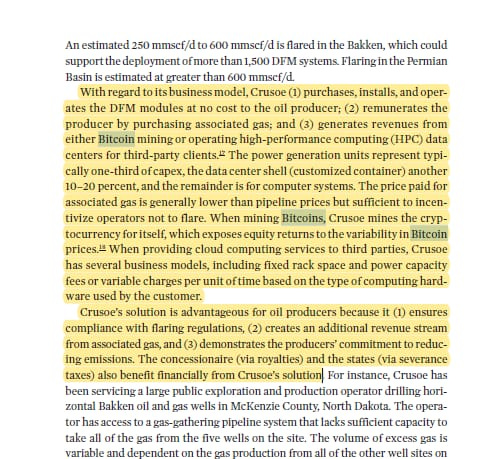
The World Bank recently released a report titled “Gas Flaring: A Burning Issue for the Climate and Development” that analyzes the global trends and impacts of gas flaring, a practice of burning off excess natural gas during oil production. The report highlights the environmental, economic and social costs of gas flaring, and proposes solutions to reduce it. The World Bank acknowledges the beneficial environmental impact of Bitcoin mining in relation to gas flaring.

According to the report, Bitcoin mining can provide a profitable alternative use for the otherwise wasted gas, by converting it into electricity to power the mining operations. This can reduce the amount of gas flared, and thus lower the environmental footprint of the oil industry.

The report also highlights the potential economic and social benefits of Bitcoin mining for local communities in oil-producing regions, such as creating jobs, increasing income, and fostering innovation. The report cites several examples of successful projects that have implemented this model, such as Upstream Data in Canada, Crusoe Energy Systems in the US, and BitRiver in Russia.

These projects have demonstrated that Bitcoin mining can be a viable solution for utilizing stranded gas resources, while also supporting the development of the cryptocurrency sector.

One of the most interesting aspects of the report is the frequent mention of Bitcoin, the leading cryptocurrency that uses a proof-of-work consensus mechanism to secure its network. The report acknowledges that Bitcoin provides a powerful incentive structure for using stranded or wasted gas as a source of energy for mining, thus reducing emissions and generating income for oil producers.

According to the report, Bitcoin mining could potentially consume up to 12 billion cubic meters of natural gas per year, equivalent to about 23% of the global gas flaring volume in 2020. This would not only reduce greenhouse gas emissions by about 60 million tons of CO2 equivalent, but also create an additional revenue stream of about $4.5 billion for the oil and gas sector.

The report also recognizes that Bitcoin mining can support renewable energy development, by providing a flexible and profitable outlet for excess electricity generation. This could help overcome some of the challenges of integrating variable renewable sources, such as solar and wind, into the grid.

The World Bank’s report is a significant acknowledgement of the role that Bitcoin can play in tackling climate change and promoting sustainable development. It shows that Bitcoin is not a wasteful or harmful activity, but rather a catalyst for innovation and efficiency in the energy sector. By aligning incentives with environmental and social goals, Bitcoin can create a win-win situation for both the planet and its people.

The report concludes that Bitcoin mining can offer a win-win scenario for both the oil industry and the environment, by turning a waste product into a valuable asset. The report also suggests that policymakers and regulators should encourage and facilitate this practice, by providing clear and consistent rules, incentives, and infrastructure.

The report states that “Bitcoin mining can be an effective tool for mitigating the environmental impact of gas flaring and enhancing the sustainability of the oil and gas sector.”

Meta GDPR Impact, Reel A/B Testing and Threads on Facebook

0

Meta, formerly known as Facebook, has recently announced some new features and changes to its platform that may affect marketers and advertisers.

Here are some of the highlights:

GDPR Impact: Meta has updated its terms of service and data policy to comply with the General Data Protection Regulation (GDPR), which took effect in the European Union on May 25, 2018. The GDPR is a set of rules that aims to protect the privacy and personal data of EU citizens. Meta says that it will apply the same standards to all users globally, regardless of where they live.

This means that users will have more control over how their data is collected, used, and shared by Meta and its partners. Users will also be able to access, download, and delete their data at any time. Meta advises marketers and advertisers to review their own data practices and policies to ensure compliance with the GDPR.

Reel A/B Testing: Meta is testing a new feature called Reels, which are short, vertical videos that can be viewed in a dedicated tab on the app. Reels are similar to TikTok videos, but with some differences. For example, Reels can be up to 60 seconds long, while TikTok videos are limited to 15 or 60 seconds. Reels can also be edited with various effects, filters, stickers, music, and text.

Meta says that Reels are a way to express yourself creatively and connect with your audience. Meta is currently running an A/B test to compare the performance of Reels with other types of video content on the platform. Marketers and advertisers can use Reels to showcase their products or services, tell stories, or share tips and tutorials.

Threads on Facebook: Meta is rolling out a new feature called Threads, which are a way to organize conversations on Facebook groups and pages. Threads allow users to reply to specific comments and create subtopics within a larger discussion.

Threads are designed to make conversations more focused, relevant, and easy to follow. Meta says that Threads can help users find answers, share opinions, and learn from others. Marketers and advertisers can use Threads to engage with their audience, solicit feedback, answer questions, or start polls.

One of the most significant updates is the rebranding of Facebook to Meta, which reflects the company’s vision of building the metaverse, a virtual environment where people can interact with each other and digital content. Meta’s CEO Mark Zuckerberg said that the metaverse will be “the next evolution of social connection” and that it will create new opportunities for businesses and creators.

Another update that will impact advertisers is the launch of new ad formats and tools for the metaverse. Meta said that it will introduce immersive ads that will allow users to experience products and services in 3D and augmented reality. For example, users will be able to try on clothes, test drive cars, or visit hotels in the metaverse before making a purchase. Meta also said that it will offer new ways for advertisers to measure and optimize their campaigns across its apps and the metaverse.

Meta’s updates also include new features and improvements for its existing apps. For instance, Meta said that it will enhance its e-commerce capabilities on Instagram and WhatsApp, such as adding more shopping tabs, carts, and checkout options. Meta also said that it will improve its video products, such as Reels, Live, and Watch, by adding more creative tools, monetization options, and discovery features.

Meta’s latest updates are a clear indication of its ambition to shape the future of online interaction and commerce. Advertisers and marketers should pay close attention to these changes and adapt their strategies accordingly. Meta said that it will provide more guidance and support for advertisers in the coming months as it rolls out its new products and services.