
DD
MM
YYYY

PAGES

DD
MM
YYYY

spot_img

PAGES

Home Blog Page 3637

Recent recalls by German carmakers Volkswagen and BMW in the United States

0

The German car manufacturers Volkswagen and BMW have been ordered to recall hundreds of thousands of cars in the United States due to separate safety issues. The recalls highlight the importance of addressing potential risks promptly to ensure driver safety.

Volkswagen is recalling more than 261,000 vehicles in the U.S. due to issues with a suction jet pump seal inside the fuel tank. The National Highway Traffic Safety Administration (NHTSA) identified this problem, which could increase the risk of fire. The affected vehicles include certain front-wheel drive models:

2015-2020 Audi A3 Sedan.

2019-2020 Volkswagen Jetta GLI.

2018 Golf SportWagen and others.

Dealers will replace the suction pump on these vehicles free of charge, ensuring that drivers can continue to operate their cars safely.

BMW is also facing a recall affecting 79,670 cars in the U.S. The issue lies with the brake system, which could lead to an increased braking distance. Additionally, the ABS (anti-lock braking system) and DSC (dynamic stability control) may not function correctly. To address this, workshops will rectify the problem at no cost to BMW owners.

Both Volkswagen and BMW recognize that safety is paramount. By promptly addressing these issues, they demonstrate their commitment to ensuring their customers’ well-being. The U.S. market is crucial for German car manufacturers, with strong sales figures for both brands last year:

The Volkswagen Group delivered around 993,100 vehicles in North America—an impressive increase of almost 18%. BMW sold 395,741 cars in the USA, representing a 9% growth compared to the previous year.

BMW Issues 79,670-Car Recall over Potential for Brake Malfunction

BMW has initiated a recall covering nearly 80,000 vehicles from the 2023 and 2024 model years. The recall involves a defect in the ABS and stability control systems that could cause power braking assistance to fail, potentially leading to the driver losing control of the vehicle.

According to documents filed with the National Highway Traffic Safety Administration (NHTSA), the BMWs’ integrated brake system “may not function according to specifications.” This could result in extended braking distance or potential loss of vehicle control, increasing the possibility of a crash.

However, even in the event of a malfunction, mechanical braking and the emergency brake remain unaffected by the issue. The emergency brake would automatically activate if there were a loss of braking performance.

BMW has assured that drivers will be alerted through a warning light or message in the instrument cluster if there is a problem with the braking system. Owner notification letters are expected to be mailed on April 5, 2024, and affected vehicle owners can bring their cars to their BMW or Rolls-Royce dealer for free replacement of the integrated braking system.

South Africa Working on Stablecoin Regulation

0

In the dynamic realm of cryptocurrency and digital assets, South Africa has been actively refining its approach to regulation. Last year, both the Financial Sector Conduct Authority (FSCA) and the Financial Intelligence Centre (FIC) classified crypto assets as financial products, initiating the registration process for crypto asset service providers.

Now, in 2024, South Africa is poised to take another significant step by considering stablecoins as a specific type of crypto asset. The Intergovernmental Fintech Working Group (IFWG) in South Africa is at the forefront of these regulatory developments.

Tasked with overseeing fintech advancements in the country, the IFWG has announced plans to develop a comprehensive regulatory framework for stablecoins. This initiative aims to address the growing importance of stablecoins within the financial ecosystem.

The IFWG is a collaborative effort among South African financial sector regulators, including National Treasury, the Financial Intelligence Centre (FIC), the Financial Sector Conduct Authority (FSCA), the National Credit Regulator (NCR), the South African Reserve Bank (SARB), and the South African Revenue Service (SARS). Together, they work to demystify the regulatory landscape, providing clarity and guidance to fintech companies navigating complex compliance requirements.

The IFWG will begin by assessing various use cases for stablecoins. These digital assets, pegged to fiat currencies like the U.S. dollar, offer stability and liquidity advantages over other cryptocurrencies. By exploring their potential implications, South Africa aims to strike a balance between innovation and investor protection.

Innovation thrives when there’s room for experimentation. The IFWG recognizes this and actively creates a safe space for fintech startups and established players alike. Through its Regulatory Sandbox, companies can test innovative products and services without fear of immediate regulatory repercussions. This sandbox approach encourages creativity, accelerates development, and ensures that new solutions align with regulatory standards.

In addition to stablecoins, the IFWG will scrutinize tokenization—a process that involves representing real-world assets (such as securities) on a blockchain platform. By conducting analytical work on tokenization, South Africa seeks to understand its regulatory implications thoroughly. A discussion paper outlining these implications, particularly concerning blockchain-based financial market infrastructure, is expected to be published by December.

While South Africa progresses with its regulatory agenda in the crypto space, an upcoming presidential election scheduled for May 29 adds an element of uncertainty. However, regardless of potential political changes, South Africa remains committed to fostering a conducive regulatory environment that encourages innovation while safeguarding investors.

The IFWG doesn’t stop at demystification and experimentation—it actively advances innovation. By closely monitoring emerging trends and technologies, it identifies opportunities and risks within the financial sector. The IFWG collaborates with industry stakeholders, policymakers, and entrepreneurs to shape policies that foster responsible growth while safeguarding consumers.

Only 5% of Nigerians have N500k and above in their bank accounts – finance minister

0

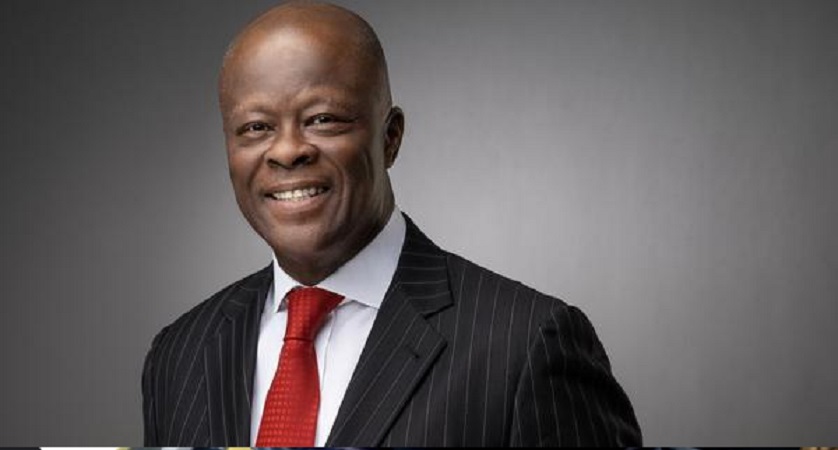
In a recent interview with Channels TV, Nigeria’s Minister of Finance and Coordinating Minister of the Economy, Wale Edun, revealed startling statistics regarding the financial situation of the country.

According to Edun, only approximately 5% of Nigerians have more than N500,000 in their bank accounts, indicating a significant wealth disparity within the nation.

“In the past eight years, only about 5% of the population have bank accounts with more than half a million in them,” Edun stated. “The majority was left out, while a small minority enjoyed.”

Highlighting the need for corrective measures, Edun emphasized that the government’s reforms aim to rectify economic imbalances that have favored a small group of elites over the majority of citizens in the past eight years. He noted the importance of redirecting government revenue into the national treasury to address these disparities.

“The reforms are corrective measures to mop up the liquidity in the economy that was not tied to production or supply of goods and services,” Edun explained. “These imbalances only benefit a few people in the economy.”

Edun further elucidated the historical context, noting that the preceding years saw a buildup of liquidity, with funds predominantly flowing to a privileged minority while the majority of the population remained sidelined. He reiterated that President Tinubu’s administration is committed to addressing these inequalities through comprehensive microeconomic reforms.

To mitigate the impact of poverty and the high cost of living, Edun announced President Tinubu’s initiative to provide a palliative package ranging from N25,000 to N15 million to households over the next three months. This measure is aimed at alleviating financial strain on vulnerable segments of the population and fostering economic stability.

His statement: “There has been an effort to ensure that the people’s money is not in the hands of a few. And on that point, I must emphasize that when we talk about the last eight years before Mr. President came to power, there was this liquidity built up.

“The Issue was that the funds were going to a few. Only about 5% of the population have bank accounts that have more than half a million in them. So, the majority was left out for eight years. They are on the sidelines while a small minority enjoy.

“That is the major correction being made by Mr. President now. These are the major microeconomic reforms that have been put in place.

“So therefore, government revenue that was outside the federal government consolidated revenue funds have been brought back to the government funds.”

The economic implications

The economic impact of the stark wealth disparity is profound and far-reaching. With only about 5% of Nigerians possessing substantial funds in their bank accounts, the vast majority of citizens are left grappling with meager earnings, which in turn has significant ramifications for the overall economy.

The concentration of wealth among a small elite segment of the population not only exacerbates inequality but also constrains economic growth. Economists note that when a large portion of the populace struggles with low incomes, their purchasing power is limited, leading to reduced consumer spending. This, in turn, dampens demand for goods and services, hampering businesses’ ability to thrive and expand. Ultimately, it stifles economic activity and hampers the nation’s potential for development.

Furthermore, a high population made up of poor people has been described as a recipe for social unrest and instability. This is because, as a significant portion of the population grapples with poverty and financial insecurity, frustration and resentment towards the privileged few who control a disproportionate share of the nation’s wealth can escalate, leading to social tensions and even unrest. Such instability undermines investor confidence and hampers economic progress.

Addressing the meager earnings of the populace and tackling wealth inequality are said to be imperative for fostering inclusive growth and sustainable development in Nigeria. The nation’s decision to distribute N25,000 to N15 million to households over the next three months, as a way of filling the gap has been criticized by experts.

Economists advocate empowering a broader segment of society with financial security and opportunities for economic advancement, which they said is not only morally imperative but also essential for building a robust and resilient economy that benefits all Nigerians.

CBN Reversal of Customs Divergent FX Rate is Good Policy for Nigeria

0

Well done Team; a great policy which I support: “To this effect, the Central Bank of Nigeria wishes to advise the Nigeria Customs Service and other related parties to adopt the FX rate on the date of opening the Form M for importation of goods, as the FX rate to be used for import duty assessment. This rate remains valid until the date of termination of the importation and clearance of goods by the importers.”

Recall last week that we made a case that it was a bad policy for the Nigerian Customs to use a different FX rate, from the one on Form M, when calculating duties: “Floating Naira does mean we cannot honour contracts. I have posited that Customs should not become a blinded rainmaker for Nigeria as doing that we will make it a poison pill: the more radical revenue from Customs, the more Nigeria’s economy is dying since these revenues are import-driven, not export-driven.  We must ask the government to allow predictability in the market system.”

The nation’s economic team has listened, and has made it clear to the Customs: if the Form M has N1000/$, you are not allowed to compute duties at any figure but N1000/$ even if Naira has shifted to N1200/$ (and I guess N800/$). Mr. Peter Obi led that charge; happy the government listened.

This reversal will bring predictability in the system and even help the Naira as it looks for a number to settle on.

CBN Directs Nigerian Customs to Adopt Same FX rate from Importation to clearance

CBN Directs Nigerian Customs to Adopt Same FX rate from Importation to clearance

0

In a bid to address pricing irregularities and provide more predictability in the cost of imported goods, the Central Bank of Nigeria (CBN) has instructed the Nigerian Customs Service (NCS) to adopt the FX closing rate on the date of Form M submission by importers for the clearance of goods and import duty assessment.

The directive, outlined in a circular issued on Friday by Hassan Mahmud, the apex bank’s Director of Trade and Exchange Department, aims to mitigate the disruptions caused by frequent updates on customs duties rates, which have led to inconsistencies in pricing and unpredictable increases in the final cost of goods in the market.

The circular states: “To this effect, the Central Bank of Nigeria wishes to advise the Nigeria Customs Service and other related parties to adopt the FX rate on the date of opening the Form M for importation of goods, as the FX rate to be used for import duty assessment. This rate remains valid until the date of termination of the importation and clearance of goods by the importers.”

The constant changes in customs duty rates have led to pricing irregularities, resulting in unpredictable increases in the final cost of goods in the market. The new directive is to enable the Nigeria Customs Service and the importers to effectively plan appropriately and reduce uncertainties around varying exchange rates in determining revenue, or cost structure respectively.

The circular mandates the NCS to utilize the foreign exchange (FX) closing rate on the date of Form M submission by importers for the clearance of goods and import duty assessment. This fixed rate will remain valid until the termination of the importation and clearance process by the importers.

Effective from February 26, 2024, the closing rate on the date of opening of Form M for importation of goods and services will be the rate applied for assessment purposes, superseding the previous requirement outlined in Memorandum 9, J (2) of the Central Bank of Nigeria Foreign Exchange Manual (Revised Edition) 2018.

This directive comes in the wake of yet another Customs duty rate review by the CBN, raising the duty rate for clearing imported items by 4.5 percent on February 21, 2024. The updated rate, according to the Nigeria Customs Service official trade portal, increased from N1,537.073/$ to N1,605.82/$, necessitating importers to allocate more funds for duty payment compared to previous rates.

The new rate is notably the highest the nation’s port industry has witnessed since the central bank introduced FX reforms in June 2023 to stabilize the foreign exchange rates.

Concerns have arisen regarding the potential adverse impact of elevated customs clearance rates on the already strained economic situation in Nigeria, prompting calls for government intervention.

Former Labour Party’s presidential candidate, Peter Obi, cautioned against arbitrary and continual increases in customs duties, citing their contribution to inflationary pressures and escalating living costs.

“If this situation is not corrected, our importers may resort to using ports of nearby countries, a situation that will leave our ports under-productive, and further deepen our economy into a worse situation as a result of loss of revenue,” he warned.

The Nigerian Customs embarked on the auctioning of seized food items, especially rice, at a reduced price (N10,000 per 25kg bag) on Friday, as a way of easing the economic pains of Nigerians.

Economists, however, advocate for a reduction in import duties and tariffs as a more effective means of alleviating economic hardships for Nigerians, citing direct benefits such as increased disposable income and enhanced purchasing power.