DD
MM
YYYY

PAGES

DD
MM
YYYY

spot_img

PAGES

Home Blog Page 3643

Nigeria Says Forex Reforms Yielding Positive Results: Naira Stabilizes Amid Inflows Surge

0

In a statement released on Friday, February 23, 2024, the Federal Government of Nigeria disclosed that the country has recorded significant success on its ongoing reforms in the foreign exchange market, highlighting the stabilization of the naira and a surge of inflows into the forex market.

Mohammed Idris, the Minister of Information and National Orientation, reiterated the government’s commitment to tackling speculators and unscrupulous players undermining the naira.

According to Mohammed, the National Bureau of Statistics (NBS) reported a remarkable 66% increase in capital importation into Nigeria during the fourth quarter of 2023 compared to the previous quarter. He also noted that the new reforms had facilitated an inflow of $1.8 billion into the foreign exchange market in the previous week alone.

The minister expressed satisfaction with the initial outcomes of these reforms, highlighting the stabilizing effect on the naira and the substantial inflows into the forex market. He quoted the CBN Governor’s acknowledgment of the $1.8 billion inflow as a direct result of the new reforms.

“The Central Bank of Nigeria (CBN) has been proactive in initiating comprehensive strategies to enhance liquidity in the forex market,” Mohammed stated. “In addition to unifying rates, the CBN has cleared a significant amount of outstanding Forex obligations and outlined new operational mechanisms for commercial banks, Bureau De Change (BDC) operators, and International Money Transfer Operators (IMTOs).”

However, Mohammed also acknowledged the resistance faced by the CBN’s efforts from speculators and other nefarious actors both within and outside the country. He emphasized the government’s determination to address these challenges through the concerted efforts of regulatory and enforcement agencies.

“To tackle this, regulatory and enforcement agencies of government have been working round the clock…to address these efforts at undermining the reforms,” Mohammed stated. “That strategic alliance has led to the intelligence-led identification, investigation, and sanctioning of individuals and organizations involved in illegal activities and sabotage within the forex market.”

Furthermore, he assured Nigerians of the government’s continuous efforts to stabilize the naira and safeguard the economy. He emphasized the need for patience and understanding during these challenging times and reiterated the government’s commitment to bringing relief and prosperity to all citizens.

“Nigerians should rest assured that the government will continue to take further steps to stabilize the naira and safeguard our economy. As the President never fails to emphasize, these headwinds we are facing are only temporary, and, collectively, we will surely overcome,” he said.

As part of its efforts to stabilize the naira, the government has also announced a clampdown on cryptocurrency exchanges operating in Nigeria. This includes the banning of popular platforms such as Binance and Coinbase. The move comes as part of broader measures aimed at curbing illicit financial activities and ensuring the stability of the Nigerian financial system.

The government cited concerns over the use of cryptocurrencies for illegal activities such as money laundering, fraud, and terrorism financing. Additionally, it expressed reservations about the lack of regulation and oversight in the cryptocurrency market, which could pose risks to investors and the broader economy.

In light of these concerns, the government has directed relevant regulatory bodies to take strict enforcement actions against cryptocurrency exchanges operating in the country. This includes the freezing of assets, the suspension of operations, and the prosecution of individuals involved in facilitating illegal activities through these platforms.

Although economic experts have warned about the potential implication of that move, the clampdown on cryptocurrency exchanges is expected to further bolster the government’s efforts to maintain stability in the forex market and safeguard the integrity of the naira. The government aims to create a more transparent, secure, and resilient financial environment by addressing loopholes in the financial system and cracking down on illicit financial activities.

Mohammed said ‘’The President and his team are and will remain resolutely committed and focused on the task of bringing immediate relief and enduring prosperity to all Nigerians.’’

The naira closed at N1571.31 against the dollar in the official market (NAFEM) on Thursday and traded at N1,750 per dollar during intraday in the parallel market on Friday.
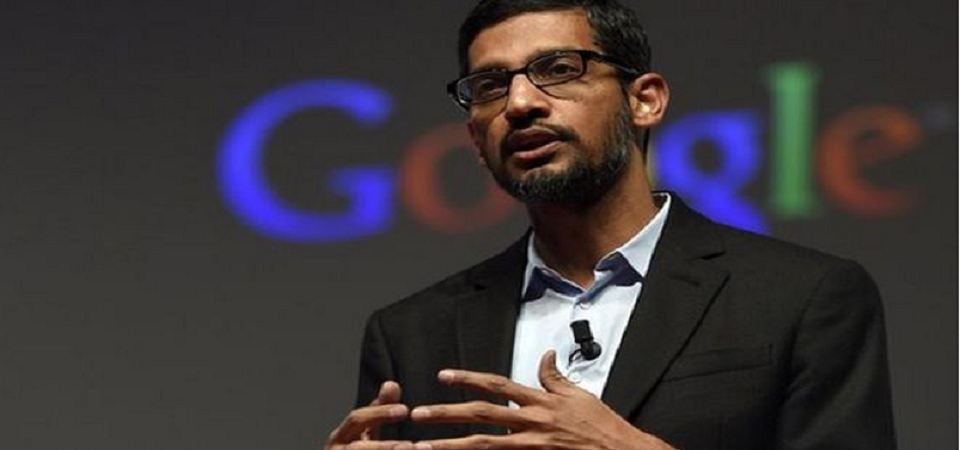

Google CEO Sundar Pichai Underscores the Significant Role of AI in Defense Against Cyber Threats

0
CEO of Google

In a dynamic digital landscape rife with evolving cybersecurity threats, the CEO of Google Sundar Pichai has underscored the significant role that Artificial Intelligence (AI) can play in defense against cybersecurity threats.

Amid growing concerns about the potentially nefarious uses of AI, Pichai said that the tool could help governments and companies speed up the detection of and response to threats from hostile actors.

In his words,

We are right to be worried about the impact on cybersecurity. But AI, I think actually, counterintuitively, strengthens our defense in cybersecurity”.

However, Pichai said that Al was also lowering the time needed for defenders to detect attacks and react against them. He said this would reduce what is known as the defenders’ dilemma, whereby cyber hackers have to be successful just once in a system whereas a defender has to be successful every time in order to protect it.

AI disproportionately helps the people defending because you’re getting a tool which can impact it at scale versus the people who are trying to exploit. So, in some ways, we are winning the race”, he said.

With the revolution of AI, the use of technology to combat cybersecurity threats has become crucial as reports forecasted Cybercrime to cost the world $8 trillion in 2023.

Cybersecurity Ventures predicts that global cybercrime damage costs will grow by 15 percent over the next three years, reaching $10.5 trillion annually by 2025, up from $3 trillion in 2015.

Cybercrime is impacting businesses of all sizes and any business that wants to ensure its uptime, to ensure its reputation, and the safety of its employee and customer data, has a responsibility to invest in cybersecurity and put themselves ahead of disruption.

Cybercrime costs include damage and destruction of data, stolen money, lost productivity, theft of intellectual property, theft of personal and financial data, embezzlement, fraud, post-attack disruption to the normal course of business, forensic investigation, restoration and deletion of hacked data and systems, and reputational harm.

To counteract these increasing cyber threats, countries have been developing strong cybersecurity programs and enacting legislation aimed at tackling cybercrime and protecting themselves from digital dangers.

In addition to this, the private sector has been at the forefront of developing innovative cybersecurity solutions ranging from antivirus programs to dedicated fraud prevention software.

In line with this, tech giant Google has launched a new AI Cyber Defense Initiative to strengthen digital security. Through the AI tool, Google is continuing its investment in an AI-ready infrastructure, releasing new tools for defenders, and launching new research and AI security training.

The company’s CEO Pichar said the tools were already being put to use in the company’s products such as Chrome, and Gmail, as well as internal systems. These commitments are designed to help AI secure, empower, and advance the collective digital future.

Do you know how to grow yourself as a Junior Full Stack Developer?

0


One thing I noticed about some of my newer contacts on LinkedIn, particularly from Nigeria, other parts of Africa, and ‘The Global South’, is the rise of this title ‘Junior Full Stack Developer’

I don’t mind having to admit, I find the title a bit perplexing.

9ja Cosmos isn’t my first rodeo. I’ve taken on Product Ownership and PM responsibilities as a senior employee (over 20 years) … I’ve seen things out the door in compliance with PLC (Product Life Cycle),  TL9000 standards, ISO Standards, and a range of PM and Product Development Methodologies, and the employers own Quality Manual.

That requires having overview of the actions of everyone in the mix to get a product out the door.

The concept of a Junior Full Stack Developer seems to me to be a contradiction in terms. Nobody can organically grow expertise uniformly across a tech stack – any tech stack. It’s just not possible.

They are most likely to have made their debut into one part of that tech stack as a point of entry. As they gradually get exposed to other parts of projects, they broaden their knowledge and experience, mostly also driven by their own motivation to do so.

Sometimes work can dry up (or cheapen) in their ‘anchor’ stack element, and they try to squeeze themselves into an element where there is more opportunity (or better pay), through circumstances rather than choice. The grow or die phenomenon.

Over the years, the development of software products has changed drastically, as has the working cultures that surround them.

In the pre-cloud days of developing things like Oracle, SAP, IBMs Informix, Sybase, and other distributed databases, Dev. Teams were closely knitted, and huddled around a centralized physical workspace.

This creates the opportunity for unique and special relationships to build, and those with uncommon knowledge find it hard to distance themselves from someone wanting a place under their wing. Even that grumpy ‘superiority complex’ ‘AH’ noted for poor team spirit, can be persuaded to (grudgingly) part with nuggets and boastfully excrete gems, with the right personal approach.

Modern development in the blockchain era has become very impersonalized. Better technologies have allowed us to make remote working operate seamlessly in ways they never did before. We have great SDKs, brilliant contribution management systems and document control, intuitive ‘version’ management, remote ‘collab’ sandboxes, and we can schedule video calls to and from anywhere on the planet.

While the ‘collab’ tools are many and varied, it has actually got much, much easier to appear to be a team player, while at the same time, keeping a personal distance, and wearing a ‘face mask’ to prevent the contagious spread of expertise and knowhow.

Informal Q&A opportunities for the ‘Imposter Syndrome’ brigade, have all but evaporated.

So how do we really equate the difference between a Junior, Regular, and Senior Full Stack Developer?

If we represent a tech stack as 5 glasses, is it a question of one being 5 glasses 30% full, another with all 60% full, and a third 95%+ full?

My instinct tells me the reality is, all those glasses have more variable completion levels than that, even for those calling themselves ‘senior’, and that many brandishing the (perplexing) title ‘Junior Full Stack Developer’ have little more than a ‘spit’ in some of those glasses as a ruse to say it isn’t empty!

I wondered if I am crazy or at a minimum a little bit ‘out of touch’ to think this way, but when I searched online, I found many eminents  and YouTube videos vindicating my perspective.

In response to a YouTube video entitled ‘Junior Full Stack Developer is not a ‘thing’ ‘

One respondent (Joost Schuur – @joostschuu) said: ‘ I’m a 50 year old developer who has been doing web dev on and off for over 25 years now (yep, that’s possible) and still not comfortable with frontend (but getting better). So many reasons why the term junior (full stack developer) doesn’t make sense :)

But let’s not focus on ‘fault’ or ‘the pretence of the desperate’ because I’m not putting in all this literary effort to be part of a problem, but rather part of a solution.

So, let’s not call you ‘Junior Full Stack Developer’ but instead call you ‘Full Stack Developer (Aspirant, Intern, Trainee…)’, qualifying it at the end in a way that doesn’t imply expertise, is probably more accurate.

What can you do to improve your skill level and value proposition?

Communities. The ill-informed think communities are mindless people with frivolous ‘maxi’ statements, ramp talk, mindless gifs and memes in different platforms. That’s not community. The best communities prioritize ecosystem expansion above visibility (read -noise). Real community walks the walk more, and talks the talks less. Find Communities to be a meaningful part of. 9ja Cosmos for example, has a community on Discord.

GitHub and other visible participation SD repositories. – I get many people exploring opportunities with 9ja Cosmos, but when they understand we are community support right now, they back away, and say, well, when things change, contact me. To be polite, I will say ‘sure’. That won’t ever happen.

We have far too many people we can see on GitHub and have engaged with … Namebase is the lead commercial actor in the Handshake Blockchain space. Discord ‘Falci’ contributed to the update of the GitHub on Bob Wallet, and is now working for Namebase. Nathan Woodburn helped for free with the 9ja Cosmos Wallet, and is working for Namebase. Many examples like this. When we reach the employment juncture, we will look at who contributed meaningfully when they could.

Anybody that comes along later, will be like those who had chance to buy Bitcoin at $100 and then want it for $100 when it’s $50k+… that can’t fly!

This is not necessarily a promo for 9ja Cosmos or the Handshake Blockchain, though getting into ecosystems on GitHub that have less active actors means more visibility and chance to shine.

There are many open HIPs (Handshake Improvement Protocols) with opportunity to contribute and improve your credibility a lot more than wasting your time with technically inept posts on online platforms.

‘Fine Gyal’ or ‘Cool Guy’ pics don’t mean jack. ‘Confirmed’

There are several other ecosystems available on GitHub to be explored.

As said in Nigeria – ‘Comot from dat side’.  ‘Do ting well well.’

DEMONSTRATE ‘Take ur time oh.’

John Mc Keown, Tekedia Fellow, 9ja Cosmos Owner, Handshake Director.

9ja Cosmos is here…

Get your .9jacom and .9javerse Web 3 domains  for $2 at:

.9jacom Domains

.9javerse Domains

Visit 9ja Cosmos LinkedIn Page

Visit 9ja Cosmos Website

Preview our Sino Amazon/Sinosignia releases

Drawing Parallel with Saudi Arabia on economic diversification, as non-oil sector contributes 95.30% to Nigeria’s GDP

0

Recent data from the Nigeria Bureau of Statistics underlines the urgent need for economic diversification, as the contribution of the non-oil sector to GDP experienced a slight decrease, albeit with positive growth.

The non-oil sector contributed approximately 95.30% to Nigeria’s GDP in the last three months of the year. Key industries such as finance, telecommunications, agriculture, trade, construction, manufacturing, and real estate have been instrumental in driving this growth.

The percentage falls below the 95.66% recorded in the fourth quarter of 2022 but exceeds the 94.52% noted in the third quarter of 2023.

During the quarter in review, the non-oil sector witnessed a growth of 3.07% in real terms. Although this growth rate was 1.37% points lower than that observed in the same quarter of 2022, it was 0.32% points higher than the growth recorded in the third quarter of 2023.

On an annual basis, the growth rate of the non-oil sector for 2023 stood at 3.04%, marking a decrease from the 4.84% growth rate observed in 2022.

Drawing parallel with the economic diversification push of Saudi Arabia

Nigeria, endowed with vast natural resources, has long relied heavily on its oil sector, a dependency that poses significant risks to its economic stability.

Drawing parallels with Saudi Arabia, another oil-dependent nation, provides valuable insights into the imperative for diversification. Saudi Arabia, recognizing the vulnerabilities associated with oil dependency, began the ambitious Vision 2030 initiative to reduce reliance on oil revenues. This initiative aims to foster growth in non-oil sectors such as tourism, entertainment, technology, and renewable energy.

For instance, Saudi Arabia has invested heavily in developing its tourism industry, promoting historical and cultural sites, and hosting international events like the Formula 1 Grand Prix. Additionally, the kingdom has made significant strides in advancing renewable energy projects, aiming to generate 50% of its energy from renewable sources by 2030.

In Nigeria, the informal sector plays a crucial role in employment, with a significant portion of the population engaged in self-employment. However, challenges such as low taxation, weak regulatory frameworks, unfair competition, and disregard for standards hinder its full potential. Despite these challenges, the informal sector remains a vital component of the economy, reflecting the structure dominated by micro, small, and medium-sized enterprises (MSMEs).

Addressing taxation and revenue generation has been advocated as pivotal for Nigeria’s economic diversification efforts. Economists said with a low tax-to-GDP ratio, currently at 10%, there is a pressing need for comprehensive tax reforms to increase revenue streams.

The government constituted a committee for tax reforms last year, signaling its intent to bridge the tax-to-GDP ratio gap. The government’s aim to raise this ratio to 18% within the next three years aligns with broader efforts to reduce dependence on oil revenues.

But economists have also called for diversification beyond taxation, touting technology and agriculture as untapped alternative sources of revenue for Nigeria.

By diversifying its economy with a focus on tech and renewable energy, the oil-rich Saudi kingdom is setting the pace. The kingdom’s diversification endeavors offer valuable lessons for Nigeria.

Economists said that by prioritizing investment in non-oil sectors, enhancing regulatory frameworks, promoting entrepreneurship, and fostering innovation, Nigeria can mitigate the risks associated with oil dependency and stimulate sustainable economic growth. However, they noted that achieving these goals requires decisive action, strong leadership, and collaboration between the public and private sectors.

Nigeria stands at a critical juncture where economic diversification is imperative for long-term prosperity and resilience. It is believed that by learning from Saudi Arabia’s experiences, the African giant can chart a path towards a more diversified and sustainable economy, reducing vulnerability to oil price fluctuations and fostering inclusive growth for its citizens.

Egypt Secures Monumental $35 Billion Investment Deal with UAE As Nigeria Waits On

0
Fund, money cash dollar

On Friday, Egypt made headlines with a groundbreaking $35 billion investment agreement with the United Arab Emirates (UAE) aimed at developing the Ras El Hikma peninsula.

This transformative deal signifies a new chapter of economic resurgence and foreign investment attraction for Egypt, potentially serving as a blueprint for Nigeria in its own forex and investment challenges.

According to Reuters, the deal struck with ADQ, one of Abu Dhabi’s prominent sovereign investment funds, is poised to inject $35 billion into Egypt’s economy over the next two months, with future projections soaring up to $150 billion.

The initiative intends to metamorphose the Ras El Hikma peninsula into a dynamic nexus of investment zones, residential complexes, commercial precincts, and tourism and leisure facilities, with groundbreaking slated to commence in 2025.

The announcement of this monumental pact has sparked fervent optimism in the markets, as evidenced by the surge in Egypt’s sovereign dollar bonds prior to the official disclosure. Notably, bonds with maturities extending beyond 2047 observed a surge of more than 3 cents in the dollar, marking their highest trading level in about a year, as per Tradeweb data.

The strategic location of Ras al-Hikma, approximately 200 km west of Alexandria, already renowned for its upscale tourist resorts and pristine beaches, positions it as an ideal candidate for this ambitious development endeavor.

However, beyond its immediate economic ramifications, this deal represents a significant stride for Egypt in its protracted battle against a lingering economic crisis characterized by a chronic foreign currency deficit, escalating debt burden, and sustained pressure on the Egyptian pound.

Despite these challenges, Egypt’s commitment to economic stability and growth has been described as steadfast. The country’s engagement with the International Monetary Fund (IMF) for a $3 billion financial support package and its proactive adoption of economic reforms, including transitioning towards a flexible exchange rate regime, attest to its resolute approach to addressing economic hurdles.

This landmark development draws parallels with Nigeria, the largest economy in Africa, and its economic aspirations. Last September, following President Bola Tinubu’s visit to the UAE, the Nigerian government announced the establishment of a comprehensive framework with the UAE, entailing investments worth billions of U.S. dollars across multiple sectors, including defense and agriculture, by the UAE government’s investment arms.

However, five months on, Nigerians await the fruition of these agreements, including the lifting of visa bans on Nigerians. This delay has been attributed to lingering investor skepticism and waning confidence in Nigeria, despite its shared economic realities, such as high inflation and forex shortages, with Egypt.