DD
MM
YYYY

PAGES

DD
MM
YYYY

spot_img

PAGES

Home Blog Page 3646

We Inherited A Difficult Situation, A Literally Bankrupt Country – NSA Nuhu Ribadu

0

Nigeria’s former anti-corruption czar and National Security Adviser, Nuhu Ribadu, has criticized the immediate past administration of Muhammadu Buhari, accusing it of leaving the country in a dire financial state before leaving power in May.

Ribadu made these remarks during the Chief of Defence Intelligence Annual Conference 2023 held in Abuja, where he addressed leaders on the theme, “Leveraging Defence Diplomacy and Effective Regional Collaboration for Enhanced National Security.”

In his speech, Ribadu did not mince words, stating, “Yes, we’re facing budgetary constraints. It is okay for me to tell you. Fine, it is important for you to know that we inherited a difficult situation, literally a bankrupt country, no money, to a point where we can say that all the money we’re getting now, we’re paying back what was taken. It is serious!”

However, Ribadu reassured the audience that despite the financial challenges, the Federal Government was committed to ensuring robust and viable defense management and security apparatus. He asserted, “This administration is doing its best to meet our requirements, particularly the armed forces, and I believe that you leaders will be able to testify to that.”

“I assure you that the Federal Government will not rest on its laurels in ensuring a robust and viable defense management and security apparatus to address contemporary challenges even in the face of enormous budgetary constraints.”

The conference, attended by key figures including the Minister of Defence, Abubakar Badaru; Minister of State, Bello Matawalle; Permanent Secretary in the Defense Ministry, Ibrahim Kana; and the Chief of Defence Staff, addressed crucial issues surrounding national security and defense.

Despite the pledge to navigate through financial constraints, questions have arisen about the continuity of fiscal responsibility within the present administration. Critics have pointed out the lavish spending patterns reminiscent of the previous regime. The focus has shifted to Bola Tinubu’s administration, alleging a parallel trajectory in financial management.

In September, reports surfaced that Tinubu spent over $500,000 during a luxurious five-day stay in a New York hotel. Furthermore, there are concerns about the president’s proposed expenditure of N13.5 billion ($16.2 million) for the renovation of official residences in Abuja and Lagos. Critics argue that this is an unnecessary allocation given the existing presidential mansion in Lagos, which is rarely used.

The supplementary budget of N2.17 trillion (about $5 billion) has drawn attention, particularly for including N1.5 billion for vehicles for the Office of the First Lady, an entity not constitutionally recognized. The budget also originally featured a controversial N5 billion yacht, which faced public backlash, leading the National Assembly to remove it from the allocation.

Additional allocations in the supplementary budget include N2.9 billion for Sport Utility Vehicles (SUVs) for the Presidential Villa and another N2.9 billion for replacing operational vehicles for the presidency.

Renovations of the presidential and vice-presidential residences are also planned, with N4 billion designated for the president’s residence and N2.5 billion for the vice president’s residence. The proposed State House budget is N28 billion, with N12.5 billion allocated for the Presidential Air Fleet.


Bolt Food Announces Plan to Exit Nigeria by December, Citing Business Reasons

0

Bolt Food delivery service that offers customers a quick and convenient way to have their favorite dishes at their doorstep, has announced plans to exit Nigeria by December 7, 2023, citing business reasons.

The food delivery company disclosed that its decision to exit the Nigerian market is coming after it managed to control only 5% of the thriving Nigerian market, falling short of its expectations.

In a statement, the company said,

“At this time, we have made the difficult decision to discontinue our food delivery operations in Nigeria due to business reasons. The decision to exit this market is necessary to streamline our resources and maximize our overall efficiency as a company”.

The move is part of the company’s efforts to streamline its resources and maximize its overall efficiency.

Bolt’s communications manager in Nigeria, Femi Adeyemo said that the company had to make the tough decision after it carefully evaluated its performance in Nigeria. He added that the company operates on the principle of frugality and efficiency.

In his words,

“Over the last 3 years, we have heavily invested in these markets, investing in low commissions to increase selection and incentives to encourage customers to move over to Bolt Food. Unfortunately, in Nigeria, these investments haven’t been successful and have only managed to achieve less than 5% market share”.

As Bolt exits the Nigerian market, it has put efforts in place to ensure a smooth transition for couriers and merchants. While exiting the delivery space, the company says it remains committed to other ventures in Nigeria, as it will continue delivering quality services in different areas.

Bolt launched its food delivery services in Nigeria in October 2021, following the increased demand for food delivery services during the COVID-19 pandemic period.

Since its launch in Nigeria, Bolt Food claims to have partnered with over 10,000 restaurants, delivered over one million meals and onboarded 23,000 agents and 12,000 merchants.

The company during its operation in Nigeria, faced stiff competition from major industry players which include Jumia Food, Chowdeck, Chicken Republic, Buyfood, and Glovo, amongst others.

However, reports reveal that the Nigeria food industry is faced with several challenges which include managing customer expectations, improper food handling, fluctuating market prices, logistical challenges, and several others.

Despite the challenges in Nigeria’s food delivery sector, it has remained attractive, drawing in New customers seeking convenience and diverse food options. Valued at $834.7 million in 2022, the online food delivery market in Nigeria is predicted to grow at a rate of 12.2%, reaching $1,719.4 million from 2023 to 2028.

The growing consumption of ready-to-eat (RTE) and fast-food products, increasing online food ordering activities of working individuals, and rising integration of advanced technologies in online food ordering and delivering systems represent some of the key factors driving the Nigerian market.

With rising investment, maturing business models, and rapid digitalization across Africa, the food delivery industry in Nigeria looks well placed for 10x growth over the next decade.

If we have knowledge, we cannot be ruled by jobs; do not burn your certificates [video]

0

Young People, pains dropped on my eyes as I watched this young’s pains. It is really painful and I sympathize with all the young people in Nigeria. There is no debate: things were absolutely better in my time. There were jobs!

Yet, even in the desert with no oasis, and you are unable to find a job, please do not burn your certificates. The biggest mistake in life is the way people position the value of education. Right from the beginning, people see going to university to be synonymous with a job.

But if you understand the value of education, education does not mean or equate to jobs. Education is designed to be a system to liberate the minds, and not a system to get jobs. Jobs are just one of the benefits or features associated with education.

This young man might have gotten it all wrong because for him, certificates = jobs, and if those papers do not deliver jobs, destroy them. That is not correct. The real value of education is the liberation of the mind, and what it does is clear: it makes you stand over jobs, because education puts you in a position to become bigger than jobs. Knowledge is power and it is bigger than jobs. A good education brings knowledge, which is liberation.

If we have knowledge, we cannot be ruled by jobs. We cannot fear jobs because we will have the capacity to own our future. An Igbo proverb says that “ndu ka ihe eji azu ya” [life is bigger than whatever is required to sustain it], we need to seek knowledge over the fixation of jobs. If we get the knowledge, the jobs will come. I challenge us to develop skills and capabilities, and jobs, in different forms, will emerge. Find mentors and connect with people with visions, and stop a mindless act which adds no value!

Have a Mindset Shift

I have scanned responses on my last post on the young man who destroyed his certificates because he has been unable to get a job with them. As I noted, going to school or being educated is not just to get a job. The most important outcome of education is the liberation of the mind. I knew the day I left the village of Ovim, got to FUTO, and began my undergraduate engineering education. When I was done, I knew the transformation.

With that transformation and associated mindset liberation, I became BIGGER than any job in the world, by focusing on my CAREER, and not jobs. Yes, a career is not a job.  This is where I blame the university system; we spend years being prepared to run, manage and operate in organizations and governments with nothing for our Personal Economy (yes, how we can run our own lives). Had the school provided directions on those, many young people will not just trust their futures on firms and governments, because with a mindset shift, we can strategize better.

If there is a non-profit which is open to run an open webinar on this, I am available to be a speaker. Young People, it is important to understand that the best time to prepare or audition for a job is when there is none. In other words, it is not just sending CVs and cover letters. Companies hire you for the value you bring to them, and not the certificates the university printed for you. I write this with respect to young people looking for jobs!

If you develop your skills, the jobs will come. Over the last few weeks, I have focused on Personal Economy in Tekedia Mini-MBA, teaching on Webinality (web + personality), Career, Mentoring and Coaching. My goal has been how young people can have that mindset shift.

Comment on Feed

Comment 1: Education is the liberation of the mind.

A nation cannot rise beyond its educational system. For nations to rise, they must invest to build mines of knowledge.

And for young men and women, they must work to channel the acquired knowledge to liberate themselves, and their society.

Comment 2: Well said. Very inspiring. I got a sage advise to be come best at a subject (after graduation) and strive to be a master. The job goes to the competent with time and not certificates.

Notable Provisions of the NMDPRA Alternative Dispute Resolution (ADR) Regulations of Nigeria

0

This article will be looking at the provisions of the regulations put in place by the Nigerian Midstream & Downstream Petroleum Regulatory Authority (NMDPRA) for the alternative dispute resolution (ADR) regarding disputes between participants and stakeholders within the Midstream & Downstream Petroleum Industry.

What are the objectives of the ADR regulations?

– To establish a Midstream & Downstream Petroleum Alternative Dispute Resolution (ADR) Centre (hereinafter referred to as “The Centre”).

– To provide procedures for timely and cost efficient dispute resolution in Nigerian Midstream Downstream Petroleum operations.

What is the application scope of te ADR regulations?

-These regulations shall apply to activities connected with dispute resolution in Midstream & Downstream Petroleum operations.

What is the provision of these regulations regarding the NMDPRA ADR Centre?

– The regulations provide that there is established the Midstream & Downstream Petroleum ADR Centre to apply ADR mechanisms to resolve disputes in the Midstream & Downstream Petroleum industry in a cost efficient and less time-consuming manner.

What are the powers of the Centre?

– The Centre has the powers to :-

a). Provide administrative supervision of ADR at the Centre in accordance with the rules adopted by it or those agreed upon by the parties to disputes.

b). Resolve disputes through ADR methods in accordance with the relevant rules adopted by the Centre.

c). Co-ordinate, cooperate & conclude agreements & memoranda of understanding with specialized regional and international arbitration institutions and centres.

What category of disputes are within the jurisdiction of the Centre?

– Operations between license or permit holders in the Midstream & Downstream Petroleum industry.

– The provision of open access I’m gas and petroleum liquids operations.

– The provision of 3rd party access to facilities and infrastructure used for gas and petroleum liquids operations by owners operating on their own account.

– Gas trading & settlement transactions.

– Midstream & Downstream Petroleum labour matters.

– Referrals to the Centre by a court of competent jurisdiction.

– The commercial, technical and operational aspects of Midstream &  Downstream Petroleum Operations among licensees or permit holders.

– Any other dispute involving companies within or outside Nigeria, in connection with Midstream & Downstream Petroleum operations.

Where it is a condition of its license or permit,a license or permit holder involved in a dispute in respect of Midstream & Downstream Petroleum operations shall submit the dispute to the centre’s jurisdiction, prior to proceeding with litigation.

What are the dispute resolution mechanisms to be used by the Centre?

– Expert determination

– Conciliation

– Mediation

– Arbitration

– Any other dispute mechanism the Centre may approve

The procedures for the use of dispute resolution mechanisms of the centre shall be as stipulated in the rules or guidelines made in the ADR Regulations.

What is the organisational structure of the Centre?

– The organizational structure and organs of the centre shall be as set out in the schedule to the Regulations.

Civil Servants Are Not Prohibited From Active Political Participation in Nigeria

0

There is this erroneous position that Nigerian civil servants or public servants are prohibited from participating in active politics in Nigeria. I recently had an argument over this with a colleague who went ahead to quote the public service rules for me which purported to have prohibited civil servants from participating in active politics. I most times also see folks argue blindly, especially on Twitter faulting civil servants who engage in political party activities claiming that such a civil servant ought to be disciplined. 

This position that civil servants are not allowed to participate in politics or be card-carrying members of a political party or actively engage in the activities of the political party he/she identifies with is erroneous and false.

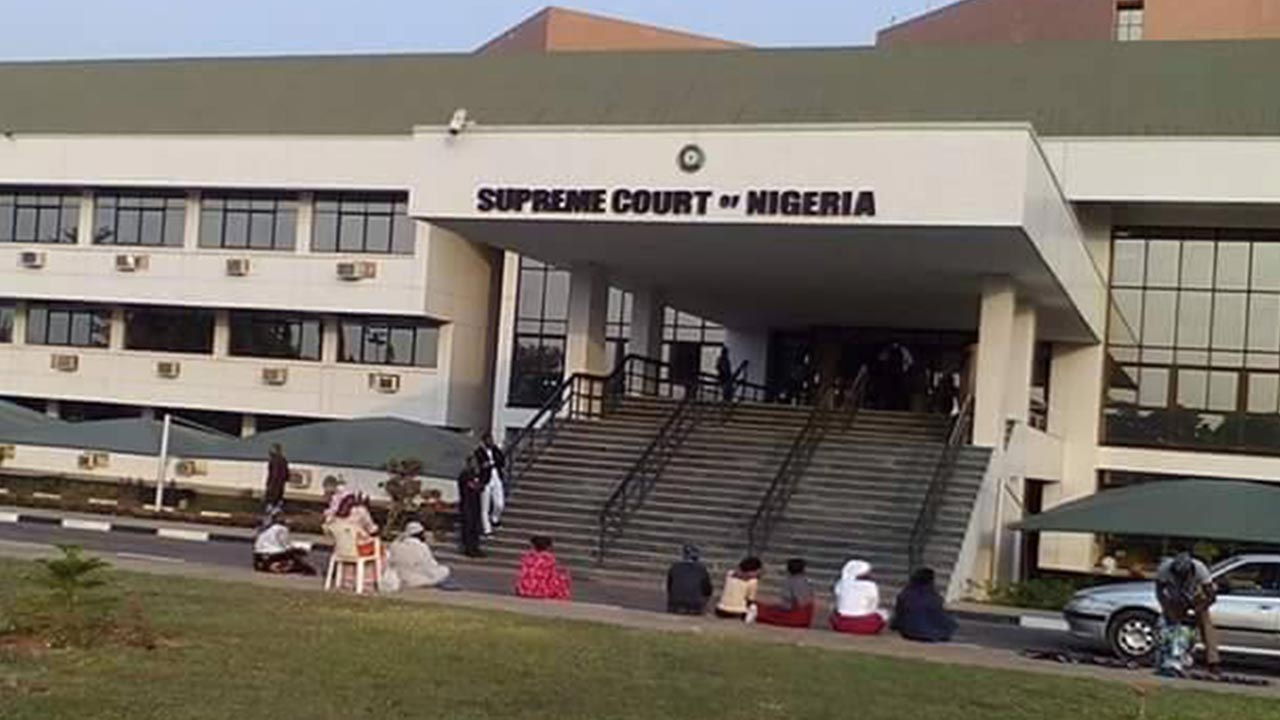
By the Supreme Court decision in the case of Independent National Electoral Commission v Balarabe Musa & Ors (2003) 10 WRN 1, the apex Court faulted the civil service rules which restrict the participation of civil servants and other public servants in the politics of the county. The court is of the opinion that freedom to express one political thought, join and participate in a political movement and express your political thoughts as have been constitutionally provided for in chapter five of the constitution is available and is for everyone with no exception of being a civil servant or not. 

In fact, his Lordship, Honourable Justice Ayoola JSC while reading the leading judgment in this case postulated that, 

“There is nothing reasonably justifiable in a democratic society in the interest of defense, public safety, public order, public morality or public health in prohibiting a member of the public service or civil service … from eligibility to be registered as a member of a political party. The submission that the restriction is a valid derogation from section 40 by virtue of section 45 (1)(a) of the Constitution was erroneous.” 

In his concurrent judgment, Honourable Justice Uwais CJN (as he then was) posited that “The provisions of section 40 of the 1999 Constitution are clear. Their purpose is to allow ‘every person,’ including public office holders and civil servants, the freedom to assemble freely and associate with other persons to form or belong to any political party, trade union or any other association for the protection of his interests. 

By the implication of this apex court judgment in the case of INEC v. Barabe Musa & ors, the position still stands (until it is reversed) that civil servants and public servants are not prohibited from participating in active politics, what they are prohibited from is being partisan in the discharge of their civil service duties. 

We should also pay attention to the fact that the position of the Supreme Court did not repeal the provisions of Rules 030422 and 030423 of the Public Service Rules (2008 Edition) which stipulated that a civil servant who wishes to participate in the nomination exercise or the party primaries or contest in an election must resign 30 days before the date of such election. This entails that a civil servant is constitutionally allowed to participate fully in a political party activities but if that civil servant wants to take his political participation to another level by contesting in an election or getting nominated in party primaries, that civil servant must reign 30 days before the day of the election as provided in the civil service rules.