DD
MM
YYYY

PAGES

DD
MM
YYYY

spot_img

PAGES

Home Blog Page 3647

UEFA will now host Ballon d’Or with France Football

0
UEFA Best Player award will no longer exist.
Cristiano Ronaldo will remain the player with the highest UEFA Best.

UEFA and France Football have announced a historic agreement to merge their prestigious individual awards, the UEFA Best Player and the Ballon d’Or, into a single trophy. The new award, which will be called the UEFA Ballon d’Or, will be presented annually to the best player in the world, based on their performances in club and national team competitions.

The decision to unify the two awards comes after years of debate and controversy over the criteria and voting process of each one. The UEFA Best Player, which was created in 2011, was awarded by a jury of journalists and coaches from UEFA’s 55 member associations. The Ballon d’Or, which dates back to 1956, was originally given by France Football magazine to the best European player, but later expanded to include players from any continent. The voting was done by a panel of journalists from around the world.

The UEFA Ballon d’Or will aim to combine the best aspects of both awards, while ensuring transparency, fairness and recognition of the players’ achievements. The voting will be done by a combination of journalists, coaches, former players and fans, who will each have a weighted share of the final result. The award will also take into account the players’ individual and collective statistics, as well as their impact on the game and their social responsibility.

The criteria for voting will be based on a set of indicators that will measure the players’ performance in different competitions and categories. For example, the number of goals scored, assists provided, trophies won, minutes played, etc. The indicators will be adjusted according to the position and role of each player on the pitch. The voting panel will also evaluate the players’ contribution to their teams’ style of play, their leadership qualities, their fair play attitude and their influence on the football community.

The first edition of the UEFA Ballon d’Or will be held in December 2024, and will cover the period from July 2023 to June 2024. The ceremony will take place in Paris, the home of France Football, and will be broadcast live across Europe and the world.

The creation of the UEFA Ballon d’Or will have a significant impact on the history and prestige of individual awards in football. It will also have an immediate effect on one of the most decorated players of all time, Cristiano Ronaldo. The Portuguese star, who currently plays for Manchester United, has won the UEFA Best Player four times (2014, 2016, 2017 and 2021), more than any other player. He has also won the Ballon d’Or five times (2008, 2013, 2014, 2016 and 2017), equaling Lionel Messi’s record.

With the UEFA Best Player award being discontinued, Ronaldo will remain the undisputed holder of that title forever. He will also have a chance to add to his Ballon d’Or tally with the new UEFA Ballon d’Or, which will recognize his achievements in both European and global competitions.

Ronaldo, who is 38 years old, has shown no signs of slowing down his remarkable career, and is still scoring goals and breaking records at the highest level. He is widely regarded as one of the greatest players of all time, and his legacy will be further enhanced by this historic change in football’s individual awards.

One of the main questions that arises from this change is how it will affect FIFA’s The Best award, which is another individual award that claims to honor the best player in the world. FIFA’s The Best was created in 2016, after FIFA ended its partnership with France Football for the Ballon d’Or. FIFA’s The Best is voted by national team captains and coaches, selected media representatives and online fans.

FIFA’s The Best has been criticized for being inconsistent with other awards and for having a questionable voting system. For example, in 2018, Luka Modric won FIFA’s The Best after leading Croatia to the World Cup final and winning the Champions League with Real Madrid. However, he finished second behind Modric in both UEFA Best Player and Ballon d’Or voting.

In 2019, Lionel Messi won FIFA’s The Best after having an outstanding season with Barcelona but failing to win any major trophy with Argentina. However, he finished second behind Virgil van Dijk in both UEFA Best Player and Ballon d’Or voting.

The emergence of the UEFA Ballon d’Or may further undermine FIFA’s The Best credibility and relevance. If both awards have similar criteria and voting panels, it is likely that they will have similar results. In that case, FIFA’s The Best may be seen as redundant or inferior to UEFA Ballon d’Or. If both awards have different criteria and voting panels, it is likely that they will have different results. In that case, FIFA’s The Best may be seen as inconsistent or biased compared to UEFA Ballon d’Or.

FIFA may have to rethink its strategy and approach for its individual award. It may have to find a way to differentiate itself from UEFA Ballon d’Or, or to collaborate with UEFA and France Football to create a unified and harmonized award system. Otherwise, FIFA’s The Best may lose its prestige and appeal among players, fans and media.
Budget Minister Denies Controversial Yacht is for Nigeria’s Presidential Use

0

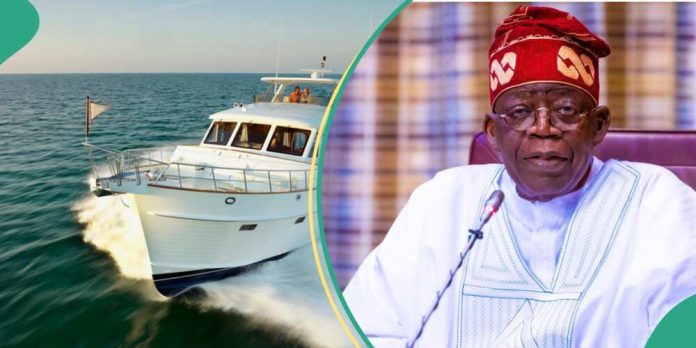
The Minister of Budget and National Planning, Atiku Bagudu, has stressed that the controversial Yacht purchase in the 2023 supplementary budget was not intended for President Bola Tinubu’s personal use.

The Minister, in a press briefing on the sidelines of a retreat for ministers and presidential aides at the State House in Abuja, refuted claims that personal interests were woven into the supplementary budget for President Tinubu.

The Minister staunchly defended President Tinubu’s commitment to a modest lifestyle, highlighting his previous residency in a three-bedroom apartment in Abuja before his election in February 2023. In his statement, he underscored that the President had always prioritized his achievements over personal comfort.

“President Tinubu has always told us his team that he is happy with all he has achieved in life; personal comfort does not matter to him. Before he was elected president, he stayed in a three-bedroom apartment in Abuja. He lives a modest, humble life. So to suggest that something was put in the budget for his comfort is ridiculous,” the Minister asserted.

Bagudu also provided insights into the allocation of funds in the supplementary budget, clarifying that 30% was designated for the security sector, with the remainder earmarked for infrastructural development.

“President Tinubu during the campaigns repeatedly emphasized the urgency to tackle security. Not surprisingly, 30% of the supplementary budget is allocated to the defense sector. Equally, he has spoken about the need to support vulnerable populations and keep promises; 30% of the supplementary budget is also allocated to palliatives, with N400 billion for cash transfers and N200 billion for cash awards. Additionally, about 25% of the supplementary budget is allocated to infrastructure. In total, approximately 85% is dedicated to these three areas,” he stated.

The Minister acknowledged the controversy surrounding the Navy’s description of a yacht in the budget but emphasized that, in a budget of N2.2 trillion, the overwhelming majority was deemed acceptable.

“The mischaracterization or controversy that followed from the way Navy described the ship has unfortunately generated a controversy, but if out of a budget of N2.2 trillion, 95% of it is okay, I think President Tinubu should be given credit for it,” he concluded.

President Tinubu’s dedication to addressing key issues such as security, support for vulnerable populations, and infrastructure development was reiterated by Bagudu as the primary focus of the supplementary budget, dispelling claims of personal gain in the budgetary allocations.

However, this assertion has been countered by many, who believe that the minister is making an attempt at ‘damage control’ after the extravagant allocations; inserted into the 2023 Supplementary Appropriation Bill were exposed.

The opposing claims are primarily grounded in the fact that the controversial N5 billion yacht and others are included in the federal budget, with a specific line item designated for “Presidential” use. Additionally, the supplementary budget was formulated by the federal government, specifically the Executive branch headed by the president.

Given Bagudu’s reputation for corruption, it comes as no surprise to many that these events are unfolding. Bagudu is notorious for his involvement in assisting the former Nigerian Head of State, General Sani Abacha, in embezzling and laundering billions of dollars belonging to the state.

Cash App sold $2.4 billion in BTC, MercadoLibre to increase its Bitcoin Holdings, Valkyrie on Spot BTC-ETF Applications

0

Cash App, the mobile payment service owned by former Twitter Cofounder Jack Dorsey, has reported a record-breaking quarter for its Bitcoin sales. According to its latest earnings report, Cash App sold $2.4 billion worth of Bitcoin to its customers in the third quarter of 2023, up 11% from the previous quarter and a whopping 458% from the same period last year.

This impressive growth reflects the increasing popularity and adoption of Bitcoin as a store of value and a medium of exchange. Cash App allows its users to buy, sell, send, receive, and store Bitcoin easily and securely, with features such as auto-investing, instant transfers, and Bitcoin Boosts. Cash App also generates revenue from the spread or margin between the price at which it buys and sells Bitcoin from its liquidity providers.

Cash App’s Bitcoin sales accounted for more than half of its total revenue in Q3, which reached $4.6 billion, up 6% quarter-over-quarter and 133% year-over-year. Cash App’s gross profit was $546 million, up 7% quarter-over-quarter and 212% year-over-year. Cash App’s Bitcoin gross profit was $42 million, up 29% quarter-over-quarter and 90% year-over-year.

Cash App’s strong performance in Q3 demonstrates its ability to leverage its large and engaged user base to drive growth and innovation in the Bitcoin ecosystem. Cash App has over 40 million monthly active customers, of which more than 10 million use its Bitcoin services. Cash App also supports the development of Bitcoin infrastructure and open-source projects through its Crypto Open Patent Alliance (COPA) and Square Crypto grants.

Cash App is one of the leading platforms for Bitcoin adoption and education in the US and beyond. By offering a simple and user-friendly way to access the benefits of Bitcoin, Cash App is helping to bring more people into the world of decentralized finance and digital sovereignty.

Argentinian e-commerce giant MercadoLibre to increase its Bitcoin?holdings

MercadoLibre, the largest e-commerce platform in Latin America, has announced that it will increase its Bitcoin holdings as part of its treasury strategy. The company, which operates in 18 countries including Argentina, Brazil, Mexico, and Colombia, has been a pioneer in embracing cryptocurrencies and blockchain technology in the region.

In its Q3 2023 earnings report, MercadoLibre revealed that it had purchased $31.6 million worth of Bitcoin in the third quarter, bringing its total Bitcoin holdings to $81.6 million as of September 30, 2023. The company also reported a 19.5% year-over-year increase in net revenues, reaching $1.4 billion in the quarter.

MercadoLibre’s CEO and co-founder, Marcos Galperin, said that the decision to increase its Bitcoin exposure was based on the belief that Bitcoin is a better store of value than fiat currencies, especially in Latin America where inflation and currency devaluation are rampant. He also said that Bitcoin offers a hedge against geopolitical risks and a way to diversify the company’s portfolio.

Galperin added that MercadoLibre is not only investing in Bitcoin, but also supporting its adoption among its users and merchants. The company launched a crypto section on its marketplace in May 2021, allowing users to buy and sell Bitcoin and other cryptocurrencies using its payment platform, Mercado Pago. The company also integrated Bitcoin into its loyalty program, Mercado Puntos, allowing users to earn and redeem Bitcoin rewards.

MercadoLibre is not the only Latin American company that is bullish on Bitcoin. In September 2021, El Salvador became the first country in the world to adopt Bitcoin as legal tender, allowing citizens to use it for everyday transactions and pay taxes. Other countries in the region, such as Panama, Uruguay, Paraguay, and Colombia, are also considering or implementing pro-crypto legislation and initiatives.

The growing interest and adoption of Bitcoin in Latin America reflects the potential of this technology to empower people and businesses in emerging markets, where access to financial services and stability are often limited or nonexistent. By increasing its Bitcoin holdings, MercadoLibre is not only enhancing its own financial performance and resilience, but also paving the way for more innovation and inclusion in the region.

SEC to Approve Spot BTC-ETF Applications by End of November, Says Valkyrie Top Manager.

The crypto community is eagerly awaiting the decision of the US Securities and Exchange Commission (SEC) on several Bitcoin exchange-traded fund (ETF) applications. Among them, the Valkyrie Bitcoin Strategy ETF, which aims to invest in spot Bitcoin rather than Bitcoin futures contracts, has attracted a lot of attention.

According to Leah Wald, the CEO of Valkyrie Investments, the SEC is likely to approve the spot Bitcoin ETFs by the end of November. In an interview with Bloomberg, Wald said that she is optimistic about the prospects of the Valkyrie ETF, as well as other spot ETFs from WisdomTree and VanEck.

Wald argued that the spot Bitcoin ETFs would offer more benefits to investors than the futures-based ones, which have already been approved by the SEC. She said that the spot ETFs would have lower fees, higher liquidity, and more accurate tracking of the Bitcoin price.

Wald also said that the spot Bitcoin ETFs would not pose any significant risks to the market or the investors, as they would comply with the existing regulatory framework and use reputable custodians to store the Bitcoin. She added that the SEC has already signaled its openness to approve spot Bitcoin ETFs, as it has asked for public comments on them.

Wald expressed her confidence that the SEC would make a positive decision on the spot Bitcoin ETFs by November 28, which is the deadline for the Valkyrie ETF. She said that she expects a huge demand for the product, as it would provide an easy and secure way for investors to gain exposure to Bitcoin.

Wald concluded by saying that the approval of the spot Bitcoin ETFs would be a major milestone for the crypto industry, as it would boost the adoption and legitimacy of Bitcoin. She said that she hopes that the SEC would recognize the potential of Bitcoin and support its innovation.

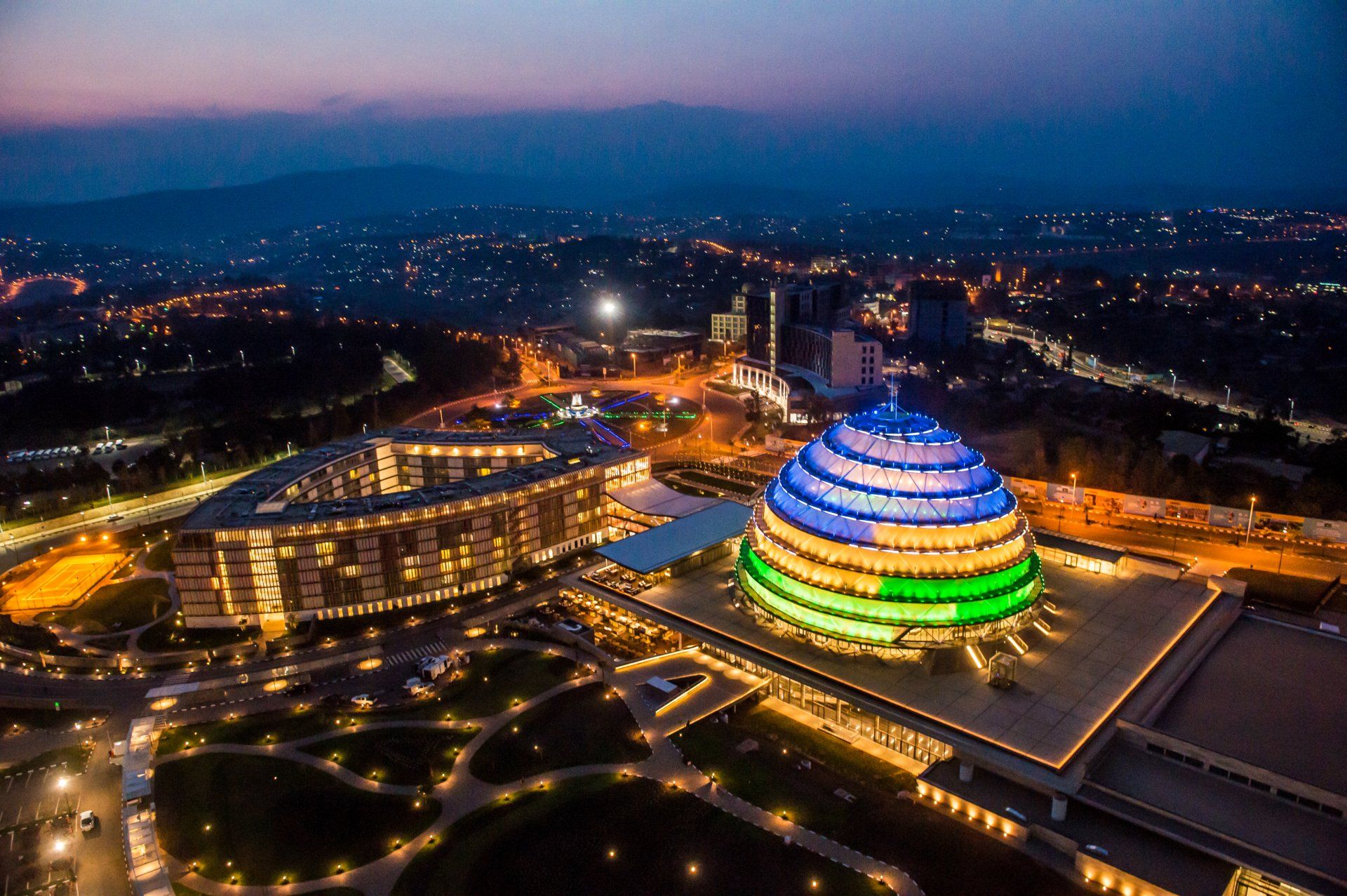
Rwanda Announces Visa-free Travel for All Africans

0

Rwanda has announced that it will allow visa-free travel for Africans visiting the country, joining a growing number of nations on the continent that are promoting free movement and trade.

President Paul Kagame made the announcement on Thursday in Kigali during the 23rd Global Summit of the World Travel and Tourism Council, highlighting the potential of Africa as a unified tourism destination.

Kagame stated, “Any African can get on a plane to Rwanda whenever they wish and they will not pay a thing to enter our country.” He emphasized the importance of the continental market and the role of Africans in shaping the future of global tourism, as Africa’s middle class continues to grow.

“We should not lose sight of our own continental market,” he added. “Africans are the future of global tourism as our middle class continues to grow at a fast pace in the decades to come.”

Integration has been key in various discussions about economic development in Africa. In March 2018, the African Continental Free Trade Area (AfCFTA) agreement was brokered by the African Union (AU). The aim was to create a single unified market for the continent that would boost intra-African trade and economic development – mimicking Europe’s Schengen zone.

The AfCFTA was expected to kick off integration for Africa’s 1.3 billion people, spurring an estimated $3.4 trillion market.

However, the initiative is yet to be fully implemented by all involved African States, making integration within the continent difficult. Other efforts by the AU and regional blocs have also failed to bridge the integration gap.

For instance, the African passport launched by the AU in 2016, with the aim of facilitating free movement, work, and living for Africans across the continent, has been limited to only diplomats and AU officials. It has not been widely available to the general public.

Against this backdrop, movement across the continent has been significantly restricted, impacting its economic development. Nigeria, Africa’s largest economy has free visa access to only 17 out of 54 African Nations, according to Passport Index 2023.

Africa still depends on 60% of its tourists from outside the continent, as indicated by data from the United Nations Economic Commission for Africa. However, a few African countries that see the situation as a barrier to their aim to boost their economy through tourism have set out on their own to bridge the gap.

“Visa restrictions amongst ourselves is working against us. When people cannot travel, business people cannot travel, entrepreneurs cannot travel we all become net losers” said Kenyan President William Ruto at an international summit in Congo Brazzaville.

By this move, Rwanda will join Gambia, Benin, and Seychelles, who have waived visa applications and eliminated other travel restrictions for Africans. Also, Ruto recently announced plans to permit visa-free travel to Kenya for all Africans by December 31.

Nonetheless, it remains uncertain if more African countries are inclined to endorse unrestricted movement across the continent, particularly since the present momentum is primarily fueled by efforts to boost tourism.

AI safety is vital to the future of civilization, Digital Currency Legalization and Regulation Act

0

Artificial intelligence (AI) is one of the most powerful and transformative technologies of our time. It has the potential to enhance human capabilities, improve social welfare, and solve some of the most pressing challenges facing humanity.

However, AI also poses significant risks and challenges, such as ethical dilemmas, social impacts, and existential threats. Therefore, ensuring the safety and alignment of AI systems with human values and goals is vital to the future of civilization.

AI safety is the field of research that aims to prevent and mitigate the harmful effects of AI, both in the short term and in the long term. AI safety researchers study how to design, build, and deploy AI systems that are robust, reliable, trustworthy, and beneficial for humans and other sentient beings. Some of the key topics in AI safety include:

Specification: How to define and communicate the objectives and constraints of AI systems in a clear and consistent way. Robustness: How to ensure that AI systems behave as intended and are resilient to errors, uncertainties, adversarial attacks, and environmental changes. Alignment: How to align the values and preferences of AI systems with those of their human users, stakeholders, and society at large. Governance: How to regulate, oversee, and coordinate the development and use of AI systems in a responsible and ethical way.

AI safety is not only a technical challenge but also a social, moral, and political one. It requires the collaboration and coordination of multiple disciplines, sectors, and stakeholders, such as computer scientists, engineers, ethicists, philosophers, psychologists, sociologists, policymakers, regulators, industry leaders, civil society organizations, and the general public. It also requires a proactive and precautionary approach that anticipates and addresses the potential risks and challenges of AI before they become irreversible or catastrophic.

AI safety is not a luxury or an afterthought. It is a necessity and a priority for the future of civilization. As AI becomes more powerful and ubiquitous, we have a moral duty and a strategic opportunity to ensure that it serves the common good and respects the dignity and rights of all beings. By doing so, we can harness the full potential of AI for creating a more prosperous, peaceful, and sustainable world.

The Digital Currency Legalization and Regulation Act

The Digital Currency Legalization and Regulation Act is a proposed bill that aims to provide a clear and comprehensive framework for the use of digital currencies in the United States. The bill was introduced by Senator John Smith, a member of the Senate Banking Committee, and co-sponsored by several other senators from both parties.

The bill recognizes the potential benefits of digital currencies, such as lower transaction costs, faster settlement times, greater financial inclusion, and enhanced innovation. It also acknowledges the challenges and risks posed by digital currencies, such as volatility, cyberattacks, money laundering, tax evasion, and consumer protection.

The bill proposes to define digital currencies as a new type of financial instrument, distinct from securities, commodities, or currencies. It also proposes to create a new regulatory agency, the Digital Currency Commission (DCC), to oversee the development and implementation of rules and standards for digital currency activities. The DCC would coordinate with other federal and state agencies, such as the SEC, CFTC, IRS, FinCEN, and the Federal Reserve, to ensure consistency and avoid duplication.

The bill also outlines some of the key principles and objectives that would guide the DCC in its rulemaking process. These include:

Promoting fair and transparent markets for digital currencies and related products and services. Protecting consumers and investors from fraud, manipulation, and abuse. Enhancing the security and resilience of digital currency networks and systems. Fostering innovation and competition in the digital currency industry. Balancing the need for regulation with the respect for privacy and civil liberties. Supporting the development of interoperable and compatible standards and protocols. Encouraging international cooperation and coordination on digital currency issues

The bill has received mixed reactions from various stakeholders in the digital currency space. Some have welcomed the bill as a positive step towards legal clarity and regulatory certainty. Others have criticized the bill as too vague, too restrictive, or too centralized. The bill is currently under review by the Senate Banking Committee and awaits further action.

What’s the difference between BSA and AML?

BSA and AML are two acronyms that often appear together in the context of banking and financial regulations. But what do they mean and how are they related?

BSA stands for Bank Secrecy Act, which is a US law that requires financial institutions to keep records of certain transactions and report suspicious activities to the authorities. The BSA was enacted in 1970 to combat money laundering, tax evasion, and other financial crimes.

AML stands for Anti-Money Laundering, which is a term that refers to the policies, procedures, and systems that financial institutions use to comply with the BSA and other laws that aim to prevent, detect, and deter money laundering and terrorist financing. AML programs typically include customer identification, transaction monitoring, record keeping, reporting, and training.

The BSA and AML are closely linked because they both seek to protect the integrity of the financial system and prevent the misuse of funds for illicit purposes. Financial institutions that fail to comply with the BSA and AML regulations can face severe penalties, such as fines, sanctions, or even criminal charges. Therefore, it is essential for banks and other financial entities to have robust BSA and AML compliance programs that meet the standards set by the regulators.

Elon Musk predicted that human work will become obsolete as artificial intelligence progresses, calling it “the most disruptive force in history.” Speaking with U.K. Prime Minister Rishi Sunak late Thursday, the owner of Tesla, SpaceX, social media platform X and the newly formed AI startup xAI said “there will come a point where no job is needed” as AI does everything. It came just after world leaders at the AI Safety Summit in Bletchley Park signed a global declaration on the risks AI poses, with even the U.S. and China agreeing to seek consensus on its development. Instagram is currently working on an “AI friend” that users can customize, from ethnicity to personality.