DD
MM
YYYY

PAGES

DD
MM
YYYY

spot_img

PAGES

Home Blog Page 3650

Huawei Reports $62.4bn Revenue in Jan-Sept, Defying US Sanctions

0
Huawei Mate X

Chinese telecoms equipment maker Huawei Technologies announced that its revenue for the first nine months of the year reached 456.6 billion yuan ($62.4 billion), reflecting a 2.4% increase compared to the same period the previous year.

The company also stated that its net profit margin was 16%, without providing a comparison basis.

Ken Hu, Huawei’s rotating chairman, expressed his gratitude to customers and partners and reaffirmed the company’s commitment to increasing investment in research and development.

“Moving forward, we will continue to increase our investment in R&D to make the most of our business portfolio and take the competitiveness of our products and services to new heights,” Hu said.

Huawei has faced significant challenges since being placed on a U.S. blacklist by former President Donald Trump, which restricted the company’s ability to do business with U.S. firms. The move cut off Huawei’s access to U.S. processor chips and other technologies. Huawei has consistently denied allegations of being a security risk and maintains that it does not engage in spying for the Chinese government.

To counter the effects of U.S. sanctions, Huawei shifted its focus to helping companies, factories, and mines digitize their operations. The company has continued to invest heavily in research and development, with a significant portion of its revenue allocated to R&D. It has also invested in advanced technologies, including computer chips and autonomous driving.

In September, Huawei garnered attention when it launched its Mate 60 smartphone series in China. The high-end Mate 60 Pro smartphone featured a domestically-made advanced chip, signaling Huawei’s efforts to overcome U.S. sanctions. Chinese consumers responded positively to the Mate 60 phones, leading to a 37% increase in Huawei’s smartphone sales for the third quarter, while other brands experienced declining sales growth.

Huawei recently opened a health lab in Helsinki, Finland, as part of its commitment to advancing research in health monitoring algorithms for wearable technologies.

The recent profit indicates that the telecom giant has significantly defied the U.S. ban, and is on a path to becoming fully self-sufficient.

Kenya Government Partners with Huawei for ICT Infrastructure Development

The government of Kenya has announced a strategic partnership with Huawei, a global leader in information and communication technology (ICT), to accelerate the development and digitization of the country’s ICT infrastructure. The partnership aims to enhance connectivity, improve public services, and create more opportunities for innovation and economic growth.

According to a press release from the Ministry of ICT, Innovation and Youth Affairs, the partnership will focus on four key areas: broadband network expansion, smart city solutions, digital skills training, and e-government services. The partnership will also support the implementation of the Digital Economy Blueprint, which was launched by President Uhuru Kenyatta in 2019.

Huawei has been a long-term partner of Kenya in the ICT sector, having worked with various government agencies and private sector players to deploy cutting-edge technologies such as 4G, 5G, cloud computing, artificial intelligence, and Internet of Things. Huawei has also invested in several corporate social responsibility initiatives, such as the Seeds for the Future program, which provides ICT training and scholarships to young Kenyans.

However, the partnership also faces some challenges and risks that need to be addressed. For instance, some critics have raised concerns about Huawei’s involvement in Kenya’s national security and data privacy, especially in light of the US sanctions and allegations of espionage against the Chinese company.

For instance, some critics have raised concerns about Huawei’s involvement in Kenya’s national security and data privacy, especially in light of the US sanctions and allegations of espionage against the Chinese company. According to the US Department of Justice, Huawei has been accused of racketeering and trade secret theft, as well as evading US rules on doing business with Iran and North Korea. Prosecutors also said Huawei offered bonuses to staff who obtained confidential information from its competitors.

Moreover, the partnership will require substantial investments and coordination from both sides, which may pose financial and operational difficulties in the midst of the COVID-19 pandemic. Therefore, it is important that the partnership is based on mutual trust, transparency, and accountability, and that it adheres to the highest standards of quality and security.

Huawei has denied any wrongdoing and has challenged the US government to provide evidence for its accusations. The company has also stated that it is working on addressing the security concerns across the globe by engaging with regulators and stakeholders. Huawei has claimed that it follows a strict code of business ethics and complies with all applicable laws and regulations in the countries where it operates.

Huawei has also argued that it is a victim of unfair competition and political pressure from the US government. The company has expressed its willingness to cooperate with any independent verification or audit of its products and services.

The partnership between Kenya and Huawei is expected to bring significant benefits to both parties, as well as to the citizens and businesses of Kenya. By leveraging Huawei’s global expertise and experience, Kenya will be able to build a more resilient and inclusive digital economy that can drive social and economic development. Huawei, on the other hand, will be able to expand its market presence and showcase its innovative solutions in one of the most dynamic and promising regions in Africa.
DYdX Trading ships open-source code for its Cosmos-based DEX, Metaverse Gaming Scaling

0

DYdX Trading, one of the leading decentralized exchanges (DEXs) in the crypto space, has announced the release of its open-source code for version 4 of its platform, which is built on the Cosmos blockchain. The code is available on GitHub for anyone to review, audit, and contribute to.

The new version of DYdX Trading aims to offer a faster, cheaper, and more scalable DEX experience for traders, while maintaining the high level of security and decentralization that DYdX is known for. The platform leverages the Cosmos SDK, a modular framework for building interoperable blockchains, and the Inter-Blockchain Communication (IBC) protocol, which enables cross-chain transactions and asset transfers.

One of the key technologies that enables these benefits is the IBC protocol, which is a standard for transferring data and tokens across different blockchains. IBC allows DYdX Trading to access a variety of assets and markets from other chains, such as Bitcoin, Ethereum, Binance Smart Chain, Terra, and more. IBC also ensures that these transfers are secure, fast, and reliable, by using cryptographic proofs and state machines to verify the validity and finality of each transaction.

According to DYdX Trading, the main benefits of using Cosmos for its DEX are:

Lower fees: By running on a dedicated blockchain, DYdX Trading can optimize its gas costs and offer lower fees to its users, compared to Ethereum-based DEXs.

Higher throughput: DYdX Trading can process more transactions per second (TPS) and offer faster confirmation times, thanks to the high-performance consensus algorithm of Cosmos, called Tendermint.

Greater scalability: DYdX Trading can easily scale up its capacity and features by connecting to other blockchains in the Cosmos ecosystem or creating custom modules and zones for specific use cases.

Enhanced user experience: DYdX Trading can offer a smoother and more intuitive interface for traders, with features such as instant trades, limit orders, margin trading, and more.

DYdX Trading also stated that it will continue to support its existing Ethereum-based DEX, which currently hosts over $500 million in total value locked (TVL), and that it plans to bridge its native token, DYDX, to the Cosmos network in the future.

The launch of the open-source code for version 4 of DYdX Trading marks a significant milestone for the DEX industry, as it showcases the potential of using Cosmos as a platform for building next-generation decentralized applications. DYdX Trading invites developers and enthusiasts to join its community and help shape the future of decentralized trading.

According to a blog post by dYdX founder Antonio Juliano, the move was motivated by the desire to align the platform’s values with its users and community. He wrote:

“We believe that decentralization is not only a technological innovation, but also a social one. Decentralization empowers individuals to take control of their own financial destiny and enables new forms of collaboration and coordination that can create positive change in the world.”

As a PBC, dYdX will have a fiduciary duty to consider the interests of all stakeholders, not just shareholders, when making decisions. This means that the platform will prioritize user experience, security, innovation, and social impact over maximizing profits.

Additionally, dYdX will allocate 10% of its revenue to a public benefit fund, which will be used to support projects and initiatives that advance the mission and vision of dYdX. The fund will be governed by a board of directors, which will include representatives from the dYdX community, Juliano also clarified that becoming a PBC does not mean that dYdX will stop being profitable or competitive. He said:

“We believe that being a PBC will actually make us more successful in the long term, as it will help us attract and retain the best talent, partners, and users who share our vision and values. We also believe that being a PBC will give us a competitive edge in the market, as it will differentiate us from other platforms that may have conflicting incentives or agendas.”

The transition to a PBC is part of dYdX’s broader vision to become a fully decentralized and community-owned platform. The platform plans to launch its own governance token in the near future, which will enable users to participate in the decision-making process and benefit from the growth of dYdX.

dYdX is one of the most popular and innovative DEXs in the crypto space, offering users access to various trading products such as spot, margin, perpetuals, and options. The platform leverages layer 2 scaling solutions to provide fast, cheap, and secure transactions. According to its website, dYdX has processed over $40 billion in trading volume since its inception in 2017.

Metaverse Gaming

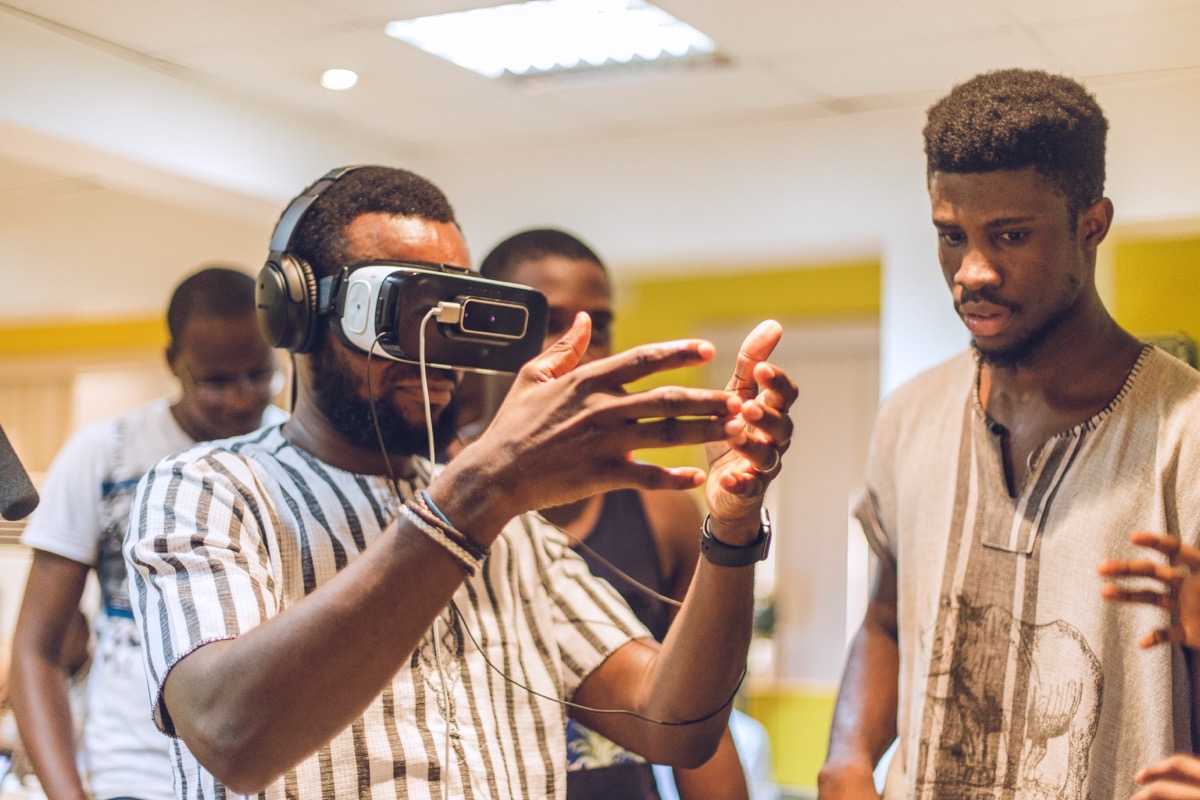
Metaverse gaming is a rapidly growing industry that promises to revolutionize the way people interact with virtual worlds. However, not all metaverse games are created equal. Some focus on selling virtual land to investors, hoping to create a scarce and valuable asset that can be traded on secondary markets. Others, like The Sandbox, emphasize the role of content creators, who can design and monetize their own experiences within the game.

The Sandbox is a decentralized, community-driven gaming platform that allows anyone to create, own and play games in the metaverse. The game uses blockchain technology to ensure that creators have full ownership and control over their assets and creations. The game also features a native cryptocurrency, SAND, that can be used to buy and sell land, items and services within the game.

The Sandbox cofounder and COO Sebastien Borget believes that metaverse gaming is more about content creation than land speculation. In a recent interview with VentureBeat, he said:

“We think that the value of the metaverse is not in the land itself, but in what you can do with it. The land is just a canvas for your imagination. The real value is in the content that you create and share with others.”

Borget explained that The Sandbox aims to empower creators by providing them with easy-to-use tools, such as VoxEdit and Game Maker, that allow them to make 3D models, animations and games without coding. He also said that The Sandbox offers a fair and transparent revenue-sharing model, where creators can earn up to 95% of the profits from their creations.

“We want to create a virtuous cycle where creators are incentivized to create more and better content, which attracts more players, which generates more revenue for the creators, which motivates them to create even more,” he said.

Borget also shared his vision for the future of metaverse gaming, where he expects to see more cross-platform and cross-game interoperability, as well as more social and immersive features.

“We believe that the metaverse is not a single game or platform, but a network of interconnected experiences that can be accessed from any device. We also think that the metaverse should be more than just a place to play games, but a place to socialize, learn, work and express yourself,” he said.

SEC has 8-10 filings on Bitcoin ETFs in front of the commission.

The U.S. Securities and Exchange Commission (SEC) is reviewing several applications for Bitcoin exchange-traded funds (ETFs), according to its chairman Gary Gensler. In a recent interview with Bloomberg, Gensler said that the SEC has received 8-10 filings from different companies that want to launch Bitcoin ETFs in the U.S. market.

Bitcoin ETFs are investment products that track the price of Bitcoin and trade on stock exchanges. They allow investors to gain exposure to Bitcoin without having to buy, store, or manage the cryptocurrency themselves. Bitcoin ETFs are seen as a way to boost the adoption and legitimacy of Bitcoin, as well as to provide more liquidity and transparency to the market.

However, Bitcoin ETFs also face significant regulatory hurdles in the U.S., as the SEC has not yet approved any of them. The SEC has expressed concerns about the potential for fraud, manipulation, and lack of investor protection in the Bitcoin market, especially in relation to the underlying spot and futures markets. The SEC has also asked for more public input and feedback on various aspects of Bitcoin ETFs, such as valuation, custody, liquidity, arbitrage, and market surveillance.

Gensler, who took office in April 2021, has been seen as a potential ally for the crypto industry, given his background as a former professor of blockchain technology at MIT. However, he has also been vocal about the need for more regulation and oversight of the crypto space, especially in areas such as stablecoins, decentralized finance (DeFi), and initial coin offerings (ICOs). He has also urged Congress to grant more authority and resources to the SEC to regulate crypto assets.

Gensler did not give a timeline or a hint on whether the SEC will approve any of the pending Bitcoin ETF applications. He said that each filing is different and that the SEC will evaluate them based on their merits and compliance with the existing rules and standards. He also said that he is open to dialogue and collaboration with the industry and other regulators to foster innovation and protect investors.

The crypto community has been eagerly awaiting the approval of a Bitcoin ETF in the U.S., as it could potentially trigger a wave of institutional and retail demand for Bitcoin. Several other countries, such as Canada, Brazil, Germany, and Switzerland, have already launched their own Bitcoin ETFs, with varying degrees of success and popularity. The U.S., however, remains the largest and most influential market for crypto assets, and a Bitcoin ETF there could have a significant impact on the global crypto landscape.

As Nigeria Goes After $7 billion NLNG Dividends, We Must Pay Attention to Deepening Industrial Capacity

0
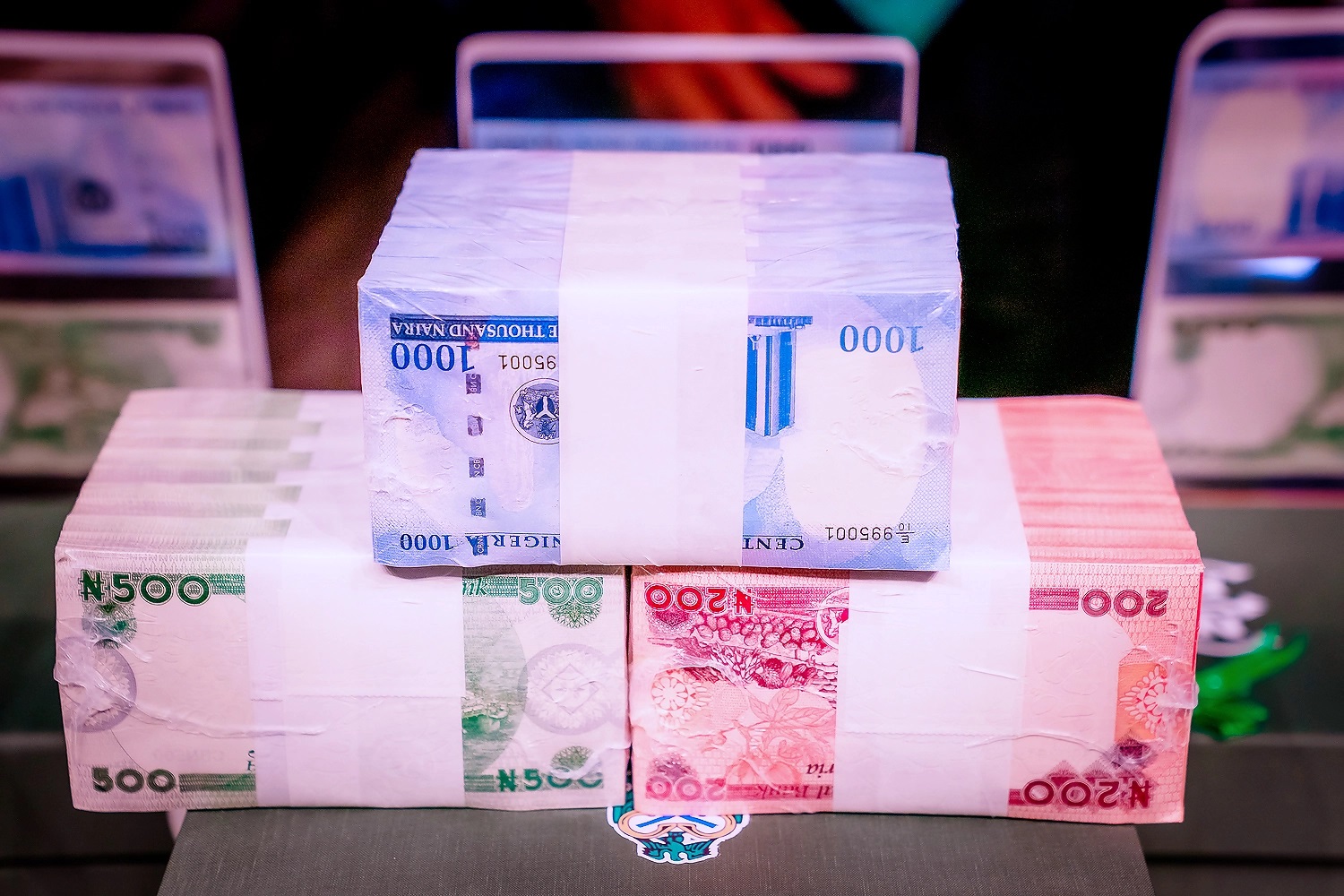
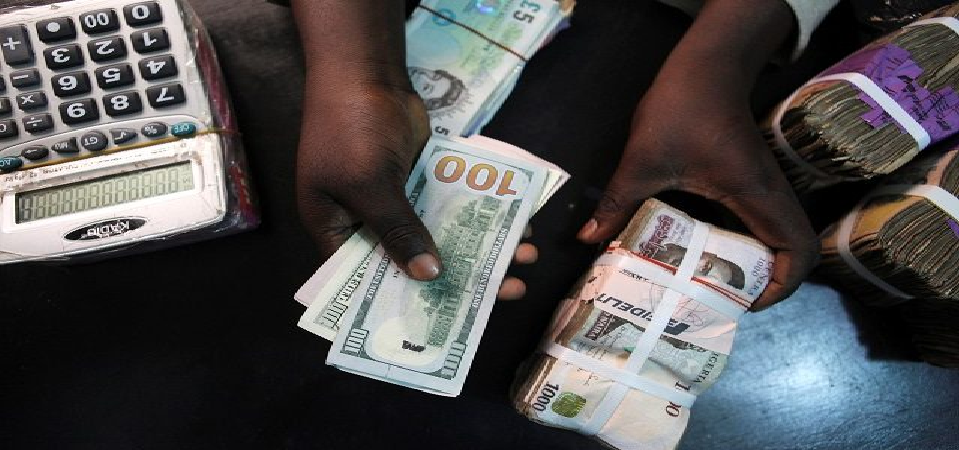
Nigeria Naira US Dollar

Poor Nigeria – now you want to go after NLNG dividends: “To boost foreign currency liquidity in the economy and fortify the foreign exchange situation, the federal government has devised a plan to securitize approximately $7 billion of the country’s dividends from the Nigerian Liquefied Natural Gas (NLNG).”

On Oct 24 2023, I wrote “Forex players, there is a warning shot in the land…Sure, Nigeria has tools which can bring Naira back to sub-N800/$.”. I continued… “And the government can actually get Naira back to whatever number it wants with the US dollars. The real challenge is a long-term playbook. Yes, how do you keep the Naira stable over a long-term view…?”

The NLNG playbook is not the long-term solution as someone must still replace this fund as NLNG’s dividend has remained vital for the Nigerian purse. Besides these ad-hoc piecemeal on-the-run solutions, someone needs to present a comprehensive blueprint on how all the pieces will come together.  Secularizing crude oil, dividends, etc are stale policies looking at what the last government did. Essentially, you shift responsibilities to the next government, leaving the root cause of the issues unsolved.

The root cause is that Nigeria is experiencing massive de-industrialization and that bleeding must STOP for Naira to have any chance to thrive. If we leave Naira alone and use this money to provide decent electricity in Nigeria, we may do better for the Naira over the long-term.

My Response: Nigeria has not shown any evidence that it has scarcity, from our scaling of bureaucracy to importing hundreds of Toyota cars. Do not think you can use Naira engineering to transform Nigeria without doing the real work. That real work includes the lawmakers driving local SUVs over Toyota, as that will send a clear message to the FOREX market that Nigeria is ready to fight for Naira. We need to change our mindset; that has not happened. Borrowing here and here will not solve this problem until we change our mindset.

Comment 1: Thank you for your post, Prof.

What I think is that, With a $7bn from securitization of dividends and a $3bn from Afreximbank loan, A total of $10bn liquidity injection would now be available to the government to meet its outstanding obligations which might give the needed support to stop this rapid depreciation of the Naira, Although this is not sustainable over the long run. But as Keynes would say, “in the long run we’re all dead”

Additionally Macroeconomic issues do not have a quick and direct fix.
It’s complex and the intricacies cannot be fully modeled or the issues be immediately fixed by just tweaking one or few variables.

Although electricity/power is an important input for production. Just focusing on power might not offer the expected benefits as it’s regards long-term equilibrium value of exchange rate.

My ResponseI agree that we need a quick solution. Yet, Nigeria has not shown any evidence that it has scarcity, from our scaling of bureaucracy to importing hundreds of Toyota cars. Do not think you can use Naira engineering to transform Nigeria without doing the real work. That real work includes the lawmakers driving local SUVs over Toyota, as that will send a clear message to the FOREX market that Nigeria is ready to fight for Naira. We need to change our mindset; that has not happened. Borrowing here and here will not solve this problem until we change our mindset.

I call for a comprehensive blueprint where we work to reduce the need for US dollars. That has not happened. All the lawmakers want their Toyotas and have defended why Toyota is better on Nigerian roads than local brands. With that mindset, the quick fixes are not going to be useful because it is a vicious cycle. You fix today, and tomorrow, you have to fix, etc. That has been ongoing for years.

But imagine if lawmakers say, send us local SUVs and let us allow Naira to breathe.  There is nothing new about secularizing dividends and crude oil; we have been doing similar things since 2017 including using pension funds. But what was supposed to be short term becomes permanent because the mindset which has to change remains unchanged. That is my point.

Comment 2: No longterm visionary playbook has be deployed to ensure stability in the economy and by extension the polity over the past two decades, and it is looking more glaring that the current illegitimate government is kicking the can down the road again.

Until the economy starts to produce for local consumption and exports, they will continue dancing around the issues and ignoring the challenges therein

Comment 3: How do you fix the backlogs?

My Response: Any strategy you have must go along with a change of mindset and that is the comprehensive blueprint I am asking for. You do not offset with pension funds in 2019, only to ramp up, and you need forward crude oil in 2021, then in 2023, you need NLNG dividend, etc. Yet, you have NOT changed anything in how you operate. My position is you can borrow anywhere but you need to change how you operate as a nation to avoid coming back in 2 years to borrow again.

Naira Appreciates As Nigeria Moves to Securitize $7bn in NLNG Dividends

1

The Nigerian Naira experienced a remarkable appreciation against the US Dollar on Friday, closing at N789.94 per $1 at the official market. This surge was attributed to several government efforts aimed at bolstering foreign exchange (FX) inflow.

The Naira’s performance represented a substantial 6.26% increase from the previous day’s rate of N837.49 per $1. In the parallel market, the Naira also made a strong comeback, rising to N1,113 per $1 from its previous rate of N1,230 per $1.

During the day’s trading, the Naira reached an intraday high of N900 per $1, while the intraday low was at N696.06 per $1, indicating a wide spread of N203.94 per $1.

Data from the official Nigerian Autonomous Foreign Exchange Market (NAFEM) window revealed that the forex turnover for the day reached $259.84 million, marking a significant 129.50% increase compared to the previous day’s figures.

Additionally, Nigeria’s external reserves experienced a slight uptick, reaching $33.326 billion. This marks the ninth consecutive day of gains and keeps the reserves above the $33 billion mark, a trend that has persisted since July 2023.

To boost foreign currency liquidity in the economy and fortify the foreign exchange situation, the federal government has devised a plan to securitize approximately $7 billion of the country’s dividends from the Nigerian Liquefied Natural Gas (NLNG).

An official from Bola Tinubu’s administration told THISDAY that the government anticipates receiving $7 billion from a consortium led by Standard Chartered Bank in the coming week.

This is in addition to the $3 billion emergency loan secured by the Nigerian National Petroleum Company Limited (NNPCL) from the African Export-Import Bank (Afreximbank), bringing the total expected inflows in the short term to $10 billion.

Finance Minister Wale Edun, speaking at the Nigerian Economic Summit in Abuja, earlier this week, confirmed that the government is well-prepared for an upcoming surge of funds. He stressed that this injection of liquidity is expected to take place in the near future, likely within weeks, rather than being spread out over an extended period.

This initiative is being orchestrated by the Federal Ministry of Finance Incorporated, which is the shareholder of the NLNG.

President Bola Tinubu, speaking at the 29th Nigerian Economic Summit in Abuja, reassured Nigerians and investors of ongoing plans to enhance the country’s foreign exchange liquidity. He acknowledged the challenges faced by the business community in the financial markets and pledged additional FX liquidity to restore market confidence.

The source explained, “NLNG has been performing and used to pay dividends of about $6 billion, but because our oil production and gas production have fallen, dividends also fell to about $2 billion. But what this government has decided to do is to securitize these dividends over a period of time and use it to borrow money to curb the depreciation of the Naira against the Dollar.”

The goal is to increase dollar liquidity by injecting the market with a supply of dollars and pushing the Naira/Dollar exchange rate to approximately N800 per $1. This move is expected to help settle some old FX forward obligations, reduce pressure on the Naira, improve liquidity, and allow the currency to appreciate.

Market analysts believe that these measures may help the Naira appreciate to around N1,000 per $1 and potentially lead to currency speculators incurring losses. They also emphasize that achieving this goal would depend on improved oil production and significant reductions in crude oil theft.

These developments indicate a positive turn of events for the troubled Nigerian currency, which has faced intense pressure in recent weeks. The Nigerian government has recently employed a strategy that entails obtaining an immediate cash loan based on the anticipated revenues from a specified portion of future crude oil production. This approach was utilized by the Nigerian National Petroleum Corporation (NNPC) to secure a $3 billion emergency loan from the African Export-Import Bank (Afreximbank).

Google’s Marketing Innovation As Google Search Spends $26B Yearly for Default Positions

1

When you send that proposal and cannot get a response, understand that certain things are not based on pure product quality or do-no-harm competition. That Google Search spends about $26 billion yearly to secure the best seats in phones and browsers is a concern: “In a federal antitrust trial, a slide made public revealed that Google paid a total of $26.3 billion in 2021 to secure its position as the default search engine on mobile phones and web browsers.” Apple possibly received $19 billion of that for the default placement on Apple devices.

Like I wrote in Harvard Business Review on Intel Inside campaign, and how the marketing genius who invented it might have done just as much as the engineers who wired Intel processors, the partnership lead in Google who closes these deals (locking the Apple world for Google) has provided  core “innovation” in the success of Google just as the engineers who creates the search technology.

What is the message: do not neglect your commercial guys as one partnership can transform a business. Period, innovation happens in marketing and sales, not just in technology.

As the trial continues, we’re learning that Google is a great partnership innovator, just as it is a good engineering one. Sure, the government does not like that. But the court will decide. But the lesson is clear: Google has not won purely on its technical strength; it has got a really great help from those “locks”, made possible by $26 billion yearly payments.