DD
MM
YYYY

PAGES

DD
MM
YYYY

spot_img

PAGES

Home Blog Page 3650

Egyptian Pound Suffers major pullbacks, plummeting 60% in 24 hours

0

The Egyptian Pound has devalued 60% in the last 24 hours, plunging the country into a deep economic crisis. This unprecedented drop in the currency’s value is the result of several factors, including political instability, social unrest, foreign debt, and the global pandemic.

The political situation in Egypt has been volatile since the 2011 revolution that toppled the long-time dictator Hosni Mubarak. Since then, the country has witnessed several changes of government, military coups, and violent clashes between different factions. The current president, Abdel Fattah el-Sisi, has faced criticism for his authoritarian rule, human rights violations, and suppression of dissent.

His legitimacy has been challenged by various opposition groups, some of which have resorted to armed resistance. The lack of political stability and security has deterred foreign investors and tourists, who are vital sources of income for the Egyptian economy.

The social unrest in Egypt has also contributed to the currency crisis. The population of Egypt is over 100 million, making it the most populous country in the Arab world. However, many Egyptians suffer from poverty, unemployment, inflation, and poor public services.

The pandemic has exacerbated these problems, as the government has struggled to contain the spread of the virus and provide adequate health care and social support. The frustration and anger of the people have erupted in frequent protests and riots, which have disrupted the normal functioning of the economy and damaged public infrastructure.

The foreign debt of Egypt is another factor that has weakened the pound. Egypt owes about $130 billion to various creditors, including the International Monetary Fund (IMF), the World Bank, and several countries. The debt burden has increased over the years due to high interest rates, low growth rates, and currency depreciation.
The government has tried to secure more loans and grants from its allies, such as Saudi Arabia and the United Arab Emirates, but these have come with strings attached, such as implementing unpopular austerity measures and reforms. The debt crisis has reduced the confidence of the international community in the Egyptian economy and its ability to repay its obligations.

The global pandemic has also played a role in the currency collapse. The pandemic has affected the world economy in unprecedented ways, causing a slowdown in trade, tourism, remittances, and oil prices. These are all important sources of revenue for Egypt, which relies heavily on its external sector.

The pandemic has also increased the demand for hard currencies, such as the US dollar and the euro, as people seek to preserve their wealth and savings. The supply of these currencies in Egypt has been limited due to the restrictions on travel and transactions imposed by various countries. This has created a shortage of foreign exchange in the Egyptian market, leading to a sharp rise in the exchange rate of the pound.

The devaluation of the pound has had severe consequences for the Egyptian economy and society. It has increased the cost of living for millions of Egyptians, who have to pay more for imported goods and services, such as food, fuel, medicine, and education. It has also eroded the purchasing power of their incomes and savings, which are mostly denominated in pounds.

It has reduced the competitiveness of Egyptian exports in international markets, as they become more expensive for foreign buyers. It has also increased the risk of inflation and hyperinflation, as prices spiral out of control due to rising demand and shrinking supply.

The currency crisis requires urgent action from both the government and the international community. The government needs to restore political stability and security in the country by engaging in dialogue with its opponents and addressing their legitimate grievances. It also needs to implement economic reforms that can boost growth, diversify revenue sources, reduce debt, and attract foreign investment.

The international community needs to support Egypt with financial assistance that can help it overcome its liquidity problems and stabilize its exchange rate. It also needs to ease its trade barriers and travel restrictions that have hampered Egypt’s external sector.

The Egyptian pound is not only a symbol of national sovereignty and pride, but also a key determinant of economic well-being and social welfare. Its devaluation is a serious challenge that threatens to undermine the progress and development of Egypt. However, it is also an opportunity to rethink and reshape its economic model and policies in a way that can foster more resilience, sustainability, and inclusiveness.

Submit Monthly Financial returns or Face sanctions, CBN mandates MFBs, PMBs and DFIs

0

In a bid to bolster transparency and regulatory compliance in the Nigerian financial sector, the Central Bank of Nigeria (CBN) has taken decisive action by mandating Microfinance Banks (MFBs), Primary Mortgage Banks (PMBs), and Development Financial Institutions (DFIs) to submit monthly financial returns through the FinA application or face sanctions.

This latest directive is one of several others issued by the CBN recently, underscoring its commitment to upholding the integrity of Nigeria’s financial system and ensuring effective oversight of financial institutions operating within its jurisdiction.

The directive was communicated through three separate letters signed by Dr. Valentine Ururuka, the Director of the Financial Policy and Regulatory Department at the CBN. These letters served as a stern warning to financial institutions falling under the specified categories, urging them to adhere strictly to regulatory guidelines.

In one of the letters addressed to Microfinance Banks, the CBN expressed concern over the recurring issue of late or non-rendition of periodic returns on FinA. Quoting Section 24 of the Banks and Other Financial Institutions Act (BOFIA), 2020, the CBN reminded MFBs of their obligation to submit monthly FinA returns by the 5th day after the end of each month.

The letter also outlined the potential consequences of non-compliance, stating, “Consequently, all MFBs are to ensure that their monthly FinA returns are submitted on or before the 5th day after the month end. Where the 5th day falls on the weekend or public holiday, returns shall be submitted the previous work day.

“You are strongly advised to ensure timely rendition of all regulatory returns as future breaches shall be sanctioned.”

Similar warnings were issued to Primary Mortgage Banks and Development Financial Institutions, highlighting the imperative of timely submission of financial returns in accordance with relevant regulations. PMBs and DFIs were reminded of their obligations under BOFIA, 2020, and urged to ensure prompt submission of monthly FinA returns to avoid penalties.

This directive is just one of the regulatory measures implemented by the CBN to promote transparency and accountability in the Nigerian financial system. In recent years, the CBN has introduced several initiatives aimed at enhancing regulatory oversight and strengthening risk management practices across the banking sector.

One such initiative is the implementation of the Bank Verification Number (BVN) system, which serves as a unique identifier for bank customers, and the current linking of it with the National Identification Number (NIN). The move is aimed at curbing fraudulent activities such as identity theft and money laundering.

Additionally, the CBN has introduced stringent Know Your Customer (KYC) requirements to ensure that financial institutions have adequate information about their customers to mitigate risks associated with illicit financial transactions.

Furthermore, the CBN has enhanced its regulatory framework for corporate governance, requiring banks and other financial institutions to adhere to strict governance standards to promote accountability and sound business practices. This includes measures such as the adoption of risk-based supervision and the establishment of independent audit committees to oversee financial reporting and internal controls.

The CBN’s proactive approach to regulatory oversight under current governor Yemi Cardoso is believed to be a reflection of its commitment to maintaining stability and integrity in the Nigerian financial system. This has become imperative given the messy malfeasance that allegedly characterized Nigeria’s financial system under the watch of former governor of the CBN, Godwin Emefiele.

Financial experts say by enforcing stringent regulations and promoting transparency, the CBN will foster investor confidence, safeguard depositor funds, and support sustainable economic growth in Nigeria.

Funding For African Startups Rose by 182% in February 2024 With $217 Million Raised – Report

0

A recent report from Africa: The Big Deal, which provides database and insights on start-up funding in Africa, revealed that funding for African startups rose by 182% in February 2024, with $217 million raised.

The increase in funding for February is coming after January was a pretty quiet month, with only $77 million worth of deals announced on the continent.

In February, 38 startups were reported to have raised at least $100k last month in equity, debt, or grants, the same number as in January. However, the total amount they announced is nearly 3 times higher, at $217 million ($156m in equity and $59m in debt).

The largest contributor by far (51% of the total, was Nigerian fintech transport Moove, who first announced $10 million of debt for its expansion in India. Then afterward, reports disclosed that Uber are currently in talks to invest up to $100 million in Moove. This investment according to reports, could boost Moove’s valuation from $650 million to $750 million.

What the report said,

As you may remember, January was a pretty quiet month with only $77 million worth of deals announced on the continent. The good news is that things have picked up in February: 38 startups raised at least $100k last month (in equity, debt, or grants), the same number as in January. The largest contributor by far (51% of the total) was Nigerian transport tech Moove who first announced $10m of debt for its India expansion before rumors of an upcoming new round surfaced last week.

We have been able to confirm directly with one of the investors that the $100 million Series B is indeed happening. There were also 3 announced exits last month: Carbon bought Vella Finance, Auto24 acquired Kupatana and FairMoney might buy Umba. All in all, funding levels in February 2024 were quite comparable to 2020 and 2021.”

Outlook on 2024 Year-to-date (YTD)

With an outlook of startup funding for 2024 YTD, the report revealed that startups on the continent have raised just short of $300 million. 80 startups have raised at least $100k, 38 of which have raised at least $1m.

The continent’s Big Four (Nigeria, Kenya, Egypt, And South Africa), have claimed 86% of all the funding. Nigeria 42%, $123 million, $110 million from Moove alone, Kenya 27%, $ 81 million in the lead, and Egypt 10%, $28m and South Africa 7%, 22m.

Beyond these regions, only Uganda has registered more than $10 million in Funding in 2024 so far. From a sector point of view, Logistics and transport represented nearly half of all funding, followed by Healthcare, Fintech, and Energy, in terms of the number of individual startups raising though Fintech came first (18 out of 80, 23%).

Egypt pulls in $40bn in Economic Turnaround, Contrasting Nigeria’s lingering Helplessness

0
Fund, money cash dollar

In barely 10 days, Egypt has gone from the brink of economic disaster to unlocking more than $40 billion of investments and loans from the United Arab Emirates and the International Monetary Fund, with the likelihood of more to come from Saudi Arabia and others, per Bloomberg.

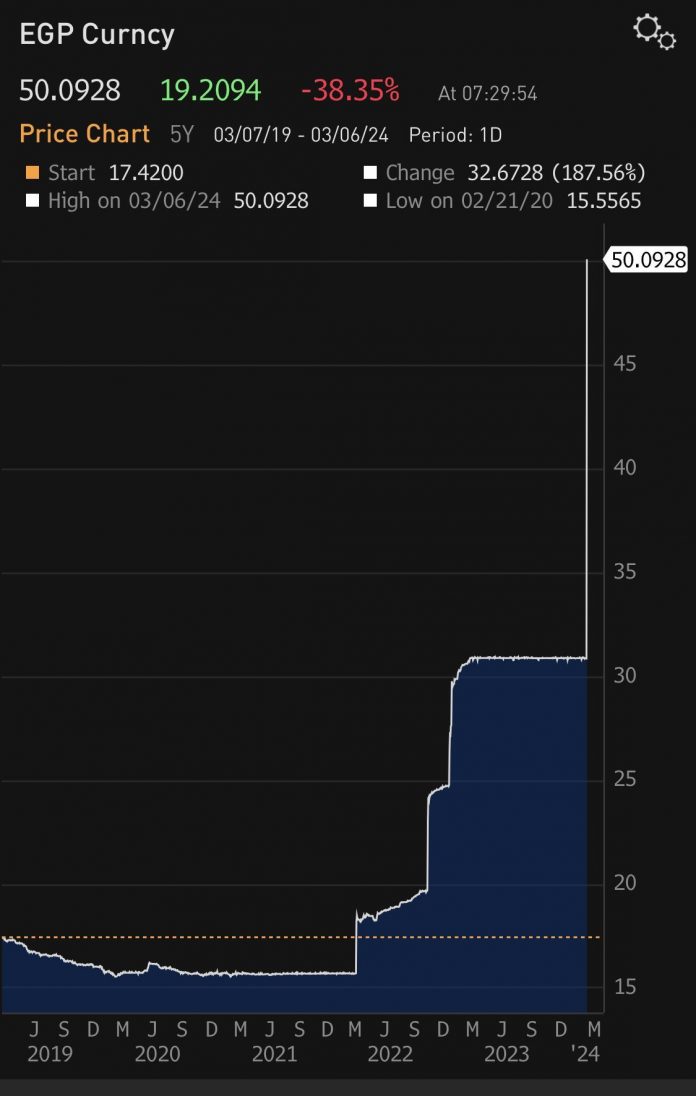
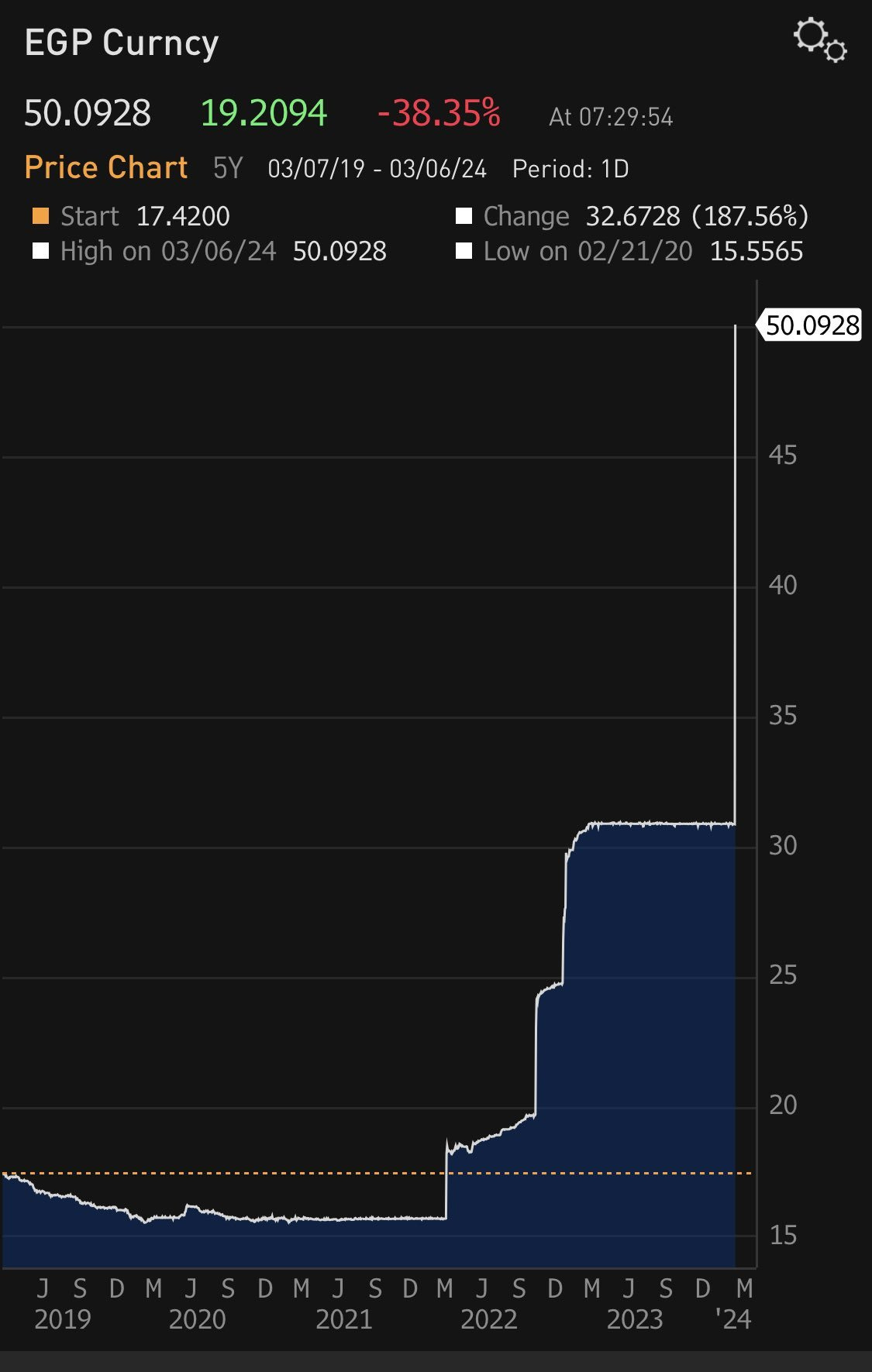
On Wednesday, Egypt implemented significant measures to address its economic crisis, including its largest-ever interest-rate hike and allowing its currency to depreciate by more than 38% in a long-anticipated flotation. These moves mark the culmination of global efforts, spearheaded by oil-rich Gulf states and the International Monetary Fund (IMF), and supported by the United States, aimed at stabilizing Egypt’s economy.

Against this backdrop, the country, which has been grappling with soaring inflation and external pressures including a war on its border, has seen a rapid turnaround in investor sentiment.

Foreign investors are already expressing optimism about Egypt’s prospects, with expectations of attracting billions of dollars in bond investments in the coming months, the report said. The recent developments signal a shift in Egypt’s economic trajectory and highlight the importance of international cooperation in addressing economic challenges.

The next phase of Egypt’s economic recovery may involve a significant land investment from Saudi Arabia. Preliminary discussions between Egyptian and Saudi authorities are underway regarding the development rights for a strategic area along the northern Red Sea coast known as Ras Gamila, per Bloomberg.

While details of the negotiations remain confidential, sources familiar with the matter, cited by Bloomberg, suggest that Saudi Arabia’s potential investment could mirror the landmark $35 billion commitment announced by the UAE, which aims to develop the Ras El-Hekma peninsula on Egypt’s Mediterranean coast.

Monica Malik, chief economist at Abu Dhabi Commercial Bank PJSC, emphasized the significance of these investments in light of Egypt’s economic crisis.

“Egypt reached a breaking point and the size of Ras El-Hekma deal showed the depth of the crisis,” said Monica Malik, chief economist at Abu Dhabi Commercial Bank PJSC. “Neither the UAE nor other Gulf countries want to see another Arab Spring or political turmoil in Egypt.”

Egypt’s economic challenges stem from various factors, including the impact of global events such as Russia’s invasion of Ukraine in 2022, which led to surging commodity prices and exacerbated the country’s vulnerability to external shocks. The conflict between Israel and Hamas in Gaza further strained Egypt’s economy, affecting tourism and maritime trade through the Suez Canal.

The negotiations between Egypt and Saudi Arabia over the development of Ras Gamila underscore the potential for further Gulf investment in Egypt’s economy. Analysts anticipate additional investment deals with Gulf partners, reflecting the growing interest in Egypt as a strategic investment destination.

Omar Monieb, a senior analyst for the Middle East and North Africa at Eurasia Group, noted, “Other investment deals with more Gulf partners will likely follow the Emirati one.”

The influx of funds from Gulf nations, coupled with expected support from international financial institutions such as the IMF and World Bank, is expected to bolster Egypt’s economic stability and facilitate its debt management efforts. This could potentially lead to an improvement in Egypt’s credit rating and lower borrowing costs, providing further impetus for economic recovery, according to Bloomberg.

Egypt’s recent economic developments mark a significant turning point in its economic trajectory, demonstrating the effectiveness of international collaboration in addressing complex economic challenges and positioning the country for sustainable growth and development.

A stark contrast to Nigeria

Egypt’s proactive approach to tackling its economic crisis stands in stark contrast to Nigeria’s response to its own economic challenges. While the North African country swiftly engaged with strategic partners and implemented bold measures to stabilize its economy, Nigeria has struggled to address persistent issues such as dwindling oil output and currency depreciation. The West African country is still struggling to raise $10 billion needed to clear its forex shortfalls.

One of the key differences lies in the approach to attracting foreign investment. Egypt actively sought investments and loans from international partners such as the UAE, the IMF, and potentially Saudi Arabia, recognizing the importance of external support in revitalizing its economy. In contrast, Nigeria has faced difficulties in attracting significant foreign investment due to factors such as policy uncertainty and security concerns.

Egypt’s willingness to implement bold economic reforms, such as its largest-ever interest rate hike and currency depreciation, is noted as a demonstration of a proactive stance towards addressing underlying issues. These measures were deemed necessary to restore confidence in Egypt’s economic prospects and attract much-needed investment.

In contrast, Nigeria has often been criticized for its slow pace of reform and reluctance to implement necessary measures to address structural deficiencies in its economy.

Furthermore, Egypt’s success in leveraging its geopolitical leverage to attract investment highlights its strategic importance in the region. As a pivotal player in regional politics and security, Egypt’s stability is crucial for the broader Middle East. In contrast, Nigeria’s influence in regional dynamics is often overshadowed by internal challenges, limiting its ability to attract significant investment and support from international partners.

Despite facing similar economic challenges, Egypt’s proactive approach and strategic partnerships have enabled it to navigate turbulent waters with greater resilience compared to Nigeria. By capitalizing on external support and implementing bold reforms, Egypt aims to emerge stronger from its recent trials, serving as a bold example of economic recovery.

Nigeria Introduces New Anti-Money Laundering Guidelines For Digital Asset Operators

0

The Nigerian Securities and Exchange Commission (SEC) has developed new anti-money laundering guidelines aimed at enhancing the licensing, registration, and screening processes for digital and virtual asset service providers (VASPs).

In a circular seen by Tekedia, the SEC disclosed that the new guidelines would ensure that criminals are not registered as operators in the capital market.

The SEC further highlighted that the new guidelines will complement the existing regulatory framework, reinforcing the commission’s commitment to ensuring market integrity and investor protection.

Based on the circular, the new guidelines will serve as additional rules and regulations to the existing ones.

Part of the circular reads,

“In September 2020, the commission released its treatment and classification of digital assets where it specified its regulatory purview over Crypto tokens traded on a recognized exchange, Utility tokens traded on a recognized exchange, security tokens that have features of securities and funds and derivatives of these three types of tokens”.

SEC outlined the existing guidelines issued in May 2022 to include, general requirements for VASPs, issuance of digital assets as securities, digital assets offering platforms (DAOPs), digital assets exchange (DAX), and digital asset custodians (DACs).

Furthermore, the SEC said it has unveiled a new Anti-Money Laundering (AML), Countering the Financing of Terrorism (CFT), and Countering Proliferation Financing (CPF) onboarding manual.

This manual is specifically designed for the licensing, registration, and ongoing screening of beneficial owners of digital and virtual asset service providers (VASPs). The objective according to SEC is to prevent individuals with criminal backgrounds from being registered as operators within the capital market, SEC further noted that it is ready to interface with genuine VASPs based on these clear rules and regulations.

Based on the commission’s recent engagement with the Central Bank of Nigeria (CBN), it said that additional comments are being incorporated into the rules that will soon be exposed to the market for comment before final approval.

By introducing these new regulations, the SEC seeks to enhance the integrity and transparency of the digital asset market while mitigating the risks of financial crime. It also aims to foster greater investor confidence in the digital asset space by establishing clear regulatory standards for AML compliance among digital asset operators.

To enforce compliance with the new regulations, the SEC could introduce stringent penalties for non-compliance, including fines, license revocation, and legal action against violators. By imposing consequences for failure to adhere to guidelines requirements, the SEC aims to incentivize digital asset operators to prioritize compliance and mitigate the risk of financial crime in the digital asset space.