DD
MM
YYYY

PAGES

DD
MM
YYYY

spot_img

PAGES

Home Blog Page 3655

The Revocation of Rights Of Occupancy Of Land Under Nigerian Law

0

This article will be dealing with the revocation of rights of occupancy under Nigerian law, particularly :-

– The extent of a governor’s power to revoke titles of occupancy under Nigerian law

– Overriding Public Interests

– Compensation payable on revocation of rights of occupancy under Nigerian law

What is the extent of a governor’s power to revoke rights of occupancy under Nigerian law?

– It shall be lawful for a governor to revoke a right of occupancy for overriding public interests.

– The governor shall revoke a right of occupancy in the event of the issue of a notice by or on behalf of the president if such notice declares such land to be required by the Federal Government for public purposes.

What exactly are overriding interests?

– Overriding public interests in the case of a statutory of occupancy means :-

a). The alienation by the occupier contrary to the provisions of the act or any regulations.

b). The requirement of the land by the governor of the state, or the requirement of the land by the government of the federation for public purposes of the federation.

c). The requirement of the land for mining purposes or oil pipelines.

– Overriding public interests in the case of a customary right means :-

a). The requirement of the land by a governor or local government of the state, in either case for public purposes within the state, or the requirement of the land by the Federal Government for public purposes of the Federation.

b). The requirement of the land for mining purposes or oil pipelines.

c). The requirement of the land for the extraction of building materials.

d). The alienation by occupier without the consent required.

What are the grounds for the revocation of a statutory right of occupancy?

– The governor may revoke a statutory right of occupancy on the grounds of :-

a). A breach of any of the provisions which a certificate of occupancy is by the Land Use Act deemed to contain.

b). A breach of any term contained in the certificate of occupancy or in any contract made under the Act. 

c). A refusal or neglect to accept and pay for a certificate which was issued on evidence of a right of occupancy buy has been cancelled by the governor. 

What is the provision of law on compensation payable on revocation of a right of occupancy by a governor?

– If a right is revoked for the reasons mentioned above (public purposes), the holder and the occupier shall be entitled to compensation for the valie at the date of revocation of their inexhausted improvements.

– Where mining or oil pipelines are involved, the holder and occupier shall be entitled to compensation under the appropriate provisions of the Mineral & Mining Act or the Petroleum Industry Act or subsidiary/subsequent regulations.

– If the holder or the occupier entitled to compensation under the

Land Use Act is a community tje governor may direct that any compensation payable to it shall be paid :-

a) . To the community

b). To the chief of leader of the community to be disposed of by him for the benefit of the community in accordance with the applicable customary law, or

c). Into some fund specified by the governor for the purpose of being utilized or applied for the benefit of the community.

What exactly is the extent of compensation applicable under Nigerian law?

– Compensation shall be as respects:-

a). The land, for an amount equal to the rent,if any, paid by the occupier being the year in which the right of occupancy was revoked. 

b). Buildings, installation or improvements thereon, for the amount of the replacement of the building, installation or improvement, i.e. such cost as may be assessed on the basis of the prescribed method of assessment as determined less ant depreciation, togerher with interest at the bank rate for delayed payment of compensation and in respect of any improvement in the nature of reclamation works, being such cost thereof as may be substantiated by documentary evidence and proof to the satisfaction of the government.

What is the provision of law on the reference of disputes as to compensation?

– Where there arises any dispute as to the amount of compensation calculated in accordance with the provisions of the Land Use Act, such dispute shall be referred to the appropriate Land Use Allocation & Committee .

– Debts due to the government will not be extinguished by a revocation concerning such right of occupancy.

What is the extent of the governor’s powers to offer resettlement in case of revocation of a right of occupancy in lieu of compensation?

– An offer of resettlement in lieu of compensation based on the discretion of a state governor or local government chairman.

– Where the resettlement value is higher than the monetary value of the original landed property being the subject of a revocation, the balance will be automatically taken as a loan from the state government. 

Nigeria’s Tinubu Welcomes Supreme Court Judgment Upholding His Election Victory (full statement)

0

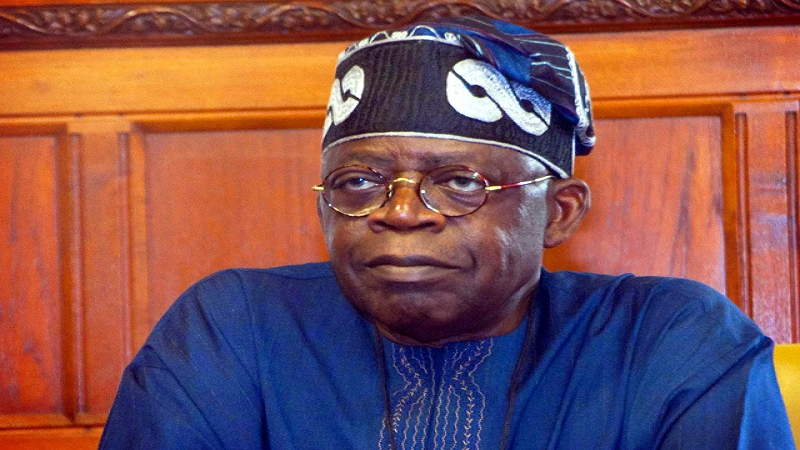
President Bola Tinubu has welcomed the judgment of the Supreme Court upholding his presidential election victory on Thursday.

Presidential candidates of the Peoples Democratic Party (PDP), Atiku Abubakar, and the Labour Party (LP), Peter Obi, filed an appeal at the Supreme Court, challenging the earlier judgment of the Presidential Election Petition Tribunal (PEPT), which upheld Tinubu’s victory.

A seven-man panel of Justices led by Inyang Okoro upheld the judgment of the Presidential Election Petition Court.

In his statement, Tinubu commended the court’s impartial handling of the case, stating that it solidifies Nigeria’s electoral and constitutional framework. Tinubu expressed unwavering confidence in the judiciary, emphasizing its commitment to justice for all Nigerians.

He noted that the ruling put to rest any doubts about the legitimacy of his election and reaffirmed that his party, the All Progressives Congress, rightfully won the people’s mandate. Tinubu accepted the victory with a sense of responsibility and a determination to address the nation’s challenges.

He pledged to serve all Nigerians regardless of their political affiliations, tribes, or faiths, and to work towards a more united and prosperous Nigeria. Tinubu also called for collective efforts in building a stronger and more prosperous nation, highlighting the importance of diversity and unity.

He expressed readiness to welcome contributions from all Nigerians to foster progress and improve living conditions.

Tinubu extended his gratitude to the citizens for entrusting him with the mandate, promising to exceed their expectations in governance.

Read his full statement below:

I welcome the verdict of the Justice John I. Okoro-led Panel of the Supreme Court on the Presidential Election petitions filed by the candidates of the Peoples Democratic Party and the Labour Party, challenging the ruling of the Presidential Election Petition Tribunal.

The court has done justice to all issues put up for consideration in the petitions on the merits of the law, without fear or favor.

There is no doubt, with the profound judgment of today, that our electoral jurisprudence and constitutional democracy are further consolidated and embedded more indelibly in our national identity because of the diligence and undaunted professionalism of the Honourable Justices who presided over the matter.

While the verdict of today has laid to rest the agitating discourse over who truly won the 2023 Presidential election and met the constitutional requirements as laid out by law, I want to reiterate that my faith in our nation’s judiciary has never been shaken, not even for a moment, because I know that our hallowed courts of law will not fail to administer justice to all Nigerians in all matters and at all times.

Despite the fusillade of pressure and attempts at intimidation by some political actors, the judiciary demonstrated its unequivocal commitment to upholding the rule of law for the upliftment and defense of humanity.

It was affirmed once more today, that my party, the governing All Progressives Congress, had freely and fairly won the popular mandate of Nigerians, which has since given rise to my leadership of this great nation at a tumultuous period of unprecedented reforms in our history as a nation.

With deep gratitude to God Almighty, I solemnly and humbly accept today’s judicial victory with an intense sense of responsibility and a burning desire to meet the great challenges confronting our people.

The victory of today has further energized and strengthened my commitment to continue to serve all Nigerians of all political persuasions, tribes, and faiths, with honour and total respect for the diverse opinions and uniting values of our citizens.

Our Renewed Hope agenda for a greater and prosperous Nigeria has further gained momentum and I will continue to work from morning to night, every single day, to build a country that meets our collective yearnings and aspirations.

We are all members of one household, and this moment demands that we continue to work and build our country together. The strength of our diversity and the great citizenship that binds us must now compel us forward in directing the energy of our people toward building a virile, stronger, united, and more prosperous country.

In the days and months ahead, I trust that the spirit of patriotism will be elevated into supporting our administration to improve the living conditions of Nigerians. I am prepared to welcome the contributions of all Nigerians to foster and strengthen our collective progress.

I send my immense gratitude to all Nigerians for the mandate to serve our country. I promise again to meet and exceed your expectations in service delivery and good governance, working with my team and trusting in the grace of God.

May God continue to bless the Federal Republic of Nigeria.

Bola Ahmed Tinubu

President and Commander-in-Chief, Federal Republic of Nigeria

October 26, 2023

Emerging Payment Orchestration solutions that are enabling Web3 payments

0

Web 3 is a term that refers to the next generation of the internet, where decentralized applications (dApps) run on peer-to-peer networks, powered by blockchain technology and smart contracts. Web 3 promises to enable more trustless, transparent, and democratic interactions among users, without intermediaries or centralized authorities.

However, Web 3 also poses significant challenges for payments, especially for cross-border and cross-chain transactions. The current payment infrastructure is not designed to handle the complexity and diversity of Web 3 ecosystems, where multiple currencies, protocols, and platforms coexist. Moreover, the existing payment solutions are often siloed, fragmented, and incompatible with each other, resulting in high costs, inefficiencies, and risks for both users and developers.

To address these challenges, a new approach to payment orchestration is needed. Payment orchestration is the process of coordinating and optimizing the execution of payment transactions across different channels, methods, and providers. Payment orchestration can help Web 3 users and developers to:

Access a wider range of payment options and services, such as fiat, crypto, stablecoins, DeFi, NFTs, etc. Reduce the complexity and friction of payment integration and management, by abstracting away the technical details and providing a unified interface and API.

Enhance the security and reliability of payments, by leveraging smart contracts, encryption, and multi-signature schemes. Improve the performance and scalability of payments, by optimizing the routing, batching, and splitting of transactions. Lower the costs and fees of payments, by minimizing intermediaries, network congestion, and gas prices.

The Future of Web 3 Payments

One of the key aspects of Web 3 is the use of cryptocurrencies and tokens as the native means of payment and exchange. Unlike traditional fiat currencies, which are issued and controlled by central authorities, cryptocurrencies are digital assets that are secured by cryptography and governed by algorithms. Cryptocurrencies can facilitate fast, cheap, and borderless transactions, as well as enable new forms of incentives and rewards for users and developers.

However, the current state of Web 3 payments is far from ideal. There are several challenges and limitations that hinder the adoption and usability of cryptocurrencies and tokens in Web 3 applications. Some of these include:

Scalability: The most popular cryptocurrencies, such as Bitcoin and Ethereum, suffer from low throughput and high fees, which make them unsuitable for high-frequency or low-value transactions. Moreover, different blockchains have different protocols and standards, which create interoperability issues and fragmentation among Web 3 applications.

Usability: The user experience of Web 3 payments is often complex and confusing, especially for non-technical users. Users have to deal with multiple wallets, addresses, private keys, gas fees, network congestion, confirmation times, etc. Additionally, users have to trust third-party custodians or exchanges to store and manage their funds, which exposes them to security risks and regulatory uncertainties.

Privacy: The transparency of public blockchains also comes with a trade-off in terms of privacy. Every transaction on a blockchain is visible to anyone who can access it, which can reveal sensitive information about users’ identities, behaviors, preferences, etc. Furthermore, some Web 3 applications require users to provide personal data or identity verification in order to access certain features or services, which can compromise their anonymity and sovereignty.

Regulation: The legal and regulatory status of cryptocurrencies and tokens is still unclear and varies across different jurisdictions. This creates challenges for both users and developers who have to comply with different rules and regulations depending on where they operate or reside. Moreover, some governments and regulators are hostile or skeptical towards cryptocurrencies and tokens, which can limit their adoption and innovation potential.

These challenges and limitations pose significant barriers for the development and growth of Web 3 payments. However, they also present opportunities for improvement and innovation. In this blog post, we will explore some of the emerging trends and solutions that aim to address these challenges and enable a more efficient, user-friendly, private, and compliant future of Web 3 payments.

Some of the emerging trends that are shaping the future of Web 3 payments are:

Layer 2 solutions: These are protocols that run on top of existing blockchains, such as Ethereum, to provide faster, cheaper, and more scalable transactions. Layer 2 solutions use various techniques, such as sidechains, state channels, rollups, etc., to process transactions off-chain and only settle them on-chain when necessary. This reduces the load on the main blockchain and improves the user experience of Web 3 payments.

Cross-chain bridges: These are mechanisms that enable the transfer of value and data across different blockchains. Cross-chain bridges use smart contracts or trusted relayers to facilitate interoperability and compatibility among Web 3 applications that run on different platforms. This allows users to access a wider range of services and opportunities in the Web 3 ecosystem.

Decentralized exchanges (DEXs): These are platforms that allow users to trade cryptocurrencies and tokens without intermediaries or centralized servers. DEXs use smart contracts or peer-to-peer protocols to match buyers and sellers directly, without requiring them to deposit their funds in a third-party custodian. This enhances the security, efficiency, and autonomy of Web 3 payments.

Stablecoins: These are cryptocurrencies that are pegged to a stable asset, such as a fiat currency or a commodity. Stablecoins aim to provide price stability and reduce volatility in the crypto market. Stablecoins can be used as a medium of exchange or a store of value in Web 3 applications, as well as a bridge between the crypto world and the traditional financial system.

Privacy-enhancing technologies: These are tools that enable users to protect their privacy and identity in Web 3 payments. Privacy-enhancing technologies use various methods, such as encryption, zero-knowledge proofs, mixers, etc., to obfuscate or hide the details of transactions or users on public blockchains. This allows users to enjoy the benefits of transparency without compromising their confidentiality or sovereignty.

Binance onboards fiat partners for Euro withdrawals and deposits, Coin Metrics raises $6.7M

3

Binance, the world’s largest cryptocurrency exchange by trading volume, has announced new partnerships with fiat payment providers to enable its users to withdraw and deposit euros seamlessly. This comes after Binance’s previous partner, Paysafe, decided to terminate its relationship with the exchange in October.

According to a blog post published by Binance on Wednesday, the exchange has integrated with two European payment processors, Clear Junction and Koinal, to offer fast and secure euro transactions for its customers. Users can now link their bank accounts to Binance and use SEPA (Single Euro Payments Area) transfers to move funds between the platforms. The service is available in 36 countries across Europe, including Germany, France, Italy, Spain and the Netherlands.

Binance said that the new fiat partners will help it expand its reach and accessibility in the European market, where it has seen a significant growth in demand for crypto services. The exchange also claimed that it offers the lowest fees for euro transactions among its competitors, charging only 0.1% for deposits and withdrawals.

Binance’s CEO Changpeng Zhao (CZ) commented on the announcement, saying: “We are always looking for ways to lower the barriers to entry for our users and make crypto more inclusive for everyone. By partnering with Clear Junction and Koinal, we are providing more options and convenience for our European users to access the Binance ecosystem.”

The move follows Binance’s separation from Paysafe, a leading online payment provider that owns Skrill and Neteller, two popular e-wallets used by many crypto traders. Paysafe announced in October that it would stop processing payments for Binance due to regulatory concerns, as the exchange faced increased scrutiny from authorities around the world.

Binance has been trying to improve its compliance and regulatory status in recent months, hiring former regulators and experts to lead its legal and policy teams. The exchange has also applied for licenses in several jurisdictions, such as Singapore, Malta and the UK, where it hopes to resume its operations soon.

According to various sources , Binance is one of the most popular and trusted platforms for trading cryptocurrencies, offering a wide range of features, such as spot trading, futures trading, margin trading, staking, lending, savings, mining pool, launchpad, launchpool, liquid swap, Binance Smart Chain, Binance Card, Binance Pay and more. Binance also supports over 300 cryptocurrencies and tokens, including its own native coin BNB, which can be used to pay for fees at a discounted rate.

Binance has a high liquidity and trading volume, making it easy for users to execute their orders quickly and efficiently. Binance also has a user-friendly interface and mobile app, as well as a dedicated customer support team.

Coin Metrics, a leading provider of crypto data and analytics, announced today that it has raised $6.7 million in a new funding round led by a new investor. The company did not disclose the name of the investor but said that it was a “global financial institution” that shares its vision of building a more transparent and efficient crypto ecosystem.

The new funding will help Coin Metrics expand its product offerings, grow its team, and accelerate its global expansion. Coin Metrics provides data and insights on various aspects of the crypto market, such as network health, market behavior, risk, and valuation. The company also offers enterprise-grade data solutions for institutional clients, such as index providers, exchanges, custodians, and funds.

Coin Metrics was founded in 2017 by a group of crypto enthusiasts who wanted to create a more reliable and comprehensive source of data for the emerging industry. Since then, the company has grown to become one of the most trusted and respected names in the space, with a client base that includes Fidelity Investments, Coinbase, Bitstamp, BlockFi, and many others.

Coin Metrics co-founder and CEO Tim Rice said in a statement: “We are thrilled to welcome our new investor and partner to the Coin Metrics family. This investment validates our vision and the progress we have made in building the most trusted data and analytics platform for the crypto industry. We look forward to working together to further our mission of bringing greater transparency and efficiency to the crypto ecosystem.”

The new funding round follows a $15 million Series Around that Coin Metrics closed in May 2020, which was led by Goldman Sachs and included participation from Castle Island Ventures, Highland Capital Partners, Avon Ventures, Communitas Capital, and Collab Currency.

Are Care Works for PhD Holders? The Big Conversation Continues on Tekedia Platform

0

Since the publication of our piece titled “Why a PhD Holder Shouldn’t Settle for a Care Worker Role” on the Tekedia platform, our dedicated analyst has been touched by the flood of heartfelt comments and deeply moving personal conversations that have followed. Published on October 24, 2023, this piece has not just been read; it has resonated with readers all around the globe, and its impact is profound. To date, it has touched the hearts and minds of over 12,000 readers, stretching across continents, with Africa, especially South Africa, Nigeria, and Uganda, as well as the UK and other parts of the Global South, coming together to engage in this significant conversation.

Our analyst has been moved by the passion and concern expressed by our readers, reaffirming Tekedia’s and Infoprations’ unwavering commitment to building a community where every individual can thrive, regardless of age, gender, socioeconomic status, or political affiliations. It’s about understanding one’s unique place in the world, and this piece has genuinely struck a chord.

As we pen this update, we can’t help but feel a surge of hope and inspiration. One of our readers is on the brink of securing a role in the UK that truly befits a PhD holder. This is more than just a story; it’s a testament to the power of heartfelt discussions and the potential to inspire real change in people’s lives. It’s a moment to cherish, and we’re grateful to be part of this emotional journey with you all.

The Big Conversation

Commenter 1: Permit me to say this, Nigeria is a country that doesn’t ascribe value to hard work or merit. My true-life story for example, upon my attainment of PhD in 2017 and as a Primary school teacher under Lagos SUBEB, I had opportunity to a FGN mission to serve as a volunteer lecturer in an African country University. It was a fixed term of 2 years (2018-2020). Upon my return, I have been having very nasty experience as an officer now at SUBEB headquarters. The treatment has been so frustrating that if I have another opportunity to check out, under any work status, I will be so glad. At the Board, all my efforts to be considered into the department of my field of study were to no avail. I have been underutilized and it’s really depressing. Nigeria government should please place value on merit and only on political connection.

Commenter 2: If you have what it takes, then no whining. Just do it.

Commenter 3: That is the way it is in Nigeria. We need a national leader who places high value on intellectual hard work and innovation.

Commenter 3: This is an inspiring peace of art. PhD holders have committed a lot of resources in research and teaching. They should use the knowledge gained in particular field to better the society.

Commenter 4: One thing I did take away from my PhD was the area of finding a missing gap and the novel you can bring to your field of learning. I have found this ideology in PhD the most remarkable information? have come across. Despite the challenges everywhere there is something new you can add to make the environment better. Though it might be that where one works might not adequately cultivate and nature what you might desire, but there are ways you can package things and make them attractive. I have worked in government, taught in a polytechnic and now in a multinational. The experiences I have acquired has motivated me to embark on a company registration now. The services I about to offer are still same I had acquired all these years. The flavour I am bringing is to fill in the service gaps I have come across in the industry. I don’t regret ever having a PhD, it might take time but the Web of knowledge and contacts you have made you are going to succeed.

Commenter 5: Sirs, The PhD is preparation for a University Lecturing job. That is all, not a Nobel prize. A significant number of PhD “opportunities” are barely research assistants working on a grant proposed by a principal investigator; the same can be said for postdoctoral positions. So, ask. Do I need a PhD and 4 to 6 years postdoctoral “training” for that rare University post? In many cases, there is glut of PhDs hanging about when time and effort would be better spent serving society in other ways.

Commenter 6: The inappropriate utilization of Doctorate degree holders could be traced to the hidden faceoff between highly educated and sub-educated members of the society.

Commenter 7: I love this presentation and stand point on facts and common realities of life. PhD degree goes with a lot of dedication and hardwork in a specialized field of study. Although, our current realities in the society does not help or accommodates a PhD holders’ viewpoints. Instead, preference was given to interlopers in the field just to rubbish the learned person. It is important to give respect to whom it is due.

Commenter 8: It is only the private sector that can utilize PhD holders or any certificate holder to it specific field thinking government can is a joke political appointment will always Trump merits

Commenter 9: Here in South Africa, a PhD qual. is a holy grail for smooth entry into both private, government and higher education employment opportunities. Sadly, PhD holders in Africa tend to be less of job creators, patent innovators or aspiration for becoming high net industrialists as seen in the Silicon Valley phenomena, globally. A bubble will one day burst when over-supply of PhD across the continent fails to match available demand, while perennially concentrating on being employed instead of themselves creating employment legacy to buttress future PhD graduates.

Commenter 10: We have remained consumption economy/country. The situation would only change when we become production/manufacturing economy/country. The humiliation abroad continues. It’s terrible.

Commenter 11: Nice write-up. However, the truth remains that any PhD Holder who goes for supposedly lower job is doing so as last resort to enable such person feed. Nigerian Government should rise to its civic responsibilities. Stop chasing rat while your house is on fire.

Commenter 12: I tend to agree with others that the idea of a PHD is to cover a gap in research, providing a solution in a specific area of study. The fact that one needs a livelihood is without question but it is assumed that your area of specialization should be the space you have created for you to contribute to society, academia and to personal improvement. Some body mentioned the Ivy league of technology because it services and answers probably not one question but a host of questions. What does your PHD assist with and its continued usefulness in humanity? It is not worth a while to slog in so much effort, time, resources, and sacrifice so much and then walk away and be happy doing something else. The big question is why do you want to do a PHD, because making money is not always a good reason for it. PhD is an academic achievement and not an economic attainment that is the reality in the ground.

Commenter 13: The fact is that so much waste is going on everywhere in Africa. The western world knows how to tap a PhD holder more than African folks. The PhD holder himself must rise by themselves and take up the gullet.

Commenter 14: Intellectually provocative! Well, it’s essential to consider individual circumstances. Many of us PhD holders in Kenya have care work as a temporary measure, however, we know it is not the most suitable career path for our level of education and expertise.

Commenter 15: As with everything in life, man always finds a way to take something neutral (in this context PhD certificate) and utilise it for either a good or bad purpose.  PhD is not in itself good or bad, it is a certification you go for if interested in it though your desire for seeking it might not be realised after and that is part of life. Some have the PhD certificate and have decide not to use it or go into something different from what they have a PhD in. Also, it is the responsibility of all PhD holders who desire to use their PhD to find a way to explore it. The Bible says “It is the glory of God to conceal a thing: but the honour of Kings is to search out a matter” Proverb 25 vs 2. A care job is not bad but your goals in life must compel you not to settle for some things.

Thematic Analysis

Commenter 1 expresses frustration with the lack of value placed on merit and hard work in Nigeria. They highlight their personal experience of being underutilized after earning a PhD.

Commenter 2 presents a contrasting view, emphasizing the importance of taking action and not complaining.

Commenter 3 agrees with Commenter 1, emphasizing the need for leadership that values intellectual hard work and innovation.

Commenter 4 discusses the value of a PhD in terms of identifying gaps and contributing to one’s field, despite challenges in the working environment. They emphasize the importance of adaptability.

Commenter 5 questions the necessity of a PhD for certain roles, particularly in academia, and suggests that some PhDs may be better spent serving society in other ways.

Commenter 6 mentions the tension between highly educated and less educated members of society as a potential reason for the inappropriate utilization of PhD holders.

Commenter 7 praises the value of a PhD and emphasizes the need for respect for educated individuals.

Commenter 8 suggests that the private sector is better at utilizing PhD holders and that government appointments often prioritize politics over merit.

Commenter 9 highlights the prevalence of PhD qualifications in South Africa but warns of the risk of oversupply and the importance of job creation.

Commenter 10 criticizes Nigeria’s consumption-based economy and the challenges faced by PhD holders.

Commenter 11 stresses the need for government responsibility in providing opportunities for PhD holders and discourages accepting lower-level jobs out of necessity.

Commenter 12 questions the motivations behind pursuing a PhD, emphasizing its academic nature and not as a means of making money.

Commenter 13 places the responsibility on PhD holders to make the most of their qualifications and not rely solely on external support.

Commenter 14 acknowledges that some PhD holders in Kenya resort to care work as a temporary measure but recognize it as not the most suitable career path for their education.

Commenter 15 provides a philosophical perspective, stating that the value of a PhD depends on individual goals and motivations and encourages exploration of one’s potential.

Dialectical Analysis

There is a recurring theme of frustration with the lack of recognition and opportunities for PhD holders, especially in government positions. Commenters 1, 3, 7, and 11 advocate for more respect and value for intellectual achievements. Commenters 5, 8, and 13 present the perspective that a PhD is not always necessary for certain roles, especially if it doesn’t align with one’s goals.

Commenter 4 emphasizes adaptability and the ability to apply knowledge gained during a PhD in various settings. Commenter 12 raises the question of motivation for pursuing a PhD, suggesting that it should not solely be for financial gain. Commenter 15 highlights the individuality of career choices and the need to align them with personal goals.

In summary, the conversation reflects a dialectical tension between the value of a PhD as an academic achievement and the practical challenges and opportunities that PhD holders face in different contexts, particularly in Nigeria and South Africa. It also underscores the need for individual agency and adaptability in navigating career choices.