DD
MM
YYYY

PAGES

DD
MM
YYYY

spot_img

PAGES

Home Blog Page 3673

The Legality of Acts Done By Or On Behalf of Companies In Nigeria

0

This article will be focused on the legality under Nigerian law, specifically the Companies and Allied Matters Act (CAMA) of acts done by or on behalf of a company in line with the principles of agency.

Of particular interest will be the subtopics of :-

– The division of powers between a general meeting and a board of directors

– Delegation of Powers

– Acts of Officers or Agents

– Constructive Notice of Registered Documents

– The legality of provisions seeking to exempt officers from liability to a company.

Division of Powers between General Meeting and Board of Directors

– A company shall act through its members in general meeting or its board of directors or through officers or agents appointed by, or under authority derived from, the members in general meeting or the board of directors.

– Subject to the provisions of this Act, the respective powers of the members in general meeting and the board of directors shall be determined by the company’s articles.

– Except as otherwise provided in the company’s articles, the business of the company shall be managed by the board of directors who may exercise all such powers of the company as are not by this Act or the articles required to be exercised by the members in general meeting.

– Unless the articles otherwise provide, the board of directors, when acting within the powers conferred upon them by this Act or the articles, is not bound to obey the directions or instructions of the members in general meeting provided that the directors acted in good faith and with due diligence.

– Notwithstanding the provisions mentioned above, the members in general meeting may:

(a) act in any matter if the members of the board of directors are disqualified or unable to act because of a deadlock on the board or otherwise ;

(b) institute legal proceedings in the name and on behalf of the company,if the board of directors refuse or neglect to do so ;

(c) ratify or confirm any action taken by the board of directors ; or

(d) make recommendations to the board of directors regarding action to be taken by the board.

– No alteration of the articles invalidates any prior act of the board of directors which would have been valid if that alteration had not been made.

Delegation to Committees and Managing Director

 – Unless otherwise provided in this Act or in the articles, the board of directors may:

(a) exercise its powers through committees consisting of such members of their body as they think fit ; or

(b) from time to time, appoint one or more of its members to the office of managing director and may delegate all or any of its powers to such managing director.

Acts of the General Meeting, The Board of Directors or The Managing Director

-Any act of the members in general meeting, the board of directors, or a managing director while carrying on in the usual way the business of the company, shall be treated as the act of the company itself and the company is criminally and civilly liable to the same extent as if it were a natural person :

Provided that-

(a) the company shall not incur civil liability to any person if that person had actual knowledge at the time of the transaction in question that the general meeting, board of directors, or managing director, as the case may be, had no power to act in the matter or had acted in an irregular manner or if, having regard to his position with or relationship to the company, he ought to have known of the absence of such power or of their irregularity ; and

(b) if in fact a business is being carried on by the company, the company shall not escape liability for acts undertaken in connection with that business merely because the business in question was not among the business authorised by the company’s memorandum.

Acts of Officers or Agents

– Except as provided under CAMA 2020, the acts of any officer or agent of a company shall not be deemed to be acts of the company,unless:

(a) the company, acting through its members in general meeting, board of directors, or managing director, shall have expressly or impliedly authorised such officer or agent to act in the matter ; or

(b) the company, acting as mentioned in paragraph (a), shall have represented the officer or agent as having its authority to act in the matter, in which event the company shall be civilly liable to any person who has entered into the transaction in reliance on such representation unless such person had actual knowledge that the officer or agent had no authority or unless having regard to his position with or relationship to the company, he ought to have known of such absence of authority.

Voiding of Provisions exempting Officers from liability to the company

– Any provision, whether contained in the articles of the company or in any contract with a company or otherwise, for exempting any officer of the company or any person employed by the company as auditor from, or indemnifying him against any liability which by virtue of any rule of law would otherwise attach to him in respect of any negligence, default, or breach of trust of which he may be guilty in relation to the company, is void.

– Notwithstanding the provisions mentioned above:

(a) person shall not be deprived of any exemption or right to be indemnified in respect of anything done or omitted to be done by him while any such provision as mentioned in that subsection was in force ; and

(b) company may, in pursuance of any such provision as mentioned above, indemnify any such officer or auditor against any liability incurred by him in defending any proceeding, whether civil or criminal, in which judgment is given in his favour or in which he is acquitted or in connection with any application under the Act in which relief is granted to him by the Court.

Abolition of Constructive Notice of Registered Documents

– Except as mentioned under this Act, regarding particulars in the register of particulars of charges, a person is not deemed to have knowledge of the contents of the memorandum and articles of a company or of any other particulars, documents, or the contents of documents merely because such particulars or documents are registered by the Commission or referred to in the particulars or documents so registered, or are available for inspection at an office of the company.

Presumptions of Regularity

– A person dealing with a company or with someone deriving title under the company, is entitled to make the following assumptions and the company and those deriving title under it shall be estopped from denying their truth that:

(a) the company’s memorandum and articles have been duly complied with;

(b) every person described in the particulars filed with the Commission pursuant to the relevant sections of this Act as a director, managing director or secretary of the company, or represented by the company, acting through its members in general meeting, board of directors, or managing director, as an officer or agent of the company, has been duly appointed and has authority to exercise the powers and discharge the duties customarily exercised or performed by a director, managing director, or secretary of a company carrying on business of the type carried on by the company or customarily exercised or performed by an officer or agent of the type concerned.

Liability of Company not affected by fraud or forgery of its officer

– Where, in accordance with  relevant sections of the Act, a company would be liable to a third party for the acts of any officer or agent, the company shall, except where there is collusion between the officer or agent and the third party, be liable notwithstanding that the officer or agent has acted fraudulently or forged a document purporting to be sealed by or signed on behalf of the company.


Basics of Web3

0

Web3 is a term that refers to the next generation of the internet, where decentralized applications (dApps) run on peer-to-peer networks, without intermediaries or centralized servers.

Web3 aims to create a more open, fair, and transparent web, where users have more control over their own data, identity, and digital assets.

In contrast to the current web (web2), where platforms like Facebook, Google, and Amazon dominate the online space and collect massive amounts of user data, web3 enables users to interact directly with each other and with the underlying protocols that power the web.

Web3 also leverages blockchain technology, which is a distributed ledger that records transactions and ensures their validity and immutability. Blockchain enables the creation of cryptocurrencies, smart contracts, and non-fungible tokens (NFTs), which are some of the key components of web3.

Some of the benefits of web3 include:

Enhanced security: Web3 applications are resistant to censorship, tampering, and hacking, as they rely on cryptographic proofs and consensus mechanisms to ensure data integrity and network availability.

Greater privacy: Web3 applications allow users to choose what data they want to share and with whom, as well as how to monetize their own data, instead of relying on third-party intermediaries that often exploit user data for their own gain.

More innovation: Web3 applications enable new forms of collaboration, coordination, and value creation, as they empower users to participate in the governance and development of the platforms they use, as well as to create and exchange new types of digital assets.

Some of the challenges of web3 include:

Scalability: Web3 applications often face trade-offs between security, decentralization, and performance, as they have to process large amounts of data across distributed networks, which can result in high latency and low throughput.

Usability: Web3 applications often require users to have a steep learning curve and a high level of technical expertise, as they have to deal with complex concepts such as cryptography, blockchain, and smart contracts, as well as with new tools such as wallets, browsers, and extensions.

Regulation: Web3 applications often operate in a legal gray area, as they challenge the existing norms and regulations that govern the internet, such as intellectual property rights, taxation, consumer protection, and anti-money laundering.

Web3 is still in its early stages of development and adoption, but it has the potential to transform the way we interact with the internet and with each other.

Web3 is not just a technological upgrade, but a paradigm shift that could enable a more democratic, inclusive, and sustainable web.

Amazon Allays Concerns That Its Humanoid Robots Will Lead to Job Losses

0

Amazon is conducting trials of humanoid robots in its US warehouses as part of its ongoing efforts to automate and enhance operational efficiency. The move, described by Amazon as a means to “free employees up to better deliver for our customers,” involves testing a new robot named “Digit,” which boasts arms and legs, enabling it to move, grasp, and handle items in a manner similar to a human.

Digit is designed to navigate the warehouse environment, including handling steps and stairs, and perform tasks such as picking up and moving packages, containers, and customer orders. While the robot is currently in the prototype phase, the trial aims to assess its safety and effectiveness when working alongside human employees.

Amazon is no stranger to implementing automation in its warehouses, employing a wide range of robotic systems to optimize its operations. According to the company, over 750,000 robots are now working collaboratively with human staff, primarily focusing on highly repetitive tasks.

The use of robotics in its warehouses has, in Amazon’s view, created hundreds of thousands of new jobs, including skilled roles that did not previously exist within the company.

Tye Brady, Amazon Robotics’ chief technologist, emphasized the irreplaceable role of human workers in the fulfillment process, dispelling the notion of fully automated warehouses in the future. He highlighted the importance of human capabilities, such as higher-level thinking and problem-solving, which cannot be replaced by automation.

“There’s not any part of me that thinks that would ever be a reality,” he said.

“People are so central to the fulfilment process; the ability to think at a higher level, the ability to diagnose problems.”

Despite these assertions, Amazon’s increasing automation efforts have raised concerns among labor unions. Stuart Richards, an organizer at the UK trade union GMB, commented on Amazon’s automation, stating that the company had been “treating their workers like robots for years” and that automation has led to job losses within fulfillment centers.

The ongoing trials with Digit and other robotic systems underscore Amazon’s commitment to leveraging automation to streamline its operations while continuing to integrate human expertise and creativity to maintain optimal fulfillment processes.

A conversation between Scott Dresser of Amazon Robotics and the BBC suggested that the fears over human jobs being replaced didn’t match what had happened at Amazon.

“Our experience has been these new technologies actually create jobs, they allow us to grow and expand. And we’ve seen multiple examples of this through the robots that we have today.

“They don’t always run unfortunately and we need people to repair them,” he said.

‘Obidient’ is a Patriotic Movement: Imo Governor Seeks Obidients Support for Reelection

0

Governor Hope Uzodinma of Imo State is making efforts to secure the support of the “Obidients” Movement ahead of the upcoming governorship election on November 11.

In a bid to win over the group, Governor Uzodinma described the Obidients Movement as a patriotic crusade for good leadership in Nigeria, per Premium Times.

Addressing a group of youths from the Imo Obidients Youths, who “endorsed” him for the election, Uzodinma clarified that the Obidients Movement transcends political party affiliations and is focused on advocating for effective leadership and the future interests of Nigeria.

The term “Obidients” is commonly associated with supporters of Peter Obi, the presidential candidate of the Labour Party (LP) in the 2023 general election. The name is derived from Mr. Obi’s surname, and it has been used to describe a group critical of President Bola Tinubu and the All Progressives Congress (APC).

Governor Uzodinma, a member of the APC, is seeking re-election. He expressed his willingness to work closely with the Obidients Movement to realize their aspirations for a better Imo State that recognizes its youth population, has a clear development plan, and a defined direction.

The leader of the Imo Obidients Youths, Mandela Emeka, announced their endorsement of Governor Uzodinma for the upcoming election, emphasizing their belief that he is the most suitable candidate to lead the state.

The political affiliations of these youths remain unclear, and it is uncertain if they are affiliated with the LP, which has put forward Athan Achonu as its governorship candidate for the election.

In the past, Governor Uzodinma had criticized the LP supporters, describing them as a party strong on social media but lacking a substantial political structure on the ground. However, the LP experienced some surprising electoral victories in the 2023 elections, including winning the governorship election in Abia State.

Peter Obi, a former governor of Anambra State, garnered significant support during the 2023 elections, particularly in Nigeria’s Southeast region. Although he did not win the presidential election, his party, the LP, achieved multiple electoral successes across the country for the first time in the party’s history. The “Obidients” Movement played a notable role in rallying support for Peter Obi’s campaign.

During the 2023 elections, various opposition parties, particularly in the southeast, sought to incorporate the term “obedient” into their campaign messages to attract supporters of the LP. The movement’s influence on electoral dynamics was evident, and its significance continues to be a topic of discussion in Nigerian politics.

Tekedia Capital Co-sponsors FUTO Biennial Lecture Series

0

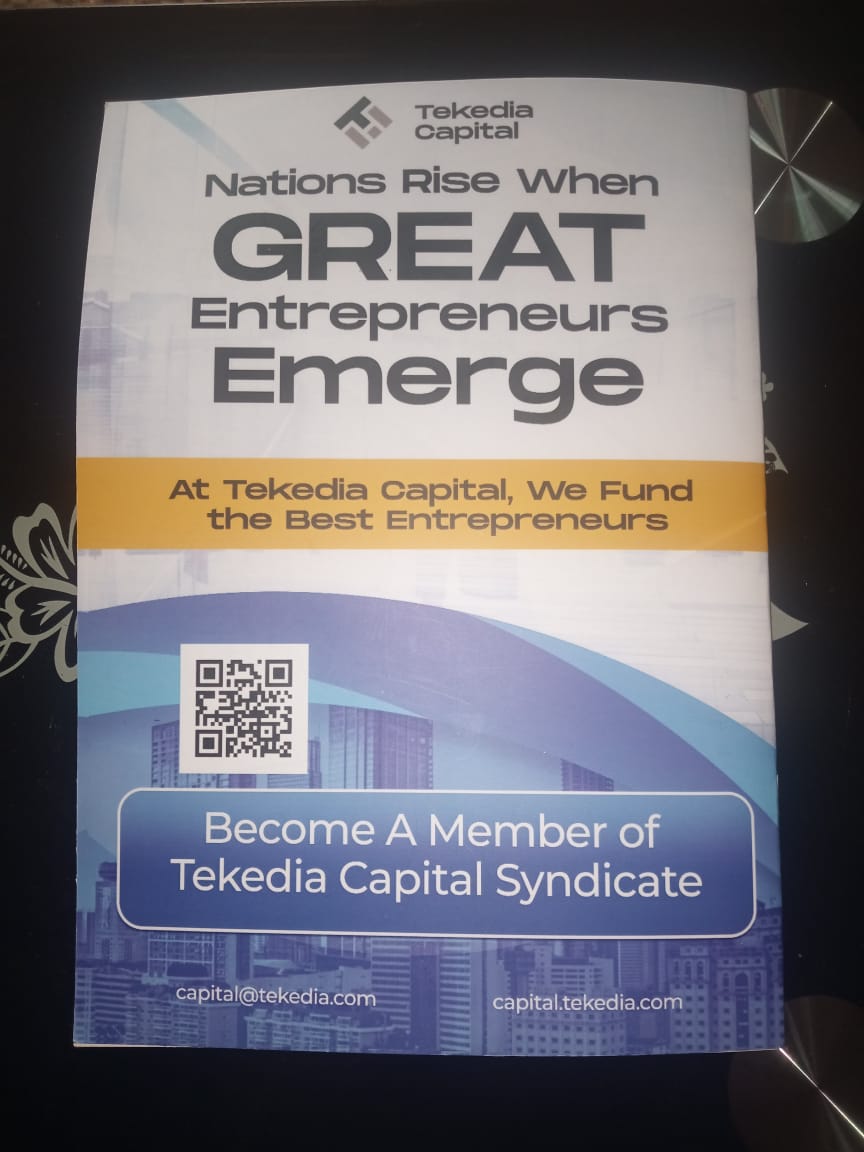
Tekedia Capital co-sponsored Federal University of Technology Owerri (FUTO) Biennial Lecture Series. On the back cover of the event material, our message was clear: nations rise when great entrepreneurs emerge, Tekedia Capital funds those entrepreneurs. Learn more about what we do, and join us as we’re in an active investment cycle