DD
MM
YYYY

PAGES

DD
MM
YYYY

spot_img

PAGES

Home Blog Page 3677

How James Mwangi, A Young Ugandan, Became a Billionaire at 40

2

If you are looking for an inspiring story of success and perseverance, look no further than the life of James Mwangi, a young Ugandan who rose from poverty to become a billionaire at the age of 40. James Mwangi is the founder and CEO of Equity Bank, one of the largest and most profitable banks in Africa, with operations in six countries and over 14 million customers.

James Mwangi was born in 1983 in a small village in Uganda, where he grew up in a mud hut with no electricity or running water. His parents were subsistence farmers who struggled to provide for their eight children. James Mwangi had to walk for hours to attend school, often without shoes or books. He was determined to get an education and improve his life, so he studied hard and excelled in his exams. He won a scholarship to attend Makerere University, where he graduated with a degree in commerce.

After graduation, James Mwangi joined a local bank as a clerk, earning a meager salary of $100 per month. He quickly realized that the banking sector in Uganda was inefficient and corrupt, and that there was a huge gap in the market for serving the low-income and unbanked population. He decided to start his own bank, with a vision of providing affordable and accessible financial services to the masses.

He faced many challenges and risks along the way, such as lack of capital, regulatory hurdles, security threats, and competition from established players. He overcame these obstacles with his innovative and customer-centric approach, leveraging technology, mobile banking, agency banking, and social impact initiatives. He also cultivated a strong corporate culture based on integrity, transparency, and excellence.

Under his leadership, Equity Bank grew from a small microfinance institution with $5 million in assets and 27,000 customers in 2004, to a regional banking giant with $6 billion in assets and 14 million customers in 2020. James Mwangi also expanded his business interests to other sectors such as insurance, telecoms, energy, and education. He became one of the richest and most influential people in Africa, with a net worth of over $1 billion.

James Mwangi is not only a successful entrepreneur, but also a generous philanthropist. He has donated millions of dollars to various causes such as education, health, environment, and women empowerment. He has also received numerous awards and recognitions for his achievements and contributions, such as the Ernst & Young World Entrepreneur of the Year Award in 2012, the Forbes Africa Person of the Year Award in 2018, and the Oslo Business for Peace Award in 2020.

James Mwangi is an example of how one can overcome adversity and achieve greatness with hard work, passion, and vision. He is a role model for millions of young Africans who aspire to follow his footsteps and make a positive difference in the world.

Here are some examples:

Strive Masiyiwa: The Zimbabwean billionaire who founded Econet Wireless, one of the largest telecoms companies in Africa.

Mo Ibrahim: The Sudanese-British billionaire who created Celtel International, one of the first mobile phone operators in Africa.

Aliko Dangote: The Nigerian billionaire who built Dangote Group, one of the largest industrial conglomerates in Africa.

Isabel dos Santos: The Angolan billionaire who is the richest woman in Africa and has investments in various sectors such as telecoms, media, banking, and energy.

Ashish Thakkar: The Ugandan-British billionaire who started Mara Group, a diversified business group with interests in technology, manufacturing, agriculture, real estate, and hospitality.

Invesco partners with Galaxy Digital, Gary Gensler actively collaborating with Bitcoin spot ETF issuers

0
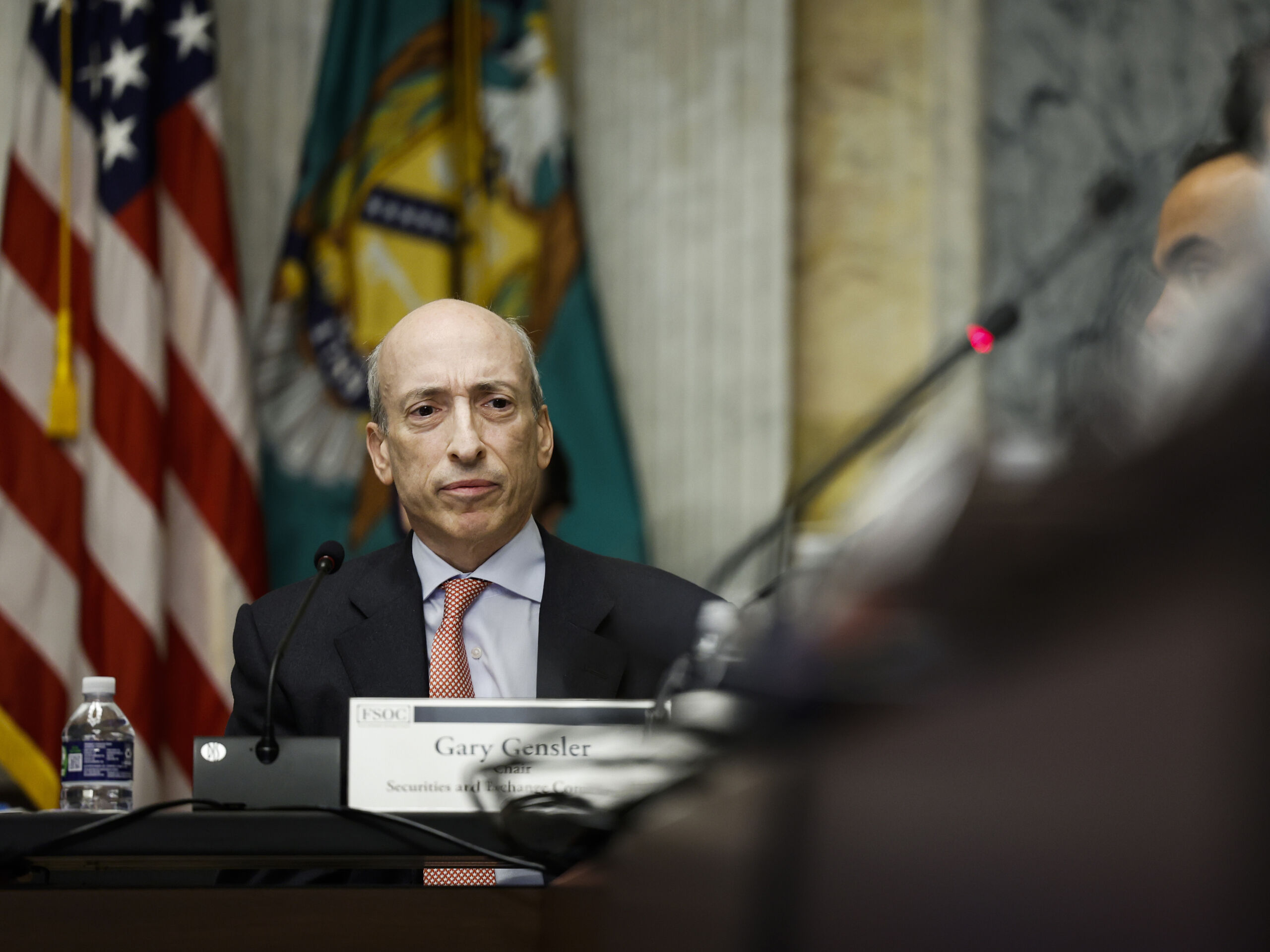
WASHINGTON, DC - OCTOBER 03: Securities and Exchange Commission (SEC) Chair Gary Gensler listens during a meeting with the Treasury Department's Financial Stability Oversight Council at the U.S. Treasury Department on October 03, 2022 in Washington, DC. The council held the meeting to discuss a range of topics including climate-related financial risk and the recent Treasury report on the adoption of cloud services in the financial sector. (Photo by Anna Moneymaker/Getty Images)

In a major development for the crypto industry, Invesco, one of the world’s largest asset managers with $1.5 trillion in assets under management, has partnered with Galaxy Digital, a leading digital asset firm, to file for a spot Bitcoin ETF with the US Securities and Exchange Commission (SEC).

A spot Bitcoin ETF is a type of exchange-traded fund that tracks the price of Bitcoin directly, rather than through derivatives or trusts. This means that the ETF would hold actual Bitcoin in custody and allow investors to gain exposure to the cryptocurrency without having to buy, store, or manage it themselves.

The Invesco-Galaxy partnership is significant because it combines the expertise and reputation of both firms in the traditional and digital asset markets. Invesco is a well-known name in the ETF space, with over 230 ETFs listed in the US and more than $405 billion in ETF assets. Galaxy Digital is a pioneer in the crypto industry, founded by former hedge fund manager and Bitcoin bull Mike Novogratz. Galaxy Digital provides a range of services and products for institutional and retail investors, including trading, asset management, custody, mining, and advisory.

The filing of the spot Bitcoin ETF comes amid growing demand and anticipation for such a product in the US. Several other firms, including Fidelity, VanEck, and Valkyrie, have also filed for spot Bitcoin ETFs with the SEC, but none have been approved yet. The SEC has been cautious and skeptical about approving crypto-related ETFs, citing concerns over market manipulation, fraud, custody, and investor protection.

However, some analysts and industry experts believe that the SEC may soon change its stance and approve a spot Bitcoin ETF, especially after Canada became the first North American country to do so earlier this year. A spot Bitcoin ETF could potentially boost the adoption and legitimacy of Bitcoin and crypto in general, as it would provide an easy and regulated way for mainstream investors to access the market.

The Invesco-Galaxy spot Bitcoin ETF is expected to trade on the NYSE Arca exchange under the ticker symbol BTCX. The filing did not disclose the fees or launch date of the ETF, which are subject to SEC approval. The filing also stated that the ETF may invest in other digital assets besides Bitcoin in the future.

Novogratz thinks bitcoin ETFs will be approved this year.

One of the most prominent figures in the cryptocurrency industry, Mike Novogratz, has expressed his optimism that the US Securities and Exchange Commission (SEC) will finally approve bitcoin exchange-traded funds (ETFs) this year. Novogratz, who is the founder and CEO of Galaxy Digital, a crypto-focused investment firm, made his prediction in an interview with CNBC on Wednesday.

Novogratz said that he believes the SEC is under pressure to greenlight bitcoin ETFs, as more and more investors are looking for exposure to the leading cryptocurrency. He also cited the success of bitcoin ETFs in Canada, where several funds have launched and attracted significant inflows.

“I think Gary Gensler, who is a smart guy and understands crypto well, understands that we need to have some regulatory clarity,” Novogratz said, referring to the SEC chairman. “And so, I’m hoping by the end of the year we get an ETF. I think it would be a big deal for the ecosystem.”

Bitcoin ETFs are seen as a potential catalyst for boosting the adoption and liquidity of the cryptocurrency, as they would allow investors to access bitcoin without having to deal with the technical challenges of buying and storing it directly. Bitcoin ETFs would also provide more regulatory oversight and transparency for the crypto market.

However, the SEC has been reluctant to approve any bitcoin ETF proposals so far, citing concerns over market manipulation, fraud, and investor protection. The regulator has repeatedly delayed or rejected applications from various firms, including VanEck, WisdomTree, and Bitwise.

Novogratz said that he thinks the SEC is waiting for more data and evidence that the crypto market is mature and resilient enough to support a bitcoin ETF. He also said that he expects the SEC to approve a futures-based bitcoin ETF first, rather than a spot-based one, as futures are regulated by the Commodity Futures Trading Commission (CFTC).

“I think they’re more comfortable with something that’s under their jurisdiction,” he said. Novogratz added that he is bullish on bitcoin in the long term, despite the recent volatility and regulatory uncertainty. He said that he expects bitcoin to reach $100,000 by the end of the year, driven by institutional and retail demand. “I think we’re in a secular bull market,” he said. “I think we’re just getting started.”

Gary Gensler actively collaborating with Bitcoin spot ETF issuers to finalize their filings.

In a major development for the crypto industry, the US Securities and Exchange Commission (SEC) chair Gary Gensler has reportedly been in talks with several Bitcoin spot ETF issuers to expedite their approval process. According to sources familiar with the matter, Gensler is keen on launching a Bitcoin spot ETF as soon as possible, as he believes it would provide more transparency and investor protection than the existing Bitcoin futures ETFs.

A Bitcoin spot ETF is an exchange-traded fund that tracks the price of Bitcoin directly, rather than through derivatives contracts. This means that the fund would hold actual Bitcoin in custody, and investors would be able to redeem their shares for Bitcoin if they wish.

A Bitcoin futures ETF, on the other hand, tracks the price of Bitcoin through futures contracts traded on regulated exchanges, such as the Chicago Mercantile Exchange (CME). These contracts are settled in cash, not in Bitcoin, and they may incur additional fees and risks.

The SEC has so far approved four Bitcoin futures ETFs, which have collectively attracted over $2 billion in assets under management since their launch in October. However, many crypto enthusiasts and experts have argued that a Bitcoin spot ETF would be more beneficial for the industry, as it would reflect the true demand and supply of Bitcoin and reduce the potential for market manipulation and arbitrage.

Moreover, a Bitcoin spot ETF would lower the barriers to entry for retail investors, who may not have access to futures trading platforms or may not want to deal with the complexities and costs of futures contracts.

Gensler, who has been vocal about his support for innovation and regulation in the crypto space, has apparently recognized these advantages and is now actively collaborating with Bitcoin spot ETF issuers to finalize their filings. According to the sources, Gensler is particularly interested in ensuring that the issuers have robust anti-money laundering (AML) and know-your-customer (KYC) policies, as well as adequate security measures to safeguard the Bitcoin holdings from theft or loss.

He is also looking for assurances that the issuers have sufficient liquidity providers and market makers to ensure a fair and efficient price discovery process.

The sources did not reveal the names of the issuers that Gensler is in contact with, but some of the candidates that have filed for a Bitcoin spot ETF include VanEck, Fidelity, WisdomTree, NYDIG, Valkyrie, and Bitwise. These issuers have been waiting for months or even years for the SEC to review their applications, but they may soon see their efforts pay off if Gensler’s initiative succeeds.

A Bitcoin spot ETF would be a game-changer for the crypto industry, as it would signal the SEC’s recognition and acceptance of Bitcoin as a legitimate asset class. It would also boost the adoption and awareness of Bitcoin among mainstream investors, who may prefer a regulated and convenient way to gain exposure to the leading cryptocurrency.

Furthermore, it would increase the competition and innovation in the crypto ETF space, which could lead to more products and services that cater to different needs and preferences of investors.

The SEC has not officially confirmed or denied Gensler’s involvement in the Bitcoin spot ETF discussions, but the sources said that an announcement could be made in the coming weeks or months. If true, this would be a welcome surprise for the crypto community, which has been eagerly awaiting a green light from the SEC for a long time. A Bitcoin spot ETF could be the catalyst that propels Bitcoin to new heights, as it would unleash a wave of institutional and retail capital into the market.

Current and Emerging Major Litigations in the Crypto Space

0

The crypto space is evolving rapidly, and with it, the legal challenges and risks that crypto businesses and investors face. In this blog post, we will explore some of the current and emerging litigation trends in the crypto space and provide some practical tips on how to prepare for them.

Current Litigation Trends

Some of the most common types of litigation that crypto businesses and investors encounter are:

Securities litigation: This involves claims that crypto tokens or platforms are securities that should have been registered with the relevant authorities, or that they violated securities laws or regulations. For example, the U.S. Securities and Exchange Commission (SEC) has sued several crypto projects, such as Telegram, Kik, Ripple, and Block.one, for allegedly conducting unregistered securities offerings. Similarly, class action lawsuits have been filed against crypto projects, such as Tezos, EOS, and BitConnect, for allegedly misleading investors or violating securities laws.

Consumer protection litigation: This involves claims that crypto businesses or platforms engaged in unfair, deceptive, or fraudulent practices that harmed consumers or users. For example, the U.S. Federal Trade Commission (FTC) has sued several crypto businesses, such as Butterfly Labs, CoinFlip, and BitClub Network, for allegedly defrauding consumers or failing to deliver on their promises. Likewise, class action lawsuits have been filed against crypto businesses, such as Coinbase, Kraken, and Bitfinex, for allegedly manipulating prices, freezing accounts, or mishandling user funds.

Regulatory enforcement litigation: This involves claims that crypto businesses or platforms violated regulatory rules or requirements that apply to their operations. For example, the U.S. Commodity Futures Trading Commission (CFTC) has sued several crypto businesses, such as BitMEX, Tether, and Bitfinex, for allegedly operating unregistered derivatives platforms or engaging in market manipulation. Similarly, the U.S. Department of Justice (DOJ) has prosecuted several crypto businesses or individuals, such as BTC-e, Liberty Reserve, and Silk Road, for allegedly facilitating money laundering, tax evasion, or other criminal activities.

Some of the emerging types of litigation that crypto businesses and investors may face in the future are:

Intellectual property litigation: This involves claims that crypto businesses or platforms infringed on the intellectual property rights of others. For example, patent lawsuits have been filed against crypto businesses or platforms, such as Coinbase, Bitmain, and ShapeShift, for allegedly using patented technologies or methods without authorization. Likewise, trademark lawsuits have been filed against crypto businesses or platforms, such as Bitcoin.com, Bitcoin Cash ABC, and Bitcoin SV, for allegedly confusing consumers or infringing on the trademarks of others.

Antitrust litigation: This involves claims that crypto businesses or platforms engaged in anti-competitive practices that harmed consumers or competitors. For example, antitrust lawsuits have been filed against crypto businesses or platforms, such as Bitmain, Bitcoin.com, and Kraken, for allegedly conspiring to manipulate the Bitcoin Cash network or market. Similarly, antitrust investigations have been launched by regulators against crypto businesses or platforms, such as Facebook’s Libra project and Apple’s App Store policies.

Privacy litigation: This involves claims that crypto businesses or platforms violated the privacy rights of consumers or users. For example, privacy lawsuits have been filed against crypto businesses or platforms, such as Robinhood and Ledger, for allegedly exposing user data or failing to protect user information.

Similarly, privacy regulations have been enacted or proposed by authorities such as the European Union’s General Data Protection Regulation (GDPR) and the California Consumer Privacy Act (CCPA), which impose strict obligations and penalties on how crypto businesses or platforms collect, use, and share user data. How to Prepare for Litigation Given the complex and dynamic nature of the crypto space, litigation is inevitable and unavoidable.

However, there are some steps that crypto businesses and investors can take to prepare for litigation and mitigate its impact:

Conduct due diligence: Before engaging in any crypto-related activity, such as launching a project, investing in a token, or using a platform, it is important to conduct thorough due diligence to understand the legal risks and implications involved. This may include researching the regulatory landscape, the market conditions, the technical aspects, and the reputation of the project, token, or platform. It may also include consulting with legal experts, accountants, or auditors to obtain professional advice or guidance.

Implement compliance measures: After conducting due diligence, it is essential to implement compliance measures to ensure that the crypto-related activity is in accordance with the applicable laws and regulations. This may include registering with the relevant authorities, obtaining licenses or permits, disclosing information to investors or users, implementing security protocols, or adopting best practices. It may also include monitoring the legal developments and updating the compliance measures as needed.

Prepare for litigation: In the event of litigation, it is crucial to prepare for it as soon as possible to avoid further damage or liability. This may include preserving evidence, identifying witnesses, hiring lawyers, or engaging in settlement negotiations. It may also include communicating with the media, the public, or the stakeholders to manage the reputation or expectations.

The crypto space is an exciting and innovative field that offers many opportunities and challenges. However, it also comes with many legal risks and uncertainties that can result in litigation. Therefore, it is important for crypto businesses and investors to be aware of the current and emerging litigation trends in the crypto space, and to prepare for them accordingly.

DSS Releases former EFCC Chairman Bawa, Following His Suit Challenging His Detention

0

The Department of State Services (DSS) has released Abdulrasheed Bawa, the former Chairman of the Economic and Financial Crimes Commission (EFCC), hours after he filed a lawsuit challenging his prolonged detention without trial.

Bawa had been in custody since June 14, 2023, raising concerns about the violation of his fundamental rights and the rule of law.

The DSS had been conducting an investigation into allegations of financial impropriety and malfeasance during Bawa’s tenure as the head of the anti-graft agency. However, his continued detention without formal charges for 134 days has drawn widespread criticism from various quarters.

In the suit filed at the Lagos Division of the Federal High Court for the Enforcement of Fundamental Rights, brought by Barrister Chinedu Oburu of Edu Oburu & Co. on behalf of Bawa, the former EFCC Chairman sought an order from the court to declare his detention without trial as illegal and to secure his immediate release.

The lawsuit, marked FHC/CS/2108/23, was filed on October 20, 2023, and Mr. Bawa sought the following orders: “A Declaration that the continued detention of the Applicant from June 14, 2023, till date without Arraignment or Criminal prosecution is a fragrant abuse and violation of his fundamental rights to freedom, liberty, and personal dignity. An Order directing the Respondent to immediately release the Applicant from custody. And for further or other Orders as the Court may deem fit to make in the circumstances.”

In an affidavit presented to the court, Barrister Oburu asserted that Bawa was appointed as the Chairman of the EFCC by the government of former President Muhammadu Buhari, an institution established to combat corruption in Nigeria.

Following his suspension from office on June 14, 2023, Bawa was invited for interrogation by the DSS, and upon his arrival at their offices, he was promptly detained.

The affidavit further stated, “That since June 14, 2023 (over 120 days) that the Applicant was detained, he has remained in the Respondent’s detention facility without any criminal charge or trial proffered against him till date.

“That the continued illegal detention of the Chairman of the EFCC without any charge is an affront and assault on the fight against corruption in Nigeria.

“That the continued and indefinite detention of the EFCC chairman without any criminal charge is a naked assault on the Fundamental Rights of the Applicant as enshrined in the Constitution of the Federal Republic of Nigeria 1999 (as amended).”

The counsel to Bawa said that he brought the action in the interest of Bawa, the Nigerian public, democracy, and the rule of law in Nigeria, and in support of sustaining the momentum in the fight against corruption.

The suit comes as a significant development in a case that had been widely criticized, with concerns raised over the prolonged detention of a prominent figure in the anti-corruption efforts in Nigeria.

The DSS has been under constant criticism for its show of total disregard for the rule of law. The Nigerian secret service is notorious for arresting and illegally detaining suspects perpetually – even after courts have ordered their release.

Supreme Court of Nigeria Upholds Tinubu’s Election Victory, Dismisses Atiku, Obi Appeal

0

Nigeria’s Supreme Court delivered a unanimous judgment on Thursday, upholding President Bola Ahmed Tinubu’s victory in the 2023 Presidential elections and dismissing the appeal filed by Alhaji Atiku Abubakar, representing the People’s Democratic Party (PDP), and Peter Obi, the Labour Party candidate. 

The Supreme Court ruled that the appeal lacked merit.

A seven-man panel of Justices led by Inyang Okoro upheld the judgment of the Presidential Election Petition Court, which had affirmed the election of President Tinubu. In the notice of appeal, Atiku had urged the apex court to set aside the September 6 judgment of the Presidential Election Petition Court, which had upheld the election of President Tinubu.

Justice Inyang Okoro, while reading the judgment, stated: “On the whole, having resolved all the issues against the appellant, it is my view that there is no merit in the appeal and it is hereby dismissed. The judgment of the court below delivered on September 6th, 2023, affirming the election of the second respondent as the duly elected President of the Federal Republic of Nigeria is hereby affirmed.”

The Supreme Court held that President Tinubu had secured the majority of lawful votes cast and that Atiku had failed to produce alternative results of the presidential election that demonstrated he had won the majority of lawful votes cast, which would invalidate the results declared by the Independent National Electoral Commission (INEC).

Additionally, the court ruled that the absence of the election results on the INEC Result Viewing Portal in real-time did not affect the outcome of the 2023 presidential election.

The Supreme Court also concurred with the Court of Appeal’s position that the Federal Capital Territory (FCT) was not different from other states, and the failure to obtain 25% of the vote in the FCT did not impact the overall results.

Furthermore, the Supreme Court dismissed Atiku’s request to use academic records obtained from Chicago State University as fresh evidence to establish forgery against President Tinubu. The court ruled that the issue of forgery was not covered by the seven issues Atiku had brought for determination and that the Constitution did not permit introducing such evidence.

“The jurisdiction of this court is donated by the constitution and the electoral act regarding election petition appeals. We cannot invoke section 22 of the Supreme Court act since the lower court has since lost its jurisdiction. Moreover, there is no paragraph in the petition to accommodate a case of forgery,” Justice Inyang Okoro stated.

Regarding the INEC results viewing portal (IReV), the Supreme Court acknowledged that its malfunctioning could affect voter trust, but it determined that the unavailability of IReV could not nullify the election results.

“The failure did not affect the outcome of the election. The issue is resolved against the appellants,” Justice Okoro said.

In response to questions about the significance of FCT’s performance, Justice Okoro asked, “Are you saying if someone scores 25% votes in 30 states but not in Abuja, he should not be president? Is that how you interpret the law? That is not the law. Supreme Court agrees with the Court of Appeal.”

This ruling by the Supreme Court effectively brings an end to the legal challenges against President Tinubu’s victory in the 2023 Presidential elections, confirming his position as the duly elected President of Nigeria.

However, reactions from Nigerians indicate that the majority were not expecting a different judgment from the Supreme Court, which they believe has been compromised.

A poll conducted by Peoples Gazette, a Nigerian online tabloid, on Wednesday, asked whether Nigerians expect the Supreme Court to base its decision on the 2023 presidential election petitions on merit and evidence or technicality. Over 60% of the respondents answered in favor of technicality.